

P0135 on 2002-2009 GMC Envoy 4.2L I6: O2 Heater Circuit Causes and Fixes
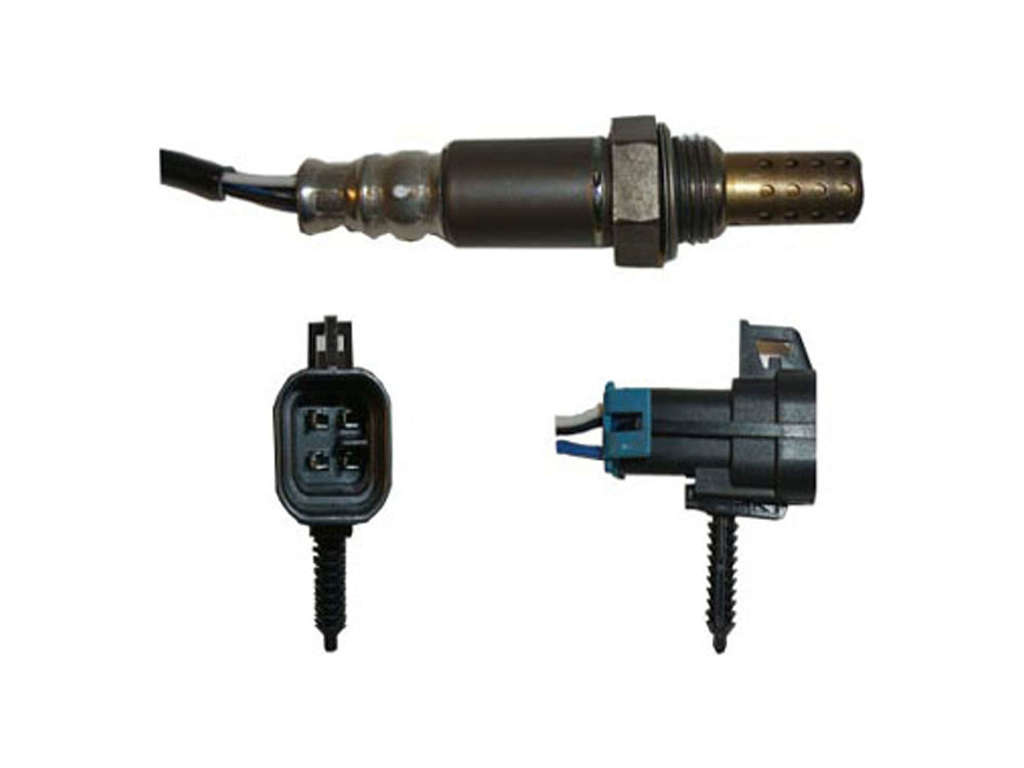
On the GMC Envoy 4.2L, code P0135 almost always means the upstream oxygen sensor (Bank 1, Sensor 1) has failed and needs replacement. Before replacing, check fuse #29 in the under-hood fuse box. Expect to pay $40-$90 for a quality aftermarket sensor (Denso, NTK) or $80-$150 for an OEM ACDelco part. It's a straightforward DIY fix for most owners with a 22mm (7/8") O2 sensor socket.
- P0135 on a GMC Envoy 4.2L points almost exclusively to a problem with the upstream oxygen sensor's heater circuit.
- The most likely fix is replacing the upstream (Bank 1, Sensor 1) oxygen sensor.
- Before replacing the sensor, always check fuse #29 (15A) in the under-hood fuse box, as this is a simple and free check.
- Part numbers for the sensor vary by year range (2002-03 vs 2004-05 vs 2006-09), so verify the correct part for your specific vehicle before purchasing.
- Using a quality, direct-fit replacement sensor from a brand like ACDelco, Denso, or NGK is recommended to avoid potential compatibility issues.
What's Unique About the 2002-2009 GMC Envoy
The GMC Envoy's 4.2L inline-six engine simplifies diagnosis for this code because it only has one exhaust bank, so there's no confusion about which side of the engine to work on. The heater circuit is protected by a dedicated 15A fuse (Fuse #29 in the under-hood fuse box), which is a common and easy-to-check point of failure. While a straightforward repair, GM has issued service bulletins warning that some aftermarket sensors can cause performance issues, making brand selection from OEM-equivalent suppliers like Denso or NTK important.
Symptoms You May Notice
- Check Engine Light is on
- Reduced fuel efficiency
- Engine runs rough or idles poorly, especially when cold
- Failing a vehicle emissions test
- Hesitation or sluggish acceleration
- "Rotten egg" or sulfur smell from the exhaust if the condition persists
- Replacing the downstream (post-catalyst) oxygen sensor. P0135 is specific to Sensor 1, the upstream sensor.
- Replacing the catalytic converter. This code relates to the sensor's heater circuit, not the performance of the converter itself.
- Ignoring a blown fuse and repeatedly replacing the sensor.
Most Likely Causes
- Failed Upstream Oxygen Sensor 🔴 High Probability → Shop Oxygen Sensor The internal heater element is a common failure point in oxygen sensors as they age from constant, rapid heat cycles. It's a wear-and-tear item.
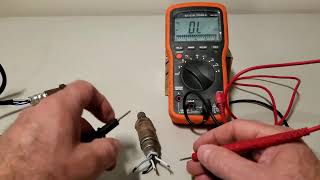
How to confirm: Disconnect the sensor and measure the resistance between the two heater circuit wires (often the two same-colored wires) with a multimeter. A good sensor 🎬 Watch: How to test if your oxygen sensor heater is bad. should have a resistance between 3-20 Ohms when cold. An open circuit (infinite resistance, 'OL') or a reading far outside this range confirms the heater element has failed.
Typical fix: Replace the Bank 1, Sensor 1 (upstream) oxygen sensor using a 22mm or 7/8-inch oxygen sensor socket.
Est. part cost: $40-$150 - Blown O2 Sensor Heater Fuse 🟡 Medium Probability → Shop Oxygen Sensor
How to confirm: Locate the fuse box in the engine compartment on the driver's side. Check fuse #29 (15A), labeled "O2 SENS" or similar. Visually inspect if the fuse is blown or test for continuity with a multimeter.
Typical fix: Replace the 15A fuse. If it blows again immediately, this indicates a short circuit in the wiring harness or the new sensor itself that must be diagnosed.
Est. part cost: $1-$5 - Damaged Wiring or Connector ⚪ Low Probability
How to confirm: Visually inspect the wiring harness leading to the upstream O2 sensor for any signs of melting, chafing, or corrosion. The harness is routed near the hot exhaust manifold and can become brittle or damaged. Check that the connector is secure and the pins are clean and free of moisture or oil contamination.
Typical fix: Repair the damaged section of the wiring harness or clean/replace the connector.
Est. part cost: $10-$50
Rare But Worth Checking
- Powertrain Control Module (PCM) Fault: → Shop Engine Control Module (ECM) In very rare cases, the driver circuit within the PCM that controls the sensor's heater can fail. This should only be considered after the sensor, fuse, and wiring have all been confirmed to be good. A forum user on GMTNation documented this failure, which required advanced diagnostics with a Tech II scanner to observe no current draw on the heater circuit despite a good sensor and wiring. The fix involves repairing or replacing the PCM.
Diagnosis Steps
- Read the code with an OBD-II scanner to confirm P0135 is present.
- Open the under-hood fuse box on the driver's side and inspect fuse #29 (a 15A mini fuse). Replace if blown.
- If the fuse is good, locate the upstream oxygen sensor on the exhaust manifold. It is the sensor before the catalytic converter.
- Visually inspect the sensor's wiring harness and connector for any signs of melting, fraying, or loose connections. The harness runs close to hot components.
- Disconnect the sensor. With the ignition key in the 'ON' position (engine off), use a multimeter to verify that there is ~12V at the 🎬 See this simple walkthrough for testing the O2 heater circuit. pink wire in the vehicle-side connector. This confirms power is getting from the fuse to the sensor.
- With the sensor still disconnected, set the multimeter to measure resistance (Ohms). Measure the resistance between the two heater pins on the sensor itself (usually the two wires of the same color). A good sensor will have a low resistance, typically between 3-20 Ohms. An infinite resistance (OL) reading indicates a failed heater element.
- If the sensor's resistance is good and power is present at the connector, the issue may be in the ground control wire leading back to the PCM or, rarely, the PCM itself. Advanced diagnostics may be needed to check for current draw on the circuit using a capable scan tool.
Parts You'll Likely Need
- Upstream Oxygen Sensor (2006-2009 Models)
(OEM #ACDelco 213-3539)— This is the OEM part number for the Bank 1 Sensor 1 on 2006-2009 models. The internal heater element fails, triggering P0135.
Trusted brands: ACDelco (OEM) 213-3539, Denso (OEM Supplier), Bosch 15131, NGK/NTK (OEM Supplier)
OEM price range: $60-$120
Aftermarket price range: $35-$80 - Upstream Oxygen Sensor (2004-2005 Models)
(OEM #ACDelco 213-1698)— This is the OEM part number for the Bank 1 Sensor 1 on 2004-2005 models. The internal heater element fails, triggering P0135.
Trusted brands: ACDelco (OEM) 213-1698, Denso 234-4119, Bosch, NGK/NTK
OEM price range: $80-$150
Aftermarket price range: $40-$90 - Upstream Oxygen Sensor (2002-2003 Models)
(OEM #ACDelco 213-1551)— This is the OEM part number for the Bank 1 Sensor 1 on the earlier 2002-2003 models. The internal heater element fails, triggering P0135.
Trusted brands: ACDelco (OEM) 213-1551, Denso, Bosch, NGK/NTK
OEM price range: $80-$150
Aftermarket price range: $40-$90
Related Codes That Often Appear With This One
- P0053 — P0053 refers to 'HO2S Heater Resistance (Bank 1, Sensor 1)'. It is a very similar code that also points directly to a problem with the same sensor's heater element or circuit, often triggered alongside P0135.
- P0030 — P0030 is 'HO2S Heater Control Circuit (Bank 1, Sensor 1)'. It is another closely related code that indicates a fault in the same circuit and is often seen with P0135.
Technical Service Bulletins (TSBs) & Recalls
- While a specific TSB number is not consistently cited in public forums, multiple repair databases and owner discussions reference a GM bulletin warning against the use of certain non-compliant aftermarket oxygen sensors that can cause driveability issues like stalling or stumbling on this platform.
Platform-Specific Known Issues
- Aftermarket Sensor Compatibility: A known GM Technical Service Bulletin (TSB) warns that some incorrect or low-quality aftermarket oxygen sensors can cause stalling, stumbling, or other performance issues. It is highly recommended to use a high-quality, direct-fit sensor from a reputable OEM or OEM-equivalent brand like ACDelco, Denso, or NGK/NTK to avoid these problems.
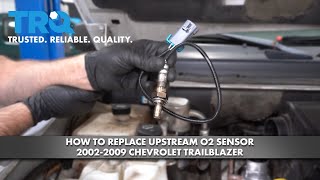
- Seized Sensor Removal: Due to its location in the exhaust manifold and exposure to extreme heat cycles, the oxygen sensor is frequently seized by rust. Removal can be very difficult. Owners report success by applying penetrating oil generously and letting it soak for an extended period (even overnight) before attempting removal with a proper 22mm (7/8" 🎬 Watch: Step-by-step guide to replacing the upstream oxygen sensor.;) O2 sensor socket and a long breaker bar.
Mechanic-Grade Diagnostic Values
- O2 Sensor Heater Current Draw — expected: 0.65A to 2.0A. Failure: 0A (open circuit) or > 3.0A (short circuit). The PCM will set P0135 if current is below ~0.25A or above ~3.15A.
- O2 Sensor Heater Resistance — expected: 3-20 Ohms (cold). Failure: Infinite resistance (OL) indicates an open heater element. Very low resistance (near 0 Ohms) indicates an internal short.
- Heater Circuit Power Supply Voltage — expected: ~12V (Battery Voltage). Failure: 0V or significantly less than battery voltage indicates a blown fuse or a break in the power wire (Pink wire).
Scan Tool Commands That Help
- GM Tech II / High-End Scan Tool: Live Data > Engine Data > O2 Sensor Heater Current (B1S1) — This is the definitive test after confirming the fuse, wiring, and sensor resistance are good. It directly shows if the PCM is attempting to control the heater and what current is flowing. A reading of 0A when the PCM is commanding the heater ON points to a wiring break or a failed PCM driver, as documented in a rare case.
Wiring & Ground Locations
- G103 — On the left front of the engine compartment, on the left side of the radiator support (location can vary slightly by year, with some reporting it on the fender near the washer reservoir).. This is a major engine and body ground point. While not the direct ground for the O2 sensor heater (which is controlled by the PCM), a poor connection at G103 can cause a host of erratic electrical issues and false codes due to improper PCM grounding.
- PCM Connector C2 (35-pin) — At the Powertrain Control Module (PCM), located on the driver's side of the engine.. This connector contains the ground control wire for the B1S1 heater. Pin 31 (Dark Green wire) is the HO2S Heater Low Control for B1S1. Pin 32 (Tan wire) is the Low Signal for B1S1. Testing continuity from the sensor connector to these pins can verify the control and signal return wiring.
- PCM Connector C1 (30-pin) — At the Powertrain Control Module (PCM).. This connector contains the high signal wire for B1S1. Pin 23 (Purple/White wire) is the HO2S High Signal for B1S1.
- Upstream O2 Sensor Connector — On the wiring harness near the upstream O2 sensor, attached to a bracket behind the engine.. The Pink wire is the 12V+ power feed from fuse #29. The Dark Green wire is the heater ground control from the PCM. The other two wires (Tan and Purple/White) are for the sensor signal itself.
Real Owner Repair Stories
- GMTNation.com user 'JayArr' (2005 GMC Envoy XL 4.2L) — Persistent P0135 and P0053 codes.
❌ Tried (didn't work) Replacing the upstream O2 sensor (B1S1)., Running a complete set of new, parallel wires from the sensor connector to the PCM and fuse box.
✅ What actually fixed it The root cause was a failed heater driver circuit inside the Powertrain Control Module (PCM). A Tech II scanner confirmed 0A current draw on the B1S1 heater circuit, despite good wiring, fuse, and sensor resistance (16 Ohms). The owner analyzed the PCM board and identified the likely failed FET or sense resistor. The ultimate fix was to replace the PCM.
OEM Part Supersession History
12586996→ACDelco 213-1698— Standard part lifecycle update by GM.
Heads up: Applies to 2004-2005 models.12592591→ACDelco 213-3539— Standard part lifecycle update by GM.
Heads up: Applies to 2006-2009 models. Some vendor data indicates this part may require programming or special setup procedures, though this is uncommon for a simple O2 sensor.
Model Year Variations Within This Range
- 2002-2003: Uses a specific upstream O2 sensor, OEM part number ACDelco 213-1551.
- 2004-2005: Uses a different upstream O2 sensor, OEM part number ACDelco 213-1698.
- 2006-2009: Uses a third distinct upstream O2 sensor, OEM part number ACDelco 213-3539.
Diagnostic Flowchart
Real Owner Stories
Aggregated from forums and TSBs cited above. Mileages and costs reflect what owners reported in those sources.
2005 GMC Envoy XL 4.2L
Symptoms: Check Engine Light with codes P0135 and P0053 occurring randomly, especially when towing a trailer under load. Using a scan tool, the owner observed zero current draw on the forward sensor heater.
What fixed it: After replacing the oxygen sensor in the exhaust manifold and running new bypass wires failed to fix the issue, PCM circuit board analysis revealed a rare failure of the PCM's internal driver FET or sense resistor.
Source hint: GMTNation.com: 'P0135' (2023) and related owner report
Related OBD-II Codes
Frequently Asked Questions
Which aftermarket oxygen sensors are recommended for the 4.2L Envoy to fix P0135?
Which fuse should I check for the P0135 code on my 2002-2009 Envoy?
How do I remove a seized upstream oxygen sensor on the LL8 4.2L engine?
What should the resistance be on a good upstream O2 sensor for the Envoy?
I replaced the sensor and checked the wiring, but P0135 is still there. What else could it be?
Helpful Videos
We Have This Part in Stock

The information in this article is provided for general reference and educational purposes only. Vehicle specifications, procedures, and part compatibility can vary by production date, trim level, and region. Always consult your vehicle's factory service manual and verify part numbers before purchasing or performing repairs. Safety-critical components such as airbags, seat belts, and braking systems should be installed by a qualified professional.
- GMC Envoy:
- 🧭 Diagnostic Flowchart
- 🎬 Helpful Videos
- 🛍️ Shop This Part
- What's Unique About the 2002-2009 GMC Envoy
- Symptoms You May Notice
- Most Likely Causes
- Rare But Worth Checking
- Diagnosis Steps
- Parts You'll Likely Need
- Related Codes That Often Appear With This One
- Technical Service Bulletins (TSBs) & Recalls
- Platform-Specific Known Issues
- Mechanic-Grade Diagnostic Values
- Scan Tool Commands That Help
- Wiring & Ground Locations
- Real Owner Repair Stories
- OEM Part Supersession History
- Model Year Variations Within This Range
- Real Owner Stories
- 2005 GMC Envoy XL 4.2L
- Related OBD-II Codes
- Frequently Asked Questions
- 🎟️ Get 5% Off