

P0135 on 2001-2006 Hyundai Santa Fe: O2 Sensor Heater Failure Causes and Fixes
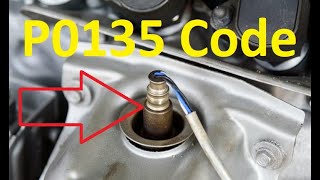
P0135 on a 2001-2006 Santa Fe almost always means the upstream oxygen sensor (Bank 1, Sensor 1) has failed. On V6 models, this is the hard-to-reach sensor on the firewall side. Before replacing it, check the 'SENSOR 1' fuse in the engine bay fuse box. A new sensor costs about $40-$80 for an aftermarket part or $150-$250 for OEM.
- P0135 points to a failure in the heater circuit of the upstream O2 sensor on Bank 1.
- For V6 engines, Bank 1 is the REAR bank near the firewall, which is difficult to access. For the 4-cylinder, it's the only bank.
- Always check the 'SENSOR 1' fuse before buying any parts.
- The most likely fix is replacing the Bank 1, Sensor 1 O2 sensor.
- Due to difficult access on V6 models and the likelihood of a seized sensor, this repair can be challenging for a DIYer.
What's Unique About the 2001-2006 Hyundai Santa Fe
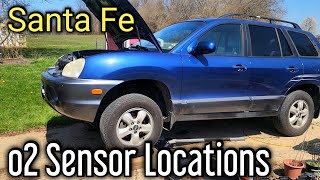
For the first-generation Santa Fe, the main challenge with code P0135 is correctly identifying and accessing the sensor, which varies by engine. On the 2.4L 4-cylinder, the sensor is easy to find on the single exhaust manifold. However, on the 2.7L and 3.5L V6 engines, 'Bank 1' is the rear cylinder bank against the firewall, making the upstream sensor notoriously difficult to access. 🎬 Watch: See exactly where all four O2 sensors are located. Additionally, for the 2.7L V6, Hyundai issued a TSB regarding a change in O2 sensor technology around 2003, making it crucial to verify the correct part number for your specific vehicle.
Symptoms You May Notice
- Check Engine Light is on
- Decreased fuel economy
- Rough idling, especially when the engine is cold
- Failing a state emissions test
- Replacing the wrong oxygen sensor. On V6 models, owners often mistakenly replace the easily accessible Bank 2 (front) sensor instead of the correct Bank 1 (rear) sensor.
- Replacing the downstream (Sensor 2) instead of the upstream (Sensor 1). P0135 specifically refers to Sensor 1, which is pre-catalytic converter.
- Replacing the oxygen sensor without first checking the 'SENSOR 1' fuse.
Most Likely Causes
- Failed Bank 1, Sensor 1 Oxygen Sensor 🔴 High Probability → Shop Oxygen Sensor Oxygen sensors are wear-and-tear items with a finite lifespan, typically 50,000 to 100,000 miles. The internal heating element is often the first part to fail after many years and thousands of heat cycles.
How to confirm: After confirming the fuse and wiring are good, test the resistance of the heater circuit within the O2 sensor using a multimeter. Disconnect the sensor and measure between the two same-colored wires (often black or white). A healthy heater circuit should have a resistance typically between 4.0 and 5.2 ohms at room temperature. An open circuit (infinite resistance) or a reading far outside this range confirms a bad heater element. If power (12V) and ground are present at the sensor connector with the engine running, the sensor is confirmed to be faulty. 🎬 See this diagnostic walkthrough and replacement on a 2003 Santa Fe.
Typical fix: Replace the Bank 1, Sensor 1 oxygen sensor. On V6 models, this is the upstream sensor on the rear (firewall side) exhaust manifold.
Est. part cost: $40-$250 - Blown Fuse for the Heater Circuit 🟡 Medium Probability An electrical short in the sensor's heating element or its wiring can cause the corresponding fuse to blow as a protective measure.
How to confirm: Locate the fuse box in the engine compartment and check the fuse, typically labeled 'SENSOR 1'. Visually inspect the fuse to see if the internal wire is broken or test for continuity with a multimeter.
Typical fix: Replace the blown fuse with a new one of the same amperage. If the new fuse blows immediately, it indicates a short circuit in the wiring or the sensor itself that must be diagnosed and repaired.
Est. part cost: $1-$5 - Damaged Wiring or Connector ⚪ Low Probability The oxygen sensor wiring is routed close to the hot exhaust system. Over time, plastic clips can become brittle and break, allowing the harness to touch the exhaust and melt, causing a short or open circuit.
How to confirm: Visually inspect the entire wiring harness from the oxygen sensor to its connection point. Look for any signs of melting, chafing, corrosion in the connector pins, or breaks in the wires. A common failure point is the harness making contact with the exhaust manifold or a drive axle.
Typical fix: Repair the damaged section of the wiring harness or replace the connector pigtail. Ensure the harness is properly secured away from any heat sources or moving parts.
Est. part cost: $10-$50
Rare But Worth Checking
- Faulty Engine Control Module (ECM): → Shop Engine Control Module (ECM) This is extremely rare. The ECM's internal driver for the heater circuit can fail, but all other possibilities (sensor, fuse, wiring) should be exhaustively ruled out before considering ECM replacement.
Diagnosis Steps
- Read the trouble codes with an OBD-II scanner to confirm P0135 is present.
- Check the fuse for the O2 sensor heater circuit in the engine bay fuse box. It is often labeled 'SENSOR 1'. Replace if blown.
- Identify your engine (2.4L I4, 2.7L V6, or 3.5L V6).
- Locate the Bank 1, Sensor 1 oxygen sensor. For the 2.4L I4, it's the upstream sensor on the exhaust manifold. For the 2.7L/3.5L V6, it's the upstream sensor on the rear exhaust manifold, near the firewall.
- Inspect the sensor's wiring harness and electrical connector for any visible damage, such as melting, corrosion, or broken wires.
- Disconnect the sensor. With the ignition on (engine off), use a multimeter to verify that the heater circuit at the vehicle-side harness connector is receiving power (approx. 12V) and has a good ground provided by the ECM.
- If power and ground are present at the harness, the fault lies within the oxygen sensor itself. If either is missing, there is a wiring or ECM issue to trace.
- To confirm a bad sensor, measure the resistance of the heater element through the sensor's pins (usually the two same-colored wires). A reading between 4.0-5.2 Ω is typical for a good sensor. An open circuit (OL) or very high resistance confirms the heater has failed.
Parts You'll Likely Need
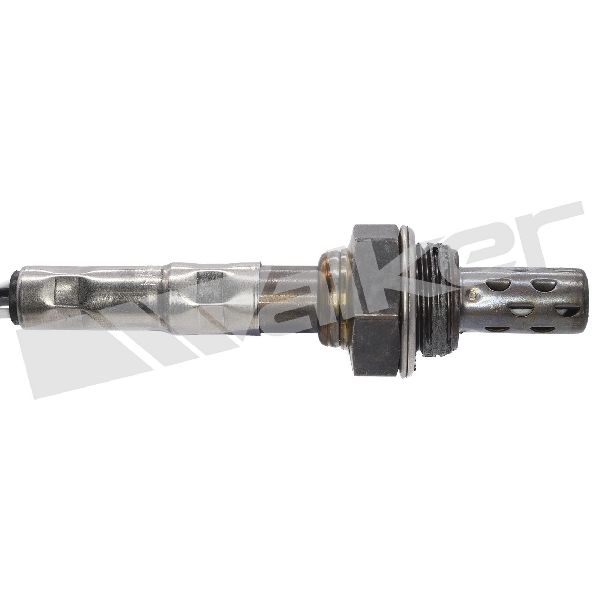
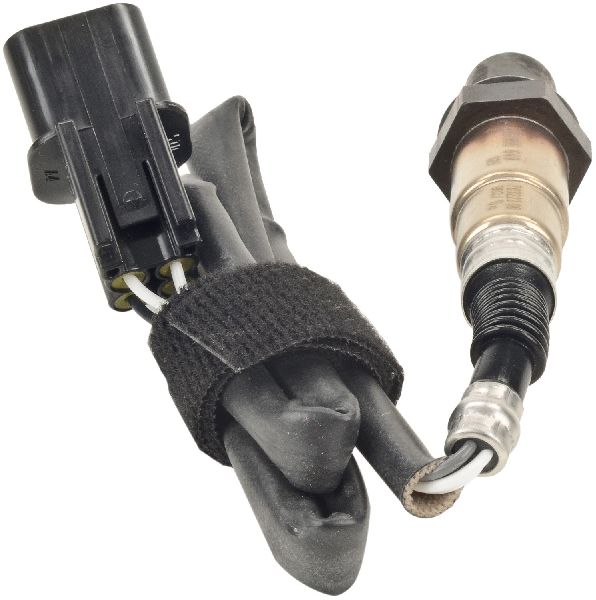
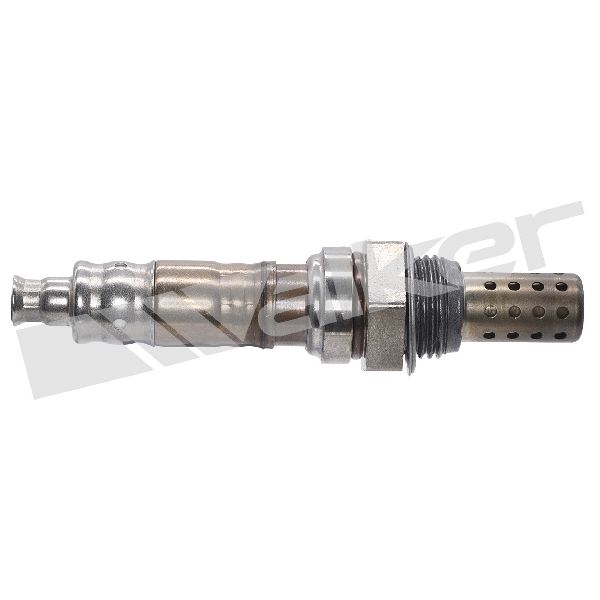
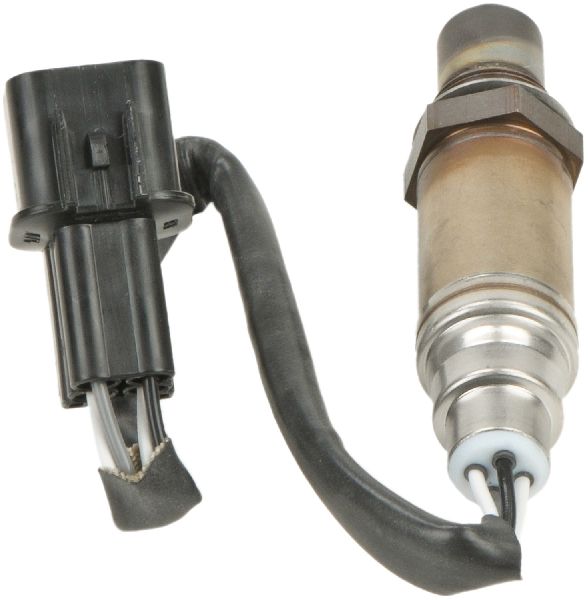
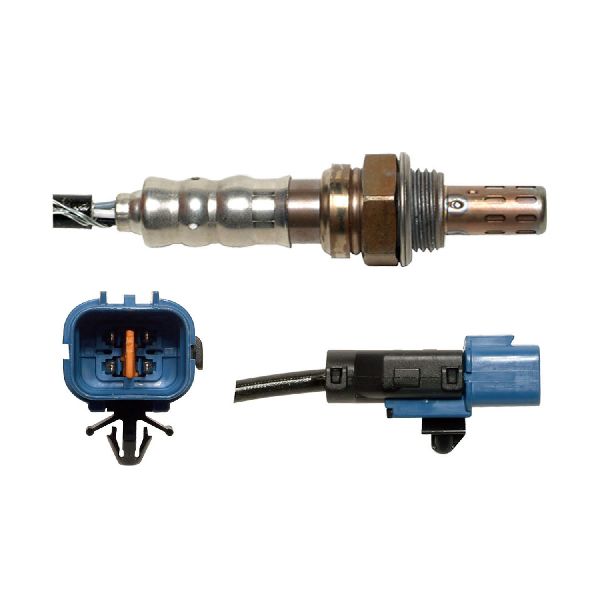
- Upstream Oxygen Sensor (Bank 1, Sensor 1)
(OEM #2.4L: 39210-38005 (CA emissions) or 39210-2G150 (Fed emissions); 2.7L V6: 39210-37530 (Zirconium type, typically for 2003+) or 39210-37140 (Titanium type, pre-2003); 3.5L V6: 39210-39660 (verify application))— This is the most common failure point for code P0135. The internal heater element burns out over time.
Trusted brands: Denso, NGK/NTK, Bosch, Hyundai (OEM)
OEM price range: $150-$310
Aftermarket price range: $40-$80
Related Codes That Often Appear With This One
- P0300-P0306 — A cylinder misfire code (e.g., P0302) can sometimes appear alongside P0135. While they can be separate issues, a faulty O2 sensor can contribute to an incorrect fuel mixture that may lead to misfires over time.
Technical Service Bulletins (TSBs) & Recalls
- TSB 02-36-333 (superseded): Notes a change in oxygen sensor material (Titanium to Zirconium) for the 2.7L V6 engine around the 2003 model year. While this TSB was for different codes, the part information is relevant.
- NHTSA Recall 03V030000 / Hyundai Recall 049: While for the Crankshaft Position Sensor on 2.7L models, it highlights a history of sensor-related manufacturing issues for this platform.
Platform-Specific Known Issues
- Access to the Bank 1 Sensor 1 on the 2.7L and 3.5L V6 engines is very difficult, as it is located on the rear exhaust manifold between the engine and the firewall. Replacement often requires removing the upper intake plenum, long extensions, a swivel joint, and a 22mm (7/8") slotted O2 sensor socket.
- The original sensors are often seized in the exhaust manifold due to rust and age, requiring significant force and penetrating oil (like PB Blaster) to remove. Applying heat to the manifold bung with a torch is sometimes necessary.
- For the 2.7L V6, a mid-cycle change from Titanium to Zirconium type sensors occurred around 2003. It is critical to use the correct sensor type for your vehicle's VIN, as they are not interchangeable and will not function correctly.
Mechanic-Grade Diagnostic Values
- O2 Sensor (B1S1) Heater Element Resistance — expected: 2.5 to 4.0 Ω at room temperature for Zirconia type sensors. Some sources cite a wider range of 2-10 Ω.. Failure: An open circuit (OL or infinite resistance) or a direct short (near 0 Ω) indicates a failed heater element.
- Heater Circuit Voltage at Sensor Connector (Vehicle Side) — expected: Approximately 12V (battery voltage) on one pin and a ground provided by the ECM on another pin, with the key on.. Failure: Absence of 12V power points to a blown fuse or wiring issue upstream. Absence of ground points to a wiring issue or a problem with the ECM driver circuit.
- Heater Circuit Current Draw — expected: 0.52 ± 0.1 A at 13.5V when the sensor is hot (approx. 450°C).. Failure: Current below the specified threshold for more than 2.5 seconds will trigger the P0135 code.
Wiring & Ground Locations
- ECM Connector C133-2, Pin 20 — At the Engine Control Module (ECM), which is typically located below the center of the dash.. This is the specific pin on the ECM that controls the heater for the Bank 1, Sensor 1 oxygen sensor. Testing for continuity or a signal here can isolate a wiring fault from a faulty ECM driver.
- G01 — On the vehicle body, near the right front of the engine.. This is a primary engine-area ground. While not directly for the O2 sensor heater (which is grounded through the ECM), a poor main ground can cause a variety of strange electrical issues and sensor faults.
- G07 — Behind the left front kick panel.. This is a key ground point for components located inside the passenger compartment, including potentially the ECM itself. Verifying this ground is clean and tight is a good step in diagnosing persistent, hard-to-trace electrical codes.
Real Owner Repair Stories
- YouTube channel 'Astral Auto Repairs' (2003 Hyundai Santa Fe (4-cylinder model shown, but diagnostic principle is identical)) — Check Engine Light with code P0135.
❌ Tried (didn't work) The video proceeds directly to diagnosis, not showing prior failed attempts.
✅ What actually fixed it The technician confirmed 12V power and a good ground were present at the vehicle-side harness connector for the O2 sensor heater circuit. This test proved the wiring and fuse were good, isolating the fault to the sensor itself. The final fix was replacing the Bank 1, Sensor 1 oxygen sensor.
OEM Part Supersession History
Varies (Titanium Type Sensor, e.g., 39210-37140)→Varies (Zirconium Type Sensor, e.g., 39210-37530)— Change in sensor technology for improved performance and to standardize parts across Hyundai's engine lineup.
Heads up: The earlier Titanium sensors and later Zirconium sensors are NOT interchangeable. They operate on different electrical principles and have different wiring and ECM software requirements. Installing the wrong type, even if it physically fits, will cause persistent codes and malfunction.
Model Year Variations Within This Range
- 2001-2002 vs. 2003-2006 (2.7L V6 only): The type of upstream oxygen sensor used was changed from a Titanium-based sensor to a Zirconia-based sensor around the 2003 model year. This also involved changes to the wiring harness and ECM logic. It is critical to verify the correct part number for the specific VIN, as the two types are not cross-compatible.
Diagnostic Flowchart
Other Known Issues on This Vehicle
Issues unrelated to this code that are worth knowing about as an owner of this generation:
- Crankshaft Position Sensor (CPS) Failure 🔴 High — Very common, especially on the 2.7L V6. Can cause intermittent stalling when warm or a no-start condition. (Ref: Hyundai Recall 049 (NHTSA #03V030000) and TSB 03-01-001 addressed this for 2001-2002 models, but failures are common across all years.)
- Road Salt Induced Corrosion (Subframe & Suspension) 🔴 High — Widespread in 'Salt Belt' regions. Can cause front coil springs to fracture or rear trailing arms to rust through, affecting vehicle control. (Ref: NHTSA Recalls 14V435000 (Front Coil Springs) and 09V122000 (Rear Trailing Arms).)
- Automatic Transmission Problems 🟠 Medium — Issues like harsh shifting, slipping, or failure to engage gears are reported, often becoming more common at higher mileage (100k+ miles).
- Intake Manifold Variable Damper Issues (2.7L V6) 🟠 Medium — The screws holding the intake manifold's variable geometry flaps can loosen and fall into the cylinders, causing significant engine damage.
Used vs. New Parts: Buying Guide for This Vehicle
When a used part is the smart pick: Never. Oxygen sensors are wear-and-tear items with a limited lifespan (typically 60,000-100,000 miles). A used sensor from a junkyard has unknown mileage and heat cycles, and its remaining life is unpredictable. The labor involved, especially on V6 models, is too significant to risk on a used part that may fail quickly.
What to inspect on the donor part:
- Not applicable as used sensors are not recommended.
OEM-only on this vehicle (don't cheap out):
- While not strictly 'OEM-only', using a reputable OEM supplier like Denso or NGK/NTK is highly recommended over generic, no-name brands. Some forum users report issues with cheaper aftermarket sensors failing prematurely or not meeting the precise specifications required by the ECM.
Aftermarket brands forum-validated for this vehicle:
- Denso
- NGK/NTK
- Bosch
- Walker Products
Brands owners have reported issues with on this vehicle:
- Unbranded, 'white-box' sensors from online marketplaces should be avoided due to inconsistent quality and a higher likelihood of premature failure or incorrect readings.
Real Owner Stories
Aggregated from forums and TSBs cited above. Mileages and costs reflect what owners reported in those sources.
2003 Hyundai Santa Fe 2.4L I4
Symptoms: Check Engine Light on with code P0135.
What fixed it: Confirmed the sensor was faulty by testing for 12V power and ground at the connector while the engine was running, then replaced the sensor.
Source hint: youtube.com video '2003 Hyundai Santa Fe P0135 - O2 Sensor Heater Circuit Bank 1 Sensor 1' by Astral Auto Repairs
2001-2006 Hyundai Santa Fe V6
Symptoms: P0131 and P0135 codes persisting after initial repair attempts.
What fixed it: Checking wiring integrity and switching from aftermarket parts to OEM sensors.
Source hint: hyundaiaftermarket.org thread titled 'P0131 And P0135 Still Persist!'
2001-2006 Hyundai Santa Fe V6 — ~75000 miles
Symptoms: Extreme difficulty accessing the upstream sensor on the rear bank near the firewall.
What fixed it: Replacing the upstream sensor on the rear (firewall side) exhaust manifold using a 22mm slotted O2 sensor socket and penetrating oil.
Source hint: hyundai-forums.com threads regarding Bank 1 V6 Santa Fe sensor replacement
Related OBD-II Codes
Frequently Asked Questions
Where is the Bank 1 Sensor 1 located on my 2.7L V6 Santa Fe?
Does TSB 02-36-333 affect which oxygen sensor I should buy for my 2003 Santa Fe?
Which fuse should I check for the P0135 code on my Santa Fe?
Why is it so difficult to replace the Bank 1 Sensor 1 on the V6 models?
Can I use a generic aftermarket O2 sensor to fix P0135?
What is the typical resistance for a healthy O2 sensor heater on this vehicle?
Helpful Videos

We Have This Part in Stock


The information in this article is provided for general reference and educational purposes only. Vehicle specifications, procedures, and part compatibility can vary by production date, trim level, and region. Always consult your vehicle's factory service manual and verify part numbers before purchasing or performing repairs. Safety-critical components such as airbags, seat belts, and braking systems should be installed by a qualified professional.
- Hyundai Santa Fe:
- 🧭 Diagnostic Flowchart
- 🎬 Helpful Videos
- 🛍️ Shop This Part
- What's Unique About the 2001-2006 Hyundai Santa Fe
- Symptoms You May Notice
- Most Likely Causes
- Rare But Worth Checking
- Diagnosis Steps
- Parts You'll Likely Need
- Related Codes That Often Appear With This One
- Technical Service Bulletins (TSBs) & Recalls
- Platform-Specific Known Issues
- Mechanic-Grade Diagnostic Values
- Wiring & Ground Locations
- Real Owner Repair Stories
- OEM Part Supersession History
- Model Year Variations Within This Range
- Other Known Issues on This Vehicle
- Used vs. New Parts: Buying Guide for This Vehicle
- Real Owner Stories
- 2003 Hyundai Santa Fe 2.4L I4
- 2001-2006 Hyundai Santa Fe V6
- 2001-2006 Hyundai Santa Fe V6 — ~75000 miles
- Related OBD-II Codes
- Frequently Asked Questions
- 🎟️ Get 5% Off