

P0135 on 2018-2023 Kia Stinger 3.3T: O2 Sensor Heater Failure Causes and Fixes
This code indicates a failed heater inside the Bank 1, Sensor 1 oxygen sensor. On the Stinger 3.3T, this is the upstream sensor on the passenger side. The most common fix is to replace the sensor itself. Before buying parts, check the 'SENSOR 1' fuse in the engine bay fuse box.
- P0135 on your Stinger 3.3T means the heater in the passenger-side upstream O2 sensor has failed.
- Before buying a new sensor, always check the dedicated fuse for the O2 sensor heaters (labeled 'SENSOR 1') in the engine bay fuse box.
- The most common fix is replacing the Bank 1, Sensor 1 O2 sensor, which is a DIY-friendly job with the correct 22mm O2 sensor socket.
- Ignoring this code will lead to poor fuel economy and can eventually cause expensive damage to your catalytic converter.
What's Unique About the 2018-2023 Kia Stinger
On the Kia Stinger's 3.3L twin-turbo V6, this code is a straightforward component failure issue. There are no widespread design flaws or unique technical service bulletins (TSBs) specifically for P0135. The diagnostic process is conventional, focusing on the sensor, its wiring, and its fuse. The most critical platform-specific detail is correctly identifying Bank 1 as the passenger (right-hand) side of the engine to ensure you are diagnosing the correct sensor. This issue is also common on its platform-mate, the Genesis G70 3.3T.
Symptoms You May Notice
- Check Engine Light is on
- Decreased fuel economy
- Rough or unstable idle, especially when cold
- Failing an emissions test
- Sluggish or hesitant acceleration in some cases
- Replacing the wrong oxygen sensor (e.g., the downstream Sensor 2, or the sensor on the driver's side Bank 2).
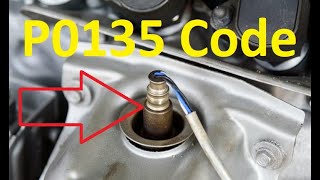
- Replacing the catalytic converter. P0135 is an electrical circuit code for the sensor heater and is not related to converter efficiency. 🎬 See this breakdown of common causes and fixes for P0135.
Most Likely Causes
- Failed Oxygen Sensor 🔴 High Probability → Shop Oxygen Sensor Oxygen sensors are consumable parts that wear out over time. The internal heater element is often the first part to fail after 60,000-100,000 miles due to constant, extreme heat cycles.
How to confirm: After confirming the fuse and wiring are intact, the most practical step is to replace the sensor. A definitive test involves using a multimeter to measure the resistance across the two heater circuit pins on the sensor (often the two same-colored wires); an open circuit (infinite resistance) or a dead short (zero resistance) confirms failure. A good heater should have a low resistance, typically between 2.5-4.0 ohms at room temperature.
Typical fix: Replace the Bank 1, Sensor 1 (passenger side, upstream) oxygen sensor.
Est. part cost: $70-$180 - Blown Heater Circuit Fuse 🟡 Medium Probability
How to confirm: Locate the fuse box in the engine compartment, on the right (passenger) side. Check the fuse labeled 'SENSOR 1' in the fuse panel. A visual inspection or a continuity test with a multimeter will confirm if it's blown.
Typical fix: Replace the blown fuse. If the new fuse blows immediately, it indicates a short circuit in the wiring that must be found and repaired.
Est. part cost: $1-$5 - Damaged Wiring or Connector ⚪ Low Probability The sensor wiring is located near the hot exhaust and turbocharger systems, making it susceptible to melting, chafing, or corrosion over time. This is a known issue in the hot turbo V6 engine bay.
How to confirm: Visually inspect the entire wiring harness for the Bank 1 O2 sensor, from the sensor connector back as far as possible. Look for melted insulation, frayed wires, or corrosion inside the connector pins. Pay close attention to where the harness may contact hot exhaust components. Use a multimeter to check for 12V power at the heater circuit pin on the harness connector with the key on.
Typical fix: Repair the damaged section of the wiring harness or clean/replace the connector.
Est. part cost: $10-$50
Rare But Worth Checking
- Faulty Engine Control Module (ECM): → Shop Engine Control Module (ECM) This is very rare. The internal driver circuit in the ECM that controls the sensor's heater can fail. This should only be considered after all other possibilities (sensor, wiring, fuse) have been definitively ruled out by a professional.
Diagnosis Steps
- Read the code: Use an OBD-II scanner to confirm P0135 is the active code. 🎬 Watch: A step-by-step guide to fixing the P0135 circuit malfunction.
- Check the fuse: Open the fuse box in the engine bay (passenger side) and inspect the fuse for the oxygen sensor heaters. It is labeled 'SENSOR 1'. Replace if blown.
- Inspect the wiring: Safely raise the vehicle if necessary. Locate the upstream O2 sensor on the passenger side exhaust manifold/downpipe. Carefully inspect its wiring harness and connector for any signs of melting, chafing, corrosion, or loose connections.
- Test the sensor (optional, requires multimeter): Disconnect the sensor. Identify the two wires for the heater circuit (often two wires of the same color). Measure the resistance between them. A reading of infinite resistance (OL) or zero means the heater is bad. A typical good heater has low resistance (e.g., 2.5-4.0 ohms).
- Replace the sensor: If the fuse and wiring are good, the sensor itself is the most likely culprit. Use a specialized 22mm O2 sensor socket to remove and replace the Bank 1, Sensor 1 oxygen sensor.
- Clear the code: After replacement, use the OBD-II scanner to clear the trouble code and turn off the check engine light. Drive the vehicle to ensure the code does not return.
Parts You'll Likely Need
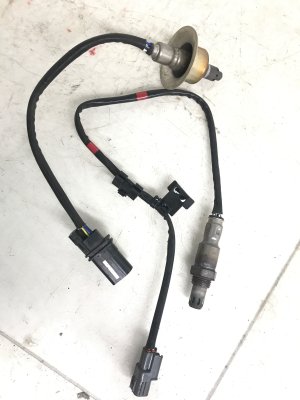
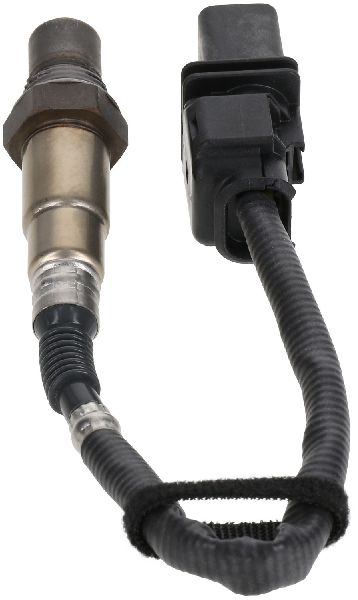
- Oxygen Sensor (Bank 1, Sensor 1)
(OEM #39210-3L000, 39210-3L100)— This is the upstream oxygen sensor for the passenger side. Its internal heater element is the most common failure point for code P0135. Part number 39210-3L100 is a newer, compatible revision.
Trusted brands: Bosch, Denso, NGK, Hyundai/Kia Genuine
OEM price range: $150-$200
Aftermarket price range: $70-$140
Related Codes That Often Appear With This One
- P0130 — This is a general circuit malfunction code for the same sensor (Bank 1, Sensor 1). A heater circuit fault can sometimes trigger the general circuit code as well.
- P0133 — This code means 'O2 Sensor Circuit Slow Response (Bank 1, Sensor 1)'. If the heater is not working, the sensor will take too long to reach operating temperature, causing a slow response that the ECM can detect.
- P0050 — This is the identical heater circuit fault but for Bank 2 (driver's side). If both P0135 and P0050 appear together, it strongly suggests a problem common to both sensors, like a blown 'SENSOR 1' fuse that powers both heaters.
Mechanic-Grade Diagnostic Values
- Upstream O2 Sensor (B1S1) Heater Circuit Resistance — expected: 2.5 - 4.0 Ω at 20°C (68°F). Failure: A reading of OL (infinite resistance) or near zero ohms indicates a failed heater element.
- O2 Sensor Heater Circuit Power Supply — expected: ~12 Volts (Battery Voltage) at the harness connector with key on, engine off.. Failure: Zero or low voltage indicates a problem with the fuse or wiring, not the sensor itself.
Scan Tool Commands That Help
- Kia GDS (Global Diagnostic System): Actuation Test — Can be used to command the O2 sensor heater circuit on/off to verify the ECM driver and wiring are functioning, which helps isolate the fault to the sensor itself.
- Kia GDS (Global Diagnostic System): Resetting Adaptive Values — After replacing the sensor, this function can be used to clear the old learned fuel trim values from the ECM, allowing it to adapt to the new sensor's readings more quickly.
- Kia GDS (Global Diagnostic System): Flight Record — For intermittent heater circuit faults, this function records sensor data during a drive cycle to capture the exact moment the failure occurs, which is difficult to diagnose in a service bay.
Wiring & Ground Locations
- B1S1 Heater Circuit Wires — On the oxygen sensor's own pigtail connector.. These are the two pins to probe with a multimeter to test the internal resistance of the heater. They are typically the two wires of the same color (e.g., two black or two white wires).
- SENSOR 1 Fuse — In the main fuse box located in the engine compartment, typically on the passenger side.. This fuse provides the 12V power for the heater circuits of both upstream oxygen sensors. If it blows, both P0135 (Bank 1) and P0050 (Bank 2) may appear simultaneously.
OEM Part Supersession History
39210-3L000→39210-3L100— Standard part revision and update. No specific failure pattern is officially documented for the change.
Diagnostic Flowchart
Other Known Issues on This Vehicle
Issues unrelated to this code that are worth knowing about as an owner of this generation:
- Premature Brake Rotor Warping / Vibration 🟠 Medium — Very common on North American models, often within the first 20,000 miles. Caused by soft OEM brake pad compound leaving deposits on rotors under heat. (Ref: No official TSB, but dealers often resurface rotors under warranty as a temporary fix. The permanent solution is replacing pads with a higher-spec aftermarket compound.)
- Leaking Left Turbocharger Oil Feed Pipe 🔴 High — Common enough to warrant a recall. Can lead to oil leaks, burning oil smell, and potential for engine fire. (Ref: Kia Recall SC257 (NHTSA 22V-800). Affects 2018-2023 Stinger 3.3T models.)
- Paint Chipping/Adhesion Failure 🟡 Low — Primarily affected early models, especially the 'Sunset Yellow' color which was subject to a specific recall campaign for full repainting. Other colors have sporadic reports of thin paint prone to chipping. (Ref: Voluntary Service Campaign for Sunset Yellow models (approx. 400 cars in the US).)
- High Pressure Fuel Pump (HPFP) Failure 🟠 Medium — A known issue that can cause fuel over-pressurization (code P0088) and lead to loss of power. (Ref: Kia Recall SC218 (NHTSA 21V-422) affects some 2018-2021 Stinger models.)
- Harsh Automatic Transmission Downshifts 🟡 Low — A common complaint among owners, particularly noticeable in stop-and-go traffic when the transmission downshifts from 3-2 and 2-1. It's more of a comfort/refinement issue than a reliability one.
- Hydraulic Electronic Control Unit (HECU) Fire Risk 🔴 High — A defect in the HECU could cause an electrical short, potentially leading to an engine compartment fire while parked or driving. (Ref: Kia Recall SC200 (NHTSA 20V-518) expanded to include 2018-2021 Stinger models.)
Used vs. New Parts: Buying Guide for This Vehicle
When a used part is the smart pick: For this repair, buying a used part is generally not recommended for the oxygen sensor itself. However, sourcing a used connector pigtail from a junkyard is a smart choice if only the connector is damaged.
Donor-vehicle mileage cap: roughly under 80000 miles for the part to have meaningful remaining life.
What to inspect on the donor part:
- For a connector pigtail, ensure the plastic is not brittle or cracked.
- Check for any signs of melting on the wiring insulation.
- Ensure the locking tab on the connector is intact and functional.
- Verify there is no corrosion on the metal pins inside the connector.
OEM-only on this vehicle (don't cheap out):
- While not strictly 'OEM-only', it is highly advisable to avoid no-name, unbranded oxygen sensors from online marketplaces, as they have a high failure rate.
Aftermarket brands forum-validated for this vehicle:
- Bosch
- Denso
- NTK (often the Original Equipment manufacturer)
Brands owners have reported issues with on this vehicle:
- Generic, unbranded sensors sold at a significant discount on platforms like Amazon or eBay.
Real Owner Stories
Aggregated from forums and TSBs cited above. Mileages and costs reflect what owners reported in those sources.
2018-2023 Kia Stinger 3.3T V6 — ~80000 miles
Symptoms: Check engine light on; confirmed as a heater circuit issue unrelated to the catalytic converter.
What fixed it: Checked the fuse and replaced the oxygen sensor.
Source hint: Reddit r/Hyundai
2018-2023 Kia Stinger 3.3T V6
Symptoms: Standard OBD-II error code P0135 triggered.
What fixed it: Straightforward sensor replacement.
Source hint: stingerforum.org
Related OBD-II Codes
Frequently Asked Questions
Is the P0135 code on my Stinger 3.3T related to the recent turbocharger oil feed pipe recall (SC257)?
Could my Stinger's P0135 code be caused by a blown fuse, and where is it located?
I'm seeing P0135 on my 2019 Genesis G70 3.3T; is the fix the same as the Kia Stinger?
Does the P0135 code mean I need to replace my catalytic converter?
Which specific oxygen sensor do I need to replace for a P0135 code on the 3.3T V6?
Are there specific brands I should use when replacing the O2 sensor on my Stinger?
Could the heat from the Stinger's turbochargers be causing my P0135 code?
Helpful Videos


Used OEM Parts in Stock
New Aftermarket Parts Available

The information in this article is provided for general reference and educational purposes only. Vehicle specifications, procedures, and part compatibility can vary by production date, trim level, and region. Always consult your vehicle's factory service manual and verify part numbers before purchasing or performing repairs. Safety-critical components such as airbags, seat belts, and braking systems should be installed by a qualified professional.
- Kia Stinger:
- 🧭 Diagnostic Flowchart
- 🎬 Helpful Videos
- 🛍️ Shop This Part
- What's Unique About the 2018-2023 Kia Stinger
- Symptoms You May Notice
- Most Likely Causes
- Rare But Worth Checking
- Diagnosis Steps
- Parts You'll Likely Need
- Related Codes That Often Appear With This One
- Mechanic-Grade Diagnostic Values
- Scan Tool Commands That Help
- Wiring & Ground Locations
- OEM Part Supersession History
- Other Known Issues on This Vehicle
- Used vs. New Parts: Buying Guide for This Vehicle
- Real Owner Stories
- 2018-2023 Kia Stinger 3.3T V6 — ~80000 miles
- 2018-2023 Kia Stinger 3.3T V6
- Related OBD-II Codes
- Frequently Asked Questions
- 🎟️ Get 5% Off