

P0135 on 1998-2005 Lexus GS300: O2 Sensor Heater Circuit Causes and Fixes
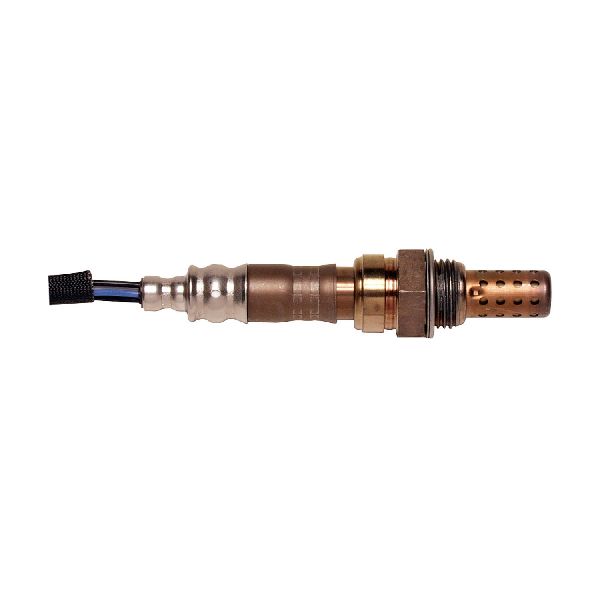
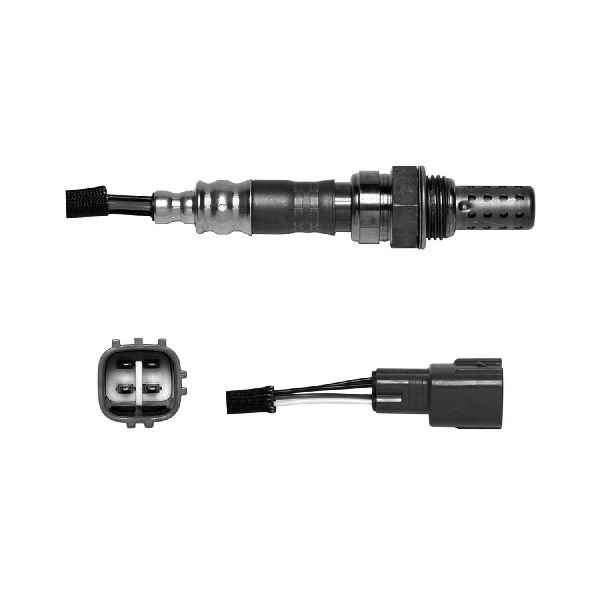
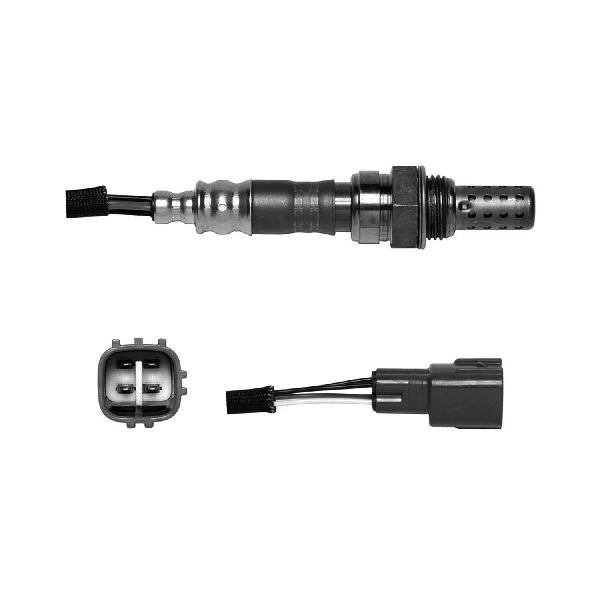
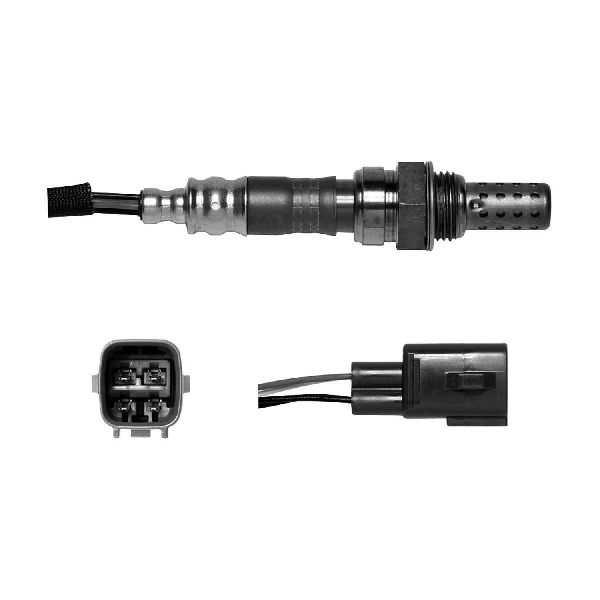
This code almost always means the front oxygen sensor (Bank 1, Sensor 1) has failed. On the 2JZ-GE engine, this is the sensor in the front half of the exhaust manifold. Replacing it with a quality part, like one from Denso (the OEM manufacturer), is the typical fix. Expect to pay $40-$80 for an aftermarket sensor or $100-$150 for an OEM part.
- P0135 on a 1998-2005 GS300 points directly to a fault in the heater circuit of the front-most oxygen sensor.
- The most probable cause is a failed sensor, which is a common wear item. Denso is the OEM supplier.
- Before buying a new sensor, it's wise to quickly check the 'A/F HTR' fuse, though some owners report this model may not have one.
- Diagnosis is straightforward with a multimeter by checking the resistance of the sensor's heater element (two black wires). An open circuit confirms failure. Expect a reading of 11-16 ohms on a good sensor.
- Use a quality replacement sensor from Denso for best results. The direct-fit Denso part number is 234-4048.
What's Unique About the 1998-2005 Lexus GS300
The 2JZ-GE engine in the GS300 uses a split exhaust manifold design, with two separate sections each serving three cylinders. This can sometimes cause confusion, but for the purpose of this code, the entire engine is considered 'Bank 1'. P0135 specifically points to the front-most oxygen sensor, which monitors cylinders 1-3. The rear-most upstream sensor (for cylinders 4-6) would trigger code P0155. Access to the front sensor is relatively easy from the top of the engine bay.
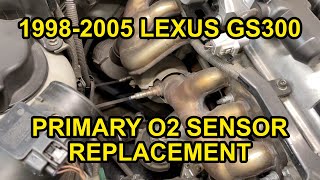
🎬 Watch: This walkthrough shows how to replace the primary sensor.Symptoms You May Notice
- Check Engine Light is on.
- Possible decrease in fuel economy, though often not noticeable by the driver.
- Failure to pass an emissions test.
- Rough running or poor performance, especially during cold starts, although this is not always noticeable.
- Code appears on cold start-ups but may not reappear on a warm start until the engine cools completely.
- Replacing the wrong oxygen sensor. The 2JZ-GE has four O2 sensors. P0135 specifically refers to the upstream sensor in the front manifold (cylinders 1-3). The other upstream sensor for cylinders 4-6 would trigger P0155.
Most Likely Causes
- Failed Bank 1, Sensor 1 Oxygen Sensor 🔴 High Probability → Shop Oxygen Sensor Oxygen sensors are wear-and-tear items. The internal heating element is a common failure point after many years and heat cycles, often failing after 7-8 years of service.
How to confirm: With a multimeter, disconnect the sensor and measure the resistance between the two heater circuit wires 🎬 See how to test O2 heater circuits with a multimeter. (usually the two black wires). A good sensor should have a low resistance. While specs can vary, a reading between 11 and 16 Ohms at room temperature is a good target for this platform. Some sources cite a wider acceptable range of 5-20 Ohms. An open circuit (infinite resistance, or 'OL') or a direct short (0 Ohms) confirms the heater has failed.
Typical fix: Replace the Bank 1, Sensor 1 oxygen sensor. On the 2JZ-GE, this is the sensor located in the front section of the exhaust manifold. An O2 sensor socket is highly recommended for removal. Applying anti-seize compound to the threads of the new sensor is crucial. If the threads in the manifold are corroded, using a thread chaser (M18x1.5) can make installation much easier.
Est. part cost: $40-$150 - Blown Fuse for Heater Circuit ⚪ Low Probability
How to confirm: Locate the fuse panel in the engine bay. Check the fuse labeled for the A/F (Air/Fuel) or O2 heater, often marked 'A/F HTR'. Visually inspect the fuse or test for continuity with a multimeter. Some forum users report that the heater circuit is powered directly by the ECU without a dedicated, user-serviceable fuse, making this cause less likely on this specific model.
Typical fix: Replace the blown fuse. If the new fuse blows immediately, it indicates a short circuit in the wiring that must be diagnosed.
Est. part cost: $1-$5 - Damaged Wiring or Connector ⚪ Low Probability The wiring is close to the hot exhaust manifold and can become brittle or melt over time. The connector itself can also corrode.
How to confirm: Visually inspect the wiring harness and connector for the Bank 1, Sensor 1 O2 sensor. Look for any signs of melting, chafing, corrosion in the pins, or broken wires.
Typical fix: Repair the damaged section of wiring or replace the connector pigtail.
Est. part cost: $10-$30
Rare But Worth Checking
- Faulty Engine Control Module (ECM): → Shop Engine Control Module (ECM) This is extremely rare. All other possibilities, including the sensor, fuse, and wiring, should be exhaustively checked before considering the ECM as the cause.
Diagnosis Steps
- Confirm the code P0135 is present using an OBD-II scanner.
- Locate Bank 1, Sensor 1. On the GS300's 2JZ-GE engine, this is the upstream O2 sensor located on the front exhaust manifold, servicing cylinders 1, 2, and 3.
- Inspect the sensor's wiring harness and connector for any visible damage, such as melting, corrosion, or breaks.
- Check the fuse for the oxygen sensor heater circuit. It is often labeled 'A/F HTR' in the fuse box under the hood. Note that some owners report this circuit may not have a separate fuse on this model.
- If the fuse and wiring are good, test the sensor's heater element. Disconnect the sensor's electrical connector.
- Using a multimeter set to measure resistance (Ohms), probe the two pins for the heater circuit on the sensor side of the connector (these are typically the two wires of the same color, often black).
- A healthy sensor will show a resistance reading, typically between 11 and 16 Ohms for this vehicle. An 'OL' or infinite reading means the heater circuit is open, and the sensor must be replaced.
- If the sensor tests good, check for 12V power at the heater circuit pins on the harness side of the connector (with the key on, engine off). If there is no power, there is a wiring issue between the fuse box/ECU and the sensor.
- If all tests pass but the code persists, the issue could be an intermittent connection or, very rarely, a fault in the ECM.
Parts You'll Likely Need
- Oxygen Sensor (Bank 1, Sensor 1)
(OEM #89465-50120)— The internal heating element of the original sensor is the most common failure point that triggers code P0135. Denso is the original equipment manufacturer (OEM) for Toyota/Lexus.
Trusted brands: Denso (OEM), Bosch, NGK/NTK
OEM price range: $100-$150
Aftermarket price range: $40-$80 - Oxygen Sensor Thread Chaser — Optional but highly recommended if the old sensor is difficult to remove. The exhaust manifold threads can become corroded, and cleaning them with a chaser (size M18x1.5) ensures the new sensor threads in smoothly without damage.
Trusted brands: Lisle, OEMTOOLS
Aftermarket price range: $10-$20
Related Codes That Often Appear With This One
- P0141 — P0141 is the heater circuit code for Bank 1, Sensor 2 (the downstream sensor). If both appear together, it could indicate a common electrical issue, like a blown fuse that powers both heaters, or simply that both sensors have failed around the same time due to age.
- P0155 — P0155 is the heater circuit code for the other upstream sensor (Bank 2, Sensor 1 in V-engines, but on the 2JZ it's the rear upstream sensor). Seeing both P0135 and P0155 could point to a shared power or ground issue, or simultaneous failure due to age.
Technical Service Bulletins (TSBs) & Recalls
- While no TSB is specific to P0135 on this model, TSIB EG010-04 was issued by Toyota to clarify engine bank identification on various engines, including the 2JZ-GE. It confirms Bank 1 is the bank containing cylinder #1. For an inline engine, there is only one bank.
Platform-Specific Known Issues
- Confusion over Bank 1 vs Bank 2: Because the 2JZ-GE is an inline-6 with a split manifold, some owners get confused. P0135 is always the front-most sensor 🎬 Watch: A quick guide to fixing the P0135 code. (cylinders 1-3). The rear sensor (cylinders 4-6) is for code P0155.
- Stuck/Seized Sensor: After years of heat cycles, the oxygen sensor can be very difficult to remove from the exhaust manifold. Using a proper 22mm (or 7/8") offset O2 sensor socket and a breaker bar is recommended. Soaking the threads with penetrating oil beforehand can help significantly.
Mechanic-Grade Diagnostic Values
- O2 Sensor Heater Resistance (B1S1) — expected: 11 - 16 Ohms at 68°F (20°C). Failure: Open circuit (infinite resistance) or short circuit (near zero resistance).
- O2 Sensor Heater Circuit Current Draw — expected: Below 2.0 Amps. Failure: The ECM will set code P0135 if the current exceeds 2.0 Amps.
- Voltage at ECM Connector (Harness Side) — expected: Approximately 12V (Battery Voltage) with ignition ON, engine OFF.. Failure: 0V or significantly low voltage indicates a wiring issue from the power source (EFI relay/fuse) to the sensor connector.
Scan Tool Commands That Help
- Toyota Techstream: Active Test: "Control the A/F Sensor Heater" — This function allows a technician to manually command the O2 sensor heater ON and OFF to verify the circuit's integrity. It can be used to check for voltage drop, current draw, and ECU driver function without waiting for a cold start cycle.
Wiring & Ground Locations
- B1S1 Connector Pinout — On the front exhaust manifold, near the cylinder head.. The two black wires are for the heater circuit (+B and HT1A). One receives 12V power from the EFI relay, and the other is the ground control from the ECM. Probing these pins is essential for diagnosis.
- ECM Connector E9, Pin 1 (+B) — At the Engine Control Module (ECM), typically located in the passenger side of the engine bay or cabin.. This is the 12V power supply pin from the EFI Main Relay to the O2 sensor heater. Checking for voltage here can confirm if power is leaving the relay.
- ECM Connector E10, Pin 4 (HT1A) — At the Engine Control Module (ECM).. This is the ground control pin for the Bank 1 Sensor 1 heater. The ECM pulses this pin to ground to activate the heater. Checking for continuity to ground on this pin (with sensor connected and engine running) confirms the ECM driver is attempting to work.
- Engine Ground Strap — Bolted to the intake manifold.. While the sensor heater is grounded through the ECM, a poor main engine ground can cause widespread electrical issues, potentially affecting sensor performance and triggering faults.
Real Owner Repair Stories
- 2CarPros.com user 'RYAN.TIM.J' (2000 Lexus GS300, 3.0L, 150,000 miles) — Check Engine Light on, code P0135. Code clears but returns on the next cold start. No noticeable driving issues.
❌ Tried (didn't work) Clearing the code with a scanner.
✅ What actually fixed it The user tested the resistance of the two upstream O2 sensors. The rear upstream sensor read 15 ohms (good), while the front upstream sensor (Bank 1, Sensor 1) read as an open circuit. Replacing the faulty front sensor resolved the issue.
OEM Part Supersession History
89465-50120→This part number appears to be current for the application.— N/A
Heads up: This OEM part number is listed for several Lexus V8 models (LS430, SC430) as well as the GS300, indicating it is a widely used sensor. The key is ensuring it is for Bank 1 Sensor 1 (or Bank 2 Sensor 1 on a V8), as the wire length may differ from downstream sensors.
Model Year Variations Within This Range
- 2001-2005: Models from 2001 onward use a smaller, hot-wire type Mass Airflow (MAF) sensor (Part No. 22204-22010) compared to the larger Karman-vortex type on 1998-2000 models (Part No. 22204-20010). While not directly related to the O2 sensor circuit, a failing or incorrect MAF can affect fuel trims and overall engine operation, so it's critical to use the correct MAF for the vehicle's year during diagnosis of any fuel/air related codes.
- 2001-2005: The GS300 received a facelift for the 2001 model year which included E-shift on the steering wheel, revised styling (headlights, grille, taillights), and curtain airbags. The core engine and emissions components related to P0135 remained the same.
Diagnostic Flowchart
Used vs. New Parts: Buying Guide for This Vehicle
When a used part is the smart pick: For this repair, buying a used oxygen sensor is almost never a good idea. They are a wear-and-tear item with a finite lifespan. A used part may fail shortly after installation. A used wiring harness pigtail or a used ECU (after extensive diagnosis proves it's the fault) are the only scenarios where a used part might be considered.
Donor-vehicle mileage cap: roughly under 50000 miles for the part to have meaningful remaining life.
What to inspect on the donor part:
- For a wiring pigtail, ensure the connector is not cracked, the locking tab is intact, and there are several inches of clean, uncorroded wire to splice into.
- For an ECU, match the part number exactly and ensure the donor vehicle was not involved in a flood or fire.
OEM-only on this vehicle (don't cheap out):
- Engine Control Module (ECM) - Due to programming and security complexities, an aftermarket ECU is not a viable option. A used OEM unit must be a last resort with an exact part number match.
Aftermarket brands forum-validated for this vehicle:
- Denso (This is the Original Equipment Manufacturer, offering the same quality as the Lexus-branded part, often at a lower price).
- NGK/NTK
Brands owners have reported issues with on this vehicle:
- Generic, unbranded, or 'white-box' sensors from online marketplaces. These often have incorrect heater resistance or slow response times, leading to persistent codes or poor performance.
Real Owner Stories
Aggregated from forums and TSBs cited above. Mileages and costs reflect what owners reported in those sources.
2000 Lexus GS300 3.0L — 150000 miles
Symptoms: The check engine light was on with code P0135. The code would clear but always returned on a cold start, but not on a warm start. The car drove fine with no other noticeable issues.
What fixed it: Diagnosis confirmed the heater element in the upstream oxygen sensor was bad. The user confirmed the faulty sensor's heater circuit read open ('OL') while a good sensor read 15 ohms, indicating the sensor needed replacement.
Source hint: 2CarPros.com - Code P0135 O2 Sensor Heater Circuit Bank 1 Sensor 1
2004 Lexus GS300
Symptoms: Owner experienced both P0135 and P0141 fault codes at the same time.
What fixed it: After testing the heater resistance on both the upstream and downstream sensors, both were found to have an open circuit. Replacing the faulty oxygen sensors resolved the codes.
Source hint: ClubLexus.com - P0135 & P0141 Fault Codes (2015)
Lexus IS300 (platform mate)
Symptoms: Owner had a P0135 oxygen sensor code.
What fixed it: The owner replaced the Bank 1, Sensor 1 oxygen sensor. They noted that using a thread chaser tool was very helpful for cleaning the manifold threads, which made installing the new sensor much easier.
Source hint: my.IS - P0135 oxygen sensor code fix for Lexus is300 (YouTube)
Related OBD-II Codes
Frequently Asked Questions
Where is the Bank 1, Sensor 1 oxygen sensor located on my 1998-2005 GS300?
How can I test the oxygen sensor heater element myself on this car?
Is there a specific fuse for the P0135 oxygen sensor heater circuit?
My oxygen sensor is seized in the exhaust manifold. What's the best way to remove it?
What tool is recommended if the threads in the manifold are corroded?
Does Toyota/Lexus TSB EG010-04 apply to this P0135 code?
Helpful Videos
We Have This Part in Stock


The information in this article is provided for general reference and educational purposes only. Vehicle specifications, procedures, and part compatibility can vary by production date, trim level, and region. Always consult your vehicle's factory service manual and verify part numbers before purchasing or performing repairs. Safety-critical components such as airbags, seat belts, and braking systems should be installed by a qualified professional.
- Lexus GS300:
- 🧭 Diagnostic Flowchart
- 🎬 Helpful Videos
- 🛍️ Shop This Part
- What's Unique About the 1998-2005 Lexus GS300
- Symptoms You May Notice
- Most Likely Causes
- Rare But Worth Checking
- Diagnosis Steps
- Parts You'll Likely Need
- Related Codes That Often Appear With This One
- Technical Service Bulletins (TSBs) & Recalls
- Platform-Specific Known Issues
- Mechanic-Grade Diagnostic Values
- Scan Tool Commands That Help
- Wiring & Ground Locations
- Real Owner Repair Stories
- OEM Part Supersession History
- Model Year Variations Within This Range
- Used vs. New Parts: Buying Guide for This Vehicle
- Real Owner Stories
- 2000 Lexus GS300 3.0L — 150000 miles
- 2004 Lexus GS300
- Lexus IS300 (platform mate)
- Related OBD-II Codes
- Frequently Asked Questions
- 🎟️ Get 5% Off