

P0135 on 2010 Ram 3500: O2 Sensor Heater Causes and Fixes
P0135 indicates a failed heater in the upstream oxygen sensor (Bank 1, Sensor 1). For the 6.7L Cummins, this is a well-known wiring connector issue best fixed with an overlay harness (Mopar P/N 68250763AA) per TSB 25-002-14. For the 5.7L Hemi, the sensor itself (driver's side, pre-catalyst) is the most likely cause. Expect to pay $40-$100 for an aftermarket sensor and $100-$250 for an OEM part.
- For a 2010 Ram 3500, P0135 means there's a problem with the heater for the upstream O2 sensor on Bank 1.
- If you have the 6.7L Cummins engine, the problem is very likely the wiring connector, not the sensor itself, as per TSB 25-004-12.
- If you have the 5.7L Hemi engine, the most probable cause is a failed O2 sensor that needs replacement.
- Always check the O2 sensor fuse before replacing any parts.
- Driving with this code is possible, but it will decrease fuel economy and should be fixed to prevent more expensive catalytic converter damage down the road.
What's Unique About the 2010-2010 Ram 3500
For the 2010 Ram 3500, the cause of P0135 often depends on the engine. On models with the 6.7L Cummins diesel, a well-documented issue with the O2 sensor wiring connectors causes this code, as outlined in a series of Technical Service Bulletins. The definitive fix is installing a complete overlay harness, not just replacing the sensor. For the 5.7L Hemi gasoline engine, the problem is more typically a standard failure of the O2 sensor's internal heater element, located on the driver's side before the catalytic converter.
Diagnostic Flowchart
Tap your situation to follow the diagnostic path that matches what you're seeing on this vehicle.
Symptoms You May Notice
- Check Engine Light is on.
- Reduced fuel economy.
- Failed emissions test.
- Engine may run rough or hesitate, especially during cold starts before the sensor heats up on its own.
- Exhaust may emit black smoke or smell of fuel.
- Replacing the O2 sensor on a 6.7L Cummins without first addressing the wiring harness per the TSB. The connector/harness is the likely culprit, and a new sensor will not fix a bad connection, leading to the code returning.
- Replacing the wrong sensor. P0135 is for Bank 1, Sensor 1. On the 5.7L Hemi, Bank 1 is the driver's side. Sensor 1 is always the upstream sensor before the catalytic converter.
Most Likely Causes
- Faulty O2 Sensor Wiring or Connector (6.7L Cummins) 🔴 High Probability → Shop Oxygen Sensor As documented in TSBs 25-004-12 and its successor 25-002-14, the factory connectors and wiring on 2010-2012 Cummins models are a known failure point due to moisture intrusion, poor pin contact, and incorrect terminal plating, leading to heater circuit faults.
How to confirm: Visually inspect the O2 sensor connectors and harness for signs of corrosion (green crust), melting, damage, or loose pins. Test for 12V power and ground at the connector with the key on. The issue may be intermittent and not obvious on visual inspection alone.
Typical fix: Install the Mopar overlay harness kit (P/N 68250763AA) as recommended by TSB 25-002-14. This is a more permanent solution than replacing just the pigtail connectors. Do not replace the sensor until the wiring has been confirmed good or the TSB repair has been performed.
Est. part cost: $40-$80 for the OEM overlay harness kit. - Failed Oxygen Sensor (Internal Heater Element Failure) 🔴 High Probability → Shop Oxygen Sensor This is the most common cause for the 5.7L Hemi and still a possibility for the 6.7L Cummins if wiring is confirmed to be good. The internal heating element is a wear item that simply burns out over time from heat cycles and contamination.
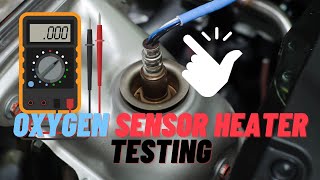
How to confirm: Disconnect the sensor and measure the resistance between the two heater circuit pins (usually same-colored wires) with a multimeter. 🎬 Watch: A simple guide to testing the O2 heater circuit. A good sensor should read between 3 and 15 Ohms at room temperature. A reading of infinite resistance (OL) means the circuit is open and the sensor is bad.
Typical fix: Replace the Bank 1, Sensor 1 oxygen sensor. Forum members often recommend using OEM (Mopar) or NTK sensors to avoid compatibility issues.
Est. part cost: $40-$120 - Blown Fuse ⚪ Low Probability
How to confirm: Check the fuse box (Totally Integrated Power Module or TIPM) for a blown fuse related to the O2 sensor heater circuit. On some Ram trucks, this may be fuse M10.
Typical fix: Replace the blown fuse. If the fuse blows again, it indicates a short circuit in the wiring or the sensor itself that must be diagnosed.
Est. part cost: $1-$5
Rare But Worth Checking
- Damaged Powertrain Control Module (PCM): → Shop Engine Control Module (ECM) This is extremely rare. The PCM's internal driver circuit for the O2 heater can fail. This should only be considered after all other possibilities, including the sensor, wiring, and fuses, have been exhaustively ruled out.
- Faulty Totally Integrated Power Module (TIPM): → Shop Fuse Box The TIPM on 2010 Ram trucks is known for a variety of electrical issues, including problems with internal non-serviceable relays that can affect circuits like the O2 sensor heater. If the fuse is good but there is no 12V power at the O2 sensor harness connector, and the wiring from the TIPM to the connector is intact, a fault within the TIPM itself is possible. This should be diagnosed after ruling out more common causes.
Diagnosis Steps
- Scan the vehicle for codes to confirm P0135 is present and check for any other related codes.
- For 6.7L Cummins models, immediately suspect the wiring harness per TSB 25-002-14. Even if a visual inspection of the connector shows no obvious damage, the fault is often internal.
- For all models, check the fuse for the O2 sensor heater circuit in the TIPM (e.g., M10 fuse). Replace if blown.
- If the fuse is good, disconnect the Bank 1, Sensor 1 O2 sensor. Use a multimeter to measure the resistance between the two heater pins on the sensor side of the connector. A reading between 3 and 15 ohms is good; an open circuit (infinite resistance) confirms the heater has failed.
- With the key on and engine off, use a multimeter to check for 12-volt battery power and a good ground on the vehicle harness side of the connector.
- If wiring has power and ground, and the sensor's heater circuit resistance is out of spec, replace the oxygen sensor.
- If the wiring is the issue (especially on a 6.7L Cummins), the recommended repair is to install the overlay harness kit.
- After the repair, clear the code with a scan tool. Perform the TSB-specified verification drive cycle: warm up the vehicle, drive at 50 MPH, then perform a 10-second deceleration with your foot off the accelerator. Repeat 3-5 times to ensure the PCM relearns the sensor and the check engine light does not return.
Parts You'll Likely Need
- Upstream Oxygen Sensor (Bank 1, Sensor 1)
(OEM #6.7L Cummins: 5149263AA. 5.7L Hemi: 5149171AA (Verify with VIN).)— This is the most common fix for the 5.7L Hemi, as the internal heater element fails over time. It is also needed for the 6.7L if the wiring harness is confirmed to be good.
Trusted brands: Mopar, Denso, NTK
OEM price range: $100-$250
Aftermarket price range: $40-$120 - O2 Sensor Overlay Harness Kit
(OEM #68250763AA)— Specifically for 2010-2012 6.7L Cummins models, TSB #25-002-14 recommends this kit as the definitive fix for recurring O2 sensor heater codes caused by the faulty factory wiring.
Trusted brands: Mopar
OEM price range: $40-$80
Aftermarket price range: $20-$50
Related Codes That Often Appear With This One
- P0131 — This code for 'O2 Sensor Circuit Low Voltage' can be triggered because a failing heater prevents the sensor from reaching the correct temperature, causing it to send a low voltage signal.
- P0132 — This code for 'O2 Sensor Circuit High Voltage' can appear if a short circuit in the heater wiring also affects the signal circuit.
- P0030 — This is a more general 'O2 Sensor Heater Control Circuit' code. It often appears with P0135 as they both relate to the same component's heater circuit and are listed together in the relevant TSBs for the 6.7L Cummins.
Technical Service Bulletins (TSBs) & Recalls
- 25-004-12: The original TSB addressing O2 sensor codes on 2010-2012 6.7L Cummins models. It prescribed replacing the O2 sensor connectors with pigtails. This bulletin has been superseded.
- 25-004-13: A revision that superseded 25-004-12, continuing to address the connector issue. This bulletin has also been superseded.
- 25-002-14: The current, definitive TSB that supersedes the previous two. It instructs technicians to install a complete overlay harness (P/N 68250763AA) for any O2 sensor related DTC, providing a more robust repair than just the pigtail connectors.
Platform-Specific Known Issues
- TSB #25-002-14 for the 6.7L Cummins engine supersedes earlier bulletins (like 25-004-12) and is the definitive guide. It states that for P0135 and a host of other O2 codes, the technician should install a complete overlay harness that bypasses the factory wiring between the O2 module and the sensors. 🎬 Watch: Troubleshooting O2 sensor codes on the 6.7L Cummins engine. This is considered a permanent fix for the known issue of poor connector quality and terminal fretting.
Mechanic-Grade Diagnostic Values
- O2 Sensor Heater Element Resistance — expected: 3 to 15 Ohms at ambient temperature.. Failure: Infinite resistance (OL) indicates an open circuit (burned out heater). Near-zero Ohms indicates a short circuit.
- O2 Sensor Heater Circuit Current Draw — expected: 0.8 to 2.0 Amps during the warm-up phase.. Failure: Current draw outside this range indicates a fault in the heater element or wiring.
- O2 Sensor Heater Power Supply at Harness Connector — expected: ~12V (Battery Voltage) with key on, engine off.. Failure: 0V indicates a problem with the fuse, TIPM, or wiring from the power source.
- O2 Sensor Heater Ground Circuit Continuity — expected: Less than 0.1 Ohms between the ground pin on the harness and a known good chassis ground.. Failure: High resistance indicates a poor ground connection, which is a common issue.
Scan Tool Commands That Help
- Professional Scan Tool (e.g., wiTECH, iCarsoft): O2 Sensor Heater Test / Actuator Test — This bidirectional command allows the technician to manually activate the O2 sensor heater circuit. If the heater activates with the scan tool but not during normal operation, it points towards a PCM control issue rather than a failed sensor or wiring. Conversely, if it fails to activate, it confirms a fault in the circuit (sensor, wiring, fuse, or TIPM).
Wiring & Ground Locations
- O2 Sensor Heater Circuit Wires (Typical) — At the O2 sensor connector.. The two same-colored wires (often both white or both black) in the 4-wire connector are for the heater circuit. One receives 12V power, and the other is the PCM-controlled ground. Testing for power, ground, and resistance is done across these specific pins.
- 5.7L Hemi B1S1 Connector Pins — Driver's side, upstream O2 sensor connector.. Pin 1 is typically the O2 Heater Control (ground from PCM), and Pin 2 is the O2 Heater Power (12V from TIPM). This allows for precise testing of the power supply and the PCM's ground control signal.
- Engine/Chassis Grounds — A common ground point is located on the driver's side wheelwell, forward of the upper control arm. Other key grounds are located near the battery negative terminal and on the firewall near the wiper motor.. A corroded or loose main engine or chassis ground can cause a variety of electrical issues, including intermittent faults in sensor circuits like the O2 heater. Verifying these grounds are clean and tight is a crucial step when diagnosing electrical codes.
OEM Part Supersession History
68203454AA, 68202815AA→68250763AA— The original repair for the 6.7L Cummins wiring issue involved pigtail connectors. These were found to be an insufficient repair, leading to the creation of the full overlay harness (68250763AA) as a more permanent solution per TSB 25-002-14.
Heads up: While the older pigtail part numbers might still be available, they are not the recommended fix and may lead to the code returning. The overlay harness is the definitive repair.
Helpful Videos

The information in this article is provided for general reference and educational purposes only. Vehicle specifications, procedures, and part compatibility can vary by production date, trim level, and region. Always consult your vehicle's factory service manual and verify part numbers before purchasing or performing repairs. Safety-critical components such as airbags, seat belts, and braking systems should be installed by a qualified professional.
- Ram 3500:
- 🧭 Diagnostic Flowchart
- 🎬 Helpful Videos
- What's Unique About the 2010-2010 Ram 3500
- Symptoms You May Notice
- Most Likely Causes
- Rare But Worth Checking
- Diagnosis Steps
- Parts You'll Likely Need
- Related Codes That Often Appear With This One
- Technical Service Bulletins (TSBs) & Recalls
- Platform-Specific Known Issues
- Mechanic-Grade Diagnostic Values
- Scan Tool Commands That Help
- Wiring & Ground Locations
- OEM Part Supersession History
- 🎟️ Get 5% Off