

P0135 on 2002-2014 Subaru Impreza, Forester & Outback: O2 Sensor Heater Fault Causes and Fixes
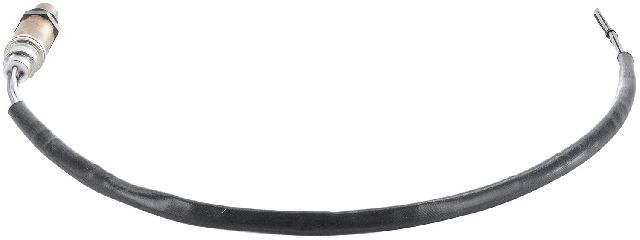
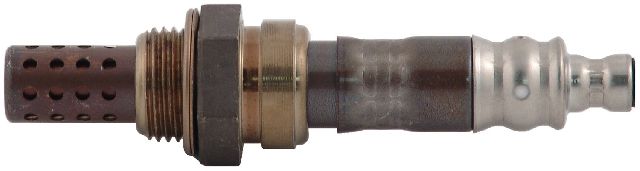
On 2002-2014 Subarus, code P0135 almost always means the front oxygen sensor's internal heater has failed. Replacing the Bank 1, Sensor 1 (passenger side, pre-catalytic converter) Air/Fuel Ratio sensor is the typical fix. Expect to pay $60-$120 for an aftermarket part (Denso is the OEM manufacturer and a trusted choice) or $150-$250 for an OEM sensor. The job is DIY-friendly.
- P0135 points directly to a problem with the heater inside the front passenger-side oxygen sensor.
- The most probable cause by a wide margin is the failure of the sensor itself.
- Before buying a new sensor, take 5 minutes to check the corresponding fuse, often labeled 'A/F HEATER' or 'O2 HEATER' in the under-hood fuse box.
- For a reliable repair, use a high-quality replacement sensor from Denso (the OEM supplier) or an OEM part from Subaru. Cheaper alternatives can sometimes cause new issues.
- This is a DIY-friendly repair for those with basic tools and a special 22mm (7/8") offset O2 sensor socket.
What's Unique About the 2002-2014 Subaru Impreza / Forester / Outback
For these Subaru models, the P0135 code is a very common and straightforward issue, almost always pointing to the failure of the front A/F sensor's heater element itself. Unlike some vehicles where wiring or fuse issues are equally probable, on this platform, the sensor is the primary point of failure after 80,000+ miles. The original equipment manufacturer for these sensors is typically Denso, and using a Denso or OEM Subaru part for replacement is highly recommended by enthusiasts to avoid compatibility issues and premature failure. Cheaper, universal sensors often require wiring modifications and may not perform reliably.
Generation note: This guide covers multiple generations: Impreza (2nd & 3rd Gen), Forester (2nd & 3rd Gen, early 4th Gen), and Outback (3rd & 4th Gen). While the cause and diagnosis of P0135 are consistent across these generations, the exact oxygen sensor part number is highly specific to the year, model, and engine (turbo vs. non-turbo). Always verify the part number with your vehicle's VIN. For example, on turbo models (WRX, Forester XT), the sensor is often in a tighter location, making access more challenging.
Symptoms You May Notice
- Check Engine Light is on
- Decreased fuel economy, potentially by 10-20% during the warm-up phase
- Rough idle or slight hesitation, particularly on a cold start
- Failing a vehicle emissions test
- Engine may run roughly until it reaches operating temperature
- Replacing the rear (downstream) oxygen sensor. P0135 specifically refers to Sensor 1, which is the upstream sensor before the catalytic converter.
- Assuming the sensor is bad without checking the fuse first. A 5-minute fuse check can save you the cost of a new sensor.
- Installing a cheap, universal oxygen sensor which can lead to incorrect readings, further codes, or premature failure.
Most Likely Causes
- Failed Front Oxygen (A/F) Sensor 🔴 High Probability → Shop Oxygen Sensor The internal heater element within the sensor is a common failure point due to age, extreme heat cycles, and potential contamination from oil or coolant if other engine issues are present. These sensors typically have a lifespan of 60,000 to 100,000 miles.
How to confirm: Disconnect the sensor and measure the resistance between the two heater circuit pins (usually the two wires of the same color, often black). A reading of infinite resistance (open circuit) or a very high resistance confirms the heater has failed. The expected resistance is typically low, with specific Subaru models specified between 2.3 and 3.0 ohms, or 5.2 +/- 0.5 ohms depending on the exact sensor part number.
Typical fix: Replace the Bank 1, Sensor 1 (front, passenger side) Oxygen/Air-Fuel Ratio Sensor.
Est. part cost: $60-$250 - Blown Fuse for Heater Circuit ⚪ Low Probability Less common than sensor failure, but a short in the wiring or the sensor itself can cause the associated fuse to blow. This is a critical check before replacing the sensor.
How to confirm: Locate the A/F or O2 heater fuse in the vehicle's fuse box. For many Impreza/Forester models, this is a 15A or 20A fuse in the under-hood fuse box, sometimes labeled 'O2 HEATER' or 'A/F HEATER'. Visually inspect it or test for continuity with a multimeter.
Typical fix: Replace the blown fuse. If the new fuse blows immediately, it indicates a short circuit in the wiring or the new sensor that must be diagnosed.
Est. part cost: $1-$5 - Damaged Wiring or Connector ⚪ Low Probability The wiring harness is close to the hot exhaust and engine components, making it susceptible to melting, chafing, or corrosion over time. The connector pins can also become corroded from moisture.
How to confirm: Visually inspect the wiring harness leading to the front O2 sensor for any signs of melting, fraying, or breaks. Check the connector for corrosion, moisture, or damaged pins. A wiring diagram can help trace the circuit back to the ECM.
Typical fix: Repair the damaged section of wiring or replace the connector pigtail.
Est. part cost: $10-$40
Rare But Worth Checking
- Faulty Engine Control Module (ECM): → Shop Engine Control Module (ECM) This is extremely rare. Only consider this after you have definitively ruled out the sensor, fuse, and wiring. The driver circuit in the ECM that supplies power or ground to the heater can fail.
Diagnosis Steps
- Read the trouble codes with an OBD-II scanner to confirm P0135 is the primary code.
- Visually inspect the front oxygen sensor on the passenger-side exhaust manifold. Check its wiring and connector for any obvious signs of damage, such as melting, chafing, or corrosion.
- Check the fuse for the O2/AF sensor heater circuit. On many models, this is a 15A or 20A fuse in the main fuse box under the hood. Consult your owner's manual or the fuse box cover for the exact location. Replace if blown.
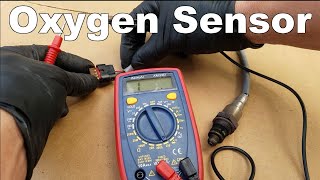
- If the fuse is good, disconnect the sensor's electrical connector. Use a multimeter set to Ohms (Ω) to measure the resistance across the two heater pins on the sensor side (often two black wires). A reading of infinite resistance (OL) or a very high number confirms a failed heater element. A good sensor should read a low resistance value, typically between 2 and 10 Ohms.
- To confirm the vehicle's wiring is good, turn the ignition to 'ON' (engine off). Use a multimeter set to DC Volts to check for battery voltage (approx. 12V) on one of the harness-side pins and a good ground on another. Refer to a vehicle-specific wiring diagram for exact pinouts.
- If the sensor's resistance is within spec and the wiring has power and ground, the issue may be intermittent. However, in over 90% of cases for this platform, the sensor heater has failed.
- Replace the Bank 1 Sensor 1 Air/Fuel Ratio sensor. A specialized 22mm (or 7/8") offset oxygen sensor socket is highly recommended for removal, as the sensor is often recessed.
- After replacement, clear the trouble code with the scanner and perform a drive cycle to ensure the Check Engine Light does not return.
Parts You'll Likely Need
- Front Air/Fuel Ratio Sensor (Bank 1, Sensor 1)
(OEM #22641AA36A (fits many 06-09 models, but VIN verification is required), 22641AA042 (fits some 2.0L Impreza models))— This is the component that contains the heater element reported as faulty by the P0135 code. Its failure is the most common cause.
Trusted brands: Denso (OEM Supplier), NTK, Bosch
OEM price range: $150-$250
Aftermarket price range: $60-$120
Technical Service Bulletins (TSBs) & Recalls
- While no TSB is specifically for P0135 on this platform, Subaru has issued service bulletins for O2 sensor issues on other models and years, such as TSB 09-115-24 for newer vehicles, which involves an updated sensor design to prevent internal cracking. This highlights Subaru's ongoing refinement of sensor technology.
Platform-Specific Known Issues
- On turbocharged models like the WRX and Forester XT, the sensor and its wiring are located near the hot turbocharger and downpipe, increasing the likelihood of heat-related damage to the wiring harness over time.
- Exhaust manifold bolts and studs on these Subaru models are prone to rust and seizing, which can complicate sensor removal if the manifold needs to be shifted for access. Applying penetrating oil to the sensor threads well before attempting removal is highly recommended.
Mechanic-Grade Diagnostic Values
- A/F Sensor Heater Element Resistance — expected: Varies by part number. Examples include 2.3-3.0 Ohms or 5.2 ± 0.5 Ohms when cold.. Failure: Infinite resistance (Open Loop/OL) or a value significantly outside the specified range for the exact sensor.
- Voltage at Harness Connector (Heater Power Pin) — expected: Approximately 12V (battery voltage) with ignition on, engine off.. Failure: 0V or significantly low voltage, indicating a problem with the fuse, relay, or wiring from the power source.
- Voltage at Harness Connector (Heater Control Pin from ECM) — expected: A bias voltage (e.g., ~4.4V) may be present with the key on, engine off. When the engine starts, the ECM will pulse-width modulate (PWM) this circuit to ground to control the heater, which can be observed with a scope or sometimes as a flickering test light.. Failure: No voltage or a constant ground may indicate an ECM or wiring issue.
- Scan Tool Live Data - Short Term Fuel Trim — expected: Should react quickly after startup as the sensor heats up.. Failure: Elevated positive fuel trim (e.g., +5% to +12%) on a cold start that persists longer than usual indicates the ECU is adding fuel because the sensor is not providing a reading.
Scan Tool Commands That Help
- Subaru Select Monitor (SSM) or equivalent professional scanner: O2 Heater Diagnosis / Test of oxygen sensor heater — This is a self-test status monitor within the OBD-II readiness checks. A technician can view this to see if the ECM has successfully completed its test of the heater circuit. If it shows 'Incomplete' or 'Failed', it confirms the ECM is detecting the fault.
- Professional bidirectional scanner: Heater Circuit Active Test (Duty Cycle Command) — This command allows a technician to manually activate the heater circuit. By commanding the heater on and off, they can verify the ECM driver, wiring, and sensor function by observing voltage changes or using a test light on the control wire.
Wiring & Ground Locations
- E22 / E23 / E24 / B18 / B262 — The main 4-pin or 6-pin connector for the front A/F sensor, typically located on the engine harness near the passenger-side strut tower or on the rear of the intake manifold.. This is the primary test point for checking sensor resistance and verifying power/ground from the vehicle harness. Corrosion or damage here is a common cause of failure.
- Engine Ground Straps — Key grounds are located from the chassis to the engine block and from the battery negative terminal to the chassis. Check for corrosion or looseness.. A poor engine ground can create voltage offsets and resistance issues, potentially affecting sensor readings and heater circuit performance, although it would likely cause multiple other codes as well.
- ECM Connector Pins (e.g., D4, D5 on some models) — Located at the Engine Control Module (ECM), typically behind the dashboard on the passenger side.. These are the specific pins where the heater control circuit terminates. Advanced diagnosis involves checking for continuity and voltage directly at the ECM to rule out a wiring break or a faulty ECM driver.
Real Owner Repair Stories
- ScoobyNet.com forum user (2006 Subaru Impreza 2.5i (stock)) — Check Engine Light with code P0031 (a related heater circuit code, diagnosis is identical to P0135).
❌ Tried (didn't work) User performed diagnostic checks before replacing parts.
✅ What actually fixed it The user tested the harness and found 12V power was present. They then measured the resistance of the cold A/F sensor's heater circuit (between the two black wires) and found it to be 2.3 ohms. This value was within the expected range, suggesting an intermittent failure or a fault that only appears when hot. Replacing the sensor is the implied next step and the most common fix in this scenario.
OEM Part Supersession History
Varies significantly by year/model→Varies— Subaru frequently updates sensor part numbers for design improvements or supplier changes.
Heads up: It is critical to use a part number cross-reference based on the vehicle's VIN. Part numbers like 22641AA042, 22641AA36A, 22641AA640, and 22690AA900 fit different year ranges and engine types within this platform and are generally not interchangeable.
Model Year Variations Within This Range
- 2002-2007 vs 2008-2014: Connector types for the front A/F sensor can vary. For example, some earlier models may use one style of 4-pin or 6-pin connector, while later models (especially post-2008 facelift) may use a different keying or shape. iWire Solutions lists different connector plugs (e.g., Plug A vs Plug I) for different year ranges.
- Turbo (WRX, XT) vs. Naturally Aspirated: Turbocharged models use a wideband Air/Fuel ratio sensor which is more sensitive and often has different resistance specifications than the conventional oxygen sensors used on some non-turbo models. The physical location is also more constrained by the turbo and downpipe.
- Mid-2000s California Emissions (PZEV) models: Some vehicles made for states with California emissions standards had more complex exhaust systems, though this is less common for the P0135 fault which is specific to the primary Bank 1 sensor.
Diagnostic Flowchart
Other Known Issues on This Vehicle
Issues unrelated to this code that are worth knowing about as an owner of this generation:
- EJ25 SOHC/DOHC Head Gasket Failure 🔴 High — Extremely common on naturally-aspirated 2.5L engines from 1999-2011, typically failing between 100,000 and 150,000 miles. Early models (pre-2004) had internal failures, while later models developed external coolant/oil leaks.
- Excessive Oil Consumption (FB Engine) 🟠 Medium — Primarily affects early FB-series engines (approx. 2011-2014) which replaced the EJ25. Caused by issues with piston rings, leading to a class-action lawsuit. (Ref: Subaru issued a warranty extension and TSBs to address the issue.)
- AVCS Solenoid Failure / Clogged Banjo Bolt Filters 🟠 Medium — Common on models equipped with Active Valve Control System (AVCS). The oil control solenoids can fail, or the small mesh filters in the banjo bolts that supply them with oil can become clogged with debris, starving the system and causing rough running and codes like P0011, P0021.
- Wheel Bearing Failure 🟠 Medium — Premature failure of front and rear wheel bearings is a well-documented issue, often requiring replacement sooner than expected, sometimes as early as 60,000 miles. Symptoms include a loud humming or grinding noise that increases with vehicle speed.
- Front Oxygen Sensor Failure 🟡 Low → Shop Oxygen Sensor — As detailed in this article, the front O2 (A/F) sensor is a very common failure item, but is considered a maintenance part. Subaru acknowledged this on some models with a service program (WXW-80). (Ref: Service Program WXW-80)
Used vs. New Parts: Buying Guide for This Vehicle
When a used part is the smart pick: Never. Oxygen sensors are wear-and-tear items with a finite lifespan, typically 60,000-100,000 miles. A used sensor from a junkyard has unknown remaining life and is very likely to fail soon, if it doesn't trigger a code immediately. The labor involved in replacing it makes a new part a much smarter investment.
What to inspect on the donor part:
- Not applicable as used sensors are not recommended.
OEM-only on this vehicle (don't cheap out):
- While not strictly 'OEM-only', using the OEM supplier (Denso) or a reputable OEM-equivalent brand (NTK) is highly recommended. Cheap, unbranded 'universal' sensors are a common cause of repeat failures or new, different trouble codes.
Aftermarket brands forum-validated for this vehicle:
- Denso (OEM supplier for most of these models)
- NTK
Brands owners have reported issues with on this vehicle:
- Unbranded 'universal' sensors that require splicing wires.
- Low-cost sensors from online marketplaces that do not explicitly state they match the OEM heater resistance specifications.
Real Owner Stories
Aggregated from forums and TSBs cited above. Mileages and costs reflect what owners reported in those sources.
Subaru Forester
Symptoms: Owner debated using a universal sensor versus OEM/Denso due to reliability concerns and the need for modifications on cheaper parts.
What fixed it: Replacing the front A/F sensor with a Denso or OEM part.
Source hint: r/SubaruForester - Should I jump for OEM O2 Sensor?
Subaru Forester — ~80000 miles
Symptoms: Check Engine Light on; discussion confirmed Denso as the original supplier to avoid counterfeit parts.
What fixed it: Installation of a Denso sensor purchased from a reputable distributor.
Source hint: r/SubaruForester - Dense or OEM O2 Sensors?
2005-2006 Saab 9-2X Aero
Symptoms: P0135 failure mode identical to the contemporary Impreza WRX due to shared EJ engine and ECU.
What fixed it: Replacement of the Bank 1, Sensor 1 Air/Fuel Ratio sensor.
Source hint: Platform mates section regarding Saab 9-2X Aero
Related OBD-II Codes
Frequently Asked Questions
Which brand of front O2 sensor should I buy for my Subaru Forester or Impreza to ensure the P0135 code stays away?
Where is the fuse for the heater circuit located on a 2002-2014 Impreza or Forester?
Does Subaru have a TSB for O2 sensor failures like P0135?
I have a Saab 9-2X Aero with a P0135 code; is the fix the same as a Subaru?
What is the specific resistance I should look for when testing the front sensor on my Subaru?
Why is it so hard to remove the sensor on my high-mileage Outback?
Helpful Videos



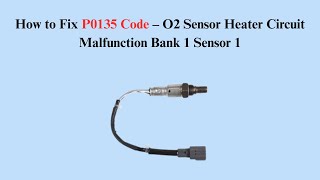
We Have This Part in Stock
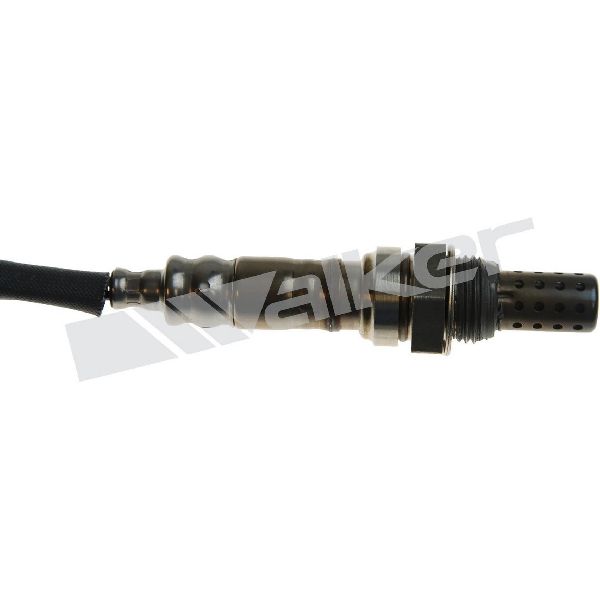
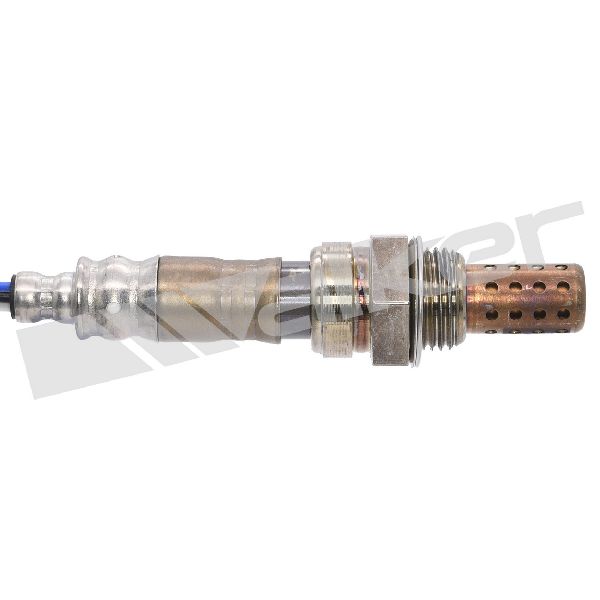


The information in this article is provided for general reference and educational purposes only. Vehicle specifications, procedures, and part compatibility can vary by production date, trim level, and region. Always consult your vehicle's factory service manual and verify part numbers before purchasing or performing repairs. Safety-critical components such as airbags, seat belts, and braking systems should be installed by a qualified professional.
- Subaru Impreza / Forester / Outback:
- 🧭 Diagnostic Flowchart
- 🎬 Helpful Videos
- 🛍️ Shop This Part
- What's Unique About the 2002-2014 Subaru Impreza / Forester / Outback
- Symptoms You May Notice
- Most Likely Causes
- Rare But Worth Checking
- Diagnosis Steps
- Parts You'll Likely Need
- Technical Service Bulletins (TSBs) & Recalls
- Platform-Specific Known Issues
- Mechanic-Grade Diagnostic Values
- Scan Tool Commands That Help
- Wiring & Ground Locations
- Real Owner Repair Stories
- OEM Part Supersession History
- Model Year Variations Within This Range
- Other Known Issues on This Vehicle
- Used vs. New Parts: Buying Guide for This Vehicle
- Real Owner Stories
- Subaru Forester
- Subaru Forester — ~80000 miles
- 2005-2006 Saab 9-2X Aero
- Related OBD-II Codes
- Frequently Asked Questions
- 🎟️ Get 5% Off