

P0135 on 2004-2009 Toyota Prius: Air/Fuel Sensor Heater Malfunction Causes and Fixes
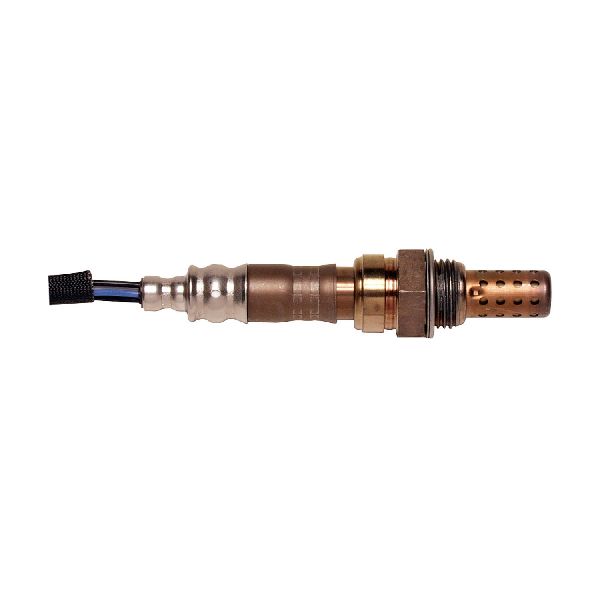
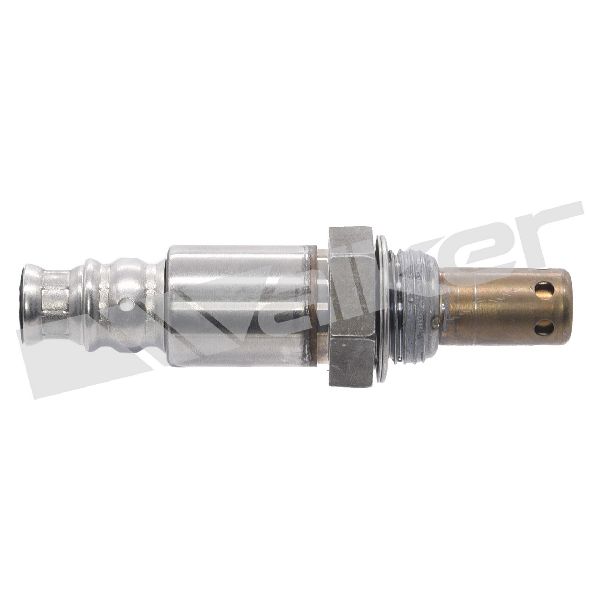
This code means the heater inside the upstream Air/Fuel Ratio sensor (Bank 1, Sensor 1) has failed. On the 2004-2009 Prius, this is a difficult DIY job requiring removal of the wiper cowl. The most common fix is replacing the sensor with Denso part #234-9056, which costs around $100-$150.
- P0135 on a 2004-2009 Prius almost certainly means you need to replace the upstream Air/Fuel Ratio sensor (Bank 1, Sensor 1).
- The correct OEM part is Toyota #89467-47010, and the recommended aftermarket equivalent is Denso #234-9056.
- This is a challenging DIY repair due to the sensor's location. Be prepared to remove the entire wiper and cowl assembly to access it.
- You will likely need a special thin-wall 22mm (7/8") crow's foot oxygen sensor socket to get the old sensor out and the new one in.
- Before replacing the sensor, quickly check the 'A/F HTR' fuse in the under-hood fuse box to rule out a simple electrical issue.
What's Unique About the 2004-2009 Toyota Prius
On the second-generation Prius, the P0135 code almost always points to a failed heater element inside the original sensor. The hybrid system's nature, where the gasoline engine frequently cycles on and off, places a high demand on the A/F sensor's heater to ensure it's always ready for emissions control. What makes this repair platform-specific is the difficult location of the upstream sensor; it's buried deep behind the engine, requiring the removal of the entire windshield wiper and cowl assembly for access, making a simple sensor replacement a labor-intensive job.
Symptoms You May Notice
- Check Engine Light is on.
- Slightly reduced fuel economy (MPG).
- Possible rough or uneven idle, especially when the engine is cold.
- Failure to pass an emissions test.
- Engine takes longer than usual to enter 'closed-loop' operation.
- Replacing the downstream (Bank 1, Sensor 2) oxygen sensor. P0135 specifically refers to Sensor 1, the upstream A/F sensor located before the catalytic converter.
Most Likely Causes
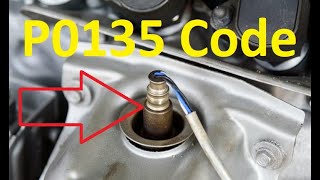
- Failed Air/Fuel Ratio Sensor Heater Element 🔴 High Probability → Shop Oxygen Sensor The internal heater element is a common failure point due to age and the constant heating/cooling cycles inherent in a hybrid vehicle's operation. It is the most frequent cause for this code. 🎬 Watch: A breakdown of P0135 causes and common fixes.
How to confirm: Disconnect the sensor and measure the resistance between the two heater wires (terminals +B and HT). A good sensor will have a low resistance, with service manuals specifying a range of 0.8-1.4 Ω at 20°C (68°F). A failed sensor will show infinite resistance (open circuit). A new Denso sensor typically measures around 2.6 Ω. A forum user on PriusChat measured their new sensor at 2.6 ohms.
Typical fix: Replace the Bank 1, Sensor 1 Air/Fuel Ratio sensor.
Est. part cost: $100-$180 - Blown A/F Heater Fuse or Faulty Relay ⚪ Low Probability
How to confirm: Locate and inspect the fuse labeled for the A/F heater (often marked 'A/F HTR') in the vehicle's under-hood fuse box. Check the EFI main relay if the fuse is intact.
Typical fix: Replace the blown fuse or faulty relay.
Est. part cost: $1-$25 - Damaged Wiring or Connector ⚪ Low Probability The wiring is located in a hot, tight space at the back of the engine, making it susceptible to heat damage, melting, or corrosion over time.
How to confirm: Visually inspect the wiring harness leading to the A/F sensor for any signs of melting, fraying, or corrosion, particularly near the exhaust manifold. Check for stable 12V power at the connector's heater circuit pins with the ignition on.
Typical fix: Repair or replace the damaged section of the wiring harness or the connector itself.
Est. part cost: $10-$50
Rare But Worth Checking
- Faulty Engine Control Module (ECM): → Shop Engine Control Module (ECM) This is extremely rare. All other possibilities, especially the sensor itself and its wiring, should be exhaustively ruled out before considering the ECM as the cause.
Diagnosis Steps
- Read the code with an OBD-II scanner to confirm P0135 is the only code present.
- Visually inspect the A/F sensor's wiring harness and connector for any obvious damage, such as melting or corrosion.
- Check the 'A/F HTR' fuse in the under-hood fuse box.
- If the fuse is good, disconnect the sensor's electrical connector. It is located on a bracket on the back of the engine block.
- Using a multimeter set to Ohms, measure the resistance across the two heater pins (+B and HT) on the sensor side of the connector. The resistance should be low; specifications for a similar Toyota engine are 0.8-1.4 Ω at room temperature. If the reading is very high or open (OL), the sensor's heater has failed and the sensor must be replaced.
- If the sensor resistance is good, check for 12-volt power at the corresponding pins on the harness side of the connector with the ignition on.
- If power and sensor resistance are both good, the issue may be in the ground-side control wire back to the ECM, which is a rare fault.
Parts You'll Likely Need
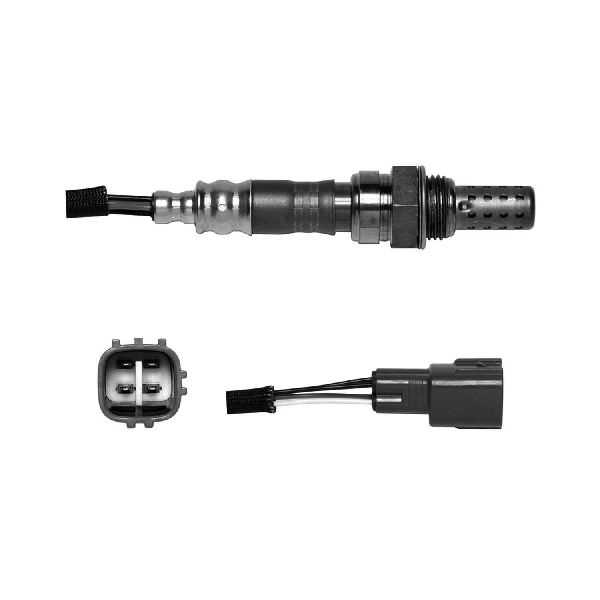
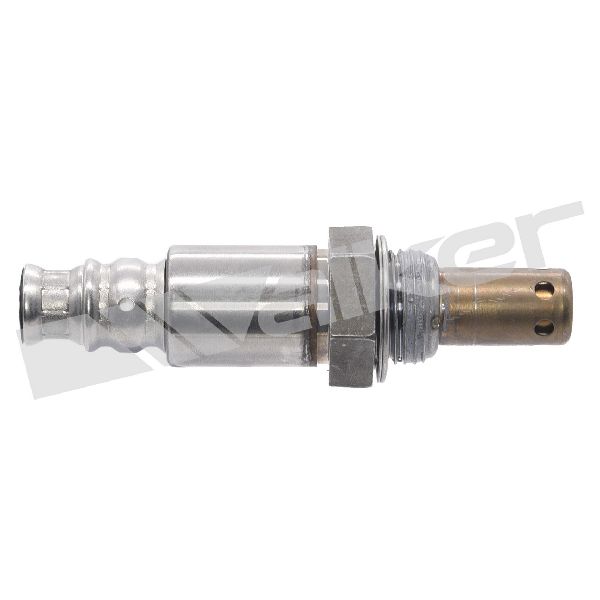
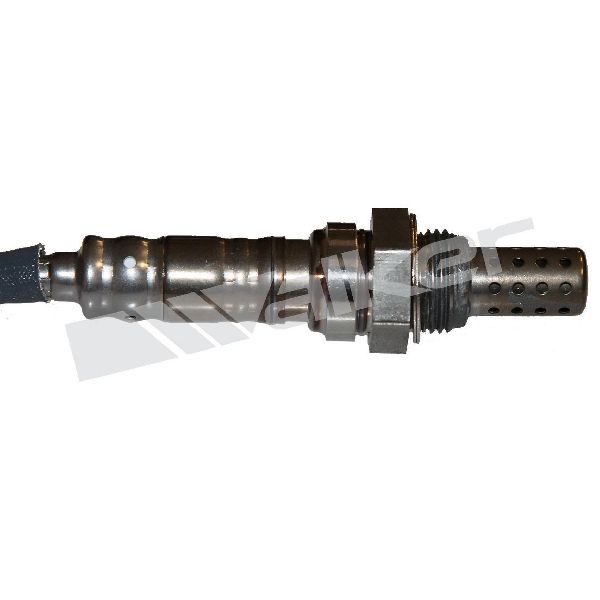
- Air/Fuel Ratio Sensor (Bank 1, Sensor 1)
(OEM #89467-47010)— This is the upstream sensor located before the catalytic converter. The internal heater element is the component that fails, triggering the P0135 code.
Trusted brands: Denso (OEM supplier), NGK/NTK, Delphi
OEM price range: $160-$220
Aftermarket price range: $100-$150
Platform-Specific Known Issues
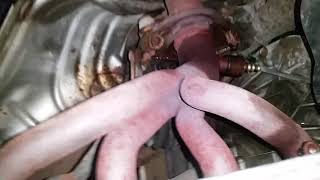
- Accessing the upstream A/F sensor is notoriously difficult on the 2nd Gen Prius. It requires removing the windshield wipers, the plastic cowl panel, and the underlying metal wiper motor assembly to create enough space to work. 🎬 See this walkthrough for accessing the buried upstream sensor.
- The heat shield around the sensor provides very little clearance, often requiring a special low-profile or thin-wall 22mm (7/8") oxygen sensor socket for removal and installation. A crow's foot style socket is highly recommended.
- Due to heat cycling, the sensor is often seized in the exhaust manifold. Liberal use of penetrating oil (like PB Blaster) and allowing it to soak is critical before attempting removal.
Mechanic-Grade Diagnostic Values
- A/F Sensor Heater Current — expected: Between 0.8 A and 10 A. Failure: A current of 0.8 A or less (triggers P0031) or a current exceeding 10 A (triggers P0032) indicates a fault. P0135 is a more general heater circuit malfunction.
- A/F Sensor Voltage (Live Data) — expected: Fluctuates between < 3.0V and > 3.35V at idle after warm-up.. Failure: A voltage that remains static or does not fluctuate within this range indicates a sensor or mixture problem.
- Voltage at ECM Connector (AFHT pin) — expected: 9 - 14 V with ignition switch ON.. Failure: No voltage or low voltage points to a problem in the wiring or the EFI Main Relay.
Scan Tool Commands That Help
- Toyota Techstream: Active Test / A/F Control — This function can help determine if the A/F sensor, heated oxygen sensor, or other components are malfunctioning by allowing the technician to manually operate them.
Wiring & Ground Locations
- EC — At the rear of the engine.. This is a primary ground point for the engine control system. A poor connection here could potentially cause various engine-related fault codes, including sensor circuit issues.
- EFI Main Relay — Located in the engine room R/B (Relay Block).. This relay supplies power to the A/F sensor heater circuit. A failure of this relay will cut power to the heater, directly causing a P0135 code.
- A/F Sensor Connector (A5) — On a bracket on the rear of the engine block, below the wiper cowl.. This is the primary connection point for testing both the sensor-side resistance and the harness-side voltage for the heater circuit.
Real Owner Repair Stories
- PriusChat user 'Stunnned' (Prius c (similar principle)) — Poor mileage, P0031 (Heater Circuit Low).
❌ Tried (didn't work) Replacing the upstream O2 sensor initially seemed to fix it, but the poor mileage and code returned the next day.
✅ What actually fixed it The user was advised that the problem was likely not the new sensor but an issue in the power supply to the heater, such as the wiring or a relay, as the fault was intermittent and returned after a thermal cycle. The final fix was not posted, but the diagnosis shifted from a bad part to a bad circuit.
OEM Part Supersession History
89467-47010→No supersession.— N/A
Heads up: According to Toyota's catalog and forum discussions, part number 89467-47010 is specific to the 2004-2009 Prius and does not have an official interchange with other Toyota sensors.
Diagnostic Flowchart
Other Known Issues on This Vehicle
Issues unrelated to this code that are worth knowing about as an owner of this generation:
- Combination Meter Failure 🟠 Medium — Very common, especially in colder climates. Can occur at any mileage but is more frequent on higher-mileage vehicles. The display fails to illuminate, and the car may not shut off properly. (Ref: Toyota issued TSB T-SB-0172-09 and a subsequent warranty enhancement program (ZTV) for this issue, though it has since expired.)
- Inverter Coolant Pump Failure 🔴 High — Common failure item. If the pump fails, the hybrid system can overheat and shut down, causing a stall-like condition. Triggers code P0A93. (Ref: Subject of Toyota Safety Recall and Limited Service Campaign (LSC-90L) to replace the pump.)
- Excessive Oil Consumption 🟠 Medium — Many owners report oil consumption starting around 100,000 miles, sometimes as much as 1 quart per 1,000 miles. Often attributed to carbon buildup on low-tension piston rings. (Ref: No specific TSB or recall, but a widely discussed issue. Some owners report improvement after replacing the PCV valve.)
- HID Headlight / Ballast Failure 🟡 Low — Common on models equipped with HID headlights. Symptoms include flickering or headlights shutting off intermittently. Often caused by a failing ballast (ECU) mounted to the headlight assembly. (Ref: Toyota issued a Customer Support Program (CSP ZHC) extending the warranty on these components, but it has expired. Related TSBs include T-SB-0044-10 and T-SB-0030-08.)
- Hybrid Battery (HV) Degradation 🔴 High — Inevitable with age and mileage, typically after 10-15 years or 150,000+ miles. Symptoms include poor fuel economy, frequent engine running, and the P0A80 trouble code.
Used vs. New Parts: Buying Guide for This Vehicle
When a used part is the smart pick: For this specific repair, a used part is almost never a smart choice. The A/F sensor is a wear item with a finite lifespan, and the heater element is the most common failure point. The labor to access the sensor on a Gen 2 Prius is extensive, so the risk of a premature failure with a used part outweighs any cost savings.
Donor-vehicle mileage cap: roughly under 20000 miles for the part to have meaningful remaining life.
What to inspect on the donor part:
- If forced to use a used part, source it from the lowest-mileage vehicle possible.
- Visually inspect for corrosion, physical damage, or melted connectors.
- Test the heater resistance with a multimeter before installation; it should be within the specified range (approx. 0.8-3.0 ohms).
Aftermarket brands forum-validated for this vehicle:
- Denso: Denso is the original equipment manufacturer (OEM) for Toyota. The Denso 234-9056 is the direct equivalent to the Toyota-branded part and is widely recommended as the best replacement.
- NGK/NTK
Brands owners have reported issues with on this vehicle:
- Generic, unbranded, or 'no-name' sensors from online marketplaces are frequently reported on forums to fail quickly or not work correctly with the Prius's sensitive ECU, leading to the code returning.
Real Owner Stories
Aggregated from forums and TSBs cited above. Mileages and costs reflect what owners reported in those sources.
2004-2009 Toyota Prius 1.5L
Symptoms: Check engine light with a code that pointed to the rear oxygen sensor.
What fixed it: Replacing Bank 1 Sensor 1 (front air/fuel ratio sensor). The owner discovered the front sensor was malfunctioning and causing the rear sensor to show high voltage.
Source hint: PriusChat / 'Is There Interchangeability Between AF Ratio Sensors...'
2004-2009 Toyota Prius 1.5L
Symptoms: Check engine light came on; owner inquired if the inverter needed to be removed for access.
What fixed it: The context identifies the typical fix as replacing the Bank 1, Sensor 1 Air/Fuel Ratio sensor after removing the cowl and wiper assembly.
Source hint: PriusChat / 'Is There Interchangeability Between AF Ratio Sensors...'
Related OBD-II Codes
Frequently Asked Questions
Is there a specific part number I should use for the A/F sensor on my Gen 2 Prius?
Do I need to remove the inverter to replace the Bank 1 Sensor 1 on my 2004-2009 Prius?
What resistance should I see when testing the heater circuit on a new sensor?
Is there a fuse I should check before replacing the sensor?
Why is the A/F sensor so difficult to remove on this specific vehicle?
Could my P0135 code be related to the Inverter Coolant Pump recall?
Helpful Videos
We Have This Part in Stock


The information in this article is provided for general reference and educational purposes only. Vehicle specifications, procedures, and part compatibility can vary by production date, trim level, and region. Always consult your vehicle's factory service manual and verify part numbers before purchasing or performing repairs. Safety-critical components such as airbags, seat belts, and braking systems should be installed by a qualified professional.
- Toyota Prius:
- 🧭 Diagnostic Flowchart
- 🎬 Helpful Videos
- 🛍️ Shop This Part
- What's Unique About the 2004-2009 Toyota Prius
- Symptoms You May Notice
- Most Likely Causes
- Rare But Worth Checking
- Diagnosis Steps
- Parts You'll Likely Need
- Platform-Specific Known Issues
- Mechanic-Grade Diagnostic Values
- Scan Tool Commands That Help
- Wiring & Ground Locations
- Real Owner Repair Stories
- OEM Part Supersession History
- Other Known Issues on This Vehicle
- Used vs. New Parts: Buying Guide for This Vehicle
- Real Owner Stories
- 2004-2009 Toyota Prius 1.5L
- 2004-2009 Toyota Prius 1.5L
- Related OBD-II Codes
- Frequently Asked Questions
- 🎟️ Get 5% Off