

Audi Q5 P0136 (2009-2012 3.2L V6): O2 Sensor Circuit Malfunction Causes and Fixes
For a 2009-2012 Audi Q5 with the 3.2L V6, code P0136 almost always indicates a failed downstream oxygen sensor on the passenger side (Bank 1, Sensor 2). The most common fix is to replace the sensor with an OEM part (06E906265Q) or a quality equivalent like Bosch 17099. Expect to pay $70-$150 for a quality aftermarket part or $180-$250 for an OEM sensor.
- P0136 on your 2009-2012 Q5 3.2L points to a circuit malfunction for the downstream O2 sensor on the passenger side.
- The most likely cause, by a large margin, is that the oxygen sensor itself has failed and needs to be replaced.
- Before replacing the sensor, always perform a quick visual inspection of the wiring underneath the car for any obvious damage like melting or corrosion.
- Use a quality OEM-brand sensor like Bosch or NTK for the best results. The OEM part number is likely 06E906265Q.
- You can safely drive the vehicle, but you won't be able to pass an emissions test until the issue is resolved.
What's Unique About the 2009-2012 Audi Q5
The 3.2L V6 (CALB) engine was only available in the Q5 from 2009 to 2012, making this a specific powertrain for the model. While P0136 is a generic code, on this platform it's overwhelmingly caused by the sensor itself failing from age rather than more complex issues. The downstream sensor is located under the vehicle, and while the sensor itself is accessible, its electrical connector is notoriously difficult to reach, located on a bracket above the transmission cross-member. This can increase labor time. It's important to differentiate this simple emissions code from the more serious and expensive timing chain or carbon buildup issues also known on this engine.
Symptoms You May Notice
- Check Engine Light is illuminated (the most common symptom).
- Failing an emissions test.
- Slightly reduced fuel economy over time.
- In rare cases, a rough or unstable idle if the sensor is providing wildly incorrect data.
- Replacing the catalytic converter. P0136 points to a fault in the sensor circuit, not necessarily the converter itself. Always diagnose the sensor and wiring first.
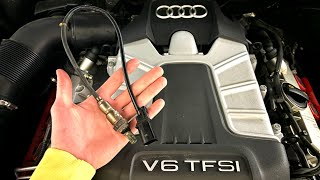
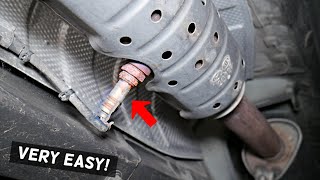
- Replacing the wrong oxygen sensor. This engine has four sensors. 🎬 See this walkthrough for replacing the upstream sensors on this platform. P0136 is specifically for Bank 1 (passenger side) and Sensor 2 (downstream/post-catalyst). Verify the location before replacing any parts. 🎬 Watch: This video shows the exact location of Bank 1 Sensor 2.
Most Likely Causes
- Failed Bank 1, Sensor 2 Oxygen Sensor 🔴 High Probability → Shop Oxygen Sensor Oxygen sensors are wear-and-tear items exposed to extreme heat and exhaust gases. Their internal components, including the heater element, degrade and fail over time, typically after 80,000-100,000 miles. This is the most common reason for P0136.
How to confirm: Use a scan tool to monitor live data for the B1S2 sensor. A healthy sensor shows a relatively stable voltage (typically 0.6V-0.8V) when the engine is warm and running at a steady RPM. A faulty sensor may have voltage that is stuck low (<0.2V), flatlined, or fluctuating erratically.
Typical fix: Replace the Bank 1, Sensor 2 oxygen sensor. This is located on the passenger side exhaust pipe, after the catalytic converter. An offset 22mm O2 sensor socket is required.
Est. part cost: $70-$250 - Damaged Wiring or Connector 🟡 Medium Probability The sensor and its wiring are located under the vehicle, exposed to road debris, water, salt, and heat from the exhaust. This can lead to frayed or melted wires, and corrosion in the connector pins, especially at the hard-to-see connector above the transmission.
How to confirm: Perform a thorough visual inspection of the wiring harness from the O2 sensor to where it connects to the main harness. Check for any signs of melting, chafing, or breaks. Unplug the connector and inspect the pins for corrosion or damage.
Typical fix: Repair the damaged section of wiring or replace the connector pigtail. Ensure the wiring is properly secured away from the exhaust pipe and driveshaft.
Est. part cost: $15-$50 - Exhaust Leak ⚪ Low Probability Flex pipes and gasket joints in the exhaust system can develop leaks from corrosion or vibration. A leak upstream of the sensor can introduce outside oxygen, causing the sensor to send incorrect (low voltage) readings to the ECM.
How to confirm: Listen for a ticking or hissing noise from the exhaust, especially when the engine is cold. Look for black soot marks around exhaust flanges and joints. A professional smoke test is the most reliable way to find small leaks.
Typical fix: Replace the leaking gasket or repair/replace the section of the exhaust pipe that is leaking.
Est. part cost: $20-$300
Rare But Worth Checking
- Failing High-Pressure Fuel Pump (HPFP): In some forum-documented cases, a failing HPFP caused an overly rich condition, leading to fuel contamination of the oil and triggering multiple O2 sensor codes, including P0136. This is an unlikely cause but worth considering if you also have codes for rich mixtures (P0172, P0175), hard starting, and can smell fuel in your engine oil.
Diagnosis Steps
- Read Codes: Use an OBD-II scanner to confirm P0136 and check for any other related codes.
- Visual Inspection: Safely raise the vehicle. Visually inspect the Bank 1, Sensor 2 oxygen sensor (passenger side, after the catalytic converter). Look for obvious damage to the sensor body, and trace its wiring harness, checking for any melting, chafing, or corrosion at the connector. The connector is on a bracket above the transmission; use a mirror and flashlight.
- Check for Exhaust Leaks: With the engine running, listen for any hissing or ticking sounds from the exhaust system, especially around flanges and the flex pipe. Look for black soot stains that indicate a leak.
- Analyze Live Data: With the engine fully warmed up, use a scan tool to view the live data stream for the 'O2S B1S2' voltage. At a steady 2,500 RPM, the voltage should be relatively stable, typically between 0.6V and 0.8V. If the voltage is stuck low (e.g., <0.2V), high (>0.9V), or not reading at all, the sensor has likely failed.
- Test the Circuit: If the sensor reading is suspect and the wiring looks good, you can disconnect the sensor and use a multimeter to test the heater circuit resistance (typically between 2-30 ohms). You can also test for power and ground at the vehicle-side of the connector to rule out a wiring or fuse issue.
- Replace the Sensor: If the visual inspection, live data, and circuit tests point to a faulty sensor, replace it. Use an offset 22mm O2 sensor socket and apply anti-seize compound to the new sensor's threads.
- Clear Codes and Test Drive: After replacement, clear the diagnostic trouble codes and perform a drive cycle to ensure the repair was successful and the Check Engine Light does not return.
Parts You'll Likely Need
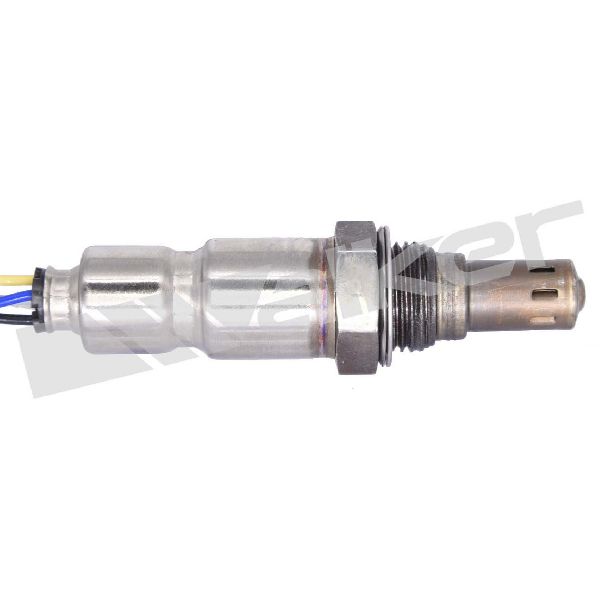
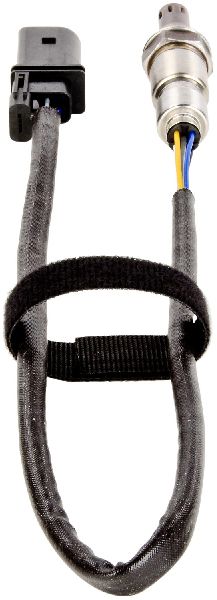
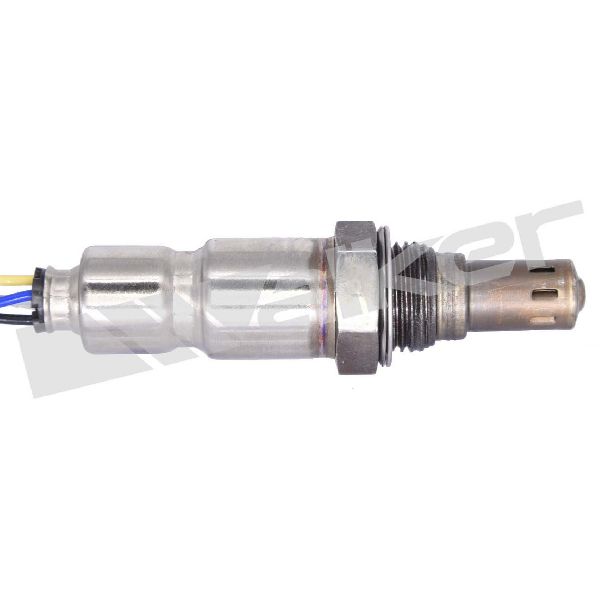
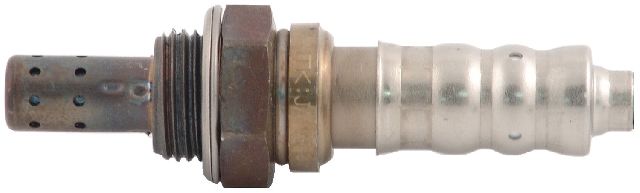
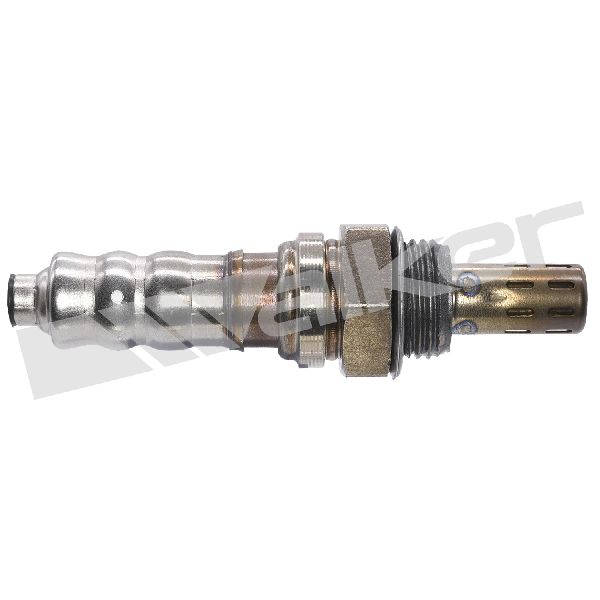
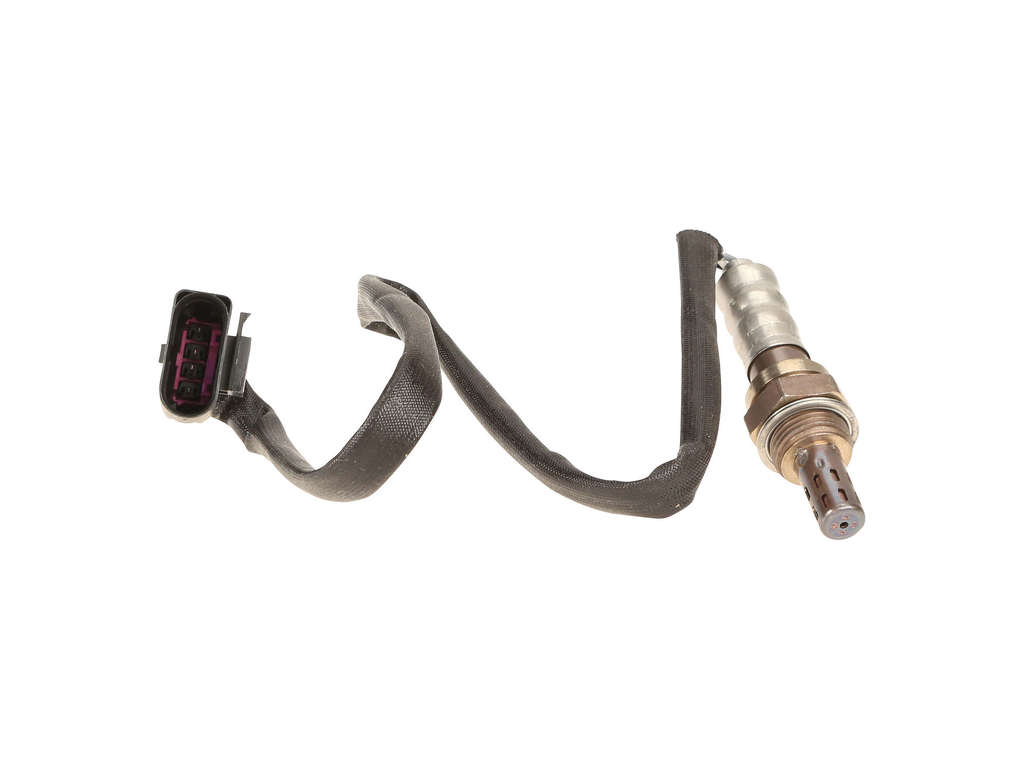
- Downstream Oxygen Sensor (Bank 1, Sensor 2)
(OEM #06E906265Q (may be superseded by 06E906265S))— This is the most common failure item for code P0136 on this vehicle. The sensor is a wear item that fails from constant exposure to high temperatures and exhaust gases.
Trusted brands: Bosch (OEM Supplier, Part #17099 or #18026), NGK/NTK (Part #24433 or #25197), Denso (Part #234-4120)
OEM price range: $180-$250
Aftermarket price range: $70-$150
Related Codes That Often Appear With This One
- P0141 — This code indicates a malfunction in the heater circuit for the very same sensor (Bank 1, Sensor 2). A failed internal heater is a common mode of failure for the entire sensor assembly, so these codes often appear together.
- P0140 — This code means 'No Activity Detected' from Bank 1, Sensor 2. If the sensor's circuit has failed (P0136) or its heater is broken (P0141), it may not send any signal at all, triggering P0140.
- P0137 — This code for 'Circuit Low Voltage' is very similar to P0136 and is often caused by the exact same issues: a failed sensor or an exhaust leak. They frequently appear together.
- P0420 — This code means 'Catalyst System Efficiency Below Threshold'. If the P0136 fault is ignored for a long time, the ECM cannot properly monitor the catalytic converter's health, which can mask a developing converter problem or even be triggered by the erratic sensor data.
Technical Service Bulletins (TSBs) & Recalls
- No Technical Service Bulletin (TSB) directly addresses the P0136 code for this specific model. However, TSBs related to carbon buildup (TSB 01 16 69) and timing chain issues exist, which are more significant platform problems.
Platform-Specific Known Issues
- Accessing the electrical connector for the Bank 1, Sensor 2 is a common complaint. It is located on a bracket on top of the transmission, tucked away behind heat shielding. Many DIYers report having to lower the transmission cross-member slightly to gain enough slack to disconnect it without breaking the retaining clip.
Mechanic-Grade Diagnostic Values
- Post-Catalyst (Downstream) O2 Sensor Voltage (B1S2) — expected: Relatively stable voltage between 0.6V and 0.8V when engine is warm and at a steady RPM.. Failure: Voltage is stuck low (<0.2V), stuck high (>0.9V), flatlined (e.g., 0.45V), or fluctuating rapidly like a pre-cat sensor.
- O2 Sensor Heater Element Resistance — expected: Between 2.5 and 15 Ohms when measured cold (~68°F/20°C) across the two heater pins on the sensor.. Failure: A reading of infinite resistance (Open Loop / 'OL') or zero Ohms (short circuit) indicates a failed heater element. Note: Some Audi documentation cites a much wider acceptable range of 810 - 4560 Ω, but this may be for a different sensor type or measurement condition. A reading below 30 Ohms is generally considered good for a typical zirconia sensor.
- P0136 Fault Setting Condition (Audi Specific) — expected: Normal sensor voltage fluctuation and response.. Failure: The code may be set when the delta voltage during a single step at heater switching is greater than 2.00V.
Scan Tool Commands That Help
- VCDS (VAG-COM): Basic Settings > Group 034 (Oxygen Sensor Test) — After replacing an O2 sensor, running this test can check the functionality of the new sensor and its heater. It forces the system to run through its diagnostic checks. This can also be used to reset learned values for the O2 sensors.
- VCDS (VAG-COM): Measuring Blocks > Groups 030-049 — To observe live data from the oxygen sensors. Group 032 shows long-term fuel trims, Group 033 shows short-term lambda regulation, and Groups 034-037 typically show voltages and heater status for the post-cat sensors. This is essential for diagnosing if the sensor is truly malfunctioning.
Wiring & Ground Locations
- Ground Connection (12) — In the engine compartment, on the left side, near the suspension strut.. This is a primary engine bay ground. A loose or corroded connection here can cause a variety of unpredictable electrical issues for engine sensors, including the O2 sensors.
- Ground Connection (685) — On the right front long member (frame rail), typically behind the wheel housing liner.. This is a key chassis ground point on the passenger side (Bank 1) of the vehicle. Since P0136 is for Bank 1, a fault at this specific ground point could directly impact the sensor's circuit.
- Ground Connection (609) — In the plenum chamber (under the windshield cowl), on the right side.. The Engine Control Module (ECM) is often located in or near the plenum chamber. A poor ground in this area can affect the ECM's ability to correctly read sensor inputs.
- T6ah - O2 Sensor Connector (B1S2) — This is a 6-pin black connector for the Bank 1 Sensor 2. Its physical location is on a bracket above the transmission, making it difficult to access without lowering the transmission cross-member.. This is the direct connection point for the sensor. Water intrusion, corrosion, or physical damage to this specific connector or its pins is a common cause of the P0136 code.
Real Owner Repair Stories
- Ross-Tech Forums User (2009 Audi Q5 3.2L (CALB), 120k miles) — Check engine light, rough running on startup, multiple misfire codes, and a fuel trim fault (P1137) with Bank 1 fuel trim at -20% to -29% at idle.
❌ Tried (didn't work) Initial diagnosis pointed towards a vacuum leak or bad O2 sensor, but exhaust gas analysis showed a perfect Lambda of 1.002, ruling out a bad sensor providing false readings.
✅ What actually fixed it The discussion concluded the most likely cause for the extreme negative fuel trim at idle (which can trigger O2 sensor codes) was one or more leaking fuel injectors on Bank 1. The recommended next step was to use a borescope to inspect injectors for leaks after shutdown.
OEM Part Supersession History
06E906265Q→06E906265S (in some catalogs, but Q is still widely referenced and sold)— Standard part revision and supplier changes over time.
Heads up: No known incompatibility. Both parts are for the downstream (Sensor 2) position. The Bosch aftermarket equivalent is often listed as 17099 or 18026, and the NTK equivalent is 25197.
Diagnostic Flowchart
Other Known Issues on This Vehicle
Issues unrelated to this code that are worth knowing about as an owner of this generation:
- Upper Timing Chain Tensioner Failure 🔴 High — Common issue, especially over 80,000 miles. Presents as a 2-3 second rattle on cold startup. Failure can be catastrophic, requiring engine removal for repair. (Ref: No specific recall, but multiple TSBs exist addressing timing chain stretch and noise for V6 FSI engines.)
- Intake Valve Carbon Buildup 🟠 Medium — Extremely common on all FSI engines. Causes rough idle, misfires (e.g., P0300-P0306), and performance loss, typically requiring manual cleaning (walnut blasting) every 60,000-80,000 miles. (Ref: TSB 01 16 69 / 2033001/8 addresses clogged secondary air ports due to carbon, a related symptom.)
- Water Pump & Thermostat Failure 🟠 Medium — The plastic components of the water pump and thermostat housing are prone to cracking and leaking coolant, often between 60,000-100,000 miles.
- Excessive Oil Consumption 🟠 Medium — Some 3.2L engines are known for oil consumption issues related to piston rings and the PCV system, which can clog over time.
Used vs. New Parts: Buying Guide for This Vehicle
When a used part is the smart pick: For this repair, a used part is only recommended for the wiring connector pigtail or the mounting bracket if they are damaged during removal. The sensor itself should always be purchased new.
Donor-vehicle mileage cap: roughly under 80000 miles for the part to have meaningful remaining life.
What to inspect on the donor part:
- For a connector pigtail, ensure the plastic is not brittle and the locking tab is intact.
- Check for any signs of corrosion on the metal pins inside the connector.
- Ensure at least 6 inches of wire is attached to the pigtail for easier splicing.
Aftermarket brands forum-validated for this vehicle:
- Bosch (often the original OEM supplier)
- NTK/NGK
- Denso
Brands owners have reported issues with on this vehicle:
- Unbranded, 'no-name' sensors from online marketplaces are frequently reported on forums as being dead-on-arrival or failing within a few months.
Real Owner Stories
Aggregated from forums and TSBs cited above. Mileages and costs reflect what owners reported in those sources.
2012 Audi Q5 3.2L V6
Symptoms: The engine will run and then trip up and won't hold idle; it experiences an intermittent hiccup.
What fixed it: The owner suspected a common ground issue because multiple sensors (P0172, P0175, P2237, P2240, P0136, P0156) showed circuit issues simultaneously.
Source hint: 2CarPros report for 2012 Audi Q5 3.2L 6 Cyl
2009 Audi Q5 3.2L V6 — ~90000 miles
Symptoms: Check Engine Light illuminated; sensor providing flatlined or stuck low voltage (<0.2V) in live data.
What fixed it: Replacement of the Bank 1, Sensor 2 oxygen sensor using an offset 22mm socket.
Source hint: Vehicle-specific issues and common causes for CALB engine platform
Related OBD-II Codes
Frequently Asked Questions
Where is the Bank 1, Sensor 2 oxygen sensor located on my 3.2L Q5?
Does TSB 01 16 69 address the P0136 code on my Audi?
Why is it so difficult to disconnect the O2 sensor on this specific CALB engine model?
Could my Q5's common timing chain rattle be related to this oxygen sensor code?
What specific tool do I need to replace the B1S2 sensor on my 2010 Audi Q5?
Can carbon buildup cause this code on my FSI engine?
Helpful Videos
We Have This Part in Stock

The information in this article is provided for general reference and educational purposes only. Vehicle specifications, procedures, and part compatibility can vary by production date, trim level, and region. Always consult your vehicle's factory service manual and verify part numbers before purchasing or performing repairs. Safety-critical components such as airbags, seat belts, and braking systems should be installed by a qualified professional.
- Audi Q5:
- 🧭 Diagnostic Flowchart
- 🎬 Helpful Videos
- 🛍️ Shop This Part
- What's Unique About the 2009-2012 Audi Q5
- Symptoms You May Notice
- Most Likely Causes
- Rare But Worth Checking
- Diagnosis Steps
- Parts You'll Likely Need
- Related Codes That Often Appear With This One
- Technical Service Bulletins (TSBs) & Recalls
- Platform-Specific Known Issues
- Mechanic-Grade Diagnostic Values
- Scan Tool Commands That Help
- Wiring & Ground Locations
- Real Owner Repair Stories
- OEM Part Supersession History
- Other Known Issues on This Vehicle
- Used vs. New Parts: Buying Guide for This Vehicle
- Real Owner Stories
- 2012 Audi Q5 3.2L V6
- 2009 Audi Q5 3.2L V6 — ~90000 miles
- Related OBD-II Codes
- Frequently Asked Questions
- 🎟️ Get 5% Off