

P0136 on 2010-2017 Chevrolet Equinox 2.4L: O2 Sensor Circuit Causes and Fixes
On a 2010-2017 Equinox 2.4L, P0136 almost always means the downstream oxygen sensor (Bank 1, Sensor 2) has failed. This is often a symptom of the engine's well-known excessive oil consumption issue, which fouls the sensor. Before replacing the sensor, check your oil level and inspect the 15A fuse labeled #41 in the under-hood fuse block. A new sensor costs around $40-$70 for aftermarket or $75-$120 for OEM.
- P0136 on this Equinox almost always points to the downstream (post-catalytic converter) oxygen sensor.
- Before replacing any parts, always check the 15A fuse (#41) in the under-hood fuse box first.
- This code is often a symptom of the 2.4L engine's known oil consumption problem, which fouls the sensor.
- If you replace the sensor and the code returns, you should investigate the engine's oil consumption.
- Do not confuse the downstream Sensor 2 with the upstream Sensor 1; they are different parts with different functions.
What's Unique About the 2010-2017 Chevrolet Equinox
For the 2.4L Ecotec engine in this generation of Equinox (and its platform-mate, the GMC Terrain), the P0136 code is extremely common and frequently linked to a larger, well-documented issue: excessive oil consumption. This problem, particularly prevalent in 2010-2013 models, is due to a faulty piston ring design that allows oil to enter the combustion chamber and then the exhaust system. This burnt oil contaminates and destroys the downstream oxygen sensor, causing it to fail prematurely. While replacing the sensor often clears the code, it may be a temporary fix if the underlying oil consumption problem is not addressed, leading to repeated sensor failures. Some owners have noted replacement sensors becoming heavily fouled in as little as 10,000 miles.
Symptoms You May Notice
- Check Engine Light illuminated
- Failure to pass an emissions test
- Slightly reduced fuel economy
- Rough idling or engine hesitation
- Visible blue or white smoke from the exhaust (if caused by severe oil consumption)
- Replacing the upstream (Bank 1, Sensor 1) oxygen sensor. This code is specific to the downstream sensor (Sensor 2).
- Replacing the catalytic converter immediately. While a P0420 code often accompanies P0136 on this vehicle due to the oil consumption issue, P0136 by itself is almost always the sensor or its circuit, not the converter itself.
Most Likely Causes
- Failed Downstream Oxygen Sensor (Bank 1, Sensor 2) 🔴 High Probability → Shop Oxygen Sensor The 2.4L Ecotec engine is known for excessive oil consumption due to piston ring issues, which fouls the oxygen sensor with soot and carbon deposits, leading to premature failure. A user on a forum noted their sensor was 'super black' upon removal.
How to confirm: After confirming fuse #41 is good, test the sensor's voltage output with a scan tool's live data. A healthy downstream sensor on a warm, running engine should show a relatively stable voltage, typically between 0.5V and 0.8V. A faulty sensor may be stuck low (near 0.0V - 0.1V), stuck high (near 0.9V - 1.0V), or show no activity at all.
Typical fix: Replace the downstream (post-catalytic converter) oxygen sensor. An O2 sensor socket is highly recommended for easier removal.
Est. part cost: $40-$120 - Blown Fuse 🟡 Medium Probability The wiring for the O2 sensor can sometimes break its retaining clips and make contact with the hot exhaust pipe, causing a short circuit that blows the fuse.
How to confirm: Inspect fuse #41 (a 15A blue fuse) in the under-hood fuse block. This fuse powers the oxygen sensor's heater circuit, and if it's blown, the sensor cannot operate correctly, often triggering P0136 or a related heater code like P0141.
Typical fix: Replace the 15A fuse if it is blown. If it blows again, this indicates a short in the wiring harness that needs to be found and repaired.
Est. part cost: $1-$5 - Damaged Wiring or Connector ⚪ Low Probability Oil leaks from other engine areas (like VVT solenoids) can wick down the wiring harness and contaminate the O2 sensor connector, causing resistance issues. The harness is also susceptible to melting if it touches the exhaust.
How to confirm: Visually inspect the wiring harness and connector for the downstream O2 sensor. Look for any signs of melting, corrosion, chafing, or loose pins. Specifically check for oil inside the connector itself.
Typical fix: Repair the damaged section of the wiring harness or replace the connector pigtail. The common pigtail connector is ACDelco part number PT2054.
Est. part cost: $15-$50 - Exhaust Leak ⚪ Low Probability The exhaust manifold on the 2.4L Ecotec is known to develop cracks. An exhaust leak upstream of the sensor can allow unmetered oxygen into the exhaust stream, causing the sensor to send inaccurate (typically lean) readings to the ECM.
How to confirm: Visually inspect the exhaust system for cracks or holes, particularly on the exhaust manifold. Listen for a ticking or hissing sound from the exhaust, especially when the engine is cold.
Typical fix: Repair the leak. This may involve replacing a cracked exhaust manifold or a leaking gasket.
Est. part cost: $10-$500+
Rare But Worth Checking
- Failed Catalytic Converter: → Shop Catalytic Converter While less common to directly cause P0136, a failing converter (often due to the same oil consumption issue) can create exhaust conditions that lead to erratic readings from the downstream O2 sensor. This is more likely to be accompanied by a P0420 code.
- Faulty Engine Control Module (ECM): This is extremely rare. The ECM should only be considered as the cause after all other possibilities, including the sensor, wiring, fuse, and exhaust system, have been thoroughly ruled out.
- Failing High-Pressure Fuel Pump (HPFP): A failing HPFP can cause an excessively rich condition. In some documented cases, this has caused the downstream O2 sensor voltage to read very high (800-950mV), which could potentially trigger a P0136 or P0138 code. This is often accompanied by other fuel-related codes.
Diagnosis Steps
- Read Codes: Use an OBD-II scanner to confirm P0136 is present and check for any other related codes (e.g., P0141, P0420).
- Check Engine Oil Level: Before any other step, check the dipstick. A low oil level is a strong indicator that oil consumption is the root cause of the sensor failure.
- Check the Fuse: Inspect fuse #41 (15A) in the under-hood fuse box. Replace if blown. If it blows again, investigate the wiring for a short.
- Inspect Wiring: Perform a thorough visual inspection of the downstream O2 sensor's wiring and connector. Look for any damage, melting from exhaust contact, oil contamination, or corrosion.
- Check for Exhaust Leaks: With the engine running, carefully inspect and listen for any leaks in the exhaust system upstream of the sensor, paying close attention to the exhaust manifold.
- Test the Sensor: Using a scan tool with live data, observe the voltage for O2 Sensor Bank 1 Sensor 2. A healthy downstream sensor should show a relatively steady voltage (typically between 0.5V and 0.8V) on a warm engine. If the voltage is stuck low (near 0.1V), stuck high (near 0.9V), or not showing any reading, the sensor is faulty.
- Replace the Sensor: If the fuse, wiring, and exhaust are all good, and the sensor's readings are abnormal, replace the downstream oxygen sensor.
- Clear Codes and Test Drive: After replacement, clear the OBD-II codes and perform a complete drive cycle to ensure the code does not return.
Parts You'll Likely Need
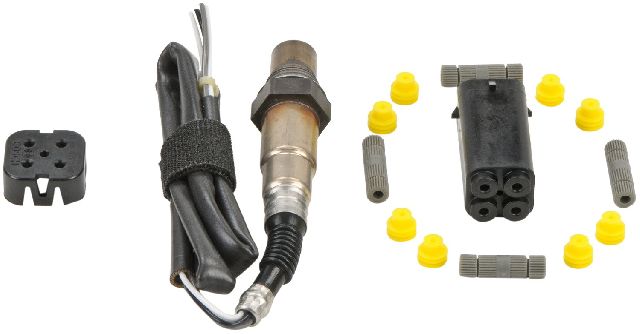
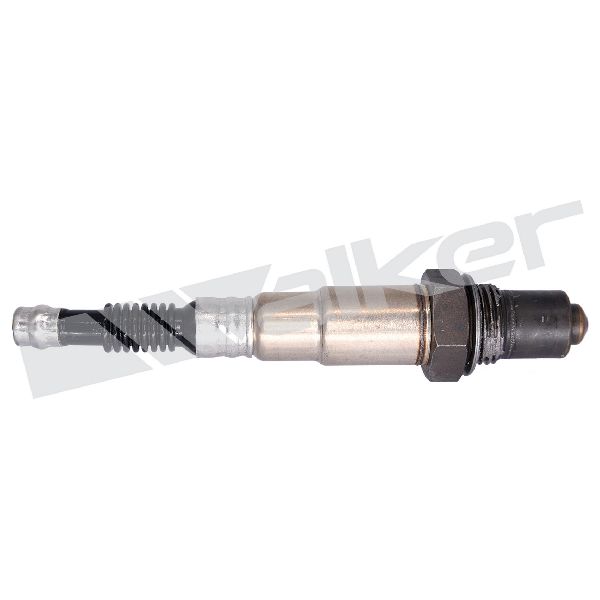
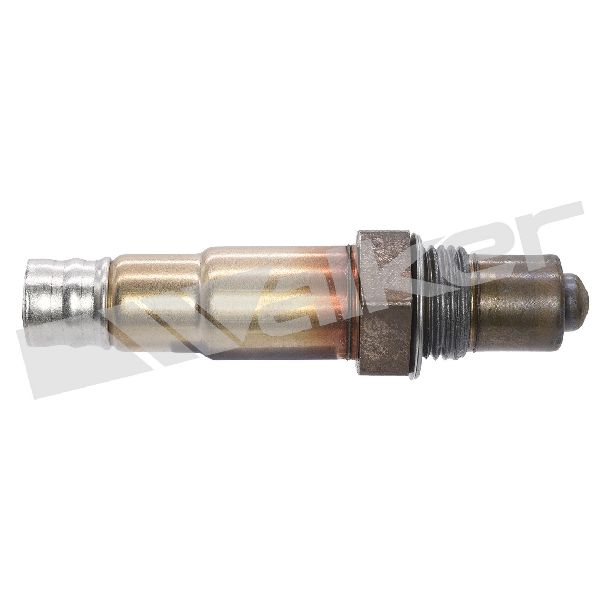
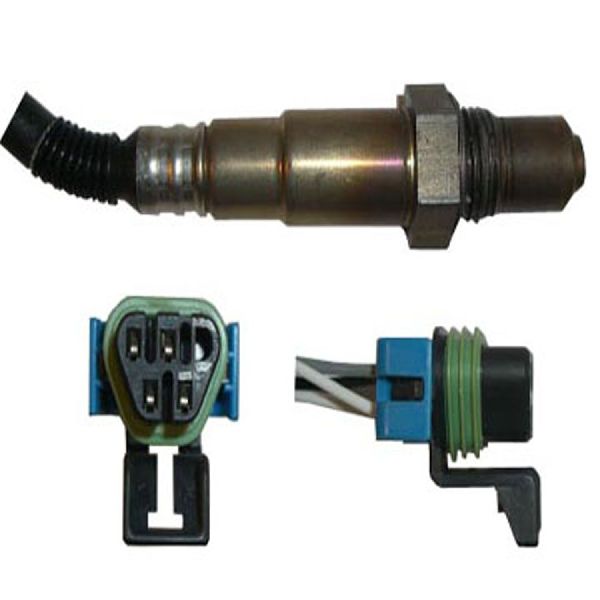
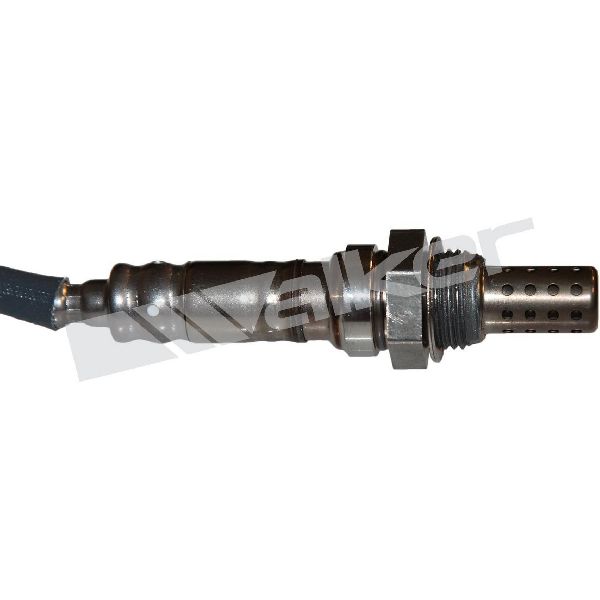
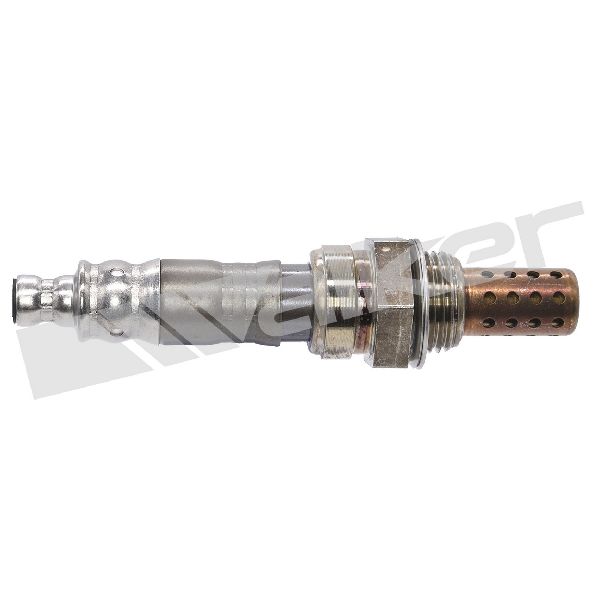
- Downstream Oxygen Sensor (Bank 1, Sensor 2)
(OEM #12609457 (ACDelco Service P/N: 213-4229))— This is the most common failure item for code P0136 on this vehicle, often due to contamination from oil consumption. The original GM production number is 12609457, which is serviced under the ACDelco part number 213-4229.
Trusted brands: ACDelco (OEM), Denso, Bosch, NGK/NTK
OEM price range: $75-$120
Aftermarket price range: $40-$70
Related Codes That Often Appear With This One
- P0420 - Catalyst System Efficiency Below Threshold — The same root cause on this engine—excessive oil consumption—damages both the oxygen sensors and the catalytic converter. It is very common for these codes to appear together.
- P0137 - O2 Sensor Circuit Low Voltage (Bank 1 Sensor 2) — This is a more specific version of P0136, indicating the sensor's signal voltage is stuck low. They share the exact same causes and diagnostic path.
- P0141 - O2 Sensor Heater Circuit (Bank 1 Sensor 2) — This code points to a failure in the heater element of the same downstream O2 sensor. A failed heater is a common failure mode and will often set P0136 as well, as the sensor cannot reach operating temperature correctly.
- P0138 - O2 Sensor Circuit High Voltage (Bank 1 Sensor 2) — This is the opposite of P0137 and indicates the sensor's voltage is stuck high. It shares the same root causes as P0136.
Technical Service Bulletins (TSBs) & Recalls
- Voluntary Emission Recall N192268180: Issued for some 2012-2013 models to replace the post-cata
Platform-Specific Known Issues
- The 2.4L Ecotec engine in the 2010-2017 Equinox has a well-documented history of excessive oil consumption, especially in 2010-2013 models. This issue can lead to fouled spark plugs, damaged oxygen sensors, and eventual catalytic converter failure. A recurring P0136 code is a strong symptom of this underlying problem. GM issued several TSBs and a Special Coverage program to address the piston ring issue that causes the oil consumption.
Mechanic-Grade Diagnostic Values
- Downstream O2 Sensor (B1S2) Live Data Voltage — expected: Relatively stable voltage between 0.6V and 0.8V on a fully warmed-up engine at a steady RPM.. Failure: Voltage is stuck low (<0.2V), stuck high (>0.9V), or fluctuates rapidly similar to the upstream sensor.
- Downstream O2 Sensor (B1S2) Heater Element Resistance — expected: Between 3 and 15 Ohms when measured across the heater circuit pins on the disconnected sensor.. Failure: An open circuit (OL on a multimeter) or a direct short (near 0 Ohms) indicates a failed heater element.
- ECM Bias Voltage (Key On, Engine Off) — expected: Approximately 450 mV (0.45V) on the sensor's signal wire at the connector.. Failure: Voltage significantly lower or absent points to a wiring or ECM issue, not necessarily a bad sensor.
Wiring & Ground Locations
- Fuse F41 — In the under-hood fuse block, on the driver's side of the engine compartment.. This 15A fuse provides power to the heater circuit for the downstream (Bank 1, Sensor 2) oxygen sensor. If this fuse is blown, the heater will not work, causing the sensor to operate incorrectly and potentially triggering P0136 or P0141.
- ECM Connector X1, Pin 37 — At the Engine Control Module (ECM).. This is the pin for the B1S2 signal wire, which is typically a Purple wire. Testing for voltage here can confirm if the signal is reaching the ECM, helping to isolate a wiring break from a sensor failure.
- ECM Connector X1, Pin 38 — At the Engine Control Module (ECM).. This is the pin for the B1S2 Low Reference signal, typically a Tan wire. A fault in this reference circuit can cause incorrect voltage readings.
- Grounds G107 / G108 — Bolted to the engine block or cylinder head.. These are main engine ground points. A loose or corroded connection at these grounds can cause erratic sensor signals and floating voltages for various engine sensors, including the O2 sensors.
Real Owner Repair Stories
- ScannerDanner Forum, as cited by Go-Parts (2012 Chevy Equinox 2.4L) — Running very rich (long-term fuel trim at -25%), stalling at stops, high downstream O2 sensor voltage (800-950mV).
❌ Tried (didn't work) Customer replaced the high-pressure fuel pump (HPFP) with an aftermarket part., Customer replaced the fuel rail pressure sensor., Technician replaced a cracked exhaust manifold.
✅ What actually fixed it The technician suspected the aftermarket HPFP was faulty. Replacing the aftermarket HPFP with a genuine OEM unit resolved the rich condition and brought the O2 sensor readings back to normal.
OEM Part Supersession History
12609457→ACDelco 213-4229— Standard service part number update.
Heads up: The ACDelco 213-4229 is the official GM Genuine Parts service replacement for the original part number. Note that this part number may also fit other GM V8 applications, but it is the correct downstream sensor for the 2.4L Equinox.
Model Year Variations Within This Range
- 2010-2013: These earlier model years are significantly more prone to the excessive oil consumption issue due to piston ring design, making P0136 and repeated sensor failures much more common.
- 2012-2017: The 2.4L engine gained FlexFuel (E85) compatibility starting in the 2012 model year. This does not directly affect the P0136 code but is a change within the production run.
- 2016: A mid-cycle refresh occurred for the 2016 model year, including updated styling and interior features like a standard 7-inch touchscreen. However, the 2.4L Ecotec powertrain and its associated issues, including the causes of P0136, remained unchanged.
Diagnostic Flowchart
Other Known Issues on This Vehicle
Issues unrelated to this code that are worth knowing about as an owner of this generation:
- Excessive Oil Consumption 🔴 High — Very common, especially on 2010-2013 models. Can start as early as 50,000-60,000 miles. Caused by defective piston ring design. (Ref: TSB 13-06-01-003H, Special Coverage programs (e.g., N192291100) issued to replace pistons/rings.)
- Timing Chain Stretch/Failure 🔴 High — Common, often occurs between 80,000-120,000 miles. Exacerbated by low oil levels from oil consumption. Listen for rattling on cold starts.
- High-Pressure Fuel Pump (HPFP) Failure 🟠 Medium — Common on 2010-2011 models. The pump shaft seal can fail, leaking fuel into the engine oil, causing rough running and oil dilution. (Ref: Voluntary Emission Recall 43180 for 2010-2011 models.)
- Cracked Exhaust Manifold 🟠 Medium — A known failure point on the 2.4L engine. Can cause exhaust leaks, leading to noise and various O2 sensor codes.
- Frozen/Clogged PCV Orifice 🟠 Medium — In cold climates, moisture in the PCV system can freeze, causing crankcase over-pressurization and blowing out the rear main seal. (Ref: TSB 14882)
Used vs. New Parts: Buying Guide for This Vehicle
When a used part is the smart pick: For this specific repair, using a used oxygen sensor is never recommended. They are wear items and highly susceptible to contamination. A used part has an unknown history and is likely to fail quickly, if it works at all.
What to inspect on the donor part:
- Not applicable for this part.
OEM-only on this vehicle (don't cheap out):
- High-Pressure Fuel Pump (HPFP) - As demonstrated in a real repair story, aftermarket HPFPs on this platform can fail to perform to OEM specifications, causing rich conditions that can mimic or induce other sensor codes.
Aftermarket brands forum-validated for this vehicle:
- ACDelco (OEM/Genuine GM)
- NTK/NGK
- Denso
Brands owners have reported issues with on this vehicle:
- Unbranded or 'white-box' sensors
- Universal sensors that require splicing (these can introduce resistance and are a common source of failure)
Real Owner Stories
Aggregated from forums and TSBs cited above. Mileages and costs reflect what owners reported in those sources.
2012 Chevrolet Equinox 2.4L
Symptoms: The vehicle was running rich and the downstream O2 sensor showed high voltage readings between 800-950mV.
What fixed it: Replacement of the failing high-pressure fuel pump (HPFP).
Source hint: ScannerDanner Forum - '2012 Chevy Equinox 2.4L'
2012 Chevrolet Equinox 2.4L
Symptoms: The owner noted an oil leak near the rear main seal and discussed systemic oil-related issues and PCV system problems.
What fixed it: Addressing the PCV system and broader engine issues linked to oil consumption that cause sensor fouling.
Source hint: chevroletforum.com - '2012 chevy equinox oil leak looks to be near rear main seal'
2017 Chevrolet Equinox 2.4L
Symptoms: No check engine light was on, but the car would tremble when shifted into Drive or Reverse. It lost power and made a buzzing sound when climbing hills, with RPMs stuck at 1500.
What fixed it: The provided context does not list the final repair for this specific report, though it notes the symptoms occurred on a 2017 model.
Source hint: owner_reports - Automotriz Maver
Related OBD-II Codes
Frequently Asked Questions
Is there a recall for the oxygen sensor on my 2012-2013 Equinox?
Could my P0136 code be related to the 2.4L Ecotec's oil consumption issues?
Which fuse should I check for the downstream O2 sensor on my Equinox?
My Equinox has a ticking sound and a P0136 code; could they be related?
What is the specific replacement part number for a damaged O2 sensor connector?
Can a failing high-pressure fuel pump cause issues with the downstream O2 sensor?
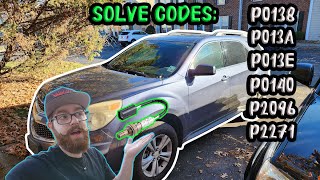
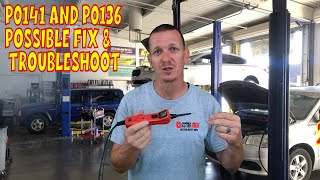
Helpful Videos
We Have This Part in Stock

The information in this article is provided for general reference and educational purposes only. Vehicle specifications, procedures, and part compatibility can vary by production date, trim level, and region. Always consult your vehicle's factory service manual and verify part numbers before purchasing or performing repairs. Safety-critical components such as airbags, seat belts, and braking systems should be installed by a qualified professional.
- Chevrolet Equinox:
- 🧭 Diagnostic Flowchart
- 🎬 Helpful Videos
- 🛍️ Shop This Part
- What's Unique About the 2010-2017 Chevrolet Equinox
- Symptoms You May Notice
- Most Likely Causes
- Rare But Worth Checking
- Diagnosis Steps
- Parts You'll Likely Need
- Related Codes That Often Appear With This One
- Technical Service Bulletins (TSBs) & Recalls
- Platform-Specific Known Issues
- Mechanic-Grade Diagnostic Values
- Wiring & Ground Locations
- Real Owner Repair Stories
- OEM Part Supersession History
- Model Year Variations Within This Range
- Other Known Issues on This Vehicle
- Used vs. New Parts: Buying Guide for This Vehicle
- Real Owner Stories
- 2012 Chevrolet Equinox 2.4L
- 2012 Chevrolet Equinox 2.4L
- 2017 Chevrolet Equinox 2.4L
- Related OBD-II Codes
- Frequently Asked Questions
- 🎟️ Get 5% Off