

P0136 on 2014-2020 Chevrolet Impala 2.5L: O2 Sensor Circuit Causes and Fixes
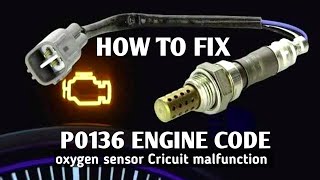
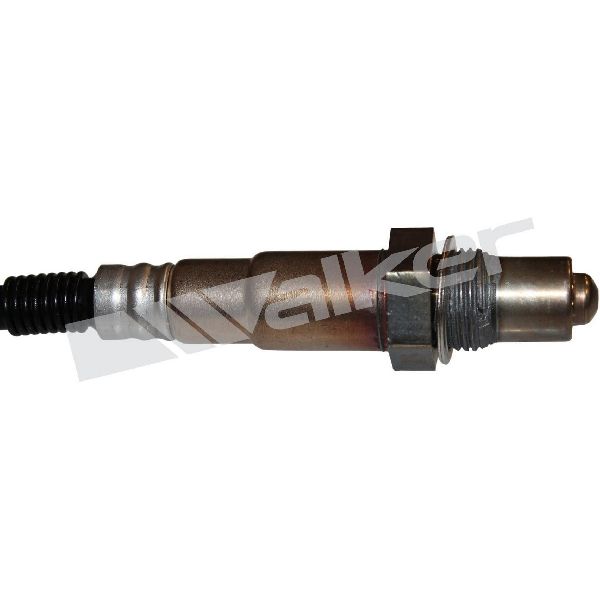
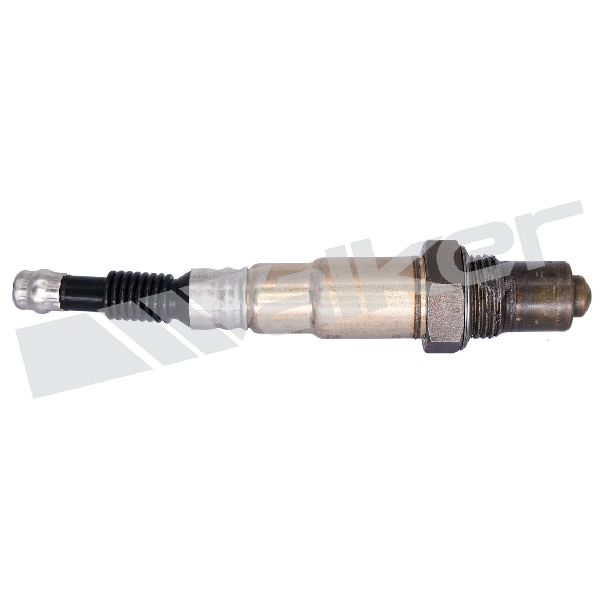
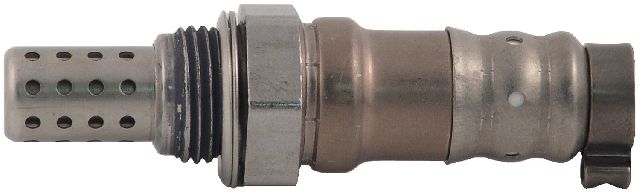
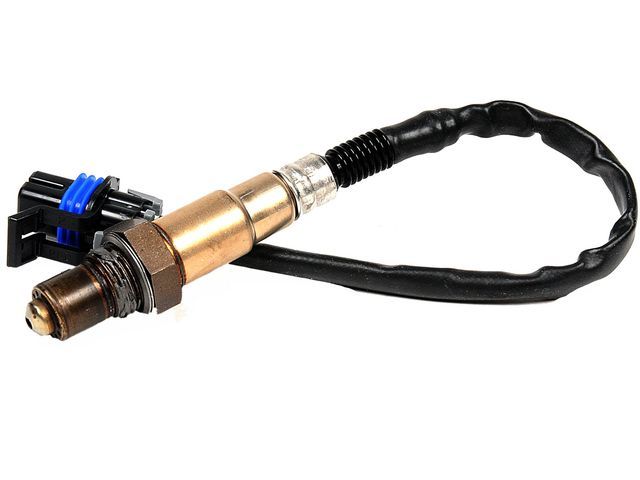
On a 2014-2020 Impala with the 2.5L engine, code P0136 is almost always caused by a failed downstream oxygen sensor (Bank 1, Sensor 2). The OEM ACDelco part number is 12663317. Expect to pay between $40-$80 for an aftermarket sensor and $75-$125 for the OEM part. Replacement is a straightforward DIY job for most, requiring an O2 sensor socket.
- P0136 on your 2014-2020 Impala 2.5L points to a problem with the downstream oxygen sensor circuit.
- The most probable cause is a failed oxygen sensor (ACDelco P/N 12663317), which is a common wear item.
- Before replacing the sensor, visually inspect the wiring and connector for any obvious damage like melting or corrosion.
- A scan tool that can read live data is essential for confirming the sensor is not producing a stable voltage between 0.6V and 0.8V.
- This is a very DIY-friendly repair; the sensor is accessible under the car and requires a special O2 sensor socket.
- Ignoring the code will cause an emissions test failure and can, over a long period, lead to expensive catalytic converter damage.
What's Unique About the 2014-2020 Chevrolet Impala
For the tenth-generation Impala with the 2.5L Ecotec engine, the P0136 code is a very common and straightforward issue. There are no widespread, unique platform-specific problems like faulty wiring harnesses or ECM software glitches that are known to cause this code. The issue is almost always the downstream O2 sensor itself failing from age and exposure to exhaust gases. Unlike some other GM codes on this platform (e.g., P0171 or P2097), P0136 does not typically point to complex underlying issues like vacuum leaks or fuel injector problems.
Symptoms You May Notice
- Check Engine Light is on
- Vehicle will fail an emissions test
- Slightly reduced fuel economy
- In some rare cases, a rough or unstable idle
- Replacing the upstream oxygen sensor (Sensor 1). This code is specific to the downstream sensor (Sensor 2).
- Replacing the catalytic converter. A P0136 code points to a sensor circuit issue, not necessarily a bad converter. A failing converter would typically set a P0420 code.
Most Likely Causes
- Failed Downstream Oxygen Sensor (Bank 1, Sensor 2) 🔴 High Probability → Shop Oxygen Sensor The sensor is a normal wear-and-tear item exposed to high heat and corrosive exhaust gases, causing it to fail over time, typically after 80,000 miles. Contamination from engine oil or coolant burn-off can also accelerate failure.
How to confirm: Use a scan tool to monitor the live data for the B1S2 O2 sensor. A healthy sensor should show a relatively stable, slow-fluctuating voltage (typically 0.6V-0.8V) on a fully warmed engine at a steady RPM. If the voltage is stuck low (near 0V), stuck high (near 1V), or not showing any activity, the sensor has likely failed.
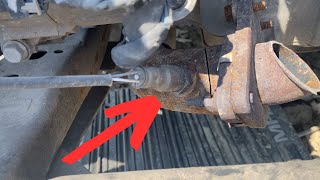
Typical fix: Replace the downstream oxygen sensor. The sensor is located underneath the vehicle, screwed into the exhaust pipe after the catalytic converter. 🎬 Watch: 2014-2020 Impala 2.5L O2 sensor location and replacement A 7/8-inch or 22mm oxygen sensor socket is required for removal and installation.
Est. part cost: $40-$125 - Damaged Wiring or Connector 🟡 Medium Probability The sensor's wiring is located under the car and is exposed to road debris, moisture, and heat, which can cause corrosion, breaks, or melting over time. The harness can also be damaged during other under-car repairs.
How to confirm: Visually inspect the entire length of the wiring harness from the O2 sensor to its connection point. Look for any frayed, melted, or broken wires. Check the connector for corrosion, bent pins, or a loose connection. Use a multimeter to check for continuity and for proper voltage/ground at the connector.
Typical fix: Repair the damaged section of wiring or clean/replace the connector.
Est. part cost: $5-$50 - Exhaust Leak ⚪ Low Probability While not specific to this platform for this code, exhaust leaks upstream of the sensor can introduce outside air, causing the sensor to send inaccurate readings to the ECM.
How to confirm: Listen for hissing or ticking sounds from the exhaust system, especially when the engine is cold. Visually inspect the exhaust manifold, pipes, and gaskets for black soot marks, which indicate a leak. A smoke test can also be performed to pinpoint the leak's location.
Typical fix: Replace the leaking gasket or repair the cracked exhaust component.
Est. part cost: $20-$200
Rare But Worth Checking
- Faulty Powertrain Control Module (PCM): This is extremely rare. All other possibilities, especially the sensor and its wiring, should be exhaustively ruled out before considering the PCM as the cause. A PCM failure would likely present with multiple other codes and drivability issues.
- Blown Fuse for Heater Circuit: The oxygen sensor has an internal heater to bring it to operating temperature quickly. This heater is on a fused circuit. If the fuse blows, the sensor may not operate correctly, which can trigger a P0136, although it more commonly triggers a specific heater circuit code like P0036.
Diagnosis Steps
- Connect an OBD-II scanner to confirm the P0136 code and check for any other related codes.
- Perform a visual inspection of the downstream O2 sensor (Bank 1, Sensor 2), its wiring harness, and connector. The sensor is located underneath the vehicle, after the catalytic converter. Look for any signs of physical damage, melting, corrosion, or loose connections.
- Use a scan tool with live data capability to observe the voltage from the Bank 1 Sensor 2. With the engine fully warmed up and running at a steady 2500 RPM, the voltage should be relatively stable, typically between 0.6V and 0.8V. If it's stuck near 0V, near 1V, or fluctuating rapidly like the upstream sensor, this points to a problem with the sensor or its circuit.
- Check for exhaust leaks between the engine and the downstream sensor. Listen for unusual noises and look for soot trails around gaskets and welds.
- If wiring is suspected, use a digital multimeter to test for proper voltage and ground at the sensor connector with the key on, engine off. Check for continuity between the ECM and the sensor connector to rule out a wire break.
- If the sensor is the primary suspect, replacement is the next step. A 7/8-inch or 22mm oxygen sensor socket will be necessary.
- If the wiring, sensor, and exhaust system are all confirmed to be good, the final and least likely possibility is a fault within the Powertrain Control Module (PCM).
Parts You'll Likely Need
- Downstream Oxygen Sensor (Bank 1, Sensor 2)
(OEM #12663317)— This is the most common cause of a P0136 code on this vehicle due to normal wear and tear.
Trusted brands: ACDelco (OEM), Denso, Bosch, NGK/NTK
OEM price range: $75-$125
Aftermarket price range: $40-$80
Related Codes That Often Appear With This One
- P0137 — This is a more specific code indicating the O2 sensor circuit voltage is stuck low, which is one of the failure modes that can trigger the general P0136 code.
- P0138 — This indicates the O2 sensor circuit voltage is stuck high, another specific failure that can cause a P0136.
- P0140 — This code means the sensor circuit has no activity, which is often due to a completely failed sensor or a broken wire, both of which can also trigger P0136.
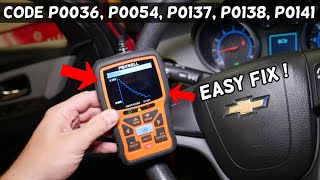
- P0036 — This code relates to the heater circuit within the same oxygen sensor. A failure in the heater can prevent the sensor from reaching operating temperature, leading to a circuit malfunction code like P0136. 🎬 Watch: How to fix GM O2 sensor heater circuit codes
Platform-Specific Known Issues
- On platforms like ImpalaForums.com, owners of the 10th generation Impala with the 2.5L engine confirm that P0136 is almost universally solved by replacing the downstream (post-cat) O2 sensor. The failure is a common wear item and not indicative of a larger platform defect.
Mechanic-Grade Diagnostic Values
- Downstream O2 Sensor (B1S2) Voltage at Idle (Warm Engine) — expected: Relatively stable voltage between 0.6V and 0.8V.. Failure: Voltage is stuck low (near 0V), stuck high (near 1V), or fluctuating rapidly like an upstream sensor.
- O2 Sensor Heater Element Resistance — expected: 5 - 25 Ohms between the two heater circuit pins on the sensor connector.. Failure: A reading of OL (infinite resistance) or near 0 Ohms indicates a failed heater element.
Scan Tool Commands That Help
- GM GDS2 (Global Diagnostic System 2): Module Diagnostics -> Engine Control Module -> Data Display — This is the dealer-level tool used to view all engine data parameters, including graphing the HO2S Bank 1 Sensor 2 voltage to check for proper activity, and to run bidirectional controls to test circuit integrity.
- GM GDS2 (Global Diagnostic System 2): Clear DTCs — After the repair is complete, this function is used to clear the P0136 code from the ECM's memory. A test drive is required to confirm the code does not return.
Wiring & Ground Locations
- G112 — Typically located on a transaxle stud on the left side of the engine.. This is a critical engine and transmission ground. A loose or corroded G112 can cause erratic voltage readings and noise on sensor circuits, including the O2 sensor, potentially leading to a false P0136 code.
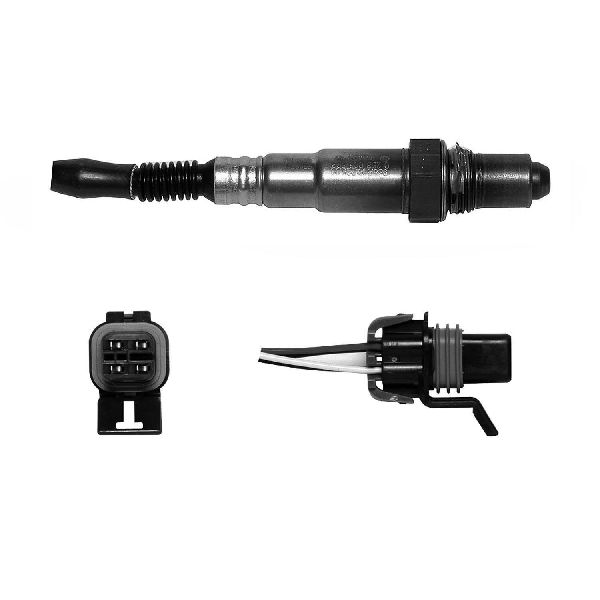
- HO2S B1S2 Connector (B52D) — On the wiring harness pigtail that connects directly to the downstream oxygen sensor under the vehicle.. This 4-pin connector is the primary point of failure for wiring issues. The pins are for the heater circuit power, heater ground, signal, and signal ground. Checking for voltage, ground, and continuity at this connector is a key diagnostic step. The ACDelco pigtail part number for this connector is PT919.
Real Owner Repair Stories
- AliExpress Review / Mechanic in Detroit (2014 Chevrolet Malibu 2.5L with 142,000 miles (shared platform/engine)) — Check Engine Light, rough running, fuel economy dropped from 28 to 22 mpg, fuel smell on cold starts.
❌ Tried (didn't work) A previous catalytic converter replacement only fixed the issue for 12,000 miles.
✅ What actually fixed it Replacing the downstream oxygen sensor with a new OEM-equivalent wideband sensor (part # 1928404687). The Check Engine Light turned off within 20 miles, fuel economy improved to 27.8 mpg, and live data showed correct sensor response time and air-fuel ratio.
OEM Part Supersession History
12663317→12701634— Standard part number update by GM.
Heads up: The new part number 12701634 is a direct replacement for 12663317 and is fully compatible.
Diagnostic Flowchart
Other Known Issues on This Vehicle
Issues unrelated to this code that are worth knowing about as an owner of this generation:
- Excessive Oil Consumption 🟠 Medium — Reported by some owners, particularly in earlier models. Can be related to PCV system issues or piston rings.
- Start-Stop System Failure / Transmission Accumulator Issues 🔴 High — A recall (N202313440) was issued for missing bolts on the start-stop transmission accumulator, which could lead to a transmission fluid leak, loss of propulsion, and fire risk. While the Impala was not explicitly in this recall, the shared technology and similar owner complaints of start-stop failure are notable. (Ref: N202313440 (related models))
- Loose Intake Manifold Bolts 🟡 Low — A known issue on the 2.5L LCV engine where intake manifold bolts can loosen over time, causing vacuum leaks and setting lean codes (like P0171), but can also affect overall engine stability. (Ref: TSB PIP5529)
- Torque Converter Shudder 🟠 Medium — Some owners experience a shake or shudder during light acceleration, often related to the torque converter or transmission fluid. (Ref: TSB 16-NA-175)
- Harsh Shifting on Low-Mileage Vehicles 🟡 Low — Primarily affects new or low-mileage vehicles where the transmission's adaptive learning process is not yet complete, causing harsh shifts or flares. (Ref: TSB 16-NA-019)
Used vs. New Parts: Buying Guide for This Vehicle
When a used part is the smart pick: For this repair, a used part is almost never a smart choice. The oxygen sensor is a wear-and-tear item with a finite lifespan. A used sensor from a junkyard has unknown remaining life and could fail shortly after installation, wasting time and money.
Donor-vehicle mileage cap: roughly under 20000 miles for the part to have meaningful remaining life.
What to inspect on the donor part:
- If forced to use a used part, source it from a very low-mileage wreck (under 20,000 miles).
- Inspect the sensor tip for heavy white, black, or green deposits, which indicate contamination or a problem with the donor engine.
- Ensure the wiring pigtail and connector are completely intact with no cuts, melting, or corrosion.
Aftermarket brands forum-validated for this vehicle:
- ACDelco (OEM)
- Denso
- NGK/NTK
- Bosch
Brands owners have reported issues with on this vehicle:
- No-name, unbranded sensors from online marketplaces should be avoided. While cheap, they are known for high failure rates, incorrect voltage readings, and short service life, often causing the code to return quickly.
Real Owner Stories
Aggregated from forums and TSBs cited above. Mileages and costs reflect what owners reported in those sources.
2015 Chevrolet Impala LT 2.5L
Symptoms: Check engine light on with code P0136.
What fixed it: Replacing the downstream (post-cat) O2 sensor.
Source hint: ImpalaForums.com thread titled 'P0136 Code 2015 Impala LT 2.5'
Related OBD-II Codes
Frequently Asked Questions
Is there a specific TSB for the P0136 code on my 2014-2020 Impala 2.5L?
What is the most common fix for a P0136 on the 10th generation Impala?
Which replacement oxygen sensor brand should I use for my 2.5L Ecotec?
Could my Impala's start-stop system issues be related to this code?
At what mileage does the downstream O2 sensor typically fail on this vehicle?
Can I use a used O2 sensor from a salvage yard to fix P0136?
Helpful Videos
We Have This Part in Stock


The information in this article is provided for general reference and educational purposes only. Vehicle specifications, procedures, and part compatibility can vary by production date, trim level, and region. Always consult your vehicle's factory service manual and verify part numbers before purchasing or performing repairs. Safety-critical components such as airbags, seat belts, and braking systems should be installed by a qualified professional.
- Chevrolet Impala:
- 🧭 Diagnostic Flowchart
- 🎬 Helpful Videos
- 🛍️ Shop This Part
- What's Unique About the 2014-2020 Chevrolet Impala
- Symptoms You May Notice
- Most Likely Causes
- Rare But Worth Checking
- Diagnosis Steps
- Parts You'll Likely Need
- Related Codes That Often Appear With This One
- Platform-Specific Known Issues
- Mechanic-Grade Diagnostic Values
- Scan Tool Commands That Help
- Wiring & Ground Locations
- Real Owner Repair Stories
- OEM Part Supersession History
- Other Known Issues on This Vehicle
- Used vs. New Parts: Buying Guide for This Vehicle
- Real Owner Stories
- 2015 Chevrolet Impala LT 2.5L
- Related OBD-II Codes
- Frequently Asked Questions
- 🎟️ Get 5% Off