

P0136 on 2015-2017 Chrysler 200 2.4L: O2 Sensor Circuit Causes and Fixes
On a 2015-2017 Chrysler 200 with the 2.4L engine, code P0136 is almost always caused by a failed downstream oxygen sensor (Bank 1, Sensor 2). Replacing the sensor is the most common fix. Before replacement, inspect the wiring for melting, as it's a known issue. An aftermarket sensor costs around $30-$90, while an OEM Mopar part is about $80-$125.
- P0136 on the 2015-2017 Chrysler 200 2.4L almost always points to a bad downstream O2 sensor.
- Before replacing the sensor, always perform a quick visual inspection of the wiring harness for any melting or physical damage, as this is a known weak point.
- This is a DIY-friendly repair; the sensor is reasonably accessible and can be replaced with a special O2 sensor socket.
- Due to the engine's known oil consumption issues (TSB 09-006-20 REV. B), check your oil level when addressing this code, as low oil can lead to larger problems and oil burning can foul the new sensor over time.
What's Unique About the 2015-2017 Chrysler 200
The 2.4L MultiAir 'Tigershark' engine is used across many Chrysler, Dodge, and Jeep vehicles, so its common faults are well-documented. For this engine platform, P0136 is a very common code that almost always points to a failed sensor or damaged wiring. The engine is notoriously known for potential oil consumption issues due to piston ring design, which can contaminate the O2 sensor with oil deposits, accelerating its failure. This oil consumption issue was widespread enough to be the subject of a class-action lawsuit and a specific TSB (09-006-20 REV. B) for testing. Additionally, the wiring for the downstream sensor is routed near hot exhaust components and is known to be susceptible to melting or chafing if its retaining clips break.
Symptoms You May Notice
- Check Engine Light is on
- Decreased fuel efficiency
- Failed emissions test
- Possible rough idling or engine hesitation
- Replacing the catalytic converter. A P0136 code is for the sensor circuit, not converter efficiency (which is typically code P0420). A bad sensor can sometimes cause a false P0420, so the sensor should always be addressed first.
Most Likely Causes
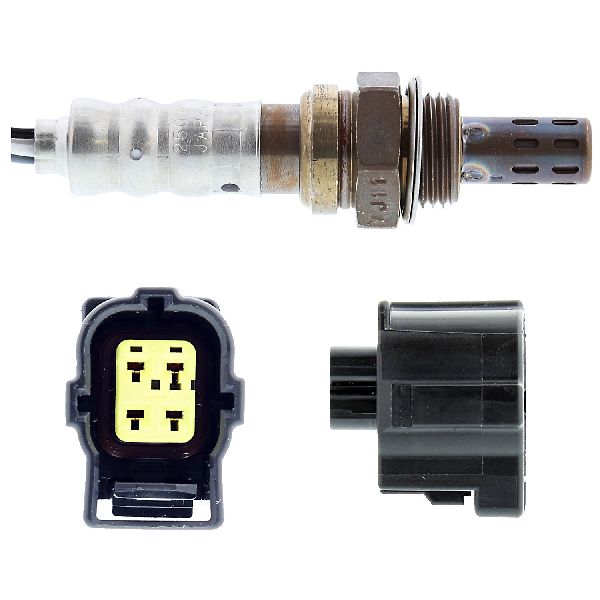
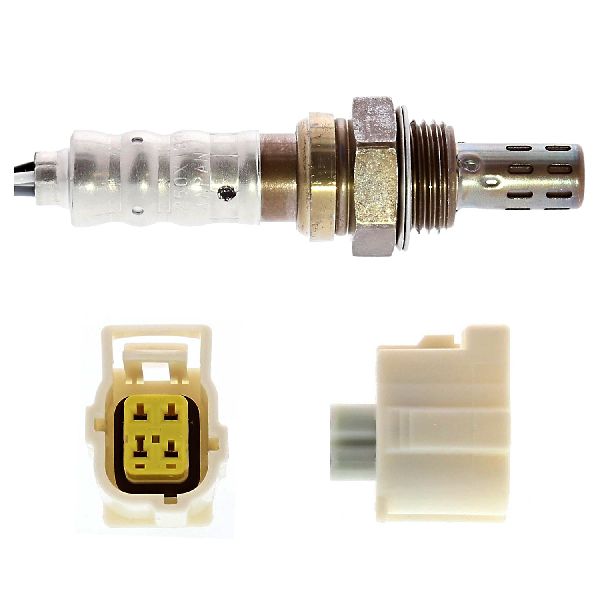
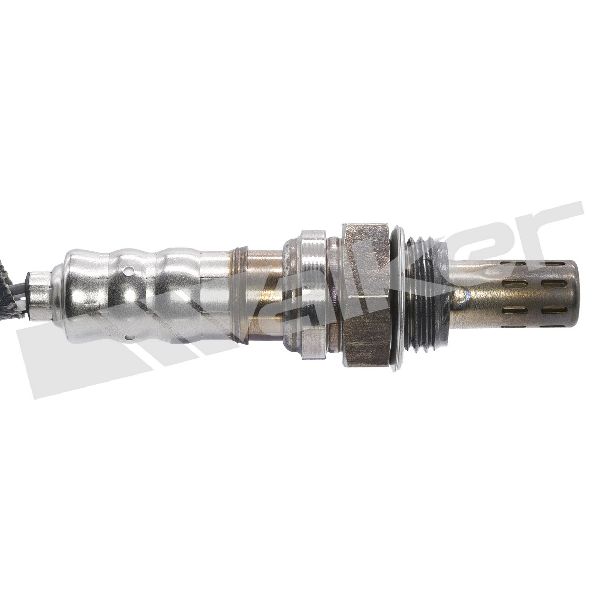
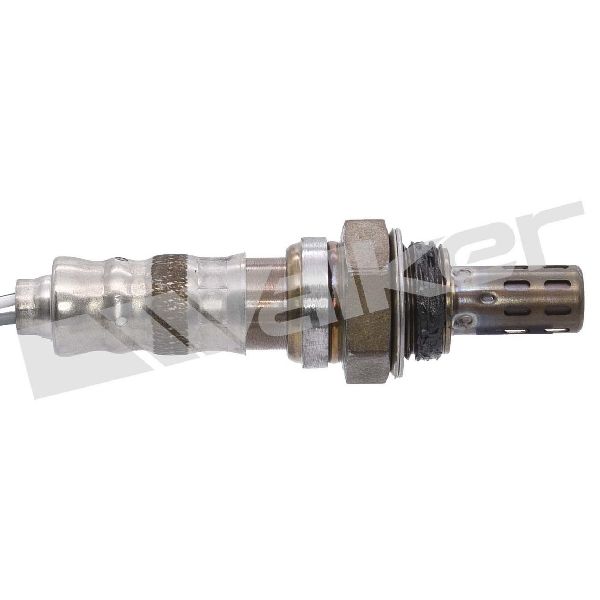
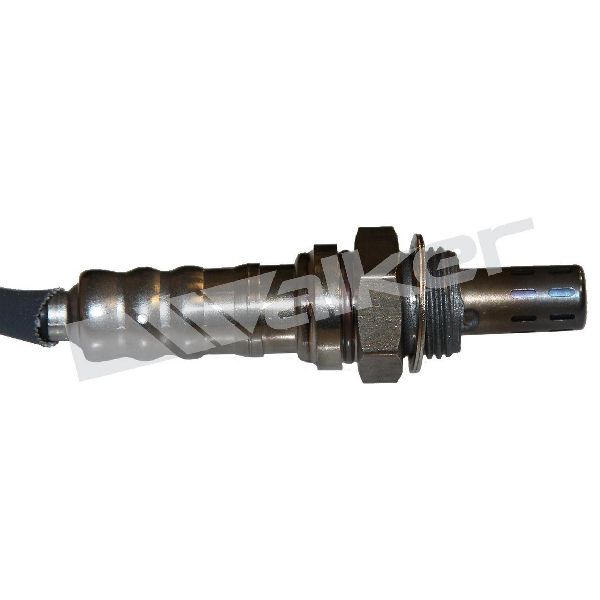
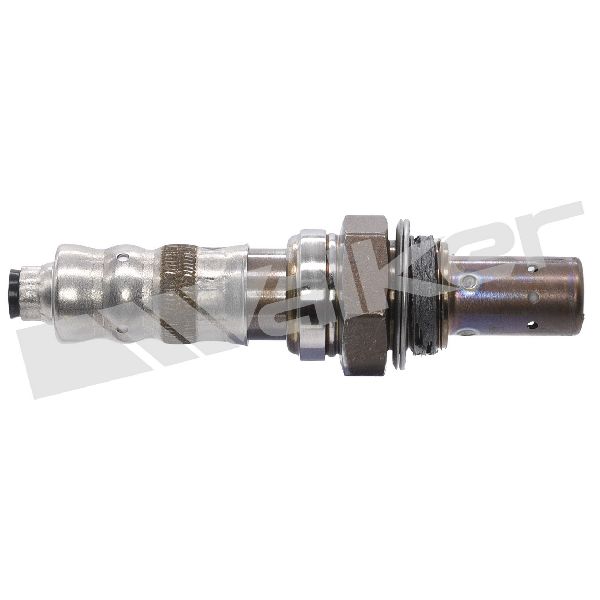
- Failed Downstream Oxygen Sensor (Bank 1, Sensor 2) 🔴 High Probability → Shop Oxygen Sensor Oxygen sensors are wear-and-tear items. The 2.4L MultiAir platform is known for this specific sensor failing due to age, heat cycles, and potential contamination from oil consumption, which is a documented issue for this engine.
How to confirm: Using a scan tool's live data, monitor the voltage for 'O2S B1S2'. A healthy sensor will show a relatively steady voltage (e.g., 0.6V-0.8V) when the engine is warm and at a steady RPM. A bad sensor will often be stuck low (near 0.1V), show no activity, or have erratic readings.
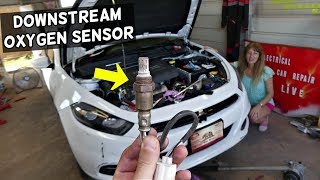
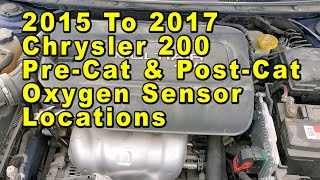
Typical fix: Replace the downstream oxygen sensor. This requires a special 22mm (or 7/8") oxygen sensor socket. Access is from underneath the vehicle. 🎬 Watch: See exactly where both oxygen sensors are located.
Est. part cost: $30 - $125 - Damaged Wiring or Connector 🟡 Medium Probability The sensor's wiring harness runs close to the hot exhaust system and is known to become brittle, melted, or chafed, leading to a short or open circuit. This is a frequently cited failure point on forums and in mechanic videos for the 2.4L MultiAir platform.
How to confirm: Visually inspect the entire wiring harness from the O2 sensor connector to where it joins the main loom. Look for melted plastic, frayed wires, or physical contact with the exhaust pipe or heat shields. Pay close attention to the area where the harness may sag near the exhaust.
Typical fix: Repair the damaged section of wire or replace the connector pigtail. Secure the harness away from hot components using high-temp zip ties or loom.
Est. part cost: $10 - $40 - Exhaust System Leak ⚪ Low Probability
How to confirm: With the engine running, carefully feel or listen for leaks at exhaust manifold gaskets, flex pipes, and flange connections before the downstream O2 sensor. A smoke test is the most effective way to find small leaks that can introduce oxygen and disrupt sensor readings.
Typical fix: Replace the leaking gasket or exhaust component.
Est. part cost: $20 - $200
Rare But Worth Checking
- Faulty Powertrain Control Module (PCM): This is extremely rare. The PCM should only be suspected after the sensor, wiring, and for exhaust leaks have all been definitively ruled out. FCA has issued TSBs for other models to update PCM software for O2 sensor-related codes, but this is less common for a hard circuit fault like P0136.
Diagnosis Steps
- Connect an OBD-II scanner to confirm P0136 is the active code and check for any other related codes, especially heater circuit (P0037) or low/high voltage codes (P0137, P0138).
- Perform a thorough visual inspection of the downstream O2 sensor's wiring harness and connector. Look for any signs of melting, chafing, corrosion, or loose connections. This is a critical step on this platform.
- Using the scanner's live data feature, monitor the voltage of 'O2 Bank 1 Sensor 2' with the engine fully warmed up. At a steady 2,000-2,500 RPM, the voltage should be relatively stable between 0.6V and 0.8V. If it's stuck near 0V, 5V, or is not changing, the sensor or circuit is faulty.
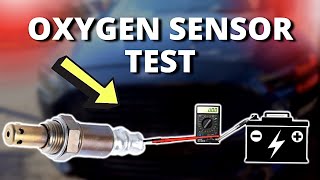
- If the voltage is stuck low (e.g., under 0.2V) or does not respond, and the wiring is confirmed to be intact, the oxygen sensor has most likely failed. 🎬 Watch: A mechanic shows you how to test an oxygen sensor.
- If the sensor and wiring appear good, inspect the exhaust system for any leaks between the engine and the downstream sensor.
- Before replacing the sensor, check the fuse for the O2 sensor heater circuit (often shared). A blown fuse typically sets a P0037 code but is worth checking.
- If all other steps fail to identify the issue, a more advanced diagnosis of the PCM circuit may be required, which is best left to a professional.
Parts You'll Likely Need
- Downstream Oxygen Sensor
(OEM #5149171AB)— This is the most common point of failure for a P0136 code on this vehicle due to age, heat, and potential oil contamination from the engine's known oil consumption issue.
Trusted brands: Mopar, Denso, Bosch, NGK/NTK
OEM price range: $80-$125
Aftermarket price range: $30-$90
Related Codes That Often Appear With This One
- P0137 — Indicates 'O2 Sensor Circuit Low Voltage' for the same sensor. Both codes point to a sensor that is not producing a correct signal and often appear together.
- P0139 — Indicates 'O2 Sensor Circuit Slow Response' for the same sensor. This often happens as the sensor ages and becomes less reactive, and can appear alongside a general circuit fault.
- P0037 — Indicates a fault in the heater circuit of the same sensor. If the sensor fails internally or the wiring is damaged, it can affect both the signal and heater circuits simultaneously.
- P0420 — While P0136 is a circuit code, a failing sensor can sometimes lead to an inaccurate reading that falsely triggers a P0420 (Catalyst System Efficiency Below Threshold) code. It's crucial to fix the P0136 first.
Technical Service Bulletins (TSBs) & Recalls
- TSB 09-006-20 REV. B: Details the official dealer procedure for performing an oil consumption test on the 2.4L MultiAir engine, which is a common root cause of O2 sensor fouling.
Platform-Specific Known Issues
- The 2.4L MultiAir engine has a known tendency for higher-than-average oil consumption, which can foul the oxygen sensors and cause them to fail prematurely. This is documented in TSB 09-006-20 REV. B.
- The wiring harness for the downstream O2 sensor is prone to damage from heat due to its routing near the exhaust system. This is a common point of failure discussed in owner forums and repair videos.
- Owners on forums for platform-mate vehicles like the Jeep Cherokee report that these engines can be sensitive to aftermarket sensors, sometimes requiring an OEM or NTK-branded sensor to resolve codes permanently.
Mechanic-Grade Diagnostic Values
- Downstream O2 Sensor (B1S2) Heater Circuit Resistance — expected: 4 to 10 Ohms at ambient temperature. Failure: A reading of infinity / OL (Open Loop) indicates a broken internal heater element. A near-zero reading indicates an internal short.
- Downstream O2 Sensor (B1S2) Voltage at Steady RPM — expected: Relatively stable between 0.6V and 0.8V with engine fully warm at a steady 2,500 RPM.. Failure: Voltage is stuck low (near 0.1V), stuck high, or fluctuates rapidly like an upstream sensor.
- O2 Sensor Heater Circuit Power Supply — expected: Approximately 12V (Battery Voltage) at the harness-side connector with Key On, Engine Off (KOEO).. Failure: A reading near 0V indicates a blown fuse, bad relay, or an open in the power supply wire from the PCM/TIPM.
Hidden / Shadow Codes Worth Checking
- Mode $06, TID $21: While not a hidden trouble code, Mode $06 provides raw test data from the PCM's emissions monitors before a code is set. For catalyst monitoring, this can show the calculated efficiency ratio. A value approaching the PCM's failure threshold can indicate a marginal catalytic converter or a lazy O2 sensor, even before a P0420 code appears alongside P0136. (see via An advanced OBD-II scan tool or app that specifically supports Mode $06 data display.)
Wiring & Ground Locations
- Downstream O2 Sensor Connector (C104) — Connected to the Bank 1 Sensor 2 oxygen sensor, which is located in the exhaust pipe just after the catalytic converter, accessible from under the vehicle.. This 4-pin connector is the primary point for testing. Pin 1 (DG/LB) is the O2 1/2 Signal, Pin 2 (DG/OR) is the O2 Return Downstream, Pin 3 (WT) is the Heater Control, and Pin 4 (RD) is the Fused ASD Relay Output. Testing for voltage and continuity at these pins confirms if a fault is in the sensor or the vehicle harness.
- G105 — On related FCA platforms, this ground point is located near the engine mount.. A poor ground at this location has been anecdotally linked to various O2 sensor circuit codes. While not a direct cause, checking and cleaning this ground is a wise step for any persistent, hard-to-diagnose electrical fault on this platform.
- G905A — Located below the left headlight in the engine compartment.. This is a major engine compartment ground point. A loose or corroded connection here can cause a variety of seemingly unrelated sensor faults and electrical issues.
OEM Part Supersession History
5149171AA, 68066160AA→5149171AB— Standard part revision for improved performance, reliability, or manufacturing efficiency. No significant incompatibility is noted between these revisions.
Model Year Variations Within This Range
- 2015-2017: No significant variations exist for the 2.4L MultiAir 'Tigershark' engine and its emissions components concerning the P0136 code within this model year range. The causes and diagnostic procedures are consistent across all three years.
Diagnostic Flowchart
Other Known Issues on This Vehicle
Issues unrelated to this code that are worth knowing about as an owner of this generation:
- Excessive Oil Consumption 🔴 High — Widespread on the 2.4L Tigershark engine. Many owners report consuming 1 quart of oil every 1,000-2,000 miles. Caused by a piston ring design defect. (Ref: TSB 09-006-20 REV. B (Oil Consumption Test); Warranty Extension XB1 for some vehicles.)
- Harsh Shifting / Failure of ZF 9-Speed Transmission 🔴 High — Extremely common, especially in the 2015 model year. Symptoms include lurching, hesitation, sudden shifts to neutral, and complete failure. (Ref: Recall S55 / NHTSA 16V-529; Recall R08 / NHTSA 15V090000.)
- Engine Stalling While Driving 🔴 High — Frequently reported problem. Can be a consequence of the excessive oil consumption (critically low oil level) or transmission control faults. (Ref: Related to oil consumption TSBs and transmission recalls.)
- Leaking Valve Cover Gasket into Spark Plug Wells 🟠 Medium — A common issue on the 2.4L Tigershark that leads to ignition coil failure and misfire codes (P030x).
- Cruise Control Cannot Be Disengaged 🔴 High — Subject of a major recall affecting many FCA vehicles, including the 2015-2017 Chrysler 200. A software flaw could prevent cruise control from turning off. (Ref: NHTSA Recall 18V-332.)
Used vs. New Parts: Buying Guide for This Vehicle
When a used part is the smart pick: For this repair, using a used part is NEVER recommended. Oxygen sensors are wear items with a finite lifespan determined by heat cycles and contamination. A used sensor from a junkyard has unknown remaining life and may fail shortly after installation, wasting time and money.
What to inspect on the donor part:
- Not applicable as used parts are not advised.
Aftermarket brands forum-validated for this vehicle:
- NTK (NGK)
- Denso
Brands owners have reported issues with on this vehicle:
- Universal-fit sensors (that require splicing wires)
- Unbranded 'white-box' parts
- Some owners have reported recurring codes after using Bosch sensors on this specific Chrysler platform.
Real Owner Stories
Aggregated from forums and TSBs cited above. Mileages and costs reflect what owners reported in those sources.
2015 Dodge Dart 2.4L MultiAir
Symptoms: Check engine light on with a cluster of codes including P0136, P0037, P0038, and P0137.
What fixed it: Replacement of the downstream oxygen sensor and inspection of the shared circuit wiring.
Source hint: YouTube - 'P0037 P0038, P0136, P0137...DODGE DART CHRYSLER 200, JEEP CHEROKEE COMPASS' by World Mechanics
2014-2020 Jeep Cherokee 2.4L MultiAir
Symptoms: Intermittent rough idle and slow sensor response codes.
What fixed it: Replacing the sensor with an OEM-quality NTK sensor after finding the engine was picky about aftermarket brands.
Source hint: jeepkj.com/threads/p0139-intermittent-rough-idle.75471/
Related OBD-II Codes
Frequently Asked Questions
Can the excessive oil consumption mentioned in TSB 09-006-20 REV. B cause my P0136 code?
Is there a specific brand of sensor I should use for my Chrysler 200 2.4L?
Could a blown fuse be causing my P0136 code on this platform?
My Chrysler 200 is stalling and has a P0136 code; are these related?
Where is the most common place for wiring damage on the 2.4L MultiAir O2 sensor circuit?
Does the P0136 code affect other vehicles with the same engine?
Helpful Videos
We Have This Part in Stock

The information in this article is provided for general reference and educational purposes only. Vehicle specifications, procedures, and part compatibility can vary by production date, trim level, and region. Always consult your vehicle's factory service manual and verify part numbers before purchasing or performing repairs. Safety-critical components such as airbags, seat belts, and braking systems should be installed by a qualified professional.
- Chrysler 200:
- 🧭 Diagnostic Flowchart
- 🎬 Helpful Videos
- 🛍️ Shop This Part
- What's Unique About the 2015-2017 Chrysler 200
- Symptoms You May Notice
- Most Likely Causes
- Rare But Worth Checking
- Diagnosis Steps
- Parts You'll Likely Need
- Related Codes That Often Appear With This One
- Technical Service Bulletins (TSBs) & Recalls
- Platform-Specific Known Issues
- Mechanic-Grade Diagnostic Values
- Hidden / Shadow Codes Worth Checking
- Wiring & Ground Locations
- OEM Part Supersession History
- Model Year Variations Within This Range
- Other Known Issues on This Vehicle
- Used vs. New Parts: Buying Guide for This Vehicle
- Real Owner Stories
- 2015 Dodge Dart 2.4L MultiAir
- 2014-2020 Jeep Cherokee 2.4L MultiAir
- Related OBD-II Codes
- Frequently Asked Questions
- 🎟️ Get 5% Off