

P0136 on 2011-2014 Ford Edge 3.5L: O2 Sensor Circuit Malfunction Causes and Fixes
This code indicates a fault in the Bank 1, Sensor 2 oxygen sensor circuit. The most common fix is replacing the sensor itself, which is located on the firewall side of the engine, after the catalytic converter. Access is tight but manageable from under the vehicle. Expect to pay between $40-$80 for an aftermarket sensor and $90-$130 for an OEM Motorcraft part.
- P0136 points to a problem with the downstream oxygen sensor on the firewall side of the engine (Bank 1, Sensor 2).
- The most likely cause is a failed oxygen sensor, which is a common wear item.
- Before replacing the sensor, perform a quick visual inspection of the wiring and use a scanner to check live data.
- Use a direct-fit replacement sensor rather than a universal one to avoid recurring issues.
- While diagnosing, be aware of the platform's potential for a failing internal water pump, which can contaminate O2 sensors.
What's Unique About the 2011-2014 Ford Edge
For the 2011-2014 Ford Edge with the 3.5L V6, the P0136 code is a straightforward and common issue. Unlike some other platforms, it rarely points to complex problems like PCM failures. The most frequent cause is simply a worn-out oxygen sensor. Accessing this specific sensor (Bank 1, Sensor 2) is known to be tight, as it's on the firewall side of the engine, but replacement is a manageable DIY job for those with patience and the correct tools, like a 22mm (or 7/8") crow's foot O2 sensor socket. A notable consideration for this platform is the internal water pump; a failure can leak coolant into the oil, and the resulting contaminated exhaust can foul and destroy O2 sensors. While not a direct cause of P0136, it's a critical related issue to be aware of.
Symptoms You May Notice
- Check Engine Light is on
- Decreased fuel efficiency
- Possible rough idling or engine hesitation
- Failure to pass an emissions inspection
- Replacing the catalytic converter. A P0136 code indicates a problem with the sensor *monitoring* the converter, not necessarily the converter itself. A failing converter would typically set a P0420 (Catalyst Efficiency) code.
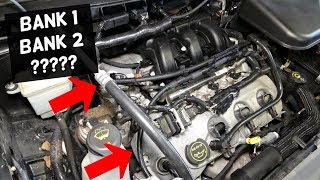
- Replacing the wrong oxygen sensor. This code is specific to Bank 1 (firewall side) and Sensor 2 (downstream/post-catalyst). Make sure to identify the correct sensor before replacement. 🎬 Watch: How to identify Bank 1 vs Bank 2 on your Edge
- Using a 'universal' oxygen sensor. Many owners report that check engine lights return shortly after installing a universal sensor that requires splicing wires. It is highly recommended to use a direct-fit sensor to ensure proper operation.
Most Likely Causes
- Failed Bank 1, Sensor 2 Oxygen Sensor 🔴 High Probability → Shop Oxygen Sensor Oxygen sensors are wear-and-tear items with a finite lifespan of around 70,000-100,000 miles. Contamination from exhaust gases, carbon buildup, and constant exposure to high temperatures eventually cause them to fail.
How to confirm: Use an OBD-II scanner to monitor live data from the B1S2 sensor (PID: O2S12). A healthy downstream sensor should show a relatively stable voltage, typically between 0.5V and 0.8V, when the engine is warm and at a steady RPM. If the voltage is stuck low (near 0V), high (near 1V), fluctuating rapidly like an upstream sensor, or not reading at all, the sensor has likely failed. A multimeter can be used to test the sensor's internal heater circuit resistance; a reading between 3 and 25 ohms is typical.
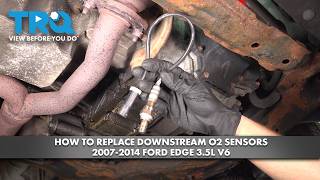
Typical fix: Replace the Bank 1, Sensor 2 oxygen sensor. This requires a 22mm (or 7/8") O2 sensor socket and accessing the sensor from underneath the vehicle. 🎬 See this step-by-step downstream O2 sensor replacement walkthrough Penetrating oil is recommended as the sensor can be seized in the exhaust pipe.
Est. part cost: $40-$130 - Damaged Wiring or Connector 🟡 Medium Probability The wiring harness for the rear oxygen sensor is routed near hot exhaust components and the transmission, making it susceptible to melting, chafing, or corrosion over time. The connector itself can also accumulate dirt and moisture, leading to poor contact.
How to confirm: Visually inspect the entire wiring harness leading to the Bank 1, Sensor 2 O2 sensor. Look for any signs of melted plastic, frayed wires, or corrosion inside the connector pins. Use a multimeter to check for proper reference voltage (around 0.45V) and ground at the connector with the key on, engine off. Also check for battery voltage (~12V) at the heater circuit power wire in the harness-side connector with the key on.
Typical fix: Repair or replace the damaged section of the wiring harness. If the connector is corroded, it may need to be cleaned with electrical contact cleaner or replaced with a new pigtail connector.
Est. part cost: $10-$50 - Exhaust Leak ⚪ Low Probability Exhaust components like manifold gaskets or flex pipe flanges can develop leaks from rust and vibration, allowing outside air to enter the exhaust stream. This unmetered oxygen entering the system upstream of the sensor can cause it to send inaccurate readings to the PCM.
How to confirm: Listen for a ticking or hissing sound from the exhaust system, especially when the engine is cold. You can also use a smoke machine to pressurize the exhaust and visually identify the source of any leaks between the engine and the B1S2 sensor.
Typical fix: Replace the leaking gasket or repair the damaged section of the exhaust pipe.
Est. part cost: $20-$150
Rare But Worth Checking
- Faulty Powertrain Control Module (PCM): This is extremely rare. Before condemning the PCM, all other possibilities, including the sensor, wiring, and exhaust system, must be exhaustively ruled out. A PCM failure is often accompanied by other, more erratic symptoms and multiple unrelated codes.
- Coolant Contamination from Failed Internal Water Pump: A known issue on the 3.5L V6 is the internal, timing-chain-driven water pump. When its seal fails, it can leak coolant directly into the engine oil. This coolant is then burned and sent down the exhaust, where it can coat and destroy oxygen sensors. If you find a milky, chocolate-milk-like substance on your oil cap or dipstick, this is a critical issue that must be addressed immediately, as it will lead to catastrophic engine failure. The O2 sensor failure is a secondary symptom in this case.
Diagnosis Steps
- Connect an OBD-II scanner to confirm the P0136 code and check for any other related codes.
- Use the scanner's live data function to observe the voltage from the 'O2S12' (Oxygen Sensor Bank 1, Sensor 2). A healthy sensor should show a stable voltage around 0.5-0.8V when warm. A reading stuck at 0V, 1V, or fluctuating wildly indicates a problem.
- Visually inspect the Bank 1, Sensor 2 oxygen sensor, which is located on the rear (firewall side) of the engine, after the catalytic converter. Access is from underneath the vehicle.
- Carefully examine the sensor's wiring harness and connector for any signs of melting, chafing, corrosion, or loose connections.
- If the wiring appears intact and the live data confirms a faulty reading, test the sensor's internal heater resistance with a multimeter. A reading between 3-25 ohms is expected; an open (OL) or short (near 0 ohms) confirms a failed sensor.
- Check for any audible exhaust leaks between the engine and the sensor. A hissing or ticking sound is a common sign.
- If you suspect a wiring issue, use a multimeter to check for continuity, ground, and reference voltage (~0.45V) at the sensor connector. Also confirm ~12V power at the heater circuit pins with the key on.
- As a precautionary check, inspect the engine oil and coolant for signs of cross-contamination (milky oil), which would point to a much more serious internal water pump failure.
- If all other steps fail to identify the problem, the issue could be a faulty PCM, but this is highly unlikely.
Parts You'll Likely Need
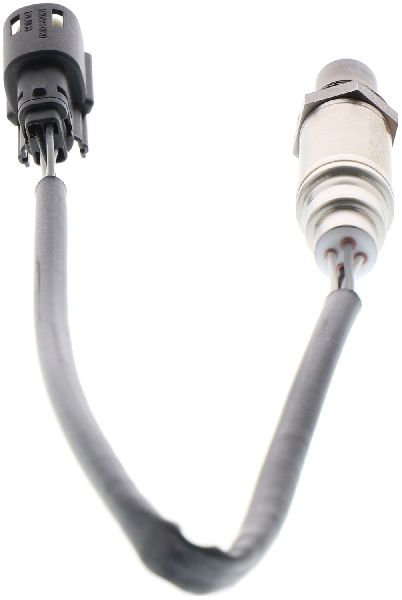
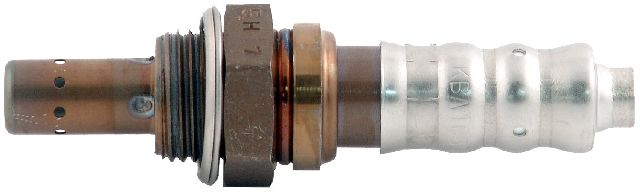
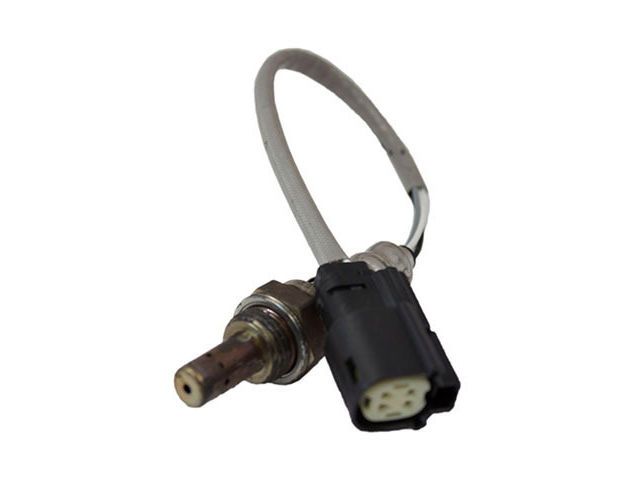
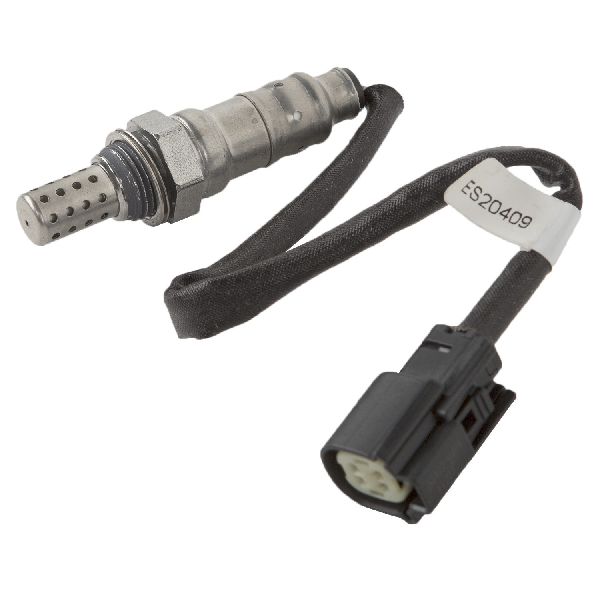
- Oxygen Sensor (Bank 1, Sensor 2)
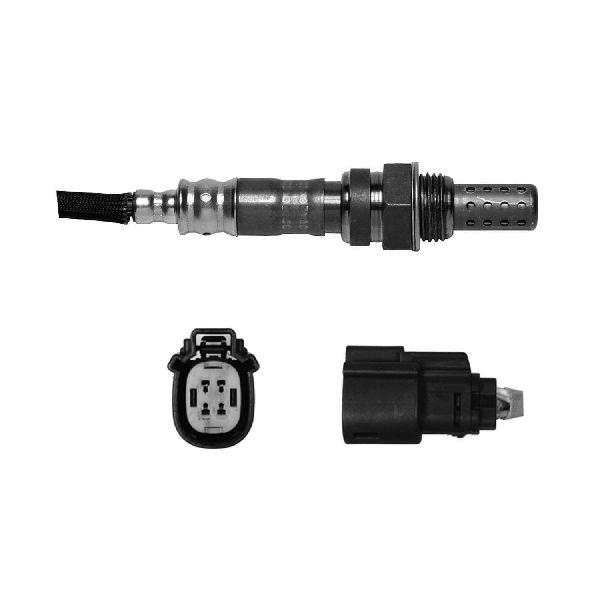
(OEM #DY-1155)— This is the most common failure point for a P0136 code. The sensor's ability to generate a correct voltage signal degrades over time.
Trusted brands: Motorcraft, Bosch, Denso, NTK
OEM price range: $90-$130
Aftermarket price range: $40-$80
Related Codes That Often Appear With This One
- P0137 — This code indicates a constant low voltage from the same sensor, which is a specific type of circuit malfunction that can also trigger the more general P0136.
- P0138 — This code indicates a constant high voltage from the same sensor, another specific fault that falls under the P0136 malfunction umbrella.
- P0036 — This code points to a failure in the heater circuit of the same O2 sensor. A failed heater can prevent the sensor from reaching operating temperature, causing it to send an incorrect signal and triggering a P0136 code.
- P0016 — In a worst-case scenario, P0136 could be seen alongside P0016 (Crank/Cam Position Correlation). This combination strongly suggests a failed internal water pump, where the bearing failure has caused the timing chain to jump, affecting engine timing and contaminating the O2 sensors with coolant.
Platform-Specific Known Issues
- Owner Experience: Bad Sensor Replacement: A user on Reddit reported getting a P0136 code at 173k miles. Using an OBD-II scanner, they observed the Bank 1 Sensor 2 voltage was stuck at 0.0V. They had replaced the sensor 10k miles prior. Replacing the sensor again with a new part resolved the issue, suggesting the previous replacement part had failed prematurely.
- Owner Experience: Universal vs. Direct-Fit Sensors: An owner of a platform-mate 2013 Ford Explorer with the 3.5L V6 reported that a P0136 code returned within two weeks of installing a 'universal' O2 sensor. The problem was only resolved after installing a direct-fit OEM-style sensor, highlighting the importance of using the correct part.
Mechanic-Grade Diagnostic Values
- Downstream O2 Sensor (B1S2) Live Data Voltage — expected: Relatively stable voltage between 0.5V and 0.8V at steady RPM (warm engine).. Failure: Voltage is stuck near 0V, near 1V, or fluctuates rapidly like an upstream sensor.
- O2 Sensor Heater Element Resistance — expected: 3 to 25 Ohms when measured across the two heater pins on the sensor.. Failure: A reading of infinite resistance (OL - Open Loop) or near 0 Ohms (short circuit).
- Heater Circuit Power Supply (at harness connector) — expected: Approximately 12V (Battery Voltage) with Key On, Engine Off (KOEO).. Failure: Voltage below 9V or 0V, indicating a problem with the fuse or power supply wiring.
- O2 Sensor Signal Wire Reference Voltage (harness unplugged) — expected: Approximately 0.45V (450mV) with Key On, Engine Off (KOEO).. Failure: A reading of 0V may indicate a break in the signal wire; a reading of 5V or 12V indicates a short to power.
- O2 Sensor Installation Torque — expected: 48 Nm (35 lb-ft). Failure: N/A - This is an installation specification.
Hidden / Shadow Codes Worth Checking
- Mode 6, Test ID $81, Component ID $12: This test monitors the Bank 1 Sensor 2 (downstream) O2 sensor's signal amplitude and switching activity. A failure in this monitor can confirm a performance issue with the sensor circuit even if the P0136 code is intermittent. (see via A professional scan tool capable of displaying Ford's specific Mode 6 data. The values are compared against manufacturer-defined minimum and maximum limits.)
Scan Tool Commands That Help
- Ford IDS (or equivalent professional scanner): KOER (Key On, Engine Running) Self-Test — This command runs the PCM through a series of active diagnostic checks while the engine is running. It can help identify intermittent faults in the O2 sensor circuit that might not be present at idle or during a simple key-on scan.
Wiring & Ground Locations
- PCM Connector Pin 35 — At the 104-pin Powertrain Control Module connector.. This is the specific pin for the Bank 1 Sensor 2 O2 Signal (wire color: RED/LT GRN). Testing for continuity between this pin and the sensor connector's signal pin can definitively rule out a broken signal wire.
- Firewall Ground Stud — On the firewall, typically on the driver's side of the engine compartment.. A loose or corroded main ground connection on the firewall can cause various electrical issues, including intermittent or faulty readings from sensor circuits that rely on a stable ground reference.
- HO2S 12 Connector — Clipped to a bracket on the firewall or nearby transmission, connecting to the B1S2 sensor.. This is the primary connector to inspect for damage and to perform electrical tests (power, ground, signal, resistance). Its location is notoriously difficult to access.
OEM Part Supersession History
BT4Z-9G472-A→DY-1155— Standard part number update and consolidation by Ford/Motorcraft.
Heads up: While other sensors may physically fit, DY-1155 is the correct service part for the 2011-2014 Edge downstream positions. Using an upstream sensor (e.g., DY-1178 / BL3Z-9F472-A) in the downstream position will cause incorrect readings.
Model Year Variations Within This Range
- 2011-2014: The O2 sensor part number for the 2011-2014 models (DY-1155) is different from the one used on 2007-2010 models (DY-1056). Using the wrong part may result in fitment or electrical incompatibility issues.
Diagnostic Flowchart
Other Known Issues on This Vehicle
Issues unrelated to this code that are worth knowing about as an owner of this generation:
- Internal Water Pump Failure 🔴 High — Can occur around 100,000 miles, but failures have been reported earlier. When the seal fails, it leaks coolant directly into the engine oil, leading to catastrophic engine failure if not addressed immediately.
- Power Transfer Unit (PTU) Failure (AWD Models) 🔴 High — Common on AWD models. The unit is sealed and considered 'filled for life' by Ford, leading to fluid breakdown from heat (especially from the nearby exhaust) and eventual bearing/gear failure. Symptoms include a burning gear oil smell or fluid leaks. (Ref: TSB 19-2017 addresses fluid leaks from the right side seal on some models, but no general recall exists.)
- Door Ajar Sensor Failure 🟡 Low — A very common annoyance where the sensor within the door latch assembly fails, causing the 'Door Ajar' light to stay on and the interior dome lights to remain illuminated, potentially draining the battery. (Ref: TSB 14-0011 was issued for this problem on 2011-2013 models.)
- Brake Booster Failure 🟠 Medium — Some owners report a hissing noise when applying the brakes, followed by a hard pedal feel and increased stopping distance. This indicates a failure of the brake booster's internal diaphragm. (Ref: Ford issued Customer Satisfaction Program 13N02, extending the warranty on the brake booster to 10 years or 150,000 miles for affected vehicles.)
Used vs. New Parts: Buying Guide for This Vehicle
When a used part is the smart pick: Buying a used part is NOT recommended for this repair. Oxygen sensors are wear items with a limited lifespan. The cost savings of a used sensor are minimal and not worth the risk of premature failure and repeated labor.
What to inspect on the donor part:
- N/A - Do not buy a used oxygen sensor.
OEM-only on this vehicle (don't cheap out):
- While not strictly 'OEM-only', using a direct-fit sensor from a reputable OE-supplier is critical. Universal 'splice-in' sensors are a common cause of repeat failures for this code.
Aftermarket brands forum-validated for this vehicle:
- Motorcraft (OEM)
- Bosch
- Denso
- NTK
Brands owners have reported issues with on this vehicle:
- Unbranded 'universal' sensors requiring wire splicing.
- No-name sensors from online marketplaces which are frequently reported to fail quickly or be dead-on-arrival.
Real Owner Stories
Aggregated from forums and TSBs cited above. Mileages and costs reflect what owners reported in those sources.
2011-2014 Ford Edge 3.5L V6 — 173000 miles
Symptoms: Check Engine Light on with code P0136; OBD-II scanner showed Bank 1 Sensor 2 voltage was stuck at 0.0V.
What fixed it: Replacing the sensor with a new part, as the previous replacement (installed 10k miles prior) had failed prematurely.
Source hint: Reddit - r/MechanicAdvice
2013 Ford Explorer 3.5L V6 — ~120000 miles
Symptoms: P0136 code returned within two weeks of a previous repair attempt.
What fixed it: Installing a direct-fit OEM-style sensor after a 'universal' O2 sensor failed to keep the code away.
Source hint: vehicle_specific_issues: Owner Experience: Universal vs. Direct-Fit Sensors
Documented NHTSA Reports
NHTSA ODI #11539323
Symptoms: An owner reported that their vehicle was diagnosed with several codes, including P0136, P0756, P1450, and P0102. The dealer determined that coolant had intruded into the engine block.
What fixed it: The dealer determined the engine needed to be replaced due to the coolant intrusion.
Related OBD-II Codes
Frequently Asked Questions
Where is the Bank 1, Sensor 2 oxygen sensor located on my 2011-2014 Ford Edge 3.5L?
What specific OEM part number should I use for an O2 sensor replacement on the 3.5L V6?
Can I use a universal O2 sensor to fix the P0136 code on my Ford Edge?
Is there a TSB for the PTU failure mentioned in the common issues for my AWD Edge?
What size socket do I need to remove the Bank 1, Sensor 2 oxygen sensor?
Could my P0136 code be related to the internal water pump issue on the 3.5L Duratec?
Helpful Videos

We Have This Part in Stock

The information in this article is provided for general reference and educational purposes only. Vehicle specifications, procedures, and part compatibility can vary by production date, trim level, and region. Always consult your vehicle's factory service manual and verify part numbers before purchasing or performing repairs. Safety-critical components such as airbags, seat belts, and braking systems should be installed by a qualified professional.
- Ford Edge:
- 🧭 Diagnostic Flowchart
- 🎬 Helpful Videos
- 🛍️ Shop This Part
- What's Unique About the 2011-2014 Ford Edge
- Symptoms You May Notice
- Most Likely Causes
- Rare But Worth Checking
- Diagnosis Steps
- Parts You'll Likely Need
- Related Codes That Often Appear With This One
- Platform-Specific Known Issues
- Mechanic-Grade Diagnostic Values
- Hidden / Shadow Codes Worth Checking
- Scan Tool Commands That Help
- Wiring & Ground Locations
- OEM Part Supersession History
- Model Year Variations Within This Range
- Other Known Issues on This Vehicle
- Used vs. New Parts: Buying Guide for This Vehicle
- Real Owner Stories
- 2011-2014 Ford Edge 3.5L V6 — 173000 miles
- 2013 Ford Explorer 3.5L V6 — ~120000 miles
- Documented NHTSA Reports
- NHTSA ODI #11539323
- Related OBD-II Codes
- Frequently Asked Questions
- 🎟️ Get 5% Off