

P0136 on 2008-2012 Ford Escape 2.5L: O2 Sensor Circuit Malfunction Causes and Fixes
On a 2008-2012 Ford Escape with the 2.5L engine, code P0136 almost always means the downstream oxygen sensor (Bank 1, Sensor 2) has failed. Replacing the sensor is the most common fix. Before replacing, visually inspect the wiring harness for melting or damage, as its proximity to the exhaust makes it vulnerable. Expect to pay $50-$90 for an aftermarket sensor and $90-$150 for an OEM Motorcraft part.
- P0136 on your 2008-2012 Escape almost always points to a bad downstream O2 sensor.
- Before buying parts, always perform a quick visual inspection of the sensor's wiring underneath the car for any obvious melting or damage.
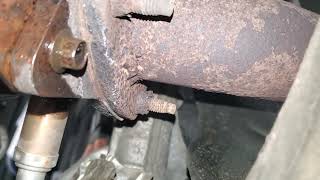
- Replacing the sensor is a manageable DIY job, but the sensor can be seized in the exhaust pipe. Use penetrating oil beforehand and have the correct 22mm or 7/8" O2 sensor socket or wrench.
- Do not mistake this code for a bad catalytic converter. A P0420 code indicates converter problems; P0136 is for the sensor circuit itself.
What's Unique About the 2008-2012 Ford Escape
The 2.5L Duratec engine in the second-generation Escape is a reliable workhorse, and a P0136 code is one of the most common and straightforward issues you'll encounter. There are no widespread, unusual platform-specific defects that cause this code. The issue is almost always localized to the oxygen sensor itself failing from age and exposure to heat, or damage to its exposed wiring underneath the vehicle. The platform-mates (Mercury Mariner and Mazda Tribute) exhibit the exact same failure pattern.
Symptoms You May Notice
- Check Engine Light is on
- Failure to pass an emissions inspection
- Possible slight decrease in fuel economy
- In rare cases, a rotten egg smell from the exhaust if the sensor fault leads to an overly rich fuel mixture
- Replacing the catalytic converter. A P0136 code points to the sensor circuit, not the converter's efficiency. A bad converter would typically set a P0420 code.
- Replacing the upstream oxygen sensor (Bank 1, Sensor 1). This code is specific to the downstream sensor (Sensor 2).
Most Likely Causes
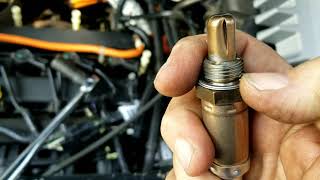
- Faulty Downstream Oxygen Sensor (Bank 1, Sensor 2) 🔴 High Probability → Shop Oxygen Sensor Oxygen sensors are wear-and-tear items exposed to extreme heat and exhaust contaminants. They have a finite lifespan and typically fail after 80,000-100,000 miles.
How to confirm: Use a scan tool to monitor the live data for the B1S2 sensor (Ford PID: O2S12). A healthy downstream sensor should show a relatively steady voltage, typically between 0.5V and 0.8V when the catalytic converter is hot and working efficiently. If the voltage is stuck low (near 0V), stuck high (near 1V), or fluctuating wildly like the upstream sensor, the sensor has likely failed.
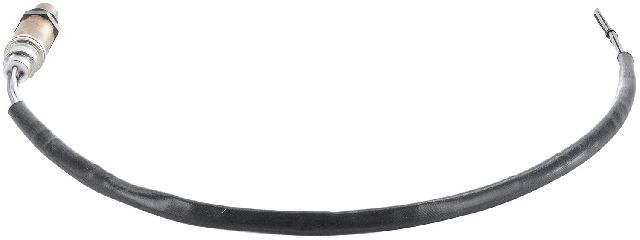
Typical fix: Replace the Bank 1, Sensor 2 oxygen sensor. The Motorcraft service part number is DY-1153 (corresponding to OEM part number BE5Z-9G444-B). 🎬 Watch: How to replace the downstream O2 sensor
Est. part cost: $50-$150 - Damaged Wiring or Connector 🟡 Medium Probability The sensor's wiring harness runs underneath the vehicle, making it susceptible to damage from road debris, moisture, and especially heat from the exhaust pipe, which can cause wires to melt, fray, or corrode. Forum users have reported finding the harness melted against the exhaust, causing a short.
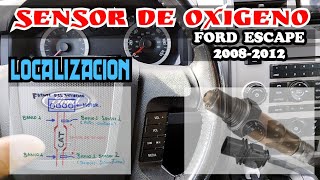
How to confirm: Visually inspect the entire wiring harness from the O2 sensor to its connection point. 🎬 See this video showing the exact sensor location Look for any signs of melting, chafing, breaks, or green corrosion inside the connector pins. A multimeter can be used to check for continuity and for 12V power at the heater circuit wires in the connector (with the key on).
Typical fix: Repair the damaged section of the wiring harness or replace the connector pigtail.
Est. part cost: $15-$40 - Exhaust System Leak ⚪ Low Probability Corrosion from road salt and age can cause leaks at exhaust flanges or create cracks in the exhaust pipe before the downstream O2 sensor. An exhaust leak can introduce outside oxygen into the exhaust stream, confusing the sensor and causing it to send incorrect voltage readings to the PCM.
How to confirm: With the engine running, listen and feel for air escaping from the exhaust system anywhere before the Bank 1, Sensor 2 location. A professional smoke test is the most effective way to find small leaks.
Typical fix: Repair the leak by replacing the faulty gasket or section of exhaust pipe.
Est. part cost: $20-$200
Rare But Worth Checking
- Blown HEGO Fuse: The Heated Exhaust Gas Oxygen (HEGO) sensor circuit is protected by a fuse. While not common for a P0136 alone, a short in the wiring or sensor can blow this fuse. It's a quick and easy check before replacing parts. In the under-hood fuse box (Power Distribution Box), check the fuse labeled for HEGO or O2 sensors (e.g., Fuse F6, a 10A fuse, on some models). Always consult your owner's manual for the exact location.
- Faulty Powertrain Control Module (PCM): This is extremely rare and should only be considered after all other possibilities (sensor, wiring, leaks, fuse) have been definitively ruled out by thorough testing.
Diagnosis Steps
- Read the code with an OBD-II scanner to confirm P0136 is the primary code present. Note any other codes, especially P0137, P0138, or P0141.
- Check the fuse for the HEGO (Heated Exhaust Gas Oxygen) circuit in the under-hood fuse box.
- Perform a thorough visual inspection of the downstream O2 sensor's wiring harness and connector. Look for obvious signs of damage, such as melting against the exhaust pipe, chafing, or corrosion in the connector.
- Check for any exhaust leaks between the catalytic converter and the downstream O2 sensor. Listen for hissing sounds with the engine running.
- Use a scan tool with live data capability to observe the voltage of the Bank 1 Sensor 2 (B1S2). A healthy sensor should show a relatively stable voltage (typically between 0.5V and 0.8V) once the engine is at operating temperature. If it's stuck near 0V, near 1V, or fluctuating rapidly like the upstream sensor, it's faulty.
- If the wiring and fuse are good, and the live data signal is incorrect, the sensor itself is the most likely culprit and should be replaced.
- If all else fails, the problem may lie with the PCM, but this is highly unlikely and requires professional diagnosis.
Parts You'll Likely Need
- Downstream Oxygen Sensor (Bank 1, Sensor 2)
(OEM #BE5Z-9G444-B (Motorcraft Service P/N: DY-1153))— This is the most common failure point for a P0136 code, typically failing due to age and constant exposure to high heat.
Trusted brands: Motorcraft, Bosch, Denso, NTK
OEM price range: $90-$150
Aftermarket price range: $50-$90
Related Codes That Often Appear With This One
- P0420 — A faulty downstream O2 sensor can sometimes incorrectly trigger a P0420 (Catalyst System Efficiency Below Threshold) code, or a failing catalytic converter can damage the sensor.
- P0137 — This code indicates 'O2 Sensor Circuit Low Voltage' for the same sensor and shares the same root causes, often related to wiring damage or a failed sensor.
- P0138 — This code indicates 'O2 Sensor Circuit High Voltage' for the same sensor, also pointing to wiring issues or a failed sensor.
- P0141 — This code indicates a malfunction in the heater circuit of the same O2 sensor. Because the heater wires are in the same harness, a single damage event (like melting) can trigger both codes.
Mechanic-Grade Diagnostic Values
- Downstream O2 Sensor (B1S2) Heater Circuit Resistance — expected: 3 to 30 Ohms at room temperature, measured between the two same-colored wires on the sensor connector.. Failure: A reading of infinite resistance (Open Loop / 'OL') or near-zero ohms indicates a failed internal heater element.
- Downstream O2 Sensor (B1S2) Live Data Voltage — expected: Relatively stable voltage between 0.6V and 0.8V when the engine is warm and at a steady RPM.. Failure: Voltage is stuck low (near 0.1V), stuck high (near 0.9V), or fluctuates rapidly like an upstream sensor.
- Heater Circuit Power Supply (KOEO) — expected: 10V to 12V DC at the power supply pin on the vehicle's harness connector with the key on, engine off.. Failure: No voltage indicates a blown fuse, a bad relay, or a break in the power wire from the PCM.
Scan Tool Commands That Help
- Ford IDS / FORScan: O2 Heater Actuation Test / Bidirectional Control — After confirming the fuse and wiring power are good, this command forces the PCM to turn the heater circuit on and off. By monitoring voltage during the test, a technician can confirm if the PCM driver and wiring are functioning correctly, definitively isolating the fault to the sensor itself if the circuit responds but the code remains.
- Ford IDS / FORScan: Key On, Engine Running (KOER) Self-Test — This test can sometimes retrieve additional DTCs like P1137 or P1138 that indicate a lack of switching from the downstream O2 sensor during a forced rich/lean condition, further confirming a sensor or circuit fault.
Wiring & Ground Locations
- G101 — Located at the rear of the 2.5L engine block.. This is a primary engine ground. A poor or corroded connection here can cause erratic sensor readings and insufficient current flow for the O2 sensor heater circuit.
- G104 / G105 — Located at the left front of the engine compartment, often near the battery tray or a shock tower.. These are major chassis and engine compartment grounds. Corrosion or looseness can affect the PCM's ability to properly control and monitor various systems, including the O2 sensor circuits.
- O2 Sensor Heater Wires — Within the O2 sensor's own wiring pigtail and connector.. On many Ford O2 sensors, the two wires for the heater circuit are the same color (e.g., two white wires). This is a useful tip for quickly identifying the correct pins for resistance testing without a wiring diagram.
OEM Part Supersession History
BE5Z-9G444-A→BE5Z-9G444-B— Standard part revision by the manufacturer, likely for improved durability or material changes.BE5Z-9G444-B→BE5Z-9G444-C— Standard part revision by the manufacturer.
Model Year Variations Within This Range
- 2008 vs. 2009-2012: The specified 2.5L Duratec I4 engine was introduced in the 2009 model year, replacing the 2.3L I4 used in 2008. While diagnosis is similar, part numbers for the O2 sensor will differ.
- 2009-2010 vs. 2011-2012: The Motorcraft part number for the downstream oxygen sensor (Bank 1, Sensor 2) is different. 2009-2010 models may use a different sensor (DY-1119 cited for some applications) than 2011-2012 models (DY-1176 cited for some applications). The primary part number BE5Z-9G444-B (DY-1153) is most commonly associated with the 2011-2012 models. Always verify the part number with the vehicle's VIN.
Diagnostic Flowchart
Other Known Issues on This Vehicle
Issues unrelated to this code that are worth knowing about as an owner of this generation:
- 6F35 Transmission Failure 🔴 High — Widespread reports, often occurring before 100,000 miles. The 2008 and 2009 model years are particularly noted for issues.
- Electronic Throttle Body (ETB) Failure 🔴 High — Common issue causing sudden loss of power ('limp mode') and may set codes like P2111 or P2112. Failures can occur around 70,000 miles. (Ref: Customer Satisfaction Program 13N03 (now expired) was issued for this problem.)
- Rear Shock Tower Rust 🔴 High — Very common in regions using road salt. The passenger side rear shock tower is especially prone to rusting completely through, causing the shock to detach.
- Power Steering Failure 🔴 High — A recall was issued, but many owners report failures of the electric power steering system even after the recall was performed. (Ref: Recall 14V284000 for the steering torque sensor.)
- Leaking Driver's Side Axle Seal 🟠 Medium — Commonly reported on 2009-2012 models, leading to transmission fluid leaks.
- Cracked Front ABS Tone Ring 🟡 Low — A frequent issue where the ABS tone ring on the front axle cracks, causing the ABS and traction control lights to illuminate and the systems to function erratically.
Used vs. New Parts: Buying Guide for This Vehicle
When a used part is the smart pick: Almost never for the oxygen sensor itself. It is a wear-and-tear component with a finite lifespan, and its performance degrades over time. A used sensor may fail shortly after installation, wasting time and money. A used wiring harness pigtail is a viable option if the original connector is damaged.
Donor-vehicle mileage cap: roughly under 40000 miles for the part to have meaningful remaining life.
What to inspect on the donor part:
- For a wiring pigtail, ensure the connector is free of corrosion (no green crust).
- Check that the locking tab on the connector is intact and not brittle.
- Inspect the wires for any signs of melting, brittleness, or previous repairs.
OEM-only on this vehicle (don't cheap out):
- While not strictly required, using an OEM Motorcraft sensor is highly recommended for best performance and longevity. Some aftermarket sensors can have slightly different response times that may not work perfectly with the Ford PCM calibration.
Aftermarket brands forum-validated for this vehicle:
- Denso
- NTK
- Bosch
Brands owners have reported issues with on this vehicle:
- Ultra-cheap, unbranded sensors from online marketplaces often fail prematurely or are dead on arrival.
Real Owner Stories
Aggregated from forums and TSBs cited above. Mileages and costs reflect what owners reported in those sources.
2003 Ford Escape
Symptoms: Check engine light was on for code P0136; owner found a worn wire during inspection.
What fixed it: The owner replaced the sensor after identifying the worn wire, though the source notes that checking the HEGO fuse is also a critical step for this repair.
Source hint: 2CarPros - '2003 Ford Escape Check Engine Code P0136'
Ford Escape
Symptoms: Owner identified a need for O2 sensor replacement specifically related to the Bank 1 Sensor 2 circuit.
What fixed it: Repairing the circuit by addressing the sensor, wiring, or connections.
Source hint: DoItYourself.com Community Forums - 'Ford escape: O2 sensors need replacement'
Ford Edge (Cross-Manufacturer Reference)
Symptoms: An owner reported the check engine light illuminated and a dealer diagnosed multiple codes including P0136, P0756, P1450, and P0102.
What fixed it: In this specific case, the dealer determined that coolant had intruded into the engine block, necessitating an engine replacement (NHTSA ODI #11539323).
Source hint: NHTSA ODI #11539323
Related OBD-II Codes
Frequently Asked Questions
What is the specific Motorcraft part number for the downstream oxygen sensor on my 2.5L Ford Escape?
I found a melted wire near my exhaust; is this a known issue for the P0136 code on the Escape?
Can I use a sensor from a Mercury Mariner or Mazda Tribute to fix my Ford Escape?
Is there a fuse I should check before replacing the Bank 1 Sensor 2 oxygen sensor?
My Escape has a rotten egg smell and a P0136 code; what does this mean?
Should I buy a used oxygen sensor from a salvage yard to save money?
Helpful Videos
We Have This Part in Stock


The information in this article is provided for general reference and educational purposes only. Vehicle specifications, procedures, and part compatibility can vary by production date, trim level, and region. Always consult your vehicle's factory service manual and verify part numbers before purchasing or performing repairs. Safety-critical components such as airbags, seat belts, and braking systems should be installed by a qualified professional.
- Ford Escape:
- 🧭 Diagnostic Flowchart
- 🎬 Helpful Videos
- 🛍️ Shop This Part
- What's Unique About the 2008-2012 Ford Escape
- Symptoms You May Notice
- Most Likely Causes
- Rare But Worth Checking
- Diagnosis Steps
- Parts You'll Likely Need
- Related Codes That Often Appear With This One
- Mechanic-Grade Diagnostic Values
- Scan Tool Commands That Help
- Wiring & Ground Locations
- OEM Part Supersession History
- Model Year Variations Within This Range
- Other Known Issues on This Vehicle
- Used vs. New Parts: Buying Guide for This Vehicle
- Real Owner Stories
- 2003 Ford Escape
- Ford Escape
- Ford Edge (Cross-Manufacturer Reference)
- Related OBD-II Codes
- Frequently Asked Questions
- 🎟️ Get 5% Off