

P0136 on 1995-2001 Ford Explorer 4.0L V6: Causes and Fixes for O2 Sensor Circuit Malfunction
This code indicates a fault with the downstream oxygen sensor on Bank 1 (passenger side). The most common fix is replacing the Bank 1, Sensor 2 O2 sensor. Expect to pay between $40-$80 for an aftermarket part and consider it a DIY-friendly repair, provided the old sensor isn't seized by rust. Using penetrating oil and a dedicated O2 sensor socket is highly recommended.
- P0136 specifically points to the downstream (post-catalytic converter) O2 sensor on the passenger side (Bank 1).
- The most probable cause is a failed oxygen sensor, which is a common wear item.
- Before buying a new sensor, always perform a quick visual inspection of the wiring and connector for obvious damage like melting or corrosion.
- This is a manageable DIY repair for most home mechanics, with the main difficulty being the potential for the old sensor to be rusted in place. Using a dedicated O2 sensor socket is highly recommended.
- Driving with this code is not immediately dangerous, but it will cause an automatic failure on an emissions test and could lead to more expensive catalytic converter damage if ignored long-term.
What's Unique About the 1995-2001 Ford Explorer
On the second-generation Ford Explorer (1995-2001), the P0136 code is a straightforward issue, almost always pointing to the sensor itself or its immediate wiring. Unlike some vehicles where this code can be a symptom of more complex catalytic converter issues, on this Explorer, it's typically a direct component failure due to age. Owners often find the most challenging part of the repair is physically removing the old sensor, which can be seized in the exhaust pipe from years of heat cycles and rust. This issue is also common on its platform mates, the Ford Ranger and Mazda B4000 with the same 4.0L engine.
Symptoms You May Notice
- Check Engine Light is on.
- Possible slight decrease in fuel economy.
- Failure to pass an emissions test.
- Rough idling or engine hesitation in some cases.
- Possible sulfur (rotten egg) smell from the exhaust.
- Replacing the wrong oxygen sensor (e.g., the upstream Bank 1 Sensor 1, or a sensor on Bank 2). P0136 is specifically for Bank 1 (passenger side), Sensor 2 (downstream/post-catalytic converter). Forum users frequently report confusion over identifying the correct sensor.
Most Likely Causes
- Faulty Bank 1, Sensor 2 Oxygen Sensor 🔴 High Probability → Shop Oxygen Sensor Oxygen sensors are wear-and-tear items with a finite lifespan. After many years and miles, the internal sensing element degrades and fails, which is a very common reason for this code.
How to confirm: Use a scan tool to observe the live data for the B1S2 sensor. A healthy downstream sensor should show a relatively stable voltage, typically between 0.5V and 0.8V when the engine is warm and at a steady RPM. If the voltage is stuck low (near 0V), high (near 1V), or is not showing any activity, the sensor has likely failed.
Typical fix: Replace the Bank 1, Sensor 2 oxygen sensor. This sensor is located on the passenger side exhaust pipe, after the catalytic converter. Using penetrating oil and a special O2 sensor socket will make removal much easier.
Est. part cost: $40-$90 - Damaged Wiring or Connector 🟡 Medium Probability The sensor wiring runs underneath the vehicle and is exposed to road debris, moisture, and heat from the exhaust, which can cause wires to break, melt on the exhaust pipe, or for the connector pins to corrode.
How to confirm: Visually inspect the wiring harness from the O2 sensor to its connection point on the vehicle's frame/body. Look for frayed wires, melting, chafing, or green/white corrosion inside the connector plug. A multimeter can be used to check for continuity and proper voltage at the connector.
Typical fix: Repair the damaged section of the wiring harness or replace the connector pigtail.
Est. part cost: $15-$40 - Exhaust Leak ⚪ Low Probability Rust can cause leaks in the exhaust system, particularly at welds or flanges. An exhaust leak before the B1S2 sensor can allow outside air to enter, skewing the sensor's readings and triggering the code.
How to confirm: With the engine running, listen and feel for hissing or puffing sounds from the exhaust pipes near the sensor. A common method is to have a helper temporarily block the tailpipe with a rag to increase pressure and make leaks more obvious. Look for black soot marks around joints.
Typical fix: Repair the leak using exhaust putty for small holes or by welding in a new section of pipe for larger cracks or rust-through.
Est. part cost: $10-$150
Rare But Worth Checking
- Faulty Powertrain Control Module (PCM): This is very rare. Before suspecting the PCM, all other possibilities, including the sensor, wiring, and exhaust system, must be thoroughly ruled out.
Diagnosis Steps
- Read the code with an OBD-II scanner to confirm P0136 is present and note any other codes.
- Visually inspect the Bank 1, Sensor 2 (passenger side, downstream) oxygen sensor and its wiring harness for any obvious signs of damage, such as melting, chafing, or corrosion.
- Inspect the electrical connector for the sensor. Disconnect it and check for corrosion, moisture, or bent pins.
- Check for exhaust leaks between the engine and the downstream O2 sensor. Listen for unusual noises and look for black soot marks around pipe joints and flanges.
- Using a scan tool with live data capability, monitor the voltage of the Bank 1, Sensor 2. A healthy sensor should show a fairly steady voltage (typically between 0.5V and 0.8V) when the engine is warm and at a steady RPM. If the voltage is stuck at 0V, near 1V, or fluctuating rapidly like an upstream sensor, the sensor is likely faulty.
- If the sensor signal appears dead (0V), use a multimeter to check for reference voltage and ground at the sensor connector to rule out a wiring issue before replacing the sensor.
- If all wiring and connections are good and the sensor signal is faulty, replace the Bank 1, Sensor 2 oxygen sensor.
Parts You'll Likely Need
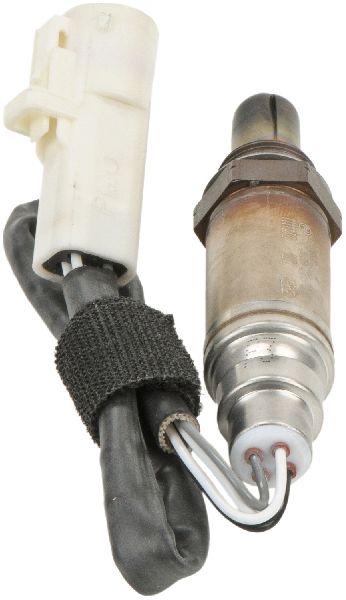
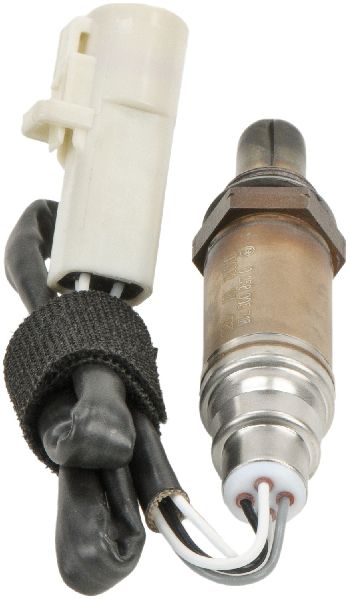
- Oxygen Sensor (Bank 1, Sensor 2)
(OEM #F87Z-9G444-BA (Motorcraft DY-1092))— This is the component that the P0136 code directly identifies as malfunctioning, and it is the most frequent point of failure.
Trusted brands: Motorcraft, Bosch, Denso, NGK/NTK, Walker
OEM price range: $70-$120
Aftermarket price range: $40-$90
Related Codes That Often Appear With This One
- P0171 — If an exhaust leak is the root cause, it can sometimes also lead to a P0171 (System Too Lean Bank 1) code, as unmetered air enters the exhaust stream. Multiple forum posts show these codes appearing together.
- P0420 — A failing downstream O2 sensor can sometimes incorrectly report a problem with the catalytic converter, leading to a P0420 (Catalyst System Efficiency Below Threshold) code, even if the converter is fine.
- P0141 — This code for 'O2 Sensor Heater Circuit Malfunction (Bank 1, Sensor 2)' often appears with P0136, as a failure of the internal heater element can cause the sensor circuit malfunction.
Platform-Specific Known Issues
- Seized Sensor Removal: A common owner complaint is the extreme difficulty in removing the original sensor due to rust. Multiple heat cycles cause it to seize in the exhaust pipe bung. Liberal use of penetrating oil (applied to a cool exhaust) and a dedicated, heavy-duty O2 sensor socket are often required. In severe cases, heating the bung with a torch may be necessary.
- Owner Experience: Simple Swap Fix: On a BobIsTheOilGuy.com forum thread, a user with a 2003 Explorer (similar platform) reported the P0136 code. The consensus and eventual fix was a straightforward replacement of the Bank 1 Sensor 2 O2 sensor, confirming the high probability of the sensor itself being the culprit.
Mechanic-Grade Diagnostic Values
- O2 Sensor Heater Element Resistance — expected: 3-15 Ohms, with 5 Ohms being a commonly cited specific value for Ford applications.. Failure: A reading of infinite resistance (OL) indicates an open circuit (failed heater), while 0 Ohms indicates a short.
- O2 Sensor Signal Voltage (at connector, KOEO) — expected: Near 0 Volts.. Failure: Unlike many other manufacturers, Ford systems of this era typically do not use a bias voltage. Seeing a significant voltage (e.g., 0.45V) with the sensor unplugged may indicate a short to another circuit.
- Downstream O2 Sensor Live Data (Warm Engine, Steady Cruise) — expected: A relatively stable voltage between 0.5V and 0.8V.. Failure: Voltage stuck low (near 0.1V), stuck high (near 0.9V), or fluctuating rapidly like an upstream sensor indicates a problem with the sensor or catalytic converter.
Scan Tool Commands That Help
- Forscan / Snap-On Solus / Equivalent: Live Data PID Monitoring (O2S12) — This is the primary diagnostic function. It is used to watch the sensor's voltage in real-time to determine if it is stuck, lazy, or responding correctly after a repair.
- Forscan / Equivalent: Clear Keep Alive Memory (KAM) — After replacing the sensor, clearing the KAM resets the PCM's long-term fuel trim adaptations and other learned values, forcing it to re-learn with the new, functional sensor.
- Forscan / Equivalent: Mode $06 Test Results — To view the results of the PCM's last self-test on the O2 sensor circuits. This can provide more granular data than a simple DTC, showing if the sensor's response time or voltage thresholds were marginally or grossly out of specification.
Wiring & Ground Locations
- G104 — On the RH (passenger) side of the engine compartment. For 1998 models, it's listed as the 'Engine support ground'.. This is a primary engine and PCM ground. Corrosion or a loose connection here can cause erratic voltage and signal issues for multiple sensors, including the oxygen sensors, leading to false codes.
- G101 — On the LH (driver) side front of the engine compartment, often near the radiator or battery.. Another critical chassis and engine ground point. All sensor grounds eventually find their way back to the battery through these main points. A bad ground here can introduce electrical noise into the system.
- O2 Sensor Heater Wires — Within the 4-wire connector for the O2 sensor itself.. On many sensors, the two wires for the internal heater are the same color (e.g., two white or two black wires). This allows a technician to quickly identify the correct pins to test for heater resistance without a wiring diagram.
Real Owner Repair Stories
- YouTube video by 'Scotties Hobbies' (2000 Ford F-150 (Platform relative with similar engine controls)) — P0136 and P0141 codes present.
❌ Tried (didn't work) The video warns against using universal, splice-in type oxygen sensors, as they are a common source of persistent codes.
✅ What actually fixed it The diagnostic advice given was to first test for continuity on all four wires of the vehicle-side harness connector with the key on. If continuity is present, the problem is almost certainly a failed O2 sensor. The final fix is replacing the Bank 1, Sensor 2 O2 sensor with a direct-fit OEM (Motorcraft) or high-quality aftermarket (Bosch) unit.
Documented NHTSA Reports
- NHTSA ODI #11539323: While involving a different model from the same manufacturer, an owner reported a situation where P0136 was retrieved alongside other codes like P0756 and P0102. In that specific instance, a dealer determined that coolant had intruded into the engine block, necessitating an engine replacement.
OEM Part Supersession History
F87Z-9G444-BA→Motorcraft DY-1092— This is the standard Motorcraft service part number for the original equipment.
Heads up: The Motorcraft DY-1092 has a wide application range, fitting many Ford trucks from 1995 through the late 2000s, indicating good compatibility within the 1995-2001 Explorer generation for the specified 4.0L engine.
Model Year Variations Within This Range
- 1995-2001: The 4.0L V6 was available in two distinct versions: the original pushrod 'Cologne' OHV engine (VIN 'X') and a new Single Overhead Cam SOHC version (VIN 'E') introduced for the 1997 model year. Both were sold concurrently until the OHV was phased out for 2001. While Bank 1 is the passenger side for both, the physical routing of the exhaust and wiring, as well as some ground point locations, may differ slightly. Always verify the correct part for your specific VIN (OHV vs. SOHC).
Diagnostic Flowchart
Other Known Issues on This Vehicle
Issues unrelated to this code that are worth knowing about as an owner of this generation:
- 4.0L SOHC Timing Chain Cassette Failure 🔴 High — Very common, especially on 1997-2001 models. Often presents as a rattling or chain-slapping noise from the front or rear of the engine, particularly at startup or around 2000-3000 RPM. Failure can be catastrophic. (Ref: Multiple TSBs were issued, but many have expired. The repair is labor-intensive as one chain is at the rear of the engine.)
- 5R55E Automatic Transmission Failures 🔴 High — Widespread issues reported, including hard shifts, slipping, loss of gears (especially reverse), and the O/D light flashing. Problems can stem from worn servo bores, failed solenoids, or welded clutch packs from overheating.
- Cracked Plastic Intake Manifold (V8 Models) 🟠 Medium — While this article is for the V6, it's a critical issue for the platform. The 5.0L V8 used a plastic intake manifold that was prone to cracking near the front coolant passage, causing a major coolant leak. The 4.0L V6 used a different design but could suffer from intake gasket leaks. (Ref: A class-action lawsuit was filed for this issue on other Ford models with similar manifolds.)
- Broken Blend Door in HVAC System 🟡 Low — A very common annoyance where the plastic blend door inside the dashboard HVAC unit breaks, resulting in the heat being stuck on full blast regardless of the temperature setting. The repair is very labor-intensive, requiring removal of the entire dashboard.
Used vs. New Parts: Buying Guide for This Vehicle
When a used part is the smart pick: For this repair, a used part is almost never a smart choice. The primary failure is the oxygen sensor itself, which is a wear item. A used wiring pigtail could be considered if the connector is damaged and a new one is unavailable, but it should be inspected carefully for corrosion or brittleness.
Donor-vehicle mileage cap: roughly under 10000 miles for the part to have meaningful remaining life.
What to inspect on the donor part:
- For a wiring pigtail: check for flexible, uncracked insulation.
- Ensure connector locking tabs are intact.
- Look for clean, corrosion-free pins inside the connector.
Aftermarket brands forum-validated for this vehicle:
- Motorcraft (OEM)
- Bosch
- Denso
- NGK/NTK
Brands owners have reported issues with on this vehicle:
- Universal 'splice-in' sensors. These are a frequent cause of incorrect readings and repeat failures.
Real Owner Stories
Aggregated from forums and TSBs cited above. Mileages and costs reflect what owners reported in those sources.
2003 Ford Explorer 4.0L V6
Symptoms: Check Engine Light on with code P0136.
What fixed it: Straightforward replacement of the Bank 1 Sensor 2 O2 sensor.
Source hint: BobIsTheOilGuy.com - 'OBD-II P0136 (O2 Sensor Bank 1 Sensor 2)'
Ford Ranger 4.0L V6
Symptoms: Frustration and confusion over identifying the correct sensor location for the P0136 code.
What fixed it: Identifying and replacing the passenger side rear (downstream) sensor.
Source hint: Ranger-Forums.com - 'P0136 AHHHHHHHHHHH!!!!'
Related OBD-II Codes
Frequently Asked Questions
Where is the Bank 1, Sensor 2 oxygen sensor located on my 4.0L V6 Explorer?
I'm having trouble removing the sensor due to rust; is this common on the Explorer?
Can an exhaust leak cause the P0136 code on my Ford Explorer?
Should I use Motorcraft or aftermarket sensors like Bosch for my 4.0L V6?
Is P0136 related to the timing chain rattling I hear in my 1997-2001 Explorer?
Could my flashing O/D light be related to the P0136 code?
Helpful Videos
![How to Fix FORD P0136 Engine Code in 4 Minutes [3 DIY Methods / Only $9.75]](https://img.youtube.com/vi/1G1CBQToLpc/mqdefault.jpg)
We Have This Part in Stock


The information in this article is provided for general reference and educational purposes only. Vehicle specifications, procedures, and part compatibility can vary by production date, trim level, and region. Always consult your vehicle's factory service manual and verify part numbers before purchasing or performing repairs. Safety-critical components such as airbags, seat belts, and braking systems should be installed by a qualified professional.
- Ford Explorer:
- 🧭 Diagnostic Flowchart
- 🎬 Helpful Videos
- 🛍️ Shop This Part
- What's Unique About the 1995-2001 Ford Explorer
- Symptoms You May Notice
- Most Likely Causes
- Rare But Worth Checking
- Diagnosis Steps
- Parts You'll Likely Need
- Related Codes That Often Appear With This One
- Platform-Specific Known Issues
- Mechanic-Grade Diagnostic Values
- Scan Tool Commands That Help
- Wiring & Ground Locations
- Real Owner Repair Stories
- Documented NHTSA Reports
- OEM Part Supersession History
- Model Year Variations Within This Range
- Other Known Issues on This Vehicle
- Used vs. New Parts: Buying Guide for This Vehicle
- Real Owner Stories
- 2003 Ford Explorer 4.0L V6
- Ford Ranger 4.0L V6
- Related OBD-II Codes
- Frequently Asked Questions
- 🎟️ Get 5% Off