

P0136 on 2011-2019 Ford Explorer 3.5L V6: Causes, Fixes, and O2 Sensor Guide
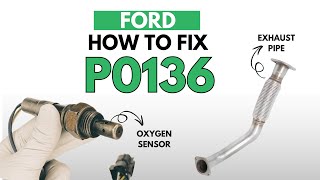
This code points to a malfunction in the downstream oxygen sensor on Bank 1 (Bank 1, Sensor 2). The most common fix is replacing the sensor itself, which is a relatively low-cost part and a straightforward DIY job for many owners. However, on this platform, it's wise to rule out exhaust leaks and consider the possibility of sensor contamination from a failing internal water pump.
- P0136 almost always points to a problem with the Bank 1, Sensor 2 oxygen sensor or its circuit.
- The most probable cause is the O2 sensor itself has failed due to age and needs to be replaced.
- Before replacing the sensor, perform a quick visual inspection of its wiring and the nearby exhaust pipe for obvious damage or leaks.
- Using a direct-fit, quality replacement sensor (like Motorcraft) is recommended to prevent the code from returning.
- Do not ignore this code, as it can lead to poor fuel mileage and eventual damage to the catalytic converter.
What's Unique About the 2011-2019 Ford Explorer
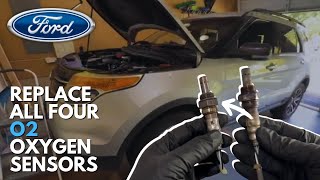
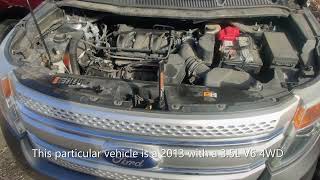
For the fifth-generation Ford Explorer with the 3.5L V6, the P0136 code is a common and typically straightforward issue. Bank 1 is the cylinder bank closer to the firewall on this transversely mounted engine, making access to its sensors slightly more challenging than Bank 2, which is at the front of the engine bay. The downstream sensor (Sensor 2) is located underneath the vehicle, next to the oil pan. 🎬 Watch: See exactly where all four O2 sensors are located. While the code itself is standard, owners have reported that using non-OEM or 'universal' sensors can sometimes cause the code to return, making a direct-fit Motorcraft, Denso, or NTK sensor a more reliable choice. A critical vehicle-specific issue to be aware of is the engine's internal, timing-chain-driven water pump. A failure can leak coolant into the engine oil, and the resulting contamination can foul and destroy oxygen sensors.
Symptoms You May Notice
- Check Engine Light is on.
- Reduced fuel economy.
- Failed emissions test.
- Rough idle or poor acceleration (less common).
- Replacing the catalytic converter when the actual problem is just the inexpensive O2 sensor. A P0136 code should always be diagnosed and fixed before addressing a P0420 (Catalyst Efficiency) code, as the faulty sensor can cause a false P0420.
- Replacing the O2 sensor without checking for an underlying cause, such as an exhaust leak or coolant contamination from a failing water pump, which will cause the new sensor to fail prematurely.
Most Likely Causes
- Faulty Bank 1, Sensor 2 Oxygen Sensor 🔴 High Probability → Shop Oxygen Sensor Oxygen sensors are wear-and-tear items that degrade over time from heat and contaminants in the exhaust. Their lifespan is typically 60,000 to 100,000 miles. On this specific engine, they can also be fouled by coolant if the internal water pump fails.
How to confirm: Use an OBD-II scanner to monitor the live data from the B1S2 O2 sensor. A healthy downstream sensor should show a relatively stable voltage (typically 0.5V-0.8V). If the voltage is stuck near 0V or 1V, is flatlined, or is not producing a signal, it has likely failed. The sensor may appear extremely black and sooty upon removal if it has failed.
Typical fix: Replace the Bank 1, Sensor 2 oxygen sensor. It is located underneath the vehicle, toward the rear. It is highly recommended to use a direct-fit OEM (Motorcraft) or high-quality aftermarket (Denso, NTK) part.
Est. part cost: $50-$150 - Damaged Wiring or Corroded Connector 🟡 Medium Probability The sensor's wiring is located under the vehicle and is exposed to road debris, moisture, and extreme heat from the exhaust, which can cause damage or corrosion over time. The harness runs up over the subframe, providing multiple points for potential chafing or melting.
How to confirm: Visually inspect the wiring harness and connector leading to the O2 sensor for any signs of melting, fraying, breaks, or corrosion on the pins. The connector is located up above the frame, and can be difficult to reach. Check for continuity and voltage at the connector with a multimeter to verify the circuit's integrity.
Typical fix: Repair the damaged section of the wiring harness or clean/replace the connector. Ensure the repaired harness is secured away from hot exhaust components.
Est. part cost: $50-$150 - Exhaust Leak ⚪ Low Probability Exhaust components can develop leaks at gaskets or weld seams due to rust and vibration. A leak near the sensor can introduce outside air, skewing its readings and triggering the code.
How to confirm: Listen for an audible ticking or hissing sound from the exhaust system, especially when the engine is cold. Visually inspect the exhaust pipes and flanges near the sensor for black soot marks, which indicate a leak.
Typical fix: Repair the leak by replacing the faulty gasket or welding the cracked component. In severe cases, the affected pipe or manifold may need replacement.
Est. part cost: $10-$400
Rare But Worth Checking
- Failing Catalytic Converter: → Shop Catalytic Converter While a P0420 code is the primary indicator of a bad catalytic converter, a failing converter can sometimes cause erratic readings on the downstream O2 sensor, triggering a P0136 first.
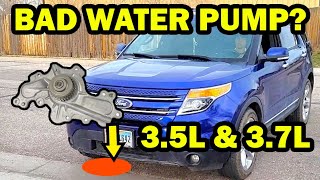
- Coolant Contamination from Internal Water Pump Failure: This is a critical, platform-specific potential cause. The 3.5L V6 has an internal water pump that, upon failure, can leak coolant into the engine oil. This contaminated oil, when burned, can foul the O2 sensors with a white, crusty deposit, leading to their failure. If you have P0136 along with unexplained coolant loss, check the oil for a milky appearance. 🎬 See how to identify a failing internal water pump leak.
- Faulty Powertrain Control Module (PCM): This is extremely rare. The PCM should only be considered after all other possibilities, including the sensor, wiring, and exhaust system, have been thoroughly ruled out.
Diagnosis Steps
- Read the Code: Use an OBD-II scanner to confirm P0136 is the active code and check for any other related codes.
- Visual Inspection: Inspect the Bank 1, Sensor 2 oxygen sensor (located under the vehicle, near the oil pan), its connector, and wiring harness. Look for any obvious signs of damage, such as melted wires, corrosion in the connector, or physical damage to the sensor itself.
- Check for Coolant Contamination: As a precaution specific to this engine, check the oil level and condition. An overfull oil level or a milky, chocolate-milk-like appearance on the dipstick or oil cap indicates coolant has mixed with the oil, likely from a failed internal water pump.
- Check for Exhaust Leaks: With the engine running, listen and feel for any leaks in the exhaust system, particularly between the engine and the catalytic converter.
- Analyze Live Data: Use a capable OBD-II scanner to view the live voltage data from the Bank 1, Sensor 2. The voltage should be relatively steady (typically between 0.5V and 0.8V) on a warm engine at steady RPM. If it's stuck low (near 0.1V), high (near 0.9V), or is not producing a signal, the sensor is likely bad.
- Test the Circuit: If the sensor appears okay, disconnect it and test the wiring harness. Check for correct reference voltage (~12V) and ground at the heater circuit pins of the connector using a multimeter with the key on, engine off. This will rule out a wiring issue between the PCM and the sensor.
- Replace the Sensor: If the sensor is determined to be faulty, replace it. Use a 22mm or 7/8" oxygen sensor socket. Torque the new sensor to 35 ft-lbs. Apply anti-seize compound to the new sensor's threads if not pre-applied. Clear the code and perform a test drive to ensure the issue is resolved.
Parts You'll Likely Need
- Oxygen Sensor (Bank 1, Sensor 2)
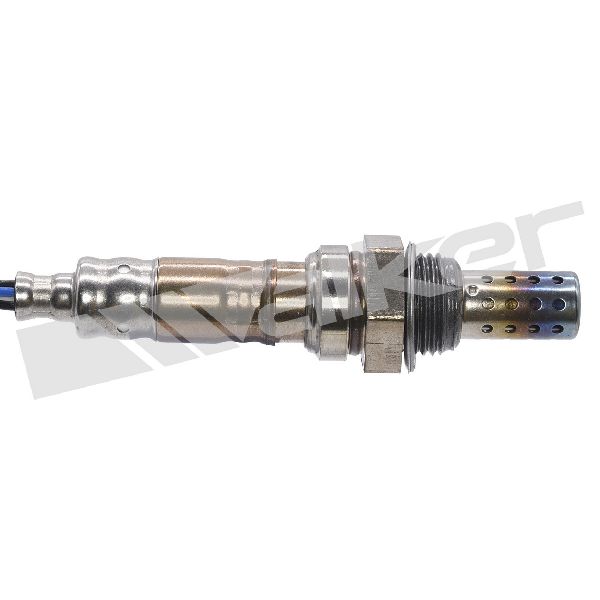
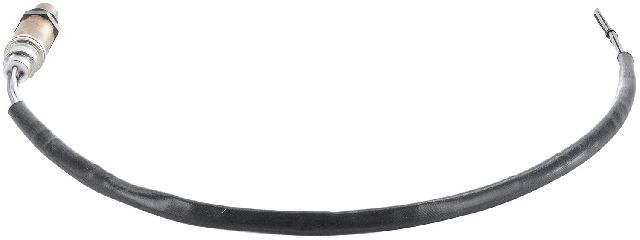
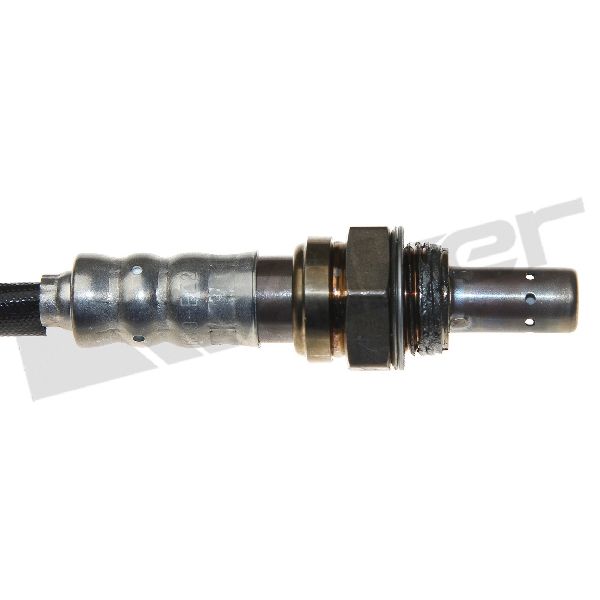
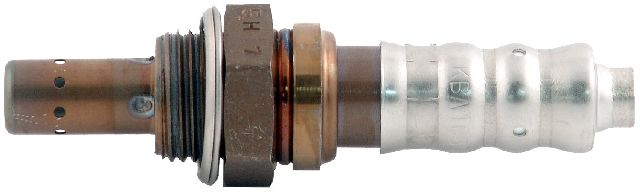
(OEM #CT4Z-9G444-A)— This is the most common failure point for a P0136 code. It is a wear item that directly triggers the fault when its internal components fail. The Ford part number CT4Z-9G444-A and the Motorcraft service part number DY-1173 are both associated with this sensor.
Trusted brands: Motorcraft (OEM), Bosch, Denso, NTK
OEM price range: $80-$150
Aftermarket price range: $50-$100
Related Codes That Often Appear With This One
- P0420 — A faulty Bank 1 Sensor 2 can no longer accurately monitor the catalytic converter, which can lead the PCM to incorrectly flag the converter as inefficient.
- P0138 — This code indicates 'O2 Sensor Circuit High Voltage (Bank 1, Sensor 2)'. Both P0136 and P0138 point to an electrical fault in the same sensor circuit and are often diagnosed and repaired together.
- P0156 — This is the equivalent code for Bank 2, Sensor 2. It's common for owners to replace sensors in pairs (both downstream sensors at the same time) as they have similar lifespans.
Technical Service Bulletins (TSBs) & Recalls
- TSB 19-2017: While related to the PTU, this TSB addresses fluid leaks from seals in the same general underbody area
Platform-Specific Known Issues
- Customer Satisfaction Program 17B25 was issued for 2013-2017 Explorers (including Police Interceptor models) regarding potential exhaust leaks into the cabin. This program involved inspecting and sealing body seams, particularly in the rear of the vehicle, to prevent carbon monoxide intrusion. While not a direct cause of P0136, it highlights known exhaust system sealing issues on this platform that could, in theory, contribute to exhaust leaks.
- Customer Satisfaction Program 21B35 was issued for some 2020 Explorer Police vehicles for cracked right-hand catalytic converters or exhaust flexible pipes, which could cause an exhaust leak and potentially trigger this code.
Mechanic-Grade Diagnostic Values
- O2 Sensor Heater Circuit Resistance — expected: 2-10 Ohms. Failure: A reading of OL (infinite resistance) or near zero indicates a failed heater element within the sensor.
- O2 Sensor Installation Torque — expected: 35 ft-lbs (47 Nm). Failure: Under-torquing can lead to exhaust leaks; over-torquing can damage the sensor or threads.
- Heater Circuit Supply Voltage (at harness) — expected: ~12V (Battery Voltage). Failure: 0V indicates a blown fuse or an open in the power supply wire from the PCM.
Hidden / Shadow Codes Worth Checking
- O2 Sensor Monitor Readiness: → Shop Oxygen Sensor This is not a fault code, but a readiness monitor within the OBD-II system that must complete to verify the oxygen sensor system is functioning correctly. A P0136 fault will prevent this monitor from setting to 'Ready'. (see via Use any standard OBD-II scanner and check the I/M (Inspection/Maintenance) readiness status. To get the monitor to run after a repair, a specific drive cycle is needed: engine at normal operating temperature, inlet air temp between 40-100°F, and cruising at a steady 40 mph for four minutes.)
Scan Tool Commands That Help
- Advanced Scan Tool (e.g., FORScan, IDS): O2 Sensor PCM Response Test — This is an advanced manual test for verifying PCM and wiring integrity. It involves disconnecting the sensor and manually introducing a voltage (e.g., via human body static or a variable voltage source) to the signal wire while watching for a response on the scan tool's live data. It confirms the PCM is capable of seeing a voltage change.
Wiring & Ground Locations
- Bank 1 Sensor 2 Connector — The electrical connector for the B1S2 sensor is not attached to the sensor itself. Follow the sensor's wire harness up from the exhaust pipe; the connector is located above the subframe, near the rear of the engine.. This connector is a common point of failure due to corrosion or damage. It must be disconnected to test the sensor and the harness independently. Knowing its location is critical for efficient diagnosis.
Real Owner Repair Stories
- AliExpress Review / User Story (2013 Ford Explorer 3.5L V6 (non-EcoBoost)) — Check Engine Light with a recurring P0136 code.
❌ Tried (didn't work) Replacing the O2 sensor with a 'universal replacement' part, which caused the P0136 code to return within two weeks.
✅ What actually fixed it Replacing the sensor with the correct OEM-specification part (part number CT4Z-9G444-A). The user confirmed the fix by monitoring live data and observing the sensor's voltage was no longer flatlined near 0.7V but was responding correctly.
OEM Part Supersession History
CT4Z-9G444-A (Engineering Number)→DY-1173 (Motorcraft Service Number)— Standard Ford practice where an engineering part number is assigned a service part number for retail and repair channels.
Heads up: Both part numbers refer to the same component for Bank 1, Sensor 2. However, it is critical not to confuse this with the sensor for Bank 2, Sensor 2, which is a different part (Motorcraft DY-1153).
Model Year Variations Within This Range
- 2011-2019: The four oxygen sensors on the 3.5L V6 are not all interchangeable. For the downstream sensors, Bank 1 Sensor 2 (the cause of P0136) is Motorcraft part DY-1173, while Bank 2 Sensor 2 is Motorcraft part DY-1153. The upstream sensors are part number DY-1178 for both banks. Using the wrong sensor, even if it physically fits, can cause codes to persist.
Diagnostic Flowchart
Other Known Issues on This Vehicle
Issues unrelated to this code that are worth knowing about as an owner of this generation:
- Internal Water Pump Failure 🔴 High — Common after 100,000 miles. Failure can cause coolant to mix with engine oil, leading to catastrophic engine damage if not caught early.
- Power Transfer Unit (PTU) Failure 🔴 High — Common on AWD models. The 'lifetime' fluid overheats due to proximity to the exhaust, breaks down, and causes bearing/gear failure. Recommended fluid change every 30,000 miles. (Ref: TSB 19-2017 (for fluid leaks))
- Exhaust Odor / CO in Cabin 🟠 Medium — Widespread enough to prompt a Customer Satisfaction Program. Caused by unsealed body seams in the rear of the vehicle. (Ref: Customer Satisfaction Program 17B25)
- Electronic Throttle Body Malfunction 🟠 Medium — Affects many 5th-gen Explorers, causing sudden power loss or entry into 'limp mode'. Often triggers codes P2111 or P2112.
- Cracked Exhaust Manifold 🟡 Low — Some owners report cracked exhaust manifolds, leading to ticking noises and exhaust smells before the gases enter the cabin.
- Power Steering Rack Failure 🟠 Medium — A common weak point, with issues ranging from whining noises to complete loss of power steering assistance. (Ref: Multiple recalls on early models (2011-2013) for steering issues.)
Used vs. New Parts: Buying Guide for This Vehicle
When a used part is the smart pick: It is strongly advised NOT to use a used oxygen sensor for this repair. O2 sensors are consumable parts with a finite lifespan determined by heat cycles and exposure to exhaust contaminants. The cost savings of a used part are minimal and do not outweigh the high risk of premature failure.
What to inspect on the donor part:
- Not applicable, as used parts are not recommended.
OEM-only on this vehicle (don't cheap out):
- Oxygen Sensor
Aftermarket brands forum-validated for this vehicle:
- Motorcraft (OEM)
- Denso
- NTK
- Bosch
Brands owners have reported issues with on this vehicle:
- Unbranded 'universal' sensors have been reported by owners to cause recurring codes.
Real Owner Stories
Aggregated from forums and TSBs cited above. Mileages and costs reflect what owners reported in those sources.
2011-2019 Ford Explorer 3.5L V6
Symptoms: The B1S2 voltage was observed on a scanner and found to be stuck at 0.0V.
What fixed it: Replacing the sensor, which was found to be black and sooty upon removal, resolved the issue.
Source hint: Reddit (r/MechanicAdvice)
2011-2019 Ford Explorer 3.5L V6
Symptoms: P0136 code present; owner was advised to check for wiring issues or exhaust leaks before replacing parts.
What fixed it: A thorough inspection of the wiring and connectors or checking for an exhaust leak was the recommended diagnostic path that led to the correct fix.
Source hint: ford-trucks.com
Ford Owner Report (NHTSA ODI #11539323)
Symptoms: The check engine light illuminated and a diagnostic scan retrieved codes P0756, P1450, P0136, and P0102.
What fixed it: A dealer determined that coolant had intruded into the engine block and the engine needed to be replaced. This highlights how severe internal engine issues can manifest as oxygen sensor circuit codes.
Source hint: NHTSA ODI #11539323
Related OBD-II Codes
Frequently Asked Questions
Which sensor is Bank 1, Sensor 2 on my Ford Explorer 3.5L V6?
Could the exhaust smell in my cabin be related to the P0136 code?
Is there a specific brand of O2 sensor I should use for my Explorer?
Can a water pump failure cause this oxygen sensor code?
What size tool do I need to replace the B1S2 sensor on my 2011-2019 Explorer?
Does Customer Satisfaction Program 21B35 apply to my P0136 code?
Helpful Videos
We Have This Part in Stock

The information in this article is provided for general reference and educational purposes only. Vehicle specifications, procedures, and part compatibility can vary by production date, trim level, and region. Always consult your vehicle's factory service manual and verify part numbers before purchasing or performing repairs. Safety-critical components such as airbags, seat belts, and braking systems should be installed by a qualified professional.
- Ford Explorer:
- 🧭 Diagnostic Flowchart
- 🎬 Helpful Videos
- 🛍️ Shop This Part
- What's Unique About the 2011-2019 Ford Explorer
- Symptoms You May Notice
- Most Likely Causes
- Rare But Worth Checking
- Diagnosis Steps
- Parts You'll Likely Need
- Related Codes That Often Appear With This One
- Technical Service Bulletins (TSBs) & Recalls
- Platform-Specific Known Issues
- Mechanic-Grade Diagnostic Values
- Hidden / Shadow Codes Worth Checking
- Scan Tool Commands That Help
- Wiring & Ground Locations
- Real Owner Repair Stories
- OEM Part Supersession History
- Model Year Variations Within This Range
- Other Known Issues on This Vehicle
- Used vs. New Parts: Buying Guide for This Vehicle
- Real Owner Stories
- 2011-2019 Ford Explorer 3.5L V6
- 2011-2019 Ford Explorer 3.5L V6
- Ford Owner Report (NHTSA ODI #11539323)
- Related OBD-II Codes
- Frequently Asked Questions
- 🎟️ Get 5% Off