

P0136 on 2004-2008 Ford F-150 4.6L V8: Causes and Fixes for O2 Sensor Circuit Malfunction
This code indicates a malfunction with the downstream oxygen sensor on the passenger side (Bank 1, Sensor 2). The most common fix is replacing the sensor itself, which costs about $40-$120 for the part. Before replacing, inspect the wiring harness for any visible damage, as that is the second most likely cause, with chafing on the frame or transmission being a known issue.
- P0136 on this F-150 points to a circuit problem with the passenger-side, post-catalytic converter O2 sensor.
- The most likely fix is replacing the O2 sensor itself, which is a common wear item.
- Before buying a new sensor, always perform a thorough visual inspection of the wiring harness for any obvious damage, especially where it runs over the transmission.
- This code will cause an automatic emissions test failure, so it should be addressed before any required inspections.
- The repair is considered DIY-friendly for those with basic tools, including a special O2 sensor socket.
What's Unique About the 2004-2008 Ford F-150
For the 11th generation F-150 with the 4.6L V8, the P0136 code is a very common and straightforward fault. The issue is rarely with the truck's computer (PCM) or other complex systems. It's typically a simple component failure of the O2 sensor due to age and heat, or damage to its exposed wiring harness under the truck. Owners frequently report that the wiring harness can rub against the frame or transmission, causing wires to chafe and short out.
Symptoms You May Notice
- Check Engine Light is on
- Failing an emissions test
- In some cases, a rough idle or poor acceleration may be noticed
- Engine may run rich if it cannot enter closed-loop mode, potentially leading to reduced fuel economy
- Replacing the catalytic converter. A P0136 code points to a sensor *circuit* fault, not catalytic converter efficiency. A bad converter typically triggers a P0420 code. Always diagnose and fix sensor circuit codes first.
- Replacing the wrong O2 sensor. This truck has four O2 sensors. P0136 specifically refers to Bank 1 (passenger side), Sensor 2 (downstream, after the catalytic converter).
Most Likely Causes
- Faulty Bank 1, Sensor 2 Oxygen Sensor 🔴 High Probability → Shop Oxygen Sensor Oxygen sensors are wear-and-tear items that are constantly exposed to extreme exhaust heat. Their internal heating elements and sensing capabilities degrade over time, making failure common after many years and miles.
How to confirm: Use a scan tool to monitor the live voltage from the Bank 1 Sensor 2. A healthy downstream sensor should show a relatively stable voltage between 0.5V and 0.8V when the engine is warm and at a steady RPM. If the voltage is stuck near 0V, near 1V, or fluctuates rapidly like an upstream sensor, it has likely failed.
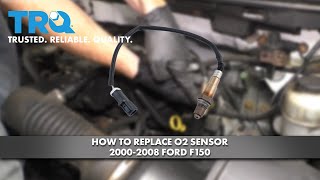
Typical fix: Replace the Bank 1, Sensor 2 oxygen sensor. This requires an O2 sensor socket and may require penetrating oil if the old sensor is seized in the exhaust pipe.
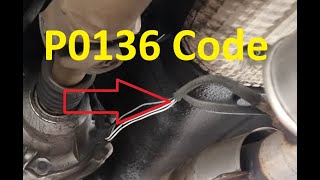
Est. part cost: $40-$120 - Damaged Wiring Harness or Connector 🟡 Medium Probability The wiring for the downstream O2 sensors is routed underneath the truck, making it vulnerable to road debris, water, and heat. Forum users specifically mention the harness chafing on the transmission or frame members, wearing through the insulation and causing a short or open circuit.
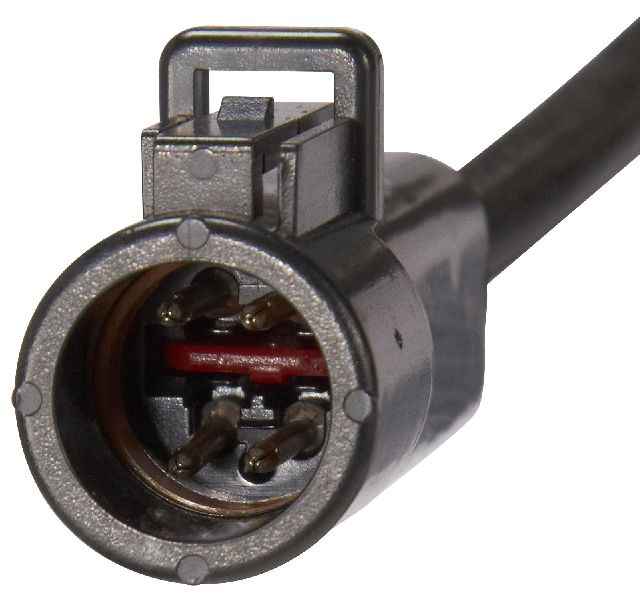
How to confirm: Visually inspect the entire length of the wiring harness leading to the Bank 1 Sensor 2. Look for any signs of melting, chafing, corrosion, or broken wires, paying close attention to where it passes over the transmission. Check the connector for corrosion or pushed-out pins. In one documented case, simply reseating the connector was enough to fix the code.
Typical fix: Repair the damaged section of the wire. This may involve soldering in a new piece of wire and protecting it with heat-shrink tubing, or replacing the connector pigtail if the damage is at the connector.
Est. part cost: $5-$30 - Exhaust Leak ⚪ Low Probability The exhaust manifolds on these trucks, particularly the studs, can rust and fail, creating leaks. Any leak upstream of the O2 sensor can introduce extra oxygen into the exhaust stream, causing incorrect sensor readings.
How to confirm: With the engine cold, start the truck and listen and feel for puffing sounds or air escaping from the exhaust manifolds, flanges, or pipes before the sensor. A shop can perform a smoke test to pinpoint the exact location of a leak.
Typical fix: Replace the leaking gasket or failed exhaust manifold studs. In some cases, the pipe itself may need to be patched or replaced.
Est. part cost: $20-$300
Rare But Worth Checking
- Faulty Powertrain Control Module (PCM): This is extremely rare. Before condemning the PCM, all other possibilities, especially the sensor and its wiring, must be exhaustively ruled out. A shop would need to perform advanced diagnostics to confirm a PCM fault. Also check for corroded main PCM ground points on the firewall, such as G101 and G102, which can cause various sensor errors.
Diagnosis Steps
- Read the fault codes with an OBD-II scanner to confirm P0136 is the primary code present.
- Visually inspect the Bank 1, Sensor 2 oxygen sensor, which is on the passenger side, downstream of the catalytic converter. Check for obvious physical damage.
- Carefully inspect the wiring harness and connector leading to the sensor. Look for any signs of melting, chafing against the frame or transmission, corrosion in the connector, or loose pins. Unplug and reseat the connector.
- Inspect the exhaust system for leaks. Listen for puffing sounds when the engine is cold, and look for black soot trails around manifold flanges and pipe connections upstream of the sensor.
- Use a scan tool with live data capability to observe the voltage from the Bank 1, Sensor 2. With the engine fully warmed up and held at a steady 2000 RPM, the voltage should be relatively stable, typically between 0.5V and 0.8V.
- If the voltage is stuck low (near 0V), stuck high (near 1V), or is not producing a signal, the sensor has likely failed.
- If the sensor and wiring appear good, but the code persists, consider testing the sensor's heater circuit resistance with a multimeter (typically 3-30 ohms). An open or shorted heater circuit can sometimes cause a general circuit malfunction code.
- For advanced diagnosis, check for continuity on the signal wire between the sensor connector and the PCM connector (Pin 35). Check for good ground at the PCM ground points on the passenger side firewall (G101, G102).
Parts You'll Likely Need
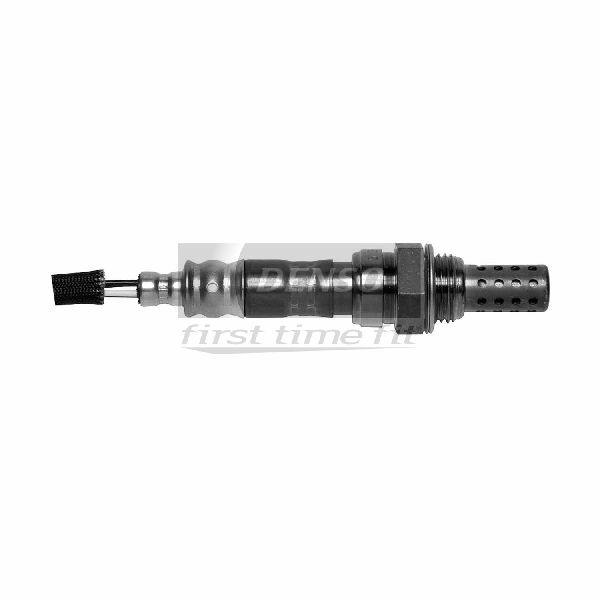
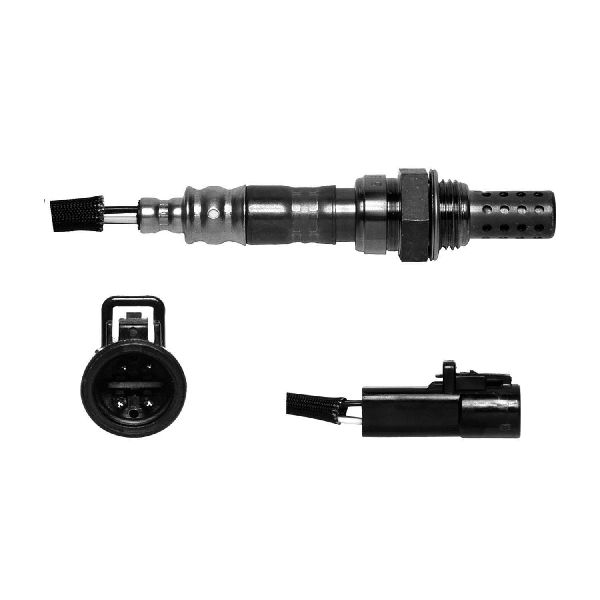
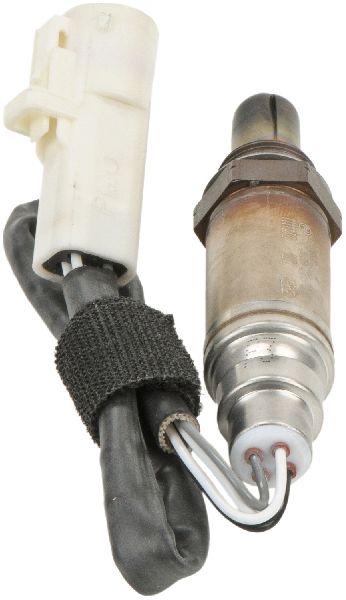
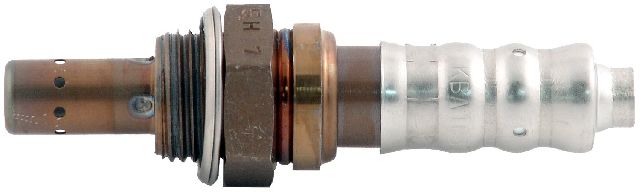
- Oxygen Sensor (Bank 1, Sensor 2)
(OEM #DY-1092)— This is the downstream, passenger-side oxygen sensor. It is the most common point of failure for a P0136 code due to age and exposure to the elements. This part number is also used for other Ford vehicles of the era, including the Ranger and Explorer.
Trusted brands: Motorcraft, Bosch, Denso, NGK/NTK
OEM price range: $70-$110
Aftermarket price range: $40-$80
Related Codes That Often Appear With This One
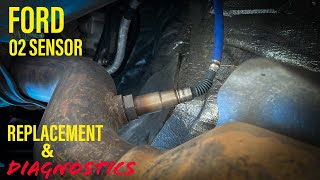
- P0141 — This code indicates a malfunction in the heater circuit for the exact same sensor (Bank 1, Sensor 2). Seeing P0136 and P0141 together strongly points to a failed sensor unit or a wiring/fuse issue related to the sensor. 🎬 Watch: Troubleshooting guide for fixing P0141 and P0136 codes together.
- P0156 — This is the identical 'O2 Sensor Circuit Malfunction' code but for Bank 2 (driver's side). Seeing both codes together suggests a common problem like a shared wiring issue or that both sensors have failed around the same time due to age.
- P1137 / P1138 — These are Ford-specific Key-On-Engine-Running (KOER) self-test codes indicating a lack of switching from the downstream O2 sensor. If they appear alongside a P0136, it confirms the sensor is not responding correctly during the PCM's active test.
Platform-Specific Known Issues
- Owners on forums frequently report the O2 sensor wiring harness getting damaged where it passes over the transmission housing, leading to intermittent shorts that are not fixed by replacing the sensor alone.
- A user on f150forum.com reported chasing P0136 and P0156 along with lean codes P1131 and P1151. After extensive testing of sensors and wiring continuity, the final suspect was the PCM itself not correctly interpreting the sensor signals.
Mechanic-Grade Diagnostic Values
- O2 Sensor Heater Element Resistance — expected: 3 to 30 Ohms, with many Ford sensors reading between 5-15 Ohms.. Failure: Infinite resistance (Open Loop/OL) or zero resistance (short circuit).
- O2 Sensor Heater Circuit Supply Voltage — expected: Approximately 12V (Battery Voltage) with Key On, Engine Off.. Failure: 0V indicates a blown fuse or a break in the power wire from the PCM.
- Downstream O2 Sensor Voltage (Live Data) — expected: Relatively stable voltage between 0.5V and 0.8V when engine is warm and at a steady RPM.. Failure: Stuck near 0V, stuck near 1V, or fluctuating rapidly like an upstream sensor.
- Mode 6, Test ID (TID) $05 — expected: This test monitors the downstream O2 sensor. The 'Actual' value on a scan tool should be within the 'Min' and 'Max' thresholds provided by the PCM.. Failure: If the 'Actual' value is outside the Min/Max limits, it indicates a failure in the sensor's response that will trigger the P0136 code.
Hidden / Shadow Codes Worth Checking
- P1137 / P1138: Lack of HO2S Switch, Sensor Indicates Lean / Rich (Bank 1 Sensor 2). These are not shadow codes but are specific to Ford's Key-On-Engine-Running (KOER) self-test. They indicate the PCM commanded a rich or lean mixture and the downstream sensor did not respond with the expected voltage change. (see via Run a KOER self-test with a capable Ford-specific scan tool (like Ford IDS or FORScan).)
Wiring & Ground Locations
- PCM Connector Pin 35 — On the 104-pin PCM connector, located on the passenger side firewall.. This is the specific signal wire for the Bank 1, Sensor 2 O2 sensor. Testing for continuity from this pin to the sensor connector is the definitive way to check for a broken signal wire.
- G101 — On the firewall, behind the PCM on the passenger side.. This is a primary ground for engine components on the passenger side. A corroded or loose G101 can cause erratic sensor readings for all of Bank 1, including the O2 sensors.
- G102 — On the firewall, to the right of the PCM.. Another critical firewall ground point. Poor connection here can lead to various electrical faults, including sensor circuit codes.
- G104 — On the right side of the engine compartment.. Provides a ground path for various components in the engine bay. While less directly tied to the O2 sensor circuit than G101/102, it's part of the overall ground system that needs to be intact for stable sensor operation.
Real Owner Repair Stories
- f150forum.com user (2006 Ford F-150) — P0136 and P0156 codes present, indicating issues with both downstream O2 sensors.
❌ Tried (didn't work) Replacing both downstream O2 sensors.
✅ What actually fixed it The user found water inside the C146 connector, a large 16-pin connector for the rear O2 sensors located on the driver's side frame rail near the transmission. After drying out the connector and applying dielectric grease, the codes were resolved.
Documented NHTSA Reports
While P0136 is often a sensor or wiring issue, cross-manufacturer records such as NHTSA ODI #11539323 for other Ford models note that this code can sometimes appear alongside others like P0102 and P1450 in severe cases where coolant has intruded into the engine block, requiring significant engine repair.
Diagnostic Flowchart
Other Known Issues on This Vehicle
Issues unrelated to this code that are worth knowing about as an owner of this generation:
- Timing Chain Guide & Tensioner Failure 🔴 High — Common after 100,000-150,000 miles. Presents as a rattling noise on startup, which can lead to catastrophic engine failure if ignored.
- Spark Plug Ejection / Breakage 🟠 Medium — A notorious issue for Ford modular V8s. Earlier 2-valve engines could eject spark plugs from the head, while the 3-valve 5.4L (often confused with the 4.6L) had issues with two-piece plugs breaking during removal. The 4.6L in this F-150 is less prone but the reputation persists. (Ref: SSM 5377 covers the authorized spark plug thread repair procedure for 2V engines.)
- Fuel Pump Driver Module (FPDM) Corrosion 🔴 High — Very common in regions with road salt. The module is mounted to the frame crossmember above the spare tire, and its aluminum casing corrodes, causing fuel delivery issues, stalling, or a no-start condition.
- Cracked Exhaust Manifolds / Broken Studs 🟠 Medium — Commonly occurs on higher mileage trucks. The manifold studs rust and break, particularly the one nearest the firewall, causing an exhaust leak and a distinct 'ticking' noise that may quiet down as the engine warms up.
- Failing Window Regulators 🟡 Low — The cable-driven window regulators are a common failure point, causing windows to get stuck, fall into the door, or make grinding noises.
Used vs. New Parts: Buying Guide for This Vehicle
When a used part is the smart pick: For this repair, buying a used part is almost never a smart choice. Oxygen sensors are wear items with a finite lifespan, similar to spark plugs or brake pads. A used sensor from a junkyard has unknown mileage and exposure to heat cycles, and could fail shortly after installation, wasting time and money.
Donor-vehicle mileage cap: roughly under 10000 miles for the part to have meaningful remaining life.
What to inspect on the donor part:
- Not applicable as used O2 sensors are not recommended.
OEM-only on this vehicle (don't cheap out):
- While not strictly 'OEM-only', using a Motorcraft sensor is highly recommended. Ford PCMs can be sensitive to the specific voltage and resistance characteristics of aftermarket sensors, sometimes leading to persistent or new codes even with a brand new part.
Aftermarket brands forum-validated for this vehicle:
- Bosch
- Denso
- NGK/NTK
Brands owners have reported issues with on this vehicle:
- Unnamed, no-brand 'universal' sensors that require splicing wires are frequently reported to cause issues. It is better to use a direct-fit sensor with the correct connector.
Real Owner Stories
Aggregated from forums and TSBs cited above. Mileages and costs reflect what owners reported in those sources.
2004-2008 Ford F-150 4.6L V8
Symptoms: The owner was chasing P0136 and P0156 along with lean codes P1131 and P1151. They performed extensive testing on sensors and wiring continuity.
What fixed it: The PCM was identified as the fault because it was not correctly interpreting the sensor signals.
Source hint: f150forum.com - "PCM possibly bad, anything else to check?"
2004-2008 Ford F-150 4.6L V8
Symptoms: The vehicle triggered a P0136 code and a P0305 misfire code.
What fixed it: Simply reseating the post-cat O2 sensor connector.
Source hint: f150forum.com - "P0136 and P0305"
2004-2008 Ford F-150 4.6L V8
Symptoms: The owner experienced both downstream sensor codes (P0136 & P0156) simultaneously.
What fixed it: The discussion suggested a common harness problem or simultaneous sensor failure due to age.
Source hint: f150forum.com - "po136, po156, 1131,1151"
Related OBD-II Codes
Frequently Asked Questions
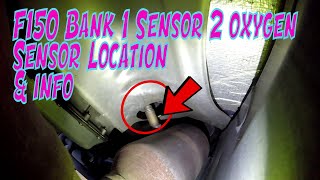
Where is the Bank 1, Sensor 2 oxygen sensor located on my 2004-2008 Ford F-150?
I'm seeing P0136 and P0156 together on my F-150; does this mean both sensors failed at once?
Is there a specific TSB for spark plug issues on my 4.6L V8 that might be related to engine performance?
Can a simple loose connection cause the P0136 code on this truck?
Could my F-150's PCM be the cause of the P0136 code?
How can I tell if my P0136 is caused by an exhaust leak instead of a bad sensor?
Helpful Videos
We Have This Part in Stock


The information in this article is provided for general reference and educational purposes only. Vehicle specifications, procedures, and part compatibility can vary by production date, trim level, and region. Always consult your vehicle's factory service manual and verify part numbers before purchasing or performing repairs. Safety-critical components such as airbags, seat belts, and braking systems should be installed by a qualified professional.
- Ford F-150:
- 🧭 Diagnostic Flowchart
- 🎬 Helpful Videos
- 🛍️ Shop This Part
- What's Unique About the 2004-2008 Ford F-150
- Symptoms You May Notice
- Most Likely Causes
- Rare But Worth Checking
- Diagnosis Steps
- Parts You'll Likely Need
- Related Codes That Often Appear With This One
- Platform-Specific Known Issues
- Mechanic-Grade Diagnostic Values
- Hidden / Shadow Codes Worth Checking
- Wiring & Ground Locations
- Real Owner Repair Stories
- Documented NHTSA Reports
- Other Known Issues on This Vehicle
- Used vs. New Parts: Buying Guide for This Vehicle
- Real Owner Stories
- 2004-2008 Ford F-150 4.6L V8
- 2004-2008 Ford F-150 4.6L V8
- 2004-2008 Ford F-150 4.6L V8
- Related OBD-II Codes
- Frequently Asked Questions
- 🎟️ Get 5% Off