

P0136 on 2012-2018 Ford Focus 2.0L: Causes and Fixes for the Downstream O2 Sensor
This code almost always means the downstream oxygen sensor (Bank 1, Sensor 2) has failed. Replacing the sensor is the most common fix. Expect to pay $60-$90 for an aftermarket sensor or around $150 for an OEM Motorcraft part. It's a straightforward DIY job for many.
- P0136 on your Focus points directly to the downstream oxygen sensor (after the catalytic converter).
- The most likely fix is to replace the sensor itself. The OEM part is Motorcraft DY-1179.
- Before buying parts, always perform a quick visual check of the sensor's wiring for obvious damage like melting or corrosion.
- Driving with this code is not an emergency, but you should fix it to avoid poor fuel mileage and potential long-term damage to your catalytic converter.
- This is a DIY-friendly repair for most home mechanics with basic tools.
What's Unique About the 2012-2018 Ford Focus
The 2012-2018 Ford Focus (Mk3) with the 2.0L GDI engine is a very common vehicle, and this code is a frequent issue as these cars age. There are no widespread design flaws causing this, but the downstream O2 sensor is a standard wear-and-tear item. The wiring is routed along the underbody, making it susceptible to road debris or corrosion over time, which is the second most likely culprit after the sensor itself fails.
Symptoms You May Notice
- Check Engine Light is on
- Failing a vehicle emissions test
- Decreased fuel economy
- Slightly rough idle or engine hesitation in some cases
- Engine misfiring in rare instances
- Replacing the upstream (Bank 1, Sensor 1) oxygen sensor. This code is specific to the downstream sensor (Sensor 2).
- Assuming the catalytic converter is bad without first diagnosing the sensor and its circuit. A faulty P0136 sensor can cause a false P0420 code.
Most Likely Causes
- Faulty Downstream Oxygen Sensor 🔴 High Probability → Shop Oxygen Sensor Oxygen sensors are consumable parts that degrade over time from heat and contaminants. After 80,000-100,000 miles, internal failure of the sensor or its heater element is very common, making this the primary cause.
How to confirm: With a scan tool, observe the live data for the B1S2 sensor. A healthy downstream sensor should show a relatively stable voltage (typically between 0.5V and 0.8V) when the engine is warm and at a steady RPM. If the voltage is stuck low (near 0V), stuck high (near 1V), or fluctuating rapidly like an upstream sensor, it has likely failed. Forum users confirm that a sensor reading stuck at 0V is a classic sign of failure on this platform.
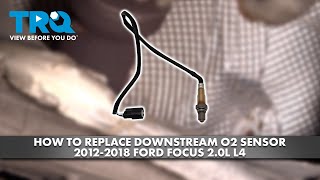
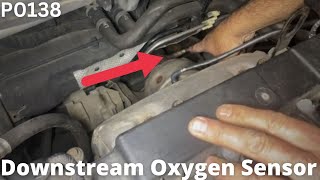
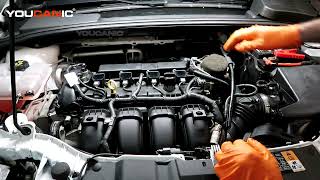
Typical fix: Replace the Bank 1, Sensor 2 oxygen sensor. 🎬 Watch: Step-by-step guide to replacing the downstream sensor. This is confirmed by numerous owner experiences as the most effective fix.
Est. part cost: $60-$160 - Damaged Wiring or Connector 🟡 Medium Probability The sensor's wiring harness runs underneath the vehicle and is exposed to road debris, water, and salt, which can cause wires to break, melt on the exhaust, or the connector pins to corrode.
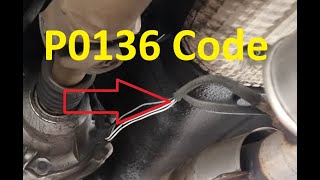
How to confirm: Visually inspect the entire length of the wiring from the O2 sensor to where it enters the main harness. Look for frayed wires, melted insulation near the exhaust, or green/white corrosion inside the connector. Use a multimeter to check for continuity between the PCM and the sensor connector and verify proper voltage/ground at the connector. 🎬 See this video for diagnosing O2 sensor circuit issues.
Typical fix: Repair the broken wire(s) or replace the connector pigtail. If damage is extensive, a new harness section may be needed.
Est. part cost: $15-$50 - Exhaust System Leak ⚪ Low Probability Rust can cause leaks at the flex pipe or flange gaskets located before the downstream O2 sensor.
How to confirm: With the engine running, listen and feel for air escaping from the exhaust system anywhere between the engine and the downstream O2 sensor. A shop can perform a smoke test to pinpoint small leaks. A leak allows outside oxygen into the exhaust, which makes the sensor send an inaccurate (typically low voltage) signal.
Typical fix: Repair the leak by replacing the faulty gasket or welding the cracked pipe.
Est. part cost: $20-$200
Rare But Worth Checking
- Failing Catalytic Converter: → Shop Catalytic Converter While a P0420 code is the primary indicator of a bad catalytic converter, a failing or clogged converter can sometimes cause erratic readings from the downstream sensor, triggering a P0136. This should be considered if replacing the sensor doesn't fix the issue.
- Powertrain Control Module (PCM) Fault: This is extremely rare. The PCM itself could have a faulty driver circuit for the O2 sensor. This should only be considered after all other possibilities (sensor, wiring, exhaust leaks) have been definitively ruled out by a professional. In some cases, an outdated PCM software calibration can cause this code, and a dealer-installed update may be required.
- Engine Coolant Intrusion: While documented on other Ford models like the Edge, NHTSA ODI #11539323 notes a case where P0136 was retrieved alongside other codes after coolant had intruded into the engine block, requiring a full engine replacement.
Diagnosis Steps
- Connect an OBD-II scanner to confirm the P0136 code and check for any other related codes, especially P0141 or P0420.
- Perform a thorough visual inspection of the downstream O2 sensor's wiring harness and connector. Look for any signs of melting, chafing, corrosion, or road damage.
- Inspect the exhaust system for any audible leaks, especially between the catalytic converter and the downstream sensor. Pay close attention to the flex pipe and flanges.
- Use the scanner's live data feature to monitor the voltage of the Bank 1 Sensor 2 (B1S2). At a steady 2500 RPM with the engine fully warmed up, the voltage should be relatively stable, ideally above 0.5V. If it's stuck near 0V, near 1V, or fluctuating wildly, the sensor is the primary suspect.
- If the wiring looks good and the sensor voltage is suspect, test the circuit. Disconnect the sensor and check for reference voltage and ground at the vehicle-side connector with the key on. A lack of voltage or ground points to a wiring or PCM issue.
- If the wiring and circuit tests are good, the oxygen sensor itself is the most probable cause of the failure. Replacing it is the next step.
- If a new sensor does not resolve the code, have a professional smoke test the exhaust system to find any hairline leaks that were missed visually.
Parts You'll Likely Need
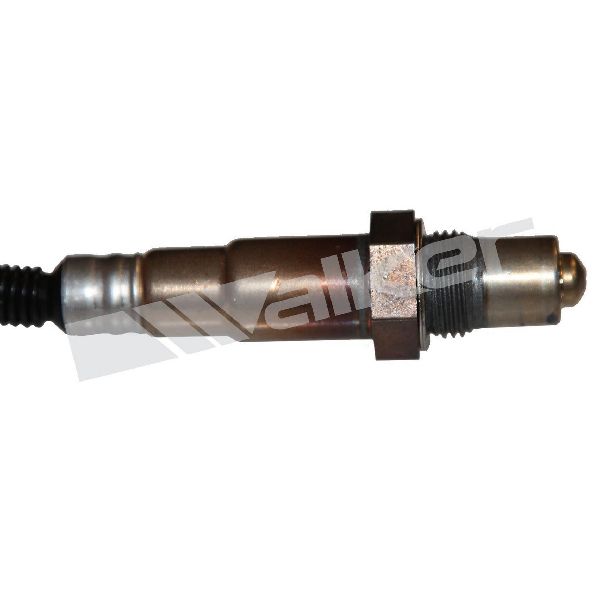
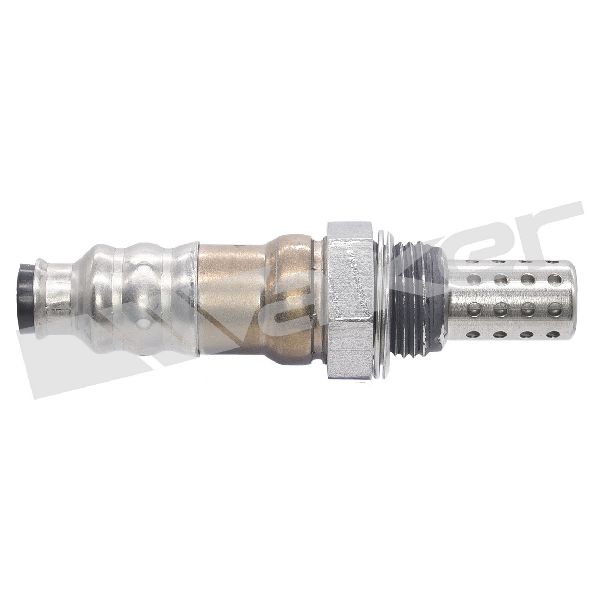
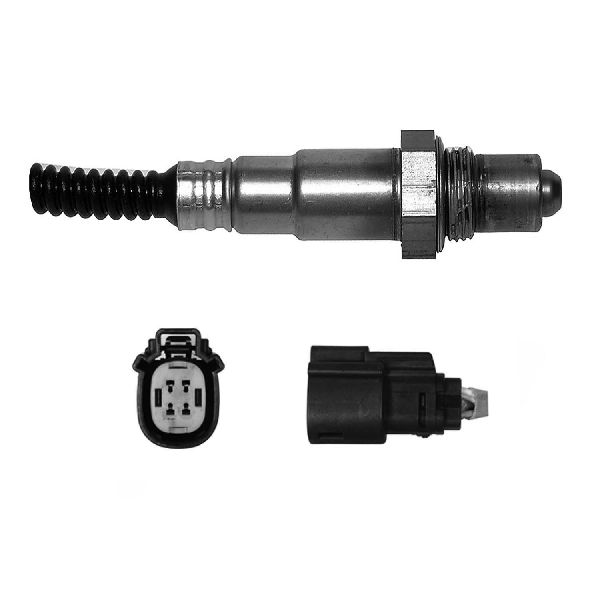
- Downstream Oxygen Sensor (Bank 1, Sensor 2)
(OEM #DY-1179)— This is the component that has failed in the vast majority of P0136 cases due to normal wear and tear.
Trusted brands: Motorcraft (OEM), Bosch (e.g., 15733, 16643), Denso (e.g., 234-4575), NTK (e.g., 22542)
OEM price range: $140-$160
Aftermarket price range: $60-$90
Related Codes That Often Appear With This One
- P0141 — P0141 indicates a malfunction in the heater circuit of the same Bank 1, Sensor 2. Oxygen sensors have an internal heater to get them to operating temperature quickly. If the heater fails, the sensor won't work correctly, often triggering both codes. 🎬 Watch: How to fix P0141 and replace the sensor.
- P0420 — P0420 means 'Catalyst System Efficiency Below Threshold'. Since the P0136 sensor's job is to monitor the catalyst, a faulty sensor can lead to an incorrect P0420 code, or a failing catalyst can cause erratic P0136 readings. They are closely related.
Platform-Specific Known Issues
- Wiring Harness Vulnerability: The wiring for the downstream O2 sensor is routed along the underbody in a way that makes it somewhat vulnerable to being snagged or damaged by road debris, or corroded by road salt in winter climates. Several owners have found the P0136 code was caused by a broken or frayed wire rather than a failed sensor.
Mechanic-Grade Diagnostic Values
- Downstream O2 Sensor (B1S2) Live Data Voltage — expected: Relatively stable voltage between 0.6V and 0.8V when the engine is warm and at a steady RPM, indicating a healthy catalytic converter.. Failure: Voltage is stuck low (near 0.1V), stuck high (near 0.9V), or fluctuates rapidly like an upstream sensor.
- Downstream O2 Sensor Heater Circuit Resistance — expected: 4.2 - 6.6 Ohms at room temperature when measured between the two same-colored wires on the sensor connector.. Failure: A reading of infinite resistance (Open Loop / 'OL') or near-zero ohms indicates a failed internal heater element.
- O2 Sensor Heater Circuit Power Supply (at harness connector) — expected: Battery Voltage (~12.6V with Key On, Engine Off; ~14V with engine running).. Failure: 0V or significantly low voltage points to a blown fuse (F32), faulty relay, or a break in the power wire from the Battery Junction Box.
Wiring & Ground Locations
- Downstream O2 Sensor Connector (C140) — Underneath the vehicle, attached to the wiring harness near the downstream oxygen sensor, which is screwed into the exhaust pipe after the catalytic converter.. This is the primary connection point to test for power, ground, and signal integrity. It is exposed to road debris and corrosion, making it a common failure point. The pins are: Pin 1 (Signal), Pin 2 (Signal Ground), Pin 3 (Heater Power), Pin 4 (Heater Ground/Control).
- Fuse F32 (Engine Bay Fuse Box) — In the Battery Junction Box (BJB) located in the engine compartment.. This 10A fuse provides power to the heater circuit for the downstream O2 sensor. If this fuse is blown, it will often trigger a P0141 code alongside P0136.
- Ground G104 — On the left side of the engine compartment, on the frame rail, often under the airbox assembly.. This is a primary chassis ground point for the Powertrain Control Module (PCM) and various engine sensors. A corroded or loose G104 can cause erratic sensor readings and seemingly unrelated electrical issues.
Real Owner Repair Stories
- Reddit user 'Gottafocus2k' (Ford Focus (year not specified, but Mk3 platform)) — Car would not start.
❌ Tried (didn't work) Tightening the ground wire to the transmission.
✅ What actually fixed it The user removed the main ground cable from the transmission bell housing, thoroughly cleaned the cable end and the mating surface on the transmission with a brass brush to remove debris, and then re-secured it. This restored a solid ground connection and resolved the no-start condition.
Diagnostic Flowchart
Other Known Issues on This Vehicle
Issues unrelated to this code that are worth knowing about as an owner of this generation:
- DPS6 PowerShift Transmission Failure 🔴 High — Extremely common on 2012-2016 models with the automatic transmission. Symptoms include shuddering, hesitation, slipping, and complete failure. (Ref: Subject of multiple lawsuits and warranty extensions. Not a standard recall, but a well-documented, widespread problem.)
- Faulty Canister Purge Valve 🟠 Medium — Very common across all 2012-2018 2.0L models. Leads to rough idle, stalling after refueling, and codes like P1450. (Ref: Ford Safety Recall 18S32 (NHTSA 18V-735) was issued to reprogram the PCM and replace the valve if necessary to prevent fuel tank deformation.)
- Passenger-Side Engine Mount Collapse 🟠 Medium — Common failure item. The fluid-filled hydraulic mount on the passenger side collapses, causing severe vibration at idle and clunking noises.
- Power Steering Assist Failure 🔴 High — Reported in some models, particularly earlier in the generation (2012-2014), where the electronic power steering assist can suddenly fail, making the car very difficult to steer. (Ref: A recall was issued for some earlier models for this issue.)
Used vs. New Parts: Buying Guide for This Vehicle
When a used part is the smart pick: For this repair, using a used part is NOT recommended. Oxygen sensors are wear-and-tear items with a finite lifespan (typically 80,000-100,000 miles). A used sensor from a junkyard has unknown remaining life and may fail shortly after installation, wasting time and money.
Donor-vehicle mileage cap: roughly under 20000 miles for the part to have meaningful remaining life.
What to inspect on the donor part:
- If forced to use a donor, source from a very low-mileage wreck.
- Inspect the sensor tip for heavy carbon deposits or white contamination, which indicates a poor-running donor engine.
- Ensure the wiring and connector are free from any cuts, melting, or corrosion.
Aftermarket brands forum-validated for this vehicle:
- Motorcraft (OEM)
- Bosch
- Denso
- NTK/NGK
Brands owners have reported issues with on this vehicle:
- No-name, unbranded sensors from online marketplaces are frequently reported on forums to be dead-on-arrival or fail prematurely.
Real Owner Stories
Aggregated from forums and TSBs cited above. Mileages and costs reflect what owners reported in those sources.
2012-2018 Ford Focus 2.0L GDI — ~90000 miles
Symptoms: Check engine light on with codes P0136 and P0141 appearing together.
What fixed it: Replacing the Bank 1, Sensor 2 oxygen sensor resolved both codes.
Source hint: focusfanatics.com: P0136 and P0141 question
2012-2018 Ford Focus 2.0L GDI
Symptoms: The car was drivable but had a recurring P0136 code.
What fixed it: Checking the wiring and connector for issues and ensuring the exhaust was leak-free before replacing the sensor.
Source hint: ford-club.fi: Vikakoodi p0136 (Finnish Language Forum)
2012-2018 Ford Focus 2.0L GDI
Symptoms: P0136 code caused by a broken or frayed wire rather than a failed sensor.
What fixed it: Repairing the damaged wiring harness that had been snagged by road debris.
Source hint: Wiring Harness Vulnerability section
Ford Owner Report
Symptoms: An owner reported that their vehicle was diagnosed with several DTC codes including P0756, P1450, P0136, and P0102.
What fixed it: According to NHTSA ODI #11539323, a dealer determined that coolant had intruded into the engine block and the engine needed to be replaced.
Related OBD-II Codes
Frequently Asked Questions
Is there a recall for the P0136 code on my 2012-2018 Ford Focus?
Can I use a used oxygen sensor from a salvage yard to fix this code?
Why is my Focus showing both P0136 and P0141 at the same time?
Could the P0136 code be caused by the common Focus transmission issues?
Is the downstream O2 sensor wiring prone to damage on this car?
How can I tell if my P0136 is a sensor failure or an exhaust leak?
Helpful Videos
We Have This Part in Stock



The information in this article is provided for general reference and educational purposes only. Vehicle specifications, procedures, and part compatibility can vary by production date, trim level, and region. Always consult your vehicle's factory service manual and verify part numbers before purchasing or performing repairs. Safety-critical components such as airbags, seat belts, and braking systems should be installed by a qualified professional.
- Ford Focus:
- 🧭 Diagnostic Flowchart
- 🎬 Helpful Videos
- 🛍️ Shop This Part
- What's Unique About the 2012-2018 Ford Focus
- Symptoms You May Notice
- Most Likely Causes
- Rare But Worth Checking
- Diagnosis Steps
- Parts You'll Likely Need
- Related Codes That Often Appear With This One
- Platform-Specific Known Issues
- Mechanic-Grade Diagnostic Values
- Wiring & Ground Locations
- Real Owner Repair Stories
- Other Known Issues on This Vehicle
- Used vs. New Parts: Buying Guide for This Vehicle
- Real Owner Stories
- 2012-2018 Ford Focus 2.0L GDI — ~90000 miles
- 2012-2018 Ford Focus 2.0L GDI
- 2012-2018 Ford Focus 2.0L GDI
- Ford Owner Report
- Related OBD-II Codes
- Frequently Asked Questions
- 🎟️ Get 5% Off