

P0136 on 2012-2017 Hyundai Veloster: O2 Sensor Circuit Malfunction Causes and Fixes
This code indicates a fault with the downstream oxygen sensor (Bank 1, Sensor 2). The most common fix is replacing the sensor itself. Before replacement, check the wiring harness for damage, especially where it may contact the exhaust, and ensure the related fuse is intact.
- P0136 on a 2012-2017 Veloster points to a problem with the downstream oxygen sensor (after the catalytic converter).
- The most likely cause is simply a failed oxygen sensor, which is a standard wear item.
- Before replacing the sensor, always inspect the wiring harness for melting or physical damage, as this is a known weak point on this vehicle.
- This code is often accompanied by P0141 (Heater Circuit Malfunction), which reinforces the diagnosis of a failed sensor.
- The fix is typically straightforward for a DIYer with basic tools and an O2 sensor socket.
What's Unique About the 2012-2017 Hyundai Veloster
The 2012-2017 Hyundai Veloster belongs to the first generation (FS), which uses a straightforward four-cylinder engine layout (both naturally aspirated and turbo). This simplifies diagnosis for a P0136 code because there is only one cylinder bank ('Bank 1'), so you don't have to guess which side of the engine the problem is on. The issue almost always points directly to the downstream O2 sensor or its immediate wiring. A common point of failure is the wiring harness melting from contact with the hot exhaust pipe.
Symptoms You May Notice
- Check Engine Light is on
- Potential for slightly reduced fuel economy
- Failure to pass an emissions inspection
- Possible sulfur (rotten egg) smell from the exhaust if the issue affects the catalytic converter's operation.
- Replacing the upstream (Bank 1, Sensor 1) oxygen sensor instead of the downstream (Bank 1, Sensor 2) sensor.
- Replacing the catalytic converter when the actual problem is a faulty downstream O2 sensor that is incorrectly reporting on the converter's efficiency.
Most Likely Causes
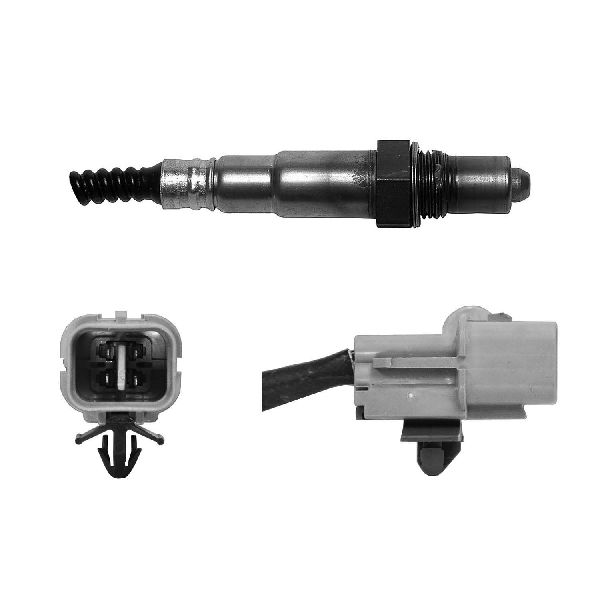
- Failed Downstream Oxygen Sensor (Bank 1, Sensor 2) 🔴 High Probability → Shop Oxygen Sensor Oxygen sensors are wear-and-tear items that have a finite lifespan and are exposed to extreme heat and exhaust gases, leading to eventual failure. The internal heater element is a common point of failure, which can trigger both P0136 and P0141.
How to confirm: Use a scan tool to monitor the live data for the Bank 1 Sensor 2 voltage. A healthy downstream sensor should show a relatively steady voltage, typically around 0.5V when the engine is warm and at a steady RPM. If the voltage is stuck low (near 0V), stuck high (near 1V), or not reading at all, the sensor has likely failed. You can also test the internal heater circuit's resistance with a multimeter; a healthy sensor should have a resistance of approximately 9.0 Ohms at 68°F (20°C).
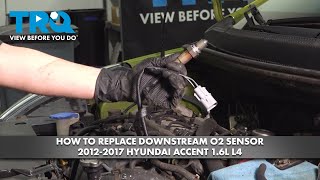
Typical fix: Replace the downstream oxygen sensor. An O2 sensor socket is recommended for removal and installation. 🎬 See this step-by-step walkthrough for replacing the downstream sensor.
Est. part cost: $50-$120 - Damaged Wiring or Corroded Connector 🟡 Medium Probability The sensor's wiring harness is routed near the hot exhaust system. If it comes loose from its retaining clips, it can easily melt against the exhaust pipe, causing a short circuit and triggering the P0136 code.
How to confirm: Visually inspect the entire length of the O2 sensor's wiring harness from the sensor to the main connector. Pay close attention to any areas where it could touch the exhaust. Look for melted plastic, burns, cuts, or corrosion in the connector pins. Perform a continuity test on the wires if visual inspection is inconclusive.
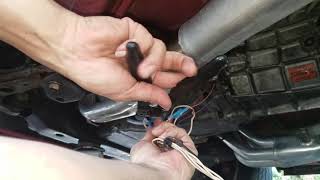
Typical fix: Repair the damaged section of wiring or replace the connector pigtail. 🎬 Watch: How to properly repair damaged oxygen sensor wiring.
Est. part cost: $15-$40 - Exhaust Leak ⚪ Low Probability Corrosion or physical damage can cause leaks in the exhaust system near the sensor, allowing outside air to enter and skew the sensor's readings, leading the ECM to believe the sensor is malfunctioning.
How to confirm: Listen for unusual hissing or ticking sounds from the exhaust. A visual inspection may reveal soot trails or cracks near welds and flanges. A smoke test can definitively identify the location of a leak.
Typical fix: Repair the leak. This may involve replacing a gasket, patching a hole, or replacing a section of the exhaust pipe.
Est. part cost: $10-$200 - Blown Fuse ⚪ Low Probability A short in the O2 sensor's heater circuit can cause the associated fuse to blow, which will also disable the sensor's signal circuit.
How to confirm: Check the fuse box in the engine compartment for a blown fuse. On many Hyundais, this fuse is labeled 'SENSOR 1' and protects both upstream and downstream O2 sensors. For P0141-related issues, a fuse labeled 'SENSOR 2' (10A) may also be present.
Typical fix: Replace the blown fuse. If the fuse blows again, there is an underlying short circuit in the heater element of an O2 sensor or its wiring that must be addressed.
Est. part cost: $1-$5
Rare But Worth Checking
- Faulty Powertrain Control Module (PCM): This is extremely rare. The PCM should only be considered after all other possibilities, including the sensor, wiring, and exhaust system, have been thoroughly tested and ruled out.
Diagnosis Steps
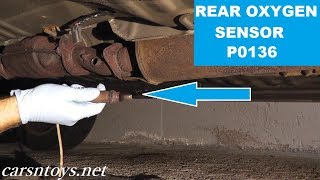
- Connect an OBD-II scanner to confirm the P0136 code and check for any other stored codes, especially P0141. 🎬 Watch: How to diagnose and fix these common Hyundai codes.
- Perform a thorough visual inspection of the downstream (post-catalytic converter) O2 sensor, its connector, and its wiring harness. Carefully check for signs of melting, chafing, or contact with the exhaust pipe.
- Inspect the exhaust system for any leaks, cracks, or soot trails between the catalytic converter and the downstream O2 sensor.
- Check the fuse for the oxygen sensor circuit in the engine bay fuse box (often labeled 'SENSOR 1').
- Use a scan tool to observe the live data for 'O2S B1S2' (Bank 1, Sensor 2). A healthy downstream sensor should show a relatively stable voltage (typically 0.5V - 0.8V) when the engine is warm and at a steady RPM. If the voltage is stuck low (near 0V), stuck high (near 1V), or flat-lined, the sensor or its circuit is faulty.
- If the wiring and fuse are good, and the live data points to a faulty sensor, proceed with replacing the Bank 1, Sensor 2 oxygen sensor.
Parts You'll Likely Need
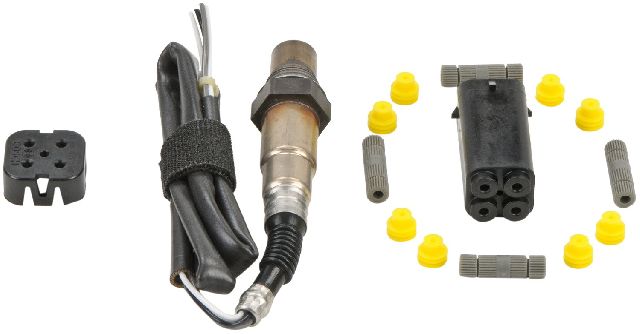
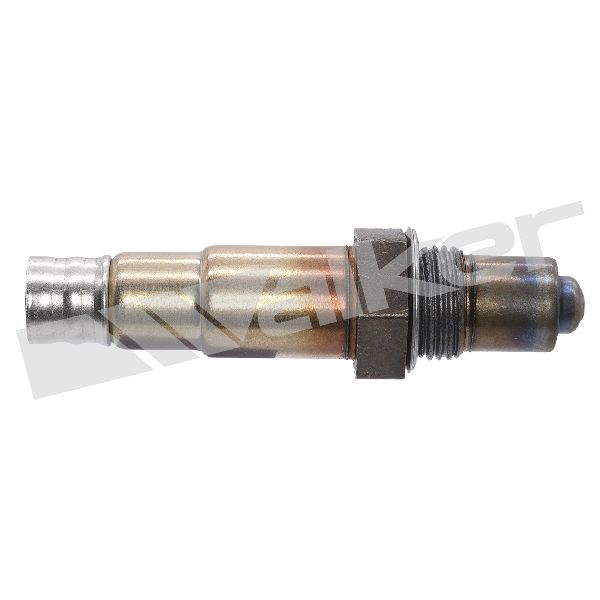
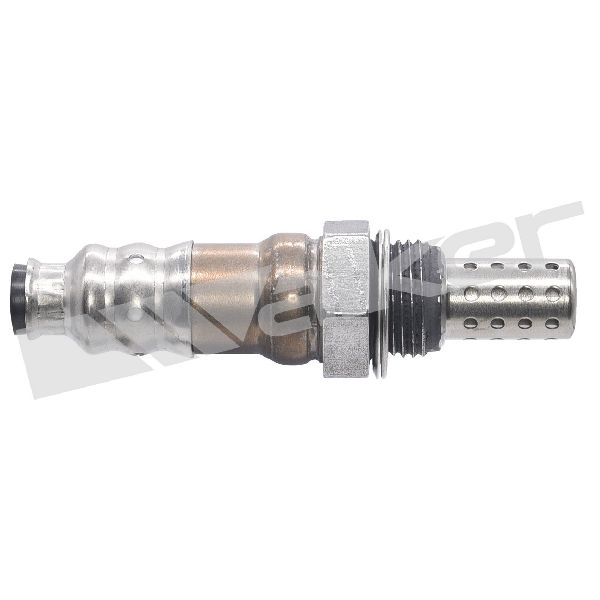
- Downstream Oxygen Sensor (Bank 1, Sensor 2)
(OEM #39210-2B220 (For 1.6L Non-Turbo) / 39210-2B410 (For 1.6L Turbo))— This is the most common failure point for a P0136 code. The sensor is a wear item that eventually fails from exposure to high temperatures and exhaust gases.
Trusted brands: Hyundai (OEM), Bosch, Denso, NGK/NTK
OEM price range: $100-$170
Aftermarket price range: $50-$120
Related Codes That Often Appear With This One
- P0141 — This code indicates a malfunction in the heater circuit of the same sensor (Bank 1, Sensor 2). A failed heater element is a common reason for the entire sensor to be replaced and will almost always trigger both P0136 and P0141 codes together.
- P0420 — This code means 'Catalyst System Efficiency Below Threshold.' Since the P0136 sensor's job is to monitor the catalytic converter, a failing sensor can sometimes lead to a false P0420 code, or it may appear alongside a legitimate P0420 if the converter is also failing.
Technical Service Bulletins (TSBs) & Recalls
- Hyundai Service Campaign - Event 663: While not directly for P0136, this campaign involves a software update for the Knock Sensor Detection System (KSDS) on 2012-2017 Velosters to detect abnormal engine bearing noise. It's a critical update for vehicle longevity and relevant to any owner of this car.
Platform-Specific Known Issues
- Melted Wiring Harness: A recurring theme in owner forums and mechanic videos is the downstream O2 sensor's wiring harness coming loose from its clips and melting on the hot exhaust pipe. This creates a direct short and is a very common cause for P0136 on the Veloster. Always inspect the wiring path carefully before replacing the sensor itself.
Mechanic-Grade Diagnostic Values
- Downstream O2 Sensor (B1S2) Heater Circuit Resistance — expected: Approximately 9.0 Ohms at 20°C (68°F). Failure: An open circuit (infinite resistance) or a value far outside the expected range.
- Downstream O2 Sensor (B1S2) Internal Resistance (Sensor Circuit) — expected: Below 40 kΩ. Failure: If the internal resistance is over 40 kΩ, the ECM may set DTC P0136.
- Downstream O2 Sensor (B1S2) Voltage at Idle (Warm Engine) — expected: Relatively stable voltage around 0.5V - 0.8V.. Failure: Voltage stuck low (near 0V), stuck high (near 1V), or staying in a narrow, inactive range of 0.4-0.52V for an extended period (over 600 seconds).
Scan Tool Commands That Help
- Hyundai GDS (Global Diagnostic System) / Hi-Scan Pro: O2 Sensor Service Data Monitoring — To view live voltage data from the downstream O2 sensor. A good sensor's voltage will drop below 0.2V on sudden deceleration (fuel cut) and rise to 0.6-1.0V on sudden acceleration, confirming its responsiveness.
Wiring & Ground Locations
- Oxygen Sensor (Down) Connector — Underneath the vehicle, in the exhaust pipe downstream of the catalytic converter.. This is the main connector for the sensor. It's a 4-wire connector where corrosion or damage can cause a P0136. The two same-colored wires are for the heater circuit.
- ECM Connector EM11 — At the Engine Control Module (ECM), located in the left rear of the engine compartment.. This is the main engine harness connector where the O2 sensor wiring terminates. A pin-out test can be performed here to check continuity back from the sensor if a wiring break is suspected.
- Ground GGGt01 / GGGt07 — On the left side of the engine compartment.. These are primary engine grounds. A poor ground connection at these points can cause a variety of sensor-related issues, including erratic O2 sensor readings.
OEM Part Supersession History
39210-2B220→Current— This is the current OEM part number for the rear oxygen sensor on the 1.6L non-turbo Veloster.
Heads up: This part number is also used for the rear sensor on the 2011-2017 Hyundai Accent. No supersessions were found.39210-2B410→Current— This is the current OEM part number for the oxygen sensor on the 1.6L Turbo Veloster (2015-2017).
Heads up: This part is listed for the front sensor on some Accent models but is specified for the Veloster Turbo. Always verify the part number with your VIN.
Model Year Variations Within This Range
- 2016-2017: For the 2016 model year, the Veloster Turbo received an optional 7-speed dual-clutch transmission (DCT), replacing the 6-speed automatic from previous years. The Turbo R-Spec and Rally Edition models gained a B&M sport shifter for the manual transmission. While these changes don't directly affect the P0136 diagnosis, they are notable differences in the powertrain.
- 2012-2017 (Turbo vs. Non-Turbo): The naturally aspirated and Turbo models use different part numbers for the downstream oxygen sensor (39210-2B220 for non-turbo, 39210-2B410 for turbo). While functionally identical, the physical exhaust layout and sensor fitment may differ.
Diagnostic Flowchart
Other Known Issues on This Vehicle
Issues unrelated to this code that are worth knowing about as an owner of this generation:
- Connecting Rod Bearing Failure / Engine Seizure 🔴 High — A widespread and well-documented issue, particularly in 2012-2016 models, often occurring between 30,000 and 80,000 miles. Symptoms include engine knocking, power loss, and potential for catastrophic failure. (Ref: NHTSA Recall 20V-746 (Campaign 198) was issued for premature connecting rod bearing wear. Hyundai also released a service campaign (Event 663) to update the Knock Sensor Detection System (KSDS) software to provide an early warning of bearing failure.)
- Dual-Clutch Transmission (DCT) Problems 🟠 Medium — Common complaints on DCT-equipped models include hesitation from a stop, shuddering, jerking, and premature failure. Some owners report the transmission overheating or failing to engage gears. (Ref: Multiple lawsuits have been filed regarding the DCT's reliability. While no single recall covers all issues, various TSBs address specific symptoms like shift quality.)
- Excessive Oil Consumption 🟠 Medium — Many owners report the 1.6L engine consuming oil at a high rate, sometimes requiring top-offs between changes. This can be a precursor to more serious engine problems.
- Premature Timing Chain Wear 🟠 Medium — Reports indicate the timing chain can wear prematurely, causing a rattling noise on startup, rough idle, and potentially leading to engine damage if not addressed. This is often linked to oil starvation or tensioner issues and is more common after 60,000 miles.
- ABS Module Electrical Short 🔴 High — A recall was issued because the Anti-Lock Brake System (ABS) module can leak brake fluid internally, causing an electrical short that can lead to an engine compartment fire, even when the vehicle is parked. (Ref: NHTSA Recall 23V-754 (Campaign 251) advises owners to park outside and away from structures until the recall repair (replacing the ABS fuse) is completed.)
Used vs. New Parts: Buying Guide for This Vehicle
When a used part is the smart pick: It is generally not recommended to buy a used oxygen sensor. They are wear-and-tear items with a finite lifespan, and a used part may fail shortly after installation. A used wiring harness pigtail from a junkyard is a viable option if only the connector is damaged.
Donor-vehicle mileage cap: roughly under 40000 miles for the part to have meaningful remaining life.
What to inspect on the donor part:
- For a wiring pigtail, ensure the connector is free of corrosion, the locking tab is intact, and there are several inches of clean, unmelted wire to splice into.
Aftermarket brands forum-validated for this vehicle:
- NTK/NGK
- Denso
- Bosch
Brands owners have reported issues with on this vehicle:
- Unbranded, no-name sensors from online marketplaces are frequently reported to fail prematurely or be dead-on-arrival.
Real Owner Stories
Aggregated from forums and TSBs cited above. Mileages and costs reflect what owners reported in those sources.
2012 Hyundai Veloster — 75000 miles
Symptoms: Transmission failing; the vehicle also had potential for P0136/P0141 codes based on shared diagnostic patterns for this model year.
What fixed it: Transmission replaced under warranty; O2 sensor issues on this platform are often fixed by checking for melted wires near the exhaust.
Source hint: Reddit r/veloster - DCT Transmission Issues
2017 Hyundai Veloster DCT
Symptoms: The vehicle would not move forward; common issues include clutch actuator problems which can be misdiagnosed.
What fixed it: Diagnosis of the clutch actuator and checking for electrical shorts/wiring issues similar to those found in O2 sensor circuits.
Source hint: YouTube - DTech Engineering - Veloster DCT Issues
2012-2017 Hyundai Veloster 1.6L
Symptoms: Check Engine Light with codes P0136 and P0141; wiring harness coming loose from clips.
What fixed it: Repairing melted wires near the exhaust pipe that had caused a direct short.
Source hint: YouTube - Auto Repair Guys - Hyundai P0136-P0141 Fix
Related OBD-II Codes
Frequently Asked Questions
Does the Hyundai Service Campaign Event 663 apply to my 2012-2017 Veloster if I have a P0136 code?
I have a P0136 and a P0141 code on my Veloster; could this be a simple fuse issue?
Why is my Veloster's downstream O2 sensor wiring prone to damage?
What should the voltage reading be for Bank 1 Sensor 2 on my Veloster during a live data scan?
Is there a recall for the engine issues I'm hearing while diagnosing my O2 sensor?
Helpful Videos

We Have This Part in Stock


The information in this article is provided for general reference and educational purposes only. Vehicle specifications, procedures, and part compatibility can vary by production date, trim level, and region. Always consult your vehicle's factory service manual and verify part numbers before purchasing or performing repairs. Safety-critical components such as airbags, seat belts, and braking systems should be installed by a qualified professional.
- Hyundai Veloster:
- 🧭 Diagnostic Flowchart
- 🎬 Helpful Videos
- 🛍️ Shop This Part
- What's Unique About the 2012-2017 Hyundai Veloster
- Symptoms You May Notice
- Most Likely Causes
- Rare But Worth Checking
- Diagnosis Steps
- Parts You'll Likely Need
- Related Codes That Often Appear With This One
- Technical Service Bulletins (TSBs) & Recalls
- Platform-Specific Known Issues
- Mechanic-Grade Diagnostic Values
- Scan Tool Commands That Help
- Wiring & Ground Locations
- OEM Part Supersession History
- Model Year Variations Within This Range
- Other Known Issues on This Vehicle
- Used vs. New Parts: Buying Guide for This Vehicle
- Real Owner Stories
- 2012 Hyundai Veloster — 75000 miles
- 2017 Hyundai Veloster DCT
- 2012-2017 Hyundai Veloster 1.6L
- Related OBD-II Codes
- Frequently Asked Questions
- 🎟️ Get 5% Off