

P0136 on 2013-2016 Mazda CX-5 2.0L: O2 Sensor Circuit Causes & Fixes
For a 2013-2016 Mazda CX-5, code P0136 almost always points to a failed downstream O2 sensor. A very common secondary cause is an exhaust leak at the flange just before the sensor. Expect to pay $70-$150 for a quality replacement sensor.
- P0136 on a 2013-2016 Mazda CX-5 points to the downstream (post-catalytic converter) oxygen sensor circuit.
- Before replacing the sensor, carefully inspect the exhaust flange just upstream of it for leaks, as this is a common issue on this model.
- The most likely fix is replacing the downstream O2 sensor with a quality part from a brand like Denso or NGK.
- This is a DIY-friendly repair for those comfortable working under their vehicle, but the sensor and flange bolts can sometimes be difficult to remove due to rust.
What's Unique About the 2013-2016 Mazda CX-5
While a failed sensor is the most common cause for P0136 on most vehicles, the 2013-2016 CX-5 is particularly known for developing exhaust leaks at the two-bolt flange connection located just before the downstream O2 sensor. This leak allows outside air into the exhaust, causing the sensor to send false readings and trigger the P0136 code. It's crucial to check this flange for leaks before replacing the sensor itself. Forum users on Mazdas247 have documented this exact issue, noting the bolts will likely be very corroded.
Symptoms You May Notice
- Check Engine Light is on
- Vehicle may fail an emissions test
- Slight decrease in fuel economy (uncommon)
- Rough idle (rare)
- Replacing the catalytic converter. P0136 points to a sensor circuit issue, not necessarily a bad converter. A failing converter usually sets a P0420 or P0421 code.
- Replacing the upstream (Bank 1, Sensor 1) oxygen sensor. This code is specific to the downstream (Sensor 2) sensor.
Most Likely Causes
- Failed Downstream Oxygen Sensor (Bank 1, Sensor 2) 🔴 High Probability → Shop Oxygen Sensor Oxygen sensors are wear items that degrade over time from constant exposure to high heat, moisture, and exhaust gases. After 80,000-100,000 miles, internal failure of the sensing element or heater circuit is common.
How to confirm: Using a scan tool, observe the live data for the B1S2 sensor. A healthy sensor on a warm, running engine should show a relatively stable voltage (typically 0.5V - 0.8V). A failed sensor may be stuck at a very low voltage (near 0V), a high voltage (near 1.0V), or show no activity at all. The PCM also monitors the sensor's internal impedance; if it falls out of a standard range, it can trigger P0136.
Typical fix: Replace the downstream oxygen sensor. Ensure the engine is cool and use a 22mm (or 7/8") O2 sensor socket for removal. Penetrating oil may be necessary for rusty sensors.
Est. part cost: $70 - $180 - Exhaust Leak Before the Sensor 🟡 Medium Probability The gasket at the two-bolt flange just upstream of the downstream sensor is a known failure point on the CX-5. Rust and vibration can cause the gasket to disintegrate, allowing unmetered oxygen into the exhaust stream.
How to confirm: With the engine running, feel or listen for a hissing or puffing sound from the flange area before the sensor. A visual inspection may reveal black soot marks around the flange, indicating a leak. A shop can use a smoke machine for a more definitive test. The bolts will likely be heavily corroded and may need to be cut off and replaced.
Typical fix: Replace the exhaust flange gasket (OEM Part #PE23-40-305) and likely the two spring bolts and nuts. Clean the mating surfaces thoroughly before installing the new gasket. Some owners have reported mechanics using high-temp silicone in addition to the gasket to ensure a seal if the flange is slightly warped.
Est. part cost: $15 - $40 - Damaged Wiring or Connector ⚪ Low Probability The wiring harness runs underneath the vehicle and is exposed to road debris, water, and heat, which can cause chafing, melting, or corrosion over time. The connector pins can also corrode, leading to a poor signal.
How to confirm: Visually inspect the entire wiring harness from the O2 sensor to where it enters the cabin. Check the connector pins for corrosion, moisture, or damage. Test for continuity, shorts, and proper voltage at the connector with a multimeter using a wiring diagram for reference.
Typical fix: Repair the damaged section of wiring or replace the connector pigtail. Ensure the harness is properly secured away from hot exhaust components.
Est. part cost: $10 - $50
Rare But Worth Checking
- Faulty Powertrain Control Module (PCM): This is extremely rare. Before condemning the PCM, all other possibilities (sensor, wiring, exhaust leaks) must be exhaustively ruled out. A PCM failure might be suspected if a new sensor and verified good wiring do not resolve the code.
Diagnosis Steps
- Verify the code with an OBD-II scanner.
- Visually inspect the downstream O2 sensor's wiring harness and connector for any signs of melting, chafing, or corrosion.
- Inspect the exhaust system for leaks, paying close attention to the flange gasket just before the downstream sensor. Look for soot trails or listen for hissing sounds.
- With a scan tool, monitor the live voltage data from Bank 1 Sensor 2. A healthy sensor should show a fairly steady voltage above 0.5V when the engine is warm and at a steady cruise. A faulty sensor will often be stuck low (near 0V), show erratic readings, or show no activity.
- If an exhaust leak is ruled out and the wiring appears intact, the most likely cause is a failed oxygen sensor.
- Replace the downstream oxygen sensor. Use penetrating oil on the threads before attempting removal.
- Clear the trouble codes and perform a drive cycle to confirm the repair.
Parts You'll Likely Need
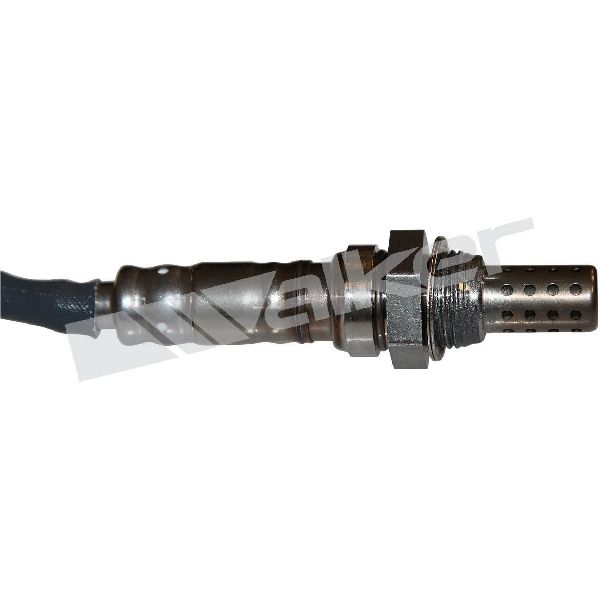
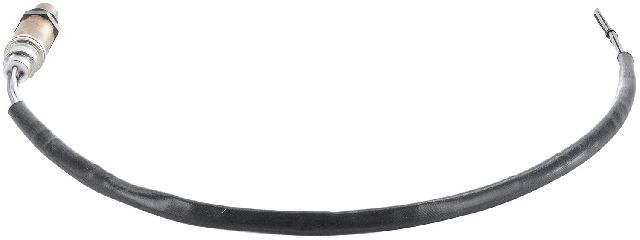
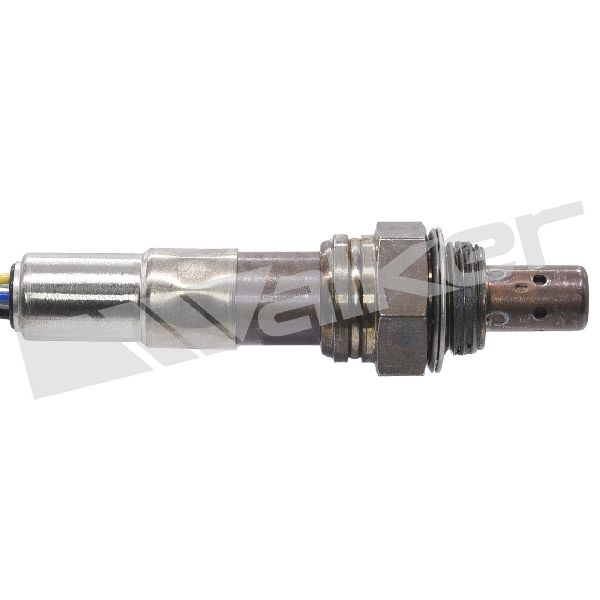
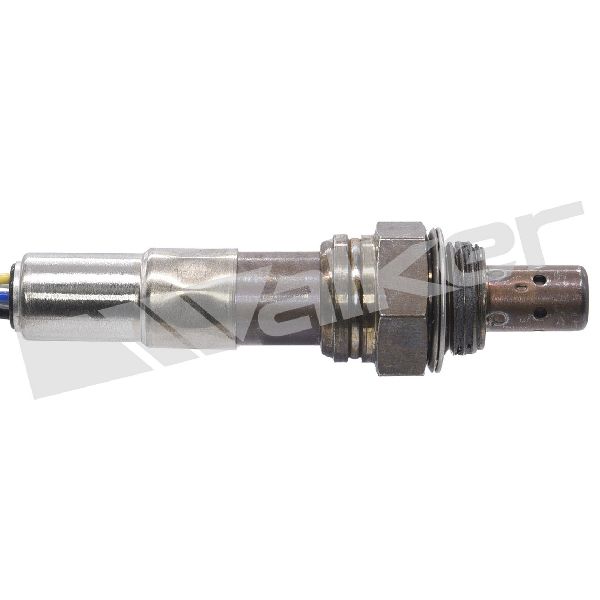
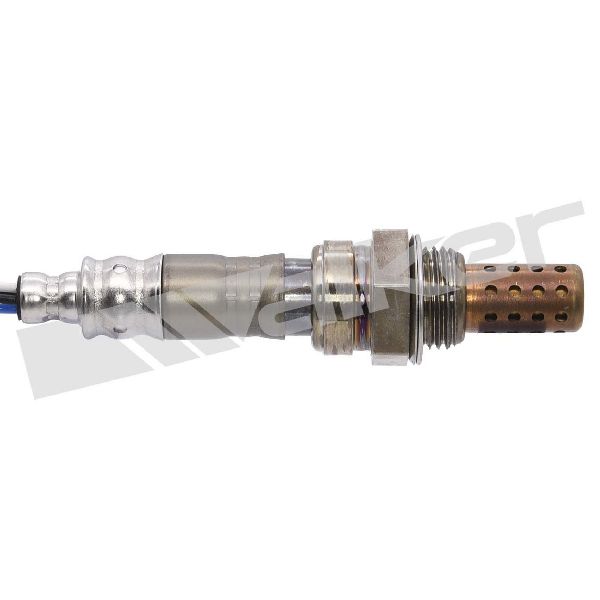
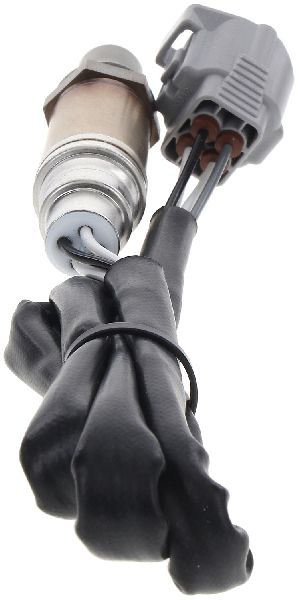
- Downstream Oxygen Sensor
(OEM #PE02-18-86ZA)— This is the most common component to fail and trigger a P0136 code. It is a standard wear-and-tear part.
Trusted brands: Denso (e.g., 234-4583), NGK/NTK (e.g., 24792)
OEM price range: $150-$235
Aftermarket price range: $70-$120 - Exhaust Flange Gasket
(OEM #PE23-40-305)— A known weak point on this platform is the gasket at the flange before the downstream sensor, which can cause an exhaust leak that triggers this code. This part number is widely used across many Mazda models.
Trusted brands: Mazda (OEM), Walker Exhaust
OEM price range: $16-$25
Aftermarket price range: $10-$20
Related Codes That Often Appear With This One
- P0137 — This code for 'O2 Sensor Circuit Low Voltage' is very similar and can be triggered by the same root causes, such as an exhaust leak or a failing sensor. A user on a Mazda forum with a 2014 CX-5 traced their P0137 to the flange leak.
- P0141 — This code indicates a malfunction in the heater circuit of the same downstream O2 sensor. Many O2 sensor failures involve the internal heater, so it's common to see both codes together.
Technical Service Bulletins (TSBs) & Recalls
- TSB 01-010/16: Addresses a CHECK ENGINE LIGHT ON with DTC P0421, caused by improper PCM logic on some 2014-2016 CX-5s. The fix is a PCM software update. This is relevant as it shows PCM sensitivity on this platform.
Platform-Specific Known Issues
- Some 2014-2016 CX-5 models were subject to TSB 01-010/16 for a related code, P0421, which required a PCM software update. While not directly for P0136, it shows that the emissions monitoring system on this platform can be sensitive to software logic and that the dealer should be consulted about open TSBs.
- A user on Mazdas247 with a 2015 CX-5 confirmed a leak at the pre-muffler gasket and had a mechanic replace it for around $60 in labor, noting the mechanic also used silicone to ensure a seal due to a slight dent in the pipe.
Mechanic-Grade Diagnostic Values
- O2 Sensor Heater Circuit Resistance — expected: Typically 2-15 Ohms, with some similar Mazda models specified between 5.0 - 6.8 Ohms.. Failure: A reading of infinite resistance (Open Loop / 'OL') or near-zero resistance (short circuit) indicates a failed heater element. The PCM may trigger a fault if resistance exceeds 30 Ohms.
- Downstream O2 Sensor (B1S2) Voltage during PCM Active Test — expected: The PCM automatically runs an active test, forcing the air-fuel ratio rich and lean. During this test, voltage should fluctuate, dropping below 0.21V and rising above 0.59V.. Failure: The PCM will set DTC P0136 if the voltage fails to cross these thresholds during the test, indicating a lazy or non-responsive sensor.
- Downstream O2 Sensor (B1S2) Internal Impedance — expected: The PCM continuously monitors the sensor's internal impedance against a non-published standard range.. Failure: If the impedance deviates from the expected range, the PCM determines the sensor has deteriorated and can set code P0136. This cannot be measured with a standard multimeter.
Scan Tool Commands That Help
- Mazda PCM (Internal Function): Active Air-Fuel Ratio Control Test — This is not a user-initiated command, but an automatic diagnostic routine the PCM runs while driving. Understanding that the PCM is actively testing the sensor by forcing rich/lean conditions helps a technician interpret why a P0136 code was set, as it's based on the sensor's failure to respond within expected voltage thresholds during this test.
Wiring & Ground Locations
- G07 — Located on the left rear of the engine.. A poor or corroded main engine ground can introduce electrical noise and voltage offsets, leading to erratic or incorrect readings from sensitive components like oxygen sensors. Verifying this ground is clean and tight is a crucial step in diagnosing any persistent, difficult-to-trace sensor circuit codes.
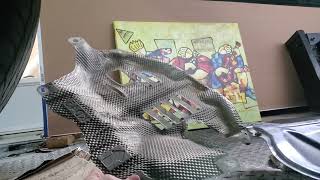
- Downstream O2 Sensor Connector — Underneath the vehicle, above a plastic underbody shield that must be partially removed for access.. Accessing the connector to perform voltage and resistance tests requires removing several 10mm bolts and plastic clips holding the underbody shield in place. Knowing this beforehand saves time during diagnosis.
Real Owner Repair Stories
- mazda-forum.com user (2014 Mazda CX-5) — Check Engine Light with code P0137 (O2 Sensor Circuit Low Voltage)
✅ What actually fixed it The user traced the issue to a significant leak at the bolted flange connection just before the downstream sensor. Sealing the exhaust leak resolved the code without replacing the oxygen sensor itself. - Reddit r/CX5 user (2014 CX-5, 89k miles) — Failed inspection due to exhaust leak.
✅ What actually fixed it A muffler shop identified a leak in the manifold/flex pipe area. A temporary fix with sleeves was performed for $300 to pass inspection, but the user was quoted $1000+ for a proper flex pipe repair, highlighting how leaks in this area are common and can be costly if not addressed as a simple gasket.
OEM Part Supersession History
pe021886z→PE02-18-86ZA— Standard part number update/revision by the manufacturer.
Model Year Variations Within This Range
- 2016: The 2016 model year marked a mid-cycle refresh for the CX-5. While the core 2.0L engine and exhaust layout remained similar, it received an upgraded interior and a different infotainment system (Mazda Connect). While not directly impacting the P0136 cause, it's a key differentiator within the 2013-2016 range. The TSB for the related P0421 code also specifically applies to 2014-2016 models, suggesting potential PCM logic changes over the years.
Diagnostic Flowchart
Other Known Issues on This Vehicle
Issues unrelated to this code that are worth knowing about as an owner of this generation:
- Intake Valve Carbon Buildup 🟠 Medium — Becomes a potential issue after 60,000-80,000 miles. As a direct-injection engine, fuel does not wash over the intake valves, allowing carbon deposits to accumulate, which can lead to misfires (P0300-P0304). (Ref: TSB 01-020/15 (later superseded by 01-012/19) outlines a cleaning procedure for this issue.)
- Infotainment System 'Ghost Touch' and Reboots 🟡 Low — Common on 2016 models with the Mazda Connect system. The screen may register phantom touches, or the whole system may lag and reboot. A class-action lawsuit addressed this for some models. (Ref: TSB 09-003/22 and a warranty extension program (CSP13) were issued for later models, but the issue is known on 2016s.)
- Premature Rear Brake Wear 🟡 Low — Owners frequently report that rear brake pads and rotors wear out faster than the front, sometimes as early as 30,000-40,000 miles. This is often attributed to the electronic parking brake design and traction control system activity.
- Failing LED Daytime Running Lights (DRL) 🟡 Low — The gasket for the signature DRL can fail, allowing moisture entry and causing the LED unit to burn out. This was common enough to warrant a recall on 2016 models. (Ref: NHTSA Recall 19V457000)
- Failing Liftgate Support Struts 🟡 Low — The gas-powered struts that hold the rear liftgate open are known to weaken and fail prematurely, causing the liftgate to not stay open on its own. This is a common wear item but happens relatively early on this model.
Used vs. New Parts: Buying Guide for This Vehicle
When a used part is the smart pick: For this repair, used parts are generally not recommended for the sensor itself. However, sourcing used exhaust hardware like the two-bolt flange, spring bolts, or sections of pipe from a low-mileage, rust-free donor vehicle can be a cost-effective option if the original parts are excessively corroded or damaged during removal.
Donor-vehicle mileage cap: roughly under 60000 miles for the part to have meaningful remaining life.
What to inspect on the donor part:
- Check for minimal rust on exhaust pipes and flanges.
- Ensure flange mating surfaces are flat and not heavily pitted.
- Inspect bolts and hangers to ensure they are intact and not seized or stripped.
Aftermarket brands forum-validated for this vehicle:
- Denso (often the OEM supplier)
- NGK / NTK
Brands owners have reported issues with on this vehicle:
- Generic, unbranded 'white-box' sensors from online marketplaces, as they often have incorrect resistance values or poor-quality heaters that can fail prematurely or not communicate correctly with the Mazda PCM.
Real Owner Stories
Aggregated from forums and TSBs cited above. Mileages and costs reflect what owners reported in those sources.
2015 Mazda CX-5 2.0L Skyactiv-G
Symptoms: Owner identified a leak at the pre-muffler gasket.
What fixed it: A mechanic replaced the exhaust gasket and used high-temp silicone to ensure a seal due to a slight dent in the pipe.
Cost: $60-$100
Source hint: Mazdas247 - Thread '2015 CX-5 Muffler Exhaust Gasket - Leak'
2016 Mazda CX-5 2.0L Skyactiv-G
Symptoms: A small leak at the exhaust flange was identified; owner received a quote for $2,000 for the repair.
What fixed it: Replacement of the flange gasket and bolts (suggested by community members as a low-cost alternative to the high quote).
Source hint: Reddit r/CX5 - Thread 'Should I be concerned about this ? There is a small leak and they quoted me around 2,000 to fix it .'
Related OBD-II Codes
Frequently Asked Questions
Does TSB 01-010/16 apply to my 2014-2016 Mazda CX-5 if I have an emissions code?
Is there a specific part number for the exhaust gasket that often fails on the CX-5?
I was quoted a very high price to fix an exhaust leak near the sensor; is this normal for a CX-5?
What size socket do I need to replace the downstream oxygen sensor on my 2.0L Skyactiv-G?
Are there other common issues on the 2013-2016 CX-5 that might coincide with an engine light?
Helpful Videos

![How to Fix P0137 Engine Code in 4 Minutes [3 DIY Methods / Only $9.42]](https://img.youtube.com/vi/D7iaXnsbzWQ/mqdefault.jpg)
We Have This Part in Stock

The information in this article is provided for general reference and educational purposes only. Vehicle specifications, procedures, and part compatibility can vary by production date, trim level, and region. Always consult your vehicle's factory service manual and verify part numbers before purchasing or performing repairs. Safety-critical components such as airbags, seat belts, and braking systems should be installed by a qualified professional.
- Mazda CX-5:
- 🧭 Diagnostic Flowchart
- 🎬 Helpful Videos
- 🛍️ Shop This Part
- What's Unique About the 2013-2016 Mazda CX-5
- Symptoms You May Notice
- Most Likely Causes
- Rare But Worth Checking
- Diagnosis Steps
- Parts You'll Likely Need
- Related Codes That Often Appear With This One
- Technical Service Bulletins (TSBs) & Recalls
- Platform-Specific Known Issues
- Mechanic-Grade Diagnostic Values
- Scan Tool Commands That Help
- Wiring & Ground Locations
- Real Owner Repair Stories
- OEM Part Supersession History
- Model Year Variations Within This Range
- Other Known Issues on This Vehicle
- Used vs. New Parts: Buying Guide for This Vehicle
- Real Owner Stories
- 2015 Mazda CX-5 2.0L Skyactiv-G
- 2016 Mazda CX-5 2.0L Skyactiv-G
- Related OBD-II Codes
- Frequently Asked Questions
- 🎟️ Get 5% Off