

P0136 on 2003-2009 Toyota 4Runner 4.0L V6: O2 Sensor Circuit Causes and Fixes
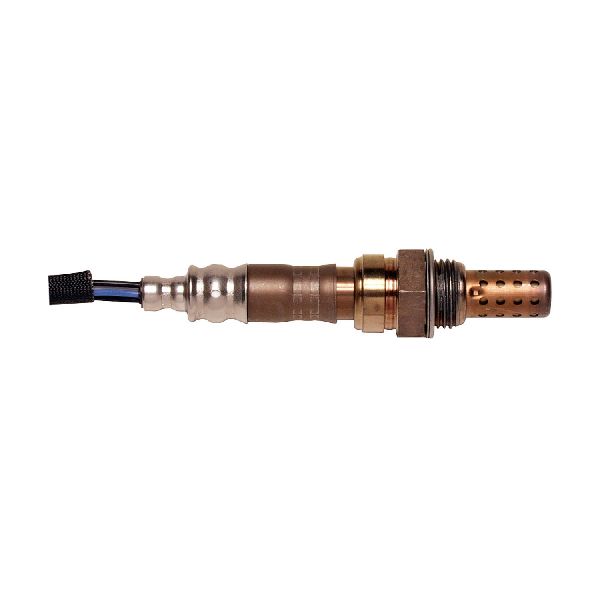
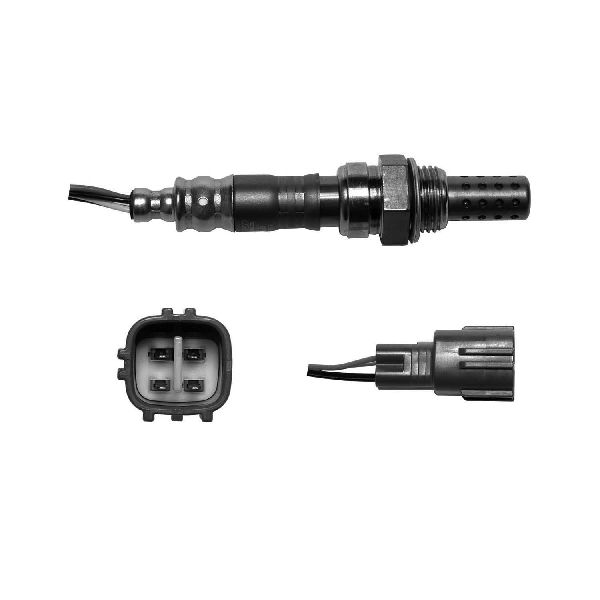
For the 2003-2009 4Runner, code P0136 almost always points to a failed downstream oxygen sensor on the passenger side (Bank 1, Sensor 2). Replacing this sensor with an OEM-brand part like Denso (Part No. 234-4260) is the most common fix. Expect to pay around $50-$90 for the part, which is a straightforward DIY replacement for many owners, though the old sensor can be difficult to remove due to rust.
- P0136 on a 2003-2009 4Runner points to the passenger-side, downstream O2 sensor (Bank 1, Sensor 2).
- The most common and reliable fix is replacing the sensor with a Denso brand part (234-4260). Avoid universal sensors.
- While driving is possible, the issue will cause an emissions test failure and should be addressed to prevent potential long-term damage.
- The VSC and TRAC lights will likely illuminate with the Check Engine Light; this is normal for this vehicle and they will reset after the fix.
- The old sensor can be very difficult to remove due to rust; use penetrating oil and a proper O2 sensor socket.
What's Unique About the 2003-2009 Toyota 4Runner
The 4th generation 4Runner is a robust platform, but its oxygen sensors are a common wear item, especially after 100,000 miles. While the code indicates a 'circuit malfunction,' the issue on this vehicle is overwhelmingly the sensor itself rather than complex wiring problems. Owners and mechanics strongly advise against using generic or 'universal' sensors, as the 4Runner's ECM can be sensitive and may not work correctly with non-OEM parts, leading to persistent codes or new issues. Sticking with the original equipment manufacturer, Denso, is a well-documented best practice in owner forums.
Symptoms You May Notice
- Check Engine Light is on
- VSC and TRAC OFF lights may illuminate along with the Check Engine Light
- Slight decrease in fuel economy
- Failure to pass an emissions inspection
- Replacing the upstream Air/Fuel Ratio Sensor (Sensor 1) instead of the downstream Oxygen Sensor (Sensor 2).
- Replacing the wrong side (Bank 2, driver's side) sensor.
- Immediately replacing the sensor without checking for exhaust leaks or wiring damage first.
Most Likely Causes
- Failed Downstream Oxygen Sensor (Bank 1, Sensor 2) 🔴 High Probability → Shop Oxygen Sensor Oxygen sensors are wear-and-tear components that degrade over time due to constant exposure to high-temperature exhaust gases. It is the most frequent point of failure for this code on high-mileage 4Runners, often failing after 100,000-150,000 miles.
How to confirm: Use a scan tool to monitor the live data for the 'Bank 1, Sensor 2' voltage. With the engine warm and at a steady 2,000 RPM, a healthy sensor should show a relatively stable voltage (e.g., 0.6V-0.8V). If the voltage is flatlined at 0V, stuck high, or fluctuating rapidly like the upstream sensor, it has failed. The sensor's internal heater circuit can also be tested with a multimeter; it should have a resistance between 5 and 7 Ohms at 68°F (20°C).
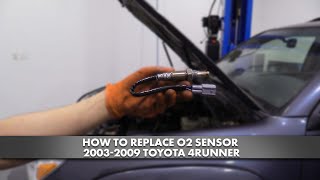
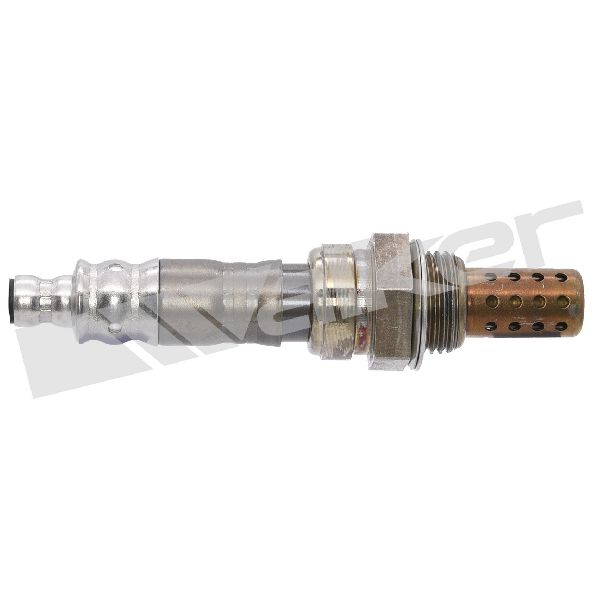
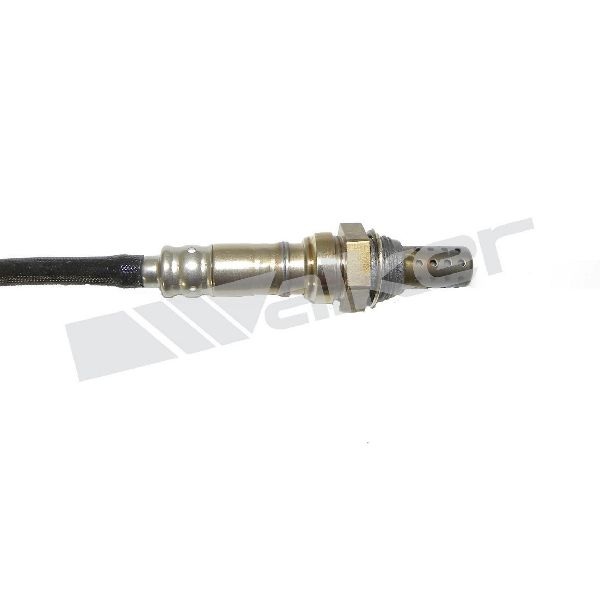
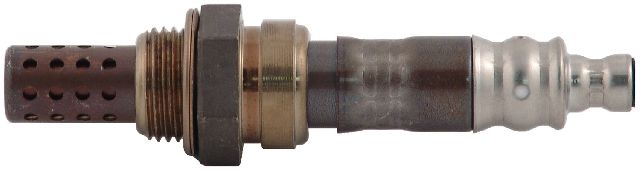
Typical fix: Replace the Bank 1, Sensor 2 oxygen sensor, located on the passenger-side exhaust pipe after the catalytic converter. It is highly recommended to use a Denso-brand sensor (part number 234-4260). 🎬 Watch: A step-by-step guide to replacing the downstream sensor. Using an O2 sensor socket and pre-soaking the old sensor's threads with penetrating oil is advised.
Est. part cost: $50-$90 - Exhaust System Leak 🟡 Medium Probability Gaskets (especially the donut gaskets) and exhaust pipe flanges can develop leaks from rust and age, particularly in regions that use road salt. A leak near the sensor allows outside air to enter, skewing the oxygen readings and potentially triggering the code.
How to confirm: Visually inspect the exhaust system from the passenger-side manifold back to the sensor for any signs of black soot, cracks, or holes. Listen for an audible ticking or hissing sound, which is more noticeable on a cold start. A smoke test is the most definitive way to find small leaks.
Typical fix: Replace the leaking gasket or repair the cracked section of the exhaust pipe.
Est. part cost: $10-$50 for gaskets, potentially more for pipe repair. - Damaged Wiring or Connector ⚪ Low Probability The sensor wiring is located under the vehicle and can be damaged by road debris, off-roading, or corrosion. The connector pins can also become corroded from moisture, causing a poor connection.
How to confirm: Visually inspect the wiring harness leading to the Bank 1, Sensor 2. Look for any frayed, melted, or broken wires. Unplug the connector and check for corrosion, moisture, or bent pins. Check for continuity on the heater circuit wires with a multimeter.
Typical fix: Repair the damaged section of wire or clean the connector terminals. If the connector itself is damaged, it may need to be replaced.
Est. part cost: $5-$30
Rare But Worth Checking
- Failing Catalytic Converter: → Shop Catalytic Converter While a failing converter typically triggers a P0420 code, it can sometimes cause erratic readings that the ECM interprets as a sensor circuit fault. This is worth considering if a new sensor doesn't fix the code, especially if an aftermarket converter has been installed.
- Engine Control Module (ECM) Fault: This is extremely rare. Before condemning the ECM, all other possibilities, including the sensor, wiring, and exhaust leaks, must be exhaustively ruled out.
Diagnosis Steps
- Read the code with an OBD-II scanner to confirm P0136 is the primary code present.
- Visually inspect the wiring harness and connector for the Bank 1, Sensor 2 (passenger side, downstream) for any obvious damage, melting, or corrosion.
- Inspect the exhaust system for leaks, paying close attention to the flanges and gaskets near the sensor. Listen for hissing sounds on a cold start.
- If a capable scan tool is available, graph the voltage for Bank 1, Sensor 2. A healthy sensor should show a steady voltage around 0.6-0.8V when the engine is warm and held at a steady RPM. A flatline (e.g., 0V) or rapidly fluctuating reading indicates a bad sensor.
- If the sensor and wiring appear intact, test the sensor's internal heater circuit resistance with a multimeter. It should be between 5-7 Ω at 20°C (68°F). If it's out of spec, the sensor is bad.
- If the wiring and exhaust are intact, the most likely cause is the sensor itself. Pre-soak the old sensor's threads with a quality penetrating oil for several hours or overnight before attempting removal.
- Replace the Bank 1, Sensor 2 oxygen sensor using a 22mm or 7/8" O2 sensor socket to avoid damaging the new sensor's wires.
- After replacement, clear the codes with the scanner. If the VSC/TRAC lights remain on, they may need to be reset by performing a zero-point calibration with a capable scan tool like Techstream or by using a specific manual procedure. 🎬 Watch: How to perform a Zero Point Calibration in 10 minutes.
- Perform a drive cycle to ensure the Check Engine Light does not return.
Parts You'll Likely Need
- Oxygen Sensor (Bank 1, Sensor 2)
(OEM #89465-35660)— This is the downstream, passenger-side oxygen sensor. It is the most common failure point for code P0136 on this vehicle.
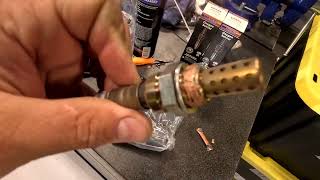
Trusted brands: Denso (P/N: 234-4260)
OEM price range: $120-$160
Aftermarket price range: $50-$90
Related Codes That Often Appear With This One
- P0137 — This code indicates 'O2 Sensor Circuit Low Voltage (Bank 1 Sensor 2),' which is a more specific version of the general P0136 circuit malfunction.
- P0138 — This code indicates 'O2 Sensor Circuit High Voltage (Bank 1 Sensor 2),' another specific fault related to the same sensor.
- P0420 — This code for 'Catalyst System Efficiency Below Threshold (Bank 1)' can appear if the O2 sensor has been failing for a long time and providing inaccurate data, or if the catalytic converter itself is also failing.
Technical Service Bulletins (TSBs) & Recalls
- While not directly related to P0136, owners should be aware of the widespread frame rust issue. Toyota issued Limited Service Campaigns (LSC) and Customer Support Programs (CSP) like ZKA for other trucks, but the 4th Gen 4Runner was not included, leading to significant owner concern and legal action.
Platform-Specific Known Issues
- VSC/TRAC Light Illumination: On this generation of 4Runner, it is very common for the VSC and TRAC OFF lights to illuminate whenever a Check Engine Light is triggered. This is a standard Toyota behavior to disable the stability systems when an engine fault is present. The lights will typically clear along with the engine code once the repair is made, but sometimes a 'Zero Point Calibration' is required to turn them off.
Mechanic-Grade Diagnostic Values
- O2 Sensor Heater Circuit Resistance — expected: 5 - 7 Ω at 20°C (68°F). Failure: Resistance is outside the specified range, indicating a failed internal heater.
- Downstream O2 Sensor (B1S2) Voltage at steady 2000-2500 RPM (warm engine) — expected: Relatively stable voltage between 0.6V and 0.8V.. Failure: Voltage is flatlined (e.g., 0V or near 0V), stuck high (near 0.9V), or fluctuating rapidly similar to an upstream sensor.
Scan Tool Commands That Help
- Toyota Techstream: Chassis / ABS/VSC/TRAC / Utility / Reset Memory — This is used to clear the stored zero point calibration data for the yaw rate and deceleration sensors before performing a new calibration. This is often necessary after repairs that trigger the VSC/TRAC lights.
- Toyota Techstream: Chassis / ABS/VSC/TRAC / Utility / Test Mode — This function puts the VSC system into a mode that allows the technician to perform the Zero Point Calibration of the yaw rate and acceleration sensors, which is required to turn off the VSC/TRAC lights after they have been triggered by a CEL.
Wiring & Ground Locations
- Engine Control Module (ECM) — Behind the right end of the dashboard, accessible by removing the glove box assembly.. The O2 sensor circuit wiring runs directly to the ECM. A bad connection at the ECM, corrosion, or a fault in the ECM's internal ground for the sensor circuit can mimic a sensor or wiring failure.
- O2 Sensor Connector (Bank 1, Sensor 2) — On the passenger side of the vehicle, above the frame rail, near the transmission crossmember. The harness from the sensor plugs into a connector mounted to the body.. This connector is a common point for corrosion or damage due to its location under the vehicle. A poor connection here will directly cause a P0136 circuit code.
Real Owner Repair Stories
- Tacoma World forum user 'Flamingskull' (2002 Toyota Tacoma 2.7L (platform mate with similar electronics)) — Check Engine Light with code P0136.
❌ Tried (didn't work) Replacing both catalytic converters, Replacing both O2 sensors
✅ What actually fixed it The code returned immediately after replacing parts. The final diagnosis pointed to a wiring issue, specifically a short or voltage drop in the circuit, as the code definition is for the entire circuit, not just the sensor. - Toyota Tundra Forum user 'maseb42' (Toyota Tundra (uses similar Denso sensors and logic)) — Check Engine Light with P0136 appeared one week after having a stolen catalytic converter replaced with an aftermarket unit.
❌ Tried (didn't work) Replacing the Bank 1 Sensor 2 O2 sensor (with a Denso part)
✅ What actually fixed it The code returned one day after sensor replacement. The strong consensus from other forum members was that many aftermarket catalytic converters do not have the same efficiency or oxygen storage capacity as OEM, causing the downstream O2 sensor to give readings the ECU interprets as a fault, even with a perfectly good sensor. The fix is often to install a higher-quality or OEM catalytic converter. - Toyota Owner Report (NHTSA ODI #11377970) — An owner of a related Toyota model reported persistent P0136 Bank 1 Sensor 2 error codes even after taking the vehicle to several mechanics who switched the downstream O2 sensor.
- Toyota Owner Report (NHTSA ODI #10194123) — A diagnostic report for a similar Toyota platform confirmed a P0136 oxygen sensor malfunction, with the dealer advising that the sensor required replacement to resolve the check engine light.
When the Usual Fixes Don't Work
- In a significant number of documented cases, replacing the Bank 1 Sensor 2 O2 sensor does not fix a persistent P0136 code. The next most likely culprit, especially if the catalytic converter has ever been replaced, is the converter itself. Low-quality aftermarket catalytic converters often lack the necessary materials to satisfy the Toyota ECM's efficiency monitoring, causing the new O2 sensor to report values that are outside the expected range, re-triggering the P0136 or an associated P0420 code. Before replacing the sensor a second time, investigate the history and brand of the catalytic converter.
OEM Part Supersession History
89465-35660→89465-35660 (current)— This part number has remained stable for the specified application.
Heads up: While the OEM part number is stable, it is critical to use the correct Denso equivalent (234-4260) and avoid 'universal' sensors. The 4Runner's ECM is sensitive to the specific resistance and response characteristics of the OEM-style sensor, and universal parts frequently fail to resolve the code.
Model Year Variations Within This Range
- 2003-2009: While there were minor engine updates between the 2003-2004 and 2005-2009 model years of the 1GR-FE (primarily related to engine management and sensors for engine swap compatibility), the Bank 1 Sensor 2 oxygen sensor part number (Denso 234-4260) and the P0136 diagnostic logic are consistent across the entire 4th generation.
Diagnostic Flowchart
Other Known Issues on This Vehicle
Issues unrelated to this code that are worth knowing about as an owner of this generation:
- Premature Head Gasket Failure 🔴 High — Most common on 2003-2006 model years, often appearing between 125,000 and 150,000 miles. Symptoms include coolant loss, overheating, and a gurgling sound from the dashboard. (Ref: No official recall, but Toyota updated the head gasket design in mid-2006.)
- Frame Rust/Corrosion 🔴 High — Widespread, especially in regions using road salt. Can lead to structural failure of suspension mounts and is a major safety concern. (Ref: Toyota issued a Limited Service Campaign (LSC) and Customer Support Program (CSP) for other trucks like the Tacoma, but the 4Runner was controversially excluded, leading to class-action lawsuits.)
- Seized Front Brake Calipers 🟠 Medium — Very common, particularly in the rust belt. The caliper pistons corrode and stick, causing brake drag, pulling to one side, a burning smell, and severe, uneven pad wear.
- Cracked Exhaust Manifolds 🟠 Medium — The original manifolds, which have integrated catalytic converters, are prone to cracking, causing a ticking noise on cold starts and an exhaust smell in the cabin.
- Water Pump Failure 🟡 Low — The water pump is a known wear item that can fail before 100,000 miles, often showing signs of a slow coolant leak from the sweep hole.
Used vs. New Parts: Buying Guide for This Vehicle
When a used part is the smart pick: For this specific repair, using a used part is almost never a smart choice. The primary cause is a wear-item sensor. However, if the catalytic converter is diagnosed as the root cause, a used OEM converter from a low-mileage, rust-free donor vehicle can be a better choice than a new, cheap aftermarket converter.
Donor-vehicle mileage cap: roughly under 80000 miles for the part to have meaningful remaining life.
What to inspect on the donor part:
- For a used OEM catalytic converter, inspect for any dents, cracks, or heavy rust on the heat shields and pipe flanges.
- Ensure the donor vehicle did not have a known engine problem (like excessive oil consumption) that could have contaminated the converter.
- Check that the honeycomb structure inside is intact and not melted or broken by looking down the pipe with a flashlight.
OEM-only on this vehicle (don't cheap out):
- Oxygen Sensor: Strongly recommended to use OEM (Toyota) or the original equipment manufacturer (Denso). Aftermarket sensors from other brands, especially 'universal' types, are well-known for causing persistent codes on this platform.
- Catalytic Converter: While expensive, an OEM converter is guaranteed to meet the ECU's strict efficiency parameters. If OEM is not an option, a high-quality, CARB-compliant aftermarket unit (e.g., MagnaFlow, Walker) is the next best choice.
Aftermarket brands forum-validated for this vehicle:
- Denso (for Oxygen Sensors)
- MagnaFlow (for Catalytic Converters)
- Walker (for Catalytic Converters)
Brands owners have reported issues with on this vehicle:
- Unbranded or 'universal' oxygen sensors.
- The cheapest available non-CARB compliant catalytic converters found on sites like eBay or Amazon, as they are notorious for failing to meet efficiency standards and causing codes.
Real Owner Stories
Aggregated from forums and TSBs cited above. Mileages and costs reflect what owners reported in those sources.
2003-2009 Toyota 4Runner 4.0L V6 — ~130000 miles
Symptoms: The Check Engine Light would turn off and on intermittently as the sensor failed, and there was a noticeable lack of power when the ECU adjusted trims based on faulty data.
What fixed it: Replacement of the downstream O2 sensor.
Source hint: YotaTech Forums - P0136 code O2 sensor question
2005-2015 Toyota Tacoma 4.0L 1GR-FE V6
Symptoms: Recurring P0136 code and Check Engine Light.
What fixed it: Replacing the downstream O2 sensor with a Denso replacement.
Source hint: TacomaWorld - CEL - P0136 (Repeated Issues)
Related OBD-II Codes
Frequently Asked Questions
Why did my VSC and TRAC OFF lights come on at the same time as the P0136 code?
Which specific oxygen sensor do I need to replace for a P0136 code on my 4.0L V6?
Is there a TSB or recall for the frame rust I noticed while checking my O2 sensor wiring?
Can I use a universal O2 sensor to fix this code on my 4Runner?
What should the resistance be for the heater circuit on the Bank 1, Sensor 2?
Could an exhaust leak cause this code instead of a bad sensor?
Helpful Videos
We Have This Part in Stock


The information in this article is provided for general reference and educational purposes only. Vehicle specifications, procedures, and part compatibility can vary by production date, trim level, and region. Always consult your vehicle's factory service manual and verify part numbers before purchasing or performing repairs. Safety-critical components such as airbags, seat belts, and braking systems should be installed by a qualified professional.
- Toyota 4Runner:
- 🧭 Diagnostic Flowchart
- 🎬 Helpful Videos
- 🛍️ Shop This Part
- What's Unique About the 2003-2009 Toyota 4Runner
- Symptoms You May Notice
- Most Likely Causes
- Rare But Worth Checking
- Diagnosis Steps
- Parts You'll Likely Need
- Related Codes That Often Appear With This One
- Technical Service Bulletins (TSBs) & Recalls
- Platform-Specific Known Issues
- Mechanic-Grade Diagnostic Values
- Scan Tool Commands That Help
- Wiring & Ground Locations
- Real Owner Repair Stories
- When the Usual Fixes Don't Work
- OEM Part Supersession History
- Model Year Variations Within This Range
- Other Known Issues on This Vehicle
- Used vs. New Parts: Buying Guide for This Vehicle
- Real Owner Stories
- 2003-2009 Toyota 4Runner 4.0L V6 — ~130000 miles
- 2005-2015 Toyota Tacoma 4.0L 1GR-FE V6
- Related OBD-II Codes
- Frequently Asked Questions
- 🎟️ Get 5% Off