

P0136 on 2007-2011 Toyota Camry 2.4L: O2 Sensor Circuit Causes and Fixes
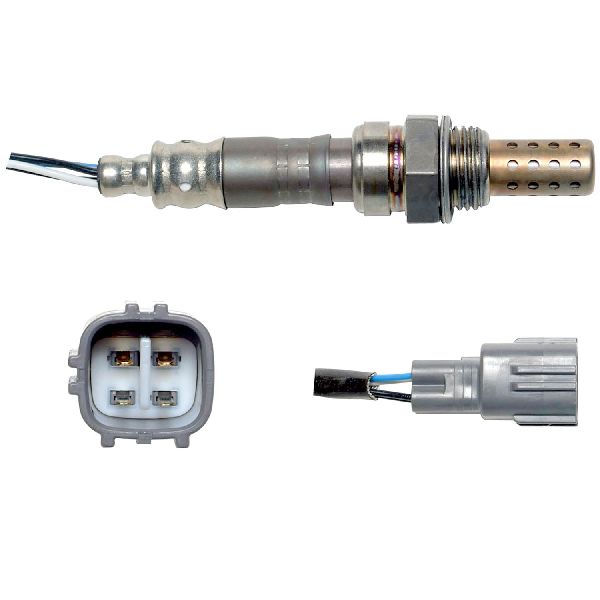
On a 2007-2011 Camry, code P0136 is most often caused by a heat-damaged wiring harness or using a non-OEM sensor, not the sensor itself. First, inspect the wiring for damage, then replace the sensor with a Denso-brand part if needed. The recommended Denso aftermarket part is 234-4509. Expect to pay ~$60 for a Denso sensor and ~$150 for an OEM part.
- Do NOT immediately replace the O2 sensor. First, carefully inspect the wiring harness for heat damage, as this is a very common failure point on this Camry.
- If you must replace the sensor, ONLY use a Denso or genuine Toyota part. Using other brands will likely cause the code to return.
- This code will cause an automatic failure on an emissions test, so it must be resolved before inspection.
- If you also have a P0420 (catalyst efficiency) code, fix the P0136 code first. A bad sensor reading from P0136 can cause a false P0420 code.
What's Unique About the 2007-2011 Toyota Camry
For this generation of Camry (XV40), the P0136 code is frequently misdiagnosed. The root cause is often not a failed sensor, but one of two platform-specific issues. First, the sensor's wiring harness runs close to the hot exhaust, causing the wires to become brittle and corroded over time, which creates high electrical resistance. Second, the Camry's computer is precisely calibrated for the internal heater resistance of the original Denso oxygen sensor; many aftermarket sensors (especially Bosch) do not meet this specification, fail to heat up properly, and trigger the code.
Symptoms You May Notice
- Check Engine Light is on
- Failure to pass an emissions test
- Slightly decreased fuel economy (uncommon)
- Rough idle (rare)
- Immediately replacing the oxygen sensor without first inspecting the wiring harness for heat damage.
- Replacing the oxygen sensor with a cheap, universal, or non-Denso brand (like Bosch), which often leads to the code returning.
- Replacing the catalytic converter due to a P0420 code that appears alongside P0136. A faulty P0136 sensor can provide inaccurate data to the ECM, causing a false P0420 code. Always fix O2 sensor circuit codes first.
Most Likely Causes
- Heat-Damaged Wiring Harness 🔴 High Probability The wiring for the downstream O2 sensor is routed near the hot exhaust system. Over many years and heat cycles, the protective loom and wire insulation can become brittle, crack, and allow moisture to corrode the copper wire, creating high resistance.
How to confirm: Visually inspect the entire wiring harness from the O2 sensor connector towards the engine. Look for cracked or melted plastic loom. A key sign is if the wires inside feel stiff and hard instead of flexible when you bend them. Perform a voltage drop test with a multimeter on the signal and ground wires to check for high resistance.
Typical fix: Repair the damaged section of the wiring harness. This may involve cutting out the bad section and splicing in new wire with heat-shrink butt connectors. Ensure the repair is properly shielded from heat.
Est. part cost: $5-$20 - Incorrect (Non-Denso) Aftermarket Oxygen Sensor 🔴 High Probability → Shop Oxygen Sensor The Toyota ECM is calibrated to expect a specific electrical resistance from the sensor's internal heater. Many universal or non-Denso aftermarket sensors have the wrong heater resistance, so they don't heat up to the required 600°F fast enough, causing the ECM to see a 'slow response' and set the P0136 code. Forum users on ClubLexus and TacomaWorld strongly advise against using Bosch sensors on Toyota vehicles for this reason.
How to confirm: Check the brand of the currently installed sensor. If it is not a Denso or genuine Toyota part, it is highly suspect. A Denso sensor will be stamped with 'DENSO'.
Typical fix: Replace the sensor with a direct-fit Denso or genuine Toyota part. The recommended direct-fit Denso part is 234-4509.
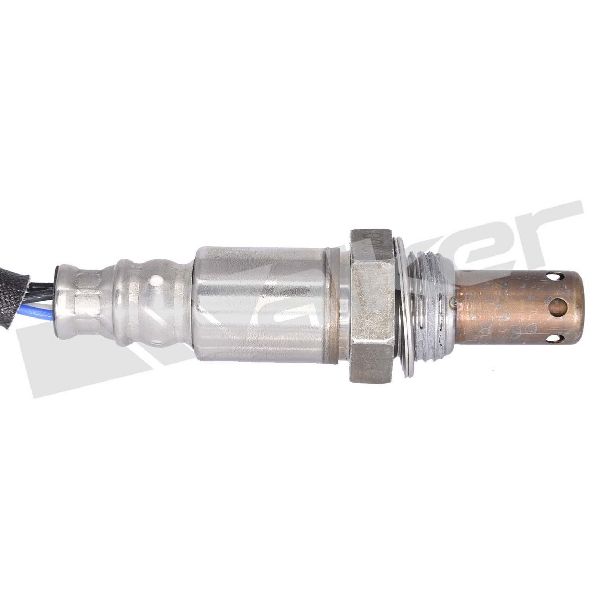
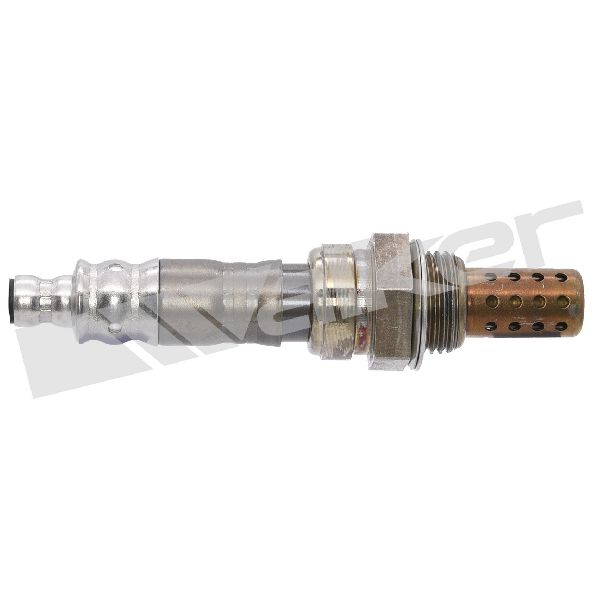
Est. part cost: $60-$180 - Failed Downstream Oxygen Sensor (Bank 1 Sensor 2) 🟡 Medium Probability → Shop Oxygen Sensor
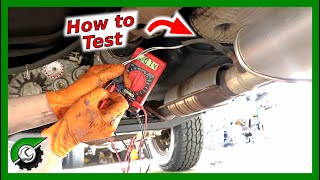
How to confirm: After confirming the wiring is in good condition and the correct type of sensor is installed, the sensor itself is the likely culprit. A scan tool can be used to observe the sensor's voltage; if it is flatlined (stuck at 0V) or does not respond to changes in engine conditions (like stabbing the throttle), it has failed. 🎬 See how to test your O2 sensor before buying parts
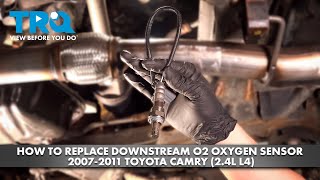
Typical fix: Replace the Bank 1, Sensor 2 oxygen sensor. The sensor can often be seized in the exhaust pipe, requiring penetrating oil (like PB Blaster) and a special O2 sensor socket to remove. 🎬 Watch: Step-by-step guide to replacing the downstream sensor
Est. part cost: $60-$180 - Exhaust System Leak ⚪ Low Probability
How to confirm: Listen for hissing or ticking sounds from the exhaust, especially when the engine is cold. Visually inspect the exhaust pipes and gaskets for black soot marks, which indicate a leak. A shop can perform a smoke test to pinpoint the leak's location.
Typical fix: Replace the leaking gasket or repair the damaged section of the pipe using exhaust putty or by welding.
Est. part cost: $20-$100
Rare But Worth Checking
- Faulty Engine Control Module (ECM): This is extremely rare. The ECM should only be considered after all other possibilities, including wiring and the sensor itself, have been exhaustively tested and ruled out.
- Blown 'A/F Heater' Fuse: The sensor's internal heater is powered by a fuse, often labeled 'A/F HEATER' or similar in the engine bay fuse box. While not common to fail, it's a quick check that can save a lot of diagnostic time. For the XV40 Camry, this is typically a 25A fuse in the engine compartment fuse box.
Diagnosis Steps
- Read the code with an OBD-II scanner 🎬 Watch: A professional walkthrough on how to diagnose a P0136 to confirm P0136 is present.
- Perform a thorough visual inspection of the oxygen sensor's wiring harness, from the sensor connector up towards the engine bay. Look for signs of melting, chafing, or brittle, cracked insulation near the exhaust manifold.
- If an aftermarket sensor is installed, identify the brand. If it is not Denso or OEM Toyota, it is the most likely cause.
- If the wiring looks damaged, perform a voltage drop test on the signal and ground wires between the sensor connector and the ECM to confirm high resistance.
- Check the 'A/F Heater' fuse in the engine bay fuse box.
- With the key on and engine off, use a multimeter to check for 12-volt power at the sensor's heater circuit in the connector.
- If wiring and power supply are good, use a scan tool to monitor the live data from the B1S2 sensor. The voltage should fluctuate. If it is stuck at a specific voltage (e.g., 0V or 0.9V) and does not respond, the sensor has likely failed.
- Inspect the exhaust system for leaks between the engine and the downstream O2 sensor.
- If all other tests pass, replace the oxygen sensor with a quality part, preferably Denso 234-4509.
Parts You'll Likely Need
- Downstream Oxygen Sensor (Bank 1, Sensor 2)
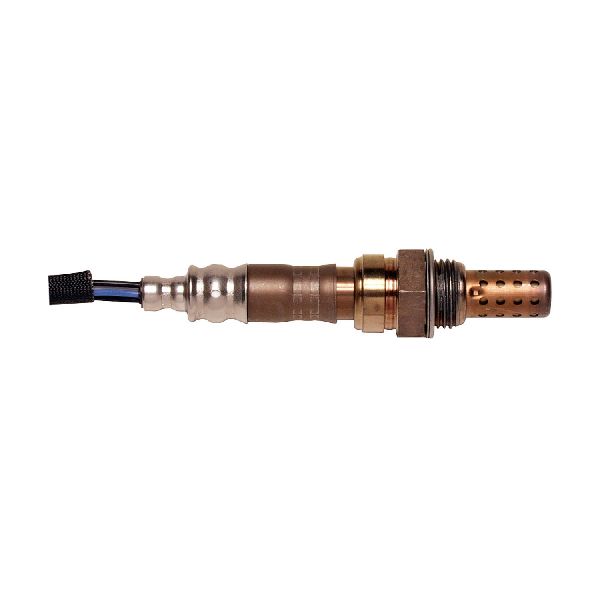
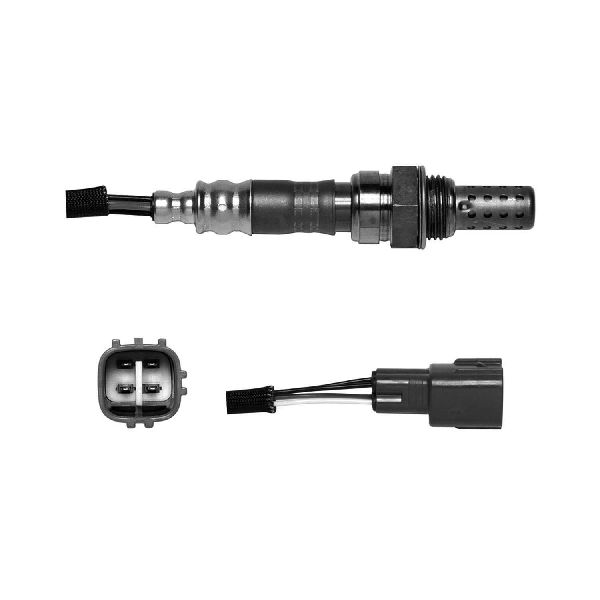
(OEM #89465-06150)— This is the sensor indicated by the code. On this vehicle, it's critical to use the OEM supplier (Denso) to ensure the heater circuit has the correct resistance for the ECU. The direct-fit aftermarket equivalent is Denso P/N 234-4509.
Trusted brands: Denso (OEM Manufacturer, P/N: 234-4509), Genuine Toyota (P/N: 89465-06150)
OEM price range: $150-$200
Aftermarket price range: $60-$120
Related Codes That Often Appear With This One
- P0137 — This code indicates 'O2 Sensor Circuit Low Voltage'. It can appear with P0136 if the circuit is shorted to ground or has an open, causing the voltage signal to be lower than expected.
- P0138 — This code indicates 'O2 Sensor Circuit High Voltage'. It can be triggered if the sensor's signal wire shorts to a power source.
- P0420 — This code means 'Catalyst System Efficiency Below Threshold'. The P0136 sensor is what monitors the catalyst. If the sensor provides inaccurate data, it can falsely trigger a P0420 code. Always fix P0136 first.
Technical Service Bulletins (TSBs) & Recalls
- T-SB-0072-12: MIL "ON" DTC P0136 - Addresses this code on 2007-2011 Camry Hybrid models by installing an updated sensor and reprogramming the HV ECU.
Platform-Specific Known Issues
- TSB for Hybrid Model Highlights ECU Sensitivity: Toyota issued Technical Service Bulletin T-SB-0072-12 for the related Camry Hybrid model (2AZ-FXE engine) which exhibits the same P0136 issue. The fix involves an updated oxygen sensor and a reprogramming of the engine's computer (ECU) to better tolerate sensor variations. While the TSB is officially for the hybrid, it highlights the known sensitivity of the platform's electronics to this specific sensor, reinforcing why using a non-Denso part can cause issues on the standard 2AZ-FE as well.
Mechanic-Grade Diagnostic Values
- Downstream O2 Sensor (B1S2) Voltage during Active A/F Control Test — expected: Voltage should fluctuate, decreasing below 0.21V and increasing above 0.59V.. Failure: The ECM will set P0136 if the voltage variation is small and does not cross both the <0.21V and >0.59V thresholds during the test.
- Downstream O2 Sensor (B1S2) Voltage during throttle snap — expected: When revving the engine to 4,000 RPM multiple times, the sensor voltage should alternate between less than 0.4V and more than 0.5V.. Failure: A flatlined or slow-to-respond voltage indicates a faulty sensor.
- O2 Sensor Heater Circuit Voltage at Connector (Key On, Engine Off) — expected: Approximately 12-14V (battery voltage) should be present on the power wire to the heater.. Failure: No voltage suggests a problem with the fuse (A/F Heater) or the EFI relay. If voltage is present on both heater wires, it indicates the ECM is not commanding the heater on by providing a ground.
Hidden / Shadow Codes Worth Checking
- Mode 6, O2S Test Results: The onboard diagnostic monitor for the oxygen sensor stores detailed test results, including rich-to-lean and lean-to-rich switch times and voltages. These values can be compared against manufacturer failure thresholds to confirm sensor degradation before a persistent DTC is set. (see via Using a professional scan tool like Toyota Techstream, navigate to the 'CARB OBD II' or 'OBD/MOBD' menu and select 'O2S TEST RESULTS' to view the data for Bank 1, Sensor 2.)
Scan Tool Commands That Help
- Toyota Techstream: ACTIVE TEST / A/F CONTROL — This is a primary bidirectional test for this code. It forces the engine's air-fuel ratio rich and lean, allowing a technician to observe the live voltage response of the downstream O2 sensor (O2S B1 S2) on a graph. A healthy sensor will show clear, rapid voltage swings, while a failing one will be slow or flat.
- Toyota Techstream: ECU Flash Reprogramming (Calibration Update) — On the related 2007-2011 Camry Hybrid, TSB T-SB-0072-12 requires reprogramming the HV ECU with an updated calibration after replacing the sensor to prevent the code from returning. This highlights the ECU's sensitivity and may be a consideration in extremely stubborn cases on non-hybrid models if all other causes are ruled out.
Wiring & Ground Locations
- EG — Left side of cylinder head.. This is a primary engine ground point for the 2AZ-FE engine family. A corroded or loose ground here can introduce electrical noise or resistance into sensor circuits, including the O2 sensor.
- EH — Intake side of the cylinder block.. Another critical engine ground point. Verifying this ground is clean and tight is a key step when troubleshooting any sensor circuit malfunction code.
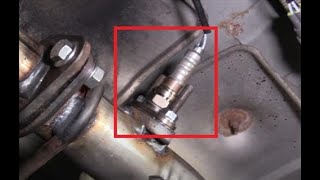
- B1S2 Connector — On the exhaust pipe, downstream of the primary catalytic converter, under the vehicle.. This is the main connection point for the sensor. It is exposed to road debris and moisture, and the harness leading to it is prone to heat damage from the exhaust. All voltage and resistance tests begin at this connector.
OEM Part Supersession History
89465-33440→89465-06150— Standard part update/revision.
Heads up: While 89465-06150 is the correct replacement, TSB T-SB-0072-12 for the hybrid model mentions an updated sensor *design* was released under the same part number. This implies that older stock of 89465-06150 may differ from newer stock, making it crucial to source from a high-volume vendor to get the latest revision.
Model Year Variations Within This Range
- 2007-2011 (Camry Hybrid): The ECU calibration to address P0136 is different depending on the model year. TSB T-SB-0072-12 lists specific 'New Calibration IDs' for 2007-2008, 2009, and 2010-2011 models. This shows that the ECU software evolved throughout the XV40 generation's lifespan.
Diagnostic Flowchart
Real Owner Stories
Aggregated from forums and TSBs cited above. Mileages and costs reflect what owners reported in those sources.
2004 Toyota Camry 4-cylinder
Symptoms: Check engine light with code P0136 returned less than 40 miles after replacing the Bank 1 Sensor 2 O2 sensor.
What fixed it: The mechanic had used a Denso part (234-4624), but the issue persisted. Forum members advised diagnosing the wiring harness and connections for damage, or checking for a dirty MAF sensor. A similar case in NHTSA ODI #10194123 noted that a dealer diagnostic report confirmed a P0136 oxygen sensor malfunction, where replacement was advised to prevent further issues.
Source hint: Camry Forums - Toyota Nation
2005 Toyota Camry
Symptoms: Experienced a P0136 code along with a significant drop in fuel economy after a recent catalytic converter replacement.
What fixed it: The owner suspected the downstream O2 sensor was damaged or failed following the catalytic converter replacement. This aligns with reports like NHTSA ODI #11377970, where an owner reported persistent P0136 Bank 1 Sensor 2 errors even after multiple mechanics switched the downstream sensor.
Source hint: reddit.com/r/Toyota - '2005 Camry (P0136)' thread
Related OBD-II Codes
Frequently Asked Questions
Does TSB T-SB-0072-12 apply to my standard 2.4L 2AZ-FE Camry?
What brand of oxygen sensor should I use to fix P0136 on my 2007-2011 Camry?
Which sensor is Bank 1 Sensor 2 on the 2.4L engine?
Why is the wiring harness a common cause for P0136 on this specific vehicle?
How can I test if the downstream O2 sensor has failed on my Camry?
Helpful Videos

We Have This Part in Stock


The information in this article is provided for general reference and educational purposes only. Vehicle specifications, procedures, and part compatibility can vary by production date, trim level, and region. Always consult your vehicle's factory service manual and verify part numbers before purchasing or performing repairs. Safety-critical components such as airbags, seat belts, and braking systems should be installed by a qualified professional.
- Toyota Camry:
- 🧭 Diagnostic Flowchart
- 🎬 Helpful Videos
- 🛍️ Shop This Part
- What's Unique About the 2007-2011 Toyota Camry
- Symptoms You May Notice
- Most Likely Causes
- Rare But Worth Checking
- Diagnosis Steps
- Parts You'll Likely Need
- Related Codes That Often Appear With This One
- Technical Service Bulletins (TSBs) & Recalls
- Platform-Specific Known Issues
- Mechanic-Grade Diagnostic Values
- Hidden / Shadow Codes Worth Checking
- Scan Tool Commands That Help
- Wiring & Ground Locations
- OEM Part Supersession History
- Model Year Variations Within This Range
- Real Owner Stories
- 2004 Toyota Camry 4-cylinder
- 2005 Toyota Camry
- Related OBD-II Codes
- Frequently Asked Questions
- 🎟️ Get 5% Off