

P0136 on 2010-2015 Toyota Prius: O2 Sensor Circuit Malfunction Causes and Fixes
This code points to a malfunction in the downstream oxygen sensor (Bank 1, Sensor 2). On a Gen 3 Prius, this is almost always a failed sensor due to age. Replacing the sensor is a straightforward DIY job, with parts costing between $60 for a quality aftermarket part (like Denso) and $150 for an OEM Toyota-branded part. Before replacing, check the wiring for obvious damage.
- P0136 specifically points to the oxygen sensor located *after* the catalytic converter.
- The most common fix for this code on a 2010-2015 Prius is replacing the downstream oxygen sensor, which is a normal wear item.
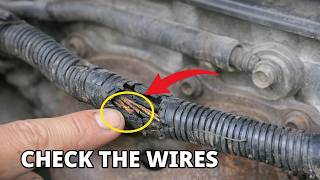
- Before buying parts, always perform a quick visual inspection of the sensor's wiring and connector for obvious damage like melting or corrosion.
- You can continue to drive with this code, but you will fail an emissions test and may experience slightly worse fuel economy until it is fixed.
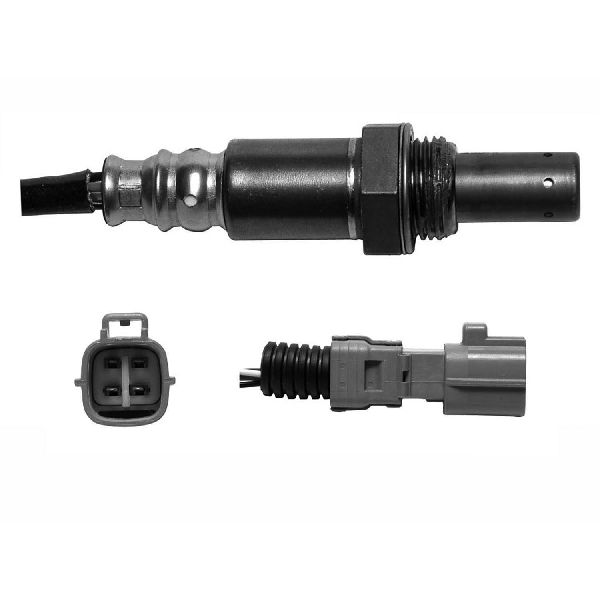
- Using an OEM-quality sensor from a brand like Denso (part # 234-4521) is highly recommended to ensure compatibility and prevent the code from returning.
What's Unique About the 2010-2015 Toyota Prius
The 2010-2015 Toyota Prius (third generation) is generally very reliable, and P0136 is not an unusually common or complex issue. Unlike some other vehicles where this code can be triggered by tricky wiring harness issues or incompatibility with non-OEM sensors, the Prius seems more straightforward. The most common cause is simply the sensor failing due to age and heat cycles. Owners on forums like PriusChat often resolve this code with a direct sensor replacement. However, it's worth noting that in some cases, a failing upstream Air/Fuel (A/F) sensor can cause unusual readings downstream, leading to a P0136 code, though this is less common.
Symptoms You May Notice
- Check Engine Light is on.
- Possible decrease in fuel efficiency.
- Vehicle will fail an emissions test.
- Replacing the upstream Air/Fuel Ratio Sensor (Sensor 1) instead of the downstream Oxygen Sensor (Sensor 2). The code P0136 specifically refers to the post-catalyst sensor.
- Replacing the catalytic converter. While a failing converter can affect the downstream O2 sensor readings, it will typically set a P0420 (Catalyst System Efficiency Below Threshold) code, not a P0136 circuit code.
Most Likely Causes
- Failed Downstream Oxygen Sensor (Bank 1, Sensor 2) 🔴 High Probability → Shop Oxygen Sensor Oxygen sensors are wear items that operate in a high-heat environment. Over many miles (often over 100k) and heat cycles, the internal sensing element or heater can fail. On the Prius, this is the most frequent culprit for P0136.
How to confirm: Use a scan tool to monitor the live data for the B1S2 O2 sensor. A healthy sensor on a warm engine should show a relatively stable voltage, typically between 0.1V and 0.8V. If the voltage is stuck at 0V, stuck near 1V, or fluctuating wildly like the upstream A/F sensor, the sensor has likely failed. Toyota's diagnostic criteria state that if the voltage fails to go below 0.25V or above 0.59V during an active test, the sensor is faulty. A resistance check on the sensor's heater circuit can also be performed; a reading outside of the manufacturer's specification indicates a bad heater element.
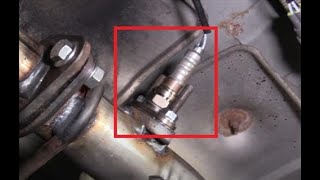
Typical fix: Replace the Bank 1, Sensor 2 oxygen sensor. It is located downstream of the catalytic converter, accessible from underneath the vehicle. Using an O2 sensor socket makes removal much easier, though sometimes they can be seized from rust.
Est. part cost: $60-$180 - Damaged Wiring or Connector 🟡 Medium Probability The wiring harness runs underneath the vehicle and is exposed to road debris, moisture, and heat from the exhaust, which can cause corrosion or physical damage over time. A visual inspection is the first step in diagnosis.
How to confirm: Visually inspect the entire wiring harness from the O2 sensor to where it connects to the main loom. Look for any signs of melting, chafing, corrosion in the connector pins, or broken wires. Perform a voltage drop test on the signal and ground wires if a visual inspection is inconclusive. Check for 12V at the heater circuit wire with the key on.
Typical fix: Repair the damaged section of the wiring harness or clean/replace the corroded connector.
Est. part cost: $5-$50 - Exhaust Leak ⚪ Low Probability Gaskets and welds in the exhaust system can degrade over time, allowing outside air to be drawn into the exhaust stream near the sensor. This introduces extra oxygen and can skew the sensor's readings.
How to confirm: Listen for a hissing or ticking sound from the exhaust system when the engine is running. Look for black soot marks around exhaust flanges and welds, which indicate a leak. A smoke test is the most definitive way to find small leaks.
Typical fix: Replace the leaking exhaust gasket or repair the cracked pipe.
Est. part cost: $20-$100
Rare But Worth Checking
- Faulty Engine Control Module (ECM): This is extremely rare. The ECM should only be considered a potential cause after all other possibilities (sensor, wiring, exhaust leaks) have been definitively ruled out.
- Failing Upstream Air/Fuel Sensor (Bank 1, Sensor 1): While uncommon, a failing or contaminated upstream A/F sensor can sometimes cause erratic fuel trims that lead the ECM to flag the downstream sensor. One PriusChat user noted that if the upstream A/F sensor voltage is stuck high (e.g., above 3.3V), it can trigger a P0136. This is more likely if the car recently had a head gasket failure, which can contaminate the upstream sensor.
Diagnosis Steps
- Connect an OBD-II scanner to confirm that P0136 is the only code present. Document the freeze frame data.
- Visually inspect the Bank 1, Sensor 2 oxygen sensor, which is located on the exhaust pipe after the catalytic converter. Check for physical damage to the sensor body.
- Carefully inspect the sensor's wiring harness and connector for any signs of melting, chafing, corrosion, or loose connections. Ensure the connector is dry and the pins are clean.
- With the engine running, check for audible exhaust leaks between the engine and the downstream O2 sensor. Pay close attention to the flange gaskets.
- Use the live data function on your scan tool to observe the voltage of Bank 1, Sensor 2. At operating temperature, it should be relatively steady. If it is stuck at 0V, near 1V, or fluctuating wildly, the sensor has likely failed. According to Toyota service info, if it's stuck between 0.25V and 0.59V during an active test, it's also considered faulty.
- If the sensor signal appears dead (0V), use a multimeter to check for power (approx. 12V) and ground at the sensor connector's heater circuit to rule out a wiring issue before replacing the sensor.
- If wiring and the sensor itself test good, consider the rare possibility of a failing upstream A/F sensor causing the issue, especially if other symptoms are present.
- If all other possibilities are exhausted, the final, though very unlikely, possibility is a fault within the Engine Control Module (ECM).
Parts You'll Likely Need
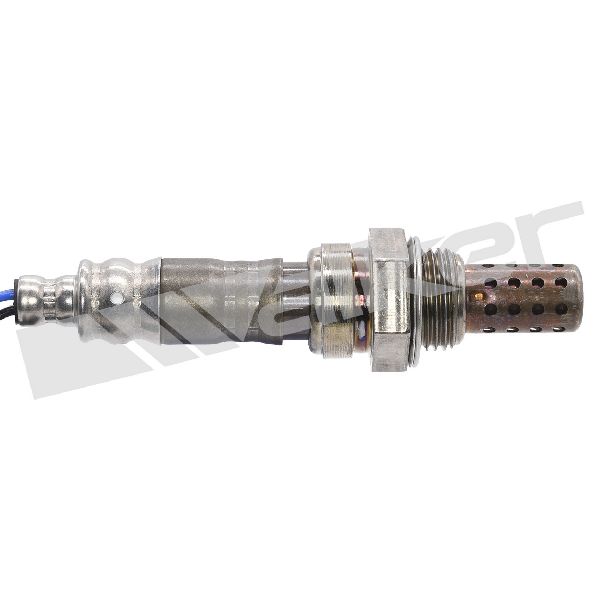
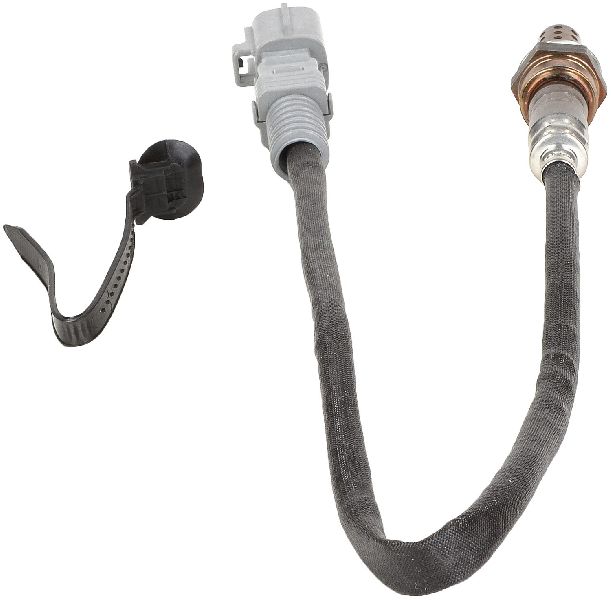
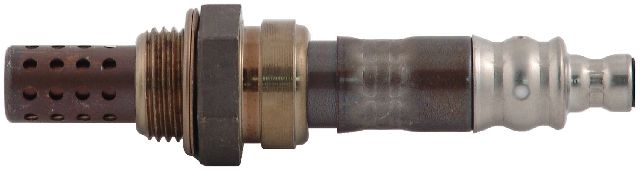
- Downstream Oxygen Sensor (Bank 1, Sensor 2)
(OEM #89465-47080)— This is the component that the P0136 code directly identifies as having a circuit malfunction. It is a common wear-and-tear item and the most frequent cause of this code. The original part number may have been 89465-47070, which was superseded by 89465-47080.
Trusted brands: Denso (OEM manufacturer), Toyota (Genuine)
OEM price range: $120-$180
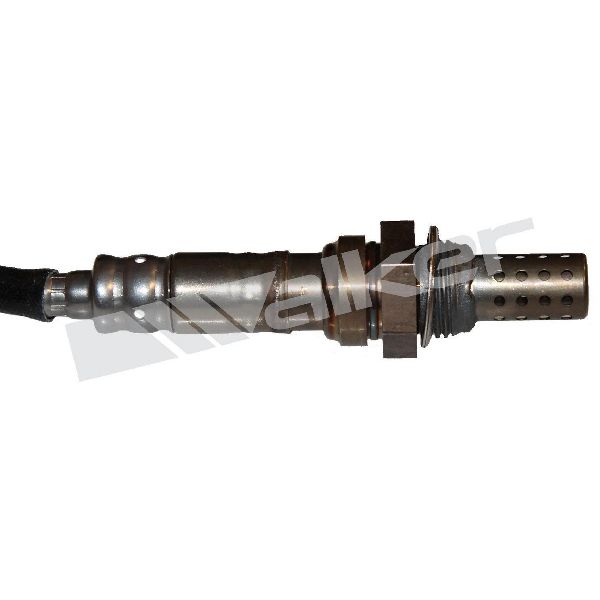
Aftermarket price range: $60-$110
Platform-Specific Known Issues
- Easy Access but Potentially Seized Sensor: The downstream sensor is located in a relatively easy-to-access spot on the exhaust pipe underneath the car. However, due to its location and exposure to heat and moisture, it can become heavily corroded and seized in the exhaust pipe bung, making removal difficult without a proper O2 sensor socket and penetrating oil.
Mechanic-Grade Diagnostic Values
- Downstream O2 Sensor (B1S2) Heater Resistance — expected: 11 to 16 Ω at 68°F (20°C). Failure: A resistance reading outside of this range indicates a faulty heater element within the sensor.
- Downstream O2 Sensor (B1S2) Voltage during ECM Active Test — expected: Voltage should fluctuate, going below 0.21V and above 0.59V.. Failure: If the voltage remains stuck between 0.25V and 0.59V during the active test, the ECM flags it as an abnormal voltage output malfunction (P0136).
- Upstream A/F Sensor (B1S1) Voltage Check for P0136 Diagnosis — expected: Should not be stuck at a high voltage.. Failure: A voltage stuck above 3.3V can indicate a biased lean reading from the A/F sensor, which can trick the ECM into flagging the downstream sensor and setting a P0136 code.
- Downstream O2 Sensor (B1S2) Impedance — expected: Should be within a specific range calculated by the ECM.. Failure: The ECM will set a DTC if the impedance is too high (e.g., exceeds 15 kΩ, indicating an open/short) or too low (e.g., less than 5 Ω). P0136 can be set due to impedance-based calculations.
Scan Tool Commands That Help
- Toyota Techstream: Active Test: "Control the Injection Volume / A/F Control" — This function allows a technician to force the air-fuel ratio rich (+25%) and lean (-12.5%) to observe the downstream O2 sensor's reaction. A healthy sensor's voltage will swing widely in response. A lazy or failed sensor will not respond correctly, confirming the malfunction indicated by P0136.
Wiring & Ground Locations
- ECM Connector A57 — At the Engine Control Module, located in the engine compartment.. A PriusChat user identified the specific pins for the downstream O2 sensor at the ECM connector for a 2011 Prius. The blue (+) wire and white (-) wire for the sensor can be tested here, which is useful for diagnosing wiring issues without having to access the sensor connector underneath the car.
- Ground Points EA, EB — Located on the right side of the fender apron in the engine compartment.. These are primary engine bay ground points. While not specific to the O2 sensor circuit alone, a poor ground at these locations can cause a variety of difficult-to-diagnose electrical issues, including erratic sensor readings. Always check that main grounds are clean and tight when chasing electrical faults.
- O2 Sensor Connector (H14) — Underneath the vehicle, near the exhaust pipe, where the sensor pigtail connects to the main vehicle harness.. This is the most common point for inspection. The connector is exposed to road grime and heat. Check for corrosion on pins, melted plastic, or physical damage to the locking tab or wires.
Real Owner Repair Stories
- PriusChat user 'The Critic' (2011 Prius Three) — P0136 code present. The user had also recently experienced a head gasket failure.
❌ Tried (didn't work) The initial diagnosis pointed towards the downstream O2 sensor as per the code definition.
✅ What actually fixed it The root cause was a contaminated upstream Air/Fuel (A/F) sensor. The user noted that after the head gasket failure, the A/F sensor was likely contaminated. Live data showed the A/F sensor voltage was stuck high (above 3.3V), which incorrectly biased the fuel trims and led the ECM to flag the downstream sensor. Replacing the upstream A/F sensor resolved the P0136 code. - NHTSA ODI #11377970 — An owner reported repeatedly receiving a P0136 Bank 1 Sensor 2 error code. Despite taking the vehicle to several mechanics and having the downstream O2 sensor switched, the error persisted.
- NHTSA ODI #10194123 — In a cross-manufacturer reference for Toyota vehicles, an owner reported the check engine light came on with a diagnostic report showing failure code P0136 for oxygen sensor malfunction, with a dealer advising replacement at a cost of approximately $230.00.
OEM Part Supersession History
89465-47070→89465-47080— Standard part revision by the manufacturer.
Heads up: The new part number (89465-47080) is the correct and current replacement for the original. There are no known incompatibilities; it is a direct replacement.
Diagnostic Flowchart
Other Known Issues on This Vehicle
Issues unrelated to this code that are worth knowing about as an owner of this generation:
- EGR System Clogging 🔴 High — Very common, typically noticeable between 80,000-150,000 miles. Leads to rough idle, engine knocking, and can cause subsequent head gasket failure if ignored. (Ref: T-SB-0027-16 addresses a rough idle and P0401 code by replacing the EGR valve with an updated part.)
- Excessive Oil Consumption 🟠 Medium — Common in 2010-2014 models, especially those with higher mileage. Caused by piston ring design that allows carbon buildup. (Ref: T-SB-0168-16 (Inspection) and T-SB-0169-16 (Repair) detail a procedure to confirm consumption and replace pistons/rings with updated parts for qualifying vehicles.)
- Brake Actuator / Booster Pump Failure 🔴 High — A known issue, particularly in 2010 models, that can lead to a change in brake feel or loss of braking assist. (Ref: Multiple recalls and warranty extensions (e.g., Customer Support Program ZJB) have been issued to address brake booster and pump assemblies that may fail, often setting codes like C1391, C1252, or C1256.)
- Head Gasket Failure 🔴 High — Often a consequence of a clogged EGR system leading to engine overheating, particularly around cylinder 4. Symptoms include a 'morning rattle' or misfires on cold start.
- Inverter (IPM) Failure 🔴 High — Affects 2010-2014 models. The Intelligent Power Module (IPM) inside the inverter can fail, causing the hybrid system to shut down. (Ref: Toyota issued a recall (e.g., 14V-053) to update the inverter software. If the inverter had already failed, it would be replaced.)
Used vs. New Parts: Buying Guide for This Vehicle
When a used part is the smart pick: For this repair, buying a used oxygen sensor is NOT recommended. O2 sensors are wear items with a finite lifespan, similar to spark plugs or brake pads. A used sensor from a junkyard has unknown remaining life and may fail shortly after installation, wasting time and money.
What to inspect on the donor part:
- Not applicable as used sensors are not advised.
OEM-only on this vehicle (don't cheap out):
- While not strictly 'OEM-only', using a non-reputable, cheap, no-name brand oxygen sensor is highly discouraged. Many forum users report issues with off-brand sensors not working correctly with the Prius's sensitive ECU.
Aftermarket brands forum-validated for this vehicle:
- Denso is the original equipment manufacturer (OEM) for Toyota's oxygen sensors. Buying a Denso-branded sensor (like the Denso 234-4521) is functionally identical to buying the Genuine Toyota part from a dealer, but often at a significantly lower price.
Brands owners have reported issues with on this vehicle:
- Avoid unbranded, 'white-box' sensors from online marketplaces. While their price is tempting, they frequently have incorrect internal resistance or slow response times, leading to the code returning or other performance issues.
Real Owner Stories
Aggregated from forums and TSBs cited above. Mileages and costs reflect what owners reported in those sources.
2010-2015 Toyota Prius 1.8L
Symptoms: The Check Engine Light came back on with a P0136 code immediately after replacing the downstream sensor and clearing the code. Live data showed the A/F sensor was at 3.3V with some fluctuations.
What fixed it: Replacing the upstream A/F sensor, which was the actual root cause despite the P0136 code pointing downstream.
Source hint: PriusChat forum thread titled 'P0136 Oxygen Sensor- Bank 1 Sensor 2 Malfunction'
2010-2015 Toyota Prius 1.8L — 214000 miles
Symptoms: Check Engine Light (P0136) triggered on a high-mileage vehicle.
What fixed it: Replacement of the original Bank 1, Sensor 2 oxygen sensor due to age and mileage.
Source hint: PriusChat forum thread 'P0136'
Related OBD-II Codes
Frequently Asked Questions
Is the P0136 code on my 2010-2015 Prius related to the common EGR clogging issue?
I have a 2010 Prius with a P0136 code; could this be related to the brake actuator recall?
Can a faulty upstream A/F sensor cause a P0136 code on my Prius?
How do I know if my Bank 1, Sensor 2 is actually bad according to Toyota's specifications?
Does the Lexus CT200h suffer from the same P0136 issues as the Prius?
Could excessive oil consumption on my 2012 Prius be causing my O2 sensor to fail?
Helpful Videos
We Have This Part in Stock


The information in this article is provided for general reference and educational purposes only. Vehicle specifications, procedures, and part compatibility can vary by production date, trim level, and region. Always consult your vehicle's factory service manual and verify part numbers before purchasing or performing repairs. Safety-critical components such as airbags, seat belts, and braking systems should be installed by a qualified professional.
- Toyota Prius:
- 🧭 Diagnostic Flowchart
- 🎬 Helpful Videos
- 🛍️ Shop This Part
- What's Unique About the 2010-2015 Toyota Prius
- Symptoms You May Notice
- Most Likely Causes
- Rare But Worth Checking
- Diagnosis Steps
- Parts You'll Likely Need
- Platform-Specific Known Issues
- Mechanic-Grade Diagnostic Values
- Scan Tool Commands That Help
- Wiring & Ground Locations
- Real Owner Repair Stories
- OEM Part Supersession History
- Other Known Issues on This Vehicle
- Used vs. New Parts: Buying Guide for This Vehicle
- Real Owner Stories
- 2010-2015 Toyota Prius 1.8L
- 2010-2015 Toyota Prius 1.8L — 214000 miles
- Related OBD-II Codes
- Frequently Asked Questions
- 🎟️ Get 5% Off