

P0137 on 2009-2014 Acura TSX: O2 Sensor Low Voltage Causes and Fixes
For a 2009-2014 Acura TSX, code P0137 almost always points to a failed downstream oxygen sensor (Bank 1, Sensor 2). Replacing this sensor is the most common fix, costing around $60-$120 for an aftermarket part and is a straightforward DIY job. Before replacing, check for exhaust leaks and ensure the battery is healthy.
- P0137 on a 2009-2014 TSX is most likely caused by a failed downstream oxygen sensor (Bank 1, Sensor 2).
- Before buying parts, perform a quick visual inspection of the sensor's wiring and the exhaust pipe for obvious damage or leaks.
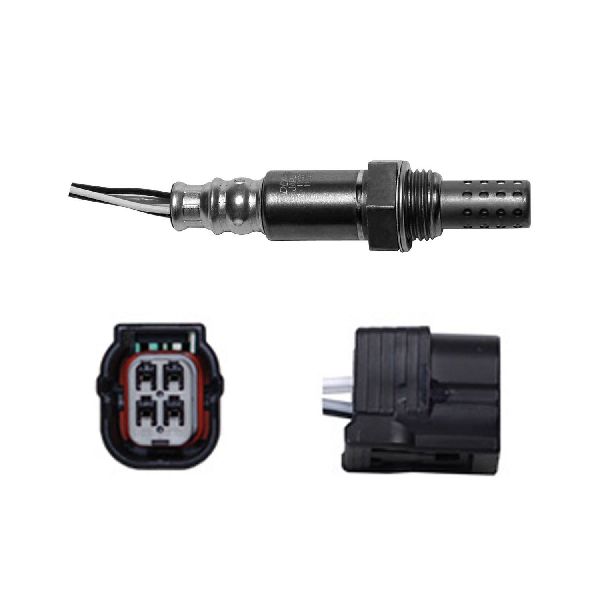
- For the 2.4L engine, the correct OEM part is 36532-R40-A01. A quality aftermarket part like Denso 234-4462 is a reliable, cost-effective alternative.
- This is a DIY-friendly repair for those comfortable working under their car; the main special tool needed is an O2 sensor socket.
- Ensure your car's battery is healthy, as a weak battery can occasionally cause this erroneous sensor code.
What's Unique About the 2009-2014 Acura TSX
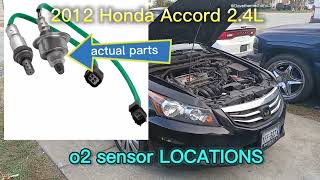
The 2009-2014 TSX was available with two different engines, which changes the location of 'Bank 1'. On the common 2.4L 4-cylinder engine, there is only one bank, so 'Bank 1, Sensor 2' is simply the one and only downstream O2 sensor, located under the car after the catalytic converter. On the less common 3.5L V6 engine, 'Bank 1' refers to the cylinder bank closer to the firewall (rear bank), and Sensor 2 is the downstream sensor for that specific bank. Bank 2 is the cylinder bank closer to the radiator (front bank). While the code's cause is typically a straightforward sensor failure, it's critical to identify the correct engine 🎬 Watch: See exactly where the O2 sensors are located to locate the right part.
Symptoms You May Notice
- Check Engine Light is on.
- Decreased fuel efficiency.
- Rough or unstable idle.
- Vehicle will fail an emissions test.
- In many cases, no symptoms other than the Check Engine Light will be noticeable.
- Replacing the upstream Air/Fuel Ratio sensor (Sensor 1) instead of the downstream Oxygen sensor (Sensor 2).
- Replacing the catalytic converter when the actual fault is just the sensor that monitors it.
- Ignoring a small exhaust leak before the sensor, which causes the new sensor to read incorrectly as well.
Most Likely Causes
- Failed Downstream Oxygen Sensor (Bank 1, Sensor 2) 🔴 High Probability → Shop Oxygen Sensor Oxygen sensors are wear-and-tear items that have a finite lifespan of around 100,000 miles. They eventually fail from constant exposure to hot exhaust gases, moisture, and contaminants.
How to confirm: Use a scan tool to monitor the live voltage data for Bank 1, Sensor 2. If the voltage is stuck below 0.2V and does not fluctuate when the engine is warm, the sensor has likely failed. A healthy downstream sensor should show a relatively stable voltage, typically between 0.5V and 0.8V.
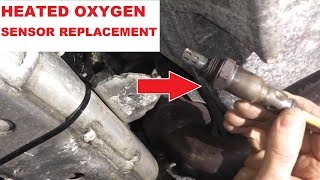
Typical fix: Replace the Bank 1, Sensor 2 oxygen sensor. This requires an O2 sensor socket and accessing the exhaust underneath 🎬 See this walkthrough on testing and replacing the sensor the car. The electrical connector can sometimes be difficult to reach.
Est. part cost: $60-$180 - Exhaust Leak 🟡 Medium Probability Exhaust components can develop leaks at gaskets or from corrosion over time, allowing outside air to be drawn in. This extra oxygen tricks the sensor into reading a false low voltage (lean) condition.
How to confirm: Visually inspect the exhaust system from the engine to the downstream O2 sensor for any signs of black soot, cracks, or holes. Listen for ticking or hissing sounds from the exhaust when the engine is cold. A common method is to briefly block the tailpipe with a rag to increase pressure and make leaks more audible.
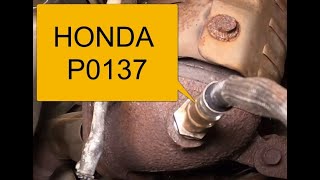
Typical fix: Repair the leak. This may involve replacing a gasket or using exhaust putty/wrap 🎬 Watch: Three simple DIY methods to fix a P0137 code for a small hole. In severe cases, a section of the exhaust pipe may need to be replaced.
Est. part cost: $10-$300 - Damaged Wiring or Connector ⚪ Low Probability The sensor wiring runs under the vehicle and is exposed to road debris, moisture, and heat, which can lead to corrosion, short circuits, or physical damage over time.
How to confirm: Visually inspect the O2 sensor's wiring harness and connector for any signs of fraying, melting, corrosion, or loose pins. Use a multimeter to check for continuity and proper voltage at the connector.
Typical fix: Repair the damaged section of the wiring harness or replace the connector pigtail.
Est. part cost: $15-$50
Rare But Worth Checking
- Weak or Failing Battery: A user on an Acura forum reported that a P0137 code on their TSX disappeared after replacing a weak battery. A mechanic in the thread noted that low system voltage can cause modules to 'shed' load and trigger erroneous sensor codes. Before replacing parts, it's wise to ensure the vehicle's battery and charging system are healthy.
- Faulty Powertrain Control Module (PCM): → Shop Engine Control Module (ECM) This is extremely rare, but the PCM itself can fail. This should only be considered after all other possibilities, including the sensor, wiring, and exhaust system, have been thoroughly ruled out by a professional.
Diagnosis Steps
- Read the code with an OBD-II scanner to confirm P0137 is present and check for any other codes.
- Test the battery and charging system to rule out a systemic electrical issue.
- Visually inspect the Bank 1, Sensor 2 oxygen sensor's wiring harness and connector for any obvious damage, melting, or corrosion.
- With the engine cold, start the car and inspect the exhaust system for leaks between the engine and the downstream O2 sensor. Listen for unusual noises and feel for escaping air.
- Use a scan tool with live data capability to monitor the voltage of Bank 1, Sensor 2. With the engine warm and running, the voltage should be relatively stable. If it is stuck below 0.2 volts, the sensor is the primary suspect.
- If the sensor, wiring, and exhaust are all confirmed to be good, the final and least likely possibility is a fault within the PCM.
Parts You'll Likely Need
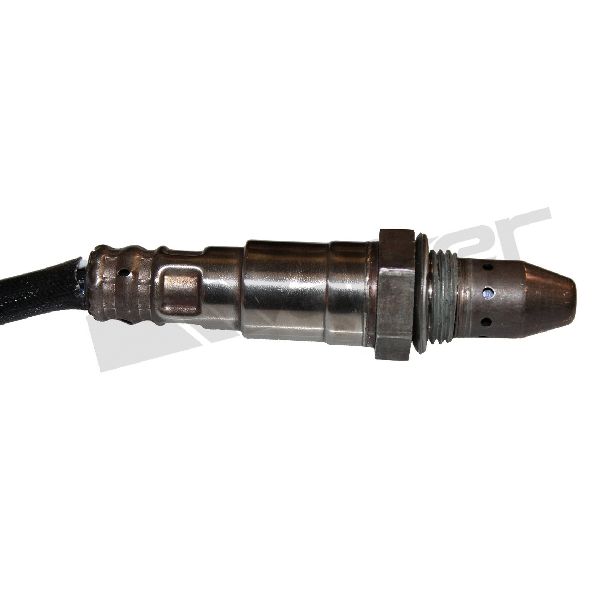
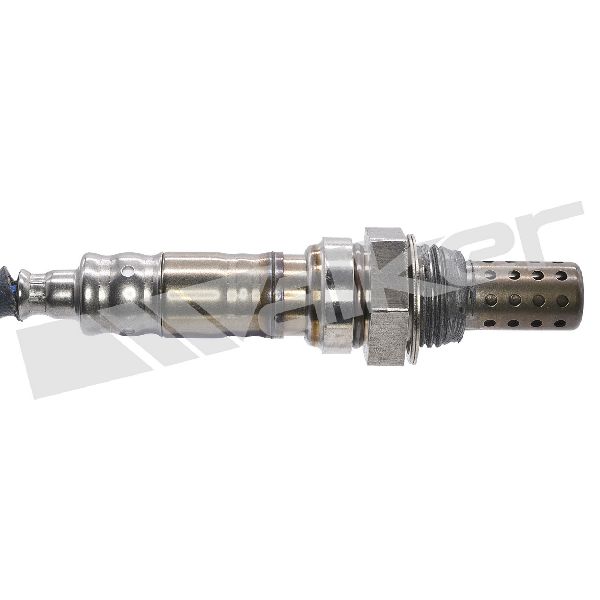
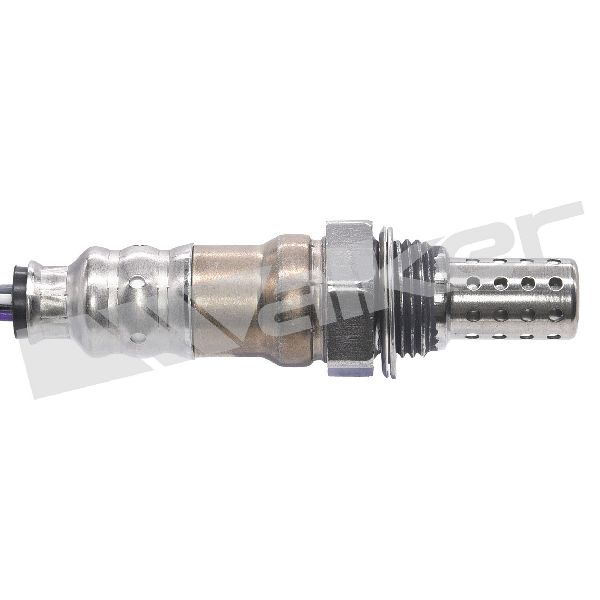
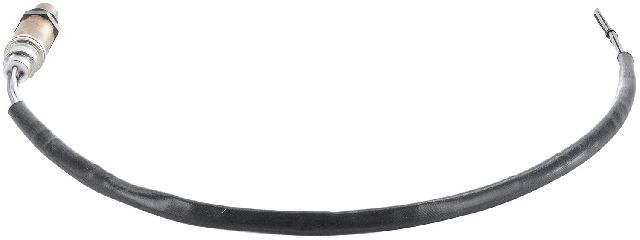
- Downstream Oxygen Sensor (Bank 1, Sensor 2)
(OEM #36532-R40-A01)— This is the most common failure point for code P0137. It is a standard maintenance part that degrades over time.
Trusted brands: Denso (e.g., 234-4462), NGK (NTK)
OEM price range: $150-$220
Aftermarket price range: $60-$120
Related Codes That Often Appear With This One
- P0420 — P0420 indicates 'Catalyst System Efficiency Below Threshold'. Since P0137 means the sensor that monitors the catalyst isn't working correctly, the PCM can't accurately judge the catalyst's health. A faulty sensor can sometimes trigger a false P0420, or the two codes can appear together if both the sensor and the catalyst are failing.
- P2096 — P2096 means 'Post Catalyst Fuel Trim System Too Lean Bank 1'. This code is closely related to P0137, as both point to a lean condition being detected by the downstream O2 sensor. They often appear together when there is an exhaust leak or a failing sensor.
Platform-Specific Known Issues
- ECU Reflash/Tune: A user on Reddit reported that a P0137 code began appearing immediately after an ECU reflash from a tuning company. The issue persisted after replacing the sensor twice, indicating the tune itself was the cause.
Mechanic-Grade Diagnostic Values
- Secondary O2 Sensor Heater Resistance — expected: 1.1 - 1.6 Ohms at 68°F (20°C). Failure: A reading outside of this range indicates a faulty heater circuit within the sensor, which can affect its ability to get to operating temperature and cause incorrect voltage readings.
- Secondary O2 Sensor Signal Voltage at PCM — expected: Relatively stable between 0.5V and 0.8V on a warm, running engine.. Failure: A voltage signal that is stuck below 0.2V when probing the appropriate pin at the PCM connector confirms the low voltage condition is reaching the computer and isn't a wiring issue between the connector and the PCM.
Scan Tool Commands That Help
- Honda Diagnostic System (HDS): Secondary HO2S Test — This function in the dealer-level scan tool forces the engine's fuel mixture rich and lean to observe the O2 sensor's response. It's a definitive way to confirm if the sensor is lazy or non-responsive, beyond just observing passive voltage readings at idle.
Wiring & Ground Locations
- ECM/PCM Connector C (Pin 15 & 16 on some models) — Located at the Powertrain Control Module (PCM), typically in the engine bay or behind the passenger side kick panel.. For the 2.4L K24Z3 engine, the secondary O2 sensor signal (SO2S) and signal ground (S_GND) wires terminate here. Probing for voltage at these specific pins can help determine if a wiring fault exists between the sensor connector and the PCM.
- G101 — Bolted to the engine block or thermostat housing area on the left side of the engine.. This is a primary engine ground distribution point for numerous sensors. While not directly for the O2 sensor's signal, a corroded or loose G101 can introduce electrical noise into the system, potentially causing erratic or incorrect readings from various engine sensors, including the O2 sensor.
Real Owner Repair Stories
- Mazda Talk & Camaro5 Forums (Multiple vehicles, not TSX-specific but highly relevant) — P0137 code appeared after installing an aftermarket header (with or without a high-flow cat).
❌ Tried (didn't work) Replacing the O2 sensor., Checking for exhaust leaks., Clearing the code, which would return shortly after.
✅ What actually fixed it The issue is caused by the O2 sensor being relocated further downstream in the new header, changing its reading characteristics. The fix requires an ECU tune to disable the rear O2 sensor check or adjust its expected parameters. - Acurazine Forum User (Acura TL (similar platform)) — Persistent P0137 code even after trying multiple fixes.
❌ Tried (didn't work) Replacing the O2 sensor with a universal, splice-in type.
✅ What actually fixed it The user's problem was only resolved after replacing the faulty splice-in universal sensor with a direct-fit, plug-and-play Denso sensor. The splices on the universal sensor were a point of failure, causing the low voltage reading.
OEM Part Supersession History
36532-R40-A01→N/A— This part number remains the current and correct OEM part for the 2009-2014 TSX.
Diagnostic Flowchart
Other Known Issues on This Vehicle
Issues unrelated to this code that are worth knowing about as an owner of this generation:
- Excessive Engine Oil Consumption (2.4L K24Z3) 🔴 High — Common, particularly on 2009-2011 models. Onset can be as early as 80,000 miles. Caused by carbon deposits on oil control rings. (Ref: Acura TSB 19-006 and 19-052 extended the warranty for piston/ring replacement to 8 years/125,000 miles.)
- VTC Actuator Rattle on Cold Start 🟠 Medium — A very common issue across K-series engines. A brief, loud rattle or grind for 1-2 seconds upon starting the engine in cold weather. Many owners live with it, but it can be a precursor to timing chain stretch if ignored. (Ref: No specific recall, but it is a widely documented problem. Repair involves replacing the VTC actuator (part #14310-R40-A02).)
- Power Steering Hose Leak 🔴 High — More prevalent on earlier models but can affect the 2nd generation. The high-pressure hose deteriorates from engine heat, leaking fluid onto the hot exhaust, creating a fire risk. (Ref: NHTSA Recall 10V174000 (Acura Recall R35) was issued for 2004-2008 models, but the underlying design and heat exposure issue can still be a concern.)
- Premature Brake Wear 🟡 Low — Some owners report soft brake pedal feel and faster-than-expected wear on pads and rotors, sometimes within 30,000 miles. Often resolved by using higher-quality aftermarket brake components.
Used vs. New Parts: Buying Guide for This Vehicle
When a used part is the smart pick: Almost never for this repair. The O2 sensor is a wear item with a finite lifespan, so a used one has unknown life remaining. The only exception is sourcing a used wiring harness pigtail if the original connector is physically damaged.
Donor-vehicle mileage cap: roughly under 80000 miles for the part to have meaningful remaining life.
What to inspect on the donor part:
- For a connector pigtail, ensure the plastic is not brittle or cracked.
- Check that locking tabs are intact.
- Inspect pins for any signs of corrosion (green or white powder) or being bent.
OEM-only on this vehicle (don't cheap out):
- Catalytic Converter - It is widely documented on Honda/Acura forums that aftermarket catalytic converters often lack sufficient precious metals and will fail to satisfy the PCM's efficiency tests, causing a P0420 code to appear even if the converter is new.
Aftermarket brands forum-validated for this vehicle:
- Denso (OEM supplier)
- NTK (NGK)
Brands owners have reported issues with on this vehicle:
- Bosch - While a major brand, many Honda/Acura owners report compatibility issues, slower sensor response, and premature failures compared to Denso or NTK.
- Universal (splice-in) sensors - The wire splices are a common failure point and should be avoided in favor of direct-fit parts.
- Unbranded eBay/Amazon sensors - These often fail quickly or are dead on arrival.
Real Owner Stories
Aggregated from forums and TSBs cited above. Mileages and costs reflect what owners reported in those sources.
2009 Acura TSX
Symptoms: Check emissions light is on; car sometimes shudders when accelerating and the RPM will go up and down really fast for about two seconds.
What fixed it: The owner attempted to fix it by changing spark plugs, but the code remained; a faulty downstream O2 sensor was the suspected cause.
Source hint: reddit.com - Hello Reddit !what to do about code P0137
2009-2014 Acura TSX
Symptoms: P0137 code appeared and would not clear.
What fixed it: Replacing a weak battery.
Source hint: Reddit (r/AcuraTSX) - 'Fixed P0137 CEL'
2009-2014 Acura TSX
Symptoms: P0137 code keeps coming back immediately after an aftermarket ECU tune.
What fixed it: The issue was identified as being caused by the software changes in the ECU reflash/tune rather than a mechanical failure.
Source hint: Reddit (r/AcuraTSX) - 'P0137 code keeps coming back'
Related OBD-II Codes
Frequently Asked Questions
I just reflashed my ECU with a tuning company and now P0137 won't go away. Is the sensor bad?
Could my 2009 TSX's starting issues or battery be related to the P0137 code?
Is the Bank 1, Sensor 2 oxygen sensor easy to replace on the 2nd Gen TSX?
Does the oil consumption TSB for the 2.4L K24Z3 engine relate to my oxygen sensor?
What are the specific voltage specs I should look for when diagnosing this on my TSX?
Helpful Videos
![How to Fix P0137 Engine Code in 4 Minutes [3 DIY Methods / Only $9.42]](https://img.youtube.com/vi/D7iaXnsbzWQ/mqdefault.jpg)
We Have This Part in Stock


The information in this article is provided for general reference and educational purposes only. Vehicle specifications, procedures, and part compatibility can vary by production date, trim level, and region. Always consult your vehicle's factory service manual and verify part numbers before purchasing or performing repairs. Safety-critical components such as airbags, seat belts, and braking systems should be installed by a qualified professional.
- Acura TSX:
- 🧭 Diagnostic Flowchart
- 🎬 Helpful Videos
- 🛍️ Shop This Part
- What's Unique About the 2009-2014 Acura TSX
- Symptoms You May Notice
- Most Likely Causes
- Rare But Worth Checking
- Diagnosis Steps
- Parts You'll Likely Need
- Related Codes That Often Appear With This One
- Platform-Specific Known Issues
- Mechanic-Grade Diagnostic Values
- Scan Tool Commands That Help
- Wiring & Ground Locations
- Real Owner Repair Stories
- OEM Part Supersession History
- Other Known Issues on This Vehicle
- Used vs. New Parts: Buying Guide for This Vehicle
- Real Owner Stories
- 2009 Acura TSX
- 2009-2014 Acura TSX
- 2009-2014 Acura TSX
- Related OBD-II Codes
- Frequently Asked Questions
- 🎟️ Get 5% Off