

P0137 on 2013-2017 Cadillac ATS: O2 Sensor Low Voltage Causes and Fixes
P0137 on a Cadillac ATS most often means the rear oxygen sensor (Bank 1, Sensor 2) has failed. The second most common cause is an exhaust leak before the sensor, particularly at flex pipes or gaskets. A less common but vehicle-specific cause is loose intake manifold bolts creating a vacuum leak. Expect to pay $50-$150 for a new sensor and replace it yourself in under an hour.
- P0137 almost always points to a problem with the rear oxygen sensor (Bank 1, Sensor 2) or an exhaust leak before it.
- Before buying parts, always check for other stored trouble codes. On the ATS, a group of codes alongside P0137 strongly suggests an air leak from loose intake manifold bolts is the root cause, per GM TSBs.
- A visual inspection of the sensor's wiring and the exhaust pipe for leaks is a critical first step and can save you from buying an unnecessary part.
- Replacing a downstream O2 sensor is a beginner-friendly DIY job that requires a 22mm (7/8") O2 sensor socket and basic hand tools.
- Do not replace the expensive catalytic converter for a P0137 code alone; this code relates to the sensor, not converter efficiency (which is typically code P0420).
What's Unique About the 2013-2017 Cadillac ATS
While a faulty oxygen sensor is the most common cause for P0137 on most cars, the Cadillac ATS and its platform mates are specifically called out in GM technical service bulletins for a different root cause. On this platform, P0137 can appear alongside a wide variety of other engine codes as a secondary symptom of a significant intake air leak caused by loose intake manifold bolts. This makes it crucial to check for other stored codes before assuming the O2 sensor is the sole culprit, as simply tightening bolts may resolve the issue.
Diagnostic Flowchart
Tap your situation to follow the diagnostic path that matches what you're seeing on this vehicle.
Symptoms You May Notice
- Check Engine Light (Malfunction Indicator Lamp) is illuminated.
- Potential decrease in fuel economy.
- Vehicle may fail an emissions inspection.
- Rough or unstable idle in some cases.
- Hesitation or stalling in rare cases, especially if accompanied by other codes mentioned in TSB PIP5529B.
- Replacing the catalytic converter. A P0137 code points to the sensor *monitoring* the converter, not necessarily the converter itself. A failing converter typically sets a P0420 code, not a sensor circuit code.
- Replacing the O2 sensor without checking for exhaust or intake leaks first. An air leak can mimic the symptoms of a bad sensor, leading to wasted money on a part that wasn't needed.
Most Likely Causes
- Faulty Downstream Oxygen Sensor (Bank 1, Sensor 2) 🔴 High Probability → Shop Oxygen Sensor Oxygen sensors are wear-and-tear items that have a finite lifespan. They are exposed to extreme heat and exhaust gases, which causes them to degrade and fail over time, typically becoming less responsive or failing to produce a correct voltage signal.
How to confirm: Use an OBD-II scanner to monitor the live voltage data for the B1S2 sensor. A healthy downstream sensor should show a relatively stable voltage, typically between 0.5V and 0.8V on a warm, running engine. If the voltage is stuck low (typically below 0.2V) and does not fluctuate, the sensor is likely bad.
Typical fix: Replace the Bank 1, Sensor 2 oxygen sensor. This requires a 22mm (or 7/8") oxygen sensor socket. Apply anti-seize compound to the threads of the new sensor before installation.
Est. part cost: $50-$150 - Exhaust Leak 🟡 Medium Probability Exhaust components, especially flex pipes and flange gaskets, can develop leaks from corrosion, vibration, or impact over time. This allows outside air to be sucked into the exhaust stream, which the downstream O2 sensor reads as a high-oxygen, low-voltage condition.
How to confirm: Perform a visual inspection of the exhaust system from the engine to the rear O2 sensor, looking for soot marks, cracks, or rusted-out sections. A smoke test is the most effective method, where smoke is forced into the exhaust to reveal the exact location of any leaks. A hissing or ticking noise that is louder when the engine is cold can also indicate a leak.
Typical fix: Repair the leak by replacing the faulty gasket or section of pipe. A cracked flex pipe will need to be cut out and a new one welded in. Sealing small leaks with exhaust putty can be a temporary fix.
Est. part cost: $10-$300 - Damaged Wiring or Connector ⚪ Low Probability The wiring harness for the O2 sensor is located under the vehicle and can be damaged by road debris, improper service, or contact with hot exhaust components. A TSB for a different code (P0131) on the ATS notes that leaking power steering fluid can drip onto and contaminate the O2 sensor wiring harness, which is a possibility for P0137 as well.
How to confirm: Visually inspect the entire wiring harness for the O2 sensor, from the sensor itself to the main engine harness. Look for frayed wires, melting, corrosion in the connector pins, or loose connections. Use a multimeter to check for continuity and proper voltage at the connector.
Typical fix: Repair the damaged section of wire or replace the connector pigtail.
Est. part cost: $20-$50
Rare But Worth Checking
- Intake Air / Vacuum Leak: As noted in GM Technical Service Bulletins PIP5529A and PIP5529B, a significant air leak from loose intake manifold bolts can cause a lean condition that triggers P0137 along with many other codes. On the 2.0L LTG engine, cracked PCV hoses are also a common source of vacuum leaks that can set lean-related codes. If you have multiple codes stored, this becomes a more likely cause.
- Faulty Powertrain Control Module (PCM): → Shop Engine Control Module (ECM) This is extremely rare. The PCM should only be considered after all other possibilities, including sensors, wiring, and leaks, have been thoroughly ruled out.
Diagnosis Steps
- Read all stored trouble codes with an OBD-II scanner. If multiple codes are present, especially those listed in TSB PIP5529B, investigate for a common cause like an intake leak before focusing on individual sensors.
- Perform a thorough visual inspection of the exhaust system between the engine and the Bank 1 Sensor 2. Look for cracks, holes, or black soot indicating a leak, paying close attention to the flexible pipe sections.
- Inspect the O2 sensor's wiring harness and connector for any signs of melting, chafing, corrosion, or loose connections.
- Use the live data function on your scanner to observe the voltage of Bank 1 Sensor 2. A healthy sensor will have a relatively steady voltage (usually 0.5V - 0.8V) on a warm engine. If it's stuck below 0.2V, the sensor is likely faulty or there's a major exhaust/intake leak.
- If an exhaust leak is suspected but not visible, perform a smoke test to pinpoint its location. A video on a 2013 ATS 2.5L shows this method successfully identifying a gasket leak after the converter.
- If TSB PIP5529B applies (multiple codes present), inspect the intake manifold bolts for looseness. The TSB recommends tightening them to the correct specification, which may resolve the codes.
- If no leaks or wiring issues are found and the sensor voltage is stuck low, replace the Bank 1, Sensor 2 oxygen sensor.
- After the repair, clear the codes and perform a test drive to ensure the issue is resolved.
Parts You'll Likely Need
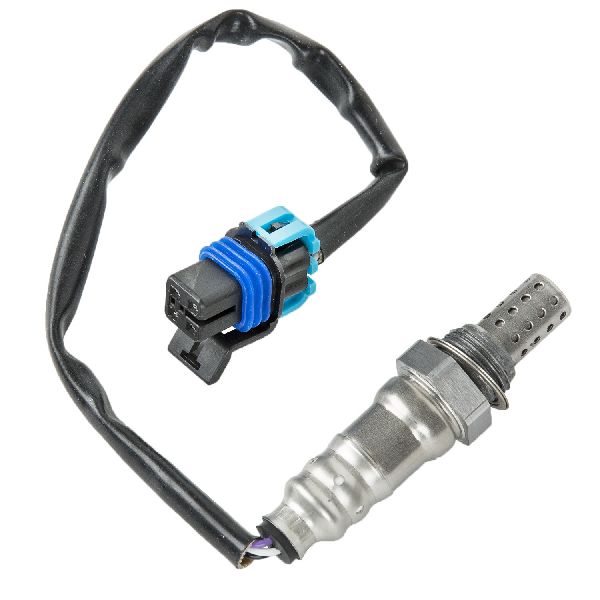
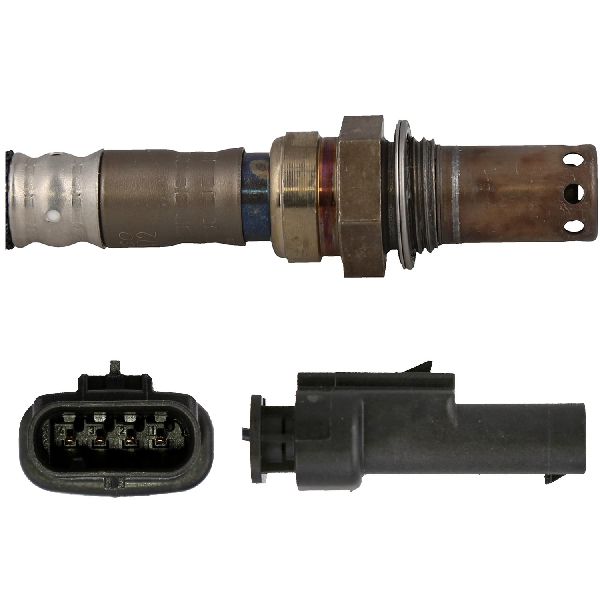
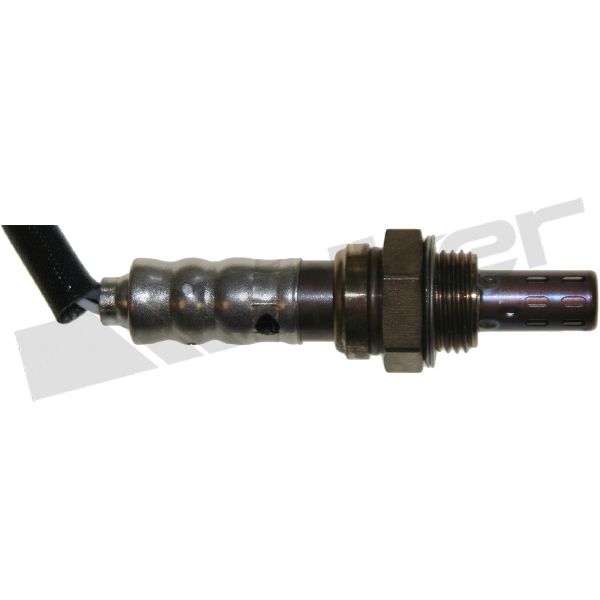
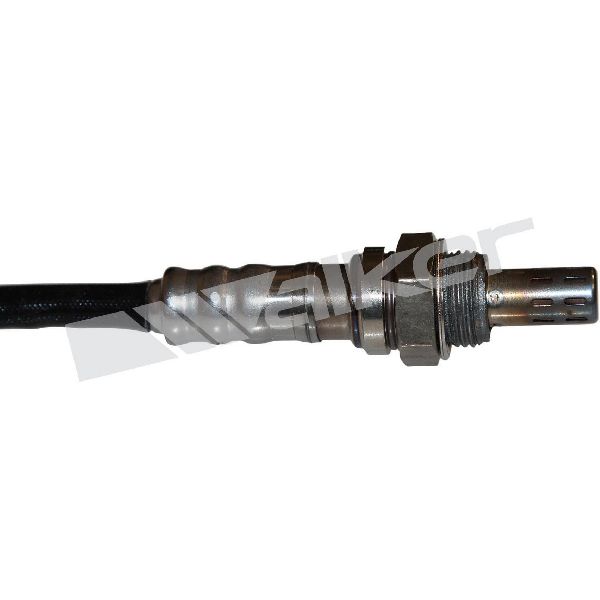
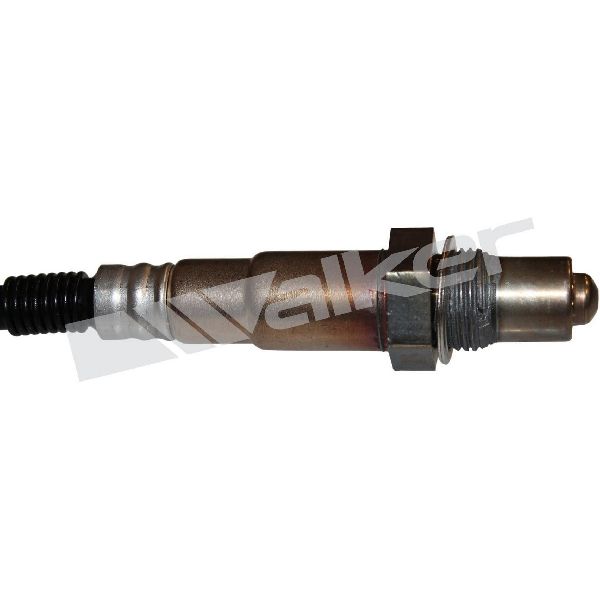
- Downstream Oxygen Sensor (Bank 1, Sensor 2)
(OEM #ACDelco 213-4768 (GM 12639692) - Note: This fits many GM 2.4L/2.5L engines, verify for your specific ATS engine. The 2.0T and 3.6L may use different part numbers. Always confirm fitment.)— This is the most frequent point of failure for an isolated P0137 code. It is a consumable part that degrades over time.
Trusted brands: ACDelco, Bosch, Denso, NGK/NTK
OEM price range: $100-$180
Aftermarket price range: $50-$120
Related Codes That Often Appear With This One
- P0171 — System Too Lean (Bank 1). A vacuum leak or exhaust leak can cause both a general lean condition (P0171) and the specific low voltage reading on the rear O2 sensor (P0137).
- P0068, P0101, P0106, P0131, P0324, P0326, P0331, P0506 — According to GM TSBs #PIP5529A and #PIP5529B, a combination of these codes with P0137 on a Cadillac ATS strongly suggests a common underlying issue, likely a significant unmetered air leak (e.g., loose intake manifold bolts) affecting multiple sensors and systems.
- P2096 — Post Catalyst Fuel Trim System Too Lean Bank 1. This code is closely related to P0137 and indicates the PCM is detecting a lean condition after the catalytic converter, often caused by the same issues like exhaust leaks or a failing sensor.
Technical Service Bulletins (TSBs) & Recalls
- PIP5529B - Mentions P0137 in a group of DTCs that can be caused by an unmetered air leak from loose intake manifold bolts.
- PIP5529A - An earlier version of the same bulletin, also citing P0137 in the same context.
Platform-Specific Known Issues
- Per TSBs #PIP5529A and #PIP5529B, this vehicle may present P0137 as part of a larger group of codes caused by a single air leak. The bulletins suggest inspecting for any source of unmetered air entering the engine, specifically loose intake manifold bolts, before replacing individual components.
- Cracked PCV hoses on the 2.0L LTG engine are a known issue that can cause vacuum leaks, leading to lean conditions and potentially triggering P0137 as a related code.
Mechanic-Grade Diagnostic Values
- Downstream O2 Sensor (B1S2) Voltage at Idle/Steady Cruise — expected: Relatively stable voltage between 0.4V and 0.8V on a fully warm engine with a healthy catalytic converter.. Failure: Voltage is consistently stuck low, below 0.2V - 0.4V.
- O2 Sensor Heater Circuit Resistance — expected: Between 3 and 15 Ohms when measured across the two heater circuit wires with the sensor disconnected and at ambient temperature.. Failure: An infinite resistance reading (open circuit) or a reading significantly outside the expected range indicates a failed heater element.
Hidden / Shadow Codes Worth Checking
- Mode $06, OBDMID $02: On GMLAN vehicles like the ATS, advanced scan tools can access Mode $06 data. The monitor for Bank 1, Sensor 2 is typically under OBDMID $02. Technicians can check Test IDs (TIDs) like TID $07 (Minimum Sensor Voltage Achieved) and TID $08 (Maximum Sensor Voltage Achieved) to see the sensor's performance limits during a drive cycle, which can confirm a low voltage problem even if the code is intermittent. (see via Professional scan tool with Mode $06 data capability (e.g., GM GDS2, high-end Autel/Launch scanners).)
Scan Tool Commands That Help
- GDS2 (or equivalent professional scan tool): O2 Sensor Replacement/Setup Procedure — Some GM service procedures recommend running a sensor setup or reset function after replacing an oxygen sensor to ensure the ECM correctly calibrates to the new component.
Wiring & Ground Locations
- G104 — For 2.0L/2.5L engines, this critical engine-to-chassis ground is located on the lower rear of the cylinder head. For the 3.6L LFX, it is on the front of the right cylinder head.. The ECM and its sensors rely on clean, solid ground connections. A corroded or loose G104 can introduce electrical noise or voltage offsets, potentially causing incorrect sensor readings, including a false P0137. A GM Preliminary Bulletin (PI1097A) specifically calls out inspecting this ground on 2013-2014 models for being loose or having contaminants under the eyelet.
- GM Ground Numbering Scheme — Vehicle-wide. Technicians should know that GM grounds are numbered by location: G1xx series are in the engine bay/front of vehicle, G2xx are in the dash area, G3xx are in the rear seat area, and G4xx are in the trunk/rear of vehicle. This helps quickly narrow down the location of a ground point referenced in a wiring diagram.
Real Owner Repair Stories
- GM Forum user with a Bonneville GXP (Pontiac Bonneville GXP (different vehicle, but same GM code logic)) — P0137 code
❌ Tried (didn't work) Replacing the O2 sensors
✅ What actually fixed it The catalytic converter was faulty and had to be replaced. This is a good reminder that while P0137 is a sensor circuit code, a malfunctioning converter can sometimes be the underlying cause. - CorvetteForum user (Chevrolet Corvette C5 (different vehicle, same GM code logic)) — Recurring P0137 code after exhaust modifications.
❌ Tried (didn't work) Resetting the code, Checking O2 sensor connections
✅ What actually fixed it The user had an exhaust leak at a slip-joint clamp that was not sealing properly. Welding the joint to seal the leak permanently resolved the P0137 code, proving an air leak was tricking the sensor. - Cadillac V-Series Forums user (2023 Cadillac Blackwing (newer model, similar engine family)) — P0137 with 2,300 miles on the vehicle.
❌ Tried (didn't work) Dealer replaced the O2 sensor, Dealer reprogrammed the computer per GM instructions
✅ What actually fixed it The issue was unresolved at the time of posting, with the owner waiting for a further solution from GM. This highlights that even on a new vehicle, the cause can be non-obvious and may not be fixed by standard procedures.
"I Checked Everything" — The Actual Cause
- The most significant example for this vehicle is documented in TSBs PIP5529A and PIP5529B. A technician may perform an exhaust smoke test and find no leaks, leading them to replace the O2 sensor. However, the true cause of P0137 (especially when seen with codes like P0171, P0101, P0106) is often an *intake* air leak from loose intake manifold bolts, which a standard exhaust smoke test would not identify.
When the Usual Fixes Don't Work
- While replacing the Bank 1 Sensor 2 O2 sensor is the most common fix for an isolated P0137, forum reports from GM owners show this is not always the solution. In one case involving a P0137 code, replacing the sensors did not work, and the final repair was a new catalytic converter. In another instance on a nearly new Cadillac, both a sensor replacement and a PCM reprogram failed to resolve the code, indicating a more complex underlying issue. These cases underscore the importance of thorough diagnosis before replacing parts.
Model Year Variations Within This Range
- 2013: On 2013 ATS models with 4-cylinder engines (LCV, LTG) and automatic transmissions, the main engine ground (G104) was moved mid-year. Early production vehicles (before mid-December 2012) have G104 at the front of the engine, while later vehicles have it at the rear. This is critical information when trying to locate and inspect this ground.
- 2017-2019: For the 2017 model year, Cadillac discontinued the base 2.5L LCV engine. This means 2017 and later models only came with the 2.0L LTG or 3.6L V6 engines, simplifying the diagnostic landscape slightly.
Helpful Videos

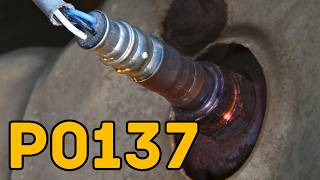
![How to Fix P0137 Engine Code in 4 Minutes [3 DIY Methods / Only $9.42]](https://img.youtube.com/vi/D7iaXnsbzWQ/mqdefault.jpg)

We Have This Part in Stock


The information in this article is provided for general reference and educational purposes only. Vehicle specifications, procedures, and part compatibility can vary by production date, trim level, and region. Always consult your vehicle's factory service manual and verify part numbers before purchasing or performing repairs. Safety-critical components such as airbags, seat belts, and braking systems should be installed by a qualified professional.
- Cadillac ATS:
- 🧭 Diagnostic Flowchart
- 🎬 Helpful Videos
- 🛍️ Shop This Part
- What's Unique About the 2013-2017 Cadillac ATS
- Symptoms You May Notice
- Most Likely Causes
- Rare But Worth Checking
- Diagnosis Steps
- Parts You'll Likely Need
- Related Codes That Often Appear With This One
- Technical Service Bulletins (TSBs) & Recalls
- Platform-Specific Known Issues
- Mechanic-Grade Diagnostic Values
- Hidden / Shadow Codes Worth Checking
- Scan Tool Commands That Help
- Wiring & Ground Locations
- Real Owner Repair Stories
- "I Checked Everything" — The Actual Cause
- When the Usual Fixes Don't Work
- Model Year Variations Within This Range
- 🎟️ Get 5% Off