

P0137 on 2016-2017 Chevrolet Camaro: Causes and Fixes for O2 Sensor Low Voltage
On a 2016-2017 Camaro, code P0137 most often points to a failing downstream oxygen sensor (Bank 1, Sensor 2). Other common causes include an exhaust leak or a wiring issue. On 2.0L LTG engines, check for loose intake manifold bolts per TSB PIP5529B before replacing parts. Expect to pay $40-$100 for an aftermarket sensor and $90-$120 for an OEM part.
- P0137 indicates the downstream oxygen sensor on Bank 1 is sending a persistently low voltage signal to the computer.
- The most likely cause is a failed oxygen sensor itself, which is a common wear item.
- Before replacing the sensor, always inspect for exhaust leaks and damaged wiring, as these are also common causes.
- If multiple other engine codes are present, consider the possibility of a vacuum or intake air leak as suggested by GM's technical service bulletins.
- Replacing the sensor is a DIY-friendly job that can be done with an O2 sensor socket and basic hand tools.
What's Unique About the 2016-2017 Chevrolet CAMARO
For the sixth-generation Camaro, the P0137 code is a straightforward emissions fault. However, it's important to note the provided NHTSA Technical Service Bulletins (TSBs), which group P0137 with a wide array of other engine codes. This suggests that on these specific vehicles, an underlying issue like an intake air leak from loose intake manifold bolts could trigger P0137 along with other faults. Therefore, if multiple codes are present (especially P0171), diagnosing a simple O2 sensor failure might be a misstep; a broader diagnostic approach focusing on vacuum and exhaust leaks is necessary.
Diagnostic Flowchart
Tap your situation to follow the diagnostic path that matches what you're seeing on this vehicle.
Symptoms You May Notice
- Check Engine Light is on
- Decreased fuel efficiency
- Rough or unstable idle
- Engine may run rough or lack power
- Leaking exhaust fumes or a sulfur/rotten egg smell from the exhaust.
- Replacing the catalytic converter when the actual issue is a faulty O2 sensor or an exhaust leak.
- Replacing the O2 sensor without checking for exhaust leaks or wiring damage first. 🎬 Watch this before you buy a new O2 sensor
- Replacing the O2 sensor when the true cause is a vacuum leak from loose intake manifold bolts, especially if code P0171 is also present. 🎬 See how to test for intake and exhaust leaks
Most Likely Causes
- Faulty Bank 1, Sensor 2 Oxygen Sensor 🔴 High Probability → Shop Oxygen Sensor Oxygen sensors are wear-and-tear items that operate in a harsh exhaust environment and eventually fail from age or contamination. This is the most common fix when P0137 appears alone.
How to confirm: Use a scan tool to monitor the live voltage data from the B1S2 sensor. A healthy downstream sensor shows a relatively steady voltage. If the voltage is stuck low (e.g., below 0.2V) and doesn't respond to changes in engine RPM, the sensor is likely bad.
Typical fix: Replace the Bank 1, Sensor 2 oxygen sensor. 🎬 Watch: Locate and replace the O2 sensors on your Camaro A user on Camaro6.com noted a trick for releasing the wiring harness connector: push the white tab out, then use a tiny flathead screwdriver to push the middle of the white pin inwards to release it.
Est. part cost: $40 - $120 - Exhaust Leak 🟡 Medium Probability Leaks can develop at exhaust manifold gaskets, pipe flanges, or welds due to heat cycles and corrosion. A leak before the sensor allows outside air into the exhaust, which the sensor reads as a low voltage (lean) condition.
How to confirm: Visually inspect the exhaust system from the engine to the downstream O2 sensor for cracks or black soot trails indicating a leak. You can also carefully feel for escaping air when the engine is cold and running. A smoke test is the most definitive way to find small leaks. A user on the Camaro5 forums noted their P0137 appeared after having an exhaust shop fix a leak, suggesting the repair itself may have been incomplete.
Typical fix: Repair the leak by replacing the gasket, tightening flanges, or welding the cracked component.
Est. part cost: $10 - $150 - Damaged Wiring or Connector 🟡 Medium Probability The wiring harness for the downstream O2 sensor is routed near hot exhaust components and the driveshaft, making it susceptible to melting, chafing, or corrosion. This is a known concern on modified cars with aftermarket headers.
How to confirm: Visually inspect the O2 sensor's wiring harness and connector for any signs of melting, fraying, corrosion, or loose pins. Use a multimeter to check for continuity, ground, and proper voltage at the connector. Also, check the O2 sensor fuses in the underhood fuse box, as a blown heater circuit fuse can cause this code.
Typical fix: Repair the damaged section of the harness or clean/replace the connector. One Camaro6 forum member warned others to wrap the harness to prevent it from burning on aftermarket headers.
Est. part cost: $5 - $50
Rare But Worth Checking
- Intake Air / Vacuum Leak: As suggested by TSBs #PIP5529A and #PIP5529B, an unmetered air leak from sources like loose intake manifold bolts can cause the engine to run lean, which manifests as a low voltage reading on the downstream O2 sensor. This is more likely if other codes like P0171 (System Too Lean) are also present. On the 3.6L V6, a failed PCV system is another known cause of vacuum leaks that can lead to this code.
- Aftermarket Modifications (Headers, Tune): Installing long-tube headers moves the sensor location and changes exhaust flow, often triggering P0137 and P0157 (for Bank 2). Using O2 sensor defoulers or spacers to try and fix a P0420 code can also inadvertently cause a P0137. Often, a custom tune is required to disable the rear O2 sensors to prevent these codes, though this is for off-road use only and will cause an emissions test failure.
- Failing Catalytic Converter: While less common for this specific code, a degraded or clogged catalytic converter can alter the exhaust gas composition and cause abnormal readings from the downstream sensor. This is more often associated with a P0420 code, but can be a contributing factor.
- Faulty Powertrain Control Module (PCM): → Shop Engine Control Module (ECM) In very rare instances, the PCM itself may be unable to correctly read the sensor's voltage, triggering the code erroneously. One owner on a Camaro6 forum mentioned that permanent codes (including P0137) only cleared after replacing the PCM for an unrelated issue. This should only be considered after all other possibilities have been exhausted.
Diagnosis Steps
- Connect an OBD-II scanner and confirm P0137 is present. Check for any other codes. If codes like P0171, P0101, or P0106 are present, immediately suspect a vacuum leak per TSB #PIP5529B.
- Perform a thorough visual inspection of the Bank 1, Sensor 2 oxygen sensor and its wiring harness. Look for any signs of melting, corrosion, or physical damage, paying close attention to clearance with the exhaust and driveshaft.
- Inspect the exhaust system for leaks between the engine and the downstream O2 sensor. Look for soot marks or listen for hissing sounds, especially around flanges and welds.
- Use the scanner's live data function to monitor the voltage of the Bank 1, Sensor 2. It should show a relatively stable voltage, typically between 0.5V and 0.8V on a warm, running engine with a healthy catalytic converter. If it's stuck below 0.2V, the sensor is likely faulty or there's a significant exhaust/vacuum leak.
- If an intake or vacuum leak is suspected (especially with a P0171 code), perform a smoke test to confirm its location. Check the intake manifold bolts for proper torque.
- Check the fuses for the O2 sensor heater circuits in the under-hood fuse panel. A blown fuse will cause the sensor to report incorrectly.
- If the sensor, wiring, and exhaust system appear to be in good condition and no other codes point to a systemic issue, replace the Bank 1, Sensor 2 oxygen sensor.
Parts You'll Likely Need
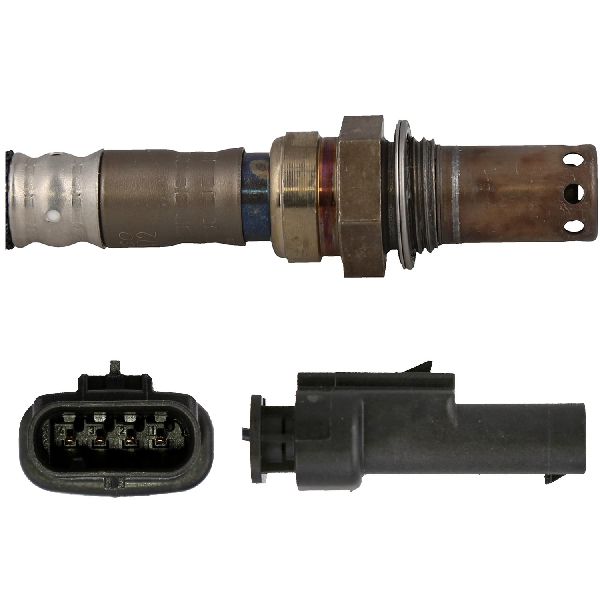
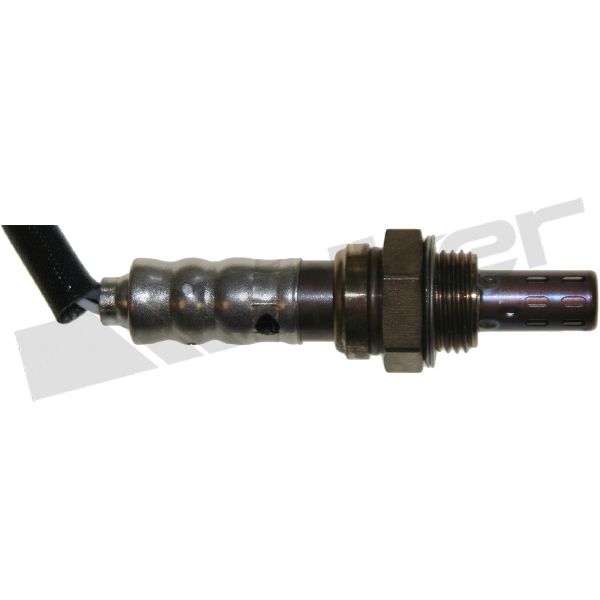
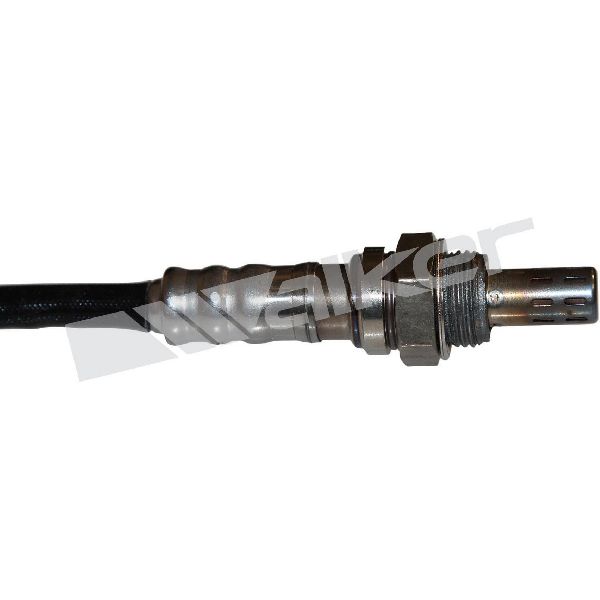
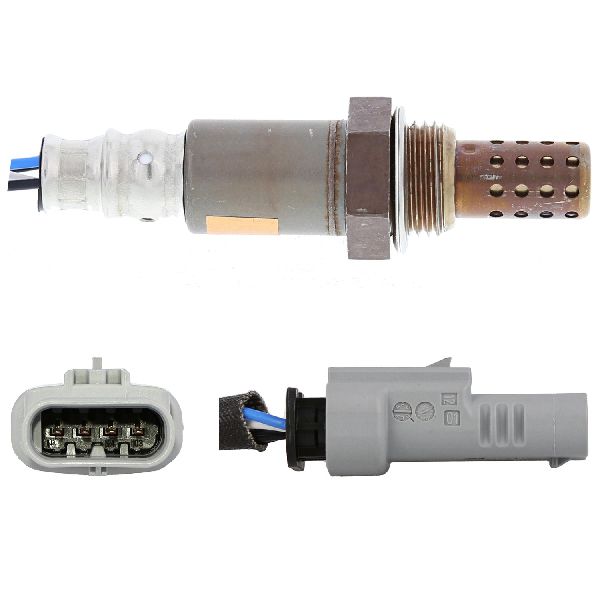
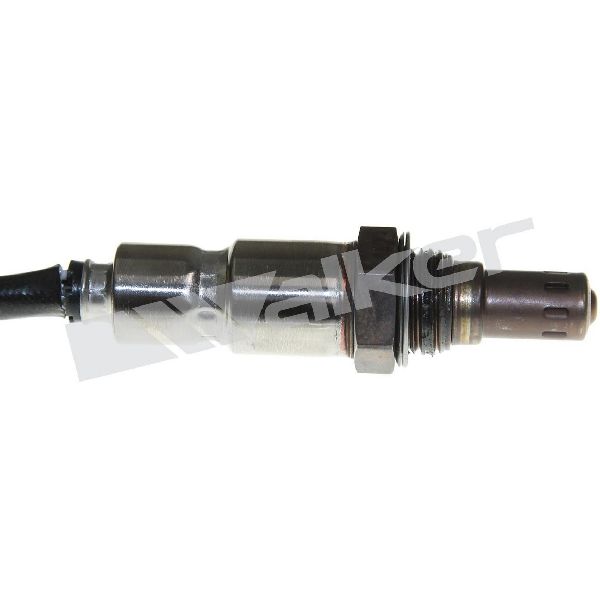
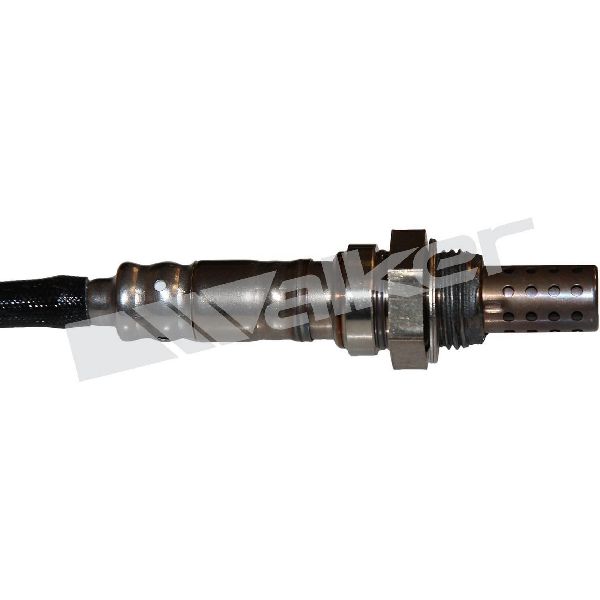
- Downstream Oxygen Sensor (Bank 1, Sensor 2)
(OEM #12683553)— This is the most common component to fail, triggering a P0137 code.
Trusted brands: ACDelco, Denso, Bosch, NTK
OEM price range: $90 - $120
Aftermarket price range: $40 - $80 - Downstream Oxygen Sensor (Alternative)
(OEM #ACDelco 213-4764)— This is another commonly cited ACDelco part number for GM downstream oxygen sensors in this era. Always verify fitment with your specific VIN and engine before purchasing.
Trusted brands: ACDelco
OEM price range: $80 - $110
Aftermarket price range: N/A
Related Codes That Often Appear With This One
- P0171 — A lean condition (too much air) from a vacuum leak can cause both a P0171 and a low voltage reading on the downstream O2 sensor (P0137), as noted in TSBs #PIP5529A and #PIP5529B.
- P0157 — This is the equivalent P0137 code for Bank 2. If you have a V6 or V8 and see both codes, it could point to a common issue like a tune, aftermarket exhaust, or a wiring problem affecting both sides.
- P2096 — This code means 'Post Catalyst Fuel Trim System Too Lean Bank 1'. It often appears with P0137 as it indicates the computer is seeing a lean condition based on the downstream O2 sensor's low voltage reading.
- P0037 — This code points to a problem with the heater circuit inside the same O2 sensor (Bank 1, Sensor 2). A failed heater can prevent the sensor from reaching operating temperature, causing a low voltage reading and triggering P0137.
Technical Service Bulletins (TSBs) & Recalls
- PIP5529B: Mentions P0137 in a list of codes that can be caused by an air leak from loose intake manifold bolts, especially on the 2.0L LTG engine. The fix is to re-torque the bolts with threadlocker.
- PIP5529A: An earlier version of the same bulletin, also citing P0137 in a list of potential codes related to air leaks.
Platform-Specific Known Issues
- TSBs #PIP5529B and #PIP5529A indicate that an air leak from loose intake manifold bolts can cause a combination of DTCs, including P0137. If you have multiple codes stored, a smoke test to check for intake and vacuum leaks is highly recommended before replacing parts.
- Owners who install aftermarket long-tube headers frequently report getting P0137 and P0157 codes. This is due to the change in sensor position and exhaust gas flow, and often requ
Mechanic-Grade Diagnostic Values
- Downstream O2 Sensor (B1S2) Voltage - Healthy — expected: Relatively steady signal between 0.4V and 0.6V on a warm engine with a good catalytic converter.. Failure: Voltage is stuck low, consistently below 0.4V. The PCM may set the code if voltage is below 400mV for over 20 seconds or, in some GM systems, below 50mV for over 100 seconds.
- Upstream O2 Sensor (B1S1) Voltage - For Comparison — expected: Rapidly fluctuating signal between approximately 0.1V and 0.9V (100-900 mV).. Failure: A sluggish or non-fluctuating signal. This is not a direct indicator for P0137 but is useful for overall system health diagnosis.
- O2 Sensor Heater Circuit Voltage — expected: Battery voltage (approx. 12V) at the sensor's heater circuit pins with the key on, engine off.. Failure: No voltage indicates a problem with the power supply, fuse, or wiring leading to the sensor.
- O2 Sensor Heater Circuit Resistance (General Guide) — expected: Should not exceed approximately 15 Ohms when the sensor is cold.. Failure: A very high or open circuit reading indicates a failed internal heater element. This is a general value, and manufacturer specs should be consulted if available.
Scan Tool Commands That Help
- GDS2 / Professional Scan Tool: Oxygen Sensor Data Display — Use this to monitor the live voltage of the Bank 1 Sensor 2. This is the primary method to confirm if the sensor is reading a consistently low voltage, which triggers P0137.
- GDS2 / Professional Scan Tool: ECM/PCM Module Self-Test — If wiring and the sensor itself test good, a module self-test can help identify internal ECM faults that might be causing the code.
- GDS2 (GM Service Information): Special Setup / Programming Procedures — After replacing the oxygen sensor. Some GM documentation states that this part requires programming or a special setup procedure to ensure proper operation. Skipping this step after a DIY replacement could be a reason for the code to persist.
Wiring & Ground Locations
- ECM (Engine Control Module) — Under the main engine bay fuse box. The fuse box must be unbolted and lifted to access the module and its connectors.. The ECM receives and interprets the voltage signal from the O2 sensor. All sensor wiring terminates here, making its connectors a key inspection point for corrosion or damage.
- G103 / G106 — G103 is located on the cowl at the left rear of the engine compartment, above the brake booster. G106 is on the front frame cross rail.. These are primary grounding points for the Engine Control Module (ECM). A loose or corroded ground at these locations can cause erratic voltage readings and trigger false sensor codes like P0137.
OEM Part Supersession History
12627140→12683553— Standard part lifecycle update by the manufacturer.
Heads up: 12683553 is the correct current OEM replacement for the 2016-2017 Camaro's downstream O2 sensor.
Helpful Videos
![How to Fix P0137 Engine Code in 4 Minutes [3 DIY Methods / Only $9.42]](https://img.youtube.com/vi/D7iaXnsbzWQ/mqdefault.jpg)
We Have This Part in Stock

The information in this article is provided for general reference and educational purposes only. Vehicle specifications, procedures, and part compatibility can vary by production date, trim level, and region. Always consult your vehicle's factory service manual and verify part numbers before purchasing or performing repairs. Safety-critical components such as airbags, seat belts, and braking systems should be installed by a qualified professional.
- Chevrolet CAMARO:
- 🧭 Diagnostic Flowchart
- 🎬 Helpful Videos
- 🛍️ Shop This Part
- What's Unique About the 2016-2017 Chevrolet CAMARO
- Symptoms You May Notice
- Most Likely Causes
- Rare But Worth Checking
- Diagnosis Steps
- Parts You'll Likely Need
- Related Codes That Often Appear With This One
- Technical Service Bulletins (TSBs) & Recalls
- Platform-Specific Known Issues
- Mechanic-Grade Diagnostic Values
- Scan Tool Commands That Help
- Wiring & Ground Locations
- OEM Part Supersession History
- 🎟️ Get 5% Off