

P0137 on 2000-2005 Dodge Neon 2.0L: Downstream O2 Sensor Low Voltage Causes and Fixes
This code almost always points to a failed downstream oxygen sensor (the one after the catalytic converter). Replacing the sensor is a common DIY fix, with aftermarket parts costing around $25-$60. Before replacing, check for obvious wiring damage under the car and any exhaust leaks between the engine and the sensor.
- P0137 on your Neon points to a problem with the downstream O2 sensor (Sensor 2).
- The most probable cause is a failed O2 sensor, which is a relatively inexpensive and easy part to replace for a DIYer.
- Before replacing the sensor, thoroughly inspect its wiring for heat damage and check for exhaust leaks.
What's Unique About the 2000-2005 Dodge Neon
For the 2000-2005 Dodge Neon, this code is straightforward. The 2.0L engine has a simple exhaust layout with one upstream and one downstream O2 sensor, making diagnosis less complicated than on V-type engines. A notable issue for 2003 models is a Technical Service Bulletin (TSB 18-003-03) indicating the PCM could erroneously set this code; a reflash may be required for vehicles built before January 2nd, 2003. The wiring for the downstream sensor is also susceptible to damage from road debris and heat from the exhaust.
Symptoms You May Notice
- Check Engine Light (MIL) is on.
- Failure to pass an emissions test.
- Slightly increased fuel consumption.
- In most cases, no other noticeable drivability symptoms like rough idle or power loss will be present, as the downstream sensor primarily monitors emissions and does not directly control fuel trim.
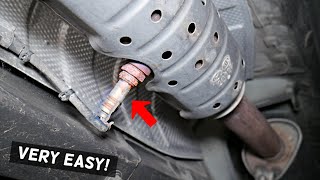
- Replacing the upstream (Bank 1, Sensor 1) O2 sensor. The code P0137 specifically refers to Sensor 2, which is located after the catalytic converter. 🎬 See exactly where the downstream O2 sensor is located
- Replacing the catalytic converter. While a failing converter can cause other codes (like P0420), it is not the direct cause of a P0137 low voltage code. A bad sensor is far more likely.
Most Likely Causes
- Faulty Downstream O2 Sensor 🔴 High Probability → Shop Oxygen Sensor Oxygen sensors are wear items and fail over time due to constant exposure to high heat and exhaust gases. The internal heating element can fail, or the sensor can become contaminated, leading to inaccurate voltage readings.
How to confirm: Using a scan tool, observe the live data for Bank 1 Sensor 2. A healthy downstream sensor should show a relatively steady voltage, typically around 0.45-0.7 volts. If the voltage is stuck low (typically below 0.2 volts), the sensor is likely bad.
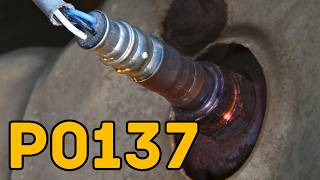
Typical fix: Replace the downstream (post-catalytic converter) oxygen sensor. This requires an O2 sensor socket (often 22mm or 7/8") and is a common DIY task. 🎬 Watch: Step-by-step downstream O2 sensor replacement on a Dodge Neon Soaking the threads with penetrating oil beforehand is highly recommended.
Est. part cost: $25-$70 - Damaged Wiring or Connector 🟡 Medium Probability The sensor and its wiring are located under the vehicle, exposed to road debris, moisture, and extreme heat from the exhaust. This can lead to melted insulation, corroded connectors, or broken wires, causing a short or open circuit.
How to confirm: Visually inspect the entire wiring harness from the O2 sensor back to the main loom. Check for any signs of chafing, melting, or physical damage. Unplug the connector and check for corrosion, moisture, or bent pins. A multimeter can be used to check for continuity and proper voltage at the connector.
Typical fix: Repair the damaged section of the wire or replace the connector pigtail. Ensure the repair is sealed against moisture using heat-shrink tubing.
Est. part cost: $5-$25 - Exhaust Leak ⚪ Low Probability Rust or failed gaskets can create leaks in the exhaust system between the catalytic converter and the downstream O2 sensor. This allows outside air (oxygen) to be drawn in, which the sensor interprets as a lean condition, causing a persistent low voltage reading.
How to confirm: With the engine running (preferably when cold), listen and feel for puffs of air from the exhaust manifold, flex pipe, and catalytic converter connections. A mechanic can also use a smoke machine to definitively pinpoint small leaks.
Typical fix: Replace the leaking gasket or repair/replace the cracked exhaust component.
Est. part cost: $10-$100
Rare But Worth Checking
- Erroneous Code due to PCM Software (2003 models): Chrysler issued TSB 18-003-03 for 2003 Neons built before 01/02/03. If P0137 appears with no other codes or symptoms, the PCM may need a software update (reflash) from a dealership or qualified shop to correct the monitoring logic.
- Faulty Powertrain Control Module (PCM): → Shop Engine Control Module (ECM) This is extremely rare. Before condemning the PCM, all other possibilities, especially the sensor, its wiring, and potential exhaust leaks, must be exhaustively ruled out. A PCM fault occurs when its internal circuit for reading the sensor fails.
Diagnosis Steps
- Confirm the code is P0137 using an OBD-II scanner and check for any other codes.
- Visually inspect the downstream O2 sensor, which is located on the exhaust pipe after the catalytic converter. Check for physical damage.
- Inspect the sensor's wiring harness and connector for any signs of melting, chafing, corrosion, or loose connections. Pay close attention to where the harness might rub against the chassis or suspension components.
- If you have a 2003 model, check the vehicle's build date (on the driver's side door jamb). If it's before January 2, 2003, be aware of TSB 18-003-03 regarding a potential PCM reflash.
- Check for any exhaust leaks between the engine and the downstream O2 sensor. Listen for hissing or ticking sounds when the engine is cold. A common spot for leaks is the flex pipe.
- Using a scan tool with live data, monitor the voltage of 'O2 Bank 1 Sensor 2'. At operating temperature, it should be relatively stable. If it's stuck below 0.2V, this strongly points towards a bad sensor or a significant wiring/exhaust leak issue.
- If the wiring and connector are confirmed to be good (checking for voltage and ground with a multimeter) and no exhaust leaks are found, the most likely culprit is the O2 sensor itself.
Parts You'll Likely Need
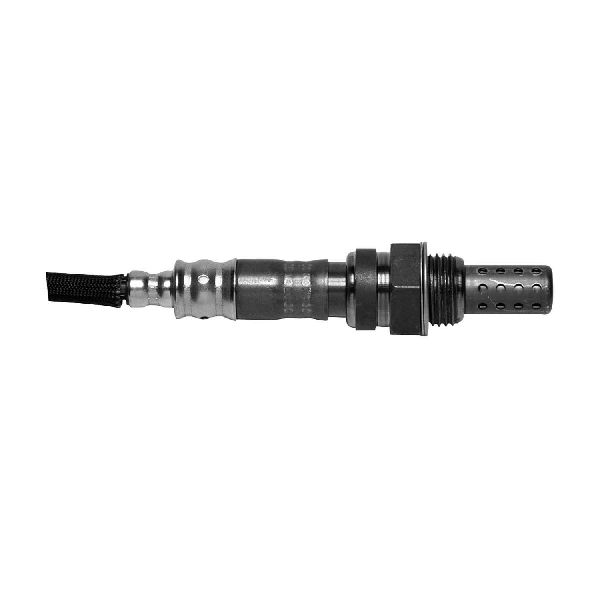
- Downstream Oxygen Sensor (Bank 1, Sensor 2)
(OEM #56028994AA (Verify with VIN, may vary by year/emissions))— This is the most common failure point for code P0137. It is a wear-and-tear component that directly produces the voltage reading monitored by the PCM.
Trusted brands: Denso, Bosch, NTK/NGK
OEM price range: $60-$100
Aftermarket price range: $25-$70
Technical Service Bulletins (TSBs) & Recalls
- 18-003-03: For 2003 models built before Jan 2, 2003, the PCM may store a false P0137 code, requiring a software reflash to correct. The procedure involves using a scan tool to reprogram the PCM with updated software.
- TSB Bulletin #25-002-14: While issued for other models in the manufacturer lineup, this bulletin confirms that P0137 is defined as the 1/2 O2 sensor being shorted to ground.
- TSB Bulletin #25-003-13: This manufacturer record reinforces that P0137 indicates the 1/2 O2 sensor is shorted to ground, distinguishing it from heater performance issues like P0141.
- TSB Bulletin #25-004-12: This technical documentation lists P0137 as a specific condition where the 1/2 O2 sensor circuit is shorted to ground.
Platform-Specific Known Issues
- TSB 18-003-03 for 2003 Dodge Neon models (built prior to 1/2/03) notes that an erroneous P0137 code can be set. The fix is a PCM software update, not a part replacement. A dealer or shop with a wiTECH tool is needed for this.
- Owners on forums frequently report the wiring harness for the downstream sensor getting damaged by heat from the exhaust or chafing on the underbody, making a thorough visual inspection critical before buying a new sensor.
Mechanic-Grade Diagnostic Values
- Downstream O2 Sensor (B1S2) Voltage - Live Data — expected: Relatively steady voltage between 0.45V and 0.7V on a warm engine with a healthy catalytic converter.. Failure: Voltage is stuck consistently below 0.2V - 0.3V.
- O2 Sensor Heater Element Resistance — expected: Typically between 4-7 ohms when cold for this vehicle platform. Some generic sources state up to 16 ohms.. Failure: Infinite resistance (open circuit) or zero resistance (short circuit) when measured across the two heater wires (usually same color) on the sensor connector.
- O2 Sensor Heater Circuit Voltage Supply — expected: Battery voltage (12V+) at one of the heater circuit pins on the harness-side connector with the key on, engine off.. Failure: No voltage indicates a problem with the ASD relay, fuse, or the wiring from the power distribution center.
Scan Tool Commands That Help
- Chrysler DRB III / wiTECH: O2 Sensor Heater Test — This is a bidirectional command that allows the technician to manually activate the O2 sensor's internal heater. It's used to verify the integrity of the heater circuit (wiring, relay, and the heater element itself) independently of the PCM's automatic control, which is useful for isolating a P0141 heater code that often accompanies sensor performance codes.
Wiring & Ground Locations
- Downstream O2 Sensor Connector (C115) — Underneath the vehicle, on the driver's side, connected to the O2 sensor that is screwed into the side of the catalytic converter.. This is the primary connection point to test. It is exposed to road debris and heat, making it a common point of failure due to corrosion or melted plastic.
- Downstream O2 Sensor Pinout — On the 4-pin connector for the sensor. Pin 1: (DG/OR) Heater Control, Pin 2: (OR/RD) Heater Power from ASD Relay, Pin 3: (BK/OR) Sensor Ground, Pin 4: (BK/DG) Sensor Signal to PCM.. Knowing the specific function of each pin is critical for accurately testing for power, ground, and signal voltage with a multimeter to determine if the fault is in the sensor, wiring, or PCM.
- G102 Ground — A wiring diagram indicates the O2 sensor ground circuit (along with other engine sensors) terminates at ground point G102. General Neon ground locations are on the left side of the radiator closure panel (G100) and on the fender side shields.. A corroded or loose main sensor ground can cause a floating ground, leading to incorrect voltage readings for multiple sensors, including the O2 sensor, which can manifest as a P0137.
Real Owner Repair Stories
- dodge-talk.com forum user (2004 Dodge Neon) — Persistent P0137 Check Engine Light.
❌ Tried (didn't work) A repair shop replaced the downstream O2 sensor, but the code returned.
✅ What actually fixed it The owner found a section of the downstream O2 sensor's wiring harness had melted against the hot exhaust pipe. Repairing the melted wires resolved the code permanently.
OEM Part Supersession History
Denso 234-4078→N/A— Model Year Split
Heads up: The downstream oxygen sensor for 2000-2002 Dodge Neons is a different part number (e.g., Denso 234-4078) than the one for 2003-2005 models (e.g., Bosch 13718). While they may physically fit, the internal calibration or heater characteristics can differ, leading to persistent codes if the wrong year's sensor is installed.
Model Year Variations Within This Range
- 2003-2005: Uses a different downstream oxygen sensor part number than the 2000-2002 models. For example, Bosch lists part #13718 for 03-05 models.
- 2000-2002: Uses a different downstream oxygen sensor part number than later models. For example, Denso lists part #234-4078 for 00-02 models.
- 2003 (pre-Jan 2, 2003 build date): Subject to TSB 18-003-03, where the PCM can set a false P0137 code. The only fix is a software reflash from a dealer, not a hardware replacement.
Diagnostic Flowchart
Other Known Issues on This Vehicle
Issues unrelated to this code that are worth knowing about as an owner of this generation:
- Head Gasket Failure 🔴 High — Very common, particularly on the SOHC 2.0L engine. Can occur from 60,000 miles onward. An MLS (Multi-Layer Steel) gasket is the recommended replacement.
- Failed Engine & Transmission Mounts 🟠 Medium — Extremely common. The rubber in the upper passenger-side mount and lower 'dog bone' torque struts degrades, causing excessive engine vibration at idle and clunking noises when shifting.
- Clear Coat / Paint Peeling 🟡 Low — Widespread on certain colors (especially white, blue, and red). The clear coat and sometimes the color coat delaminate and peel off in sheets, typically on the roof, hood, and trunk. (Ref: No specific recall for Neon, but a well-documented factory paint issue for this era of Chrysler vehicles.)
- Oil Leaks (Valve Cover, Cam/Crank Sensors) 🟠 Medium — Common. The valve cover gasket leak is notorious for filling the spark plug tubes with oil, causing misfires. Cam and crank sensor O-rings also frequently leak.
- Input/Output Speed Sensor Failure (Automatic Trans) 🟠 Medium — A frequent issue where failure of one or both transmission speed sensors can cause the transmission to go into 'limp mode' (stuck in 2nd gear) and may cause an inaccurate speedometer reading.
Used vs. New Parts: Buying Guide for This Vehicle
When a used part is the smart pick: A used part is generally not recommended for this repair. The primary failure part is the oxygen sensor itself, which is a wear-and-tear component with a finite lifespan. Installing a used sensor is risky as it may have limited life remaining or be faulty already. A used wiring harness pigtail from a junkyard is a viable option if only your connector is damaged and the donor vehicle's wiring is in good condition.
Donor-vehicle mileage cap: roughly under 60000 miles for the part to have meaningful remaining life.
What to inspect on the donor part:
- For a wiring pigtail, inspect for any signs of melting, brittleness, or corrosion on the connector pins.
- Ensure the locking tab on the plastic connector is intact.
- Avoid harnesses from vehicles with visible signs of oil leaks or underbody damage in that area.
Aftermarket brands forum-validated for this vehicle:
- Denso
- NTK (NGK)
- Bosch
Brands owners have reported issues with on this vehicle:
- No-name, unbranded 'universal' sensors that require splicing wires are frequently reported on forums to fail prematurely or provide incorrect readings. It is better to buy a direct-fit sensor.
Real Owner Stories
Aggregated from forums and TSBs cited above. Mileages and costs reflect what owners reported in those sources.
2004 Dodge Neon
Symptoms: Persistent P0137 code even after a shop had already replaced the oxygen sensor.
What fixed it: Finding and repairing a section of the O2 sensor's wiring harness that had melted on the exhaust pipe.
Source hint: dodge-talk.com
2000-2005 Dodge Neon
Symptoms: Check engine light with code P0137.
What fixed it: Replacement of the downstream O2 sensors.
Source hint: DodgeForum.com - "Rev Limiter" gone crazy?
2003 Dodge Neon
Symptoms: Erroneous P0137 code stored in the PCM on a vehicle built before Jan 2, 2003.
What fixed it: PCM software update (reflash) using a dealer wiTECH tool as per TSB 18-003-03.
Source hint: TSB 18-003-03
Related OBD-II Codes
Frequently Asked Questions
I have a 2003 Dodge Neon with code P0137. Does TSB 18-003-03 apply to my car?
Where is the downstream O2 sensor located on my 2000-2005 Neon?
Can an exhaust leak cause a P0137 code on this vehicle?
What tools do I need to replace the O2 sensor myself?
Will a P0137 code cause my Neon to run poorly or lose power?
Is there a common wiring issue I should check before buying a new sensor?
Helpful Videos

We Have This Part in Stock

The information in this article is provided for general reference and educational purposes only. Vehicle specifications, procedures, and part compatibility can vary by production date, trim level, and region. Always consult your vehicle's factory service manual and verify part numbers before purchasing or performing repairs. Safety-critical components such as airbags, seat belts, and braking systems should be installed by a qualified professional.
- Dodge Neon:
- 🧭 Diagnostic Flowchart
- 🎬 Helpful Videos
- 🛍️ Shop This Part
- What's Unique About the 2000-2005 Dodge Neon
- Symptoms You May Notice
- Most Likely Causes
- Rare But Worth Checking
- Diagnosis Steps
- Parts You'll Likely Need
- Technical Service Bulletins (TSBs) & Recalls
- Platform-Specific Known Issues
- Mechanic-Grade Diagnostic Values
- Scan Tool Commands That Help
- Wiring & Ground Locations
- Real Owner Repair Stories
- OEM Part Supersession History
- Model Year Variations Within This Range
- Other Known Issues on This Vehicle
- Used vs. New Parts: Buying Guide for This Vehicle
- Real Owner Stories
- 2004 Dodge Neon
- 2000-2005 Dodge Neon
- 2003 Dodge Neon
- Related OBD-II Codes
- Frequently Asked Questions
- 🎟️ Get 5% Off