

P0137 on 2011-2019 Ford Explorer 3.5L EcoBoost: Causes and Fixes for Low Voltage O2 Sensor
On a 2011-2019 Ford Explorer with the 3.5L EcoBoost, code P0137 is most often caused by a failed downstream oxygen sensor on the passenger side (Bank 1, Sensor 2). Replacing the sensor is a common DIY fix, with the part costing between $50 and $150. Before replacing, check for exhaust leaks and wiring damage, which are less common but possible causes.
- P0137 on a 2011-2019 Explorer almost always points to the downstream O2 sensor on the passenger side (Bank 1, Sensor 2).
- The most probable fix is replacing the sensor itself, which is a manageable DIY task for those with basic tools, including an O2 sensor socket.
- Before replacing the sensor, always perform a quick visual check for obvious exhaust leaks or damaged wiring, as these can also trigger the code.
- Driving with this code for a long time is not recommended as it can negatively affect fuel economy and potentially damage the expensive catalytic converter.
What's Unique About the 2011-2019 Ford Explorer
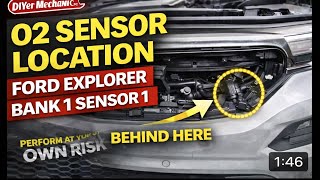
For the fifth-generation Ford Explorer (2011-2019) with the 3.5L EcoBoost engine, the P0137 code is a common and straightforward issue. It typically points directly to a worn-out sensor rather than more complex engine problems. The Bank 1 Sensor 2 is located on the passenger side, just after the catalytic converter and near the oil pan, making it reasonably accessible 🎬 Watch: How to locate the O2 sensors on your Explorer. from underneath the vehicle for replacement. While a simple sensor failure is most common, it's worth noting that exhaust leaks before the sensor can also trigger this code, so a quick inspection is always recommended.
Generation note: The 2011-2019 year range covers the entire fifth generation of the Ford Explorer (U502). The causes and fixes for P0137 are consistent across this generation for the specified engine.
Symptoms You May Notice
- Check Engine Light is on
- Decreased fuel efficiency
- Rough or unstable idle
- Noticeable odor of exhaust fumes
- Hesitation or lack of power during acceleration
- Replacing the O2 sensor without first checking for exhaust leaks. An exhaust leak before the sensor can introduce extra oxygen, causing the sensor to read low voltage and triggering the code, even if the sensor itself is good.
- Replacing the catalytic converter. A P0137 code by itself does not mean the converter is bad; it only indicates a problem with the downstream sensor's reading. Other codes, like P0420, would typically be present for a failed converter.
Most Likely Causes
- Faulty Bank 1, Sensor 2 Oxygen Sensor 🔴 High Probability → Shop Oxygen Sensor Oxygen sensors are wear items and fail over time due to constant exposure to high heat and exhaust gases. With mileage over 90,000, sensor failure is a very common cause for this code. Contamination from oil, carbon, or fuel additives can also cause incorrect readings.
How to confirm: Use an OBD-II scanner to monitor the live data for the B1S2 O2 sensor. If the voltage is stuck low (e.g., below 0.2V) and does not fluctuate, the sensor is likely bad. 🎬 Watch: A professional diagnostic walkthrough for the P0137 code. Visually inspect the sensor for physical damage or contamination.
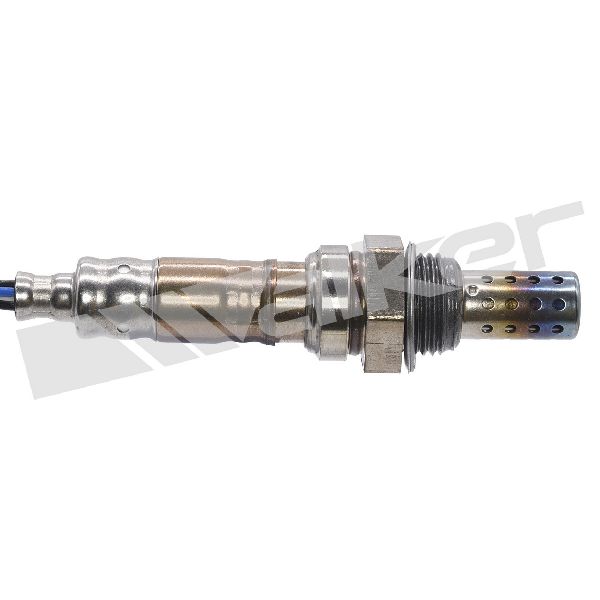
Typical fix: Replace the Bank 1, Sensor 2 oxygen sensor. The OEM Motorcraft part number for the downstream rear sensor is often DY1173 (Ford part BE5Z9G444B). It's recommended to use an OEM sensor for best compatibility.
Est. part cost: $50-$150 - Exhaust Leak 🟡 Medium Probability Exhaust components can develop leaks at gaskets or weld seams due to rust and vibration over time. An exhaust leak before the sensor allows outside oxygen to enter the exhaust stream, causing the sensor to read a false low voltage.
How to confirm: Visually inspect the exhaust system from the engine manifold back to the O2 sensor for any signs of black soot, cracks, or holes. Listen for ticking or hissing sounds from the exhaust when the engine is running, especially on a cold start. A shop can perform a smoke test to pinpoint small leaks.
Typical fix: Repair the leak by replacing the faulty gasket, welding the crack, or applying exhaust sealant/putty for minor leaks.
Est. part cost: $10-$200 - Damaged Wiring or Connector ⚪ Low Probability The wiring harness is routed under the vehicle and can be susceptible to damage from road debris, corrosion, or contact with hot exhaust components. A short in the circuit or a corroded connector can cause a low voltage reading.
How to confirm: Visually inspect the wiring harness and connector for the Bank 1, Sensor 2 O2 sensor. Look for any frayed, melted, broken, or corroded wires and pins. Check for a secure connection at the sensor and the main harness. Use a multimeter to test for proper voltage and ground at the connector according to the vehicle's wiring diagram.
Typical fix: Repair the damaged section of wiring or replace the connector pigtail. Ensure the harness is properly secured away from heat sources and moving parts.
Est. part cost: $20-$75
Rare But Worth Checking
- Faulty Powertrain Control Module (PCM): → Shop Engine Control Module (ECM) This is extremely rare and should only be considered after all other possibilities (sensor, wiring, exhaust leaks) have been thoroughly ruled out by a professional. Sometimes a PCM software update may be required, as noted in TSBs for similar models.
Diagnosis Steps
- Connect an OBD-II scanner and confirm that P0137 is the active code. Note any other codes present, as they can point to a root cause like a lean condition.
- Use the scanner's live data feature to monitor the voltage of the Bank 1, Sensor 2 (B1S2) O2 sensor. A healthy downstream sensor should show a relatively stable voltage, typically between 0.4V and 0.8V. If it is stuck consistently below 0.2V-0.3V, it indicates a problem.
- Perform a thorough visual inspection of the exhaust system from the passenger side exhaust manifold to the B1S2 sensor. Look for signs of leaks like black soot trails or listen for hissing/ticking sounds.
- Inspect the O2 sensor's wiring harness and connector for any signs of melting, corrosion, fraying, or loose connections.
- If no leaks or wiring damage are found, the most likely cause is a failed O2 sensor. Consider testing the sensor's heater circuit resistance with a multimeter; a reading between 3 and 30 ohms is typical.
- After replacing the sensor or repairing a leak/wiring, clear the code and perform a drive cycle to ensure the code does not return.
Parts You'll Likely Need
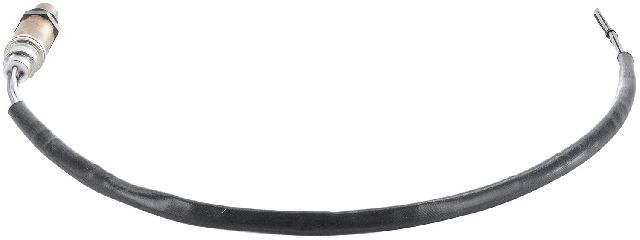
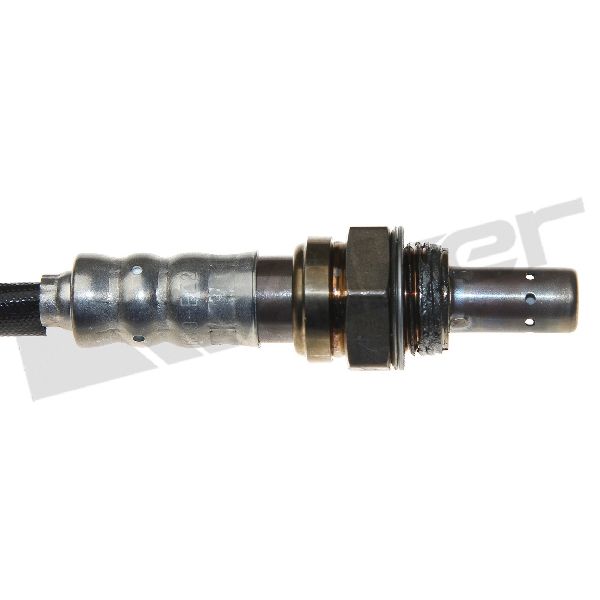
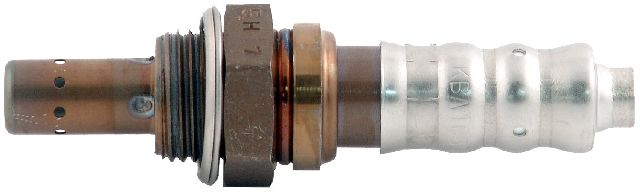
- Oxygen Sensor (Bank 1, Sensor 2)
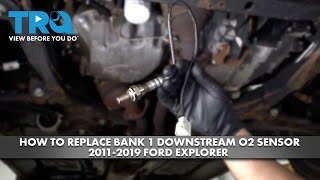
(OEM #DY1173 (Ford Part #: BE5Z9G444B))— This is the most common failure point for code P0137. It is the downstream sensor on the passenger side. 🎬 See this step-by-step guide to replacing the downstream sensor.
Trusted brands: Motorcraft, Bosch, Denso, NGK/NTK
OEM price range: $80-$150
Aftermarket price range: $50-$100
Related Codes That Often Appear With This One
- P2096 — P2096 (Post Catalyst Fuel Trim System Too Lean Bank 1) can appear with P0137 because both codes relate to a lean condition being detected by the downstream O2 sensor on Bank 1.
Technical Service Bulletins (TSBs) & Recalls
- cause: While not directly for the Explorer, TSB 15-0073 for the 2015 F-150 3.5L EcoBoost addressed multiple O2 sensor codes, including P0137, by replacing all four sensors, indicating a known vulnerability in the system.
Platform-Specific Known Issues
- cause: A Reddit user with a 2014 F-150 EcoBoost (a similar platform) reported a persistent P0137 code even after replacing the sensor and catalytic converter. A potential cause mentioned was the need for a PCM software update, referencing TSB 15-0072, highlighting that sometimes the issue can be software-related.
Mechanic-Grade Diagnostic Values
- Downstream O2 Sensor (B1S2) Voltage — expected: Relatively steady 0.6V - 0.9V on a warm engine with a healthy catalytic converter.. Failure: Voltage is consistently stuck below 0.2V - 0.4V for more than 20 seconds.
- O2 Sensor Heater Circuit Resistance — expected: Between 3 and 30 Ohms when measured across the two heater pins on the disconnected sensor.. Failure: An open circuit (infinite resistance) or a direct short (near zero ohms) indicates a failed internal heater.
Hidden / Shadow Codes Worth Checking
- Mode $06, TID $81: This Test ID monitors the O2 Sensor Bank 1, Sensor 2 switching time and response for the catalyst monitor. A failing value here can indicate a 'lazy' sensor that is about to fail completely. (see via Use an advanced OBD-II scan tool capable of displaying Mode $06 data.)
- Mode $06, TID $82: This Test ID monitors the performance of the O2 Sensor Heater for Bank 1, Sensor 2. A failure here often precedes or accompanies heater circuit codes like P0141 but can be related to overall sensor health. (see via Use an advanced OBD-II scan tool capable of displaying Mode $06 data.)
Wiring & Ground Locations
- G102 — Right front corner of the engine compartment.. This is a primary engine bay ground. A poor connection here can cause a variety of sensor and module issues, including incorrect voltage readings from the O2 sensor on the passenger side (Bank 1).
- G104 — Right side of the engine compartment.. Another key ground point on the passenger side of the engine bay. Verifying this ground is clean and tight is a critical step if wiring is suspected as the cause of P0137.
- G105 — Top right side of the engine.. This ground is located directly on the engine and is crucial for providing a stable ground reference for sensors mounted on the engine and exhaust, including the O2 sensors.
- Exhaust Ground Strap — A braided metal strap connecting a section of the exhaust pipe to the vehicle's frame or chassis.. The exhaust system can become electrically isolated from the chassis. This strap ensures a proper ground path for the O2 sensors. If it corrodes and breaks, it can cause floating voltage readings and trigger codes like P0137.
Real Owner Repair Stories
- Reddit user 'darkx1337' on r/WRX (analogous issue) (Subaru WRX (demonstrates a common but missed failure mode applicable to many vehicles)) — Persistent P0137 code even after replacing the downstream O2 sensor.
❌ Tried (didn't work) Replacing the downstream O2 sensor (B1S2).
✅ What actually fixed it The user identified that a corroded or broken ground strap for the exhaust pipe can cause voltage-specific O2 sensor codes. The fix is to inspect and replace the corroded ground strap to ensure the exhaust system is properly grounded to the chassis.
OEM Part Supersession History
BE5Z-9G444-B→No direct supersession found, this part number appears current for the specified model years.— N/A
Heads up: The Motorcraft part number is DY1173, which corresponds to Ford's BE5Z-9G444-B. Ensure any replacement part is specified for the downstream, passenger side location.
Model Year Variations Within This Range
- 2016-2019: A significant mid-cycle refresh occurred for the 2016 model year. The problematic MyFord Touch infotainment system was replaced by the much-improved SYNC 3 system, which included Apple CarPlay and Android Auto. The exterior was updated, and a new 2.3L EcoBoost I4 engine option was introduced. While these changes did not directly affect the P0137 diagnosis for the 3.5L V6, the wiring and module architecture around the PCM and infotainment are different, which is a consideration for advanced electrical diagnosis.
Diagnostic Flowchart
Other Known Issues on This Vehicle
Issues unrelated to this code that are worth knowing about as an owner of this generation:
- Internal Water Pump Failure 🔴 High — Common after 100,000-120,000 miles. When it fails, it can leak coolant into the engine oil, leading to catastrophic engine damage if not caught immediately. (Ref: No recall, but a known, widespread issue. Repair is labor-intensive (10+ hours) as the pump is driven by the timing chain.)
- Power Transfer Unit (PTU) Failure 🔴 High — Commonly fails before 100,000 miles on AWD models. The unit is located near the hot exhaust, causing its lubricant to break down and leak, leading to gear failure. (Ref: No recall, but Ford has service bulletins addressing the 'propane smell' associated with overheating fluid. The factory unit is not designed to be serviced (no drain plug).)
- Carbon Buildup on Intake Valves 🟠 Medium — A known side effect of the direct-injection (GDI) system on first-generation EcoBoost engines (pre-2017). Can cause rough idle, misfires, and loss of power over time. (Ref: No TSB, as it's an inherent characteristic of the engine design. The primary fix is a manual cleaning process like walnut blasting.)
- Cracked Exhaust Manifolds / Leaking Studs 🟠 Medium — The exhaust manifolds, particularly on the EcoBoost models, are prone to cracking or having studs break due to heat cycles, causing exhaust leaks.
- Electronic Throttle Body Malfunction 🟠 Medium — A common issue in 5th-gen Explorers, causing the vehicle to suddenly lose power and enter 'limp mode,' often with codes P2111 or P2112. (Ref: Ford initiated a customer satisfaction program (13N03) for some vehicles, but it has since expired.)
Used vs. New Parts: Buying Guide for This Vehicle
When a used part is the smart pick: For this repair, a used part is almost never a smart choice for the oxygen sensor itself. However, sourcing a used wiring harness connector pigtail from a junkyard is a viable option if only the connector is damaged.
Donor-vehicle mileage cap: roughly under 100000 miles for the part to have meaningful remaining life.
What to inspect on the donor part:
- For a connector pigtail, inspect for any signs of melting, cracked plastic, or corrosion on the pins.
- Ensure there is at least 4-6 inches of clean, undamaged wire attached to the pigtail for splicing.
- Avoid connectors from vehicles with obvious signs of fire, flood, or major undercarriage impact.
OEM-only on this vehicle (don't cheap out):
- While not strictly required, using an OEM Motorcraft oxygen sensor is highly recommended. Forum and mechanic experience often show that budget aftermarket sensors can have a shorter lifespan or incorrect voltage calibration, leading to the code returning.
Aftermarket brands forum-validated for this vehicle:
- NTK (a division of NGK) is a highly regarded OEM supplier and a trusted aftermarket choice.
- Denso is another top-tier OEM supplier with a strong reputation for quality and reliability.
- Bosch, the inventor of the O2 sensor, is also a reliable choice, though some users express a preference for NTK or Denso for Ford applications.
Brands owners have reported issues with on this vehicle:
- Avoid unbranded, no-name sensors from online marketplaces. While inexpensive, they are frequently cited as a cause of persistent or recurring codes due to poor quality control.
Real Owner Stories
Aggregated from forums and TSBs cited above. Mileages and costs reflect what owners reported in those sources.
2014 Ford F-150 3.5L EcoBoost
Symptoms: Persistent P0137 code and Check Engine Light (MIL) even after a shop replaced the catalytic converter and the O2 sensor.
What fixed it: The discussion suggested checking for a PCM software update (referencing TSB 15-0072) or inspecting the wiring harness for damage.
Source hint: Reddit r/f150/comments/p6y39h/ecoboost_mil_light_for_p0137/
2015 Ford F-150 3.5L EcoBoost
Symptoms: Multiple O2 sensor codes including P0137.
What fixed it: Replacement of all four oxygen sensors as per TSB 15-0073.
Source hint: TSB 15-0073
Related OBD-II Codes
Frequently Asked Questions
Where is the Bank 1 Sensor 2 oxygen sensor located on my 2011-2019 Ford Explorer?
Does TSB 15-0072 apply to the P0137 code on my EcoBoost engine?
What is the recommended replacement part for the downstream O2 sensor on my Explorer?
Could a ticking sound on cold starts be related to my P0137 code?
Is it common for all O2 sensors to fail at once on the 3.5L EcoBoost?
Can a bad PTU cause an exhaust-related smell and this code?
Helpful Videos

We Have This Part in Stock

The information in this article is provided for general reference and educational purposes only. Vehicle specifications, procedures, and part compatibility can vary by production date, trim level, and region. Always consult your vehicle's factory service manual and verify part numbers before purchasing or performing repairs. Safety-critical components such as airbags, seat belts, and braking systems should be installed by a qualified professional.
- Ford Explorer:
- 🧭 Diagnostic Flowchart
- 🎬 Helpful Videos
- 🛍️ Shop This Part
- What's Unique About the 2011-2019 Ford Explorer
- Symptoms You May Notice
- Most Likely Causes
- Rare But Worth Checking
- Diagnosis Steps
- Parts You'll Likely Need
- Related Codes That Often Appear With This One
- Technical Service Bulletins (TSBs) & Recalls
- Platform-Specific Known Issues
- Mechanic-Grade Diagnostic Values
- Hidden / Shadow Codes Worth Checking
- Wiring & Ground Locations
- Real Owner Repair Stories
- OEM Part Supersession History
- Model Year Variations Within This Range
- Other Known Issues on This Vehicle
- Used vs. New Parts: Buying Guide for This Vehicle
- Real Owner Stories
- 2014 Ford F-150 3.5L EcoBoost
- 2015 Ford F-150 3.5L EcoBoost
- Related OBD-II Codes
- Frequently Asked Questions
- 🎟️ Get 5% Off