

P0137 on 2013-2017 GMC Acadia 3.6L V6: Causes and Fixes for O2 Sensor Low Voltage
P0137 on a GMC Acadia most often means the downstream oxygen sensor on the rear cylinder bank (Bank 1, Sensor 2) has failed. A DIY replacement costs around $50-$100 for the part. Before replacing, it is critical to inspect for common platform issues: exhaust leaks (especially the flex pipe), a blown 'Emission 1' fuse due to a chafed harness, and power steering fluid leaking onto the O2 sensor wiring.
- P0137 points to the downstream O2 sensor on the rear cylinder bank (Bank 1), which is near the firewall.
- Before replacing the sensor, always check the 'Emission 1' fuse and inspect for exhaust leaks or damaged wiring.
- A known issue on this vehicle is a power steering fluid leak from a hose dripping onto the O2 sensor wiring, which can cause this code.
- While the most common fix is replacing the sensor, proper diagnosis can save you from replacing a part that isn't broken.
- Accessing the Bank 1 sensors is difficult due to their location on the firewall side of the engine.
What's Unique About the 2013-2017 GMC Acadia
On the first-generation Acadia (2013-2016 and 2017 'Limited' models) and its platform mates, the Bank 1 sensors on the firewall side are notoriously difficult to access. More importantly, GM has issued specific Technical Service Bulletins (TSBs) that link P0137 to non-sensor issues. TSB PIT5336 points to a potentially blown 'Emission 1' fuse caused by the engine harness chafing on an A/C line. TSB 18-NA-009 is a major issue, warning that a power steering fluid leak can drip onto and contaminate the Bank 1 O2 sensor wiring, causing this code and requiring replacement of the hose, sensor, and potentially the entire engine wiring harness. Additionally, the exhaust flex pipes on this platform are a known failure point, causing leaks that trigger P0137.
Generation note: The 2013-2017 range covers the first generation (2013-2016 and the 2017 'Limited' model) and the start of the second generation (2017). This guide focuses on the first generation with the LLT/LFX 3.6L V6, as it is the most common for this year range and has well-documented issues. The Bank 1 (rear) sensor location is consistent.
Symptoms You May Notice
- Check Engine Light is on.
- Failed emissions inspection.
- Noticeable odor of exhaust fumes, especially if an exhaust leak is the cause.
- Slightly reduced fuel economy.
- Rough or unstable idle in some cases.
- Hesitation or lack of power during acceleration.
- Replacing the O2 sensor without first checking for exhaust leaks. A leak will cause the new sensor to report the same low voltage, and the code will return.
- Replacing the wrong sensor. It is easy to confuse Bank 1 (rear/firewall) with Bank 2 (front/radiator) or Sensor 2 (downstream) with Sensor 1 (upstream). Always confirm the location before replacement. 🎬 Watch: How to locate and replace Bank 1 and 2 sensors.
- Not checking for the platform-specific TSBs. Many owners replace the sensor only to find the true cause was a blown fuse, chafed wire, or power steering fluid contamination.
Most Likely Causes
- Faulty Bank 1, Sensor 2 Oxygen Sensor 🔴 High Probability → Shop Oxygen Sensor O2 sensors are wear items that operate in a harsh exhaust environment and eventually fail. The internal heating element is a common point of failure, and contamination from engine fluids can also cause failure.
How to confirm: Use a scan tool to monitor live data for the B1S2 sensor. A healthy downstream sensor should show a relatively stable voltage between 0.4V and 0.6V. If the voltage is stuck consistently low (e.g., <0.2V) and does not fluctuate, the sensor is likely bad. The sensor can also be bench-tested with a multimeter.
Typical fix: Replace the Bank 1, Sensor 2 oxygen sensor. This requires a 22mm (or 7/8") oxygen sensor socket. Soaking the old sensor in penetrating oil beforehand is highly recommended.
Est. part cost: $45-$150 - Exhaust Leak 🟡 Medium Probability Corrosion or failed gaskets can allow outside air into the exhaust system before the sensor, which the sensor interprets as a lean condition (low voltage). On the Acadia and its platform mates, the flexible pipe section of the exhaust is a very common point for cracks and leaks.
How to confirm: Visually inspect the exhaust system for cracks, rust, or black soot trails, especially around the manifold flanges and the woven flex pipe. A smoke test is a definitive way to find leaks. You can also carefully use a hand to feel for escaping air when the engine is cold (use caution).
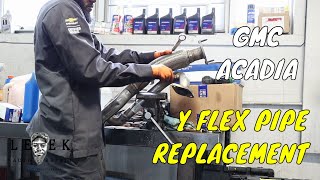
Typical fix: Repair the leak by replacing the faulty gasket or welding/replacing the damaged section of pipe, such as the Y-pipe containing the flex joint. 🎬 See this walkthrough on replacing the common failing Y-pipe flex section.
Est. part cost: $10-$300 - Damaged Wiring or Connector 🟡 Medium Probability TSB 18-NA-009 specifically notes that on these vehicles, a leaking power steering hose can drip fluid onto the Bank 1 O2 sensor harness, contaminating it and causing skewed readings. The official fix can require replacing the hose, sensor, and the entire engine wiring harness. TSB PIT5336 notes the harness can also chafe against an A/C hose coupling, causing a short.
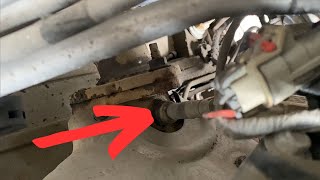
How to confirm: Visually inspect the wiring harness for the Bank 1, Sensor 2 for any signs of melting, chafing, corrosion, or fluid contamination from above. Check for a tight connection at the sensor. Follow the harness from the sensor towards the engine, looking for any wetness from power steering fluid.
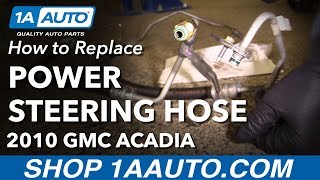
Typical fix: Repair the damaged section of the wiring harness and secure it away from the source of damage. If contaminated by power steering fluid, the leaking hose (P/N 22912855), the O2 sensor, and the engine wiring harness may all need replacement per the TSB. 🎬 Watch: How to replace the power steering hose to stop leaks.
Est. part cost: $20-$1000+ - Blown 'Emission 1' Fuse ⚪ Low Probability TSB PIT5336 specifically calls out that a blown 'Emission 1' fuse in the underhood fuse block can cause P0137 and other O2 sensor codes. This is often a symptom of the wiring harness chafing on an A/C line and shorting to ground.
How to confirm: Locate the underhood fuse block on the passenger side of the engine bay and check the 15A fuse labeled 'Emission 1'.
Typical fix: Replace the blown fuse. If it blows again immediately or soon after, there is a short circuit in the harness that must be found and repaired. Do not simply keep replacing the fuse.
Est. part cost: $1-$5
Rare But Worth Checking
- Failing Catalytic Converter: While less common, a failing or inefficient catalytic converter can sometimes alter the exhaust gas composition in a way that causes the downstream sensor to report low voltage. This should be considered if a new sensor and confirmed good wiring do not solve the code.
- Powertrain Control Module (PCM) Fault: → Shop Engine Control Module (ECM) This is extremely rare. The PCM should only be considered after all other possibilities, including sensor, wiring, and exhaust leaks, have been definitively ruled out through proper testing.
Diagnosis Steps
- Read the code with an OBD-II scanner and confirm P0137 is present. Note any other codes, especially P0171 or P2096.
- Check the 'Emission 1' fuse in the underhood fuse block, as per TSB PIT5336.
- Inspect the power steering hoses above the Bank 1 (rear) side of the engine for any leaks that could contaminate the O2 sensor wiring, as noted in TSB 18-NA-009.
- Visually inspect the Bank 1, Sensor 2 oxygen sensor wiring harness for physical damage, melting, chafing on A/C lines, or corrosion.
- Inspect the exhaust system for leaks, paying close attention to the area before the B1S2 sensor. Listen for hissing sounds or look for soot trails, especially on the flex pipe.
- Use a scan tool to view live data for the Bank 1, Sensor 2 voltage. A healthy downstream sensor should show a relatively stable voltage around 0.4-0.6V. If it's stuck below 0.2V, it confirms the fault condition.
- If wiring, fuses, and the exhaust system are all confirmed to be in good condition, the oxygen sensor itself is the most likely failed component.
Parts You'll Likely Need
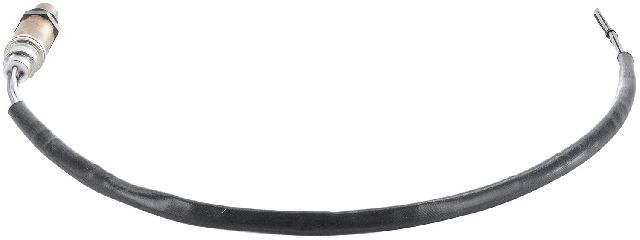
- Oxygen Sensor (Bank 1, Sensor 2)
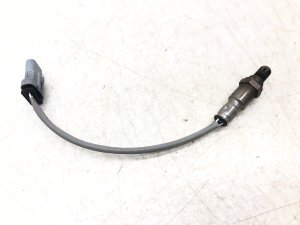
(OEM #12634064)— This is the most common cause of P0137. The sensor fails internally from age and heat. This specific part number fits the downstream position for the specified vehicles.
Trusted brands: ACDelco (GM Original Equipment), Denso (234-4529), NGK/NTK (22514), Bosch (17252)
OEM price range: $80-$150
Aftermarket price range: $45-$100
Related Codes That Often Appear With This One
- P0171 — If an exhaust leak or lean condition is the root cause, a P0171 (System Too Lean Bank 1) code may also be present. TSB 18-NA-009 lists this as a common companion code.
- P2096 — This code for 'Post Catalyst Fuel Trim System Too Lean Bank 1' is often associated with P0137, as both point to a lean condition being detected after the catalytic converter. TSB 18-NA-009 also lists this code.
Technical Service Bulletins (TSBs) & Recalls
- PIT5336: SES Lamp O2 Sensor Or Purge Solenoid Valve DTCs And/Or Emission 1 Fuse Open.
- 18-NA-009: Malfunction Indicator Lamp (MIL) Illuminated - DTCs P0137, P0171, etc. due to power steering fluid contamination of O2 sensor wiring.
- PIP5516: Predecessor to 18-NA-009, describing the same power steering leak issue.
- Bulletin #PIP5529B: Provides diagnostic assistance for resolving MIL illumination due to combinations of codes including P0137, P0171, and P0101.
- Bulletin #PIP5529A: Earlier guidance for technicians to assist in resolving MIL illumination involving P0137 and other related codes like P0106 and P0506.
Platform-Specific Known Issues
- TSB PIT5336: A blown 'Emission 1' fuse can cause P0137. This is often caused by the engine harness chafing on an A/C hose coupling at the back of the engine, creating a short circuit.
- TSB 18-NA-009 (replaces PIP5516): A power steering fluid leak from a hose above the Bank 1 O2 sensor can contaminate the sensor's wiring harness, causing skewed readings and setting codes like P0137. The full repair can be extensive, requiring replacement of the leaking hose, the O2 sensor, and the entire engine wiring harness.
- Exhaust Flex Pipe Failure: The flexible, woven section of the Y-pipe is a common failure point on the Acadia and its platform mates, leading to exhaust leaks that directly cause the P0137 code.
Mechanic-Grade Diagnostic Values
- Downstream O2 Sensor (B1S2) Voltage at Idle — expected: Relatively stable voltage between 0.4V and 0.6V.. Failure: Voltage is consistently below 0.4V, often stuck under 0.2V, for more than 20 seconds.
- O2 Sensor Heater Element Resistance — expected: Approximately 5 to 8.6 ohms when tested across the two heater wires (often same color) on the sensor side of the connector.. Failure: An open circuit (infinite resistance) or a reading significantly outside the expected range indicates a failed heater.
- O2 Sensor Heater Circuit Voltage (at harness connector) — expected: Approximately 12V (battery voltage) with Key On, Engine Off between the power and ground pins on the vehicle's harness connector.. Failure: No voltage suggests a blown fuse (e.g., 'Emission 1') or a break in the power supply wire.
Scan Tool Commands That Help
- GDS2/Tech2: O2 Sensor Heater Diagnostics — A professional scan tool can command the O2 sensor heater on and off to verify the control circuit from the ECM is functioning. It can also display heater current, which should be between 0.2 and 2.0 amps, providing a more precise diagnostic than a simple voltage test.
Wiring & Ground Locations
- G112 — Rear of the engine, mounted to the rear of the cylinder head (Bank 1).. This is a primary engine ground. A loose or corroded connection at G112 can cause erratic sensor readings and various engine control issues, including O2 sensor faults.
- G114 — Left rear of the engine.. Another critical engine ground point. Poor connection here can affect the ECM's reference voltage and lead to incorrect sensor readings.
- J112 — A junction connector in the engine harness, located near ground G112.. This is a splice pack or junction where multiple ground wires converge before connecting to the main ground point. Corrosion or damage within this junction can cause issues for multiple sensors simultaneously.
- Engine Control Module (ECM) — Left side of the engine compartment.. The O2 sensor signal and heater control wires run directly to the ECM. Knowing its location is critical for performing continuity and voltage checks at the ECM connector pins to rule out wiring breaks.
Real Owner Repair Stories
- GM Technical Service Bulletin 18-NA-009 (which superseded PIP5516) (2016-2017 Buick Enclave, Chevrolet Traverse, GMC Acadia/Acadia Limited with 3.6L LLT Engine) — Check Engine Light on, possible rough idle or low power. Codes P0137, P0171, P2096, and others for Bank 1 may be present.
❌ Tried (didn't work) Replacing the Bank 1 O2 sensor(s) multiple times without addressing the root cause, leading to a repeat failure.
✅ What actually fixed it The documented cause was a power steering fluid leak from the power steering gear inlet hose (P/N 22912855) located above the Bank 1 O2 sensor harness. The fluid wicked into the wiring, contaminating it and causing skewed sensor readings. The official GM repair procedure requires replacing the leaking power steering hose, the affected Bank 1 O2 sensor(s), AND the entire engine wiring harness.
OEM Part Supersession History
Unknown/Previous Revisions→12634064— Standard part updates for material and technology integration by GM.
Heads up: While listed for many positions, 12634064 is specified in TSB PIP5516 for the Bank 1 sensor replacement related to the power steering leak issue. Some vendors note this part may require programming or special setup, though this is more common for control modules than sensors. Always verify fitment for the specific sensor position (upstream/downstream) as connector keys can differ.
Model Year Variations Within This Range
- 2017: The 2017 model year is a split year. The 'Acadia Limited' is a carryover of the first generation and is covered by this guide and its associated TSBs. The all-new second generation 'Acadia' (non-Limited) began in 2017 with a different chassis and updated LGX 3.6L engine. While O2 sensor function is similar, part numbers, wiring, and locations may differ. For example, NTK is an OE supplier for the new model, and part listings specify 'New Model' for 2017+ vehicles.
Diagnostic Flowchart
Real Owner Stories
Aggregated from forums and TSBs cited above. Mileages and costs reflect what owners reported in those sources.
GMC Acadia
Symptoms: Check engine light came on with codes P0137 and P2096.
What fixed it: Owner replaced the Bank 1 Sensor 2 oxygen sensor, but the codes returned. The community advised that replacing the sensor is not always the fix, and recommended checking for exhaust leaks between the sensor and the engine, or a potential wiring issue.
Source hint: acadiaforum.net thread titled 'P0137 and P2096 after sensor replacement'
Chevrolet Traverse 3.6L V6
Symptoms: Vehicle threw both P0137 and P0157 codes for the downstream sensors at the same time.
What fixed it: Advised to check for a wiring problem or a bad ground common to both sensors, as it is highly unlikely both downstream sensors failed simultaneously.
Source hint: traverseforum.com thread titled 'Discussion on P0137 Causes'
GM Truck
Symptoms: P0137 code thrown, live data showed abnormal readings.
What fixed it: Replacing the Bank 1 Sensor 2 did not fix the issue. The owner had to begin investigating deeper problems like a wiring fault or an exhaust leak.
Source hint: Reddit r/MechanicAdvice thread titled 'P0137 Code Thrown'
2013-2017 GMC Acadia 3.6L V6
Symptoms: Malfunction Indicator Lamp (MIL) illuminated with DTCs P0137 and P0171 due to power steering fluid contaminating the O2 sensor wiring.
What fixed it: Replaced the leaking power steering hose (P/N 22912855), the O2 sensor, and the entire engine wiring harness.
Source hint: TSB 18-NA-009 (and predecessor PIP5516)
2013-2017 GMC Acadia 3.6L V6
Symptoms: SES Lamp illuminated with O2 sensor DTCs and an open (blown) Emission 1 fuse.
What fixed it: Repaired the engine harness that was chafing on an A/C hose coupling at the back of the engine, creating a short circuit, and replaced the blown 15A fuse.
Source hint: TSB PIT5336
Related OBD-II Codes
Frequently Asked Questions
Does TSB 18-NA-009 apply to my 2013-2017 GMC Acadia for code P0137?
I have code P0137 on my 3.6L V6 Acadia; should I just replace the Bank 1 Sensor 2 oxygen sensor?
Why did the 'Emission 1' fuse blow on my GMC Acadia?
Are the Chevy Traverse and Buick Enclave prone to the same P0137 issues as the Acadia?
What voltage should a healthy Bank 1 Sensor 2 show on my scan tool?
Helpful Videos

Used OEM Parts in Stock
New Aftermarket Parts Available

The information in this article is provided for general reference and educational purposes only. Vehicle specifications, procedures, and part compatibility can vary by production date, trim level, and region. Always consult your vehicle's factory service manual and verify part numbers before purchasing or performing repairs. Safety-critical components such as airbags, seat belts, and braking systems should be installed by a qualified professional.
- GMC Acadia:
- 🧭 Diagnostic Flowchart
- 🎬 Helpful Videos
- 🛍️ Shop This Part
- What's Unique About the 2013-2017 GMC Acadia
- Symptoms You May Notice
- Most Likely Causes
- Rare But Worth Checking
- Diagnosis Steps
- Parts You'll Likely Need
- Related Codes That Often Appear With This One
- Technical Service Bulletins (TSBs) & Recalls
- Platform-Specific Known Issues
- Mechanic-Grade Diagnostic Values
- Scan Tool Commands That Help
- Wiring & Ground Locations
- Real Owner Repair Stories
- OEM Part Supersession History
- Model Year Variations Within This Range
- Real Owner Stories
- GMC Acadia
- Chevrolet Traverse 3.6L V6
- GM Truck
- 2013-2017 GMC Acadia 3.6L V6
- 2013-2017 GMC Acadia 3.6L V6
- Related OBD-II Codes
- Frequently Asked Questions
- 🎟️ Get 5% Off