

P0137 on 2016-2021 Hyundai Tucson: O2 Sensor Low Voltage Causes and Fixes
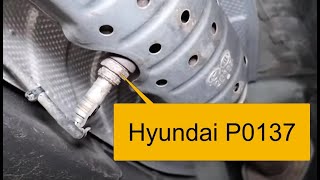
For a 2016-2021 Hyundai Tucson, code P0137 almost always indicates a failed downstream oxygen sensor (Bank 1, Sensor 2). Replacing this sensor is the most common fix. Before replacing, visually inspect the wiring harness for melting or damage, as its proximity to the exhaust makes it vulnerable. Expect to pay between $40-$80 for an aftermarket part and $100-$150 for an OEM sensor. It is a DIY-friendly repair for those with basic tools and an O2 sensor socket.
- P0137 on a 2016-2021 Tucson points directly to the downstream oxygen sensor (Bank 1, Sensor 2) or its circuit.
- The most probable cause is a failed oxygen sensor, which is a common wear item.
- Before replacing the sensor, always perform a quick visual inspection of the wiring harness for any obvious damage like melting or chafing, as this is a known vulnerability.
- Driving with this code is safe in the short term, but it will cause an automatic failure on an emissions test and should be addressed to prevent potential long-term catalytic converter stress.
- Do not confuse this with the upstream sensor (Sensor 1) or mistake it for a bad catalytic converter, which typically throws a P0420 code.
What's Unique About the 2016-2021 Hyundai Tucson
The 2016-2021 (Third Generation, TL) Hyundai Tucson used several four-cylinder engines (2.0L Nu, 1.6L Gamma Turbo, 2.4L Theta II). While the P0137 code is a standard OBD-II fault, the specific part number for the downstream O2 sensor varies by engine, model year, and drivetrain (FWD vs. AWD). There are no widespread, unique platform-wide failures that cause this code outside of the typical reasons like sensor age and wiring damage. However, on some Hyundai models, the wiring harness routing can be susceptible to melting if retaining clips fail, causing the harness to contact the hot exhaust pipe. The diagnosis and repair are consistent and straightforward across all engine options for this generation.
Symptoms You May Notice
- Check Engine Light is on.
- Failure to pass an emissions inspection.
- Slightly decreased fuel efficiency (often not noticeable by the driver).
- In rare cases, if the P0137 code is caused by a significant underlying issue like a major exhaust leak or lean running condition, other drivability symptoms like rough idling or hesitation might be present.
- Replacing the upstream (Bank 1, Sensor 1) oxygen sensor. P0137 specifically points to the downstream sensor (Sensor 2).
- Replacing the catalytic converter. A bad converter typically causes a P0420 code (Catalyst System Efficiency Below Threshold), not a P0137 low voltage code. P0137 indicates a sensor or circuit fault, not converter efficiency.
Most Likely Causes
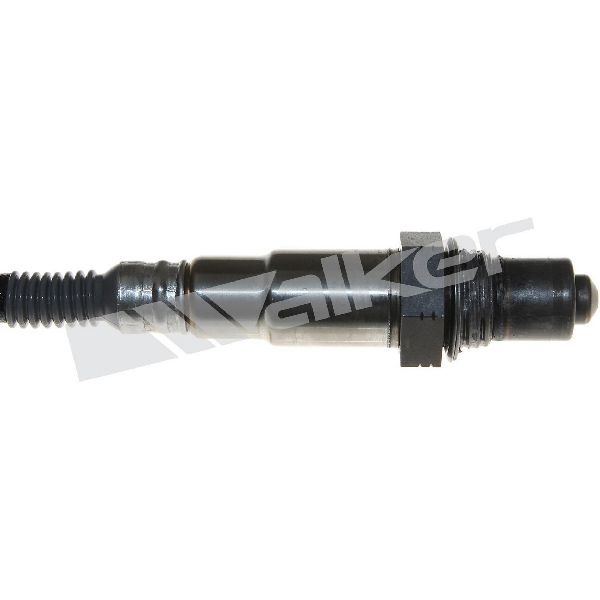
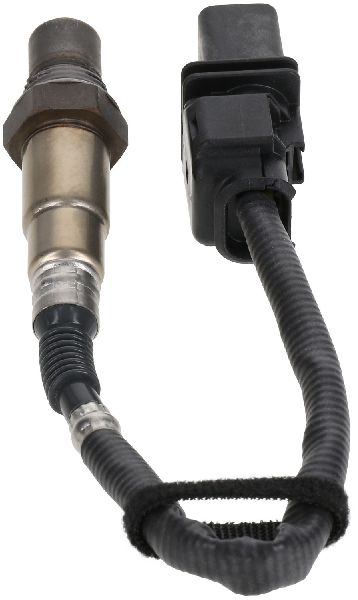
- Failed Downstream Oxygen (O2) Sensor 🔴 High Probability → Shop Oxygen Sensor Oxygen sensors are wear-and-tear items that degrade over time from constant exposure to hot exhaust gases. This is the most common reason for P0137 on any vehicle, including the Tucson. Their typical lifespan is 60,000 to 100,000 miles.
How to confirm: Use an OBD-II scanner with live data to monitor the Bank 1 Sensor 2 voltage ('O2S B1S2'). If the voltage is stuck low (typically below 0.1V) and does not fluctuate, the sensor has likely failed internally. A healthy downstream sensor should show a relatively stable voltage, usually between 0.5V and 0.8V, when the engine is at operating temperature.
Typical fix: Replace the Bank 1, Sensor 2 (downstream) oxygen sensor. An O2 sensor socket is highly recommended for removal as the sensor can be seized in the exhaust pipe.
Est. part cost: $40 - $150 - Damaged O2 Sensor Wiring or Connector 🟡 Medium Probability → Shop Oxygen Sensor The sensor wiring is routed under the vehicle near the hot exhaust. The harness can become brittle, melt from contact with the exhaust, or get damaged by road debris. Some Hyundai/Kia models have harness clips that can fail, allowing the wiring to droop onto the exhaust pipe, causing a short circuit.
How to confirm: Visually inspect the entire wiring harness from the O2 sensor to its connection point. Look for any signs of melting, chafing, corrosion in the connector, or broken wires. Follow the wire from the sensor to its connector, which on the Tucson is often located in an accessible spot on the back of the engine.
Typical fix: Repair the damaged section of the wiring harness or replace the connector pigtail.
Est. part cost: $10 - $30 - Exhaust Leak ⚪ Low Probability Rust or a failed gasket can cause leaks in the exhaust system. If a leak occurs anywhere between the engine and the downstream O2 sensor, it can introduce extra oxygen into the exhaust stream. This outside air causes the sensor to read a false low voltage (lean) condition, triggering the P0137 code.
How to confirm: Listen for a ticking or hissing noise from the exhaust, especially when the engine is cold. You can also use a smoke machine to pressurize the exhaust and look for visible smoke escaping from cracks or bad gaskets. A common leak point is the flex pipe or gasket seams.
Typical fix: Repair the leak by replacing the failed gasket, applying exhaust putty for small pinholes, or welding the cracked pipe.
Est. part cost: $20 - $200
Rare But Worth Checking
- Blown O2 Sensor Heater Circuit Fuse: → Shop Oxygen Sensor The oxygen sensor has an internal heater that helps it reach operating temperature quickly. This heater circuit is protected by a fuse, often labeled 'SENSOR 1' in the engine bay fuse box on Hyundai vehicles. While a blown heater fuse more commonly sets a specific heater circuit code (e.g., P0141), it can sometimes lead to incorrect voltage readings and trigger P0137.
- Faulty Powertrain Control Module (PCM): → Shop Engine Control Module (ECM) This is extremely rare. The PCM is the computer that reads the sensor's signal. Before condemning the PCM, all other possibilities (sensor, wiring, exhaust leaks) must be exhaustively ruled out. A PCM failure would likely be accompanied by other, more severe symptoms and codes.
Diagnosis Steps
- Read the code: Use an OBD-II scanner to confirm P0137 is present and check for any other codes. If other codes are present, address them first as they may be the root cause.
- Inspect the wiring: Visually inspect the downstream O2 sensor's wiring harness and connector for any signs of melting, chafing, or corrosion. Ensure the connector is securely plugged in. Follow the harness from the sensor to the connection point.
- Check for exhaust leaks: Start the engine when it's cold and listen for any hissing or ticking sounds from the exhaust system, particularly between the catalytic converter and the downstream sensor. A visual inspection for soot trails around exhaust joints can also indicate a leak.
- Analyze live data: Using a capable OBD-II scanner, monitor the live voltage data for 'O2S B1S2' (Bank 1, Sensor 2). At operating temperature, a healthy downstream sensor should show a relatively stable voltage, typically between 0.5V and 0.8V. If the voltage is stuck below 0.2V, it confirms the low voltage condition.
- Test the sensor (optional but recommended): If the wiring is good and there are no exhaust leaks, the sensor itself is the most likely culprit. You can test the sensor's internal resistance or heater circuit with a multimeter, but given the high failure rate and low cost, replacement is often the most practical next step.
- Clear the code and test drive: After replacing the sensor or repairing the wiring/exhaust, clear the trouble code with the scanner and perform a test drive covering various speeds to ensure the Check Engine Light does not return.
Parts You'll Likely Need
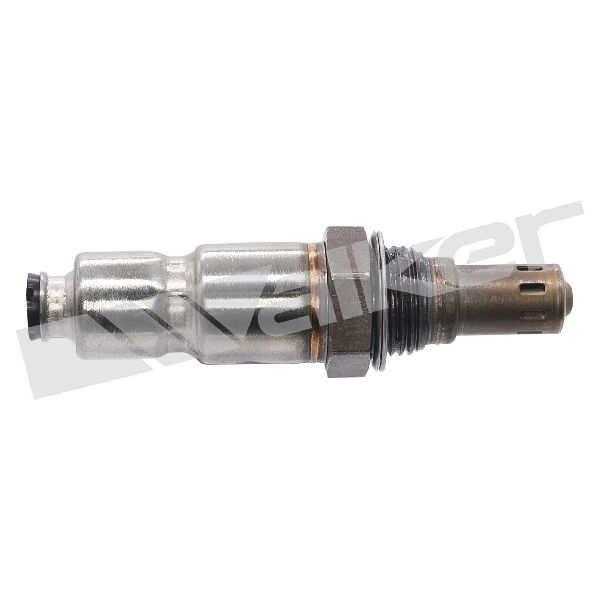
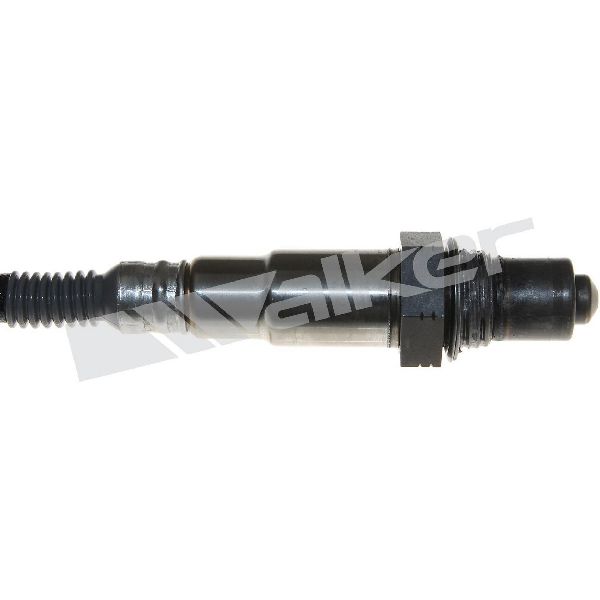
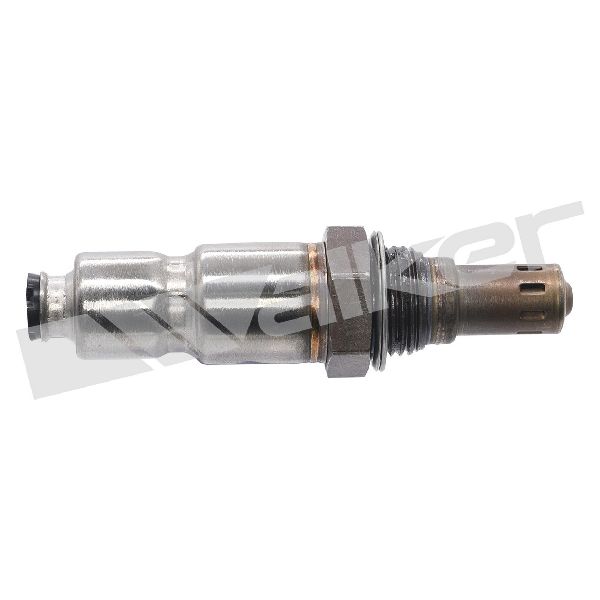
- Downstream Oxygen Sensor (Bank 1, Sensor 2)
(OEM #Varies by engine/drivetrain. Examples: 39210-2ETL2 (2.0L FWD), 39210-2E411 (2.0L AWD, 2019-21), NGK 25262 (2.4L AWD). Always verify with VIN.)— This is the primary component that fails and causes the P0137 code. It is a standard maintenance part that degrades over time.
Trusted brands: Hyundai (OEM), NGK/NTK, Bosch, Denso
OEM price range: $100-$150
Aftermarket price range: $40-$80
Related Codes That Often Appear With This One
- P0136: O2 Sensor Circuit Malfunction (Bank 1, Sensor 2) - A more general fault code for the same sensor circuit.
- P0138: O2 Sensor Circuit High Voltage (Bank 1, Sensor 2) - Can sometimes appear if wiring is shorting intermittently.
- P0141: O2 Sensor Heater Circuit Malfunction (Bank 1, Sensor 2) - Points to a problem with the sensor's internal heater, which can affect its readings.
Technical Service Bulletins (TSBs) & Recalls
- 21-01-023H-4: Service campaign to update knock sensor logic, not directly related to P0137 but affects some 2016-2018 Tucson models.
- 20-01-006H: Product improvement campaign for knock sensor logic on 2018-2019 Tucson 2.4L models, not directly related to P0137.
- 21-01-010H (Recall 195): Recall for a potential electrical short in the ABS module on 2016-2021 Tucson models, unrelated to the P0137 code.
- Recall 147 (NHTSA 16V-628000): For 2016 Tucsons with the 7-speed DCT, a software update for the Transmission Control Module was issued to fix acceleration hesitation. While unrelated to P0137, it's a key software update for that model year.
Platform-Specific Known Issues
- Connector Location: On many Tucson models, the upstream and downstream O2 sensor electrical connectors are located side-by-side on a bracket at the rear of the engine, making them easy to access from the top after removing the plastic engine cover. The downstream sensor is typically the one on the outer edge.
- Tool Requirement: The O2 sensor is screwed into the exhaust pipe and is often seized due to heat cycles. A standard open-end wrench will likely strip the sensor's hex head. A dedicated O2 sensor socket (a 22mm socket with a slot for the wire) is essential for a successful DIY replacement.
Mechanic-Grade Diagnostic Values
- Downstream O2 Sensor (B1S2) Voltage at Idle (Warm Engine) — expected: Relatively stable, above 0.7V.. Failure: Voltage is stuck below 0.1V - 0.2V.
- PCM Fault-Triggering Threshold — expected: The PCM expects a fluctuating voltage signal.. Failure: The PCM will set code P0137 if it sees a sensor voltage below 0.02V for more than 20 seconds.
- O2 Sensor Heater Circuit Resistance — expected: 3 to 15 Ohms (Ω) when measured at ambient temperature across the two heater wires on the sensor connector.. Failure: Resistance is infinite (open circuit) or near zero (short circuit).
Scan Tool Commands That Help
- Hyundai GDS (Global Diagnostic System): Live Data Graphing / DTC Analysis — While there is no direct bidirectional control for the sensor's signal, using the GDS to graph the B1S2 voltage in high resolution is the standard dealer procedure. It helps distinguish between a completely dead sensor (flat low voltage), a wiring short (erratic signal), or a lazy sensor (slow response), which is critical for an accurate diagnosis before replacing parts.
Wiring & Ground Locations
- O2 Sensor Signal Wire — Runs from the downstream O2 sensor on the exhaust pipe, up towards the back of the engine. The connector is often on a shared bracket with the upstream sensor's connector.. This wire carries the low-voltage signal. If it shorts to ground due to melting on the exhaust or chafing on the chassis, it will cause a constant low voltage reading and trigger P0137, even with a perfectly good sensor.
- Engine Bay Fuse Box ('SENSOR 1' Fuse) — Located in the main fuse box in the engine compartment.. This fuse powers the O2 sensor's internal heater. While a failure usually sets a P0141 heater code, a fault in this circuit can sometimes affect the sensor's ability to produce a correct signal, indirectly causing a P0137. Checking this fuse is a quick and easy step.
Real Owner Repair Stories
- Hyundai-Forums user story (for a similar platform) (2011 Hyundai Sonata) — Check Engine Light with code P0137.
❌ Tried (didn't work) Replacing the downstream O2 sensor (Bank 1, Sensor 2).
✅ What actually fixed it The code returned immediately after sensor replacement. A detailed inspection revealed the wiring harness had come loose from a retaining clip and fallen onto the hot exhaust pipe. This melted the wire insulation, causing the signal wire to short to ground. Repairing the melted section of wire and properly securing the harness away from the exhaust permanently resolved the code.
OEM Part Supersession History
39210-2ETL2→N/A— This is the specified OEM part number for the downstream sensor on 2016-2018 Tucson models with the 2.0L FWD engine. No supersession information was found.
Heads up: This part is specific to the 2.0L FWD configuration. Using it on AWD or other engine models may result in improper fitment or function.
Model Year Variations Within This Range
- 2016-2021: The primary variation is the engine and drivetrain combination, which dictates the correct oxygen sensor part number. The 2016-2018 models commonly used the 2.0L Nu and 1.6L Turbo engines. The 2019 facelift introduced the 2.4L Theta II engine as a more common option. For example, the downstream sensor for a 2018 2.0L FWD is different from a 2019 2.4L AWD. Always confirm the part number with the vehicle's VIN.
Diagnostic Flowchart
Other Known Issues on This Vehicle
Issues unrelated to this code that are worth knowing about as an owner of this generation:
- Theta II Engine Failure and Excessive Oil Consumption 🔴 High — Widespread across multiple model years, particularly affecting the 2.4L Theta II GDI engine. Can occur at various mileages, sometimes before 100,000 miles. (Ref: Multiple recalls (e.g., NHTSA 21V-727000 for 2017 Tucson) and class-action lawsuits led to extended warranties (15-year/150k miles) and the Knock Sensor Detection System (KSDS) software update (Campaign 966) as a prerequisite for coverage.)
- 7-Speed Dual-Clutch Transmission (DCT) Hesitation and Failure 🟠 Medium — Common on 1.6L Turbo models. Owners report hesitation/stumbling from a stop, jerky shifting, and in some cases, complete failure of clutch actuators. (Ref: Recall 147 (NHTSA 16V-628000) was issued for 2016 models to reprogram the Transmission Control Module (TCM) to address hesitation. A class-action lawsuit was also filed regarding these issues.)
- Knock Sensor Detection System (KSDS) Logic Flaws 🟠 Medium — The KSDS, designed to detect impending engine failure, can be overly sensitive, putting the car into a limp mode with a flashing check engine light even without an actual engine fault. This has been a common complaint following the mandatory software update. (Ref: Numerous campaigns (e.g., 953, 966) were launched to install and update the KSDS software.)
- ABS Module Electrical Short / Fire Risk 🔴 High — Affects a wide range of 2016-2021 models. An internal electrical short in the ABS module can occur even when the vehicle is off, posing a fire risk. (Ref: Recall 195 (NHTSA 20V-543000) was issued, advising owners to park outside and away from structures until the recall repair (installing a new fuse and/or module) is completed.)
Used vs. New Parts: Buying Guide for This Vehicle
When a used part is the smart pick: For a P0137 repair, a used part is almost never recommended for the oxygen sensor itself, as it is a wear item with a finite lifespan. However, sourcing a used connector pigtail from a salvage yard is a very smart and cost-effective choice if your original connector or a section of the harness is melted or damaged.
Donor-vehicle mileage cap: roughly under 75000 miles for the part to have meaningful remaining life.
What to inspect on the donor part:
- For a used connector/pigtail: Inspect for brittle or cracked plastic on the connector body.
- Check for any signs of melting or heat stress.
- Ensure the locking tab is intact and functional.
- Look at the wire insulation for cracking or stiffness.
- Verify there is no corrosion (green or white powder) on the metal pins inside the connector.
OEM-only on this vehicle (don't cheap out):
- No parts for this specific repair are strictly 'OEM-only', but using reputable brands is critical for sensor longevity and accuracy.
Aftermarket brands forum-validated for this vehicle:
- NGK / NTK
- Denso
- Bosch
Brands owners have reported issues with on this vehicle:
- Unbranded, generic, or 'white-box' sensors sold at exceptionally low prices (e.g., under $25) often have a high failure rate, poor accuracy, or short service life.
Real Owner Stories
Aggregated from forums and TSBs cited above. Mileages and costs reflect what owners reported in those sources.
2017 Hyundai Tucson
Symptoms: The vehicle triggered both P0137 (low voltage) and P0138 (high voltage) codes at the same time, indicating erratic sensor behavior.
What fixed it: Replacement of the downstream O2 sensor.
Source hint: https://www.hyundai-forums.com/threads/p0137-and-p0138-at-the-same-time.680654/
2011 Hyundai Sonata (Similar Platform)
Symptoms: The P0137 code returned even after the oxygen sensor was replaced with a new one.
What fixed it: Repairing the wiring harness which had melted after falling onto the exhaust pipe.
Source hint: https://www.hyundai-forums.com/threads/check-engine-light-p0137.169517/
Related OBD-II Codes
Frequently Asked Questions
Where is the downstream O2 sensor connector located on the 2016-2021 Hyundai Tucson?
Does TSB 21-01-023H-4 or 20-01-006H fix the P0137 code on my Tucson?
Can I use a standard wrench to replace the O2 sensor on my Tucson?
Is there a recall for the 2016 Tucson that might cause drivability issues alongside P0137?
Could a wiring issue be causing P0137 on my Hyundai?
Helpful Videos


We Have This Part in Stock


The information in this article is provided for general reference and educational purposes only. Vehicle specifications, procedures, and part compatibility can vary by production date, trim level, and region. Always consult your vehicle's factory service manual and verify part numbers before purchasing or performing repairs. Safety-critical components such as airbags, seat belts, and braking systems should be installed by a qualified professional.
- Hyundai Tucson:
- 🧭 Diagnostic Flowchart
- 🎬 Helpful Videos
- 🛍️ Shop This Part
- What's Unique About the 2016-2021 Hyundai Tucson
- Symptoms You May Notice
- Most Likely Causes
- Rare But Worth Checking
- Diagnosis Steps
- Parts You'll Likely Need
- Related Codes That Often Appear With This One
- Technical Service Bulletins (TSBs) & Recalls
- Platform-Specific Known Issues
- Mechanic-Grade Diagnostic Values
- Scan Tool Commands That Help
- Wiring & Ground Locations
- Real Owner Repair Stories
- OEM Part Supersession History
- Model Year Variations Within This Range
- Other Known Issues on This Vehicle
- Used vs. New Parts: Buying Guide for This Vehicle
- Real Owner Stories
- 2017 Hyundai Tucson
- 2011 Hyundai Sonata (Similar Platform)
- Related OBD-II Codes
- Frequently Asked Questions
- 🎟️ Get 5% Off