

P0137 on 2010-2013 Kia Forte: Causes and Fixes for O2 Sensor Low Voltage
This code almost always means the downstream oxygen sensor (Bank 1, Sensor 2) has failed. On a 2010-2013 Forte, expect to pay $40-$90 for an aftermarket sensor and $120-$180 for an OEM part. It's a straightforward DIY replacement with a 22mm (7/8") O2 sensor socket. Before replacing, visually inspect the wiring harness for melting or damage.
- P0137 on a 2010-2013 Forte points directly to a problem with the downstream oxygen sensor (Bank 1, Sensor 2).
- The most probable cause is a failed sensor, which is a common wear item with a lifespan of 60-100k miles.
- Before replacing the sensor, perform a quick visual inspection of the wiring harness for obvious damage like melting, as it's exposed near the hot exhaust.
- This is a DIY-friendly repair, but a thin-walled O2 sensor socket may be required for clearance.
What's Unique About the 2010-2013 Kia Forte
For the first-generation (TD) Kia Forte, the P0137 code is a very common and straightforward issue. The Theta II engines are not known for complex electrical problems that mimic this code, so diagnosis is typically simple. The downstream O2 sensor and its wiring are reasonably accessible from underneath the vehicle, making it a popular DIY repair. A key detail for this platform is the location of the electrical connector on the back of the engine, which can be reached from above. It is highly recommended to use a quality replacement sensor (like Denso, NGK/NTK, or OEM), as owners of similar Kia/Hyundai platforms report issues when using cheap, universal-style sensors.
Symptoms You May Notice
- Check Engine Light is on
- Failing an emissions/smog test
- Slightly reduced fuel economy
- Rough or unstable idle in some cases
- Hesitation during acceleration
- Replacing the upstream (Bank 1, Sensor 1) oxygen sensor. The code P0137 specifically refers to Sensor 2, which is after the catalytic converter.
- Replacing the catalytic converter. A P0420 code would indicate a bad converter. P0137 is an electrical fault code for the sensor circuit itself.
Most Likely Causes
- Failed Downstream Oxygen Sensor (Bank 1, Sensor 2) 🔴 High Probability → Shop Oxygen Sensor Oxygen sensors are wear-and-tear items that degrade over time from heat and contamination, typically lasting 60,000 to 100,000 miles. It is the most common reason for this code.
How to confirm: Using a scan tool, observe the live data for 'O2S B1S2'. If the voltage is stuck below 0.2V (often near 0.05V) when the engine is fully warmed up and at a steady RPM, the sensor is likely bad. A healthy downstream sensor should show a relatively stable voltage, typically fluctuating gently between 0.6V and 0.8V.
Typical fix: Replace the downstream oxygen sensor. This requires a 22mm (7/8") O2 sensor socket, often a thin-walled version to fit. Apply anti-seize to the new sensor's threads and torque to specification (approx. 30 ft-lbs).
Est. part cost: $40 - $180 - Damaged Wiring or Connector 🟡 Medium Probability The sensor wiring is routed under the car near the hot exhaust, making it vulnerable to melting, corrosion, or damage from road debris. The harness runs up the back of the engine to its connection point.
How to confirm: Visually inspect the entire wiring harness from the O2 sensor to its connector on the back of the engine. Look for melted insulation, chafed wires, or corrosion on the connector pins. Use a multimeter to check for continuity, proper voltage, and ground at the connector with the key on.
Typical fix: Repair the damaged section of the wiring harness or clean/replace the connector.
Est. part cost: $5 - $50 - Exhaust Leak ⚪ Low Probability Rust can cause leaks at exhaust pipe flanges or flex pipes over time. An exhaust leak before the sensor can introduce outside air, causing a false lean (low voltage) reading.
How to confirm: Listen for hissing or ticking sounds from the exhaust system when the engine is running. A smoke machine is the most effective way to find small leaks between the engine and the downstream O2 sensor.
Typical fix: Repair the leak by replacing the gasket or welding the cracked component.
Est. part cost: $20 - $300
Rare But Worth Checking
- Faulty Powertrain Control Module (PCM): → Shop Engine Control Module (ECM) This is extremely rare. All other possibilities, especially the sensor and wiring, should be exhaustively ruled out before considering the PCM as the cause.
- Blown O2 Sensor Heater Fuse: → Shop Oxygen Sensor The O2 sensor has an internal heater that helps it reach operating temperature quickly. This heater circuit is often protected by a fuse. If the fuse blows, the sensor may not heat up properly, leading to incorrect voltage readings. Check your owner's manual for the fuse box diagram.
Diagnosis Steps
- Read the code with an OBD-II scanner to confirm P0137 is the primary code present.
- Visually inspect the downstream O2 sensor's wiring harness and connector for any signs of melting, chafing, corrosion, or loose connections. The harness runs along the back of the engine to a connector you can access from above.
- With the engine warm and at idle, use a scan tool to monitor the live voltage of 'O2 Bank 1 Sensor 2'. A reading consistently below 0.2V points towards a problem. 🎬 See this diagnostic walkthrough to confirm a bad sensor.
- Inspect the exhaust system for leaks between the upstream and downstream sensors. Listen for noise and look for black soot marks at flanges. A smoke test is definitive.
- Check the fuse for the O2 sensor heater circuit in the vehicle's fuse box.
- If the wiring, fuse, and exhaust are all intact, the oxygen sensor itself is the most likely cause of the problem.
- Replace the Bank 1, Sensor 2 oxygen sensor using a 22mm O2 sensor socket.
- Clear the code and perform a test drive to ensure the code does not return.
Parts You'll Likely Need
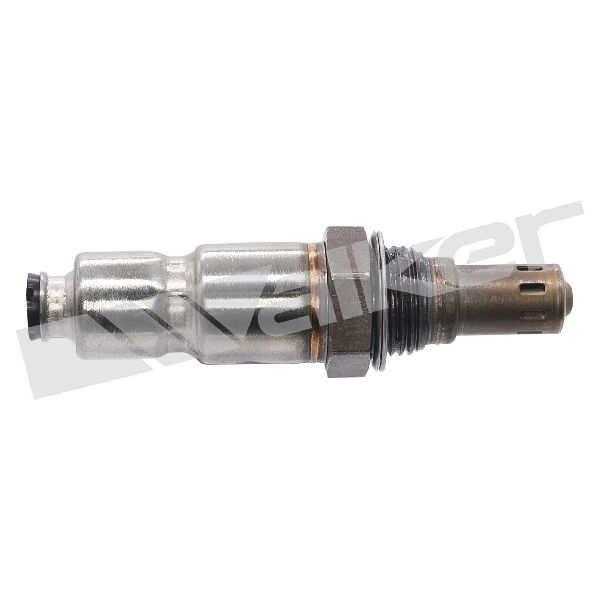
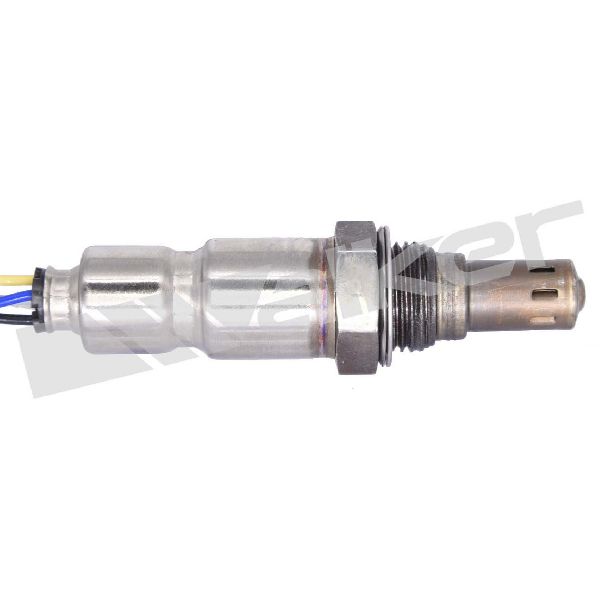
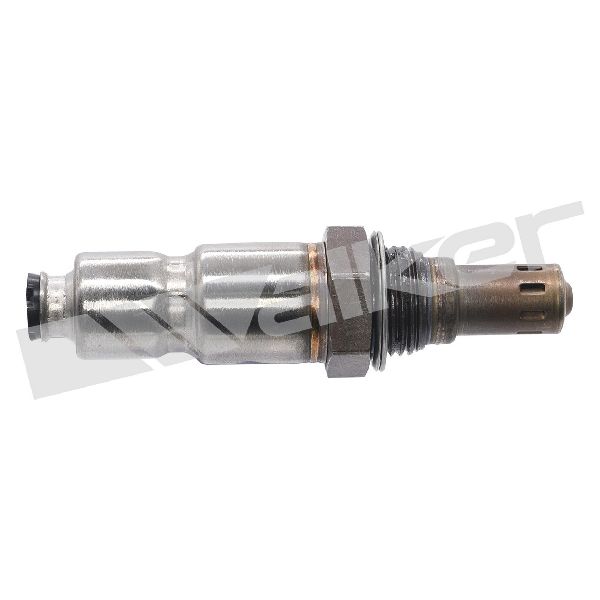
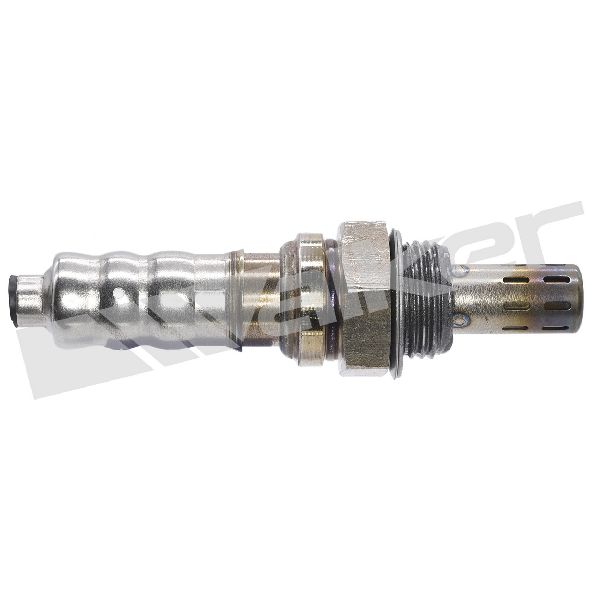
- Downstream Oxygen Sensor (Bank 1, Sensor 2)
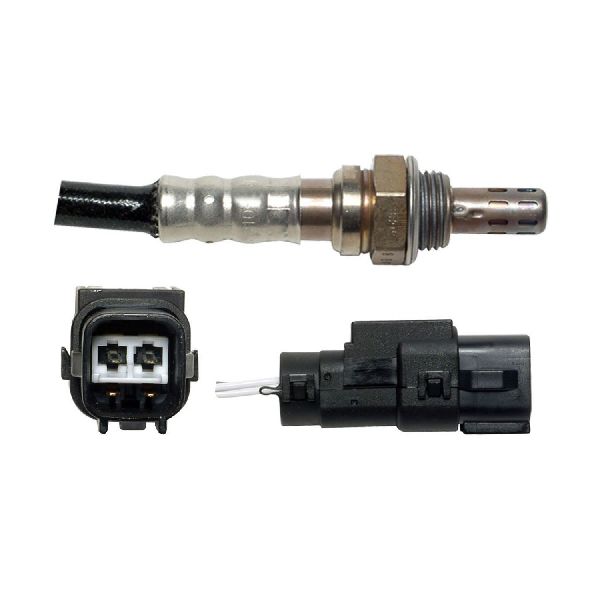
(OEM #39210-2G200 (cross-references to 234-4238). Note: Some California emissions models may use 39210-2G370. Always verify with VIN.)— This sensor is a common failure item and is the direct cause of the P0137 code in most cases.
Trusted brands: Denso, NGK/NTK, Bosch, Mando
OEM price range: $120-$180
Aftermarket price range: $40-$90
Related Codes That Often Appear With This One
- P0136 — P0136 is a general 'O2 Sensor Circuit Malfunction' code for the same sensor. P0137 is a more specific version of that fault, indicating low voltage.
- P0420 — A failing downstream O2 sensor can sometimes incorrectly trigger a P0420 'Catalyst System Efficiency Below Threshold' code because it can no longer accurately report on the catalytic converter's performance.
Technical Service Bulletins (TSBs) & Recalls
- As of early 2026, no specific Technical Service Bulletins (TSBs) from Kia directly address the P0137 code on this platform. The issue is typically handled as a standard diagnostic and repair procedure.
Platform-Specific Known Issues
- Connector Location: Unlike some platform mates where the connector is inside the cabin, on the 2010-2013 Forte the downstream O2 sensor connector is located on the back of the engine block, accessible from the engine bay. Following the wire up from the sensor leads directly to it.
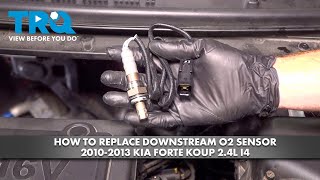
- Tool Requirement: A video guide from 1A Auto for the Forte Koup specifically notes that a standard O2 sensor socket may be too thick to fit between the sensor and the exhaust pipe. A thin-walled socket is recommended for easier removal. 🎬 Watch: This 1A Auto guide shows the full replacement process.
Mechanic-Grade Diagnostic Values
- Downstream O2 Sensor (B1S2) Voltage - Normal Operation — expected: Steady voltage around 0.6V - 0.8V when engine is warm and at a steady RPM.. Failure: Voltage is stuck below 0.21V for more than 20 seconds.
- Downstream O2 Sensor (B1S2) Voltage - Multimeter Test — expected: Should fluctuate constantly between 0.1V and 0.9V after the engine has run for 2-3 minutes.. Failure: Voltage remains below 0.5V or stays fixed at a particular voltage.
- O2 Sensor Heater Circuit Resistance — expected: 5.0 - 6.0 Ohms when measured on a cool engine (approx. 20°C / 68°F).. Failure: A reading of 0 Ohms (short) or infinite/OL (open circuit).
- Short Term Fuel Trim (STFT B1) — expected: Should be within ±5% at idle.. Failure: High positive values could indicate a vacuum or exhaust leak tricking the sensor.
Scan Tool Commands That Help
- Kia GDS (Global Diagnostic System): DTC Guide / Diagnostic Procedure — After retrieving code P0137, the GDS software provides a step-by-step diagnostic tree specific to that code, guiding the technician through checks.
- Kia GDS (Global Diagnostic System): Live Data Analysis (Current Data) — To monitor the real-time voltage of the B1S2 O2 sensor, heater circuit status, and fuel trims to confirm if the sensor is responding correctly to engine condition changes.
- Kia GDS (Global Diagnostic System): Resetting Adaptive Values — After replacing the O2 sensor or repairing a related fault, this function should be used to clear the long-term fuel trim and other learned values from the ECM, allowing it to adapt to the new component faster.
Wiring & Ground Locations
- Downstream O2 Sensor Connector — On the back of the engine block, accessible from the top of the engine bay, toward the driver's side.. This is the primary connection point to inspect for corrosion or damage before testing or replacing the sensor itself. Its location in the engine bay makes it easier to access than connectors routed inside the vehicle cabin.
- Sensor Harness Routing — Runs from the sensor in the exhaust pipe up along the back of the engine/exhaust manifold heat shield.. This harness is secured by several mounting points. It's critical to check that the harness is properly secured and not touching hot exhaust components, which could cause it to melt and short the circuit, triggering P0137.
OEM Part Supersession History
39210-2G200→N/A— This appears to be the current and valid part number for the standard application.
Model Year Variations Within This Range
- 2011: Part catalogs show different downstream oxygen sensor part numbers for models with automatic transmissions versus manual transmissions. It is critical to select the correct part based on the vehicle's transmission type.
- 2010-2011: For 2.0L EX and LX submodels, parts listings specify different sensors for vehicles with 'Non Calif-ESV' vs 'Calif-ESV Manual Transmission'. This indicates a potential difference in parts based on the emissions package and transmission combination.
Diagnostic Flowchart
Other Known Issues on This Vehicle
Issues unrelated to this code that are worth knowing about as an owner of this generation:
- Theta II Engine Knocking / Seizure 🔴 High — Widespread enough to trigger multiple class-action lawsuits. Can occur at various mileages. Caused by manufacturing debris restricting oil flow to bearings. (Ref: Multiple recalls and a lifetime warranty extension for the engine short block were issued for affected vehicles that received a required Knock Sensor Detection System (KSDS) software update.)
- Faulty Airbag Clock Spring 🔴 High — Common failure item. Symptoms include an illuminated airbag warning light and non-functional steering wheel controls (horn, cruise control, radio buttons). (Ref: Kia issued an extended warranty (15 years/unlimited miles) for this part on some models. A recall (18V-363) also addressed a related Airbag Control Unit (ACU) that could prevent deployment.)
- Faulty Brake Light Switch 🟠 Medium — A plastic stopper pad on the brake pedal arm deteriorates, causing the brake lights to stay on and allowing the shifter to move out of Park without the brake being pressed. (Ref: Yes, covered under Kia recall SC158. Dealers will replace the brake pedal stopper pad free of charge.)
- Engine Compartment Fire Risk 🔴 High — A potential electrical short in the Hydraulic Electronic Control Unit (HECU) can occur, creating a fire risk while parked or driving. (Ref: Yes, this is part of a large recall affecting many Kia models from the era. Owners are often advised to park outside and away from structures until the repair is performed.)
- Clicking Noise from Steering Column 🟡 Low — While more common on the second-generation Forte, some first-gen owners report a clicking or clunking noise from the steering. This is often due to a worn flexible coupler in the electronic power steering (MDPS) motor.
Used vs. New Parts: Buying Guide for This Vehicle
When a used part is the smart pick: For this specific repair, a used oxygen sensor is almost never a smart choice. They are wear-and-tear items with a limited lifespan. The low cost of a new aftermarket sensor makes the risk and labor of installing a used part impractical.
What to inspect on the donor part:
- Not applicable as a used sensor is not recommended.
OEM-only on this vehicle (don't cheap out):
- Catalytic Converter - While not the direct cause of P0137, if a catalytic converter is needed for any reason, using an OEM part is highly recommended. Aftermarket converters for Kia/Hyundai vehicles are frequently reported to fail emissions tests or trigger P0420 codes shortly after installation.
Aftermarket brands forum-validated for this vehicle:
- Denso
- NGK/NTK
- Mando
- Bosch
Brands owners have reported issues with on this vehicle:
- Unbranded, 'white box', or generic 'universal' sensors that require splicing wires are often reported to have a short service life or cause intermittent issues.
Real Owner Stories
Aggregated from forums and TSBs cited above. Mileages and costs reflect what owners reported in those sources.
2010-2013 Kia Forte 2.0L/2.4L
Symptoms: The P0137 error appeared temporarily and was then cleared.
What fixed it: The source suggests that if the vehicle is under warranty, the owner should take it to the dealership without clearing the code to address the intermittent fault.
Source hint: Kia-Forums.com (Polish) thread viewtopic.php?t=10557
Kia Sorento (Cross-Manufacturer Reference)
Symptoms: An owner reported that multiple codes appeared including P0137, P0087, P0506, P2096, and misfire codes P0300 through P0306.
What fixed it: According to NHTSA ODI #11513767, the owner noted the codes would sometimes disappear and reappear, leading them to investigate broader engine and electrical issues documented on the NHTSA website.
Source hint: NHTSA ODI #11513767
Kia Sorento (Cross-Manufacturer Reference)
Symptoms: A driver experienced a series of fault codes including P0137, P0506, P0087, and P2096, along with misfire codes for all cylinders.
What fixed it: NHTSA ODI #11499800 describes a situation where these codes would clear from the dashboard and not return immediately, with the owner seeking professional advice regarding the recurring fuel and propulsion system faults.
Source hint: NHTSA ODI #11499800
Related OBD-II Codes
Frequently Asked Questions
Is there a Kia TSB or recall for the P0137 code on my 2010-2013 Forte?
Where is the downstream oxygen sensor connector located on the 2010-2013 Forte?
Do I need any special tools to replace the O2 sensor on my Forte Koup?
Could my P0137 code be related to the Theta II engine recalls?
Can a faulty brake light switch cause a P0137 code?
What is the correct torque spec for the new oxygen sensor?
Helpful Videos

We Have This Part in Stock


The information in this article is provided for general reference and educational purposes only. Vehicle specifications, procedures, and part compatibility can vary by production date, trim level, and region. Always consult your vehicle's factory service manual and verify part numbers before purchasing or performing repairs. Safety-critical components such as airbags, seat belts, and braking systems should be installed by a qualified professional.
- Kia Forte:
- 🧭 Diagnostic Flowchart
- 🎬 Helpful Videos
- 🛍️ Shop This Part
- What's Unique About the 2010-2013 Kia Forte
- Symptoms You May Notice
- Most Likely Causes
- Rare But Worth Checking
- Diagnosis Steps
- Parts You'll Likely Need
- Related Codes That Often Appear With This One
- Technical Service Bulletins (TSBs) & Recalls
- Platform-Specific Known Issues
- Mechanic-Grade Diagnostic Values
- Scan Tool Commands That Help
- Wiring & Ground Locations
- OEM Part Supersession History
- Model Year Variations Within This Range
- Other Known Issues on This Vehicle
- Used vs. New Parts: Buying Guide for This Vehicle
- Real Owner Stories
- 2010-2013 Kia Forte 2.0L/2.4L
- Kia Sorento (Cross-Manufacturer Reference)
- Kia Sorento (Cross-Manufacturer Reference)
- Related OBD-II Codes
- Frequently Asked Questions
- 🎟️ Get 5% Off