

P0137 on 2011-2016 Kia Optima Hybrid: Causes and Fixes for O2 Sensor Low Voltage
On a 2011-2016 Kia Optima Hybrid, code P0137 almost always indicates a failed downstream oxygen sensor (Bank 1, Sensor 2). A crucial second check is the sensor's wiring harness, which is known to break from its clips and melt on the exhaust. A replacement sensor costs between $40 for a quality aftermarket part and $180 for an OEM version. It's a DIY-friendly repair with a difficulty of 2/5.
- P0137 on your Optima Hybrid points to the downstream O2 sensor (Bank 1, Sensor 2) reporting low voltage.
- The most common fix is replacing the downstream O2 sensor, which is a common wear item.
- Before replacing the sensor, always inspect the wiring harness for melting or damage, as this is a known issue on this platform.
- This is a DIY-friendly repair for those with basic tools and an O2 sensor socket.
- Driving with this code is possible, but it will cause an emissions failure and should be addressed to prevent potential long-term issues.
What's Unique About the 2011-2016 Kia Optima
The 2011-2016 Kia Optima Hybrid spans two vehicle generations (TF: 2011-2015, JF: 2016). While the P0137 code is a standard OBD-II fault, a noteworthy and frequently reported issue on this platform is the potential for the O2 sensor's wiring harness to break free from its plastic retaining clips. These clips become brittle with age and heat. This can cause the harness to fall directly onto the hot exhaust pipe, melting the wire insulation and leading to a short circuit that grounds the signal wire, triggering the P0137 code. Always inspect the wiring thoroughly before replacing the sensor itself, as this is a common point of failure. This issue is also rampant on its platform-mate, the Hyundai Sonata Hybrid.
Generation note: The specified range of 2011-2016 covers the third generation (TF, 2011-2015) and the first year of the fourth generation (JF, 2016) Optima. The 2.4L Hybrid powertrain was used in the 2011-2015 models. The 2016 Optima Hybrid introduced a new 2.0L engine. However, the diagnosis for P0137 on the downstream O2 sensor circuit remains fundamentally the same, as the causes are nearly universal for this code across most vehicles.
Symptoms You May Notice
- Check Engine Light is on
- Failure to pass an emissions test
- Potentially decreased fuel efficiency
- In rare cases, rough or unstable idle
- In some instances, the code may appear temporarily and can be cleared, indicating a transient glitch or intermittent connection issue.
- Replacing the upstream (Bank 1, Sensor 1) oxygen sensor. Code P0137 specifically points to the downstream (Sensor 2) sensor.
- Replacing the catalytic converter. A bad converter would typically set a P0420 (Catalyst System Efficiency Below Threshold) code, not a P0137 electrical circuit code.
Most Likely Causes
- Failed Downstream Oxygen Sensor (Bank 1, Sensor 2) 🔴 High Probability → Shop Oxygen Sensor Oxygen sensors are wear-and-tear items exposed to extreme heat and contaminants. Failure is common between 60,000 and 100,000 miles and is the most frequent cause of P0137.
How to confirm: After visually inspecting the wiring, use a scan tool to monitor live data for the B1S2 O2 sensor. If the engine is warm and the voltage is stuck consistently low (near 0.0V - 0.1V) and does not fluctuate, the sensor has likely failed. A healthy downstream sensor should show a relatively stable voltage between 0.6V and 0.8V.
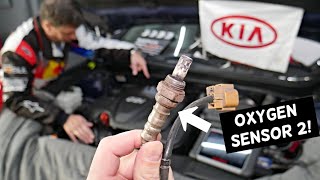
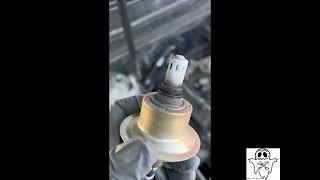
Typical fix: Replace the downstream oxygen sensor. This requires a special 22mm (or 7/8") O2 sensor socket to remove and install.
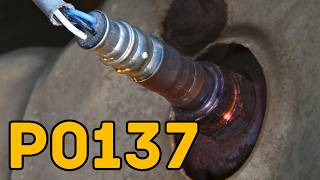
Est. part cost: $40-$180 - Damaged Wiring or Connector 🟡 Medium Probability The wiring harness for the downstream O2 sensor is routed under the car. On this platform, the plastic clips holding the harness can break, allowing the wires to contact the hot exhaust pipe, which melts the insulation and causes a short to ground. This is a very common failure pattern for this specific vehicle and its Hyundai Sonata twin.
How to confirm: Visually inspect the entire length of the wiring harness from the O2 sensor to its connection point. Look for any signs of melting, chafing, or corrosion on the connector pins. Pay close attention to the area directly above the exhaust pipe.
Typical fix: Repair the damaged section of the wire and secure the harness away from the exhaust using high-temperature zip ties. If the connector is damaged, it may need to be replaced.
Est. part cost: $10-$50 - Exhaust Leak ⚪ Low Probability Corrosion can cause leaks at exhaust flanges or in the flex pipe, particularly in regions that use road salt. An exhaust leak before the sensor can introduce outside oxygen, which the sensor will read as a lean condition (low voltage).
How to confirm: Listen for hissing or ticking sounds from the exhaust system when the engine is running. A visual inspection may reveal black soot trails near a leak. A professional smoke test is the most definitive way to find a leak.
Typical fix: Replace the leaking gasket or the damaged section of the exhaust pipe.
Est. part cost: $20-$200
Rare But Worth Checking
- Blown O2 Sensor Heater Circuit Fuse: → Shop Oxygen Sensor The O2 sensor has an internal heater to bring it to operating temperature quickly. This heater is on a fused circuit. A short in the wiring can blow this fuse. Check the fuse box in the engine bay for a fuse labeled 'SENSOR 1' or similar.
- Powertrain Control Module (PCM) Issue: → Shop Engine Control Module (ECM) In very rare cases, the PCM itself can be faulty. This should only be considered after all other possibilities, including wiring and the sensor itself, have been exhaustively ruled out.
Diagnosis Steps
- Read the code with an OBD-II scanner to confirm P0137 is present and note any other codes.
- Perform a thorough visual inspection of the downstream O2 sensor (Bank 1, Sensor 2), which is located on the exhaust pipe after the catalytic converter.
- Carefully inspect the sensor's wiring harness for any signs of melting, chafing, or physical damage. Pay close attention to where it is secured, ensuring it is not touching the exhaust. This is a critical step on this vehicle.
- Check the O2 sensor heater circuit fuse in the engine compartment fuse box, often labeled 'SENSOR 1'.
- Inspect the exhaust system for any leaks between the catalytic converter and the downstream sensor. Look for soot or listen for hissing sounds.
- Using a scan tool with live data capability, monitor the voltage of the Bank 1 Sensor 2. A healthy downstream sensor on a warm engine should show a relatively stable voltage (around 0.6V-0.8V). If it is stuck very low (e.g., below 0.2V), this confirms the fault condition.
- If wiring is intact and the sensor voltage is stuck low, the sensor itself is the most likely cause and should be replaced.
Parts You'll Likely Need
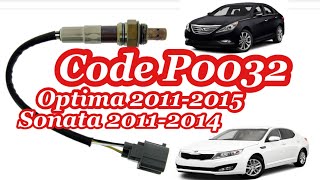
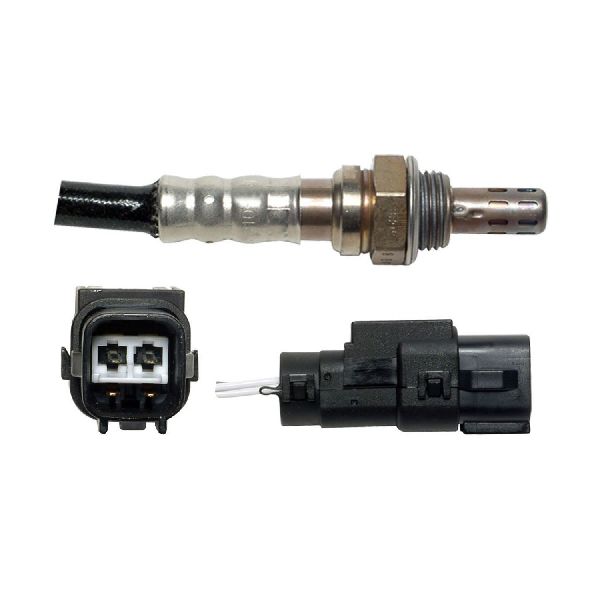
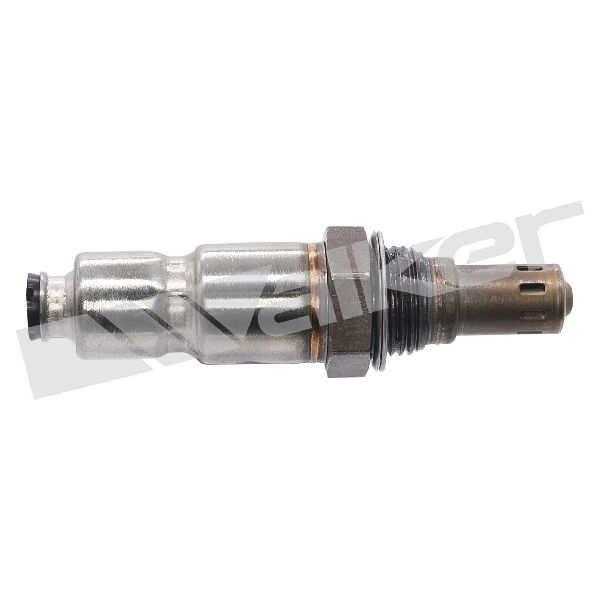
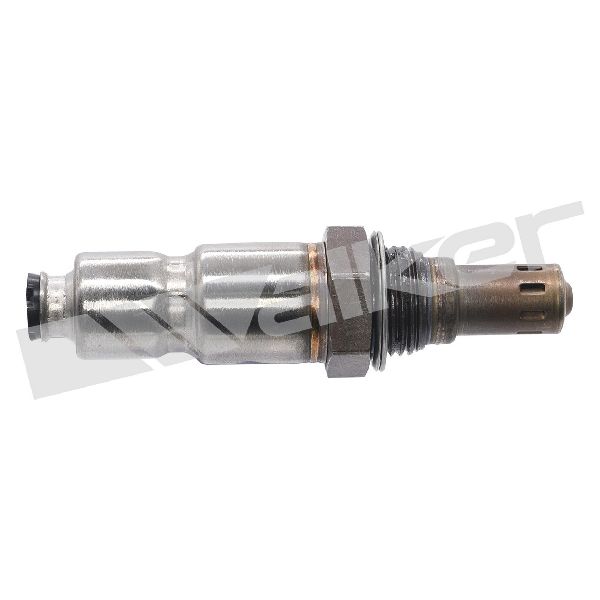
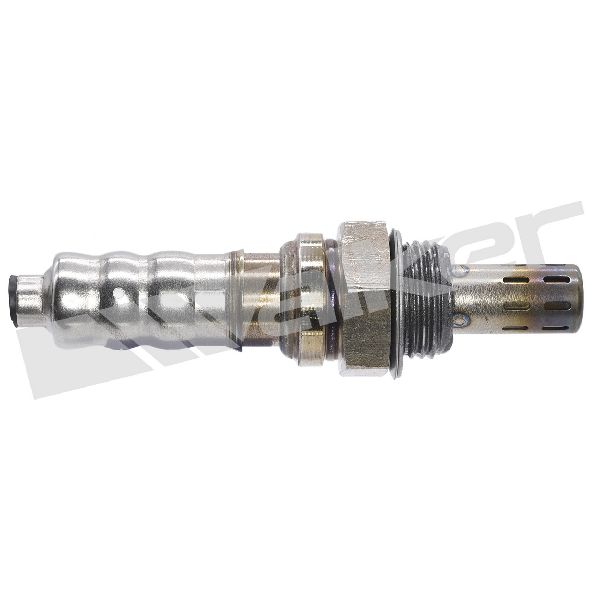
- Downstream Oxygen Sensor (Bank 1, Sensor 2)
(OEM #39210-2G200, superseded by 39210-2G560 in some applications. VIN verification with a dealer is critical.)— This is the component that fails most frequently, triggering the P0137 code. It is a standard wear item.
Trusted brands: Denso, NGK/NTK (often the original equipment manufacturer), Bosch, Delphi
OEM price range: $130-$180
Aftermarket price range: $40-$90
Related Codes That Often Appear With This One
- P0136 — This indicates a general malfunction in the same O2 sensor circuit, and is a less specific version of P0137.
- P0138 — This indicates the opposite fault in the same circuit (High Voltage), often pointing to a short to power in the wiring, rather than a short to ground.
- P0141 — This code indicates a malfunction in the heater circuit of the same O2 sensor. A faulty heater can prevent the sensor from reaching operating temperature, causing it to report incorrect (often low) voltages and triggering P0137 as well.
- P0171 or P2096 — These codes indicate a lean running condition. A significant vacuum or exhaust leak can introduce excess unmetered air, causing the engine to run lean and potentially triggering P0137 alongside these codes.
Technical Service Bulletins (TSBs) & Recalls
- TSB PI1802: Relates to a Knock Sensor Detection System (KSDS) software update for 2014-2015 Optimas. While not for P0137, it shows that ECU updates are available for this platform and could resolve rare software-related glitches.
- Service Campaign SC135: Addresses potential cracks in the evaporative canister on 2011-2014 Optima Hybrids in salt-belt states, which would cause EVAP codes (P0442, P0455), not P0137.
Platform-Specific Known Issues
- A notable issue on the 2011-2015 Optima platform is the tendency for the plastic clips securing the O2 sensor wiring harness to fail, allowing the harness to melt on the exhaust pipe.
- While not directly related to P0137, owners of 2011-2014 models should be aware of TSB CHA072 regarding a steering column coupler, and NHTSA Recall 17V224000 concerning potential engine failure on the 2.4L GDI engine.
Mechanic-Grade Diagnostic Values
- Downstream O2 Sensor (B1S2) Live Data Voltage — expected: Relatively stable voltage between 0.6V and 0.9V on a warm, running engine at a steady RPM.. Failure: Voltage is stuck below 0.2V for an extended period. The code may set if the PCM sees a signal below 0.05V for more than 12.5 seconds.
- O2 Sensor Heater Element Resistance — expected: Between 4 and 10 ohms when the sensor is cold (at room temperature).. Failure: A multimeter reading of 'OL' (Open Line) or infinite resistance, indicating a broken internal heater element. This would typically set a P0141 code but can affect sensor performance and lead to P0137.
- O2 Sensor Signal Wire Voltage (at sensor connector) — expected: Should fluctuate constantly between 0.1 and 0.9 volts when probing the signal wire with a voltmeter on a warm engine.. Failure: Voltage remains below 0.5 volts or is stuck at a particular voltage, indicating a faulty sensor or circuit issue.
Scan Tool Commands That Help
- Kia GDS (Global Diagnostic System): ECU Upgrade / Reprogramming — This is a last-resort diagnostic step. If the sensor, wiring, fuse, and exhaust system are all confirmed to be in perfect condition, a PCM software reflash may be required to correct logic errors in how the module interprets the O2 sensor's voltage signal.
Wiring & Ground Locations
- Engine Ground Strap — One of the primary engine-to-chassis ground straps is often located near the passenger side motor mount or on the transmission housing.. A corroded or loose ground strap can introduce electrical noise and voltage offsets into the entire engine management system. This can affect the O2 sensor's signal and heater circuit performance, potentially causing incorrect readings even with a good sensor.
- Engine Compartment Fuse Box ('SENSOR 1' Fuse) — Located in the engine bay, typically on the driver's side.. This fuse powers the O2 sensor's internal heater. If the fuse is blown (often due to a shorted wire), the sensor cannot heat up properly, leading to slow or incorrect voltage readings that can trigger P0137.
Real Owner Repair Stories
- Go-Parts Repair DB, citing a common owner experience on the Hyundai Sonata platform-mate. (2011 Hyundai Sonata 2.4L GDI) — Check Engine Light with code P0137. The code returned shortly after replacing the downstream O2 sensor.
❌ Tried (didn't work) Replacing the downstream O2 sensor (Bank 1, Sensor 2).
✅ What actually fixed it A detailed follow-up inspection revealed the O2 sensor's wiring harness had detached from its retaining clip and melted on the hot exhaust pipe. This created a short to ground. Repairing the melted wires and securing the harness away from the exhaust with high-temp zip ties permanently resolved the P0137 code.
OEM Part Supersession History
39210-2G200→39210-2G560— Part update and consolidation for different model years and build applications within the 2011-2015 range.
Heads up: While the parts may look similar, using the wrong version can lead to persistent codes. It is critical to verify the correct part number with the vehicle's VIN at a dealership parts counter before purchasing.
Model Year Variations Within This Range
- 2016: The 2016 Kia Optima Hybrid (part of the new 'JF' generation) switched to a 2.0L engine, while non-hybrid 2016 models retained the 2.4L option. While the P0137 diagnosis is fundamentally the same, the physical location and part numbers for the O2 sensor may differ from the 2011-2015 'TF' generation 2.4L Hybrid. Always verify parts by VIN for a 2016 model.
Diagnostic Flowchart
Other Known Issues on This Vehicle
Issues unrelated to this code that are worth knowing about as an owner of this generation:
- Theta II Engine Seizure/Failure 🔴 High — Widespread issue affecting 2.4L GDI and Hybrid engines, often between 80,000-135,000 miles. Caused by manufacturing debris (metal shavings) restricting oil flow to connecting rod bearings, leading to seizure. (Ref: NHTSA Recall 17V224000 (SC147); Class-action lawsuit settlement extending warranties.)
- Worn Steering Column Flexible Coupler 🟠 Medium — Extremely common issue causing a distinct clicking or ticking noise when turning the steering wheel, especially when stationary. The small rubber coupler degrades over time. (Ref: TSB CHA072 / Customer Satisfaction Program CS1604 extended the warranty to 10 years/unlimited miles for this part.)
- Hybrid Brake Actuator Failure 🔴 High — A known failure point on hybrid models. The actuator (brake pump) can fail due to internal leaks, causing the pump to run constantly (every ~15 seconds in 'ready' mode), leading to a soft/spongy pedal, dashboard warning lights (ABS, Brake), and eventual loss of braking assist.
- Voltage Protection Device (VPD) Activation 🟠 Medium — Affects 2017-2018 models primarily, but relevant to the platform. The VPD, meant to protect the high-voltage battery, can activate inadvertently, causing a loss of power while in EV mode. (Ref: NHTSA Recall 17V007000)
Used vs. New Parts: Buying Guide for This Vehicle
When a used part is the smart pick: A used part is generally not recommended for the oxygen sensor itself, as it is a wear-and-tear item with a finite lifespan. However, sourcing a used wiring harness pigtail from a junkyard is a smart, cost-effective choice if only the connector is damaged and the rest of the harness is intact.
Donor-vehicle mileage cap: roughly under 60000 miles for the part to have meaningful remaining life.
What to inspect on the donor part:
- For a wiring pigtail, ensure the connector is not cracked or brittle.
- Check for at least 6-8 inches of clean, unmelted wire attached to the connector.
- Verify the locking tab on the connector is present and functional.
- Avoid any parts from vehicles with visible fire or flood damage.
OEM-only on this vehicle (don't cheap out):
- While not the primary fix for P0137, if the catalytic converter is ever replaced, using an OEM unit is strongly advised. Aftermarket converters for this platform have a reputation for failing emissions tests or setting P0420 codes prematurely.
Aftermarket brands forum-validated for this vehicle:
- NTK (also known as NGK) is the Original Equipment Manufacturer (OEM) for many Kia vehicles and is considered the most reliable choice.
- Denso is another top-tier OEM supplier with a strong reputation for quality and compatibility.
Brands owners have reported issues with on this vehicle:
- Avoid unbranded, no-name sensors from online marketplaces. While inexpensive, they often have high failure rates, incorrect voltage outputs, or short lifespans, leading to the code returning.
Real Owner Stories
Aggregated from forums and TSBs cited above. Mileages and costs reflect what owners reported in those sources.
2016 Kia Optima 2.4L — 68000 miles
Symptoms: Check engine light with codes P1326 and P0137, vehicle was limited to 62mph.
What fixed it: The owner was told by the dealership that it needed a $9000 engine replacement, but the owner was skeptical and seeking other options.
Source hint: reddit r/kia
2011 Hyundai Sonata Hybrid 2.4L
Symptoms: Check Engine Light with code P0137; replacing the O2 sensor did not fix the code.
What fixed it: The actual cause was a melted wiring harness that had fallen onto the exhaust. Repairing the wires solved the problem permanently.
Source hint: Hyundai-Forums - '2011 Hyundai Sonata - Check Engine Light with code P0137'
2011-2016 Kia Optima Hybrid
Symptoms: The code appeared temporarily. After monitoring live data which appeared normal, they cleared the code and it did not return.
What fixed it: Cleared the code; suggested a possible transient glitch from a quick start-up sequence.
Source hint: Kia Forums - 'Error P0137 - low voltage of the lambda probe after the catalytic converter'
Documented NHTSA Reports
NHTSA ODI #11513767
Symptoms: An owner reported a series of codes including P0087, P2096, P0133, and P0137. The owner noted that while the codes sometimes disappeared, they were concerned about documented engine and electrical problems.
NHTSA ODI #11499800
Symptoms: A report describes a vehicle showing multiple fault codes including P0506, P0087, P2096, and P0137. The owner indicated that the codes would occasionally clear from the dashboard and not return immediately.
Related OBD-II Codes
Frequently Asked Questions
Could my P0137 code be related to the engine failure recall on my 2011-2014 Optima?
Is there a specific wiring issue I should check for on my 2011-2015 Optima Hybrid?
Does TSB PI1802 address the P0137 code on my 2015 Optima?
I have EVAP codes P0442 and P0455 along with P0137; are they related?
Can I use a standard socket to replace the Bank 1 Sensor 2 O2 sensor?
My steering wheel is clicking and I have a P0137 code; are these connected?
Helpful Videos
We Have This Part in Stock



The information in this article is provided for general reference and educational purposes only. Vehicle specifications, procedures, and part compatibility can vary by production date, trim level, and region. Always consult your vehicle's factory service manual and verify part numbers before purchasing or performing repairs. Safety-critical components such as airbags, seat belts, and braking systems should be installed by a qualified professional.
- Kia Optima:
- 🧭 Diagnostic Flowchart
- 🎬 Helpful Videos
- 🛍️ Shop This Part
- What's Unique About the 2011-2016 Kia Optima
- Symptoms You May Notice
- Most Likely Causes
- Rare But Worth Checking
- Diagnosis Steps
- Parts You'll Likely Need
- Related Codes That Often Appear With This One
- Technical Service Bulletins (TSBs) & Recalls
- Platform-Specific Known Issues
- Mechanic-Grade Diagnostic Values
- Scan Tool Commands That Help
- Wiring & Ground Locations
- Real Owner Repair Stories
- OEM Part Supersession History
- Model Year Variations Within This Range
- Other Known Issues on This Vehicle
- Used vs. New Parts: Buying Guide for This Vehicle
- Real Owner Stories
- 2016 Kia Optima 2.4L — 68000 miles
- 2011 Hyundai Sonata Hybrid 2.4L
- 2011-2016 Kia Optima Hybrid
- Documented NHTSA Reports
- NHTSA ODI #11513767
- NHTSA ODI #11499800
- Related OBD-II Codes
- Frequently Asked Questions
- 🎟️ Get 5% Off