

P0137 on 2018-2024 Mitsubishi Eclipse Cross: O2 Sensor Circuit Low Voltage Causes and Fixes
This code means the downstream oxygen sensor is sending a low voltage signal. Most often, the fix is to replace the rear (post-catalytic converter) oxygen sensor. Expect to pay $70-$150 for a quality aftermarket sensor like Denso or Bosch and around 1 hour of labor if you don't do it yourself. Using cheap, universal sensors is not recommended for this vehicle.
- P0137 on your Eclipse Cross points to the rear (downstream) O2 sensor.
- The most probable fix is replacing the rear O2 sensor with a direct-fit, OEM-quality part from a brand like Denso or NTK.
- Before buying parts, always inspect the sensor's wiring and connector for damage, as this is a common and cheaper fix.
- Driving with this code on won't leave you stranded, but it will cause you to fail an emissions test and may lead to reduced fuel economy and potential catalytic converter damage over time.
What's Unique About the 2018-2024 Mitsubishi Eclipse Cross
For the 2018-2024 Eclipse Cross, this is a straightforward emissions code. The 4B40 is a modern direct-injection and port-injected turbo engine, but the function of the downstream O2 sensor is conventional. There are no widespread, unique platform-specific failures that cause P0137 on the Eclipse Cross. However, some owners report these vehicles can be 'picky' about replacement sensors, and using a direct-fit OEM-quality replacement (like Denso or NTK) is strongly recommended over universal, splice-in types. Diagnosis follows the standard procedure for this common code, starting with the sensor and its wiring.
Symptoms You May Notice
- Check Engine Light is on
- Potential decrease in fuel economy
- Possible rough or unstable idle
- Vehicle may fail an emissions test
- Noticeable odor of exhaust fumes
- Replacing the front (upstream) oxygen sensor instead of the rear (downstream) one. The code P0137 specifically refers to Sensor 2, which is after the catalytic converter.
- Using a cheap, universal O2 sensor. Some owners report the Eclipse Cross is sensitive to sensor choice, and a universal part may not resolve the code.
- Replacing the sensor when the actual fault is a damaged wire or a poor connection at the harness plug.
Most Likely Causes
- Faulty Rear (Downstream) Oxygen Sensor 🔴 High Probability → Shop Oxygen Sensor Oxygen sensors are wear items with a finite lifespan, typically needing replacement after 60,000-100,000 miles. Constant exposure to hot exhaust gases eventually causes them to degrade and fail.
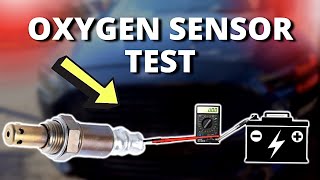
How to confirm: Use an OBD-II scanner to monitor the live data for the Bank 1 Sensor 2 voltage. A healthy sensor on a warm engine should show a relatively stable voltage. If the voltage is stuck below 0.2V, the sensor is likely bad. You can also test the sensor's internal heater circuit with a multimeter; an open circuit indicates a failed heater, which requires sensor replacement. 🎬 Watch: A pro guide on how to test an oxygen sensor.
Typical fix: Replace the rear (post-catalytic converter) oxygen sensor with a direct-fit OEM-quality part. After replacement, clear the DTCs with an OBD-II scanner.
Est. part cost: $70-$150 - Damaged Wiring or Connectors 🟡 Medium Probability The sensor wiring is located under the vehicle and is exposed to road debris, moisture, and heat, which can cause corrosion or physical damage over time. Forum users have reported issues with non-OEM sensors that required cutting and splicing wires, which can introduce a point of failure.
How to confirm: Visually inspect the wiring harness and connector leading to the rear O2 sensor. Look for any signs of chafing, melting, corrosion in the connector pins, or breaks in the wires. Perform a continuity test on the signal and ground wires from the sensor connector to the ECM connector if a visual inspection is inconclusive.
Typical fix: Repair the damaged section of the wiring harness or replace the connector pigtail.
Est. part cost: $10-$50 - Exhaust Leak ⚪ Low Probability Gaskets and exhaust pipe welds can fail over time due to corrosion and thermal cycles, allowing outside air to be drawn into the exhaust stream before the sensor.
How to confirm: Listen for hissing or ticking sounds from the exhaust system, especially when the engine is cold. A visual inspection may reveal soot trails near flanges or cracks. A smoke test, where smoke is forced into the exhaust system, is the most effective way to pinpoint a small leak.
Typical fix: Replace the leaking gasket or repair the cracked section of the exhaust pipe.
Est. part cost: $20-$100
Rare But Worth Checking
- Engine Control Module (ECM) Failure: → Shop Engine Control Module (ECM) This is extremely rare. The Mitsubishi factory service information lists this as a possibility, but you should exhaust all other diagnostic options before considering the ECM.
Diagnosis Steps
- Connect an OBD-II scanner and confirm P0137 is the active code. 🎬 See this quick video for three ways to fix P0137. Check for any other stored codes, like P0420 or P0138.
- Observe the live data stream for 'O2 Sensor B1S2'. With the engine fully warmed up, the voltage should be relatively stable. If it is stuck below 0.2V, it confirms the low voltage condition.
- Perform a thorough visual inspection of the rear oxygen sensor, its connector, and the wiring harness leading to it. Look for any signs of physical damage, melting on the exhaust, or corrosion.
- Inspect the exhaust system for leaks between the catalytic converter and the rear O2 sensor. Look for black soot marks or listen for audible leaks.
- If wiring and exhaust look good, the most likely culprit is the sensor itself. Test the sensor's heater circuit resistance with a multimeter (should be within manufacturer specs).
- If a new sensor does not resolve the issue, perform continuity and voltage checks on the sensor wiring harness back to the ECM to rule out a wiring fault. According to a service document, the signal wire is pin 4 and the ground is pin 3 on the sensor connector, which correspond to pins 49 and 50 on the ECM connector, respectively.
- As a final, and very unlikely step, consider the possibility of an ECM fault.
Parts You'll Likely Need
- Rear Oxygen Sensor (Downstream, Post-Catalyst)
(OEM #1588A469 (Note: Part number may vary by specific production date, always confirm with VIN))— This sensor is the most common point of failure for code P0137. It is a wear item that degrades over time.
Trusted brands: Denso, NGK/NTK, Bosch
OEM price range: $180-$250
Aftermarket price range: $70-$150
Related Codes That Often Appear With This One
- P0138 — O2 Sensor Circuit High Voltage. If seen with P0137, it could indicate an intermittent shorting issue in the wiring.
- P0420 — Catalyst System Efficiency Below Threshold. A failing rear O2 sensor can sometimes incorrectly trigger a P0420 code, or a P0137 can be an early sign of a failing catalytic converter.
- P0421 — Warm Up Catalyst Efficiency Below Threshold. Similar to P0420, this code can be triggered by a faulty rear O2 sensor giving incorrect readings about the catalyst's performance.
Platform-Specific Known Issues
- Some owners have noted that the Eclipse Cross can be 'picky' about replacement O2 sensors. Using a direct-fit sensor from an OEM-quality brand like Denso or NGK/NTK is highly recommended to avoid persistent issues.
- A user on a Polish Mitsubishi forum with P0137 on an Outlander (which shares platform elements) discovered a previous owner had installed an 'emulator' or spacer on the O2 sensor, which was causing the low voltage reading. Removing it and reinstalling the sensor directly into the exhaust resolved the issue.
Mechanic-Grade Diagnostic Values
- Rear O2 Sensor Heater Circuit Resistance — expected: 4.5 - 8.0 Ω at 20°C (68°F). Failure: An open circuit (infinite resistance) or resistance outside the specified range indicates a failed heater element, requiring sensor replacement.
- Rear O2 Sensor Signal Voltage (at sensor connector) — expected: Should fluctuate, but a healthy catalytic converter will result in a relatively stable voltage between 0.6V and 1.0V when the engine is warm and at idle.. Failure: A voltage that is consistently less than 0.2V for more than 2 seconds triggers the code.
- Rear O2 Sensor Ground Wire Voltage (at sensor connector, KOEO) — expected: 0.4V - 0.6V. Failure: A reading outside this range indicates a problem with the ECM's reference voltage circuit.
- Rear O2 Sensor Signal Voltage (at ECM connector B-108, Pin 40 to ground) — expected: Should mirror the voltage at the sensor, typically 0.6V - 1.0V at idle.. Failure: If the voltage here is low but correct at the sensor, it indicates an open or shorted wire between the sensor and the ECM.
Scan Tool Commands That Help
- Mitsubishi MUT-III: Data List Item AD: Heated Oxygen Sensor (rear) — This function is used to monitor the live voltage output of the rear O2 sensor directly from the ECM. It is the primary way to confirm the low voltage condition reported by the P0137 code.
- Mitsubishi MUT-III: Special Function -> Actuator Test — While not directly for the sensor signal, the MUT-III can perform actuator tests on related components. For P0137, a technician might use this to test the O2 sensor heater circuit relay or other emission system components to rule out cascading failures.
Wiring & Ground Locations
- Rear O2 Sensor Harness Connector — Inside the vehicle's cabin, on the passenger side. To access it, you must remove the passenger side kick panel, sill plate, and lower console trim, then pull back the carpet and foam insulation. The connector passes through a rubber grommet in the floor.. The connector is not under the car, but inside. Technicians unfamiliar with the Eclipse Cross may waste time searching for it underneath. Damage can occur where the harness passes through the floor grommet, and this location is critical for testing continuity back to the ECM.
- ECM Connector B-108 — Located at the Engine Control Module (ECM) in the engine bay.. This is the termination point for the O2 sensor wiring. Pin 40 is the signal wire from the rear O2 sensor, and Pin 41 is the sensor ground. Testing at these pins is the final step to confirm if a wiring fault exists or if the ECM itself is the problem.
OEM Part Supersession History
1588A469→
Heads up: The OEM part number 1588A469 is listed for the 3.0L V6 Outlander, not the 1.5T Eclipse Cross. While the Pass 2 data lists this number, it is likely incorrect for this specific vehicle and engine. Always confirm the correct part number with a Mitsubishi dealer using the vehicle's VIN before ordering.
Diagnostic Flowchart
Other Known Issues on This Vehicle
Issues unrelated to this code that are worth knowing about as an owner of this generation:
- CVT Transmission Shudder and Failure 🔴 High — Can manifest as jerky shifting or hesitation as early as 30,000-60,000 km. Widespread issue noted in multiple sources, often linked to the Jatco CVT unit. Regular CVT fluid changes are critical. (Ref: TSB-22-23-001REV instructs dealers to diagnose shudder/surge conditions.)
- Forward Collision Mitigation (FCM) System Faults 🟠 Medium — Owners report 'FCM Radar Blocked' warnings or requests for calibration, disabling the safety feature. Can be caused by dirt/ice on the sensor, but also by system or sensor failures requiring dealer recalibration.
- Electrical System and Infotainment Glitches 🟡 Low — NHTSA complaints show a pattern of electrical issues, including infotainment screens freezing, parasitic battery drain, and other electronic gremlins.
- Intake Valve Carbon Buildup 🟠 Medium — A known issue with Gasoline Direct Injection (GDI) engines like the 4B40. Over time (typically 60,000+ miles), carbon can build up on intake valves, leading to rough idle and reduced efficiency. Mitsubishi issued a service bulletin to address this. (Ref: TSB-ME-18-007 (mentioned in a technical review))
Used vs. New Parts: Buying Guide for This Vehicle
When a used part is the smart pick: For this repair, a used part is generally not recommended. The primary failure part is the oxygen sensor itself, which is a wear-and-tear item with a finite lifespan. A used sensor from a junkyard carries a high risk of being near the end of its life or already faulty.
Donor-vehicle mileage cap: roughly under 30000 miles for the part to have meaningful remaining life.
What to inspect on the donor part:
- If considering a used sensor, ensure the donor vehicle has very low mileage.
- Inspect the sensor tip for heavy carbon deposits, oil, or white contamination, which indicate a hard life or a problem with the donor engine.
- Check the wiring and connector for any signs of melting, corrosion, or physical damage.
Aftermarket brands forum-validated for this vehicle:
- Denso
- NGK/NTK
- Bosch
Brands owners have reported issues with on this vehicle:
- Generic, unbranded 'universal' sensors that require cutting and splicing wires are frequently reported to cause persistent issues on modern Mitsubishi vehicles.
Real Owner Stories
Aggregated from forums and TSBs cited above. Mileages and costs reflect what owners reported in those sources.
2021 Mitsubishi Eclipse Cross 1.5L Turbo
Symptoms: The Check Engine Light appeared just a few kilometers after starting the vehicle.
What fixed it: The timing of the light suggests a sensor failing as it reaches operating temperature, requiring replacement of the O2 sensor.
Source hint: r/mitsubishi - P-0137 error code (2021)
2020 Mitsubishi Outlander 1.5L Turbo
Symptoms: Low voltage reading on the rear oxygen sensor (P0137).
What fixed it: Discovered a previous owner had installed an 'emulator' or spacer on the O2 sensor; removing the spacer and reinstalling the sensor directly into the exhaust fixed it.
Source hint: MitsuManiaki (Polish Mitsubishi Club Forum) - Błąd P0137 (2020)
2025 Mitsubishi Outlander Sport 1.5L Turbo
Symptoms: Persistent P0137 error after attempting a repair with a non-OEM sensor.
What fixed it: The owner struggled with the code due to using a non-OEM sensor with spliced wires; the solution is using a direct-fit, quality OEM part.
Source hint: r/MechanicAdvice - Stuggling with P0137 Error (2025)
Related OBD-II Codes
Frequently Asked Questions
Which specific brand of oxygen sensor should I use for my 2018-2024 Mitsubishi Eclipse Cross to avoid the P0137 code returning?
Could the P0137 code on my Eclipse Cross be related to the intake valve carbon buildup mentioned in TSB-ME-18-007?
I recently bought a used Mitsubishi with P0137; could a previous owner's modifications be the cause?
Is there a specific wiring check I can perform for the Bank 1 Sensor 2 on this vehicle?
My Eclipse Cross has a jerky transmission and a P0137 code; are they related?
Helpful Videos

![How to Fix P0137 Engine Code in 4 Minutes [3 DIY Methods / Only $9.42]](https://img.youtube.com/vi/D7iaXnsbzWQ/mqdefault.jpg)

The information in this article is provided for general reference and educational purposes only. Vehicle specifications, procedures, and part compatibility can vary by production date, trim level, and region. Always consult your vehicle's factory service manual and verify part numbers before purchasing or performing repairs. Safety-critical components such as airbags, seat belts, and braking systems should be installed by a qualified professional.
- Mitsubishi Eclipse Cross:
- 🧭 Diagnostic Flowchart
- 🎬 Helpful Videos
- What's Unique About the 2018-2024 Mitsubishi Eclipse Cross
- Symptoms You May Notice
- Most Likely Causes
- Rare But Worth Checking
- Diagnosis Steps
- Parts You'll Likely Need
- Related Codes That Often Appear With This One
- Platform-Specific Known Issues
- Mechanic-Grade Diagnostic Values
- Scan Tool Commands That Help
- Wiring & Ground Locations
- OEM Part Supersession History
- Other Known Issues on This Vehicle
- Used vs. New Parts: Buying Guide for This Vehicle
- Real Owner Stories
- 2021 Mitsubishi Eclipse Cross 1.5L Turbo
- 2020 Mitsubishi Outlander 1.5L Turbo
- 2025 Mitsubishi Outlander Sport 1.5L Turbo
- Related OBD-II Codes
- Frequently Asked Questions
- 🎟️ Get 5% Off