

P0137 on 2007-2011 Toyota Camry 3.5L V6: Causes and Fixes for O2 Sensor Low Voltage
This code almost always means the downstream oxygen sensor on the rear cylinder bank (Bank 1, Sensor 2) has failed. A replacement sensor from a quality brand like Denso or NGK typically costs $60-$150 and is a straightforward DIY replacement. Do not replace the ECM if a P0606 code is also present; this is a known false code triggered by the faulty sensor.
- P0137 on your 2007-2011 Camry V6 points directly to the downstream oxygen sensor on the rear cylinder bank (the one near the firewall).
- The most probable cause is simply a failed sensor; this is a common repair for these vehicles.
- Before buying parts, do a quick visual check of the sensor's wiring for any obvious damage and listen for exhaust leaks.
- Do not be alarmed if you also have a P0606 code. Replace the oxygen sensor first, as this is known to fix both issues.
- Use a quality replacement sensor from a brand like Denso or NGK for a lasting repair.
What's Unique About the 2007-2011 Toyota Camry
On the 2GR-FE V6 engine in this Camry generation, the P0137 code is an extremely common and straightforward issue. Unlike on other vehicles where it might suggest complex problems like vacuum leaks or fuel system faults, on this platform, it overwhelmingly points to the Bank 1, Sensor 2 oxygen sensor itself failing due to age. A notable and frequently discussed quirk is the potential for a P0606 (ECM Processor Fault) code to appear alongside P0137. Mechanics and owners on forums like the International Automotive Technicians Network (iATN) report that replacing the faulty oxygen sensor almost always resolves both codes, indicating the bad sensor data was confusing the computer. It is critical to replace the O2 sensor before considering an expensive ECM replacement.
Symptoms You May Notice
- Illuminated Check Engine Light is the most common and often only symptom.
- Slightly decreased fuel efficiency.
- Failure to pass an emissions/smog test.
- In some cases, a rough or unstable idle may be noticed.
- Check VSC System light may also illuminate, as engine faults often disable the Vehicle Stability Control system as a precaution.
- Replacing the Engine Control Module (ECM) when a P0606 code is also present. On this platform, a faulty O2 sensor is a well-documented cause of a false P0606 code; replacing the sensor almost always resolves both issues.
- Replacing the wrong oxygen sensor. Ensure you are replacing Bank 1, Sensor 2, which is the DOWNSTREAM (post-catalytic converter) sensor on the REAR cylinder bank (firewall side).
- Replacing the sensor multiple times without checking the wiring. As one owner on Reddit experienced, a persistent P0137 after two new sensors and a new ECM was likely due to an overlooked wiring issue.
Most Likely Causes
- Failed Bank 1, Sensor 2 Oxygen Sensor 🔴 High Probability → Shop Oxygen Sensor Oxygen sensors are consumable parts that wear out over time from constant exposure to extreme heat and exhaust gases. After 100,000+ miles, the internal heating element or sensing element commonly fails.
How to confirm: Use a scan tool to monitor live data for the 'O2S B1S2'. On a fully warmed engine, a healthy downstream sensor should show a relatively stable voltage between 0.6V and 0.8V. If the voltage is stuck at a very low value (e.g., below 0.2V, often 0.0V) and doesn't fluctuate, the sensor has failed.
Typical fix: Replace the Bank 1, Sensor 2 oxygen sensor. This sensor is located on the exhaust pipe for the rear cylinder bank (closest to the firewall), after the catalytic converter.
Est. part cost: $60-$180 - Damaged Wiring or Corroded Connector 🟡 Medium Probability The sensor is located under the vehicle, making its wiring harness and connector susceptible to damage from road debris, moisture, corrosion, and heat. Owners report P0137 codes appearing only in wet or rainy conditions, which strongly points to a wiring short where the harness sheathing is compromised.
How to confirm: Visually inspect the wiring leading to the sensor for any signs of fraying, chafing, melting, or breaks. Unplug the connector and check for green or white corrosion, moisture, or bent pins. Pay close attention to the harness sheathing for any tears.
Typical fix: Repair the damaged section of wiring or clean the connector terminals with electrical contact cleaner. If damage is severe, a new connector pigtail may need to be spliced in. For weather-induced shorts, find the break in the sheathing and repair/insulate the wires.
Est. part cost: $10-$30 - Exhaust Leak ⚪ Low Probability Exhaust gaskets (especially at the manifold or pipe flanges) and pipe welds can degrade over time, causing leaks. An exhaust leak before the sensor can introduce outside oxygen, fooling the sensor into reading a false lean (low voltage) condition.
How to confirm: Listen for a ticking or hissing sound from the exhaust system, especially when the engine is cold. You can also look for black soot marks around exhaust flanges and connections near the sensor. A shop can perform a smoke test to pinpoint the leak.
Typical fix: Replace the leaking exhaust gasket or repair the cracked pipe. The leak must be sealed before the O2 sensor.
Est. part cost: $20-$100
Rare But Worth Checking
- Blown A/F Heater Fuse: A blown fuse for the oxygen sensor's heater circuit can prevent the sensor from reaching its required operating temperature of ~600°F, causing it to send an incorrect low voltage signal. Check the fuses in the engine bay fuse box labeled 'A/F' or 'A/F HEATER'. For a 2010 Camry, this is often a 25A fuse in the engine compartment fuse box.
- Failing Engine Control Module (ECM): → Shop Engine Control Module (ECM) This is extremely rare. Before condemning the ECM, all other possibilities, especially the sensor itself and its wiring, must be thoroughly ruled out. As noted, a P0606 code with P0137 is more likely a symptom of the bad sensor than a bad ECM on this platform.
Diagnosis Steps
- Read the code with an OBD-II scanner to confirm P0137 is present. Note any other codes like P0606.
- Visually inspect the Bank 1, Sensor 2 (rear, downstream) oxygen sensor and its wiring harness. Look for any obvious signs of damage, such as frayed wires or a connector that is loose, corroded, or melted. Pay special attention to harness sheathing, as tears can cause water intrusion and shorts.
- Check for exhaust leaks. Start the engine when it's cold and listen for any hissing or ticking sounds from the exhaust manifold or pipes near the rear cylinder bank. Look for soot trails near flanges.
- Use a scan tool with live data capabilities to monitor the voltage of 'O2S B1S2'. With the engine fully warmed up and idling, the voltage should be relatively stable between 0.6-0.8V. If it is stuck at 0.0V or below 0.2V, the sensor is the primary suspect.
- Check the fuse box in the engine compartment for a blown fuse related to the A/F or O2 sensors, often labeled 'A/F HEATER'.
- If wiring and fuses are good, test the sensor itself. Unplug it and measure resistance across the two heater pins (usually same-colored wires). A healthy sensor should read between 11-16 Ohms at room temperature (68°F/20°C). An open circuit ('OL') means the heater is broken and the sensor must be replaced.
- If all else checks out, the most likely culprit is still the sensor itself having failed internally. Replace it with a quality part.
- After replacing the sensor, clear the codes with the scanner and perform a drive cycle to ensure the code does not return.
Parts You'll Likely Need
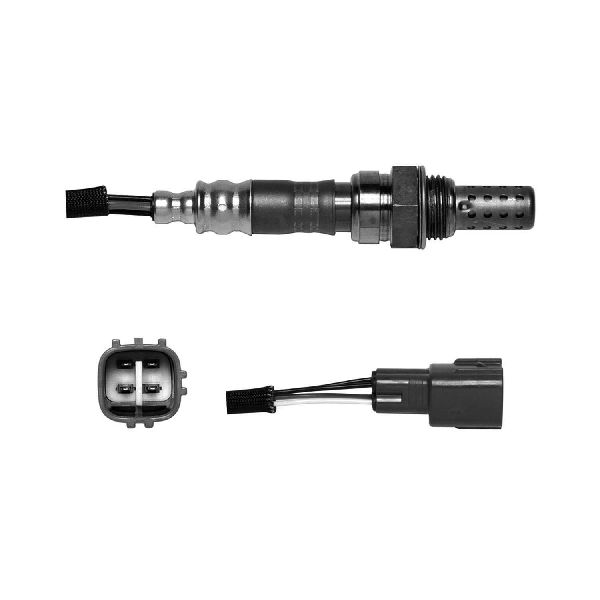
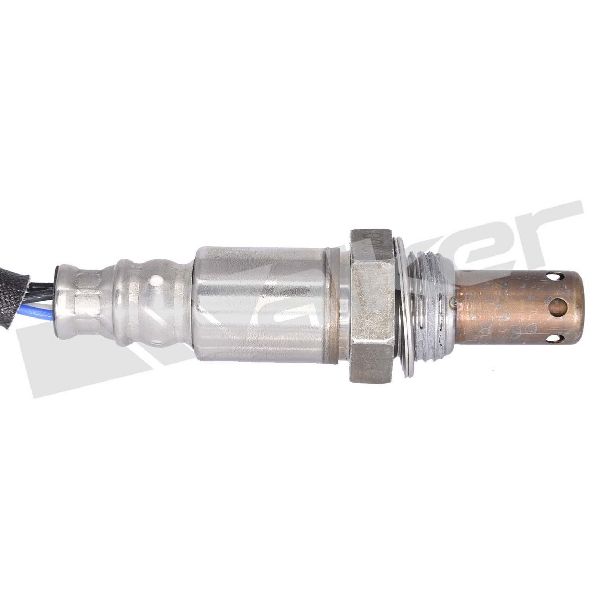
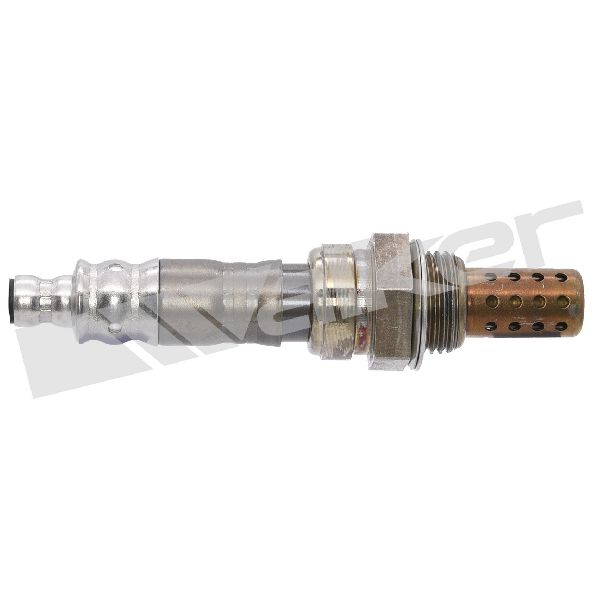
- Oxygen Sensor (Bank 1, Sensor 2)
(OEM #89465-06150)— This is the direct cause of the P0137 code in the vast majority of cases on this vehicle. It is a wear item that fails with age and mileage.
Trusted brands: Denso (OEM supplier), NGK
OEM price range: $110-$165
Aftermarket price range: $60-$150
Related Codes That Often Appear With This One
- P0606 — A failing Bank 1 Sensor 2 can send erratic data or have an internal short in its heater circuit that the ECM interprets as an internal processor fault, triggering P0606. This is a very common and specific pairing for this vehicle.
- P0138 — This code indicates high voltage for the same sensor. Seeing both P0137 and P0138 intermittently can suggest a sensor that is failing erratically or has a wiring short that is grounding and opening.
- P0157 — This is the same low voltage code but for Bank 2, Sensor 2 (front bank, downstream). Seeing both codes together could indicate a systemic issue like a shared ground problem or simply that both sensors are failing around the same time due to age.
- C1201 — This is an ABS/VSC system code for 'Engine Control System Malfunction'. It is a secondary code logged whenever a primary engine fault occurs, and it disables the VSC system as a safety measure. It will clear once the P0137 is resolved.
Technical Service Bulletins (TSBs) & Recalls
- TSB EG037-04 / L-SB-0188-09: While not for P0137 specifically, these bulletins are relevant as they clarify that for the 2GR-FE engine, Bank 1 is the rear cylinder bank (closest to the firewall), which is critical information for locating the correct sensor.
Platform-Specific Known Issues
- P0137 and P0606 in Wet Weather: A known issue documented on forums involves P0137 and P0606 appearing only on rainy or wet days. This is a classic sign of a compromised wiring harness. In one case, road debris had torn the plastic sheathing on the O2 sensor harness, allowing two wires to short when wet. The fix was repairing the wires, not replacing the sensor.
- Frustrating Misdiagnosis with Aftermarket Parts: A 2011 Camry owner on Reddit shared a frustrating experience where a P0137 code persisted after replacing the sensor with a new NGK part, and then even after a shop replaced the ECM. The live data
Mechanic-Grade Diagnostic Values
- O2 Sensor Heater Circuit Resistance (B1S2) — expected: 11 to 16 Ohms at 20°C (68°F). Failure: An 'OL' or infinite resistance reading indicates a broken internal heater element.
- O2 Sensor Heater Circuit Power Supply (at harness connector) — expected: 10V - 14V (Battery Voltage) with Key On, Engine Off. Failure: 0V indicates a blown 'A/F HTR' fuse, bad relay, or a break in the power wire.
- Downstream O2 Sensor (B1S2) Signal Voltage (Live Data) — expected: Relatively stable voltage between 0.6V and 0.8V on a fully warmed-up engine at idle.. Failure: Voltage stuck below 0.2V (often at 0.0V) for an extended period.
Scan Tool Commands That Help
- Toyota Techstream: Active Test: 'Control the Injection Volume' — To verify if the sensor is responsive. A technician can command a rich (+12.5%) or lean (-12.5%) condition. A healthy B1S2 sensor's voltage will react accordingly (increase when rich, decrease when lean). If the voltage remains stuck low despite the command, it confirms a sensor or circuit fault.
Wiring & Ground Locations
- ECM Terminals OX1B and EX1B — At the Engine Control Module (ECM) located behind the right side of the dashboard.. These are the specific pins on the ECM for the Bank 1 Sensor 2 signal (OX1B) and sensor ground (EX1B). For a persistent P0137 after sensor replacement, a technician would test for continuity and shorts between the sensor connector and these specific ECM pins to rule out a wiring harness failure.
- A/F HTR Fuse — In the engine compartment fuse box.. This fuse supplies power to the oxygen sensor's internal heater. If it blows, the sensor cannot heat up to its operating temperature, causing it to send an incorrect low voltage signal and trigger a P0137 or a related heater code like P0141.
Real Owner Repair Stories
- YouTube video by user 'd T' (2006 Toyota Camry (similar platform and issue)) — Check Engine Light with codes P0137 and P0606, appearing intermittently, especially on wet or rainy days.
❌ Tried (didn't work) Ignoring the code since it would sometimes disappear on its own.
✅ What actually fixed it The root cause was not the O2 sensor itself. Road debris had torn the plastic sheathing on the sensor's wiring harness, exposing two wires. In wet conditions, these wires would short out, triggering the codes. The fix was to individually tape and repair the two damaged wires and then re-wrap the entire harness bundle. This resolved both codes without replacing any parts.
OEM Part Supersession History
89465-33440→89465-06150— Standard part revision and consolidation by Toyota.
Heads up: None. The new part number (89465-06150) is the correct and current replacement for the original.
Model Year Variations Within This Range
- 2007-2011: For the 2GR-FE V6 engine, there are no significant documented variations related to the P0137 code or the Bank 1 Sensor 2 oxygen sensor across this model year range. The engine, exhaust layout, and emissions components remained consistent.
Diagnostic Flowchart
Other Known Issues on This Vehicle
Issues unrelated to this code that are worth knowing about as an owner of this generation:
- Rupturing VVT-i Oil Line 🔴 High — Common on 2007-early 2010 models with the original rubber/metal hybrid line. Can fail without warning at any mileage. (Ref: Limited Service Campaign (LSC) announced by Toyota to replace the rubber hose with an all-metal line (part #15772-31030).)
- Melting/Sticky Dashboard 🟡 Low — Very common in vehicles exposed to heat and sun. The dashboard surface becomes shiny, sticky, and can cause glare. (Ref: Toyota had a Warranty Enhancement Program (ZE6) to replace affected dashboards, but it has since expired.)
- Transmission Shudder/Hesitation 🟠 Medium — Reported on some 2007-2009 models with the 6-speed automatic. Can manifest as hesitation or shuddering during shifts. (Ref: A Limited Service Campaign was issued to update the ECM software or replace the torque converter to address shuddering.)
- Water Pump Leak 🟠 Medium — A known failure point on the 2GR-FE as it ages. Often presents as a slow coolant seep, visible as pink/dried crust around the pump.
- Ignition Coil Failure (Rear Bank) 🟠 Medium — Ignition coils can fail with age, causing misfires. Coils on the rear bank (Bank 1) are difficult to access, requiring removal of the intake manifold, which significantly increases labor costs for replacement.
Used vs. New Parts: Buying Guide for This Vehicle
When a used part is the smart pick: For this repair, a used part only makes sense for the wiring harness connector pigtail if the original is physically damaged. A used oxygen sensor is never recommended, as it is a wear-and-tear item with a finite lifespan, and a used one may fail shortly after installation.
Donor-vehicle mileage cap: roughly under 100000 miles for the part to have meaningful remaining life.
What to inspect on the donor part:
- For a connector pigtail, inspect for any signs of corrosion (green or white powder), brittleness, or melted plastic.
- Ensure the locking tab is intact and functional.
- Check that the wires have sufficient length for splicing and are not frayed or cracked.
Aftermarket brands forum-validated for this vehicle:
- Denso (OEM supplier for Toyota)
- NGK/NTK
Brands owners have reported issues with on this vehicle:
- Generic or unbranded 'universal' sensors that require splicing wires are often problematic. Forum users frequently advise against using Bosch sensors on Toyota vehicles, citing compatibility and longevity issues, even though Bosch is a major OEM for other brands.
Real Owner Stories
Aggregated from forums and TSBs cited above. Mileages and costs reflect what owners reported in those sources.
2011 Toyota Camry 3.5L V6
Symptoms: P0137 code persisted even after replacing the sensor with an NGK part and having a shop replace the ECM.
What fixed it: The context notes this was a frustrating misdiagnosis where live data and part compatibility were issues, illustrating that even new aftermarket parts or ECM replacements may not resolve the code if the root cause isn't addressed.
Source hint: Reddit r/MechanicAdvice thread titled 'p0137_code_2011_toyota_camry_beyond_frustrated/'
2007-2011 Toyota Camry 2GR-FE — ~120000 miles
Symptoms: P0137 and P0606 appearing specifically on rainy or wet days.
What fixed it: Repairing the wiring harness where road debris had torn the plastic sheathing, allowing wires to short when wet.
Source hint: Vehicle-specific issues: P0137 and P0606 in Wet Weather
2002-2007 Toyota Camry
Symptoms: Engine light on with codes P0606 and P0137.
What fixed it: Replacing the O2 sensor resolved both the P0137 and the P0606 internal processor code.
Source hint: YouTube video '2002 - 2007 TOYOTA CAMRY FIX FOR P0606 P0137 ENGINE LIGHT PROBLEM'
Related OBD-II Codes
Frequently Asked Questions
Where exactly is the Bank 1 Sensor 2 located on my 2GR-FE V6 Camry?
Why does my Check Engine Light and 'Check VSC System' light come on at the same time for P0137?
My P0137 code only appears when it rains; do I need a new sensor?
Is there a specific fuse I should check for the oxygen sensor circuit?
What resistance should a healthy Bank 1 Sensor 2 have on this 3.5L V6?
Helpful Videos
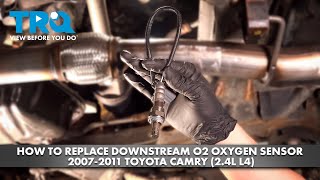

We Have This Part in Stock
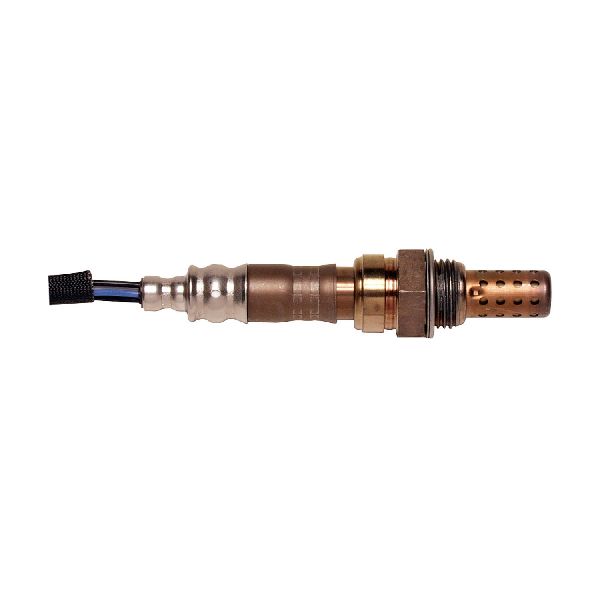
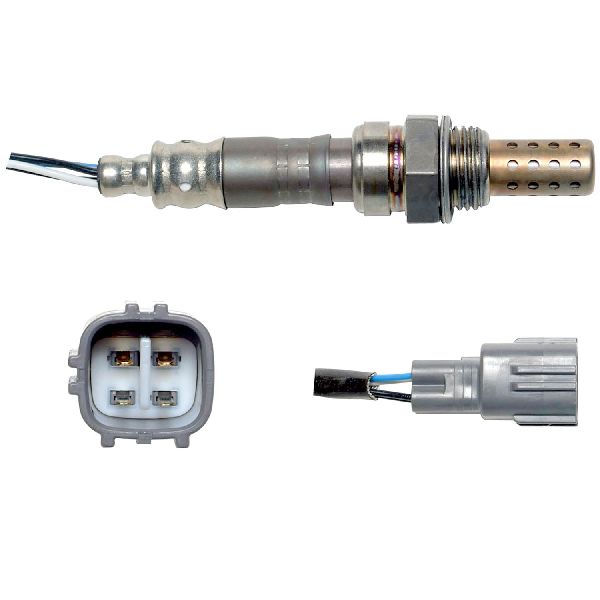


The information in this article is provided for general reference and educational purposes only. Vehicle specifications, procedures, and part compatibility can vary by production date, trim level, and region. Always consult your vehicle's factory service manual and verify part numbers before purchasing or performing repairs. Safety-critical components such as airbags, seat belts, and braking systems should be installed by a qualified professional.
- Toyota Camry:
- 🧭 Diagnostic Flowchart
- 🎬 Helpful Videos
- 🛍️ Shop This Part
- What's Unique About the 2007-2011 Toyota Camry
- Symptoms You May Notice
- Most Likely Causes
- Rare But Worth Checking
- Diagnosis Steps
- Parts You'll Likely Need
- Related Codes That Often Appear With This One
- Technical Service Bulletins (TSBs) & Recalls
- Platform-Specific Known Issues
- Mechanic-Grade Diagnostic Values
- Scan Tool Commands That Help
- Wiring & Ground Locations
- Real Owner Repair Stories
- OEM Part Supersession History
- Model Year Variations Within This Range
- Other Known Issues on This Vehicle
- Used vs. New Parts: Buying Guide for This Vehicle
- Real Owner Stories
- 2011 Toyota Camry 3.5L V6
- 2007-2011 Toyota Camry 2GR-FE — ~120000 miles
- 2002-2007 Toyota Camry
- Related OBD-II Codes
- Frequently Asked Questions
- 🎟️ Get 5% Off