

P0137 on 2004-2009 Toyota Prius: O2 Sensor Low Voltage Causes and Fixes
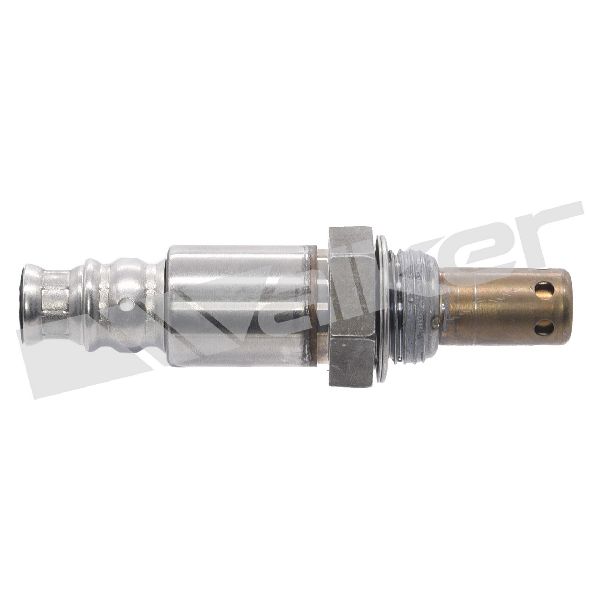
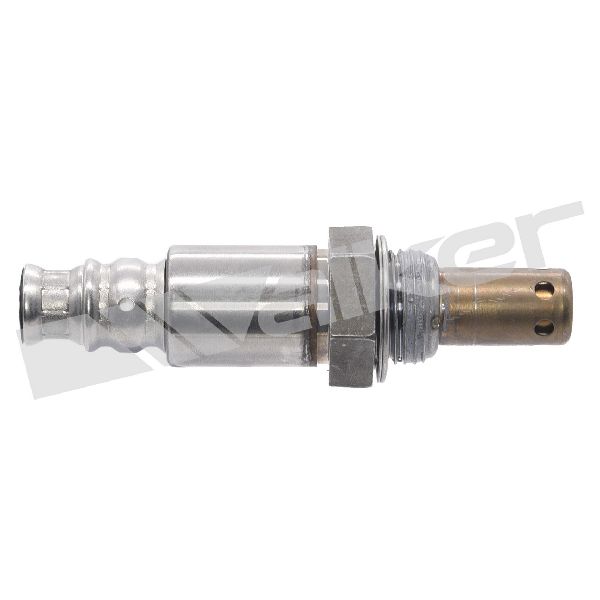
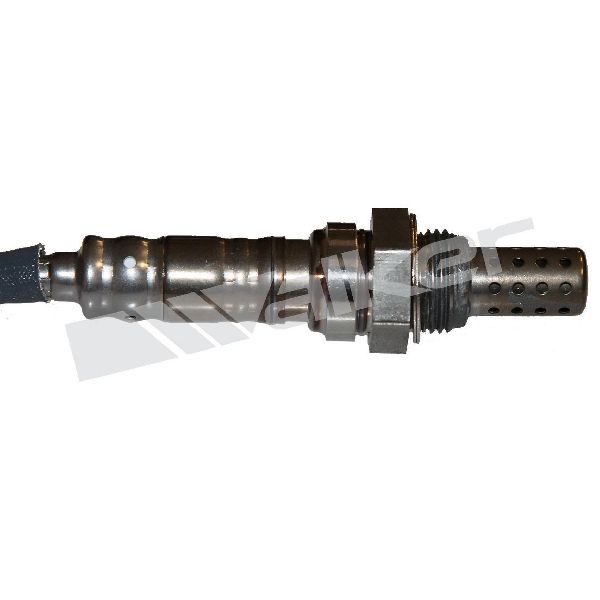
This code almost always points to a failed downstream oxygen sensor (Bank 1, Sensor 2). It's a common wear item and a straightforward DIY replacement. Expect to pay around $60-$90 for a quality aftermarket Denso sensor or $125-$180 for an OEM part.
- P0137 on a Gen 2 Prius is overwhelmingly likely to be a bad downstream (post-catalytic converter) oxygen sensor.
- This is a DIY-friendly repair. The sensor is under the car, and the plug is inside the cabin under the passenger-side carpet.
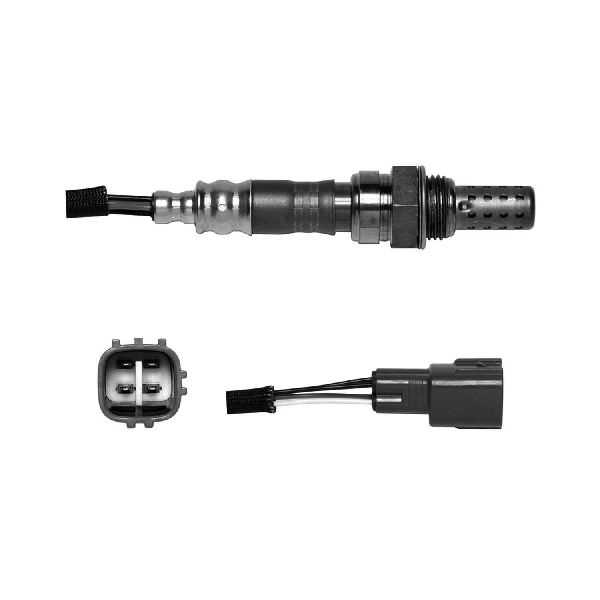
- The correct OEM part number is 89465-47070. A highly recommended aftermarket alternative is the Denso 234-4260.
- Before buying parts, check for obvious exhaust leaks or wiring damage, as these can also cause the code.
- Ignoring this code will cause you to fail an emissions test and can lead to reduced fuel economy.
What's Unique About the 2004-2009 Toyota Prius
The second-generation Prius is known for its reliability, and this code is typically a straightforward repair. The downstream O2 sensor is a standard component that fails from age and heat cycles. Unlike the more complex upstream Air/Fuel Ratio sensor, the downstream sensor replacement is very accessible from under the car, with the electrical connector conveniently located inside the passenger cabin under the carpet, making it a popular DIY fix for Prius owners.
Symptoms You May Notice
- Check Engine Light is on.
- Inability to pass an emissions/smog test.
- Slight decrease in fuel economy (often not noticeable).
- Rough idle (rare for this specific code).
- Replacing the upstream Air/Fuel Ratio Sensor (Bank 1, Sensor 1) instead of the downstream Oxygen Sensor (Bank 1, Sensor 2). The code P0137 specifically refers to Sensor 2, which is after the catalytic converter.
Most Likely Causes
- Failed Downstream Oxygen Sensor (Bank 1, Sensor 2) 🔴 High Probability → Shop Oxygen Sensor Oxygen sensors are wear-and-tear items that operate in a harsh exhaust environment. After 100,000+ miles, failure is common due to age, heat cycles, and contamination from oil burning or fuel additives.
How to confirm: Use an OBD-II scanner to monitor live data for 'O2S B1S2'. If the voltage is stuck consistently low (e.g., below 0.2V) and doesn't fluctuate when the engine is warm and running, the sensor has likely failed. A healthy downstream sensor should show a relatively stable voltage, typically above 0.5V.
Typical fix: Replace the downstream oxygen sensor. The sensor is located under the car, after the catalytic converter. Its wiring harness runs through a grommet in the floor and connects inside the passenger cabin, under the passenger-side carpet near the center console.
Est. part cost: $60 - $180 - Exhaust Leak 🟡 Medium Probability Rust and corrosion on an older vehicle can cause leaks in the exhaust system, particularly at gasket flanges. A leak between the catalytic converter and the O2 sensor can introduce outside air (oxygen), causing the sensor to report a false low voltage (lean) reading.
How to confirm: Visually inspect the exhaust pipe and flanges for rust, holes, or black soot marks. With the engine running, you may be able to feel or hear the leak. A mechanic can use a smoke machine to pinpoint the exact location. This is a common issue after a catalytic converter replacement if old gaskets are reused.
Typical fix: Repair the leak by replacing the damaged exhaust section or gasket. The donut gasket between the manifold and catalytic converter is a common failure point.
Est. part cost: $20 - $300 - Damaged Wiring or Connector ⚪ Low Probability The sensor wiring runs underneath the car and can be damaged by road debris, corrosion, or improper jacking. The connector is inside the cabin but can be damaged during other repairs or by moisture if the grommet fails.
How to confirm: Visually inspect the wiring harness from the sensor to the grommet under the car for any signs of chafing, melting, or breaks. Pull back the passenger-side carpet to inspect the connector for corrosion or loose pins. A user on PriusChat reported chasing a P0137 code, replacing the sensor and even the harness, only to find the issue persisted, highlighting the importance of thorough diagnosis.
Typical fix: Repair the damaged section of wire or replace the connector pigtail. Ensure the wiring is properly secured away from hot exhaust components.
Est. part cost: $10 - $50
Rare But Worth Checking
- Failing Catalytic Converter: While a P0420 code is the primary indicator of a bad catalytic converter, a physically damaged converter (e.g., with a hole or crack) could let in air and trigger a P0137. This is uncommon but possible.
- Engine Control Module (ECM) Fault: → Shop Engine Control Module (ECM) This is extremely rare. The ECM should only be considered as a potential cause after all other possibilities, including the sensor, wiring, and exhaust leaks, have been thoroughly ruled out.
- Blown Fuse or Bad Relay: The O2 sensor's internal heater element is powered by a circuit that is often protected by a fuse (e.g., 'A/F Heater' fuse). While a heater circuit failure typically sets a different code (like P0141), a related power issue could theoretically contribute to erratic sensor readings. Check the under-hood fuse box.
Diagnosis Steps
- Confirm the code P0137 is present using an OBD-II scanner.
- Using the scanner's live data function, monitor the voltage for 'O2S B1S2'. With the engine fully warmed up, observe if the voltage is stuck low (under 0.2V). A PriusChat user noted their new sensor worked correctly for a few minutes before the voltage dropped and stayed at 0.015V, indicating an intermittent or underlying issue.
- Visually inspect the exhaust system for any leaks, cracks, or holes between the catalytic converter and the downstream O2 sensor. Pay close attention to the flange gaskets.
- Inspect the oxygen sensor's wiring harness under the car for any signs of physical damage, melting, or corrosion.
- Locate the sensor's electrical connector inside the car on the passenger side by pulling back the carpet near the center console. Disconnect it 🎬 See how to find the connector under the passenger carpet. and check for corrosion or damage to the pins.
- Check the 'A/F Heater' fuse in the engine bay fuse box to rule out a power supply issue to the sensor's heater circuit.
- If the wiring, fuse, and exhaust are intact and the live data shows a persistently low voltage, the oxygen sensor itself is the most likely culprit and should be replaced.
Parts You'll Likely Need
- Downstream Oxygen Sensor (Bank 1, Sensor 2)
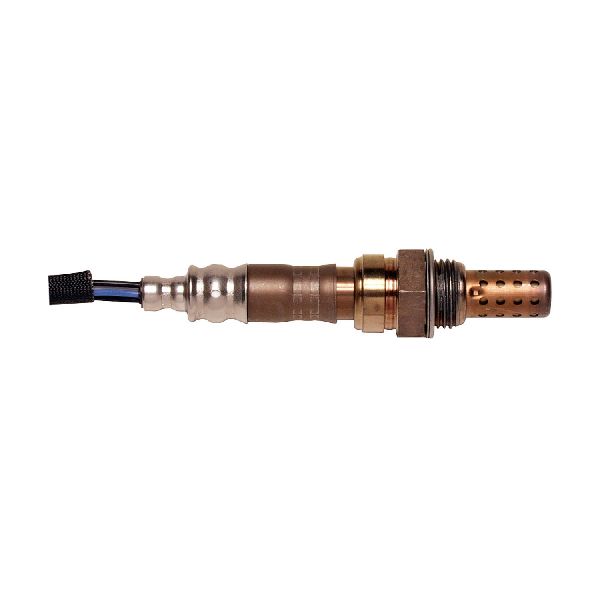
(OEM #89465-47070)— This sensor is a wear item and the most common cause of code P0137. Its failure leads to the low voltage reading detected by the ECM.
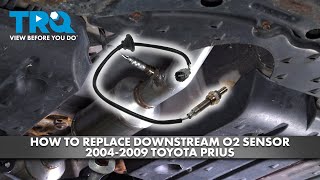
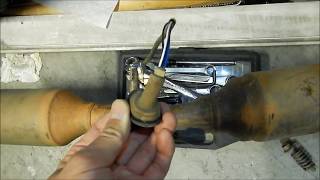
Trusted brands: Denso (OEM supplier, aftermarket part #234-4260 is a direct fit) 🎬 Watch this step-by-step guide to replacing the downstream sensor., NGK/NTK, Bosch
OEM price range: $125-$180
Aftermarket price range: $60-$90
Related Codes That Often Appear With This One
- P0420 — A failing O2 sensor can sometimes incorrectly report data that leads the ECM to set a P0420 (Catalyst System Efficiency Below Threshold) code, or a failing catalyst can cause erratic readings on the O2 sensor. If both codes are present, it's often wise to diagnose the O2 sensor first.
- P0138 — This code indicates 'O2 Sensor Circuit High Voltage', the opposite of P0137. Seeing both codes together can point towards a significant wiring issue, a faulty aftermarket catalytic converter, or a major exhaust leak causing chaotic readings.
Platform-Specific Known Issues
- Aftermarket Catalytic Converter Issues: After a catalytic converter theft and replacement with an aftermarket unit, some owners report getting P0137 or P0138 codes. This can be due to poor fitment causing exhaust leaks at the gaskets, or the aftermarket converter's efficiency being different enough to cause strange readings on the downstream sensor. One owner on PriusChat experienced this immediately after a cat replacement.
Mechanic-Grade Diagnostic Values
- Downstream O2 Sensor (B1S2) Heater Resistance — expected: 11 to 16 Ω at 20°C (68°F). Failure: A reading outside this range, or an open circuit (infinite resistance), indicates a failed heater element within the sensor.
- Downstream O2 Sensor (B1S2) Voltage at Idle (Warm Engine) — expected: Relatively stable voltage, typically around 0.6V to 0.7V.. Failure: Voltage stuck consistently below 0.45V, especially near 0V, indicates a lean reading or a sensor/circuit fault.
- Mode $06 Test ID $02, Component ID $07 — expected: This test monitors the minimum sensor voltage during a test cycle. The measured value should be above the minimum threshold set by the ECM.. Failure: A 'FAIL' status for this monitor indicates the sensor voltage dropped below the calibrated minimum, confirming the low voltage condition seen by the ECM.
Scan Tool Commands That Help
- Toyota Techstream: Active Test: Control the Injection Volume — This function allows a technician to manually command a rich or lean fuel mixture. While observing the B1S2 voltage on the live data graph, you can force the mixture rich and look for a corresponding rise in O2 sensor voltage. If the voltage remains low despite a commanded rich mixture, it strongly suggests a faulty sensor or circuit, rather than an actual lean running condition.
Wiring & Ground Locations
- H13 — Inside the passenger cabin, under the front passenger-side carpet, near the center console and the floor grommet.. This is the 4-pin connector for the downstream oxygen sensor (Bank 1, Sensor 2). All electrical tests for the sensor (resistance) and the vehicle-side harness (voltage, ground) are performed at this connector.
- H13, Pin 2 (+B) — On the vehicle-side of the H13 connector.. This pin supplies 12V power to the sensor's internal heater circuit from the EFI Main Relay. A lack of voltage here would typically set a heater circuit code (like P0141 or P0037) but is essential for proper sensor operation.
- H13, Pin 4 (E1) — On the vehicle-side of the H13 connector.. This is the ground circuit for the sensor. A poor ground connection here can cause incorrect voltage readings, leading to a P0137 code.
Real Owner Repair Stories
- PriusChat user 'grommet' (2007 Prius, ~268k miles) — Check Engine Light with codes P0137 and P0138 immediately after replacing a stolen catalytic converter.
❌ Tried (didn't work) The user had already replaced the downstream O2 sensor with a new, albeit cheap, aftermarket one before the cat replacement.
✅ What actually fixed it The user identified that they had reused the old front exhaust gasket when installing the new catalytic converter. The consensus was that the old, compressed gasket was causing an exhaust leak, introducing air that caused the erratic high and low voltage readings. The fix was to replace the faulty gasket with a new OEM part. - PriusChat user 'JakeO' (2007 Prius, >300k miles) — Failed emissions test due to P0420 and P0137 codes. Vehicle had an aftermarket catalytic converter installed two years prior.
❌ Tried (didn't work) Replacing the front A/F sensor., Replacing the existing aftermarket cat with another cheap aftermarket cat from Amazon.
✅ What actually fixed it The immediate problem preventing diagnosis was the P0137 code itself. Forum experts advised that the ECM cannot run the catalyst monitor test (which triggers P0420) until the O2 sensor circuit fault (P0137) is resolved. The final fix required replacing the faulty downstream O2 sensor first, clearing the P0137, and only then properly diagnosing the P0420, which was likely caused by the insufficient aftermarket catalytic converter.
OEM Part Supersession History
89465-47070→N/A— This part number remains the current OEM designation for the 2004-2009 Prius downstream oxygen sensor.
Heads up: While there are no supersessions, using non-Denso or unverified cheap aftermarket sensors is a common cause of immediate or premature failure and recurring codes.
Model Year Variations Within This Range
- 2004-2009: There are no significant variations in the downstream oxygen sensor, its location, or the function of the related exhaust components for the P0137 code across the entire 2004-2009 (Gen 2) Prius model range. Parts are interchangeable.
Diagnostic Flowchart
Other Known Issues on This Vehicle
Issues unrelated to this code that are worth knowing about as an owner of this generation:
- Combination Meter (Dashboard) Failure 🟠 Medium — Very common, especially in high-mileage vehicles or those operated in cold climates. The issue is related to component failure on the circuit board. (Ref: Toyota TSB T-SB-0172-09 Rev2 addresses this, and a warranty enhancement program was offered, but has since expired.)
- Brake Actuator Assembly Failure 🔴 High — A widespread and well-documented failure. Symptoms include a loud, frequent buzzing/honking noise from the engine bay and ABS/VSC/BRAKE warning lights. (Ref: Toyota issued a Warranty Enhancement Program (ZEG / ZG1) which has now expired for all vehicles. It is not an official recall.)
- Excessive Oil Consumption 🟠 Medium — Commonly begins after 100,000-150,000 miles. Caused by carbon buildup on low-tension piston rings and clogged PCV valves.
- Hybrid Inverter Coolant Pump Failure 🔴 High — A common failure that triggers a master warning light and code P0A93. If not addressed, it can lead to inverter damage. (Ref: A recall was issued for this component (NHTSA ID: 12V536000).)
- Main Hybrid Battery (HV Battery) Degradation 🔴 High — Inevitable with age and mileage, typically after 10-15 years or 150,000+ miles. Triggers code P0A80 and results in poor performance.
- Transaxle / Transmission Failure 🟠 Medium — Can occur between 150,000-250,000 miles, especially in high-use vehicles like taxis. Symptoms include whining noises or failure to 'Ready'. Often sets code P0AA6.
Used vs. New Parts: Buying Guide for This Vehicle
When a used part is the smart pick: For this repair, a used part is almost never a smart choice. Oxygen sensors are wear-and-tear items with a finite lifespan, similar to spark plugs. A used sensor from a junkyard has unknown mileage and remaining life, and could fail shortly after installation, wasting time and money.
Donor-vehicle mileage cap: roughly under 15000 miles for the part to have meaningful remaining life.
What to inspect on the donor part:
- If forced to use a donor part, source it from the lowest-mileage vehicle possible.
- Inspect the wiring for any cuts, melting, or brittleness.
- Ensure the connector is free of corrosion and the locking tab is intact.
OEM-only on this vehicle (don't cheap out):
- While not strictly 'OEM-only', using a high-quality sensor is critical. Cheap, unbranded sensors from online marketplaces are notorious for failing out of the box or causing persistent codes.
Aftermarket brands forum-validated for this vehicle:
- Denso (this is the original equipment manufacturer for Toyota; part #234-4260 is the direct-fit aftermarket equivalent)
- NGK/NTK (a highly reputable alternative, part #24605 is a common choice)
Brands owners have reported issues with on this vehicle:
- Unbranded, 'no-name' sensors from marketplaces like Amazon or eBay, especially those priced significantly below the known-good brands. Forum users consistently report issues with these parts failing to resolve codes.
Real Owner Stories
Aggregated from forums and TSBs cited above. Mileages and costs reflect what owners reported in those sources.
2004-2009 Toyota Prius 1.5L
Symptoms: The owner replaced the catalytic converter with an aftermarket unit and immediately began receiving P0137 and P0138 codes.
What fixed it: The issue was attributed to an exhaust leak, likely caused by reusing old gaskets during the catalytic converter installation.
Source hint: PriusChat.com Thread 'P0137 + p0138 after replacing cat'
2004-2009 Toyota Prius 1.5L
Symptoms: A new oxygen sensor was installed and worked correctly for a few minutes, but then the voltage dropped and stayed fixed at 0.015V.
What fixed it: The source indicates this was a complex diagnostic scenario where the problem persisted despite a new sensor, pointing to an intermittent or underlying wiring/exhaust issue.
Source hint: PriusChat.com Thread 'P0137 weird problem...'
Toyota Prius Gen 3
Symptoms: The owner replaced both the oxygen sensor and the entire wiring harness, yet the P0137 code persisted.
What fixed it: The diagnostic path suggested investigating other potential causes such as exhaust leaks or ECM issues when sensor and harness replacement fails.
Source hint: PriusChat.com Thread 'Please help - Gen3 - p0137'
Related OBD-II Codes
Frequently Asked Questions
Where is the downstream oxygen sensor connector located on the 2004-2009 Prius?
Could my P0137 code be related to the recent catalytic converter replacement on my Prius?
Is there a TSB for the dashboard display going dark on my 2004-2009 Prius?
I have P0137 and a loud buzzing from the engine bay; are these related?
Can oil consumption in my high-mileage 1NZ-FXE engine cause P0137?
Which fuse should I check if my downstream O2 sensor has no power?
Helpful Videos


We Have This Part in Stock


The information in this article is provided for general reference and educational purposes only. Vehicle specifications, procedures, and part compatibility can vary by production date, trim level, and region. Always consult your vehicle's factory service manual and verify part numbers before purchasing or performing repairs. Safety-critical components such as airbags, seat belts, and braking systems should be installed by a qualified professional.
- Toyota Prius:
- 🧭 Diagnostic Flowchart
- 🎬 Helpful Videos
- 🛍️ Shop This Part
- What's Unique About the 2004-2009 Toyota Prius
- Symptoms You May Notice
- Most Likely Causes
- Rare But Worth Checking
- Diagnosis Steps
- Parts You'll Likely Need
- Related Codes That Often Appear With This One
- Platform-Specific Known Issues
- Mechanic-Grade Diagnostic Values
- Scan Tool Commands That Help
- Wiring & Ground Locations
- Real Owner Repair Stories
- OEM Part Supersession History
- Model Year Variations Within This Range
- Other Known Issues on This Vehicle
- Used vs. New Parts: Buying Guide for This Vehicle
- Real Owner Stories
- 2004-2009 Toyota Prius 1.5L
- 2004-2009 Toyota Prius 1.5L
- Toyota Prius Gen 3
- Related OBD-II Codes
- Frequently Asked Questions
- 🎟️ Get 5% Off