

P0137 on 2009-2012 Toyota RAV4 2.5L: Causes and Fixes for O2 Sensor Low Voltage
This code almost always means the downstream oxygen sensor (Bank 1, Sensor 2) has failed. On the 2009-2012 RAV4 2.5L, this is a very common and DIY-friendly repair. Expect to pay $60-$120 for a quality aftermarket sensor (like Denso or NGK) or $150-$220 for an OEM part.
- P0137 on your 2009-2012 RAV4 almost certainly means the downstream (post-catalytic converter) oxygen sensor has failed.
- When the Check Engine Light comes on for this code, expect the VSC, TRAC OFF, and/or 4WD lights to illuminate as well; this is normal for this vehicle.
- Before buying parts, it's wise to do a quick visual check for obvious exhaust leaks or damaged sensor wiring, as these can also cause the code.
- This is a very manageable DIY repair for most home mechanics. The main challenge is often breaking the old sensor loose from the exhaust pipe; use plenty of penetrating oil.
What's Unique About the 2009-2012 Toyota RAV4
For the third-generation RAV4 with the 2AR-FE engine, the P0137 code is a straightforward and very common issue. Unlike some platforms where this code can be caused by complex software or electrical issues, on this RAV4 it almost always points directly to the downstream O2 sensor itself having failed from age or contamination. The repair is a frequent topic in DIY forums and videos, confirming its high probability as a simple wear-and-tear replacement.
Symptoms You May Notice
- Check Engine Light is on.
- The VSC (Vehicle Stability Control), TRAC OFF, and/or 4WD warning lights will often illuminate at the same time as the Check Engine Light. This is a standard Toyota safety feature to disable these systems when an engine fault is detected.
- Cruise control will be disabled.
- Reduced fuel economy.
- Possible 'rotten egg' smell from the exhaust if the condition persists and affects the catalytic converter.
- Replacing the upstream Air/Fuel Ratio Sensor (Bank 1, Sensor 1). The code P0137 specifically refers to the downstream sensor (Sensor 2) located after the catalytic converter.
- Replacing the catalytic converter. While a failing converter can cause other codes, P0137 is a fault with the sensor or its circuit, not necessarily the converter itself. A bad sensor is far more likely.
Most Likely Causes
- Failed Downstream Oxygen Sensor (Bank 1, Sensor 2) 🔴 High Probability → Shop Oxygen Sensor Oxygen sensors are wear items exposed to extreme heat and contaminants. They typically fail after 80,000-120,000 miles. This is the most common reason for P0137 on this vehicle, as documented extensively in owner forums and repair videos.
How to confirm: Use an OBD-II scanner to monitor live data for 'O2S B1S2'. If the engine is fully warmed up and the voltage is stuck low (e.g., 0.0V to 0.2V) and does not fluctuate, the sensor has failed. A healthy downstream sensor should show a relatively stable voltage, typically between 0.5V and 0.8V when the catalytic converter is working efficiently.
Typical fix: Replace the downstream oxygen sensor. The sensor is located underneath the vehicle, just past the catalytic converter. The job typically requires a 22mm or 7/8" oxygen sensor socket. Soaking the old sensor's threads with penetrating oil (like PB Blaster) before attempting removal is highly recommended.
Est. part cost: $60 - $220 - Exhaust Leak 🟡 Medium Probability Gaskets and exhaust pipe flanges can corrode and fail over time, allowing outside air into the exhaust stream before the sensor. This extra oxygen makes the sensor read a false low voltage (lean) condition.
How to confirm: Visually inspect the exhaust system between the engine and the downstream O2 sensor for black soot marks, cracks, or holes. Listen for an audible ticking or hissing sound, especially when the engine is cold. A shop can use a smoke machine to pinpoint leaks. 🎬 See this breakdown of the six causes for low voltage.
Typical fix: Repair the leak. This may involve replacing a gasket, tightening loose flange bolts, or using exhaust repair putty or wrap for small holes. For larger cracks, the pipe section may need to be welded or replaced.
Est. part cost: $10 - $150 - Damaged Wiring or Connector ⚪ Low Probability The sensor's wiring harness runs underneath the car and is exposed to road debris, moisture, and heat, which can lead to chafing, breaks, or corrosion in the connector.
How to confirm: Visually inspect the entire length of the oxygen sensor's wire harness up to its connection point inside the cabin (often under the carpet near the center console). Check for melted plastic, frayed wires, or green/white corrosion on the connector pins.
Typical fix: Repair the damaged section of the wire or clean the connector terminals. If the damage is severe, a new connector pigtail may need to be spliced in.
Est. part cost: $5 - $30
Rare But Worth Checking
- Blown A/F Heater Fuse: The oxygen sensor's internal heater has a dedicated fuse that helps it reach operating temperature quickly. If this fuse blows, the sensor may not heat up correctly, leading to faulty readings. Check the 'A/F Heater' or similarly named fuse in the engine bay fuse box.
- Faulty Engine Control Module (ECM): → Shop Engine Control Module (ECM) This is extremely rare. Before condemning the ECM, all other possibilities (sensor, wiring, exhaust leaks) must be definitively ruled out. Sometimes an ECM software update is required, as noted in a TSB for a related code (P0138) on this engine. In one forum case, a user with a 2012 RAV4 reported the code returning even after replacing the sensor with an OEM part, suggesting a more complex issue.
Diagnosis Steps
- Connect an OBD-II scanner to confirm P0137 is the primary code. Note if it is listed as current, pending, and/or permanent.
- Select 'Live Data' on the scanner and monitor the voltage for 'O2S B1S2' (Oxygen Sensor Bank 1 Sensor 2).
- Start the engine and let it warm up to operating temperature.
- Observe the B1S2 voltage. If it remains consistently below 0.2V and does not show any activity, the sensor is likely bad or there is a circuit issue.
- Turn off the vehicle and allow the exhaust to cool completely.
- Visually inspect the exhaust system from the catalytic converter to the downstream sensor. Look for signs of leaks like black soot around flanges or cracks in the pipe.
- Locate the downstream O2 sensor and trace its wiring to the connector. On the RAV4, the connector is often inside the vehicle, under the center console carpet on the driver's or passenger's side. Inspect the wiring and connector for any signs of melting, chafing, or corrosion.
- If no visible issues are found, the most probable cause is a failed oxygen sensor. Prepare to replace it using a 22mm (or 7/8") O2 sensor socket and penetrating oil.
- For advanced diagnosis, you can use a multimeter to check for continuity and voltage at the sensor connector to rule out a wiring problem.
Parts You'll Likely Need
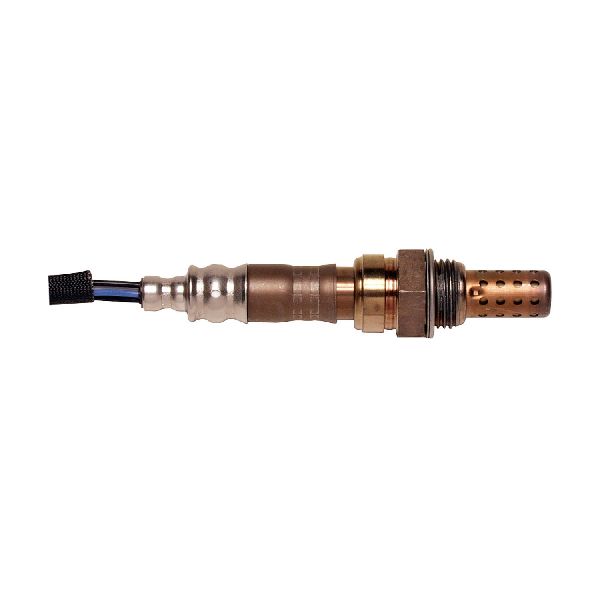
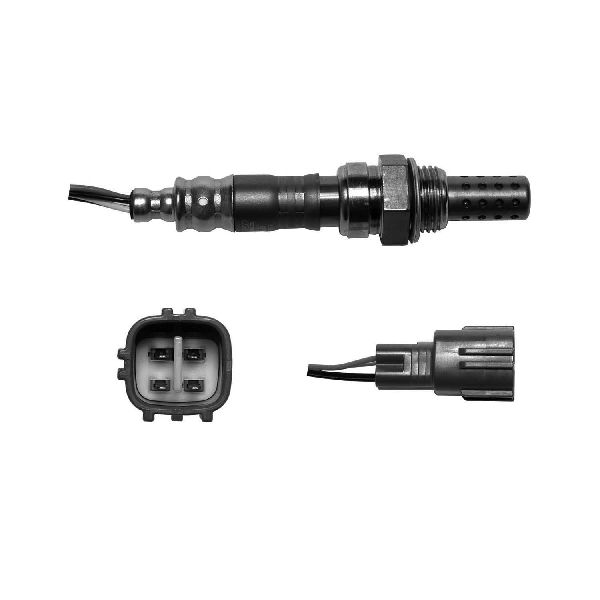
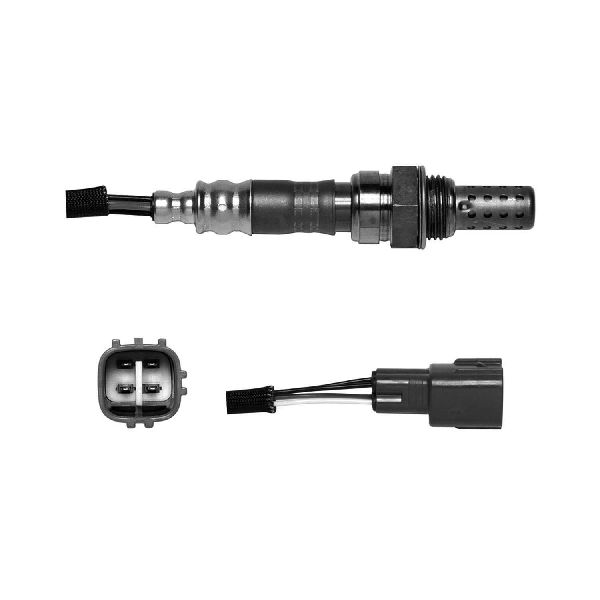
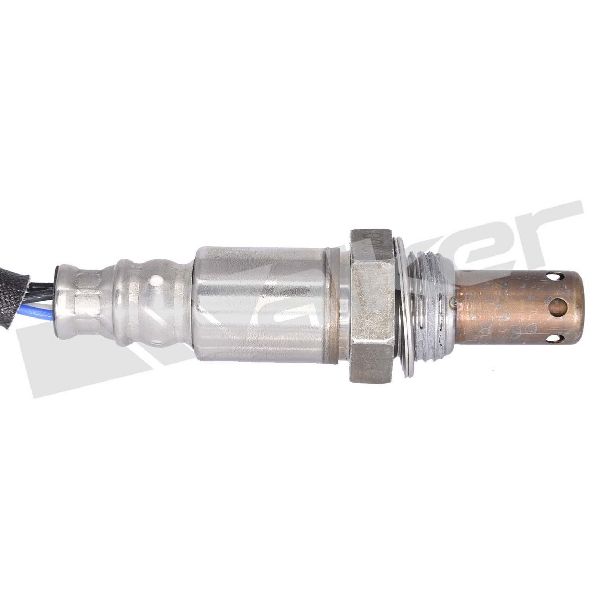
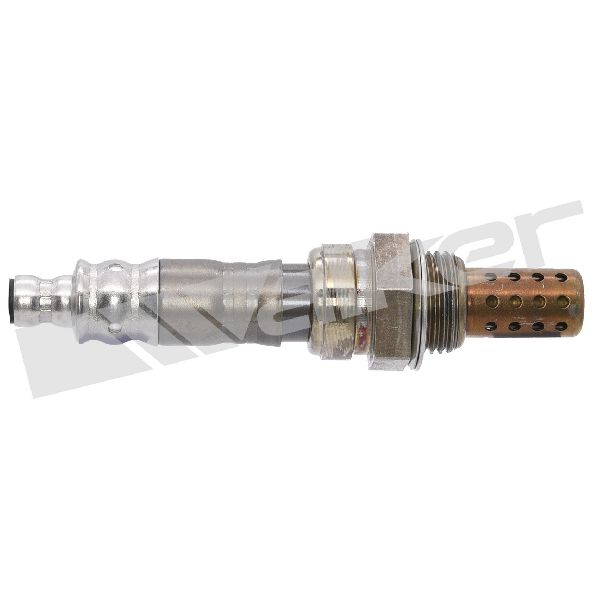
- Downstream Oxygen Sensor (Bank 1, Sensor 2)
(OEM #89465-0R080)— This is the component that fails in the vast majority of P0137 cases on this vehicle due to age and heat exposure. Denso is the original equipment manufacturer (OEM).
Trusted brands: Denso (OEM, Recommended), NGK/NTK, Bosch
OEM price range: $150 - $220
Aftermarket price range: $60 - $120
Related Codes That Often Appear With This One
- P0136 — P0136 is a general 'O2 Sensor Circuit Malfunction' for the same sensor. They often appear together, indicating a definitive problem with the Bank 1 Sensor 2 circuit or sensor.
- P0606 — In some cases, a failing O2 sensor can cause erratic data that leads the ECU to flag an internal processor fault (P0606). One owner of a 2006 RAV4 reported fixing both P0137 and P0606 by replacing the downstream O2 sensor. 🎬 Watch: Fixing P0137 and P0606 with a sensor replacement.
Technical Service Bulletins (TSBs) & Recalls
- T-SB-0151-18: While not for P0137, this TSB for the same engine/years addresses code P0138 (High Voltage) and notes a potential ECM logic issue fixed by a software update, which is useful context for rare cases where a new sensor doesn't fix the problem.
Platform-Specific Known Issues
- On this RAV4, it is extremely common for the VSC, 4WD, and Check Engine lights to all come on for this single fault. Owners on Reddit and other forums frequently report this combination of lights for code P0137.
- The downstream O2 sensor connector is located inside the cabin, requiring you to pull back the carpet on the passenger or driver side of the center console for access. 🎬 Watch: Step-by-step guide to replacing the RAV4 downstream sensor.
Mechanic-Grade Diagnostic Values
- Downstream O2 Sensor (B1S2) Heater Circuit Resistance — expected: While no exact spec for the 2AR-FE is published, similar Toyota platforms specify a low resistance. For the 2AZ-FE A/F sensor, it is 0.8 - 1.4 Ω at 20°C (68°F). A healthy sensor should have a low single-digit or low double-digit ohm reading.. Failure: A very high resistance reading (hundreds or thousands of ohms) or an open circuit (OL) indicates a failed internal heater element.
- Downstream O2 Sensor (B1S2) Live Voltage (Warm Idle) — expected: A relatively stable voltage between 0.5V and 0.8V.. Failure: Voltage is stuck consistently below 0.2V, often reading 0.0V to 0.1V.
- A/F Heater Fuse Current Draw — expected: Normal operating current is typically between 0.8 A and 2.0 A.. Failure: A current draw below 0.3 A can trigger a P0037 (low circuit) code, while a draw above 2.0 A can trigger a P0038 (high circuit) code, indicating a fault in the heater circuit or sensor.
Hidden / Shadow Codes Worth Checking
- Mode $06 Data (MID: $21, TID: $81): Mode $06 provides access to the results of the ECM's non-continuous self-tests. For Toyota, Monitor ID (MID) $21 often corresponds to the Catalyst Monitor. Test ID (TID) $81 may relate to O2 Sensor Bank 1 Sensor 2 response tests. A technician can view the raw test value and compare it to the manufacturer's min/max limits to see if the sensor is close to failing, even before a DTC is set. (see via Requires an advanced scan tool capable of displaying Mode $06 data. The specific TIDs and CIDs must be cross-referenced with Toyota's service information for an exact definition.)
Scan Tool Commands That Help
- Toyota Techstream: Active Test: 'Control the Injection Volume for A/F Sensor' — This bidirectional command allows a technician to manually force the engine to run rich or lean (-12.5% to +25%). While observing the live data graph for the B1S2 sensor, the technician can confirm if the sensor's voltage correctly responds to these changes. A healthy sensor will show a voltage change, while a dead sensor's voltage will remain flat, confirming the sensor is unresponsive.
- Toyota Techstream: Utility: 'All Readiness' — After a repair, this function is used to check the status of all emission-related monitors. The technician can input DTC P0137 to specifically check if the oxygen sensor monitor has completed its self-test and passed, confirming the fix without waiting for a full drive cycle.
Wiring & Ground Locations
- B1S2 Connector — Inside the vehicle cabin, under the carpet. Access is typically gained by pulling back the carpet on the driver's or passenger's side of the center console.. This is the primary test point for the sensor circuit. You can disconnect it to test the sensor's heater resistance directly at the sensor-side pins. You can also test for power, ground, and signal integrity on the harness-side pins coming from the ECM.
- Exhaust System Ground Strap — A braided metal strap connecting a section of the exhaust pipe to the vehicle's chassis or subframe.. The O2 sensor relies on a solid ground connection through the exhaust system. If this strap is corroded or broken (common in salt-belt regions), it can create a poor ground path, leading to erratic or low voltage readings and triggering a P0137 even with a perfectly good sensor.
- Ground Point E1 — Located in the driver's side kick panel area.. This is a major chassis ground point. While not exclusively for the O2 sensor, a loose or corroded connection here can cause various electrical issues, including sensor circuit problems. Verifying major grounds is a key step in diagnosing persistent electrical codes.
Real Owner Repair Stories
- YouTube channel 'PeanutButterMan' (2011 Toyota RAV4 2.5L (2AR-FE) with 131,999 miles) — Check Engine Light on. Scanner showed current, pending, and permanent P0137 codes.
✅ What actually fixed it The owner replaced the downstream oxygen sensor (Bank 1, Sensor 2) with a Bosch 13355. The Check Engine Light went out on its own after a short test drive, confirming the fix. - Reddit user 'darkx1337' in r/WRX (Subaru WRX (General advice applicable to other vehicles)) — A user reported a persistent P0137 code even after replacing the downstream O2 sensor.
❌ Tried (didn't work) Replacing the downstream oxygen sensor.
✅ What actually fixed it The advice given was that the code is specifically for voltage, and if the sensor is new, the issue is likely wiring. The user was advised to check the ground strap attached to that section of the exhaust pipe, as it can corrode and break, causing voltage codes for the O2 sensor.
When the Usual Fixes Don't Work
- While replacing the downstream O2 sensor fixes P0137 in over 90% of cases for this RAV4, there are documented instances where the code persists. In these scenarios, the root cause is often not the sensor itself but a problem in its operating environment or circuit. A common 'next step' for technicians is to investigate the integrity of the sensor's ground path. This includes checking for a corroded or broken exhaust ground strap, which can prevent the sensor from having a stable reference and cause a low voltage reading even with a new part. Another rare but possible cause is a fault within the ECM's internal driver for the sensor circuit, though this should only be considered after all wiring and grounding possibilities have been exhaustively ruled out.
OEM Part Supersession History
89465-0R010→89465-0R080— Standard part revision by the manufacturer for improvements or supplier changes.
Diagnostic Flowchart
Other Known Issues on This Vehicle
Issues unrelated to this code that are worth knowing about as an owner of this generation:
- Torque Converter Shudder 🟠 Medium — Common on 2013-2015 models, but can occur on earlier models. Feels like driving over rumble strips at low speeds (25-50 mph) under light throttle. (Ref: T-SB-0023-15 (for 2013-2014 RAV4). A similar TSB, T-SB-0034-14, was issued for the Camry with the same U760 transmission.)
- Excessive Oil Consumption 🟠 Medium — More prevalent on the earlier 2.4L 2AZ-FE engine (2006-2008), but some 2AR-FE engines can also consume oil. Toyota issued a warranty enhancement program. (Ref: T-SB-0094-11)
- Intermediate Steering Shaft Clunk/Noise 🟡 Low — A very common issue where a clunking or popping noise is heard/felt in the steering wheel when turning at low speeds. Often requires lubrication or replacement of the intermediate shaft. (Ref: T-SB-0318-08 (covers 2006-2008 models, but the issue is known to persist in later years).)
- VVT Gear Rattle on Cold Startup 🟠 Medium — A brief rattle from the engine bay on a cold start can indicate a failing VVT gear. If ignored, it can lead to timing-related engine codes like P0017. (Ref: T-SB-0012-11 (addresses related code P0017 caused by this issue).)
Used vs. New Parts: Buying Guide for This Vehicle
When a used part is the smart pick: For this repair, buying a used part is strongly discouraged. Oxygen sensors are wear-and-tear items with a finite lifespan, exposed to extreme heat and contaminants. A used sensor from a junkyard has an unknown history and is likely to have significantly reduced life or be faulty already.
What to inspect on the donor part:
- Not applicable, as used sensors are not recommended.
OEM-only on this vehicle (don't cheap out):
- While not strictly 'OEM-only', using the OEM manufacturer (Denso) is highly recommended for this part. Toyota engine management systems are often calibrated specifically for the response characteristics of Denso sensors.
Aftermarket brands forum-validated for this vehicle:
- Denso (OEM supplier, best choice)
- NGK / NTK (Widely regarded as a high-quality equivalent)
Brands owners have reported issues with on this vehicle:
- Bosch: While a major brand, forum discussions frequently contain reports of compatibility issues, premature failure, or slightly different performance characteristics when using Bosch sensors on Toyota vehicles, sometimes leading to persistent or new codes.
Real Owner Stories
Aggregated from forums and TSBs cited above. Mileages and costs reflect what owners reported in those sources.
2011 Toyota RAV4 2.5L
Symptoms: Check Engine Light is on; owner diagnosed a P0137 code.
What fixed it: Replacement of the downstream oxygen sensor using Bosch P/N 13355.
Source hint: YouTube - 'Toyota P0137/Oxygen Sensor Replacement RAV4/Camry' by 'PeanutButterMan'
2010 Toyota RAV4
Symptoms: Check Engine Light (CEL) and 4WD light both illuminated.
What fixed it: Pulled code P0137; identified as a downstream oxygen sensor issue.
Source hint: Reddit r/MechanicAdvice - '2010 Toyota RAV4 CEL and 4WD illuminated; pulled P0137 code'
2012 Toyota RAV4
Symptoms: Check Engine, Trac Off, and 4WD lights all came on simultaneously.
What fixed it: Owner replaced the sensor with an OEM part, though noted the code returned in this specific instance, suggesting further circuit or logic issues.
Source hint: Reddit r/AskAMechanic - 'Any fix?'
Related OBD-II Codes
Frequently Asked Questions
Why did my 4WD and VSC lights come on at the same time as the Check Engine light for code P0137?
Where is the downstream oxygen sensor connector located on my 2009-2012 RAV4?
Does TSB-0151-18 apply to my P0137 code?
What specific part should I use to replace the Bank 1 Sensor 2 oxygen sensor?
Is there a specific tool I need to change the sensor on my RAV4?
Helpful Videos


We Have This Part in Stock


The information in this article is provided for general reference and educational purposes only. Vehicle specifications, procedures, and part compatibility can vary by production date, trim level, and region. Always consult your vehicle's factory service manual and verify part numbers before purchasing or performing repairs. Safety-critical components such as airbags, seat belts, and braking systems should be installed by a qualified professional.
- Toyota RAV4:
- 🧭 Diagnostic Flowchart
- 🎬 Helpful Videos
- 🛍️ Shop This Part
- What's Unique About the 2009-2012 Toyota RAV4
- Symptoms You May Notice
- Most Likely Causes
- Rare But Worth Checking
- Diagnosis Steps
- Parts You'll Likely Need
- Related Codes That Often Appear With This One
- Technical Service Bulletins (TSBs) & Recalls
- Platform-Specific Known Issues
- Mechanic-Grade Diagnostic Values
- Hidden / Shadow Codes Worth Checking
- Scan Tool Commands That Help
- Wiring & Ground Locations
- Real Owner Repair Stories
- When the Usual Fixes Don't Work
- OEM Part Supersession History
- Other Known Issues on This Vehicle
- Used vs. New Parts: Buying Guide for This Vehicle
- Real Owner Stories
- 2011 Toyota RAV4 2.5L
- 2010 Toyota RAV4
- 2012 Toyota RAV4
- Related OBD-II Codes
- Frequently Asked Questions
- 🎟️ Get 5% Off