

P0138 on 2008-2016 Audi A4 2.0T: O2 Sensor High Voltage Causes and Fixes
On a 2008-2016 Audi A4 2.0T, P0138 almost always indicates a failed downstream (post-catalyst) oxygen sensor. Before replacing the sensor, visually inspect its wiring harness for melting or chafing, the second most common cause. Expect to pay around $70-$150 for a quality aftermarket sensor (like Bosch or NTK) and $150-$250 for an OEM part. It's a straightforward DIY replacement for those with basic tools and an O2 sensor socket.
- P0138 on your A4 2.0T means the downstream oxygen sensor (after the catalytic converter) is sending a constant high voltage signal.
- The most common fix by a large margin is to replace the downstream O2 sensor (Bank 1, Sensor 2).
- Before replacing the sensor, perform a quick visual inspection of the wiring harness for any obvious signs of melting or chafing, as this is the second most frequent cause.
What's Unique About the 2008-2016 Audi A4
The 2.0T TFSI engine (EA888) in the B8 generation A4 is generally reliable, but its sensors are wear items. For this specific P0138 code, there isn't a major platform-specific design flaw that causes it. However, the B8 platform is known for two related issues. First, many of these engines (particularly 2009-2012 models) are known for excessive oil consumption, which can contaminate the exhaust and potentially shorten the life of O2 sensors over a long period. Second, the wiring harness for the downstream sensor is sometimes routed in a way that can lead to melting against the exhaust or chafing against the driveshaft if not properly secured, making a visual inspection of the wiring crucial before replacing parts.
Generation note: The 2008-2016 model years cover the Audi A4 B8 generation. This includes the pre-facelift B8 (2008-2012) and the post-facelift B8.5 (2013-2016). The diagnosis and repair for code P0138 are identical across this entire generation for the 2.0T TFSI engine. However, earlier B8 models are more susceptible to the underlying oil consumption issue that can contribute to sensor failure over time.
Symptoms You May Notice
- Check Engine Light is on
- Failing an emissions test
- Slightly reduced fuel economy
- Strong exhaust odor (in rare cases of a rich running condition)
- Rough idling or engine hesitation in some cases
- Replacing the upstream (pre-catalyst) O2 sensor. P0138 specifically refers to the downstream Sensor 2.
- Replacing the catalytic converter. A faulty sensor or wiring issue is far more common and should be diagnosed first before condemning the expensive converter.
- Overlooking a faulty upstream (Bank 1, Sensor 1) O2 sensor. A failing upstream sensor can cause a rich condition, which the downstream sensor (B1S2) will accurately report as high voltage, leading to a P0138 code even though B1S2 is functioning correctly.
Most Likely Causes
- Failed Downstream Oxygen (O2) Sensor 🔴 High Probability → Shop Oxygen Sensor O2 sensors are wear-and-tear items with a finite lifespan, typically 80,000-100,000 miles. Contaminants from exhaust, fuel additives, and potential oil burning from the EA888 engine can degrade the sensor's internal components over time.
How to confirm: After checking wiring, this is the most likely cause. A diagnostic scanner can be used to observe the live voltage from Sensor 2; if it's stuck high (over 1.0V) and doesn't fluctuate, the sensor has failed. You can also test the sensor's internal heater circuit with a multimeter; a healthy sensor should have a resistance of 5-20 Ohms when cold.
Typical fix: Replace the Bank 1, Sensor 2 oxygen sensor. An offset 22mm (7/8") O2 sensor socket is highly recommended as the sensor can be seized in the exhaust pipe.
Est. part cost: $70-$250 - Damaged Wiring or Connector 🟡 Medium Probability The wiring harness runs along the underbody and can come loose from its retaining clips. This allows it to make contact with the hot exhaust pipe (causing melting) or chafe against the driveshaft or subframe, causing a short circuit that sends high voltage to the ECU.
How to confirm: Visually inspect the entire wiring harness from the O2 sensor's pigtail to the main connector, which is often located in a plastic box on the vehicle's underbody near the transmission tunnel. Look for melted plastic sheathing, frayed or exposed wires, and check for corrosion or moisture inside the connector pins.
Typical fix: Repair the damaged section of wire with a heat-shrink butt connector or solder. Replace the connector if it is corroded or damaged. Secure the harness firmly in its clips away from heat and moving parts.
Est. part cost: $10-$100
Rare But Worth Checking
- Engine Running Rich: A condition causing a rich fuel mixture (like a leaking fuel injector or faulty upstream O2 sensor) can overwhelm the catalytic converter and cause the downstream O2 sensor to correctly read a high voltage. This would typically be accompanied by other codes like P2196 (Stuck Rich) or fuel trim codes.
- Exhaust Leak: An exhaust leak before or near the O2 sensor can sometimes cause erratic readings, though it's less likely to cause a consistently high voltage signal compared to a low voltage signal.
- Faulty Engine Control Unit (ECU): This is extremely rare. The ECU should only be considered as a potential cause after all other possibilities, including both O2 sensors and the wiring, have been thoroughly ruled out. A failure of the internal voltage regulator in the PCM could theoretically cause this code.
Diagnosis Steps
- Read the code with an OBD-II scanner to confirm P0138 is present and note any other codes.
- Use the scanner to view live data for 'O2 Sensor Voltage Bank 1 Sensor 2'. A reading stuck above 1.0V confirms the high voltage condition. A healthy downstream sensor should show a relatively stable voltage between 0.6V and 0.8V when the engine is warm and at a steady cruise.
- Perform a thorough visual inspection of the O2 sensor wiring harness for any signs of melting, chafing, or physical damage, especially where it runs near the exhaust pipe, driveshaft, or subframe.
- Check the 4-pin connector for the O2 sensor for corrosion, moisture, or pushed-out pins. The connector is typically clipped to the underbody.
- If the wiring appears intact, the most probable cause is the O2 sensor itself.
- Optional: Test the sensor's heater circuit with a multimeter. Resistance should be between 5-20 Ohms. An open circuit (infinite resistance) confirms a failed heater.
- Replace the Bank 1, Sensor 2 oxygen sensor. Applying anti-seize compound to the threads of the new sensor is recommended.
- Clear the trouble code and perform a drive cycle to ensure the code does not return.
Parts You'll Likely Need
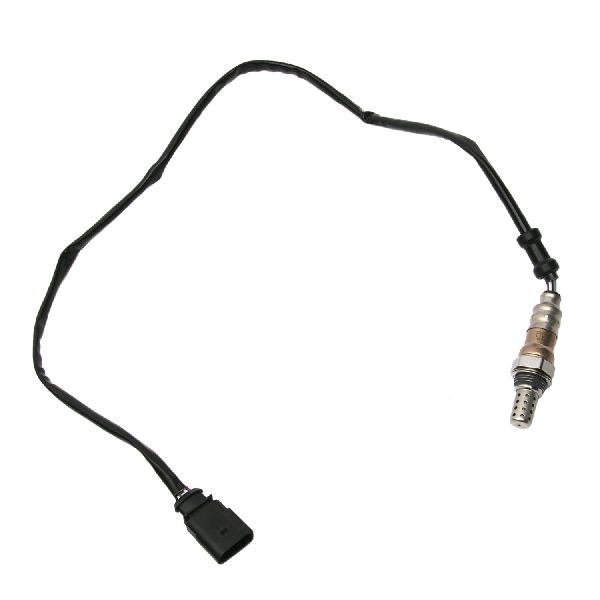
- Downstream Oxygen Sensor (Bank 1, Sensor 2)
(OEM #06K906262D, 1K0998262T)— This is the component that has failed in the vast majority of P0138 cases. It is a standard wear item.
Trusted brands: Bosch (OEM supplier), NGK/NTK, Denso
OEM price range: $150-$250
Aftermarket price range: $70-$150 - Oxygen Sensor Socket — A special 22mm (7/8") slotted socket is often required to remove and install the oxygen sensor without damaging the wire, especially if the sensor is seized.
Trusted brands: Lisle, OEMTools, GearWrench
Aftermarket price range: $15-$30
Related Codes That Often Appear With This One
- P2196 — P2196 (O2 Sensor Signal Stuck Rich Bank 1 Sensor 1) can indicate a problem with the upstream sensor that is causing a true rich condition, which the downstream sensor then reports, triggering P0138.
- P0036 — P0036 (HO2S Heater Control Circuit Bank 1 Sensor 2) points to a problem with the heater circuit inside the same O2 sensor, often indicating the entire sensor unit needs replacement.
- P0137 — This is the low-voltage counterpart to P0138 for the same sensor. Seeing both intermittently could point to a severe wiring issue or a failing sensor.
- P2272 — P2272 (O2 Sensor Signal Stuck Lean Bank 1 Sensor 2) has been documented to appear alongside P0138 in some cases on the B8 platform, potentially indicating an erratic sensor or wiring fault.
Technical Service Bulletins (TSBs) & Recalls
- While no TSB is specific to P0138, TSB #2027731 for excessive oil consumption on the 2.0T engine addresses a root cause (oil in exhaust) that can lead to premature O2 sensor failure.
Platform-Specific Known Issues
- The wiring for the downstream O2 sensor is known to sometimes break free from its retaining clips, allowing it to contact the hot exhaust or rotating driveshaft, which can melt or chafe the wires and cause a short.
- The notorious oil consumption of the EA888 Gen 2 engine can lead to long-term fouling and premature failure of O2 sensors.
Mechanic-Grade Diagnostic Values
- Downstream O2 Sensor (B1S2) Voltage at steady 2500 RPM (warm engine) — expected: Relatively stable voltage between 0.5V and 0.8V.. Failure: Voltage is stuck consistently above 1.0V and does not fluctuate.
- Downstream O2 Sensor (B1S2) Heater Circuit Resistance (cold) — expected: 5 to 20 Ohms.. Failure: An open circuit (infinite resistance) or a reading outside the specified range indicates a failed internal heater.
- VCDS Measuring Block Group 036, Field 1 (Post-catalyst O2 Sensor Voltage) — expected: Slowly fluctuating or stable voltage between 0.5V and 0.8V.. Failure: Voltage reading is fixed above 1.0V.
- Key-On Engine-Off (KOEO) Sensor Signal Reference Voltage — expected: Approximately 0.3V to 0.45V.. Failure: No voltage or significantly higher voltage may indicate a PCM or wiring issue.
Scan Tool Commands That Help
- VCDS (VAG-COM): Measuring Blocks (e.g., Groups 031, 036, 041) — Use to observe live data from both upstream (Lambda) and downstream (Voltage) O2 sensors simultaneously. Group 031 shows the actual vs. specified Lambda for the upstream sensor, which helps identify a rich condition causing P0138. Group 036 specifically shows the downstream sensor's voltage and readiness status.
- VCDS (VAG-COM): Advanced Measuring Blocks — Allows the user to select and log multiple specific parameters at once, such as RPM, downstream O2 voltage, and fuel trims. This is more flexible than fixed measuring blocks for diagnosing the root cause of the high voltage reading under different engine loads.
Wiring & Ground Locations
- T6z - 6-pin connector, red — Connector station in the electronics box in the plenum chamber (under the cowl panel at the base of the windshield).. This is a key junction point for engine sensor wiring, including the O2 sensors. Checking for corrosion or pushed pins here is a valid step if a wiring fault is suspected between the sensor and the ECU.
- Engine Block Ground Strap — Typically a braided strap connecting the engine block to the chassis, often near the alternator or starter.. A poor engine ground can cause floating voltages and erratic sensor readings throughout the engine management system. Verifying this connection is clean and tight is a crucial step in diagnosing any persistent electrical fault like P0138.
- Ground point in battery box — A main chassis ground point located in the battery box area.. This serves as a primary ground for many vehicle systems. While less direct than the engine ground strap, corrosion or looseness here can contribute to widespread electrical issues.
Real Owner Repair Stories
- AudiWorld Forums (Audi A4 (B8 platform) 2.0T) — Persistent P0138 CEL.
❌ Tried (didn't work) Replacing the downstream O2 sensor.
✅ What actually fixed it The wiring harness for the sensor had come loose from a retaining clip and melted against the exhaust pipe. Repairing the shorted wires and properly securing the harness resolved the code. - Audizine Forums (2011 Audi A4 2.0T) — P0138 and P2272 codes.
✅ What actually fixed it A simple replacement of the downstream (post-cat) O2 sensor with a new Bosch part cleared the codes permanently.
OEM Part Supersession History
06F906262P, 06H906262A, 06J906262K→1K0998262T— Part consolidation and potential design updates over the vehicle's production run.
Model Year Variations Within This Range
- 2008-2012 (B8): These earlier models with the EA888 Gen 2 engine are more widely known for the piston ring issue causing excessive oil consumption. This can lead to faster-than-normal fouling and failure of O2 sensors due to oil contaminants in the exhaust stream.
Diagnostic Flowchart
Other Known Issues on This Vehicle
Issues unrelated to this code that are worth knowing about as an owner of this generation:
- Excessive Oil Consumption 🔴 High — Very common on pre-2013 EA888 Gen 2 engines (esp. 2009-2011 with CAEB engine code), often appearing after 30,000-60,000 miles. Can be over 1 quart per 1,000 miles. (Ref: TSB #2027731 / 17-13-43 details a multi-stage repair, from PCV replacement to new pistons/rings.)
- Timing Chain Tensioner Failure 🔴 High — Common on earlier B8 models (approx. 2008-2012). The original tensioner can fail without warning, allowing the chain to jump, causing catastrophic engine damage. B8.5 models (2013+) have an updated design. (Ref: Subject of a class-action lawsuit. An updated tensioner (part # 06K109467K) resolves the issue.)
- Timing Chain Stretch 🟠 Medium — Can occur on all B8/B8.5 models over time, typically after 80,000-100,000 miles. Leads to timing-related codes like P0016.
- Water Pump / Thermostat Failure 🟠 Medium — Plastic water pump housings are prone to cracking and leaking, often between 60,000-100,000 miles. Considered a common maintenance item.
- PCV Valve Failure 🟠 Medium — The PCV / oil separator can fail, leading to high oil consumption, rough idle, and various fault codes. It's often the first step in diagnosing oil consumption issues. (Ref: Often replaced as part of the oil consumption TSB.)
Used vs. New Parts: Buying Guide for This Vehicle
When a used part is the smart pick: For this repair, buying a used oxygen sensor is almost never a smart choice. O2 sensors are wear items with a finite lifespan, similar to spark plugs or brake pads. A used sensor has unknown remaining life and may fail shortly after installation, wasting time and money.
Donor-vehicle mileage cap: roughly under 20000 miles for the part to have meaningful remaining life.
What to inspect on the donor part:
- If forced to use a used part, source it from a very low-mileage vehicle that was wrecked due to collision, not engine failure.
- Inspect the sensor tip for heavy black carbon deposits or a white, chalky coating, which indicate contamination and imminent failure.
- Ensure the wiring pigtail and connector are completely intact with no signs of melting, brittleness, or corrosion.
Aftermarket brands forum-validated for this vehicle:
- Bosch (often the original OEM supplier for Audi)
- NGK / NTK
- Denso
Brands owners have reported issues with on this vehicle:
- Universal 'splice-in' sensors. These often have compatibility issues and are a common source of recurring codes.
- Unbranded, no-name sensors from online marketplaces. Forum users frequently report these failing quickly or being dead-on-arrival.
Real Owner Stories
Aggregated from forums and TSBs cited above. Mileages and costs reflect what owners reported in those sources.
2011 Audi A4 2.0T
Symptoms: Check Engine Light with P0138 and P2272 codes.
What fixed it: Replacement of the downstream O2 sensor with a Bosch part.
Source hint: Audizine forum thread: P0138 and P2272 O2 Sensor Codes
Audi A4 (B8 platform)
Symptoms: Persistent P0138 code that remained even after replacing the sensor.
What fixed it: Repaired the sensor's wiring harness which had come loose from a retaining clip and melted against the exhaust pipe.
Source hint: AudiWorld forum thread: p0138 cel
Related OBD-II Codes
Frequently Asked Questions
Could the high oil consumption on my 2010 Audi A4 be causing this P0138 code?
I replaced the sensor on my B8 A4 but the P0138 code is still there. What else should I check?
What is the correct resistance for a new Bank 1, Sensor 2 O2 sensor on the 2.0T TFSI?
Where is the main connector for the downstream O2 sensor located on the A4?
Is there a specific tool recommended for removing the sensor on the 2.0T exhaust?
Does the P0138 code on my Audi A4 mean I will fail my emissions test?
Helpful Videos
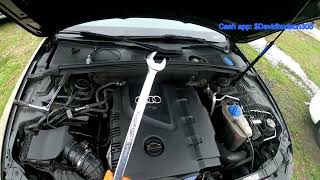
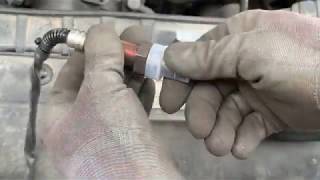
![How to Fix P0138 Engine Code in 3 Minutes [2 DIY Methods / Only $8.99]](https://img.youtube.com/vi/xhP3cILng74/mqdefault.jpg)
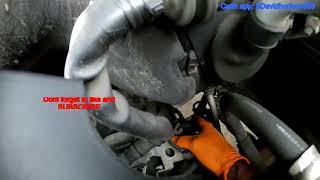
We Have This Part in Stock


The information in this article is provided for general reference and educational purposes only. Vehicle specifications, procedures, and part compatibility can vary by production date, trim level, and region. Always consult your vehicle's factory service manual and verify part numbers before purchasing or performing repairs. Safety-critical components such as airbags, seat belts, and braking systems should be installed by a qualified professional.
- Audi A4:
- 🧭 Diagnostic Flowchart
- 🎬 Helpful Videos
- 🛍️ Shop This Part
- What's Unique About the 2008-2016 Audi A4
- Symptoms You May Notice
- Most Likely Causes
- Rare But Worth Checking
- Diagnosis Steps
- Parts You'll Likely Need
- Related Codes That Often Appear With This One
- Technical Service Bulletins (TSBs) & Recalls
- Platform-Specific Known Issues
- Mechanic-Grade Diagnostic Values
- Scan Tool Commands That Help
- Wiring & Ground Locations
- Real Owner Repair Stories
- OEM Part Supersession History
- Model Year Variations Within This Range
- Other Known Issues on This Vehicle
- Used vs. New Parts: Buying Guide for This Vehicle
- Real Owner Stories
- 2011 Audi A4 2.0T
- Audi A4 (B8 platform)
- Related OBD-II Codes
- Frequently Asked Questions
- 🎟️ Get 5% Off