

P0138 on 2008-2023 Dodge Challenger: O2 Sensor High Voltage Causes and Fixes
This code almost always points to a failed downstream oxygen sensor on Bank 1 (the driver's side for V8s, passenger side for V6s). Replacing the Bank 1, Sensor 2 O2 sensor is the most common fix. Before replacing, inspect the wiring harness for melting or damage, a common issue on this platform. Expect to pay $40-$90 for a quality aftermarket sensor (NTK, Denso) or $100-$160 for an OEM Mopar part. DIY difficulty is 2/5.
- P0138 on a Dodge Challenger points to a high voltage signal from the driver's side, downstream O2 sensor.
- The most common cause is a failed O2 sensor. Do not replace the catalytic converter.
- A visual inspection of the sensor's wiring for melting or damage is a critical first step.
- Use a high-quality replacement sensor (Mopar, NTK, Denso) to prevent the code from returning.
- Owners of 2015-2017 Hellcat models should check if their vehicle is eligible for a recall that replaces all O2 sensors for free.
What's Unique About the 2008-2023 Dodge Challenger
For the Dodge Challenger and its LX platform mates (Charger, 300), this code is a straightforward and common issue. A key vulnerability is the O2 sensor wiring harness, which is often routed near hot exhaust and transmission components. It is frequently reported that the harness melts or chafes, causing the signal wire to short to the heater circuit's power wire, which triggers the P0138 code. Owners consistently report that using cheap, generic O2 sensors often leads to the code returning quickly, making it crucial to use OEM (Mopar) or high-quality OE-equivalent brands like NTK or Denso.
Generation note: The 2008-2023 model years cover the third generation (LC) of the Dodge Challenger. The interpretation of code P0138 is consistent across all engine options (3.5L V6, 3.6L V6, 5.7L Hemi, 6.1L Hemi, 6.2L Hemi, 6.4L Hemi) within this generation. Bank 1 is the driver's side on V8s and the passenger's side on V6s.
Symptoms You May Notice
- Check Engine Light is on
- Failed emissions test
- Decreased fuel economy
- Rough or unstable idle
- Hesitation or sluggish acceleration
- Strong exhaust odor or smell of gasoline
- Replacing the catalytic converter. P0138 points to a problem with the sensor that *monitors* the converter, not the converter itself. A high voltage reading is almost never caused by a bad converter.
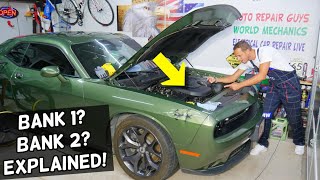
- Replacing the wrong O2 sensor. The Challenger has four O2 sensors. 🎬 Watch: Locate all four O2 sensors on a 3.6L engine It is critical to identify and replace Bank 1, Sensor 2 specifically (driver's side on V8s, passenger's on V6s; always downstream).
- Assuming an aftermarket exhaust modification (like headers or high-flow cats) isn't the cause. Modifications can change exhaust flow and temperature, sometimes triggering codes if not properly tuned for.
Most Likely Causes
- Faulty Bank 1, Sensor 2 Oxygen Sensor 🔴 High Probability → Shop Oxygen Sensor Oxygen sensors are wear-and-tear items that degrade over time due to extreme heat, exhaust contaminants, and vibration. They have a finite lifespan, and internal failure can cause the voltage to stick high.
How to confirm: Use an OBD-II scanner to monitor the live data for the B1S2 O2 sensor. If the voltage is stuck high (e.g., >0.9V) and does not fluctuate as you drive (e.g., coasting vs. accelerating), the sensor has likely failed internally.
Typical fix: Replace the Bank 1, Sensor 2 oxygen sensor. It is located after the catalytic converter on the driver's side (V8s) or passenger's side (V6s). Use a quality brand like Mopar or NTK to prevent recurrence.
Est. part cost: $40-$160 - Damaged Wiring or Connector 🟡 Medium Probability The O2 sensor wiring is routed near the hot exhaust system and transmission. The harness can melt, become brittle and crack, or get damaged by road debris, leading to a short circuit to voltage. This is a very common failure point on the Challenger and its platform mates.
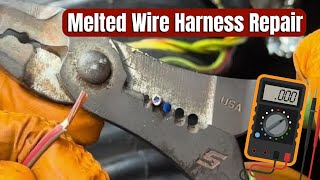
How to confirm: Visually inspect the entire wiring harness from the O2 sensor to the main engine harness. Look for melted plastic, chafed wires, or corrosion in the connector. A common failure spot is where the harness may rest on the transmission. 🎬 See this walkthrough on finding and fixing melted wiring harnesses Use a multimeter to check for a short to voltage on the signal wire.
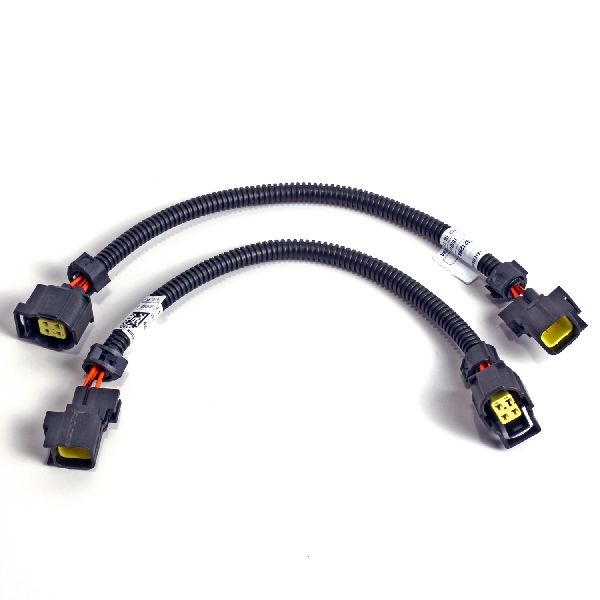
Typical fix: Repair the damaged section of the wiring harness or replace the connector pigtail. Secure the harness away from direct contact with the exhaust using zip ties.
Est. part cost: $10-$50 - Engine Running Rich ⚪ Low Probability While not specific to the Challenger, any issue causing a rich fuel mixture (too much fuel, not enough air) can cause the downstream O2 sensor to read high correctly. This could be due to leaking fuel injectors or excessive fuel pressure.
How to confirm: Look for other diagnostic trouble codes related to the fuel system (e.g., P0172 - System Too Rich). Check fuel pressure and inspect for leaking fuel injectors or a faulty fuel pressure regulator.
Typical fix: Diagnose and repair the root cause of the rich condition, such as replacing a leaking fuel injector.
Est. part cost: $50-$400+
Rare But Worth Checking
- Exhaust Leak Before the Sensor: An exhaust leak before the *upstream* O2 sensor can trick the system into adding too much fuel, causing a rich condition that the downstream sensor then reports as high voltage. This is less common than a direct sensor or wiring failure for this code.
- Powertrain Control Module (PCM) Failure: In very rare cases, the PCM itself can have a faulty driver circuit, causing it to misinterpret the sensor's signal. Some TSBs recommend a software update to fix erroneous O2 sensor codes. This should only be considered after all other possibilities have been exhaustively ruled out.
Diagnosis Steps
- Confirm the code P0138 is present using an OBD-II scanner. Check for any other codes.
- Observe live data on the scanner for the Bank 1, Sensor 2 (B1S2) O2 sensor. Confirm if the voltage is stuck high (consistently >0.9V).
- Perform a thorough visual inspection of the B1S2 O2 sensor and its wiring harness. Pay close attention to where the harness passes over the transmission or near the exhaust manifold for signs of melting, chafing, or loose connections.
- If wiring looks good, disconnect the sensor. With the key on, engine off, check the harness-side connector for voltage. A short to power on the signal wire would cause this code.
- Check for relevant Technical Service Bulletins (TSBs) for your vehicle's year and engine. For example, TSB 18-071-22 REV. B suggests a PCM software update for some models with O2 sensor codes.
- If the wiring and PCM software are ruled out and the voltage is stuck high on live data, the O2 sensor itself is the most likely culprit.
- Replace the Bank 1, Sensor 2 oxygen sensor using a quality Mopar or NTK part.
- Clear the code and perform a drive cycle to ensure the code does not return.
Parts You'll Likely Need
- Oxygen Sensor (Bank 1, Sensor 2)
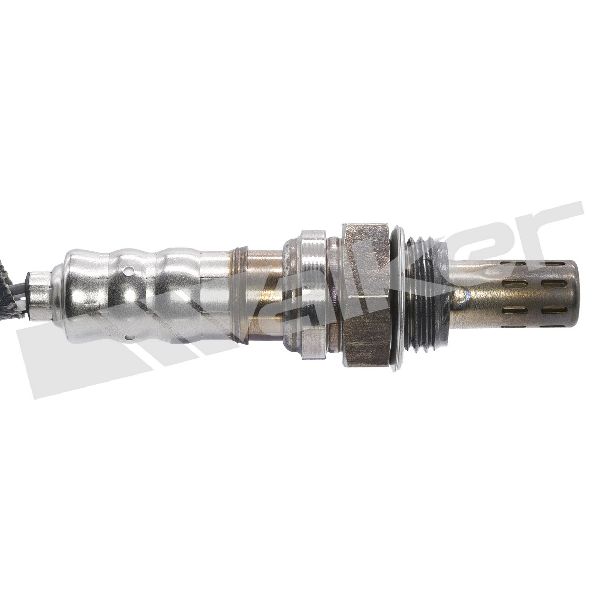
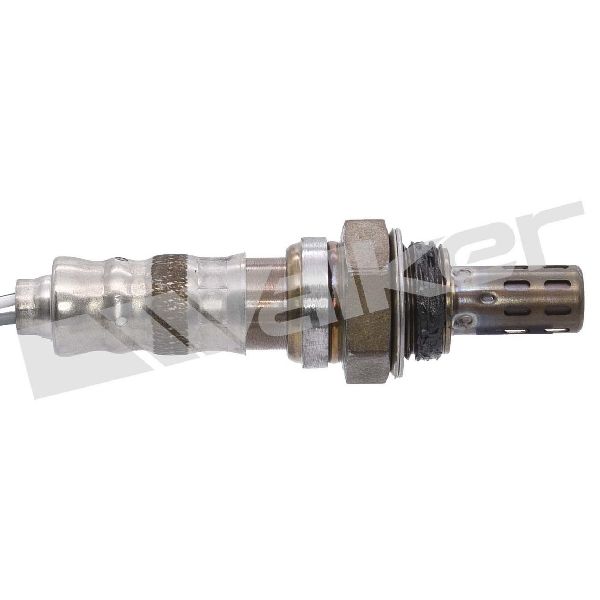
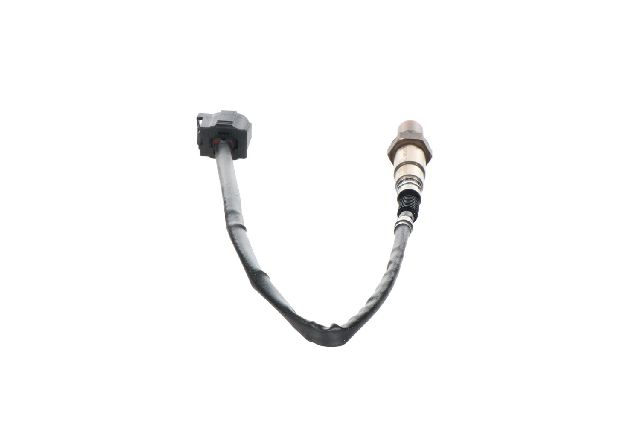
(OEM #Mopar 56029049AA (example for 5.7L, check VIN for exact fit))— This is the component that generates the voltage reading. It is a common wear item and the most frequent cause of the P0138 code.
Trusted brands: Mopar, NTK, Denso, Bosch
OEM price range: $100-$160
Aftermarket price range: $40-$90
Related Codes That Often Appear With This One
- P0038 — P0038 is for 'HO2S Heater Control Circuit High (Bank 1, Sensor 2)'. Since the heater and sensor elements are in the same physical component, a failure or wiring short that causes P0138 can often trigger a heater circuit code as well.
- P0137 — P0137 is for 'O2 Sensor Circuit Low Voltage (Bank 1, Sensor 2)'. Seeing this code intermittently with P0138 could point to an erratic sensor or a wiring problem causing wild voltage swings.
- P0172 — P0172 means 'System Too Rich (Bank 1)'. If the P0138 is being caused by a legitimate rich running condition, you will likely see this code as well, which points to the underlying fuel delivery problem.
Technical Service Bulletins (TSBs) & Recalls
- TSB 18-071-22 REV. B: Recommends a PCM software update for some 5.7L models to address various O2 sensor related codes, including P0138.
- TSB Bulletin #25-002-14: A manufacturer service bulletin for related models notes that P0138 specifically indicates the 1/2 O2 sensor is shorted to voltage.
- TSB Bulletin #25-003-13: This bulletin lists P0138 as a condition where the 1/2 O2 sensor is shorted to voltage, requiring diagnostic attention to the electrical system.
- TSB Bulletin #25-004-12: Documentation regarding fuel and electrical systems identifies P0138 as an O2 sensor 1/2 shorted to voltage condition.
Platform-Specific Known Issues
- Emissions Recall V86: Some 2015-2017 Challenger Hellcat models were recalled for catalytic converter issues. The fix, performed by a dealer, includes replacing both catalytic converters, all four oxygen sensors, and updating the PCM software. Owners of these vehicles should check if this free repair has been performed.
- Melted Wiring Harness: A recurring theme in owner forums for Challengers, Chargers, and 300s is the O2 sensor harness sagging or coming loose and melting on the hot transmission case or exhaust pipe, causing wires to short together. This should be the first visual check before buying parts.
Mechanic-Grade Diagnostic Values
- O2 Sensor Heater Element Resistance — expected: 2.0 to 30.0 Ohms at 70°F (21°C). Specifically, 5-9 Ohms is common for NTK sensors.. Failure: A reading of infinite resistance (OL - Open Loop) or near-zero Ohms (short circuit) indicates a failed heater element.
- O2 Sensor Signal Circuit Bias Voltage (KOEO) — expected: Approximately 5.0 Volts on the signal wire at the harness-side connector with the sensor disconnected.. Failure: No voltage or significantly lower voltage suggests a problem with the PCM or the wiring between the PCM and the sensor connector.
- Downstream O2 Sensor Live Data (Warm Engine, Steady RPM) — expected: A relatively stable voltage, typically around 0.5V - 0.7V, if the catalytic converter is efficient.. Failure: Voltage is stuck high, consistently reading above 0.9V, which triggers the P0138 code.
Scan Tool Commands That Help
- wiTECH (or equivalent professional scanner): O2 Sensor Heater Actuation Test — This command forces the O2 sensor's internal heater on, allowing a technician to verify the integrity of the heater circuit (power, ground, and control) by monitoring voltage or current draw, without waiting for the PCM to command it on during a cold start.
- wiTECH (or equivalent J2534 device): PCM Flash / Reprogramming — Used to apply a software update from a Technical Service Bulletin (TSB), such as TSB 18-071-22 REV. B, which can resolve erroneously set O2 sensor codes by modifying the PCM's monitoring logic.
Wiring & Ground Locations
- O2 Sensor Harness Connector (at sensor) — On the exhaust pipe, after the catalytic converter. Bank 1 is driver's side for V8s, passenger's side for V6s.. This is the primary point for visual inspection of melting/damage and for performing voltage and resistance tests on both the sensor and the harness side.
- PCM Connectors (e.g., C1, C2) — The Powertrain Control Module is typically located in the engine bay.. The O2 sensor signal, return, and heater control wires terminate at specific pins on these connectors. For example, on similar Chrysler platforms, the B2S2 signal and return are on C1 pins 33 and 32 respectively. Verifying continuity from the sensor connector to these pins is the definitive test for wiring integrity.
- G903 — This is a common ground point shown in wiring diagrams for related 3.6L engines.. Multiple sensors, including the O2 sensors, may share this ground point via a splice (e.g., S106). A loose or corroded G903 can cause erratic readings on all associated sensors, not just the B1S2 O2 sensor.
Real Owner Repair Stories
- Reddit user Galopigos in r/AskMechanics (General vehicle, but advice specific to P0138) — Persistent P0138 code that a mechanic could not figure out.
❌ Tried (didn't work) Initial diagnosis was inconclusive.
✅ What actually fixed it The user was advised that the harness had likely rubbed through and the sensor's heater voltage was shorting to the signal line. The recommended fix was to locate the melted/chafed section, cut out the damaged wires, and repair using solder seal or crimp-and-seal connectors, ensuring the harness is re-secured away from heat sources.
Model Year Variations Within This Range
- 2011-2023 (3.6L Pentastar V6): The 3.6L engine replaced the earlier 3.5L V6 in 2011. Wiring diagrams and component locations are specific to this engine. For example, a wiring diagram for the 3.6L shows a specific ground point G903 used by the O2 sensors.
- 2015-2023: The 2015 model year refresh included significant updates to the vehicle's electronics, including the Uconnect system and potentially PCM software logic. TSBs related to PCM software updates are often specific to post-2015 models.
Diagnostic Flowchart
Other Known Issues on This Vehicle
Issues unrelated to this code that are worth knowing about as an owner of this generation:
- Hemi Tick (Lifter/Camshaft Failure) 🔴 High — Common across all Hemi engines (5.7L, 6.1L, 6.4L), particularly in 2009-2016 models, but can occur at any time. Often starts as a light tick and can progress to misfires and engine failure.
- Uconnect Screen Delamination 🟠 Medium — Very common on 2017 and newer models with the 8.4-inch screen. The screen bubbles and separates, causing 'ghost touches' and non-functionality. Typically occurs 1-3 years into ownership. (Ref: No recall, but subject of class-action investigation.)
- Active Exhaust Valve Squeak/Failure 🟡 Low — Common on R/T, Scat Pack, and Hellcat models 2015+. The butterfly valves in the exhaust tips begin to squeak loudly on startup or when opening/closing. Can eventually stick or fail.
- Alternator Failure 🟠 Medium — A frequent complaint across many model years, leading to battery drain and no-start conditions.
- Broken Exhaust Manifold Bolts 🟠 Medium — Common on 5.7L Hemi engines. The bolts, especially at the rear of the manifold, break and cause an exhaust leak, resulting in a ticking noise often mistaken for the 'Hemi Tick', especially when cold.
- Totally Integrated Power Module (TIPM) Failure 🔴 High → Shop Fuse Box — A known issue on 2008-2021 models, causing a wide range of bizarre electrical problems like random horn activation, starter issues, and fuel pump failure.
Used vs. New Parts: Buying Guide for This Vehicle
When a used part is the smart pick: A used part is a smart choice for a wiring harness pigtail. If the original connector body is melted or the locking tab is broken, splicing in a used pigtail from a salvage yard is a cost-effective and reliable repair.
Donor-vehicle mileage cap: roughly under 150000 miles for the part to have meaningful remaining life.
What to inspect on the donor part:
- For a wiring pigtail, inspect for any signs of brittleness, cracking, or heat damage on the plastic connector.
- Check that the connector pins are clean and free of corrosion.
- Ensure there is at least 4-6 inches of wire attached to allow for easy splicing.
OEM-only on this vehicle (don't cheap out):
- Oxygen Sensor
Aftermarket brands forum-validated for this vehicle:
- NTK (often the OEM supplier)
- Denso
Brands owners have reported issues with on this vehicle:
- Bosch (While a major OEM supplier for other brands, numerous forum posts across Chrysler/Dodge platforms report issues with aftermarket Bosch O2 sensors having slow response times or failing prematurely, with problems often being resolved by switching to NTK).
Real Owner Stories
Aggregated from forums and TSBs cited above. Mileages and costs reflect what owners reported in those sources.
2015-2017 Challenger Hellcat
Symptoms: Potential issues with catalytic converters and oxygen sensors leading to an emissions-related failure.
What fixed it: Dealer performed Emissions Recall V86, which replaced both catalytic converters, all four oxygen sensors, and updated the PCM software.
Source hint: Emissions Recall V86
Chrysler 300C (Platform Mate)
Symptoms: P0138 and P0158 codes present; the owner replaced the sensor twice but the codes persisted.
What fixed it: Splicing damaged wires and securing the wiring loom after discovering it had melted onto the exhaust, causing a short.
Source hint: 300CForums.com - Thread 'P0138 and P0158 codes, help!'
Dodge Challenger (Rebuilt Motor)
Symptoms: Check engine light flickering, ABS light on, and codes U140B, B210D, and P0138 appearing after a battery replacement and engine rebuild.
What fixed it: The report notes the issue occurred after a motor rebuild and suggests a high circuit fault at sensor 1/2.
Source hint: RepairPal
Related OBD-II Codes
Frequently Asked Questions
Is there a specific TSB for the P0138 code on my 5.7L Dodge Challenger?
I have a 2016 Challenger Hellcat; is there a recall that might cover my P0138 code?
Which brand of oxygen sensor should I use for my Challenger to avoid the code returning?
Where is the Bank 1, Sensor 2 O2 sensor located on my Challenger?
Could my P0138 code be caused by something other than a bad sensor?
Can a ticking noise from my engine be related to O2 sensor codes?
Helpful Videos

We Have This Part in Stock

The information in this article is provided for general reference and educational purposes only. Vehicle specifications, procedures, and part compatibility can vary by production date, trim level, and region. Always consult your vehicle's factory service manual and verify part numbers before purchasing or performing repairs. Safety-critical components such as airbags, seat belts, and braking systems should be installed by a qualified professional.
- Dodge Challenger:
- 🧭 Diagnostic Flowchart
- 🎬 Helpful Videos
- 🛍️ Shop This Part
- What's Unique About the 2008-2023 Dodge Challenger
- Symptoms You May Notice
- Most Likely Causes
- Rare But Worth Checking
- Diagnosis Steps
- Parts You'll Likely Need
- Related Codes That Often Appear With This One
- Technical Service Bulletins (TSBs) & Recalls
- Platform-Specific Known Issues
- Mechanic-Grade Diagnostic Values
- Scan Tool Commands That Help
- Wiring & Ground Locations
- Real Owner Repair Stories
- Model Year Variations Within This Range
- Other Known Issues on This Vehicle
- Used vs. New Parts: Buying Guide for This Vehicle
- Real Owner Stories
- 2015-2017 Challenger Hellcat
- Chrysler 300C (Platform Mate)
- Dodge Challenger (Rebuilt Motor)
- Related OBD-II Codes
- Frequently Asked Questions
- 🎟️ Get 5% Off