

P0138 on 1998-2003 Dodge Durango 5.9L: O2 Sensor High Voltage Causes and Fixes
This code almost always points to a failed downstream oxygen sensor on the driver's side (Bank 1, Sensor 2). Replacing the sensor with a quality NTK (p/n 23132) or Denso (p/n 234-4071) part is the most common fix. Expect to pay $40-$80 for an aftermarket sensor or $90-$150 for an OEM part. DIY difficulty is 2/5. Before replacing, check the wiring harness for melting or chafing near the exhaust.
- P0138 on your Durango almost always means the driver's side downstream O2 sensor has failed.
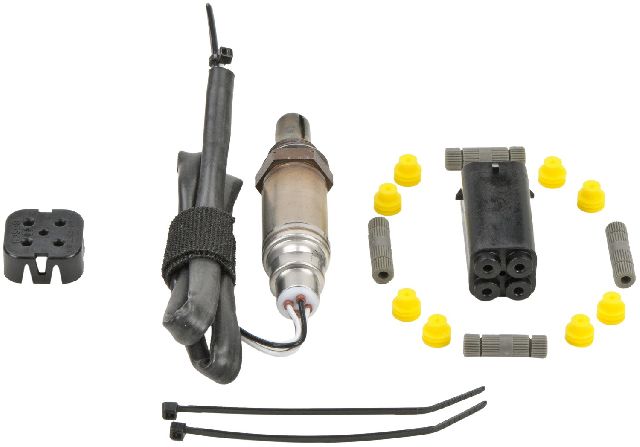
- Do not use a cheap or Bosch-branded sensor; stick with OEM/NTK (p/n 23132) or Denso (p/n 234-4071) to ensure a lasting fix.
- Before replacing the sensor, always perform a quick visual check of the wiring for obvious melting or damage, as a short-to-power can mimic a failed sensor.
- If a new, quality sensor doesn't fix the code, you must investigate for an underlying rich condition, such as high fuel pressure or leaking injectors, or a short in the harness.
What's Unique About the 1998-2003 Dodge Durango
The first-generation Durango with the 5.9L Magnum V8 is generally robust, but it is known to be extremely sensitive to the brand of oxygen sensor used. Owners and mechanics on forums for Durango and Ram trucks strongly advise against using budget or Bosch-branded sensors, as they can cause the P0138 code to return quickly or create other running issues. Sticking with OEM (Mopar/NTK) or high-quality Denso sensors is critical for a lasting repair. Additionally, this engine is prone to intake manifold plenum gasket leaks, which can cause excessive oil consumption and foul the O2 sensors and catalytic converter over time, potentially contributing to sensor failure.
Symptoms You May Notice
- Check Engine Light is on
- Decreased fuel economy
- Rough idling or stalling, especially when warm
- Hard starting
- Strong smell of gasoline or 'rotten eggs' from the exhaust
- Failing a vehicle emissions test
- Lack of acceleration or poor engine performance
- Replacing the catalytic converter. P0138 indicates a problem with the sensor that *monitors* the converter, not necessarily the converter itself.
- Replacing the wrong O2 sensor. This code is specific to Bank 1 (driver's side) and Sensor 2 (downstream/post-cat). A forum user mistakenly replaced the upstream sensor first based on bad advice.
- Using a cheap or incorrect brand of O2 sensor (e.g., Bosch), which is known to cause issues on this platform.
- Assuming the sensor is bad without checking the wiring. A shorted wire will make a brand new sensor read high as well.
Most Likely Causes
- Failed Downstream Oxygen Sensor (Bank 1, Sensor 2) 🔴 High Probability → Shop Oxygen Sensor Oxygen sensors have a finite lifespan (typically 60k-100k miles) and fail from age, heat cycles, and contamination from exhaust gases, oil, or coolant. This is the most common reason for P0138.
How to confirm: After checking wiring, this is the most likely culprit. You can observe the sensor's voltage with a scan tool; if it's stuck above 0.9V and doesn't fluctuate, it has failed. Replacing the sensor is often the quickest diagnostic step. A user on DodgeForum noted that even after replacing with a quality NTK sensor, the problem persisted at idle, indicating an underlying issue, but the sensor itself is the first step.
Typical fix: Replace the Bank 1, Sensor 2 oxygen sensor. It is located on the driver's side, after the catalytic converter, often near the transfer case. Use of a 22mm or 7/8" O2 sensor socket is recommended.
Est. part cost: $40-$150 - Damaged O2 Sensor Wiring or Connector 🟡 Medium Probability → Shop Oxygen Sensor The sensor wiring is routed near the hot exhaust system and is exposed under the vehicle, making it susceptible to melting, chafing, or corrosion from road salt and debris. This can cause a short to voltage, where the signal wire touches a power source (like the heater circuit wire), forcing the voltage high. Manufacturer service bulletins for similar platforms, such as TSB Bulletin #25-003-13, explicitly link P0138 to an "O2 sensor shorted to voltage" condition.
How to confirm: Visually inspect the entire wiring harness from the O2 sensor to where it connects to the main harness. Look for melted insulation, frayed wires, or corrosion in the connector pins. Use a multimeter to check for continuity and for shorts between the signal wire and the heater power wire at the connector.
Typical fix: Repair the damaged section of the wire or replace the connector pigtail. Ensure the repaired wiring is properly secured away from the exhaust using high-temperature zip ties.
Est. part cost: $10-$30 - Engine Running Rich ⚪ Low Probability Issues like a leaking fuel injector or a faulty fuel pressure regulator can force too much fuel into the engine. A diagnostic video specifically showed a 2000 Durango 5.9L with P0138 caused by a failing fuel pump module creating excessive pressure. The infamous intake manifold plenum gasket leak on Magnum engines can also cause oil to be burned, which can contaminate and foul the O2 sensor, leading to failure.
How to confirm: Check fuel trims with a scan tool; long-term fuel trim will be significantly negative (e.g., -15% or more). Test fuel pressure at the fuel rail to see if it's above the specification (typically 49 PSI +/- 5 PSI). Perform a fuel injector leak-down test. Check for excessive oil consumption, a key sign of a plenum leak.
Typical fix: Replace the faulty component, such as the leaking fuel injector(s) or the fuel pressure regulator/fuel pump assembly. If the plenum gasket has failed, it must be replaced with an aftermarket aluminum plate kit for a permanent fix.
Est. part cost: $50-$400
Rare But Worth Checking
- Exhaust Leak: An exhaust leak *before* the O2 sensor can sometimes draw in oxygen and confuse the sensor, although this more commonly causes a lean code (P0137). A leak after the sensor is irrelevant to this code.
- Contaminated Sensor: The sensor can become contaminated by silicone from internal engine sealants or by phosphorus from excessive oil burning (often due to the plenum gasket leak). This contamination can cause the sensor to fail and read high.
- PCM Failure: In very rare cases, the Powertrain Control Module (PCM) itself can fail, causing incorrect readings from the sensor driver circuit. This should only be considered after all other possibilities, including wiring shorts, have been exhaustively ruled out.
Diagnosis Steps
- Scan for any other DTCs. If codes related to the fuel system (like P0172) or the sensor heater (P0141) are present, address them as part of the diagnosis.
- Perform a thorough visual inspection of the Bank 1, Sensor 2 O2 sensor and its wiring harness. Look for any signs of melting, chafing, corrosion, or wires touching the exhaust or driveshaft.
- Use a scan tool to monitor the live data for the Bank 1 Sensor 2 voltage. With the engine warm and at idle, the voltage should be relatively stable. If it is stuck high (above 0.9V), the code condition is confirmed.
- To rule out a wiring short, unplug the O2 sensor. With the key on, engine off, check the signal wire terminal in the vehicle-side connector with a multimeter. It should read near 0 volts. If you read significant voltage (e.g., 5V or 12V), there is a short to power in the harness that must be found and repaired. TSB Bulletin #25-004-12 notes that a short to voltage on the 1/2 O2 sensor circuit is a primary trigger for this code.
- If the wiring checks out, the most likely cause is a failed O2 sensor. Replace the sensor with a recommended NTK or Denso part.
- If a new, quality sensor does not resolve the issue, begin diagnosing a potential rich condition. Check fuel pressure to ensure it is within spec (around 49 PSI +/- 5 PSI).
- Check short-term and long-term fuel trims. High negative numbers confirm a rich condition that the PCM is trying to correct.
- If a rich condition is confirmed, investigate for leaking fuel injectors or a faulty fuel pressure regulator. Also consider a plenum gasket leak causing oil contamination.
Parts You'll Likely Need
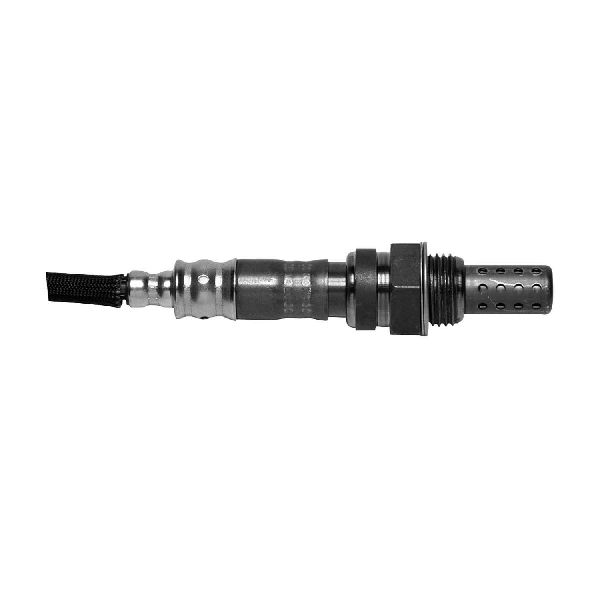
- Downstream Oxygen Sensor (Bank 1, Sensor 2)
(OEM #56041213AB)— This is the most common failure item for code P0138. It is located on the driver's side, after the catalytic converter.
Trusted brands: NTK (OEM) - Part #23132, Denso - Part #234-4071
OEM price range: $90-$150
Aftermarket price range: $40-$80
Related Codes That Often Appear With This One
- P0172 — P0172 means 'System Too Rich (Bank 1)'. If an underlying fuel system problem is causing the rich condition, you may see both codes together.
- P0141 — P0141 indicates a failure in the heater circuit for the same O2 sensor (Bank 1, Sensor 2). Since the heater and sensor elements are in the same physical component, it's common for them to fail together, triggering both codes.
- P0420 — P0420 means 'Catalyst System Efficiency Below Threshold'. If the P0138 is ignored long enough, the rich condition or faulty sensor can lead to catalyst damage, eventually triggering a P0420 code.
Technical Service Bulletins (TSBs) & Recalls
- While no TSB is specific to the 1998-2003 Durango for P0138, TSB 25-002-14 for later model Ram trucks highlights a known issue where the O2 sensor wiring harness fails, causing P0138 and requiring an overlay harness for repair. This reinforces the importance of checking wiring on the Durango.
- Manufacturer TSB Bulletin #25-003-13 identifies P0138 as a "1/2 O2 Sensor Shorted To Voltage" fault, emphasizing that electrical circuit integrity is as likely a culprit as the sensor itself.
- TSB Bulletin #25-004-12 also documents the P0138 code in relation to fuel system and electrical monitoring, confirming the "shorted to voltage" status for the downstream sensor.
Platform-Specific Known Issues
- These Magnum engines are known to be very sensitive to aftermarket oxygen sensors. Using brands other than NTK or Denso often leads to the code returning or other performance issues.
- The wiring for the downstream sensor is vulnerable to heat damage from the exhaust and physical damage from the front driveshaft on 4x4 models. Careful inspection is critical.
- A leaking intake manifold plenum gasket is a very common issue on the 5.9L Magnum, leading to oil consumption that can contaminate and destroy O2 sensors and catalytic converters.
Mechanic-Grade Diagnostic Values
- O2 Sensor Heater Element Resistance — expected: Between 2 and 16 Ohms, depending on the specific sensor build. A common value cited is around 6.6 Ohms.. Failure: A reading of infinity (open circuit) or zero (short circuit) indicates a failed heater.
- O2 Sensor Signal Wire Voltage (at vehicle-side connector, sensor unplugged, KOEO) — expected: Near 0 Volts.. Failure: Any significant voltage, especially 5V or 12V, indicates a short to power in the wiring harness.
- O2 Sensor Signal Voltage (Live Data, engine warm) — expected: Should fluctuate between 0.1 and 0.9 Volts for an upstream sensor. A downstream sensor should be relatively stable.. Failure: For P0138, the voltage will be stuck high, typically above 0.8V or 0.9V.
Scan Tool Commands That Help
- DRB III (or equivalent high-level scanner): O2 Sensor Live Data Stream — This is the primary function used to observe the sensor's voltage in real-time to confirm if it is stuck high, which is the defining characteristic of a P0138 fault.
Wiring & Ground Locations
- PCM Connector C2 (Black/Orange on NGC, Black on JTEC) — On the passenger side of the firewall.. This connector contains the signal and control wires for the O2 sensors. Probing here can confirm if the signal from the sensor is reaching the PCM correctly or if there's a wiring issue between the sensor and the PCM.
- O2 1/2 Signal Wire — Pin 33 on PCM connector C2 (NGC systems). The wire color is typically Tan/White.. This is the specific wire that carries the high voltage signal to the PCM. Testing for a short-to-power on this wire is a key diagnostic step.
- O2 1/2 Heater Control Wire — Pin 17 on PCM connector C2 (NGC systems). The wire color is typically Brown/Violet.. A short between the heater control (or power) wire and the signal wire within the harness is a common cause of P0138.
- Sensor Ground — Pin 27 on PCM connector C2 (NGC systems). The wire color is typically Black/Light Blue.. A poor ground connection can cause erratic and incorrect voltage readings, potentially leading to a high voltage code.
Real Owner Repair Stories
- DodgeForum.com user 'DrewsDurango98' (1998 Dodge Durango 5.9L V8) — P0138 and P1492 (Battery Temp Sensor Voltage Too High) codes present, poor gas mileage.
❌ Tried (didn't work) The user was advised that the P0138 was just a dead sensor and wouldn't affect mileage.
✅ What actually fixed it Another user pointed out that the P1492 code for the battery temperature sensor was the more likely cause of the bad gas mileage. The PCM uses the battery temp sensor to help determine open vs. closed loop operation. A fault in this sensor can keep the truck in open loop, causing it to run rich and potentially triggering the P0138 code as a secondary effect. The recommendation was to replace the battery temp sensor first.
When the Usual Fixes Don't Work
- While Pass 2 correctly identifies a failed sensor as the most common cause, a forum repair story highlights a crucial counterpoint: other sensor failures can create conditions that trigger P0138. In one documented case, a 1998 Durango with P0138 also had a P1492 code for the battery temperature sensor. The community consensus was that the faulty battery temp sensor was preventing the truck from entering closed-loop operation, causing it to run rich. This rich condition then caused the downstream O2 sensor to read high, setting the P0138. In this scenario, replacing the O2 sensor would not have fixed the root cause, which was the battery temperature sensor.
OEM Part Supersession History
56041213AB→56041213AB (current)— No supersession found. This part number appears to be the consistent OEM number for this application.
Heads up: While the part number itself has not changed, multiple sources confirm that using aftermarket brands other than NTK (the OEM manufacturer) or Denso can cause the code to return or introduce new performance problems.
Model Year Variations Within This Range
- 1998-2000 vs 2001-2003: The PCM architecture changed around the 2000-2001 model year. Earlier models use a JTEC (Jeep/Truck Engine Controller) with three 32-pin connectors, while later models use an NGC (Next Generation Controller) with four connectors. While the P0138 code's meaning is the same, specific pinouts for testing at the PCM will differ. The provided pinouts (e.g., C2 Pin 33) are for the later NGC systems.
Diagnostic Flowchart
Real Owner Stories
Aggregated from forums and TSBs cited above. Mileages and costs reflect what owners reported in those sources.
2002 Dodge Durango
Symptoms: Rough idle and stalling, accompanied by a P0138 code. A shop initially misdiagnosed it as the upstream sensor.
What fixed it: Replacing the downstream sensor with an OEM sensor and checking for melted wires, after an aftermarket Bosch sensor failed to resolve the rough idle.
Source hint: DodgeForum.com thread '02 Durango P0138 mystery'
2002 Dodge Durango
Symptoms: Check engine light with a P0138 code and confusion over which sensor to replace.
What fixed it: Replacing the Bank 1, Sensor 2 (downstream/post-cat) sensor with an NTK or Denso unit sourced from RockAuto.
Source hint: DodgeForum.com thread 'P0138 Oxygen Sensor Question'
Dodge Dakota 5.9L R/T
Symptoms: Triggered a P0138 code after performing several vehicle modifications.
What fixed it: Replacing the driver's side, rearward (post-cat) sensor near the transfer case, which was noted as an easy 10-minute replacement.
Source hint: DodgeForum.com thread 'P0138'
2003 Dodge Ram 5.9L
Symptoms: O2 sensor failure and brand sensitivity issues causing recurring codes.
What fixed it: Switching exclusively to NTK sensors, as owners universally agreed the Magnum engines 'like' NTK and 'usually hate Bosch'.
Source hint: RamForum.com thread 'O2 sensor brand'
2000 Dodge Durango 5.9L
Symptoms: P0138 code caused by the engine running excessively rich.
What fixed it: Replacing a failing fuel pump module that was creating excessive fuel pressure.
Source hint: Diagnostic video cited in 'Engine Running Rich' common causes
Related OBD-II Codes
Frequently Asked Questions
Should I use a Bosch oxygen sensor to fix P0138 on my 5.9L Magnum Durango?
Where exactly is the Bank 1, Sensor 2 oxygen sensor located on the 1998-2003 Durango?
Is there a TSB for the P0138 code on my 1998-2003 Dodge Durango?
Can the common 5.9L intake manifold plenum gasket leak cause a P0138 code?
Why is the O2 sensor wiring especially vulnerable on 4x4 Durango models?
Can a failing fuel pump cause a P0138 code on a 2000 Durango?
Helpful Videos
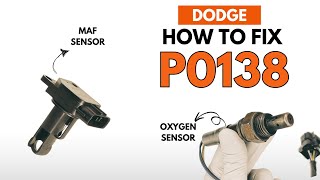
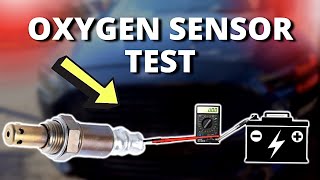
![How to Fix P0138 Engine Code in 3 Minutes [2 DIY Methods / Only $8.99]](https://img.youtube.com/vi/xhP3cILng74/mqdefault.jpg)
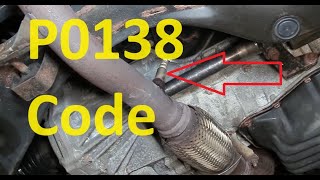
We Have This Part in Stock

The information in this article is provided for general reference and educational purposes only. Vehicle specifications, procedures, and part compatibility can vary by production date, trim level, and region. Always consult your vehicle's factory service manual and verify part numbers before purchasing or performing repairs. Safety-critical components such as airbags, seat belts, and braking systems should be installed by a qualified professional.
- Dodge Durango:
- 🧭 Diagnostic Flowchart
- 🎬 Helpful Videos
- 🛍️ Shop This Part
- What's Unique About the 1998-2003 Dodge Durango
- Symptoms You May Notice
- Most Likely Causes
- Rare But Worth Checking
- Diagnosis Steps
- Parts You'll Likely Need
- Related Codes That Often Appear With This One
- Technical Service Bulletins (TSBs) & Recalls
- Platform-Specific Known Issues
- Mechanic-Grade Diagnostic Values
- Scan Tool Commands That Help
- Wiring & Ground Locations
- Real Owner Repair Stories
- When the Usual Fixes Don't Work
- OEM Part Supersession History
- Model Year Variations Within This Range
- Real Owner Stories
- 2002 Dodge Durango
- 2002 Dodge Durango
- Dodge Dakota 5.9L R/T
- 2003 Dodge Ram 5.9L
- 2000 Dodge Durango 5.9L
- Related OBD-II Codes
- Frequently Asked Questions
- 🎟️ Get 5% Off