

P0138 on 2001-2012 Ford Escape: O2 Sensor High Voltage Causes and Fixes
This code almost always means the downstream oxygen sensor (Bank 1, Sensor 2) has failed. It's a common DIY repair costing between $50 and $150 for the part. The sensor is located in the exhaust system after the catalytic converter. Before replacing, it's crucial to inspect the wiring for melting or shorts, as this is another common failure point.
- P0138 points to a high voltage fault from the downstream oxygen sensor on Bank 1.
- The most common fix is to replace the Bank 1, Sensor 2 O2 sensor.
- Before replacing the sensor, always inspect the wiring harness for damage, as this is another frequent cause.
- On V6 models, Bank 1 is the cylinder bank closer to the firewall. On 4-cylinder models, there is only one bank.
- This repair is generally considered DIY-friendly and requires an O2 sensor socket.
What's Unique About the 2001-2012 Ford Escape
The 2001-2012 Ford Escape spans two vehicle generations and offered both inline-four (I4) and V6 engines. For I4 engines (2.0L, 2.3L, 2.5L), there is only one bank and two O2 sensors total, so 'Bank 1' is the entire engine. For V6 models (3.0L), 'Bank 1' is the cylinder bank closer to the firewall (the rear of the engine bay), which has its own upstream and downstream O2 sensors. This distinction is critical for locating the correct exhaust components for diagnosis. The V6 has four O2 sensors in total, while the I4 has two.
Generation note: This guide covers the first (2001-2007) and second (2008-2012) generations of the Ford Escape. The primary difference regarding this code is the engine configuration. V6 models have two banks of cylinders, with Bank 1 being toward the firewall. For I4 models, there is only a single bank. The diagnostic process is otherwise identical. The number of O2 sensors differs: V6 models have four, while I4 models have two.
Symptoms You May Notice
- Check Engine Light is on
- Increased fuel consumption
- Rough or unstable idle
- Failed emissions test
- Strong exhaust odor (due to rich fuel mixture)
- Poor engine performance or lack of acceleration
- Replacing the upstream oxygen sensor (Sensor 1). P0138 specifically refers to Sensor 2, which is located after the catalytic converter.
- Replacing the catalytic converter. While a failing converter can cause other O2 sensor codes (like P0420), it is not a direct cause of a P0138 high voltage fault. A P0138 fault left unfixed can, however, damage the converter over time.
- Ignoring wiring damage. Many owners replace the sensor only to have the code return because the underlying issue was a short or break in the harness.
Most Likely Causes
- Faulty Downstream Oxygen Sensor (Bank 1, Sensor 2) 🔴 High Probability → Shop Oxygen Sensor Oxygen sensors are wear-and-tear items exposed to extreme heat and contaminants like carbon, oil, and coolant. They have a finite lifespan, often failing after 80,000-100,000 miles, leading to incorrect voltage readings.
How to confirm: After checking wiring, use an OBD-II scanner to monitor live data for the B1S2 sensor (Ford PID: O2S12). If the voltage is stuck high (e.g., >0.9V) and doesn't fluctuate, the sensor is likely bad. The most definitive test is to replace it if wiring checks out.
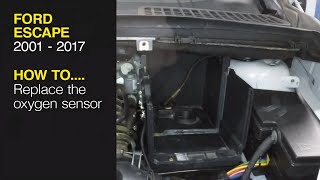
Typical fix: Replace the Bank 1, Sensor 2 oxygen sensor. Soaking the old sensor's threads with penetrating oil beforehand is highly recommended. The new sensor should come with anti-seize compound on the threads. 🎬 Watch: A step-by-step guide to replacing the oxygen sensor.
Est. part cost: $50-$150 - Damaged Wiring or Connector 🟡 Medium Probability The downstream O2 sensor harness is located under the vehicle and is exposed to road debris, moisture, and extreme exhaust heat. This can cause wires to fray, melt against the exhaust pipe, or lead to corrosion in the connector pins, causing a short to power.
How to confirm: Visually inspect the entire wiring harness from the O2 sensor to its connection point. Look for breaks, melting, or green corrosion in the connector pins. A wiggle test on the harness while monitoring live data can sometimes reveal an intermittent short. Use a multimeter to check for a short to power on the signal wire.
Typical fix: Repair the damaged section of the harness or clean the connector. In severe cases, a new connector pigtail may be needed. Ensure the repaired harness is secured away from the exhaust.
Est. part cost: $10-$40 - Exhaust Leak ⚪ Low Probability Rust can cause leaks at exhaust manifold gaskets or flange connections, especially on older vehicles from regions where road salt is used. A leak before the O2 sensor can introduce outside air, ironically causing the PCM to enrich the fuel mixture, which can sometimes lead to high voltage readings downstream.
How to confirm: Listen for a ticking or hissing sound from the exhaust, especially when the engine is cold. A visual inspection may reveal black soot around a leaking gasket or flange. A shop can use a smoke machine to pinpoint the leak.
Typical fix: Replace the leaking gasket or tighten the loose connection. More severe rust may require pipe replacement.
Est. part cost: $20-$100
Rare But Worth Checking
- Engine Running Excessively Rich: A rich condition (too much fuel) can foul the O2 sensor and cause a high voltage reading. This is often accompanied by other codes (e.g., for a mass airflow sensor, fuel injectors, or fuel pressure regulator) and symptoms like black smoke from the exhaust. A leaking fuel injector or high fuel pressure are potential root causes.
- Faulty Powertrain Control Module (PCM): This is extremely rare and should be the absolute last resort. The PCM should only be considered after all other possibilities, including the sensor, wiring, and fuel system, have been exhaustively ruled out by a professional. Ford's own diagnostic manual suggests this as a final step if resistance checks on the harness pass.
Diagnosis Steps
- Read the code: Use an OBD-II scanner to confirm P0138 is the active code and check for any other related codes.
- Check Live Data: Observe the voltage for 'O2S12' (Oxygen Sensor, Bank 1, Sensor 2). A healthy downstream sensor on a warm engine should have a relatively stable voltage. If it is stuck high (above 0.9V), it confirms the fault condition.
- Inspect Wiring: Perform a thorough visual inspection of the O2 sensor's wiring harness and connector. Look for any signs of melting, chafing, corrosion, or being disconnected. This is a very common failure point.
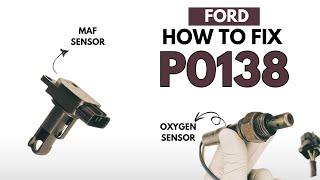
- Test the Circuit: Disconnect the sensor and check the vehicle-side harness connector. With the key on, engine off, check for voltage on the signal wire. There should be no significant voltage; if there is (e.g., 5V or 12V), you have a short to power in the harness that must be found and repaired. 🎬 See these two methods for diagnosing and fixing the P0138 code.
- Test for Internal Short: With the sensor disconnected and key on, check the O2S12 PID on the scanner. If the voltage is still high (e.g., 1.5V or greater), this points towards a short to power in the harness or a PCM fault. If the voltage drops, this suggests the original sensor was shorted internally.
- Replace the Sensor: If the wiring and connector are in good condition and there is no short circuit, the oxygen sensor itself is the most likely cause of the problem.
- Clear Code and Test Drive: After replacing the sensor, clear the trouble code with the scanner and perform a test drive, including highway speeds, to ensure the code does not return.
Parts You'll Likely Need
- Oxygen Sensor (Bank 1, Sensor 2)
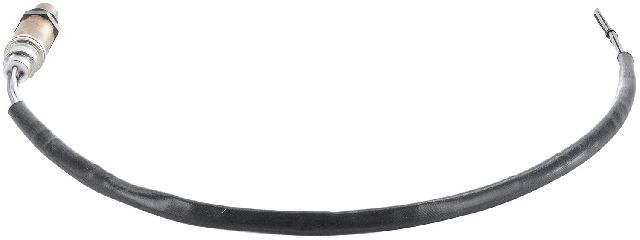
(OEM #Motorcraft DY-1034 (V6, varies by year), Motorcraft DY-997 (I4, varies by year))— This is the downstream (post-catalyst) sensor that has most likely failed due to age or contamination, causing the high voltage reading.
Trusted brands: Motorcraft, Bosch, Denso, NTK
OEM price range: $80-$180
Aftermarket price range: $26-$145
Platform-Specific Known Issues
- Wiring Harness Melting: Owners on forums frequently report that the downstream O2 sensor wiring harness can come loose from its clips and melt on the hot exhaust pipe, causing a short circuit that triggers P0138. The fix requires repairing the wires and properly securing the harness away from the exhaust. This should be the first visual check.
- V6 Bank 1 Location Confusion: A common point of confusion for V6 owners is correctly identifying Bank 1. It is the bank of cylinders against the firewall. Sensor 2 for this bank is located on the catalytic converter that services those rear cylinders, making access more difficult than the sensor for Bank 2 (front of vehicle). 🎬 Watch: DIY walkthrough for replacing the Bank 1 Sensor 2 on V6 models.
Mechanic-Grade Diagnostic Values
- Downstream O2 Sensor (HO2S12) Live Data Voltage — expected: Relatively stable voltage around 0.45V on a warm, closed-loop engine.. Failure: Voltage is stuck high, consistently above 0.8V - 0.9V. A reading of 1.5V or greater indicates a direct short to power.
- O2 Sensor Heater Circuit Resistance — expected: Typically between 2 and 20 Ohms, but varies by sensor manufacturer.. Failure: An open circuit (infinite resistance) or a dead short (zero resistance) indicates a failed heater element within the sensor.
- Harness Signal Wire Voltage (Sensor Disconnected, Key On) — expected: Near 0V. The PCM provides a low reference voltage, not battery voltage.. Failure: Voltage reading of 5V (VREF) or 12V (VPWR) indicates the signal wire is shorted to another power source in the harness.
- Resistance between HO2S Signal Circuit and VPWR/VREF at PCM Connector — expected: Greater than 10,000 Ohms.. Failure: Resistance less than 10,000 Ohms indicates a short in the harness between the PCM and the O2 sensor connector.
Scan Tool Commands That Help
- Ford IDS (or equivalent professional scanner): PID Monitoring (O2S11, O2S12, LONGFT1, SHRTFT1) — Used during initial diagnosis to compare the behavior of the upstream (O2S11) and downstream (O2S12) sensors. A normally switching upstream sensor with a stuck-high downstream sensor points away from a general rich condition and towards a sensor/circuit specific fault.
Wiring & Ground Locations
- G104 (V6) / G101 (I4) — These are primary engine bay ground points, often located on the fender aprons or near the strut towers. For a 2005 model, a key ground is on the driver's side inner fender. For a 2008, grounds are located near the battery and on the engine itself.. The PCM and its sensor circuits rely on clean ground connections. A corroded or loose primary ground can introduce electrical noise and voltage offsets, potentially causing the PCM to misinterpret the O2 sensor's signal.
- Powertrain Control Module (PCM) Connector — Typically located in the engine bay, often on the firewall or an inner fender. On a 2005-2007 Escape, it's on the passenger side of the firewall.. This is the termination point for the O2 sensor harness. Advanced diagnostics, such as checking for a short to power in the harness, require disconnecting this connector and testing for resistance between the O2 signal pin and power pins (VPWR/VREF).
- S132 (V6 Models) — A splice point in the wiring harness, often located in the engine control sensor harness.. Splices are potential failure points for corrosion and intermittent connections. If multiple sensors share a circuit that passes through this splice, it could be a source of the fault.
Real Owner Repair Stories
- Reddit r/fordescape user (Ford Escape, year not specified) — Check Engine Light with code P0138.
❌ Tried (didn't work) Replacing the O2 sensor.
✅ What actually fixed it The final fix was replacing the Powertrain Control Module (PCM). The diagnostic procedure pointed to a PCM failure after checking the harness for shorts and finding none.
OEM Part Supersession History
Motorcraft DY-1034→Motorcraft DY-1401— Part number update/revision by the manufacturer.
Heads up: The new part number (DY-1401) is the direct replacement for DY-1034 and should be fully compatible for applications that specified the original part.
Model Year Variations Within This Range
- 2001-2007 vs 2008-2012: The physical location of grounds and harness connectors may differ between the first generation (2001-2007) and the second generation (2008-2012) due to chassis and engine bay layout changes. For example, wiring diagrams for a 2005 model show different ground distribution layouts than a 2008 model.
- V6 Models (e.g., 2011): On V6 models, the two downstream sensors (Bank 1 Sensor 2 and Bank 2 Sensor 2) are typically the same part number, while the two upstream sensors are also the same as each other but different from the downstream sensors. They are not interchangeable between upstream and downstream positions.
Diagnostic Flowchart
Real Owner Stories
Aggregated from forums and TSBs cited above. Mileages and costs reflect what owners reported in those sources.
2011 Ford Escape XLT V6
Symptoms: Check Engine Light with code P0138.
What fixed it: Replaced the front downstream/Bank 1 Sensor 2 oxygen sensor with a Motorcraft/NTK unit.
Source hint: Reddit r/MechanicAdvice
2007 Ford Escape 3.0L — 118000 miles
Symptoms: O2 sensor codes appeared alongside other engine issues.
What fixed it: Performed a full diagnostic scan to address all underlying issues rather than just focusing on the P0138 code in isolation.
Source hint: ScannerDanner Forum
2004 Ford Escape V6
Symptoms: Failed emissions test due to an O2 sensor code.
What fixed it: Checked for chafed wires or loose connections in the harness before replacing the sensors.
Source hint: DoItYourself.com Community Forums
Ford Escape (General)
Symptoms: Triggered P0138 code requiring diagnosis.
What fixed it: Followed Ford's official diagnostic flowchart to check for shorts to power in the harness and sensor.
Source hint: Reddit r/fordescape
Related OBD-II Codes
Frequently Asked Questions
Where is Bank 1 Sensor 2 located on my V6 Ford Escape?
Why does the wiring harness for the O2 sensor fail so often on the 2001-2012 Escape?
Can an exhaust leak cause the P0138 code on my Escape?
What brand of oxygen sensor should I use for my 2011 Escape?
I have a 2004 Escape V6 failing emissions with P0138. Should I just replace all the sensors?
Does the P0138 code mean my PCM is bad?
Helpful Videos
We Have This Part in Stock


The information in this article is provided for general reference and educational purposes only. Vehicle specifications, procedures, and part compatibility can vary by production date, trim level, and region. Always consult your vehicle's factory service manual and verify part numbers before purchasing or performing repairs. Safety-critical components such as airbags, seat belts, and braking systems should be installed by a qualified professional.
- Ford Escape:
- 🧭 Diagnostic Flowchart
- 🎬 Helpful Videos
- 🛍️ Shop This Part
- What's Unique About the 2001-2012 Ford Escape
- Symptoms You May Notice
- Most Likely Causes
- Rare But Worth Checking
- Diagnosis Steps
- Parts You'll Likely Need
- Platform-Specific Known Issues
- Mechanic-Grade Diagnostic Values
- Scan Tool Commands That Help
- Wiring & Ground Locations
- Real Owner Repair Stories
- OEM Part Supersession History
- Model Year Variations Within This Range
- Real Owner Stories
- 2011 Ford Escape XLT V6
- 2007 Ford Escape 3.0L — 118000 miles
- 2004 Ford Escape V6
- Ford Escape (General)
- Related OBD-II Codes
- Frequently Asked Questions
- 🎟️ Get 5% Off