

P0138 on 2011-2019 Ford Explorer: O2 Sensor High Voltage Causes and Fixes
For a 2011-2019 Ford Explorer, code P0138 is most often caused by a failed downstream oxygen sensor (Bank 1, Sensor 2). Expect to pay $50-$150 for an aftermarket sensor or $200+ for OEM. Before replacing, check the wiring and connector for corrosion or damage, as this is also a common failure point, especially on the harness side.
- P0138 on your Explorer almost always points to the downstream O2 sensor on the firewall side (for V6s) or its wiring.
- Before buying a new sensor, always inspect the wiring and connector first. A corroded connector is a common issue and will need to be fixed for a lasting repair.
- The sensor can be difficult to access and may be seized in the exhaust pipe. Soaking it with penetrating oil beforehand is highly recommended, and heat may be required for removal.
What's Unique About the 2011-2019 Ford Explorer
On the V6 engines (3.5L NA & EcoBoost) in the 2011-2019 Explorer, 'Bank 1' is the cylinder bank located against the firewall, making the Bank 1 Sensor 2 (downstream) somewhat difficult to access. It is located after the catalytic converter on the firewall side, near the oil pan. While a well-documented issue exists on the next generation (2020+) where the sensor connector is placed in the wheel well and is prone to water damage, owners of 2011-2019 models should still pay close attention to the wiring harness and connector for signs of corrosion, heat damage from the exhaust, or water intrusion, as this remains a high-probability cause of failure after the sensor itself.
Symptoms You May Notice
- Check Engine Light is on
- Increased fuel consumption
- Rough idling or engine hesitation
- Reduced engine performance or stalling
- Failed emissions test
- Strong exhaust odor or black smoke due to rich fuel mixture
- Replacing the oxygen sensor without first inspecting the wiring and connector. A corroded connector can ruin a new sensor or cause the same code to return.
- Replacing the O2 sensor when the actual problem is a rich running condition caused by another component like a fuel injector or MAF sensor.
Most Likely Causes
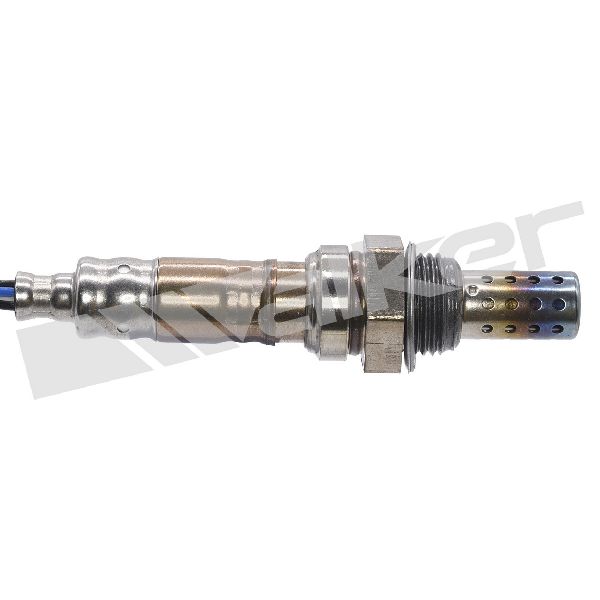
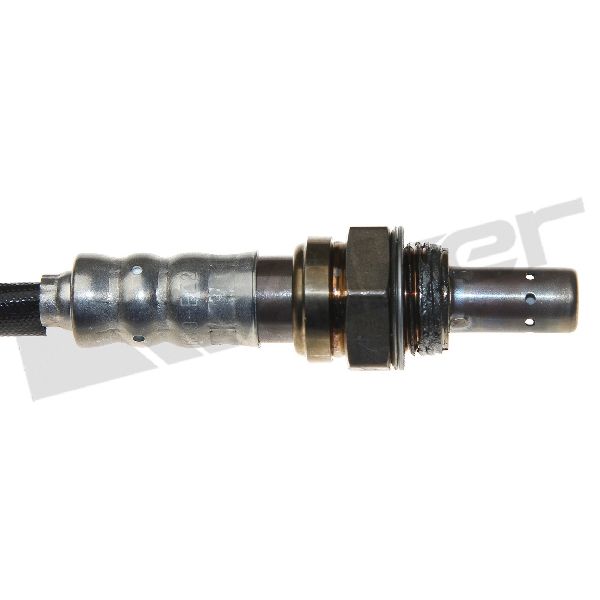
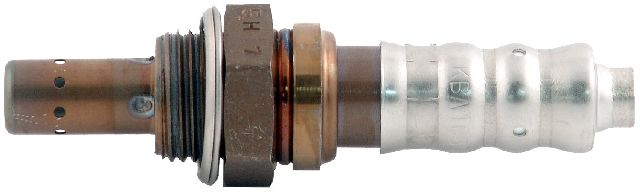
- Faulty Downstream Oxygen Sensor (Bank 1, Sensor 2) 🔴 High Probability → Shop Oxygen Sensor Oxygen sensors are wear-and-tear items that fail over time due to constant exposure to high heat and exhaust gases. Contamination from engine byproducts, such as carbon, can also cause failure.
How to confirm: After checking wiring, the most common fix is replacing the sensor. A professional can use a scan tool to observe the live voltage data from the sensor; a healthy downstream sensor should show a relatively stable voltage, while a faulty one may be stuck high (e.g., >0.9V). A DIYer can swap the downstream sensors (Bank 1 and Bank 2) and see if the code changes to P0158 (Bank 2, Sensor 2), which would confirm a bad sensor.
Typical fix: Replace the Bank 1, Sensor 2 oxygen sensor. 🎬 Watch: Step-by-step Bank 1 Sensor 2 replacement on a 2013 Explorer Soaking the sensor in penetrating oil before removal is highly recommended as they are often seized in the exhaust pipe.
Est. part cost: $50-$150 - Damaged Wiring or Corroded Connector 🟡 Medium Probability The wiring harness can be damaged by heat from the exhaust, causing wires to melt or become brittle. The connector can also suffer from corrosion, especially if exposed to road salt and moisture, leading to a short circuit that sends a high voltage signal.
How to confirm: Visually inspect the entire wiring harness from the O2 sensor to the main engine harness. Look for melted plastic, frayed wires, or any signs of damage. Disconnect the sensor and check the connector pins for green or white corrosion. A multimeter can be used to check for a short to power in the signal wire.
Typical fix: Repair the damaged section of wiring or replace the connector pigtail. If corrosion is present, clean the terminals with electrical contact cleaner or replace the connector and the sensor.
Est. part cost: $15-$50 for a pigtail - Engine Running Rich ⚪ Low Probability Not specific to the vehicle, but a possible root cause. Issues like a leaking fuel injector, a faulty fuel pressure regulator, or a bad mass airflow (MAF) sensor can cause an overly rich fuel mixture.
How to confirm: The O2 sensor is correctly reporting a high voltage because there is unburned fuel in the exhaust. This condition is usually accompanied by other codes, such as P0172 (System Too Rich). Diagnose and fix other fuel-related codes first. Check fuel trims with a scan tool.
Typical fix: Address the root cause of the rich condition, which may involve replacing a fuel injector, fuel pressure regulator, or cleaning a MAF sensor.
Est. part cost: $100-$500+
Rare But Worth Checking
- Exhaust Leak: An exhaust leak before the O2 sensor can sometimes draw in outside air and confuse the sensor, though this more commonly causes low voltage codes, it can lead to erratic readings that may trigger a high voltage code under certain conditions.
- Faulty Powertrain Control Module (PCM): This is very rare. The PCM itself can fail, but all other possibilities should be exhausted before considering PCM replacement.
- Inefficient or Damaged Catalytic Converter: A failing or broken-up catalytic converter can cause abnormal readings from the downstream O2 sensor. This is a more expensive repair and should be considered after other causes are ruled out.
Diagnosis Steps
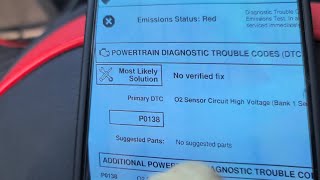
- Read the code with an OBD-II scanner to confirm P0138 is present.
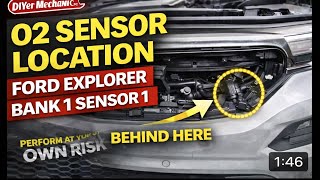
- Visually inspect the Bank 1, Sensor 2 oxygen sensor and its wiring. On V6 models, this is on the firewall side, after the catalytic converter. 🎬 See this video to help locate the Bank 1 sensors Look for any signs of melting, chafing, or physical damage to the wires.
- Disconnect the sensor's electrical connector. Inspect for moisture, corrosion (white or green powder), or bent pins. Clean with electrical contact cleaner if dirty, and apply dielectric grease upon reassembly to prevent future moisture intrusion.
- For advanced diagnosis: Use a scan tool to monitor the live voltage from Bank 1, Sensor 2 with the engine running. If it is stuck high (e.g., >0.9V) and not fluctuating, it confirms the fault condition.
- To isolate the sensor from the wiring, you can swap the Bank 1 and Bank 2 downstream sensors. If the code changes to P0158 (Bank 2 Sensor 2 fault), the sensor itself is bad. If the P0138 code returns, the problem is likely in the wiring or PCM circuit for Bank 1.
- If the wiring looks good and the sensor is suspected, replacement is the next logical step. A 22mm or 7/8" oxygen sensor socket is requ 🎬 Watch: Complete walkthrough for replacing all four oxygen sensorsired. The sensor may be seized, requiring heat or significant force to remove.
- If a new sensor and good wiring do not fix the code, investigate potential causes of a rich fuel condition (check fuel trims, look for other codes like P0172).
Parts You'll Likely Need
- Oxygen Sensor (Bank 1, Sensor 2)
(OEM #8F9Z-9F472-H (Motorcraft DY1185) - Note: This is a common upstream/downstream sensor, but always verify with VIN.)— This is the most common failure item for code P0138. It is a standard wear-and-tear component.
Trusted brands: Motorcraft, Bosch, Denso, NGK/NTK
OEM price range: $100-$180
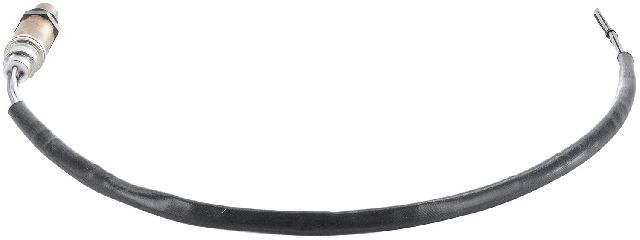
Aftermarket price range: $50-$150 - Oxygen Sensor Connector Pigtail — If the connector is corroded or damaged, replacing the pigtail on the harness side is necessary for a reliable repair. This is a known issue on later models and can occur on these as well.
Trusted brands: Motorcraft, Dorman
OEM price range: $30-$60
Aftermarket price range: $15-$30
Related Codes That Often Appear With This One
- P0141 — This code indicates a fault in the heater circuit of the same sensor (Bank 1, Sensor 2). They often appear together when the sensor fails internally or its connector is damaged, affecting multiple circuits.
- P0172 — This code means 'System Too Rich (Bank 1)'. If you see P0138 and P0172 together, it's a strong clue that the O2 sensor is not faulty, but is correctly detecting a rich fuel condition that needs to be diagnosed separately.
Platform-Specific Known Issues
- A user on Reddit with a 2013 Explorer reported having to replace the purge valve solenoid to resolve a recurring P0138 code, suggesting it was part of a larger fuel system issue.
- Multiple owners on forums and YouTube have confirmed the difficulty of accessing the Bank 1 sensors on the 3.5L V6 due to their location on the firewall side of the engine.
- A repair video for a 2013 Explorer showed the mechanic running into a rounded-off sensor that would require a torch to remove, highlighting the common problem of sensors seizing in the exhaust pipe.
Mechanic-Grade Diagnostic Values
- Downstream O2 Sensor (HO2S12) Live Data Voltage — expected: A healthy downstream sensor should show a relatively stable voltage that drifts slowly, typically between 0.5V and 0.8V on a warm, running engine.. Failure: The PCM logs P0138 when the voltage is sustained above 1.1-1.2 volts for an extended period (e.g., >10 seconds). A reading stuck above 0.9V on a scan tool is a strong indicator of a fault.
- O2 Sensor Signal Wire Voltage (at connector, disconnected) — expected: With the sensor disconnected and the key on (engine off), probing the signal wire on the harness side should show a bias voltage from the PCM, typically around 0.45V.. Failure: If you measure battery voltage (12V+) on the signal wire, it indicates a short-to-power in the wiring harness, which is the direct cause of the P0138 code.
Scan Tool Commands That Help
- Ford IDS (or equivalent high-level scanner): KOER (Key On, Engine Running) Self-Test — This command initiates a series of automated system checks while the engine is running. It can confirm if the P0138 fault is currently active and help differentiate between a hard fault and an intermittent one.
- Ford IDS (or equivalent high-level scanner): Live Data Graphing - HO2S12 Voltage — Graphing the voltage of the Bank 1 Sensor 2 is the primary diagnostic step. This allows the technician to visually confirm if the voltage is stuck high, as opposed to fluctuating normally, confirming the condition described by the code.
Wiring & Ground Locations
- G100 / G105 — Located at the top rear of the engine.. These are primary engine grounds. A poor ground connection here can cause floating voltages and erratic sensor readings throughout the engine management system, potentially leading to incorrect voltage readings from O2 sensors.
- G103 / G101 — Located at the left front corner of the engine compartment.. This is a key chassis ground point. The PCM and sensor circuits rely on solid ground paths. Corrosion or looseness at this point can introduce resistance and voltage offsets, potentially triggering fault codes like P0138.
- O2 Sensor Harness Connector — The Bank 1, Sensor 2 connector is located on the firewall side, accessible from underneath the vehicle, near the oil pan and catalytic converter.. This connector is the most likely point for wiring issues. Its location makes it susceptible to heat damage from the exhaust and contamination from oil leaks or road debris, which can cause shorts or corrosion leading to a high voltage signal.
Real Owner Repair Stories
- Reddit user in /r/FordExplorer and /r/MechanicAdvice (2013 Ford Explorer) — Persistent P0138 code.
❌ Tried (didn't work) Replaced both O2 sensors (presumably one upstream and one downstream, but not the correct ones for Bank 1 Sensor 2).
✅ What actually fixed it The user was advised that the V6 engine has four O2 sensors and they likely replaced the wrong one. The fix required identifying and replacing the correct sensor: Bank 1 (firewall side), Sensor 2 (post-catalytic converter). The user was also advised to swap the two downstream sensors to see if the code followed the sensor, confirming a bad sensor before buying a new one.
OEM Part Supersession History
8F9Z-9F472-H→Motorcraft DY-1185— This is the service part number for the original engineering number.
Heads up: While DY-1185 is listed for many applications, including upstream, some sources indicate different part numbers for the downstream sensors. For the 2011-2019 Explorer 3.5L, Motorcraft DY-1173 is often specified for Bank 1 Sensor 2 (rear/downstream) and DY-1153 for Bank 2 Sensor 2 (front/downstream). Always verify the correct part number with the vehicle's VIN.
Model Year Variations Within This Range
- 2011-2019: On 3.5L V6 engines, Bank 1 (firewall side) and Bank 2 (radiator side) use different part numbers for their downstream (Sensor 2) oxygen sensors. Bank 1 Sensor 2 is often Motorcraft DY-1173, while Bank 2 Sensor 2 is DY-1153. The upstream sensors (Sensor 1) for both banks are typically the same part, DY-1178.
Diagnostic Flowchart
Other Known Issues on This Vehicle
Issues unrelated to this code that are worth knowing about as an owner of this generation:
- Internal Water Pump Failure (3.5L V6) 🔴 High — Can occur around 100,000 miles. Failure allows coolant to mix with engine oil, potentially causing catastrophic engine damage if not caught early.
- Power Transfer Unit (PTU) Failure (AWD Models) 🔴 High — Commonly occurs due to overheating and breakdown of the non-serviceable gear oil. Symptoms include grinding noises or a smell of burning gear oil. (Ref: No recall, but a well-known issue. Aftermarket offers solutions with drain plugs.)
- Exhaust Odor in Cabin 🟠 Medium — Widespread complaints led to a NHTSA investigation covering 2011-2017 models. Can be caused by cracked exhaust manifolds or poor body sealing. (Ref: Ford issued TSBs (e.g., TSB 16-0166) and a Field Service Action to seal bodies and reprogram HVAC, but no formal recall was issued.)
- Cracked/Peeling Hood Paint 🟡 Low — Primarily affects the aluminum hood on earlier models (2011-2015), with corrosion bubbling under the paint on the leading edge. (Ref: A class-action lawsuit was filed over this issue.)
- Rear Suspension Toe Link Fracture 🔴 High — Affects 2011-2017 models, can lead to sudden loss of steering control. (Ref: Ford Recall 19S17 (NHTSA 19V-435) was issued to replace the rear suspension toe links.)
- Electronic Throttle Body Failure 🟠 Medium — Can cause the vehicle to suddenly lose acceleration and enter 'limp mode'. (Ref: A known issue, particularly on earlier models of the generation.)
Used vs. New Parts: Buying Guide for This Vehicle
When a used part is the smart pick: Never. Oxygen sensors are wear-and-tear items with a finite lifespan, typically around 100,000 miles. Installing a used sensor is risky as its remaining life is unknown, and it may fail shortly after installation, causing the same code to return.
Donor-vehicle mileage cap: roughly under 10000 miles for the part to have meaningful remaining life.
What to inspect on the donor part:
- Not applicable as used sensors are not recommended.
OEM-only on this vehicle (don't cheap out):
- While not strictly OEM-only, Ford PCMs can be sensitive to the voltage signals from aftermarket sensors. Using a Motorcraft sensor is the safest bet to ensure compatibility and avoid the code returning due to out-of-spec readings from a cheaper part.
Aftermarket brands forum-validated for this vehicle:
- NTK (a brand of NGK)
- Denso
- Bosch
Brands owners have reported issues with on this vehicle:
- Unnamed, 'white-box', or ultra-cheap online marketplace brands. These often use lower-quality sensing elements and may not meet the precise voltage specifications required by the PCM, leading to recurring codes.
Real Owner Stories
Aggregated from forums and TSBs cited above. Mileages and costs reflect what owners reported in those sources.
2013 Ford Explorer 3.5L V6
Symptoms: Check engine light with code P0138; recurring code even after initial troubleshooting.
What fixed it: Replacing the purge valve solenoid.
Source hint: Reddit r/FordExplorer thread titled '2013 for explorer keeps giving p0138 code for bad...'
2013 Ford Explorer
Symptoms: The mechanic encountered a rounded-off oxygen sensor during the repair process.
What fixed it: The sensor was seized in the exhaust pipe and required a torch for removal.
Source hint: vehicle_specific_issues repair video for a 2013 Explorer
Related OBD-II Codes
Frequently Asked Questions
Where is the Bank 1, Sensor 2 oxygen sensor located on my 3.5L V6 Explorer?
Is there a TSB for the exhaust smell I'm noticing along with the P0138 code?
Could my P0138 code be related to the rear suspension recall on my 2013 Explorer?
Can I swap sensors to test if the O2 sensor is actually bad?
Why is my mechanic suggesting a torch to remove the O2 sensor?
Could a fuel system part like the purge valve cause this code on a 2013 Explorer?
Helpful Videos
We Have This Part in Stock

The information in this article is provided for general reference and educational purposes only. Vehicle specifications, procedures, and part compatibility can vary by production date, trim level, and region. Always consult your vehicle's factory service manual and verify part numbers before purchasing or performing repairs. Safety-critical components such as airbags, seat belts, and braking systems should be installed by a qualified professional.
- Ford Explorer:
- 🧭 Diagnostic Flowchart
- 🎬 Helpful Videos
- 🛍️ Shop This Part
- What's Unique About the 2011-2019 Ford Explorer
- Symptoms You May Notice
- Most Likely Causes
- Rare But Worth Checking
- Diagnosis Steps
- Parts You'll Likely Need
- Related Codes That Often Appear With This One
- Platform-Specific Known Issues
- Mechanic-Grade Diagnostic Values
- Scan Tool Commands That Help
- Wiring & Ground Locations
- Real Owner Repair Stories
- OEM Part Supersession History
- Model Year Variations Within This Range
- Other Known Issues on This Vehicle
- Used vs. New Parts: Buying Guide for This Vehicle
- Real Owner Stories
- 2013 Ford Explorer 3.5L V6
- 2013 Ford Explorer
- Related OBD-II Codes
- Frequently Asked Questions
- 🎟️ Get 5% Off