

P0138 on 2015-2020 Ford F-150: O2 Sensor High Voltage Causes and Fixes
Code P0138 on a 2015-2020 F-150 most often means the downstream oxygen sensor on the passenger side (Bank 1, Sensor 2) has failed. It can also be caused by damaged wiring. Expect to pay $30-$80 for an aftermarket sensor or $70-$150 for an OEM Motorcraft part, with DIY difficulty rated at 2/5.
- P0138 on your F-150 almost always points to the passenger-side, post-catalytic converter O2 sensor or its wiring.
- Before replacing the sensor, always inspect the wiring harness for melting, chafing, or corrosion, as this is a common failure point on these trucks.
- Driving with this code is possible but not recommended long-term, as it can hurt fuel economy and potentially damage the catalytic converter.
- The repair is straightforward for a DIYer with basic tools, typically involving an O2 sensor socket and some penetrating oil.
- Always clear the code and perform a drive cycle after the repair to confirm the fix.
What's Unique About the 2015-2020 Ford F-150
On the F-150, a workhorse truck, the wiring for the downstream O2 sensors is relatively exposed underneath the vehicle, making it susceptible to damage from road debris, corrosion, or heat from the exhaust. While a failed sensor is the most common culprit, thoroughly inspecting the wiring harness for melting or chafing is a critical first step. A Ford Technical Service Bulletin (TSB 20-2380) for Super Duty trucks highlights a known issue with water intrusion into O2 sensor harness connectors, leading to similar codes, which suggests F-150 owners should pay close attention to connector integrity, especially in wet or snowy climates.
Symptoms You May Notice
- Check Engine Light is illuminated
- Decreased fuel economy
- Rough engine idle or stalling
- Noticeable loss of engine power or sluggish acceleration
- Strong smell of gasoline or rotten eggs from the exhaust
- Failing a vehicle emissions test
- Replacing the catalytic converter. A P0138 code points to a sensor or circuit issue, not typically a bad converter. 🎬 Watch: Understanding P0138 high voltage causes and symptoms A failing converter usually sets a P0420 (Catalyst Efficiency) code.
- Replacing the wrong O2 sensor. Ensure you are replacing Bank 1 (passenger side), Sensor 2 (downstream/post-catalyst).
Most Likely Causes
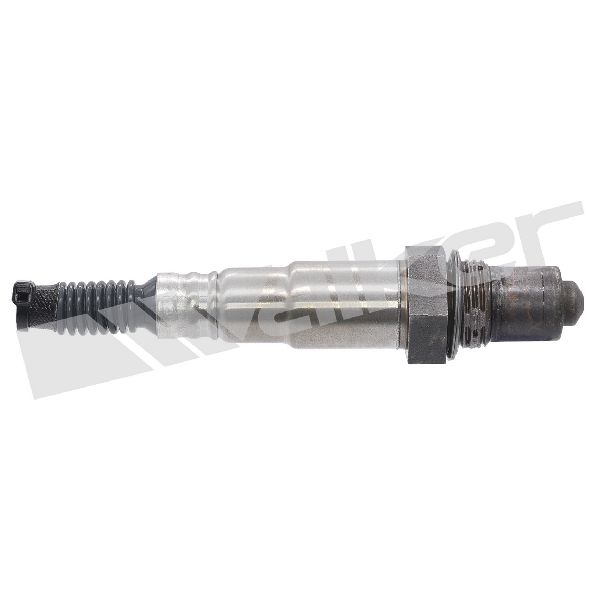
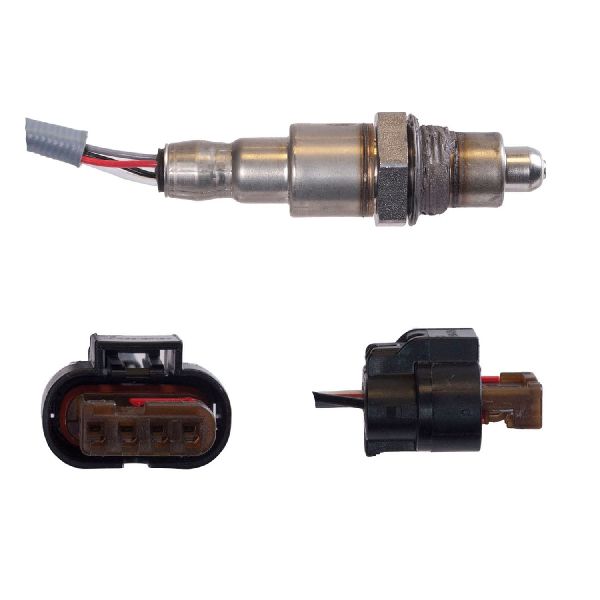
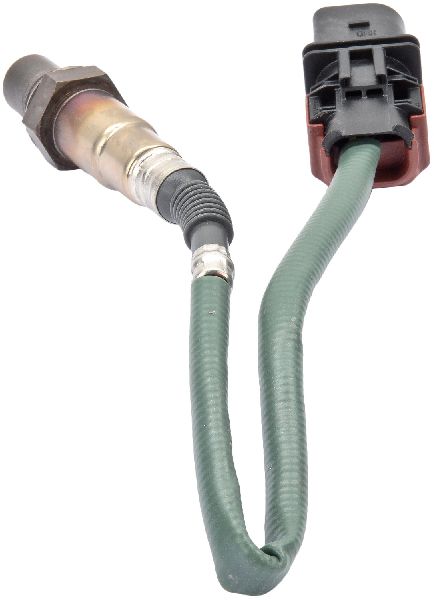
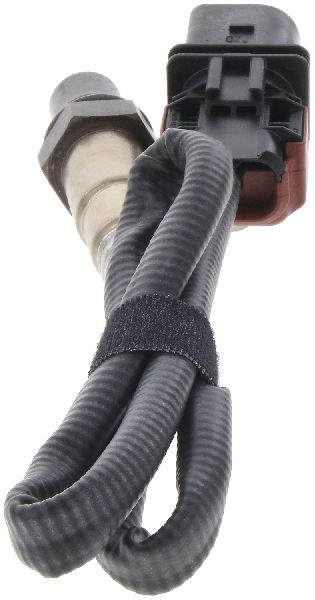
- Faulty Downstream Oxygen Sensor (Bank 1, Sensor 2) 🔴 High Probability → Shop Oxygen Sensor Oxygen sensors are wear items that degrade over time from heat and contaminants. They typically have a lifespan of 80,000 to 100,000 miles. On trucks, their exposed location makes them susceptible to physical damage as well.
How to confirm: Use an OBD-II scanner to monitor the live voltage data for the B1S2 sensor. If the voltage is stuck high (e.g., >0.9V) and doesn't fluctuate, the sensor is likely bad. A healthy downstream sensor should show a relatively stable voltage, unlike the rapidly fluctuating upstream sensor.
Typical fix: Replace the Bank 1, Sensor 2 oxygen sensor. It is located on the passenger side exhaust pipe, after the catalytic converter. Using penetrating oil on the threads before removal is highly recommended.
Est. part cost: $30-$150 - Damaged Wiring or Connector 🟡 Medium Probability The sensor wiring is routed under the truck and can be damaged by road debris, heat from the exhaust system, or corrosion from water and salt. The harness can get brittle from heat cycles and break, or melt if it comes into contact with the exhaust pipe.
How to confirm: Visually inspect the entire wiring harness from the O2 sensor to where it connects to the main harness. Look for melted plastic, chafed or broken wires, and corrosion inside the connector pins. Use a multimeter to check for a short to power on the signal wire.
Typical fix: Repair the damaged section of the wire or replace the pigtail connector. Ensure the harness is properly secured away from heat sources using zip ties or factory clips.
Est. part cost: $15-$50 - Engine Running Rich ⚪ Low Probability Issues like a leaking fuel injector, a faulty fuel pressure regulator, or a dirty Mass Airflow (MAF) sensor can cause excess fuel to enter the combustion chamber. This unburnt fuel exits the engine and can overwhelm the catalytic converter, causing the downstream O2 sensor to read high voltage.
How to confirm: Check for other trouble codes, especially P0172 (System Too Rich Bank 1). Analyze long-term and short-term fuel trims with a scan tool. Consistently negative fuel trims indicate the PCM is trying to reduce fuel to compensate for a rich condition.
Typical fix: Diagnose and repair the root cause of the rich condition, which could involve cleaning the MAF sensor, testing fuel pressure, or replacing a faulty fuel injector.
Est. part cost: $20-$400
Rare But Worth Checking
- Exhaust Leak: An exhaust leak before or near the O2 sensor can sometimes, though rarely, cause erratic or incorrect voltage readings that trigger a P0138 code. More commonly, it causes a low voltage code, but a leak can introduce oxygen that confuses the sensor.
- Powertrain Control Module (PCM) Fault: In very rare cases, the PCM itself may have an internal fault causing it to misinterpret the sensor's signal. This should only be considered after all other possibilities have been exhausted and confirmed by a professional. 🎬 Watch: Complete Ford F-150 O2 sensor diagnostics and replacement guide
Diagnosis Steps
- Connect an OBD-II scanner and confirm P0138 is the active code. Check for any other codes and freeze frame data.
- View the live data stream for the Bank 1 Sensor 2 (B1S2) O2 sensor. A normal downstream sensor shows a slow, steady voltage (typically 0.5V-0.8V). If it's stuck high (above 0.9V) and doesn't change with RPM, the issue is confirmed.
- Perform a thorough visual inspection of the B1S2 oxygen sensor, its connector, and the wiring harness. Look for any signs of melting, chafing, corrosion, or breaks. Ensure the connector is dry and the pins are clean. Pay close attention to where the harness might contact the exhaust or frame.
- If the wiring appears damaged, repair it. Clear the codes and re-test.
- If the wiring is intact, test the circuit. Disconnect the sensor and check the signal wire for a short to voltage using a multimeter. With the key on, engine off, you should not see 12V on the signal wire.
- If the wiring and circuit test good, the oxygen sensor itself is the most likely culprit. Replace the Bank 1, Sensor 2 oxygen sensor.
- After replacement, clear the codes and perform a complete drive cycle to ensure the code does not return.
- If the code persists after replacing the sensor and verifying the wiring, further diagnosis is needed to check for a rich running condition (check fuel trims, look for other codes) or a rare PCM fault.
Parts You'll Likely Need
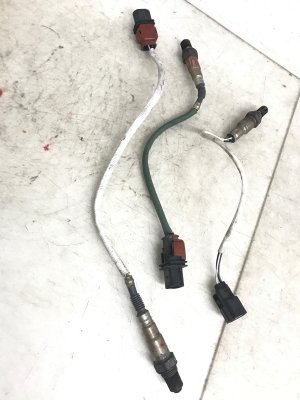
- Downstream Oxygen Sensor (Bank 1, Sensor 2)
(OEM #FL3Z-9G444-D (for 2.7L/5.0L, 2015-17), JL3Z-9G444-B (for 3.3L/5.0L, 2018-20))— This is the most frequent cause of a P0138 code. The sensor is a wear-and-tear item that fails over time.
Trusted brands: Motorcraft, Denso, Bosch, NGK
OEM price range: $70-$150
Aftermarket price range: $30-$80
Related Codes That Often Appear With This One
- P0141 — P0141 indicates a fault in the heater circuit for the same sensor (Bank 1, Sensor 2). It's common to see both codes if the sensor has failed internally, as the heater and sensor elements are housed in the same component.
- P0172 — P0172 means 'System Too Rich (Bank 1)'. If you see this with P0138, it strongly suggests the root cause is an actual rich running condition, not just a faulty sensor.
Technical Service Bulletins (TSBs) & Recalls
- TSB 20-2380: While for 2020 F-Super Duty trucks, it describes an illuminated MIL with DTC P0138 (and others) due to water intrusion into the HO2S connectors on the transmission harness, requiring replacement of the affected sensor and harness. This is relevant context for potential F-150 issues.
Platform-Specific Known Issues
- A Ford TSB for 2020 Super Duty trucks (TSB 20-2380) identifies water intrusion in the transmission harness connectors for O2 sensors as a cause for this and related codes. This indicates a potential weakness in Ford's harness design for trucks of this era, and F-150 owners should be vigilant about checking for moisture and corrosion in the sensor connectors, especially after driving in heavy rain or through water.
- Owners on forums like F150forum.com frequently report the wiring harness for the downstream O2 sensors resting on or near the exhaust, leading to melting and short circuits. When replacing the sensor, it is critical to ensure the new harness is properly secured away from heat sources.
Mechanic-Grade Diagnostic Values
- Downstream O2 Sensor (B1S2) Live Data Voltage — expected: Relatively steady voltage between 0.5V and 0.8V on a warm engine at idle.. Failure: Voltage is stuck high, consistently above 0.9V, and does not fluctuate with changes in engine RPM.
- O2 Sensor Heater Circuit Resistance — expected: 6-20 ohms between the two heater circuit pins on the sensor connector.. Failure: An open circuit (infinite resistance) or a reading far outside the specified range confirms a failed heater element.
- Wiring Harness Continuity — expected: Less than 1.0 ohm of resistance on signal and ground wires from sensor connector to PCM connector.. Failure: Resistance above 1.0 ohm indicates a compromised wire due to corrosion or a partial break.
- Scan Tool Voltage with Sensor Disconnected — expected: May show a high, fixed bias voltage (e.g., 1.27V) on some scan tools like FORSCAN.. Failure: This reading, when the sensor is disconnected, confirms the PCM and wiring up to the connector are likely okay and that the PCM is providing a bias voltage. The fault lies downstream of the connector (in the sensor).
Scan Tool Commands That Help
- Ford IDS / FORSCAN: PCM Self-Test — After verifying wiring and replacing the sensor, this internal PCM diagnostic can help identify if the control module itself has a fault related to the sensor interface board.
- Ford IDS: Re-flash or Update PCM Software — This is a final step if a TSB exists or if all hardware has been ruled out. An outdated calibration file can sometimes have incorrect thresholds for setting sensor codes.
Wiring & Ground Locations
- PCM Grounds — Located on the firewall in the engine compartment. Depending on the model year and engine, there may be one or two ground points.. A poor ground for the Powertrain Control Module can cause a host of erratic sensor readings, including incorrect O2 sensor voltages.
- Main Battery Ground — Located in the engine bay, just in front of the washer fluid reservoir.. This is the primary ground for the entire vehicle electrical system. Corrosion or looseness here can cause widespread, unpredictable electrical issues.
- PCM Connector C175B (2016 5.0L) — The main 121-pin connector on the Powertrain Control Module.. The HO2S12 (Bank 1, Sensor 2) signal wire is located at Pin 19 (Gray-Brown wire) and the signal return is at Pin 18 (Blue-Orange wire). This allows for direct continuity testing from the sensor pigtail to the PCM.
OEM Part Supersession History
FL3Z-9G444-D→N/A— This is the specified part for 2015-2017 models.
Heads up: This part is specified for 2015-2017 F-150s with the 2.7L, 3.5L (non-turbo), and 5.0L engines. It is not the correct part for 2018+ models or the 3.5L EcoBoost, which use a different part number (e.g., JL3Z-9G444-B).
Model Year Variations Within This Range
- 2015-2017: Uses downstream O2 sensor part number FL3Z-9G444-D for 2.7L, 3.5L non-turbo, and 5.0L engines.
- 2018-2020: Uses a different part number for the downstream O2 sensor (JL3Z-9G444-B as noted in Pass 2). The wiring and PCM pinouts may also differ from earlier years, as noted by forum experts.
Diagnostic Flowchart
Other Known Issues on This Vehicle
Issues unrelated to this code that are worth knowing about as an owner of this generation:
- Harsh/Delayed Shifting on 10R80 Transmission 🟠 Medium — Widespread on 2017-2020 models. Can occur at any mileage. (Ref: Multiple TSBs issued, including 21-2357 and 23-2123, which may involve a PCM reprogram or a main control valve body overhaul.)
- Excessive Oil Consumption on 5.0L V8 🟠 Medium — Common on 2018-2020 models. Some owners report consumption greater than 1 quart per 3,000 miles. (Ref: TSB 19-2365 addresses this by reprogramming the PCM to reduce engine vacuum during deceleration and installing a new oil level indicator.)
- Frozen Door Latches in Cold Weather 🔴 High — Very common on 2015-2018 models in cold climates. Can prevent doors from opening or latching shut. (Ref: Customer Satisfaction Program 18N03 provides for the installation of new seals and lubrication, with coverage extended to 2028.)
- Warped Dashboard 🟡 Low — Common on 2015-2020 XL and XLT trims. The dash material lifts and deforms around the windshield defrost vents. (Ref: TSB 20-2268 was issued to guide dealers on replacing the upper dash panel, though some owners report the replacement part also warping.)
- Unintended Downshift on 6-Speed Transmission 🔴 High — Affects 2015-2017 models with the 6R80 transmission, could cause loss of vehicle control. (Ref: A recall was issued to reprogram the PCM and, if necessary, replace the transmission lead frame.)
Used vs. New Parts: Buying Guide for This Vehicle
When a used part is the smart pick: A used part is NOT recommended for the oxygen sensor itself, as it is a wear item with a limited lifespan. However, sourcing a used wiring harness pigtail from a salvage yard is a smart and cost-effective choice if the original connector or wiring is damaged.
Donor-vehicle mileage cap: roughly under 100000 miles for the part to have meaningful remaining life.
What to inspect on the donor part:
- For a wiring pigtail, inspect for flexible, non-cracked wire insulation.
- Ensure the plastic connector housing is not brittle or cracked.
- Check for clean, corrosion-free connector pins.
- Ensure the connector's locking tab is intact.
OEM-only on this vehicle (don't cheap out):
- Oxygen Sensor
Aftermarket brands forum-validated for this vehicle:
- Motorcraft (OEM)
- Bosch
- Denso
- NTK / NGK
Brands owners have reported issues with on this vehicle:
- Unbranded 'white-box' sensors from online marketplaces.
Real Owner Stories
Aggregated from forums and TSBs cited above. Mileages and costs reflect what owners reported in those sources.
2015-2020 Ford F-150
Symptoms: The user noted the P0138 code appeared without any other accompanying trouble codes.
What fixed it: The initial diagnostic process pointed directly to a failed oxygen sensor, requiring replacement of the Bank 1 Sensor 2 unit.
Source hint: https://www.f150forum.com/f38/well-its-still-ford-555898/
2015-2020 Ford F-150
Symptoms: Wiring harness for the downstream O2 sensors resting on or near the exhaust, leading to melting and short circuits.
What fixed it: Replacing the sensor and ensuring the new harness is properly secured away from heat sources using zip ties or factory clips.
Source hint: F150forum.com as cited in vehicle_specific_issues
2020 Ford F-Super Duty (Relevant Context)
Symptoms: Illuminated MIL (Check Engine Light) with DTC P0138.
What fixed it: Replacement of the affected sensor and the transmission harness due to water intrusion into the HO2S connectors.
Source hint: TSB 20-2380
Related OBD-II Codes
Frequently Asked Questions
Does TSB 20-2380 apply to my Ford F-150 if I have code P0138?
Where is the Bank 1 Sensor 2 oxygen sensor located on my F-150?
Could my F-150's 5.0L V8 oil consumption issue be related to P0138?
Is it true that the F-150 wiring harness is prone to melting and causing this code?
Can a dirty MAF sensor on my 3.5L EcoBoost cause a P0138 code?
Helpful Videos
Used OEM Parts in Stock
New Aftermarket Parts Available

The information in this article is provided for general reference and educational purposes only. Vehicle specifications, procedures, and part compatibility can vary by production date, trim level, and region. Always consult your vehicle's factory service manual and verify part numbers before purchasing or performing repairs. Safety-critical components such as airbags, seat belts, and braking systems should be installed by a qualified professional.
- Ford F-150:
- 🧭 Diagnostic Flowchart
- 🎬 Helpful Videos
- 🛍️ Shop This Part
- What's Unique About the 2015-2020 Ford F-150
- Symptoms You May Notice
- Most Likely Causes
- Rare But Worth Checking
- Diagnosis Steps
- Parts You'll Likely Need
- Related Codes That Often Appear With This One
- Technical Service Bulletins (TSBs) & Recalls
- Platform-Specific Known Issues
- Mechanic-Grade Diagnostic Values
- Scan Tool Commands That Help
- Wiring & Ground Locations
- OEM Part Supersession History
- Model Year Variations Within This Range
- Other Known Issues on This Vehicle
- Used vs. New Parts: Buying Guide for This Vehicle
- Real Owner Stories
- 2015-2020 Ford F-150
- 2015-2020 Ford F-150
- 2020 Ford F-Super Duty (Relevant Context)
- Related OBD-II Codes
- Frequently Asked Questions
- 🎟️ Get 5% Off