

P0138 on 2015-2019 GMC Sierra 3500 HD 6.0L: O2 Sensor High Voltage Causes and Fixes
This code almost always points to a failed downstream oxygen sensor on the driver's side. Replacing the Bank 1, Sensor 2 O2 sensor is the most common fix. Before replacing, check for chafed wiring near the front driveshaft and verify the O2 sensor fuses. Stick to OEM (ACDelco) or Denso sensors, as other brands can cause issues. Expect to pay $40-$80 for a quality aftermarket sensor or $90-$150 for an OEM part. It's a straightforward DIY job with the right socket.
- P0138 points to the downstream O2 sensor on the driver's side.
- Before replacing parts, check the O2 sensor fuses and inspect the wiring harness for chafing on the front driveshaft.
- The most likely fix is replacing the sensor itself, which is an accessible and affordable DIY job.
- Always use an OEM (ACDelco) or Denso replacement sensor to avoid compatibility problems.
What's Unique About the 2015-2019 GMC Sierra 3500 HD
On the GMC Sierra 3500 HD, the P0138 code is a very common and straightforward issue. The truck's robust, body-on-frame design provides relatively easy access to the exhaust components. Critically, the wiring harness for the Bank 1, Sensor 2 O2 sensor is often routed close to the front driveshaft, making it extremely vulnerable to chafing and damage, which is a frequent cause of this code alongside sensor failure. The sensor's exposed location also makes it susceptible to damage from road debris, water, and salt.
Symptoms You May Notice
- Check Engine Light is on
- Increased fuel consumption
- Vehicle may fail an emissions test
- Slightly rough idle in some cases
- "Rotten egg" or sulfur smell from the exhaust, indicating poor catalytic converter efficiency.
- Replacing the upstream (Sensor 1) oxygen sensor. The code P0138 is specific to Sensor 2, which is after the catalytic converter.
- Replacing the catalytic converter. While a bad converter can be related to other O2 sensor codes (like P0420), it is not a direct cause of the P0138 high voltage code.
- Replacing the O2 sensor without first checking the fuses and inspecting the wiring harness for chafing against the driveshaft.
Most Likely Causes
- Failed Downstream Oxygen Sensor (Bank 1, Sensor 2) 🔴 High Probability → Shop Oxygen Sensor The sensor is exposed to extreme heat cycles 🎬 Watch: Pro tips for removing stubborn, rusted-on oxygen sensors easily. and environmental contaminants, leading to eventual failure. This is the most common point of failure for this code. Using non-OEM or non-Denso brands can lead to repeat failures or persistent codes.
How to confirm: After confirming the wiring and fuses are good, use an OBD-II scanner to monitor live data for 'O2S B1S2'. If the voltage is stuck high (e.g., >0.9V) and doesn't fluctuate, the sensor has failed.
Typical fix: Replace the Bank 1, Sensor 2 oxygen sensor. Stick to ACDelco or Denso parts.
Est. part cost: $40-$150 - Damaged Wiring or Connector 🔴 High Probability The B1S2 wiring harness runs along the frame and is known to chafe against the front driveshaft, causing a short to power. It can also be damaged by exhaust heat or corrosion from road salt and water. Manufacturer bulletin #PIP5123B notes that technicians should also inspect for a bent terminal on the X131 connector when P0138 is present.
How to confirm: Visually inspect the entire wiring harness from the sensor to its connection point, paying special attention to the area above the front driveshaft. Look for melted plastic, frayed wires, or green corrosion in the connector pins. Test for a short to voltage on the signal wire.
Typical fix: Repair the damaged section of the wiring harness or replace the connector pigtail. Secure the repaired harness away from the driveshaft.
Est. part cost: $15-$50 - Blown O2 Sensor Fuse 🟡 Medium Probability → Shop Oxygen Sensor A short in the O2 sensor heater circuit, often from the aforementioned wiring damage, can blow the fuse that powers the sensor, leading to fault codes. Manufacturer bulletin #PIT5336 indicates that technicians may find the Emission 1 Fuse is open in conjunction with P0138.
How to confirm: Check the 'O2A' and 'O2B' 10-amp fuses in the underhood fuse box. On many GM trucks, these are fuses #8 and #18. If a fuse is blown, inspect the wiring for a short before replacing it.
Typical fix: Replace the blown 10-amp fuse after repairing the underlying short circuit.
Est. part cost: $1-$5 - Engine Running Rich ⚪ Low Probability Issues like a leaking fuel injector or a faulty fuel pressure regulator can cause excess fuel to enter the exhaust, which the sensor may interpret as a high voltage signal. A manufacturer bulletin for another GMC model, #19NA077, associates P0138 with customer concerns of hesitation from a stop.
How to confirm: Check for other trouble codes related to the fuel system (e.g., P0172 Rich Condition). Analyze fuel trim data with a scanner. A professional diagnosis may be needed to pinpoint the source of the rich condition.
Typical fix: Address the root cause of the rich condition, such as replacing a faulty fuel injector or mass airflow sensor.
Est. part cost: $50-$400+
Rare But Worth Checking
- Exhaust Leak: An exhaust leak before the sensor can sometimes, though rarely, cause erratic readings that trigger this code. It's worth a quick check for soot trails or audible leaks near the exhaust manifold or flanges.
- Faulty Engine Control Module (ECM): This is extremely rare, but a fault in the ECM's internal circuits can cause it to misinterpret the sensor's signal. This should only be considered after all other possibilities have been exhaustively ruled out.
Diagnosis Steps
- Connect an OBD-II scanner and confirm that P0138 is the active code.
- Check the 'O2A' and 'O2B' 10-amp fuses in the underhood fuse box (locations may vary, but often fuses #8 and #18 on GM trucks). 🎬 Watch: How to check for common wiring and fuse issues first. If blown, find and repair the short before proceeding.
- View the freeze frame data to see the engine conditions when the code was set.
- Access live data on the scanner and observe the voltage for 'O2S B1S2' (Bank 1, Sensor 2). It should normally fluctuate slowly. If it is stuck above 0.9 volts, the fault is confirmed.
- Safely raise and support the vehicle. Locate the Bank 1 Sensor 2 O2 sensor on the driver's side exhaust pipe, downstream from the catalytic converter.
- Thoroughly inspect the sensor's wiring harness. Pay extremely close attention to the area where the harness passes over the front driveshaft, as chafing and shorting in this location is a very common failure point.
- If the wiring appears damaged, repair it. Clear the codes and re-test.
- If the wiring and fuses are good, the oxygen sensor itself is the most likely culprit.
- Replace the Bank 1, Sensor 2 oxygen sensor. It's highly recommended to use an OEM ACDelco or a Denso sensor and apply anti-seize compound to the threads 🎬 See this step-by-step guide for replacing your O2 sensors. of the new sensor.
- Clear the trouble code with the scanner and perform a drive cycle to ensure the code does not return.
Parts You'll Likely Need
- Downstream Oxygen Sensor (Bank 1, Sensor 2)
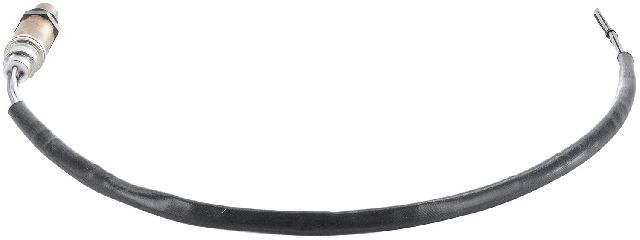
(OEM #12604913 (may be superseded))— This is the component that fails in the vast majority of P0138 cases. Owner and mechanic experiences strongly suggest using OEM (ACDelco) or Denso parts to avoid compatibility issues.
Trusted brands: ACDelco (OEM), Denso (Often the OEM supplier), NGK/NTK
OEM price range: $90-$150
Aftermarket price range: $40-$80
Related Codes That Often Appear With This One
- P0140 — O2 Sensor Circuit No Activity Detected (Bank 1 Sensor 2). This can occur if the wiring is severely damaged or a fuse is blown, causing an intermittent connection that swings between high voltage and no signal at all.
- P0141 — O2 Sensor Heater Circuit Malfunction (Bank 1 Sensor 2). The heater inside the sensor often fails along with the sensing element, or its circuit can short out, triggering both codes simultaneously.
Technical Service Bulletins (TSBs) & Recalls
- TSB 16-NA-175 / 18-NA-355: While not for P0138, this is a critical TSB for owners. It addresses a common torque converter shudder felt during light acceleration. The fix involves a specific transmission fluid flush procedure.
- PIP4112Q: An informal bulletin number mentioned in owner forums regarding a low-speed hesitation or stumble. GM has reportedly classified this as normal operation with no available repair.
- Bulletin #19NA077: Notes that P0138 may be set in conjunction with customer concerns regarding start/stop performance and hesitation from a stop.
- Bulletin #PIT5336: Highlights that technicians may find an open Emission 1 Fuse when diagnosing P0138 and other O2 sensor circuit codes.
- Bulletin #PIP5123B: Provides information regarding P0138 and related codes, advising technicians to inspect for a bent terminal on the X131 connector.
Platform-Specific Known Issues
- B1S2 Wiring Harness Chafing on Front Driveshaft: A very common failure point for the P0138 code on 4WD models is the wiring harness for the driver's side downstream O2 sensor rubbing against the front driveshaft. Over time, this can wear through the insulation and cause the signal wire to short to ground or power, resulting in a persistent high or low voltage code. Any diagnosis of P0138 on this truck must include a careful inspection of this specific area.
Mechanic-Grade Diagnostic Values
- Downstream O2 Sensor (B1S2) Voltage — expected: Should slowly drift just above 0.5V (500mV) on a healthy, warm engine with a good catalytic converter.. Failure: The ECM will set code P0138 if the voltage remains above a specific threshold, typically 999mV (0.99V) to 1.1V, for an extended period (e.g., up to 50 seconds).
- ECM Bias Voltage (Key On, Engine Off) — expected: The ECM supplies a reference voltage of approximately 450mV (0.45V) to the O2 sensor signal circuit.. Failure: If you back-probe the signal wire at the sensor connector with the sensor unplugged, a reading significantly different from 450mV could indicate a wiring issue or an ECM fault.
Wiring & Ground Locations
- B1S2 Connector Pinout (Typical) — On the driver's side exhaust pipe, after the catalytic converter.. Knowing the wire colors and functions is critical for testing. For a typical 4-wire sensor on this platform: High Signal (to ECM Pin 10) is PU/WH (Purple/White), Low Signal (to ECM Pin 11) is TN/WH (Tan/White), Heater Power is PK (Pink), and Heater Ground is L-GN (Light Green).
- Engine Block to Firewall Ground — A ground strap running from the rear of the driver's side cylinder head to the firewall.. A poor ground connection here can introduce electrical noise and voltage offsets, potentially causing incorrect readings from engine sensors, including O2 sensors.
- Main PCM Ground — Grounds for the PCM are often located on the top or rear of the engine block.. The PCM relies on a solid ground reference to accurately interpret sensor voltage. A corroded or loose PCM ground can cause a host of bizarre sensor-related codes, including P0138.
- Frame Rail Grounds — Located on the driver's side frame rail, near the front tire.. These are major chassis ground points. While less likely to directly cause a P0138, poor connections here can contribute to overall electrical system instability.
Real Owner Repair Stories
- Beretta.net Forum User (GM Vehicle (specific model not mentioned, but diagnostic logic is universal)) — Persistent P0138 code, bog/stumble at low RPM, poor MPG.
❌ Tried (didn't work) Initial diagnosis pointed towards a bad O2 sensor or clogged catalytic converter.
✅ What actually fixed it The root cause was found to be corroded grounds giving bad data to the PCM. After fixing the grounds, a faulty Mass Airflow (MAF) sensor and a cracked PCV line (vacuum leak) were also identified and repaired. The combination of these fixes resolved the code and the driveability issues.
OEM Part Supersession History
12604913→This part number may be superseded by newer revisions from GM. It is also cross-referenced by ACDelco as part number 213-3839.— Standard part updates and supplier changes.
Heads up: While this part number is listed for many 6.0L applications, it's critical to verify by VIN. Early 2000s GM trucks used different 'case grounded' vs 'isolated ground' sensors with different connectors, so using a sensor from a different year range may not work even if it physically fits.
Diagnostic Flowchart
Other Known Issues on This Vehicle
Issues unrelated to this code that are worth knowing about as an owner of this generation:
- 6L90 Transmission Torque Converter Shudder 🔴 High — Commonly reported between 80,000 and 150,000 miles. Feels like driving over rumble strips during light acceleration. (Ref: TSB 16-NA-175 / 18-NA-355 details a fluid flush procedure with a specific fluid (Mobil 1 Synthetic LV ATF HP) as the primary fix.)
- Excessive Oil Consumption 🟠 Medium — Some L96 engines may consume oil, with GM's official acceptable limit being as high as 1 quart per 1,000 miles under certain conditions. It is often linked to piston rings or valve seals.
- "Chevy Shake" - Highway Speed Vibration 🟡 Low — A vibration or shake felt at highway speeds (e.g., 65-80 mph). Often attributed to the resonance of the long, one-piece factory driveshaft.
- Low Speed Hesitation / Stumble 🟡 Low — Some owners report a hesitation or stutter when accelerating from low speeds (around 25 mph). Dealers have often stated this is 'normal operation'. (Ref: PIP4112Q (mentioned in forums) reportedly classifies this as 'working as designed' with no fix available.)
Used vs. New Parts: Buying Guide for This Vehicle
When a used part is the smart pick: Buying a used part is generally not recommended for this repair. Oxygen sensors are wear items with a finite lifespan, typically 90,000-120,000 miles. A used sensor from a junkyard has unknown remaining life and may fail shortly after installation. The only exception might be a wiring harness pigtail if the connector is damaged.
Donor-vehicle mileage cap: roughly under 40000 miles for the part to have meaningful remaining life.
What to inspect on the donor part:
- For a wiring pigtail, inspect for any signs of melting, brittleness, or corrosion on the pins.
- Ensure the locking tab on the connector is intact.
- Avoid parts from vehicles in salt-belt regions due to higher corrosion risk.
OEM-only on this vehicle (don't cheap out):
- Oxygen Sensor
Aftermarket brands forum-validated for this vehicle:
- Denso (often the OEM supplier)
- NGK/NTK
Brands owners have reported issues with on this vehicle:
- Bosch (Some forum users report compatibility issues and premature failures with Bosch sensors on GM LS-based engines, though others have success. Given the strong preference for Denso/ACDelco, it's a potential risk).
- Unbranded/generic "eBay" or "Amazon" sensors (These often fail quickly or are dead on arrival).
Real Owner Stories
Aggregated from forums and TSBs cited above. Mileages and costs reflect what owners reported in those sources.
2015 GMC Sierra 3500 HD 6.0L Flex Fuel
Symptoms: The owner experienced a P0138 code that persisted even after replacing the O2 sensor with an aftermarket part. The situation led to an expensive diagnosis involving the ECM and MAF sensor.
What fixed it: The account highlights the necessity of using OEM sensors and performing a proper diagnosis of the fuel system, including potential fuel injector issues, rather than relying on aftermarket sensors.
Source hint: GM-Trucks.com Forum Thread: 'Fixing a P0138 code on 2015 sierra 3500 HD with 6.0 liter flex motor'
2015-2019 GMC Sierra 3500 HD 6.0L V8
Symptoms: A persistent high voltage code (P0138) or low voltage code caused by the signal wire shorting to ground or power.
What fixed it: Repairing the wiring harness where it was rubbing against the front driveshaft and securing the harness away from the shaft.
Source hint: vehicle_specific_issues: B1S2 Wiring Harness Chafing on Front Driveshaft
Related OBD-II Codes
Frequently Asked Questions
I have a P0138 on my 2015 Sierra 3500 HD; which specific sensor should I replace?
My truck is vibrating at highway speeds along with the Check Engine Light. Is this related to P0138?
Does TSB 16-NA-175 apply to my P0138 oxygen sensor code?
Where should I check for wiring damage on my 4WD Sierra 3500 HD?
Which fuses power the O2 sensors on the 6.0L Flex Fuel V8?
Could a sulfur smell from my exhaust be related to P0138?
Helpful Videos
We Have This Part in Stock


The information in this article is provided for general reference and educational purposes only. Vehicle specifications, procedures, and part compatibility can vary by production date, trim level, and region. Always consult your vehicle's factory service manual and verify part numbers before purchasing or performing repairs. Safety-critical components such as airbags, seat belts, and braking systems should be installed by a qualified professional.
- GMC Sierra 3500 HD:
- 🧭 Diagnostic Flowchart
- 🎬 Helpful Videos
- 🛍️ Shop This Part
- What's Unique About the 2015-2019 GMC Sierra 3500 HD
- Symptoms You May Notice
- Most Likely Causes
- Rare But Worth Checking
- Diagnosis Steps
- Parts You'll Likely Need
- Related Codes That Often Appear With This One
- Technical Service Bulletins (TSBs) & Recalls
- Platform-Specific Known Issues
- Mechanic-Grade Diagnostic Values
- Wiring & Ground Locations
- Real Owner Repair Stories
- OEM Part Supersession History
- Other Known Issues on This Vehicle
- Used vs. New Parts: Buying Guide for This Vehicle
- Real Owner Stories
- 2015 GMC Sierra 3500 HD 6.0L Flex Fuel
- 2015-2019 GMC Sierra 3500 HD 6.0L V8
- Related OBD-II Codes
- Frequently Asked Questions
- 🎟️ Get 5% Off