

P0138 on 2016-2022 Honda Pilot: O2 Sensor High Voltage Causes and Fixes
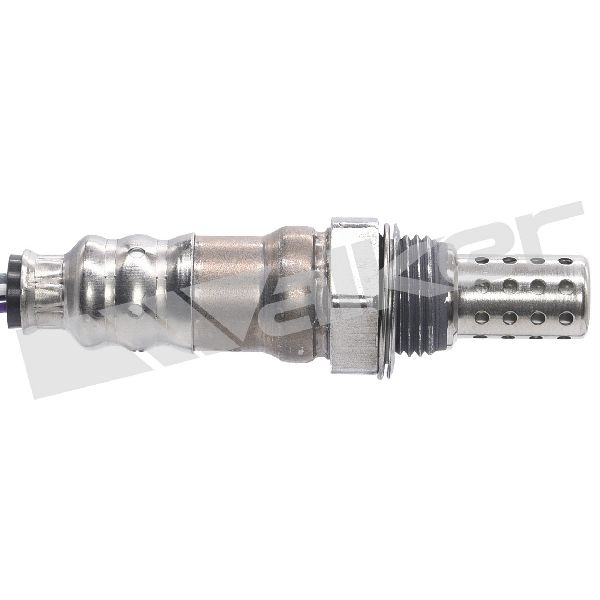
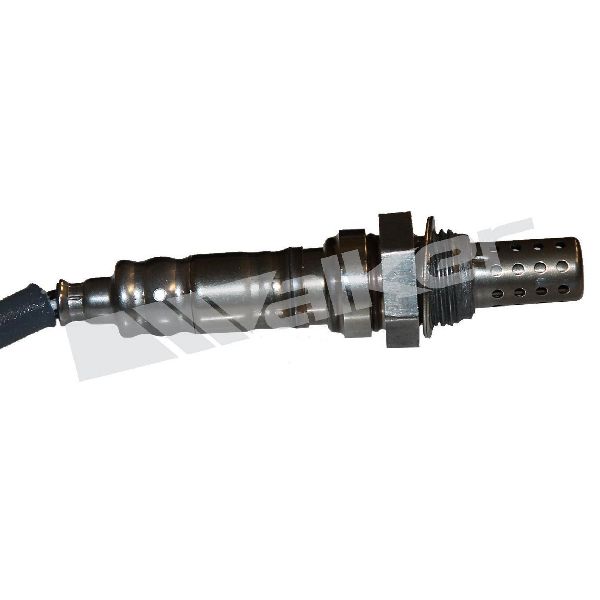
P0138 on a 2016-2022 Honda Pilot most often means the Bank 1, Sensor 2 oxygen sensor has failed. This is the downstream sensor on the firewall side of the engine. Replacing it is the most common fix, costing about $60-$75 for a quality aftermarket part (Denso/NTK) and is a straightforward DIY job, though accessing the connector can be tricky.
- P0138 points directly to the downstream oxygen sensor on the firewall side of the engine (Bank 1, Sensor 2).
- The most probable cause is a failed sensor, which is a common wear item. Using a Denso or NTK replacement is highly recommended.
- Before replacing the sensor, always perform a quick visual inspection of the wiring harness for any obvious signs of melting or damage, as this is the second most likely cause.
- This is a DIY-friendly repair for most home mechanics with the correct O2 sensor socket, but be prepared for a difficult-to-access electrical connector.
- Ensure you are buying the correct sensor; for this code, it is the 'Downstream Rear' sensor. The Denso part number is 234-4351.
What's Unique About the 2016-2022 Honda Pilot
On the Honda Pilot's J35Y6 V6 engine, the layout is transverse (sideways). "Bank 1" is the cylinder bank located against the firewall (the rear of the engine bay), while Bank 2 is toward the front bumper and radiator. This can be confusing, as many online parts catalogs refer to the Bank 1 sensor as the "rear" downstream sensor. The code P0138 specifically points to this rear, firewall-side downstream sensor.
Symptoms You May Notice
- Check Engine Light is on
- Decreased fuel economy
- Rough or hesitant engine idle
- Failure to pass an emissions test
- In rare cases, a sulfur or 'rotten egg' smell from the exhaust if a rich condition is the cause.
- Replacing the wrong oxygen sensor. Many people mistakenly replace the Bank 2 (front) sensor or the Bank 1 upstream (Sensor 1) sensor. P0138 is always Bank 1 (rear/firewall side), Sensor 2 (downstream/post-catalyst).
- Replacing the sensor without checking the wiring. A melted wire can mimic a failed sensor, and the new sensor will not fix the problem.
Most Likely Causes
- Failed Bank 1, Sensor 2 Oxygen Sensor 🔴 High Probability → Shop Oxygen Sensor Oxygen sensors are wear-and-tear items that have a finite lifespan. Contamination from exhaust gases and constant exposure to extreme heat eventually cause them to fail. This is a very common failure point on Honda J-series engines.
How to confirm: After confirming no wiring issues, replacing the sensor is the most direct diagnostic step. A professional can use a scan tool to watch the live voltage data from the sensor; a healthy downstream sensor should show a relatively stable, lower voltage, while a sensor stuck high will read close to 1.0V constantly. Many owners on forums like Piloteers.org report that simply replacing the sensor resolves the code. 🎬 Watch: Quick DIY methods to fix the P0138 code
Typical fix: Replace the Bank 1, Sensor 2 (Downstream, Rear) oxygen sensor. Using an OEM-equivalent brand like Denso or NTK is highly recommended for compatibility.
Est. part cost: $60 - $200 - Wiring Harness Short-to-Voltage 🟡 Medium Probability The oxygen sensor wiring runs close to hot exhaust components. Over time, protective sheathing can become brittle and break, allowing a wire to touch a metal surface or another wire, causing a short circuit. The connector for Bank 1, Sensor 2 is often tucked in a hard-to-reach area, increasing the chance of damaging wires during other repairs.
How to confirm: Visually inspect the entire wiring harness from the sensor connector to where it enters the main loom. Look for any melted, chafed, or damaged sections. Use a multimeter to check for voltage on the signal wire at the disconnected sensor harness; there should not be constant voltage present with the key on.
Typical fix: Repair the damaged section of the wiring harness using heat-shrink butt connectors and secure it away from heat sources with high-quality zip ties or loom.
Est. part cost: $5 - $50 - Rich Running Condition ⚪ Low Probability The J35Y6 engine is known for having issues with its direct fuel injectors. A leaking or faulty injector can cause a cylinder to run rich, overwhelming the catalytic converter and causing the downstream O2 sensor to read high voltage. This became so common that Honda issued TSBs 20-100 and 21-010 and a warranty extension.
How to confirm: Check for other trouble codes related to fuel trim (e.g., P0172, P219A, P219B) or misfires (P0300-P0306). Analyze freeze frame data to see the short-term and long-term fuel trim values when the code was set. If fuel trims are significantly negative, it indicates the PCM is trying to correct a rich condition. Contact a Honda dealer with your VIN to check for warranty coverage on the fuel injectors before paying for diagnosis.
Typical fix: Diagnose and repair the root cause of the rich condition. For this platform, this often involves replacing all six fuel injectors as a set per Honda's TSB.
Est. part cost: $100 - $500+
Rare But Worth Checking
- Faulty Powertrain Control Module (PCM): This is very rare. Before condemning the PCM, all other possibilities, especially the sensor and wiring, must be exhaustively ruled out by a qualified technician. Sometimes a PCM software update is required to fix misinterpretation of sensor data, as noted in some TSBs for related codes.
- Exhaust Leak: An exhaust leak before the sensor can sometimes draw in oxygen and cause erratic readings, though it more commonly causes low voltage or lean codes. However, a leak after the sensor is irrelevant to this code.
Diagnosis Steps
- Scan the vehicle for the P0138 code and check for any other related codes, especially fuel trim or misfire codes.
- Using a scan tool with live data, observe the voltage from 'O2S B1S2' (Bank 1, Sensor 2). If it is stuck high (e.g., >0.9V) and does not fluctuate, it points towards a problem.
- Perform a thorough visual inspection of the Bank 1, Sensor 2 wiring harness. Look for any signs of melting, chafing, or corrosion on the wires and connector. The harness is near the hot exhaust, making it prone to damage.
- If the wiring looks good, disconnect the sensor. The connector can be difficult to access; it is often located on a bracket on the back of the engine, high up on the firewall.
- Check the harness-side connector for any signs of corrosion or damage to the pins.
- With the key on and engine off, use a multimeter to check for voltage on the signal wire at the harness connector. If you find significant voltage, it indicates a short-to-power in the harness that needs to be traced and repaired.
- If the wiring checks out, the oxygen sensor itself is the most likely culprit.
- Replace the Bank 1, Sensor 2 oxygen sensor. Use a 22mm (or 7/8") O2 sensor socket for easier removal and installation. Applying anti-seize compound to the threads of the new sensor is recommended.
- After replacement, clear the trouble codes and perform a drive cycle to ensure the code does not return.
Parts You'll Likely Need
- Bank 1 Sensor 2 Oxygen Sensor (Downstream, Rear)
(OEM #36532-RLV-A01)— This is the most common failure point for code P0138. It is a standard wear item that fails due to age and contamination.
Trusted brands: Denso (e.g., 234-4351), NGK/NTK, Bosch
OEM price range: $150-$220
Aftermarket price range: $60-$100
Related Codes That Often Appear With This One
- P0158: O2 Sensor Circuit High Voltage (Bank 2, Sensor 2) - If both appear together, it points more strongly to a systemic issue like a fuel pressure problem rather than two failed sensors.
- P0420: Catalyst System Efficiency Below Threshold (Bank 1) - A failing sensor can sometimes lead to an erroneous catalyst code. It's often wise to fix the P0138 code first and see if the P0420 returns.
- P219A / P219B: Bank 1 / Bank 2 Air-Fuel Ratio Imbalance - These codes often point towards the known fuel injector issues on this engine.
Technical Service Bulletins (TSBs) & Recalls
- TSB 20-100 / 21-010: Addresses faulty fuel injectors which can cause a rich condition, potentially leading to a P0138 code. Includes a warranty extension for affected vehicles.
Platform-Specific Known Issues
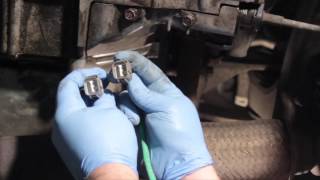
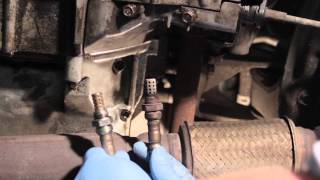
- Difficult Connector Access: Many owners and technicians report that the most difficult part of replacing the Bank 1, Sensor 2 O2 sensor is not unthreading the sensor itself, but accessing its electrical connector. It is often clipped to a bracket high on the firewall, behind the engine, requiring removal of other components 🎬 See this guide for accessing difficult J-series sensor connectors or careful maneuvering from both above and below the vehicle to disconnect.
Mechanic-Grade Diagnostic Values
- Downstream O2 Sensor (B1S2) Voltage on Live Data — expected: A healthy downstream sensor should show a relatively stable voltage, typically drifting lazily between 0.1V and 0.9V on a warm, idling engine.. Failure: Voltage is stuck high, at or above 1.0V, and can reach up to 1.27V 🎬 Watch: Diagnostic walkthrough for high voltage circuit codes for an extended period (e.g., more than 10 seconds) when the engine is held at a steady RPM like 3,000.
- O2 Sensor Heater Circuit Resistance — expected: Between 5.0 and 20 ohms at ambient temperature, with many Honda-specific sensors specified in the 5.0 to 6.4 ohm range.. Failure: A reading of 'OL' (Open Loop/infinite resistance) on a multimeter indicates a broken heater element. A reading significantly outside the expected range also indicates a fault.
- Heater Circuit Power Supply at Harness Connector — expected: Battery voltage (~12V) should be present on one of the two same-colored heater wires at the harness-side connector with the ignition key in the 'ON' position.. Failure: 0V or significantly low voltage points to a blown fuse (check A/F Heater fuse), a bad relay, or a break in the power supply wire.
Scan Tool Commands That Help
- Honda Diagnostic System (HDS): DATA LIST for HO2S S2 (Heated O2 Sensor, Bank 1 Sensor 2) — This is the factory-level method to confirm the P0138 fault condition. After the engine is warm, hold RPM at 3,000 and watch the live voltage. If it stays persistently high (>=1.0V), it confirms the PCM's reading and points strongly to a sensor or wiring fault.
- Honda Diagnostic System (HDS): Cylinder AF Test — Use this test if a rich running condition is suspected due to faulty fuel injectors (a known issue). This function tests the air-fuel ratio contribution of each cylinder. A failing cylinder will point towards an injector issue, which can be the root cause of the P0138 code.
Wiring & Ground Locations
- G101 — Typically found on the thermostat housing or on the engine block near the transmission. It serves as a primary logic and power ground for the ECU/PCM.. A loose or corroded G101 ground can cause numerous erratic electrical issues, including incorrect sensor voltage readings. While not the most common cause for a steady high voltage code, ensuring this ground is clean and tight is a fundamental step in any complex electrical diagnosis on a Honda.
- Main Engine/Transmission Ground Strap — A braided strap connecting the transmission case to the vehicle's chassis/frame rail.. This is the main path for electrical current to return to the battery from the engine block. A poor connection here can cause all sensors grounded to the block to have a floating or offset voltage, potentially leading to incorrect readings and codes like P0138.
- Bank 1 Sensor 2 Connector Pinout (Typical 4-wire) — On the 4-pin connector for the downstream O2 sensor.. Knowing the pin functions allows for targeted testing. For a typical Honda sensor: two same-colored wires (often black) are for the heater circuit, one is the signal wire, and one is the sensor ground. A short circuit between the 12V heater power wire and the signal wire is a classic cause of a P0138 high voltage code.
Real Owner Repair Stories
- Honda Service Bulletin 20-100 / 21-010 (2016-2017 Honda Pilot (All trims)) — Check Engine Light with codes P0420, P0430, P030x, P219A, and/or P219B. A rich condition causing these codes can also manifest as a P0138.
❌ Tried (didn't work) Replacing catalytic converters for P0420/P0430 without addressing the root cause., Replacing spark plugs or ignition coils for misfire codes without checking fuel system., Replacing oxygen sensors when the true cause was fuel delivery.
✅ What actually fixed it For vehicles with over 5,000 miles, the official repair is to first perform a PCM software update. If codes return or a Cylinder AF Test fails, the procedure calls for replacing all six fuel injectors as a set (Part Kit 06160-RLV-305). Honda extended the warranty for this specific issue to 10 years or 150,000 miles.
Model Year Variations Within This Range
- 2016-2017: These model years are specifically called out in Honda TSB 20-100 for potential fuel injector issues that can lead to various codes, including those related to rich conditions that could trigger P0138. While the issue may affect later years, the TSB and warranty extension explicitly name these earlier models in the generation.
Diagnostic Flowchart
Other Known Issues on This Vehicle
Issues unrelated to this code that are worth knowing about as an owner of this generation:
- Faulty Fuel Injectors 🔴 High → Shop Fuel Injector — Widespread on 2016-2019 models, leading to misfires (P030x), lean/rich codes (P017x), and catalyst codes (P0420/P0430). Can occur at various mileages. (Ref: TSB 20-100, TSB 21-010; Warranty Extension for 10 years/150,000 miles on affected VINs.)
- 9-Speed Automatic Transmission Problems 🟠 Medium — Common complaints across all years with the 9-speed ZF transmission. Issues include harsh/jerky shifting, hesitation, and in some cases, premature failure. Software updates were released to improve shift logic. (Ref: Multiple software update TSBs (e.g., A20-029) and a class-action lawsuit have been filed regarding drivability concerns.)
- Infotainment System Glitches (Popping/Cracking/Freezing) 🟡 Low — Very common on 2019-2022 models. Symptoms include popping/crackling audio, screen freezing, and network loss messages. (Ref: A recall was issued to fix faulty MOST bus network coaxial cable connectors. A class-action lawsuit was also filed.)
- Prematurely Worn Piston Rings / Oil Consumption 🟠 Medium — Related to the Variable Cylinder Management (VCM) system, which can cause uneven wear on piston rings, leading to oil consumption.
- Crankshaft Manufacturing Defect 🔴 High — Affected a specific range of 2016-2019 vehicles. Improperly manufactured crankshafts could lead to premature rod bearing wear and catastrophic engine failure. (Ref: NHTSA Recall #23V-751.)
Used vs. New Parts: Buying Guide for This Vehicle
When a used part is the smart pick: For this repair, using a used part is NOT recommended. Oxygen sensors are wear-and-tear items with a finite lifespan, similar to spark plugs or brake pads. A used sensor from a junkyard has unknown age and history, and may fail shortly after installation, wasting time and effort.
What to inspect on the donor part:
- Not applicable as used sensors are not advised.
OEM-only on this vehicle (don't cheap out):
- While not strictly 'OEM-only', using an OEM-supplier brand is critical for oxygen sensors on this vehicle.
Aftermarket brands forum-validated for this vehicle:
- Denso (OEM supplier, often sold under the Denso brand in the aftermarket)
- NTK (NGK) (Also an OEM supplier for Honda)
Brands owners have reported issues with on this vehicle:
- Generic 'universal' sensors that require splicing wires.
- Unbranded or house-brand parts from online marketplaces, as they often lack the precise calibration needed for Honda's engine management system. Forum discussions frequently cite issues with Bosch sensors on Honda platforms, despite their quality in other applications.
Real Owner Stories
Aggregated from forums and TSBs cited above. Mileages and costs reflect what owners reported in those sources.
2016 Honda Pilot J35Y6
Symptoms: The Check Engine Light came on with code P0138. Discussion on forums suggested the rear downstream sensor was the culprit.
What fixed it: Replacing the Bank 1 Sensor 2 with a Denso brand part resolved the issue permanently.
Source hint: Piloteers.org - "P0138 Code"
2016-2019 Honda Pilot J35Y6
Symptoms: Vehicle experienced misfires and rich/lean fuel trim codes alongside the high voltage O2 sensor code.
What fixed it: Replacing all six fuel injectors as a set per the manufacturer's technical service bulletin instructions.
Source hint: TSB 20-100 / 21-010
2014-2020 Acura MDX J35Y5
Symptoms: The vehicle exhibited a P0138 code, which is a common failure point for this platform's engine architecture.
What fixed it: Replacement of the Bank 1, Sensor 2 oxygen sensor, following the same diagnostic path as the Honda Pilot.
Source hint: 2014-2020 Acura MDX (J35Y5) platform-mate data
Related OBD-II Codes
Frequently Asked Questions
Does Honda TSB 20-100 or 21-010 apply to my Pilot's P0138 code?
Is there a warranty extension that might cover the cause of my P0138 code?
Which specific oxygen sensor do I need to replace for a P0138 on a 2016-2022 Pilot?
Why is the labor for replacing the Bank 1 Sensor 2 so difficult on this vehicle?
Can I just replace the O2 sensor if I also have codes like P0172 or P219A?
Helpful Videos
![How to Fix HONDA P0138 Engine Code in 3 Minutes [2 DIY Methods / Only $8.99]](https://img.youtube.com/vi/PQzl2g_wkt8/mqdefault.jpg)
We Have This Part in Stock

The information in this article is provided for general reference and educational purposes only. Vehicle specifications, procedures, and part compatibility can vary by production date, trim level, and region. Always consult your vehicle's factory service manual and verify part numbers before purchasing or performing repairs. Safety-critical components such as airbags, seat belts, and braking systems should be installed by a qualified professional.
- Honda Pilot:
- 🧭 Diagnostic Flowchart
- 🎬 Helpful Videos
- 🛍️ Shop This Part
- What's Unique About the 2016-2022 Honda Pilot
- Symptoms You May Notice
- Most Likely Causes
- Rare But Worth Checking
- Diagnosis Steps
- Parts You'll Likely Need
- Related Codes That Often Appear With This One
- Technical Service Bulletins (TSBs) & Recalls
- Platform-Specific Known Issues
- Mechanic-Grade Diagnostic Values
- Scan Tool Commands That Help
- Wiring & Ground Locations
- Real Owner Repair Stories
- Model Year Variations Within This Range
- Other Known Issues on This Vehicle
- Used vs. New Parts: Buying Guide for This Vehicle
- Real Owner Stories
- 2016 Honda Pilot J35Y6
- 2016-2019 Honda Pilot J35Y6
- 2014-2020 Acura MDX J35Y5
- Related OBD-II Codes
- Frequently Asked Questions
- 🎟️ Get 5% Off