

P0138 on 2012-2017 Kia Rio: O2 Sensor High Voltage Causes and Fixes
For a 2012-2017 Kia Rio, code P0138 almost always means the downstream oxygen sensor (Bank 1, Sensor 2) has failed. This sensor is a wear-and-tear item. Before replacing it, perform a quick visual check of the wiring harness for melting or damage, as this is a known vulnerability. Replacing the sensor is the most common fix, with parts costing around $50-$100 for a quality aftermarket brand and $135-$200 for an OEM part.
- P0138 on your Rio almost certainly points to a bad downstream O2 sensor.
- Before buying parts, do a quick visual check of the sensor's wiring underneath the car for any obvious melting or damage, as this is a known weak point.
- Replacing the sensor is a DIY-friendly job, but you will need a special 22mm (7/8") O2 sensor socket. The old sensor can be difficult to remove without penetrating oil.
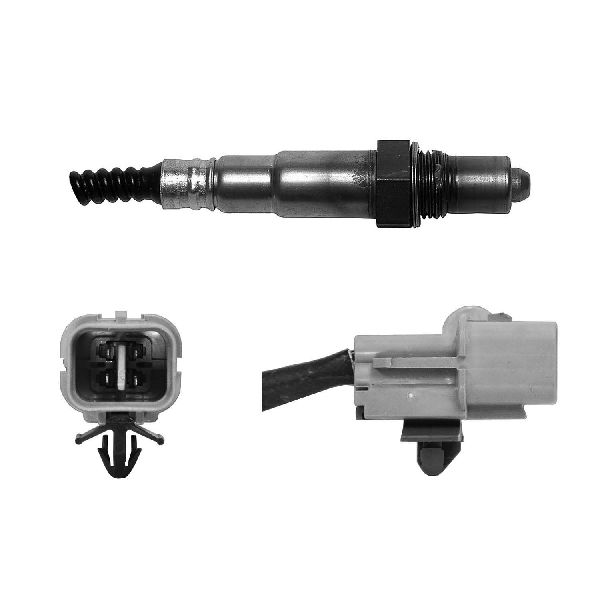
- The correct OEM part number is 39210-2B220. Reputable aftermarket brands like Denso (Part #234-4568), NGK, and Bosch are reliable alternatives.
- Do not replace the catalytic converter to fix this code. The O2 sensor must be working correctly first.
What's Unique About the 2012-2017 Kia Rio
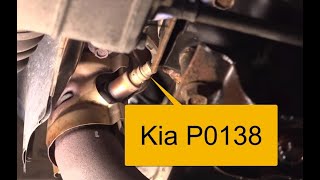
On the 2012-2017 Kia Rio with the 1.6L engine, this code is straightforward. Since the engine is an inline-four, there is only one exhaust bank, so 'Bank 1' is the only bank. 'Sensor 2' is the downstream sensor, located after the catalytic converter. 🎬 See this video showing the exact sensor location Owner and mechanic reports indicate that this is a common failure point as the vehicle ages, with the sensor itself being the culprit in the vast majority of cases. A notable vulnerability on this platform and its mates (like the Kia Soul) is the potential for the O2 sensor wiring harness to melt against hot exhaust components, causing a short to power and triggering this code.
Symptoms You May Notice
- Check Engine Light is on
- Increased fuel consumption
- Failing an emissions test
- Strong exhaust odor due to a potentially rich fuel mixture
- Rough idling or stalling in some cases
- Replacing the catalytic converter. If code P0420 (Catalyst Efficiency Below Threshold) is also present, the P0138 code must be resolved first. A faulty O2 sensor cannot accurately report on the health of the catalytic converter.
Most Likely Causes
- Failed Downstream Oxygen Sensor (Bank 1, Sensor 2) 🔴 High Probability → Shop Oxygen Sensor Oxygen sensors are consumable parts that degrade over time due to constant exposure to extreme heat and exhaust gases. The internal heating element or the sensing element itself can fail, leading to incorrect voltage signals. It is the most common reason for P0138.
How to confirm: Use an OBD-II scanner to monitor the live voltage data for 'B1S2'. If the voltage is stuck high (e.g., 0.9V or higher) and does not fluctuate on a warm engine, the sensor has most likely failed.
Typical fix: Replace the downstream oxygen sensor. This requires a special 22mm (7/8") O2 sensor socket and often penetrating fluid, as the old sensor can be seized in the exhaust pipe.
Est. part cost: $50-$200 - Wiring or Connector Damage 🟡 Medium Probability The wiring harness for the downstream O2 sensor runs under the vehicle and is exposed to road debris, moisture, and significant heat from the exhaust. On Kia/Hyundai platforms of this era, there are reports of the harness melting against the exhaust, causing a short circuit to power which results in a constant high voltage signal.
How to confirm: Visually inspect the entire wiring harness and connector from the O2 sensor up to where it enters the cabin or engine bay. Look for any signs of melting, chafing, corrosion, or broken wires. Use a multimeter to check for a short to power on the signal wire.
Typical fix: Repair the damaged section of the wiring harness or replace the connector pigtail.
Est. part cost: $15-$50
Rare But Worth Checking
- Exhaust Leak: An exhaust leak near the sensor can introduce outside air, which can unexpectedly alter sensor readings. This should be checked before replacing parts, especially if you can hear an exhaust leak.
- Engine Control Module (ECM) Fault: In very rare instances, the ECM itself can fail and misinterpret the sensor's signal. This should only be considered after all other possibilities, including the sensor and wiring, have been definitively ruled out. Sometimes an ECU software update from the dealer can resolve logic errors.
- Rich Running Condition: If the engine is running excessively rich due to another issue (like a leaking fuel injector or faulty MAF sensor), the O2 sensor may be reporting a legitimately high voltage. This is usually accompanied by other trouble codes, such as P0172 (System Too Rich).
- Blown Fuse: The oxygen sensor circuits are protected by a fuse, often labeled 'SNSR' or similar in the engine bay fuse box. While a blown fuse typically causes a low voltage or no signal code, a short in the circuit could potentially cause this issue. It's a quick and easy check to perform.
Diagnosis Steps
- Connect an OBD-II scanner and confirm the presence of the P0138 code. Check for any other related codes and freeze frame data.
- Using the scanner's live data function, observe the voltage for 'O2S B1S2' (Bank 1, Sensor 2).
- A normal, functioning downstream sensor on a warm engine will show a relatively stable voltage that fluctuates slowly, typically between 0.1V and 0.9V. If the voltage is stuck high (e.g., >0.9V) and unresponsive, proceed with diagnos 🎬 Watch: How to diagnose and fix the P0138 codeis.
- Perform a visual inspection. Safely raise the vehicle and locate the downstream O2 sensor, which is installed in the exhaust pipe after the catalytic converter.
- Carefully inspect the sensor's wiring harness and connector for any signs of damage, such as melting against the exhaust, corrosion, or frayed wires. The connector is often located in the engine bay.
- Check the related fuse in the engine compartment fuse box (often labeled 'SNSR 1' or similar).
- If the wiring and fuse are intact, the most likely cause is a failed O2 sensor.
- (Advanced) To confirm a wiring short, disconnect the sensor. With the key on and engine off, use a multimeter to check for voltage on the signal wire in the harness-side connector. There should not be constant battery voltage present; if there is, it indicates a short to power in the harness that must be traced and repaired.
Parts You'll Likely Need
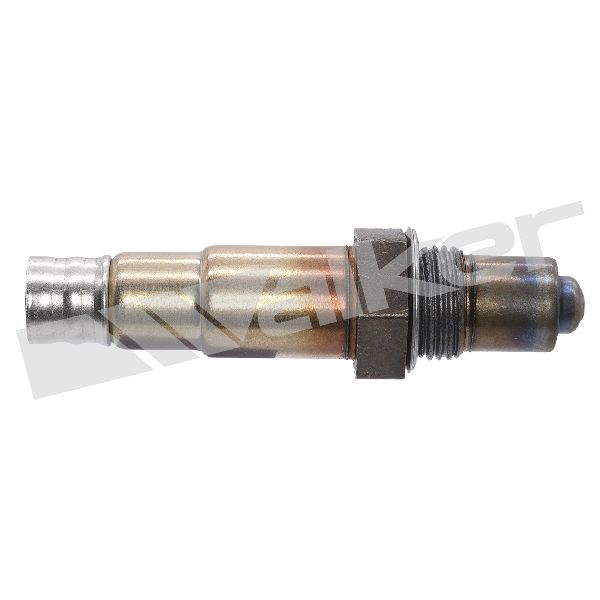
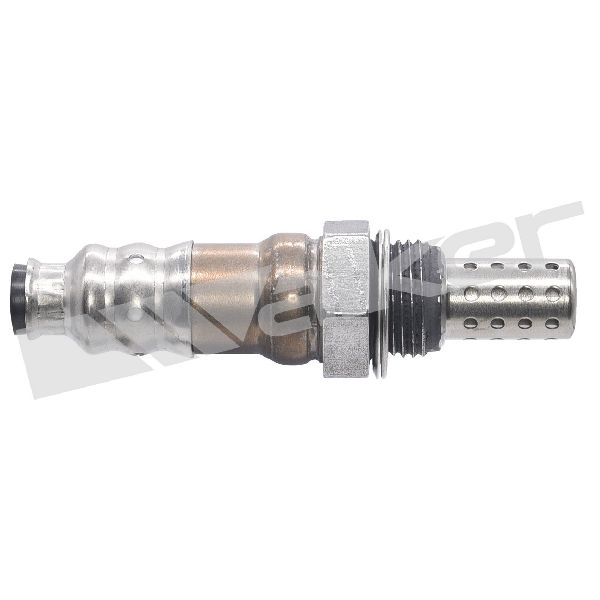
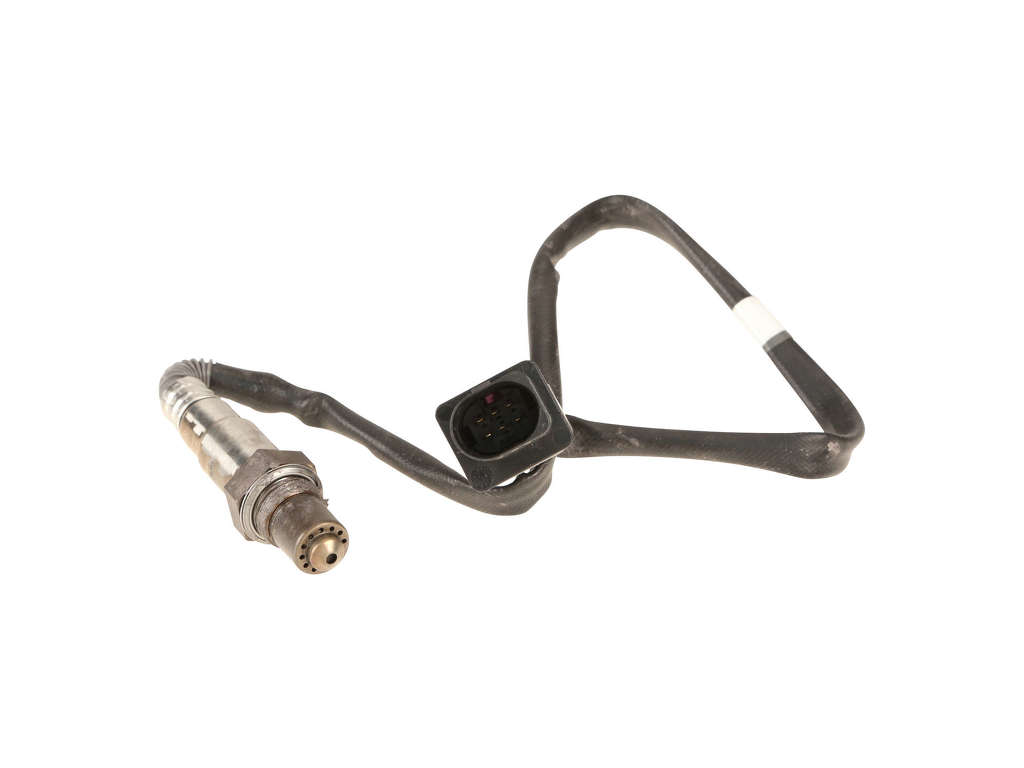
- Downstream Oxygen Sensor (Bank 1, Sensor 2)
(OEM #39210-2B220)— This is the component that fails in the vast majority of P0138 cases on this vehicle.
Trusted brands: Kia (Genuine OEM), Denso (e.g., 234-4568), NGK/NTK, Bosch
OEM price range: $135-$200
Aftermarket price range: $50-$100
Related Codes That Often Appear With This One
- P0137 — O2 Sensor Circuit Low Voltage. If P0137 and P0138 appear together or intermittently, it strongly points to a wiring short or a completely failed sensor with erratic output.
- P0038 — HO2S Heater Control Circuit High (Bank 1 Sensor 2). This code indicates a problem with the heater circuit inside the same oxygen sensor, making it highly likely the entire sensor unit needs replacement.
- P0141 — HO2S Heater Circuit Malfunction (Bank 1 Sensor 2). Similar to P0038, this code points to a failure in the heater element of the same sensor. If seen with P0138, it's a definitive sign the sensor itself has failed.
Technical Service Bulletins (TSBs) & Recalls
- While no specific TSB for P0138 on the Rio was found, Kia has issued a related safety recall (SC176 / NHTSA 19V-120) for the 2012-2016 Kia Soul with the same 1.6L GDI engine. This recall addressed high exhaust gas temperatures that could damage the catalytic converter and, by extension, place extreme stress on the O2 sensors, leading to failure. The fix involved an ECU software update.
Platform-Specific Known Issues
- source — A Reddit user with a 2014 Kia Rio reported a frustrating history of recurring O2 sensor and catalytic converter replacements. After replacing both sensors, the check engine light would still illuminate ~200 miles into a long drive. One commenter suggested that high oil consumption, a known issue with this engine, could be fouling the sensors and converter, leading to repeated failures.
Mechanic-Grade Diagnostic Values
- Downstream O2 Sensor (B1S2) Heater Circuit Resistance — expected: 8.0 - 14.0 Ohms. Failure: A reading of infinite resistance (OL) indicates a failed, open heater circuit inside the sensor. While P0138 is a signal circuit code, a bad heater can cause erratic performance.
Scan Tool Commands That Help
- Kia GDS (Global Diagnostic System): Vehicle S/W Management > Resetting Adaptive Values — After replacing a major component like an O2 sensor or addressing a significant wiring fault, resetting the ECM's adaptive values can force it to relearn fuel trims and sensor behavior more quickly. This can help confirm the fix and prevent the code from returning due to old, stored data.
- Kia GDS (Global Diagnostic System): Actuation Test — The GDS tool allows for actuation tests of various engine components. While you cannot directly actuate the O2 sensor signal, you can command other components (like forcing a rich/lean condition) and watch the O2 sensor's live data response to see if it's behaving as expected, which is a more advanced diagnostic step than simple observation.
Wiring & Ground Locations
- 'SENSOR 1' Fuse — Located in the engine compartment fuse panel.. This 10A or 15A fuse provides power to the oxygen sensor's internal heater circuit. While a blown fuse typically sets a heater circuit code (like P0141), a short or intermittent issue related to this circuit could potentially affect sensor readings.
- ECM Primary Grounds — Pins 77 and 78 at the main Engine Control Module connector.. These are primary ground pins for the ECM and its associated sensor circuits. A poor connection or corrosion at these specific pins can introduce electrical noise or voltage offsets, potentially causing a false high voltage reading from the O2 sensor. This should be checked in rare cases where the sensor and wiring harness test good.
- Engine Ground Strap (918611W210) — A braided or solid cable connecting the engine block/transmission to the vehicle's chassis/firewall.. A corroded or broken main engine ground strap can cause a variety of electrical issues, as sensor circuits may try to find alternative, less stable ground paths. This can lead to floating voltages and erratic sensor readings, including a false high voltage from the O2 sensor.
OEM Part Supersession History
39210-2B110, 39210-2B120, 39210-2B130, 39210-2B140→39210-2B220— Standard part evolution and consolidation for Hyundai/Kia 1.6L engines.
Heads up: While older numbers may exist in old stock, 39210-2B220 is the current, correct OEM replacement for the downstream sensor.
Model Year Variations Within This Range
- 2012-2017: The Kia Rio received a cosmetic facelift for the 2016 model year, which included revised styling and interior features. However, the 1.6L Gamma GDI powertrain and associated emissions components, including the oxygen sensors and their wiring, remained unchanged. Therefore, the diagnosis and repair for code P0138 are identical across the entire 2012-2017 model range.
Diagnostic Flowchart
Other Known Issues on This Vehicle
Issues unrelated to this code that are worth knowing about as an owner of this generation:
- Catastrophic Engine Failure / Excessive Oil Consumption 🔴 High — Widespread issue across the 1.6L Gamma GDI engine family, potentially starting around 40,000-60,000 miles. It has been the subject of multiple class-action lawsuits. (Ref: Related to recall SC176 (NHTSA 19V-120) on the Kia Soul, which addressed a cause of catalytic converter/engine damage.)
- Hydraulic Electronic Control Unit (HECU) Fire Risk 🔴 High — Affects a wide range of Kia models, including the 2012-2017 Rio. An electrical short in the HECU can cause a fire while parked or driving. (Ref: Recall NHTSA ID: 23V594000)
- Steering Column Click/Clunk 🟡 Low — Extremely common across many Hyundai and Kia models of this era. A clicking or clunking noise develops in the steering column due to the degradation of a small, flexible steering coupler.
- Premature Starter Motor Failure 🟠 Medium — Some owners report starter motor failure before 100,000 miles.
- AC Compressor Failure 🟠 Medium — Reports of premature AC compressor or compressor clutch failure are common, resulting in no cold air.
- Transmission Performance Issues 🟡 Low — Owners have reported hesitation, jerking, or hard shifts, particularly in models with automatic gearboxes. Sometimes addressed with a software update to the Transmission Control Module.
Used vs. New Parts: Buying Guide for This Vehicle
When a used part is the smart pick: For this repair, buying a used oxygen sensor is never a smart choice. O2 sensors are consumable parts with a finite lifespan (typically 80k-120k miles). The cost savings are minimal compared to the high risk of premature failure and the labor required to replace it again.
Donor-vehicle mileage cap: roughly under 40000 miles for the part to have meaningful remaining life.
What to inspect on the donor part:
- If a used sensor is the only option, source it from the lowest mileage vehicle possible.
- Inspect the sensor tip: avoid any with heavy, black, sooty deposits (from a rich-running engine) or a chalky white coating (from coolant/oil contamination).
- Check the connector pins for any signs of corrosion, moisture, or damage.
- Ensure the wiring pigtail has not been cut, spliced, or damaged.
Aftermarket brands forum-validated for this vehicle:
- Denso (often the OEM supplier for Kia/Hyundai)
- NGK / NTK
- Bosch
Brands owners have reported issues with on this vehicle:
- Generic, unbranded 'white-box' sensors from online marketplaces are known to have high failure rates, incorrect heater resistance, and can cause the code to return quickly.
Real Owner Stories
Aggregated from forums and TSBs cited above. Mileages and costs reflect what owners reported in those sources.
2014 Kia Rio 1.6L GDI — ~200 miles
Symptoms: The check engine light would illuminate approximately 200 miles into a long drive, even after both oxygen sensors and the catalytic converter had been replaced.
What fixed it: The issue was linked to high oil consumption fouling the sensors; however, the owner reported a frustrating history of recurring failures despite multiple part replacements.
Source hint: Reddit: Oxygen sensor recurring issue. 2014 Kia Rio.
2012-2017 Kia Rio 1.6L
Symptoms: Check engine light on with a P0138 code; visual inspection may reveal damaged wiring under the car.
What fixed it: Replacing the downstream oxygen sensor using a 22mm socket and following a step-by-step DIY guide.
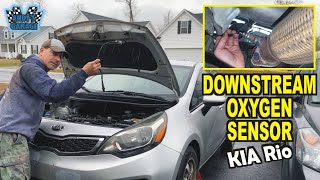
Source hint: DIY Guide: How To Replace Downstream Oxygen Sensor - KIA Rio
Documented NHTSA Reports
Cross-Manufacturer Reference: Kia Platform
Symptoms: An owner reported multiple trouble codes including P0138 (O2 sensor circuit high B1S2), P0171 (System too lean), and P0087 (Fuel pressure too low).
What fixed it: NHTSA ODI #11581569 describes frequent fuel pump and fuel injector replacements in conjunction with these oxygen sensor circuit codes.
Related OBD-II Codes
Frequently Asked Questions
Does the Kia Soul recall SC176 apply to my 2012-2017 Kia Rio?
What is the specific part number for the downstream oxygen sensor on my Kia Rio?
Could high oil consumption be causing my P0138 code to keep coming back?
Where is the fuse for the oxygen sensor located on a 2012-2017 Rio?
Is there a risk of the wiring harness melting on this vehicle?
What tools do I need to replace the Bank 1 Sensor 2 oxygen sensor myself?
Helpful Videos
We Have This Part in Stock



The information in this article is provided for general reference and educational purposes only. Vehicle specifications, procedures, and part compatibility can vary by production date, trim level, and region. Always consult your vehicle's factory service manual and verify part numbers before purchasing or performing repairs. Safety-critical components such as airbags, seat belts, and braking systems should be installed by a qualified professional.
- Kia Rio:
- 🧭 Diagnostic Flowchart
- 🎬 Helpful Videos
- 🛍️ Shop This Part
- What's Unique About the 2012-2017 Kia Rio
- Symptoms You May Notice
- Most Likely Causes
- Rare But Worth Checking
- Diagnosis Steps
- Parts You'll Likely Need
- Related Codes That Often Appear With This One
- Technical Service Bulletins (TSBs) & Recalls
- Platform-Specific Known Issues
- Mechanic-Grade Diagnostic Values
- Scan Tool Commands That Help
- Wiring & Ground Locations
- OEM Part Supersession History
- Model Year Variations Within This Range
- Other Known Issues on This Vehicle
- Used vs. New Parts: Buying Guide for This Vehicle
- Real Owner Stories
- 2014 Kia Rio 1.6L GDI — ~200 miles
- 2012-2017 Kia Rio 1.6L
- Documented NHTSA Reports
- Cross-Manufacturer Reference: Kia Platform
- Related OBD-II Codes
- Frequently Asked Questions
- 🎟️ Get 5% Off