

P0138 on 2012-2017 Kia Soul 1.6L: O2 Sensor High Voltage Causes and Fixes
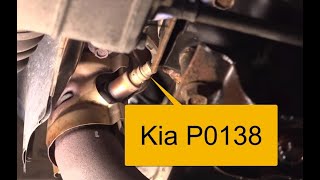
This code almost always means the downstream oxygen sensor (Bank 1, Sensor 2) has failed. Before replacing, check the 'SNSR' fuse and visually inspect the wiring harness for melting. Replacing the sensor, located after the catalytic converter, is the most common fix. Expect to pay $40-$100 for an aftermarket sensor or $130-$200 for an OEM part. It's a manageable DIY job, but the connector location differs by generation (Gen 1 is under the carpet, Gen 2 is in the engine bay).
- P0138 on a 1.6L Kia Soul almost always points to a faulty downstream O2 sensor (Bank 1, Sensor 2).
- Before replacing the sensor, always perform a quick visual inspection of the wiring harness to check for melting or damage, as this is a known issue.
- Replacing the downstream O2 sensor is a very common and straightforward DIY repair that can be done with basic tools and a special O2 sensor socket.
- Do not replace the catalytic converter for this code. Resolve the P0138 code first, clear the codes, and see if any other codes return.
What's Unique About the 2012-2017 Kia Soul
The 2012-2017 Kia Soul with the 1.6L GDI engine has a simple exhaust layout, making it easy to identify the correct sensor. However, the wiring harness is sometimes routed close to the exhaust, which can cause the wires to melt and short, triggering P0138. Critically, 2012-2016 models were recalled (NHTSA 19V-120 / Kia SC176) for a software issue that could cause high exhaust gas temperatures, damaging the catalytic converter. This not only puts extra stress on the O2 sensor but can lead to substrate from the damaged converter entering and destroying the engine.
Generation note: The 2012-2017 year range covers two Kia Soul generations: the first (Gen 1, 2012-2013) and the second (Gen 2, 2014-2017). While the P0138 fault is common to both, there is a critical difference in the repair procedure: the location of the downstream O2 sensor's electrical connector. On Gen 1 models, the connector is located inside the cabin, under the passenger-side carpet, requiring removal of interior trim. On Gen 2 models, the connector is located more conveniently in the engine bay.
Symptoms You May Notice
- Check Engine Light is on
- Reduced fuel economy
- Rough or lagging idle
- Failure to pass an emissions test
- Engine knocking noise (in severe cases related to the SC176 recall condition)
- Replacing the catalytic converter. A P0138 code is for the sensor circuit, not the converter itself. While a bad sensor can sometimes lead to a false P0420 code, you should always fix O2 sensor codes first before suspecting the converter.
Most Likely Causes
- Failed Downstream Oxygen Sensor (Bank 1, Sensor 2) 🔴 High Probability → Shop Oxygen Sensor Oxygen sensors are wear-and-tear items that operate in a harsh, high-heat environment. Contamination and age are the primary reasons for failure. The high exhaust temperatures noted in Kia recall SC176 can accelerate this wear.
How to confirm: Use a scan tool to observe the live voltage data for Bank 1 Sensor 2. If the voltage is stuck high (e.g., >0.9V) and does not fluctuate, the sensor has likely failed. You can also test the internal heater circuit's resistance with a multimeter; an open circuit (OL) confirms failure.
Typical fix: Replace the downstream oxygen sensor. This requires an O2 sensor socket and penetrating fluid. The new sensor should be torqued to approximately 28 ft-lbs. Be aware of the connector location difference between Gen 1 and Gen 2 models.
Est. part cost: $40-$100 - Damaged Wiring or Connector 🟡 Medium Probability The sensor's wiring harness can sag and make contact with the hot exhaust pipe, melting the insulation. This can cause a short between the sensor's signal wire and its heater circuit power wire, resulting in a constant high voltage signal.
How to confirm: Visually inspect the entire length of the O2 sensor wiring harness from the sensor to the main connector. Look for any melted sections, chafing, or corrosion on the connector pins. Check for shorts between pins using a multimeter.
Typical fix: Repair the damaged section of the wire and secure the harness away from the exhaust using high-temperature zip ties or by re-attaching it to its factory clips. If the connector is damaged, it may need to be replaced.
Est. part cost: $5-$30 - Blown O2 Sensor Fuse 🟡 Medium Probability → Shop Oxygen Sensor A short in the wiring can cause the associated fuse to blow. This is a common and often overlooked cause.
How to confirm: Inspect the fuse for the O2 sensors in the engine bay fuse box. It is often labeled 'SNSR' or 'SENSOR 1'. A visual inspection or a continuity test with a multimeter will confirm if the fuse is blown.
Typical fix: Replace the blown fuse. If the fuse blows again immediately, it indicates a short circuit in the wiring that must be found and repaired.
Est. part cost: $1-$5 - Exhaust Leak ⚪ Low Probability
How to confirm: Visually inspect the exhaust system for cracks or holes before the downstream O2 sensor. You can also use a smoke machine to pressurize the exhaust and look for leaks.
Typical fix: Repair the leak by replacing the gasket or welding the cracked component.
Est. part cost: $20-$150
Rare But Worth Checking
- Faulty Powertrain Control Module (PCM): This is extremely rare. The PCM should only be considered after all other possibilities, including the sensor and wiring, have been definitively ruled out.
- Excessively Rich Fuel Condition: If the engine is running extremely rich due to other issues like leaking fuel injectors, it can consume all the oxygen in the exhaust, causing the downstream sensor to read high. This will almost always be accompanied by other trouble codes (like P0172) and severe drivability problems. A manufacturer record for a related model, NHTSA ODI #11581569, notes that P0138 can sometimes appear alongside fuel system issues such as low fuel pressure (P0087) or lean conditions (P0171).
Diagnosis Steps
- Read the trouble codes with an OBD-II scanner and note any other codes that are present.
- Use the scanner to view the live data stream for the Bank 1 Sensor 2 (downstream) oxygen sensor. Confirm if the voltage is stuck high, typically above 0.9V.
- Inspect the fuse for the O2 sensors in the engine bay fuse box (often labeled 'SNSR' or similar).
- Perform a thorough visual inspection of the downstream O2 sensor's wiring harness and connector. Look for any signs of melting, chafing, or corrosion. Ensure it is properly secured away from the exhaust pipe.
- Determine your vehicle's generation to locate the connector. For 2012-2013 models, you will need to pull back the passenger-side carpet. For 2014-2017 models, the connector is in the engine bay.
- If the wiring appears intact, disconnect the sensor. Test the sensor's internal heater circuit resistance with a multimeter. A reading of 'OL' (open loop) indicates a failed sensor.
- If the sensor and wiring test good, the issue may be an exhaust leak before the sensor or, in very rare cases, a faulty ECM.
Parts You'll Likely Need
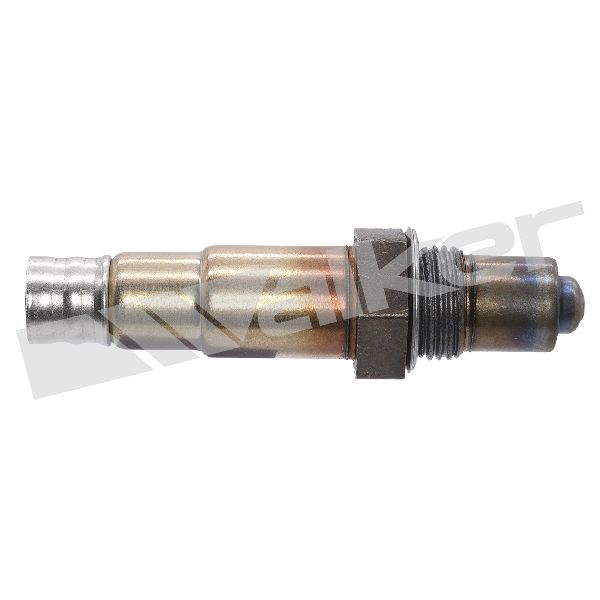
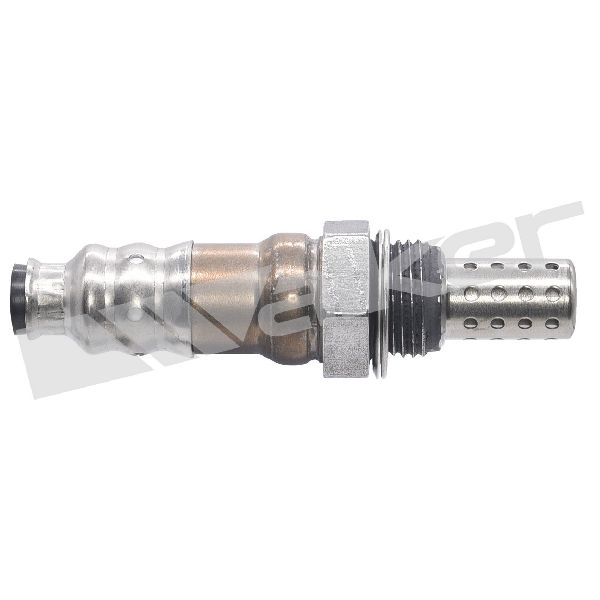
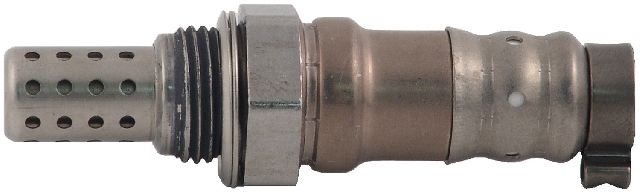
- Downstream Oxygen Sensor (Bank 1, Sensor 2)
(OEM #39210-2B110)— This is the most common cause of P0138. The sensor's internal components wear out over time, leading to incorrect voltage readings.
Trusted brands: Denso (p/n 234-4568), NGK/NTK, Bosch
OEM price range: $130-$200
Aftermarket price range: $40-$100
Related Codes That Often Appear With This One
- P0137 — Low voltage (P0137) and high voltage (P0138) codes for the same sensor often point to wiring harness damage that causes intermittent shorts to ground or power.
- P0141 — This code indicates a failure in the heater circuit of the same downstream O2 sensor. If both codes appear together, it strongly suggests the sensor itself has failed internally.
- P0420 — The P0138 code can trigger a false P0420 (Catalyst Efficiency) code because the ECM relies on the Sensor 2 reading to monitor the converter. Always resolve the P0138 code first.
Technical Service Bulletins (TSBs) & Recalls
- SC176 (NHTSA ID: 19V-120): While not directly for P0138, this safety recall addresses ECU logic and potential catalytic converter damage from high exhaust temperatures on 2012-2016 models, a condition that stresses the O2 sensors and can lead to their failure or other engine-destroying problems.
Platform-Specific Known Issues
- A critical safety recall for 2012-2016 Kia Souls with the 1.6L GDI engine (NHTSA 19V-120 / Kia SC176) addressed a condition where inaccurate ECU logic could cause excessively high exhaust gas temperatures. This overheating can damage the catalytic converter. If the converter's internal substrate breaks apart, particles can be drawn back into the engine, causing scoring of cylinder walls, piston damage, connecting rod failure, and ultimately catastrophic engine failure or fire. The remedy involves a mandatory ECU software update and, if damage is found, replacement of the catalytic converter and/or engine at no cost to the owner.
Mechanic-Grade Diagnostic Values
- Downstream O2 Sensor (B1S2) Voltage — expected: Should fluctuate lazily around 0.5 - 0.7 volts on a healthy, warm engine.. Failure: Voltage is stuck consistently high, above 0.9V, and does not change with engine conditions.
- Downstream O2 Sensor Heater Circuit Resistance — expected: Typically between 10-20 Ohms when measured across the two heater wires (often the same color) on the sensor connector.. Failure: A reading of infinity or 'OL' (Open Loop) indicates a broken heater element, requiring sensor replacement.
Wiring & Ground Locations
- Engine Block Ground Strap — A braided metal strap connecting the engine block directly to the vehicle's chassis/frame, often near the transmission or a motor mount.. A corroded or loose main engine ground can create a poor ground reference for all engine sensors, including the O2 sensors, leading to erratic or biased voltage readings like P0138.
- Chassis Ground Point (G###) — Typically found on the inner fender or strut tower, where the negative battery cable bolts directly to the car's body.. The O2 sensor circuit relies on a clean chassis ground. Verifying this primary ground point is clean and tight is a crucial step before diagnosing individual sensor wiring.
- ECM Ground Pins — On related Kia 1.6L models, pins like 77 and 78 on the main ECM connector serve as primary grounds for sensor circuits.. While rare, a fault at the ECM connector's ground pins can cause this code. This is an advanced check after sensor and harness inspection.
Real Owner Repair Stories
- Reddit user on r/AskMechanics (Vehicle exhibiting P0138, specific year/model not stated but behavior is universal.) — Persistent P0138 code that a mechanic could not solve.
❌ Tried (didn't work) Not specified, but implied that basic checks were performed without success.
✅ What actually fixed it The likely cause was identified as a chafed or melted wiring harness where the 12V heater circuit wire shorts to the sensor's signal wire, creating a constant high voltage reading. This is a common failure point on vehicles where the harness is routed too close to the exhaust.
Documented NHTSA Reports
- An owner of a related Kia model reported in NHTSA ODI #11581569 that the P0138 code appeared in conjunction with P0171 (System too lean), P0036 (B1S2 heater circuit), and P0087 (Fuel pressure too low), suggesting that in some cases, O2 sensor circuit high faults may be part of a broader fuel delivery or injector failure issue.
OEM Part Supersession History
39210-2B110→39210-2B220— Part revision or supplier change.
Heads up: The Denso aftermarket equivalent is p/n 234-4568, which is listed as compatible for 2012-2016 Kia Soul 1.6L models. 2017+ models may use a different part, especially if equipped with the Turbo engine.39210-2B210 (Upstream Sensor)→39210-2B410 (Upstream Sensor)— Part revision for 2014+ models.
Heads up: This applies to the upstream (Sensor 1), but highlights that part numbers changed with the generation shift. Always verify the downstream part number for your specific year.
Model Year Variations Within This Range
- 2012-2013 (Gen 1): The downstream O2 sensor connector is located inside the cabin, under the passenger-side carpet.
- 2014-2017 (Gen 2): The downstream O2 sensor connector is located in the engine bay, making access easier.
- 2017: An optional 1.6L Turbo GDI engine was introduced, which uses different engine management and potentially different sensors (e.g., OEM p/n 39210-2B510 for the upstream sensor on turbo models). It is critical to verify which engine the vehicle has before ordering parts.
Diagnostic Flowchart
Other Known Issues on This Vehicle
Issues unrelated to this code that are worth knowing about as an owner of this generation:
- Excessive Oil Consumption & Engine Failure 🔴 High — Widespread issue across the 1.6L Gamma GDI engine family. Can start as early as 40,000 miles, often becoming severe before 100,000 miles. (Ref: Related to recall SC176 (19V-120) which addresses a cause of engine damage. Subject of multiple class-action lawsuits.)
- Steering Coupler Clunk 🟠 Medium — Extremely common. A clicking or clunking noise develops in the steering column when turning. Caused by the degradation of a small, flexible rubber coupler (p/n 56315-2K000FFF). (Ref: No recall, but a well-known service item. The part is inexpensive but labor can be several hours.)
- HECU Engine Compartment Fire Risk 🔴 High — Affects a wide range of Kia/Hyundai models, including the 2011-2015 Soul. Less frequent than engine or steering issues, but high severity. (Ref: Recall SC284 (NHTSA 23V-736). The Hydraulic Electronic Control Unit (HECU) can experience an electrical short, potentially causing a fire while parked or driving.)
Used vs. New Parts: Buying Guide for This Vehicle
When a used part is the smart pick: A used part is almost never recommended for this repair. Oxygen sensors are wear items with a finite lifespan. The cost savings of a used sensor are minimal and not worth the risk of premature failure and repeated labor.
Donor-vehicle mileage cap: roughly under 50000 miles for the part to have meaningful remaining life.
What to inspect on the donor part:
- If buying used is unavoidable, source from a vehicle with the lowest possible mileage.
- Visually inspect the sensor for heavy carbon deposits, oil contamination, or physical damage to the tip or wiring.
- Avoid sensors from vehicles that show signs of engine failure (e.g., heavy oil leaks, coolant in oil).
OEM-only on this vehicle (don't cheap out):
- While not strictly OEM-only, using a reputable brand is critical. Cheap, unbranded sensors from online marketplaces are known to fail quickly or be dead-on-arrival.
Aftermarket brands forum-validated for this vehicle:
- Denso (often the OEM supplier)
- NGK / NTK
- Bosch
Brands owners have reported issues with on this vehicle:
- Unbranded, generic sensors sold on platforms like eBay or Amazon without a clear brand identity or warranty. Users report high failure rates.
Real Owner Stories
Aggregated from forums and TSBs cited above. Mileages and costs reflect what owners reported in those sources.
2012 Kia Soul 1.6L
Symptoms: Check engine light with code P0138; mechanic was unable to find the cause initially.
What fixed it: Found a chafed wiring harness that allowed the heater voltage to short to the signal line.
Source hint: Reddit r/AskMechanics - "Code P0138. My mechanic cannot figure out the cause."
2012 Kia Soul 1.6L
Symptoms: Check engine light for downstream oxygen sensor.
What fixed it: Replaced the downstream O2 sensor by accessing the connector under the passenger-side carpet.
Cost: $40-$100
Source hint: YouTube - "2012 Kia Soul Oxygen Sensor Replacement - Downstream O2 Sensor"
Kia Owner (NHTSA ODI #11581569)
Symptoms: Multiple reports of codes including P0171 (System too lean bank 1), P0138 (O2 sensor circuit high B1S2), P0087 (Fuel pressure too low), and P0036 (B1S2 heater).
What fixed it: Owner noted frequent fuel pump and fuel injector replacements were associated with these codes.
Related OBD-II Codes
Frequently Asked Questions
Where is the Bank 1 Sensor 2 connector located on my 2012 Kia Soul?
Could the SC176 recall be related to my P0138 code?
Is there a specific fuse I should check for the O2 sensor circuit on the 1.6L engine?
Why does my Kia Soul have a constant high voltage reading for the downstream sensor?
What is the torque specification for the new oxygen sensor on a 1.6L Soul?
Does the 1.6L Hyundai Accent share this same P0138 issue?
Helpful Videos
We Have This Part in Stock


The information in this article is provided for general reference and educational purposes only. Vehicle specifications, procedures, and part compatibility can vary by production date, trim level, and region. Always consult your vehicle's factory service manual and verify part numbers before purchasing or performing repairs. Safety-critical components such as airbags, seat belts, and braking systems should be installed by a qualified professional.
- Kia Soul:
- 🧭 Diagnostic Flowchart
- 🎬 Helpful Videos
- 🛍️ Shop This Part
- What's Unique About the 2012-2017 Kia Soul
- Symptoms You May Notice
- Most Likely Causes
- Rare But Worth Checking
- Diagnosis Steps
- Parts You'll Likely Need
- Related Codes That Often Appear With This One
- Technical Service Bulletins (TSBs) & Recalls
- Platform-Specific Known Issues
- Mechanic-Grade Diagnostic Values
- Wiring & Ground Locations
- Real Owner Repair Stories
- Documented NHTSA Reports
- OEM Part Supersession History
- Model Year Variations Within This Range
- Other Known Issues on This Vehicle
- Used vs. New Parts: Buying Guide for This Vehicle
- Real Owner Stories
- 2012 Kia Soul 1.6L
- 2012 Kia Soul 1.6L
- Kia Owner (NHTSA ODI #11581569)
- Related OBD-II Codes
- Frequently Asked Questions
- 🎟️ Get 5% Off