

P0138 on 2011-2016 Kia Sportage: O2 Sensor High Voltage Causes and Fixes
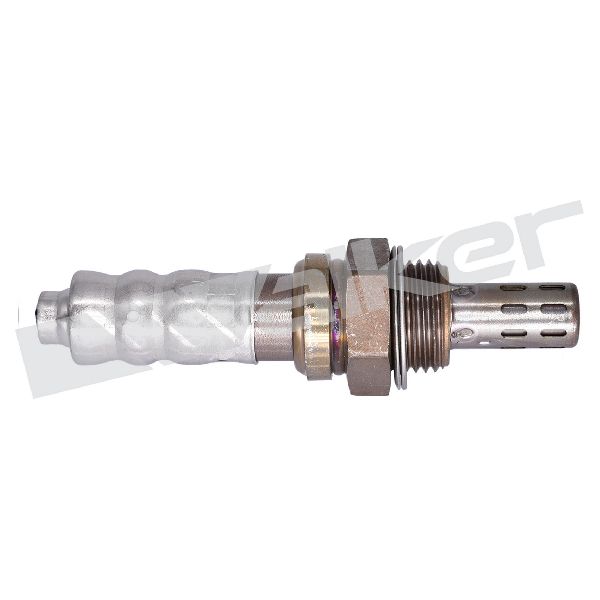
This code almost always means the downstream oxygen sensor (Bank 1, Sensor 2) has failed. Replacing the sensor is the most common fix. Expect to pay $40-$90 for an aftermarket sensor or $150-$200 for an OEM part. It's a straightforward DIY job for many, though the sensor can be seized in the exhaust pipe.
- P0138 on a 2011-2016 Sportage points directly to the downstream oxygen sensor (Bank 1, Sensor 2).
- The most probable cause is a failed sensor, which is a common wear item.
- Before buying a new sensor, always perform a quick visual inspection of the wiring and connector for obvious damage like melting or corrosion.
- This is a DIY-friendly repair for those with basic tools, including a special oxygen sensor socket, but be prepared for the old sensor to be seized.
- Driving with this code will cause you to fail an emissions test and may decrease your gas mileage.
What's Unique About the 2011-2016 Kia Sportage
The 2011-2016 Kia Sportage (third generation, SL) uses inline-four-cylinder engines (either a 2.4L or 2.0L Turbo). Because these are inline engines, they only have one cylinder bank, referred to as 'Bank 1'. This simplifies diagnosis, as there is only one downstream oxygen sensor to worry about, unlike in V6 engines which have two. The issue is typically a standard wear-and-tear failure of the sensor itself rather than a specific design flaw of the Sportage. The platform mate, the 2010-2015 Hyundai Tucson, experiences the exact same failure mode.
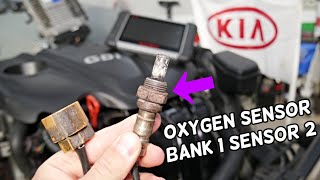
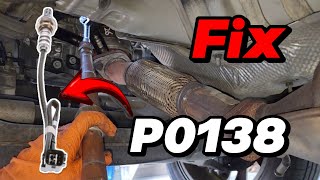
🎬 Watch this DIY fix on a 2013 Hyundai Tucson.Symptoms You May Notice
- Check Engine Light is on
- Reduced fuel economy
- Vehicle may fail an emissions test
- Rough idling or engine hesitation (in some cases)
- Excessive fuel consumption
- Strong exhaust odor
- Replacing the upstream (Bank 1, Sensor 1) oxygen sensor. This code is specific to the downstream sensor (Sensor 2).
- Replacing the catalytic converter. While a failing converter can cause other codes, it is not the typical cause of a P0138 high voltage code. A P0420 code is more indicative of converter failure. The P0138 code must be resolved before a P0420 can be accurately diagnosed.
Most Likely Causes
- Faulty Downstream Oxygen Sensor (Bank 1, Sensor 2) 🔴 High Probability → Shop Oxygen Sensor Oxygen sensors are wear-and-tear items that have a finite lifespan (often 90,000-120,000 miles) and fail from prolonged exposure to heat and exhaust gases. Contamination and internal heater circuit failure are common.
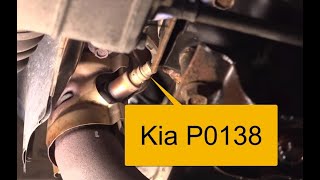
How to confirm: Use an OBD-II scanner to monitor the live data for the 'O2S B1S2' voltage. If the engine is warm and the voltage is stuck above 0.8V and not fluctuating, the sensor is very likely bad. The sensor is located on the exhaust pipe, after the catalytic converter, and is accessible from under the vehicle. A multimeter test of the sensor's heater circuit should show a resistance between 3.3 and 10 ohms; an open circuit (OL) confirms internal failure.
Typical fix: Replace the Bank 1, Sensor 2 oxygen sensor. This requires an oxygen sensor socket (a 22mm or 7/8" slotted socket) and penetrating oil to loosen the old sensor, which can be very tight. Apply anti-seize compound to the new sensor's threads before installation.
Est. part cost: $40-$200 - Damaged Wiring or Connector 🟡 Medium Probability The sensor's wiring harness runs underneath the vehicle and is exposed to road debris, moisture, and extreme exhaust heat, which can cause wires to melt, corrode, or break over time. A wire can short to a power source, causing the persistently high voltage reading.
How to confirm: Visually inspect the entire wiring harness from the O2 sensor to where it connects to the main harness. Look for any signs of melting, chafing, corrosion in the connector pins, or breaks in the wire. A multimeter can be used to check for a short to power on the signal wire.
Typical fix: Repair the damaged section of the wire or replace the connector pigtail. Ensure the repair is sealed from moisture and secured away from the hot exhaust pipe.
Est. part cost: $10-$50 - Blown Fuse ⚪ Low Probability A short in the O2 sensor's heater circuit can cause its corresponding fuse to blow, which can sometimes lead to erratic voltage readings, including a high voltage fault.
How to confirm: Check the fuse box in the engine compartment for a fuse labeled 'SENSOR 1'. On many Kia/Hyundai vehicles, this fuse protects the O2 sensors. A visual inspection or a multimeter can confirm if the fuse is blown.
Typical fix: Replace the blown fuse. If the new fuse blows immediately, it indicates a persistent short circuit in the O2 sensor or its wiring that must be diagnosed and fixed.
Est. part cost: $1-$5
Rare But Worth Checking
- Exhaust Leak: An exhaust leak before or near the oxygen sensor can sometimes alter the oxygen content in the exhaust stream, leading to incorrect sensor readings. This is less common for a high voltage code but is worth checking if a new sensor doesn't solve the issue.
- Engine Control Module (ECM) Fault: In very rare cases, the ECM itself can be the source of the problem, misinterpreting a good sensor signal. This should only be considered after all other possibilities have been exhaustively ruled out.
- Rich Fuel Condition: A severe rich running condition (caused by issues like a leaking fuel injector or faulty fuel pressure regulator) can overwhelm the catalytic converter, leading to a genuinely low oxygen environment post-cat. This would cause the B1S2 sensor to read high voltage correctly. This scenario is rare and would almost certainly be accompanied by other codes (like P0172) and severe driveability symptoms. In a cross-manufacturer example, NHTSA ODI #11581569 describes a case where P0138 appeared alongside fuel system codes like P0087 (low fuel pressure) and P0171 (lean condition), often involving frequent fuel pump or injector replacements.
Diagnosis Steps
- Read the code: Use an OBD-II scanner to confirm P0138 is the active code. 🎬 Watch: How to diagnose and fix the P0138 high voltage code. Note any other codes present, especially heater circuit codes like P0141 or P0038.
- Check Freeze Frame Data: Analyze the conditions (engine speed, temperature, etc.) under which the code was set.
- Analyze Live Data: With the engine warm, view the live data stream for the Bank 1 Sensor 2 (B1S2) voltage. It should fluctuate slowly around 0.5-0.7V. If it is stuck high (e.g., >0.9V), this confirms the fault condition.
- Inspect Wiring: Safely raise the vehicle and visually inspect the O2 sensor's wiring and connector for any signs of melting, corrosion, or physical damage. The harness runs up toward the top of the transmission area.
- Check for Blown Fuses: Inspect the engine bay fuse panel for any fuses related to the oxygen sensors, often labeled 'SENSOR 1' on Kia/Hyundai models.
- Test the Sensor (Optional): If wiring is intact, the sensor itself is the most likely culprit. While it can be tested with a multimeter, the live data reading is often sufficient for diagnosis.
- Replace the Sensor: If the sensor is deemed faulty, replace it. Use penetrating fluid as the sensor is often seized. Clear the code and perform a drive cycle to ensure the fix was successful.
Parts You'll Likely Need
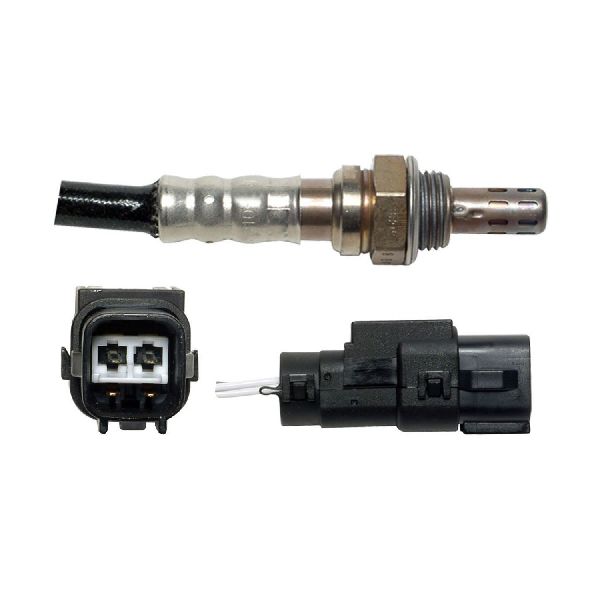
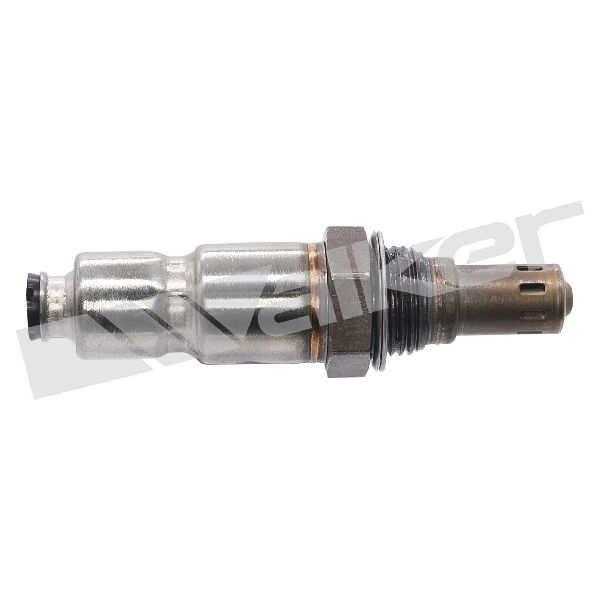
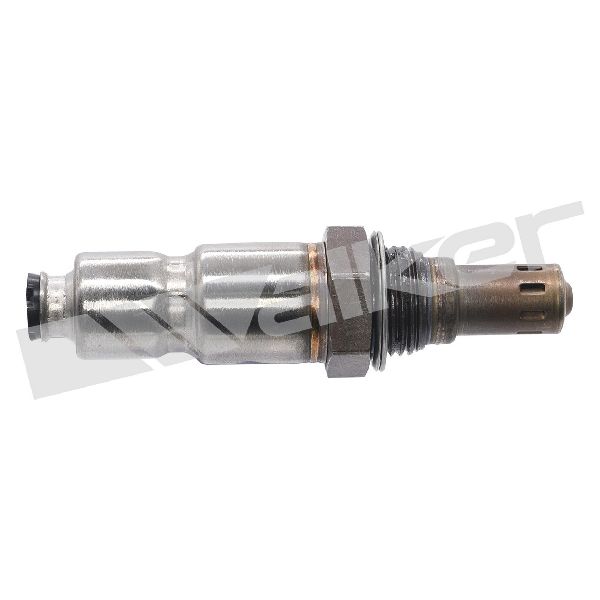
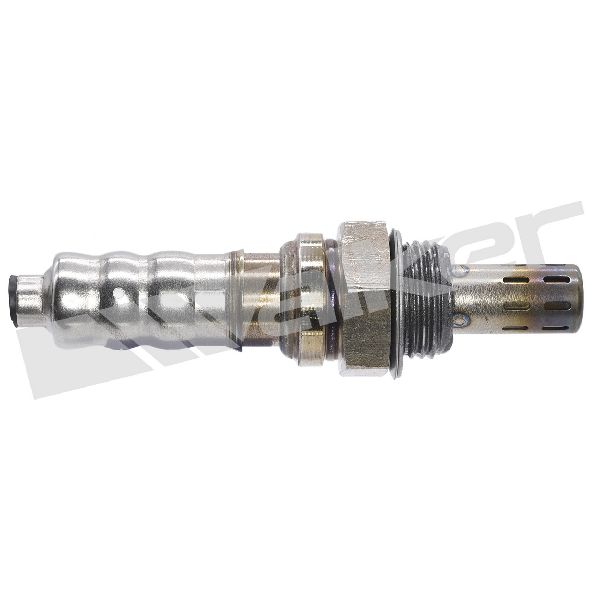
- Downstream Oxygen Sensor (Bank 1, Sensor 2)
(OEM #39210-2G650)— This is the component that fails most frequently, triggering the P0138 code. It is a standard wear item.
Trusted brands: Denso (e.g., 234-4238), NGK / NTK, Bosch, Walker Products
OEM price range: $150-$255
Aftermarket price range: $40-$90
Related Codes That Often Appear With This One
- P0038: Heater Control Circuit High (Bank 1 Sensor 2) - If seen together, this strongly points to an internal failure of the sensor assembly or a wiring issue.
- P0137: O2 Sensor Circuit Low Voltage (Bank 1 Sensor 2) - Seeing both high and low voltage codes can indicate an intermittent wiring short or a failing sensor.
- P0141: O2 Sensor Heater Circuit Malfunction (Bank 1 Sensor 2) - This is another heater circuit code that, when paired with P0138, makes the sensor itself the primary suspect.
Technical Service Bulletins (TSBs) & Recalls
- SC184 / TSB-EM2001: A voluntary emissions service campaign from March 2020 related to inspecting the evaporative canister on 2011-2016 Sportage 2.4L models. While not directly for P0138, it shows OEM attention to the emissions system of this generation.
- PI1802: A product improvement campaign to update the Knock Sensor Detection System (KSDS) ECU logic. This is related to the broader Theta II engine issues but is not a direct cause or fix for P0138.
- SC147: A safety recall campaign from June 2017 for Theta II engine inspection and replacement due to potential bearing wear from manufacturing debris. This is a critical, well-known issue but is unrelated to the P0138 O2 sensor code.
Mechanic-Grade Diagnostic Values
- Downstream O2 Sensor (B1S2) Voltage at Idle (Warm Engine) — expected: Relatively stable voltage between 0.5V and 0.8V.. Failure: Voltage is stuck high, consistently above 0.9V.
- O2 Sensor Heater Circuit Resistance — expected: Between 3.3 and 10 Ohms when tested cold across the two heater wires (often same color).. Failure: Infinite resistance (Open Loop / OL) indicates a burned-out internal heater, requiring sensor replacement.
- O2 Sensor Heater Circuit Power Supply (KOEO) — expected: Approximately 12V (battery voltage) at one pin of the harness-side connector.. Failure: 0V indicates a blown fuse (likely 'SENSOR 1' in engine bay fuse box) or a break in the power wire.
Scan Tool Commands That Help
- Kia GDS (Global Diagnostic System): Live Data / Current Data Analysis — To monitor the B1S2 voltage in real-time to confirm if it is stuck high. The GDS provides the most detailed, OEM-level data stream for accurate diagnosis.
- Kia GDS (Global Diagnostic System): DTC and Freeze Frame Data — To view the exact conditions under which the P0138 code was set and to check for any accompanying manufacturer-specific codes that a generic scanner might miss.
Wiring & Ground Locations
- SENSOR 1 Fuse — Located in the main fuse box in the engine compartment.. This fuse often provides power to the oxygen sensor heater circuits on Kia vehicles. If it blows due to a short, it can cause erratic sensor readings, including a P0138 code.
- O2 Sensor Harness Retainers — Clips securing the O2 sensor wiring harness to the vehicle's underbody, between the sensor and the main connector.. If these retainers break or come loose, the harness can fall onto the hot exhaust pipe. This can melt the wiring insulation, causing the signal wire to short to the heater power wire, which would result in a constant high voltage signal and trigger P0138.
Real Owner Repair Stories
- YouTube - EIDACARS MOTOR NEIVA (Kia Sportage (2.0L, similar platform)) — Persistent P0136 code (general circuit malfunction, closely related to P0138) and Check Engine Light.
❌ Tried (didn't work) Replacing the downstream oxygen sensor with a new aftermarket part.
✅ What actually fixed it The aftermarket sensor had an incorrect internal resistance (too low), causing an amperage draw over 1.2A that the ECU flagged as a fault. Replacing it with a proper OEM-spec sensor with the correct resistance (~9.9 Ohms) fixed the issue, highlighting the ECU's sensitivity.
Model Year Variations Within This Range
- 2014-2016: A mid-generation facelift was introduced for the 2014 model year, including engine refinements and updated styling. More importantly, some 2014-2016 models with the 2.4L GDI engine may have overly sensitive ECM logic. TSB SC185 was issued to provide a software update to correct this, which could be a potential fix for a persistent P0138 code where no hardware fault is found.
Diagnostic Flowchart
Other Known Issues on This Vehicle
Issues unrelated to this code that are worth knowing about as an owner of this generation:
- Theta II Engine Failure (Connecting Rod Bearings) 🔴 High — Widespread across 2.0L Turbo and 2.4L GDI engines. Failure can occur at various mileages, often before 100,000 miles. Led to a class-action lawsuit and extended warranty. (Ref: Recall SC147; Class-action settlement extending warranty to 15yr/150k miles.)
- Engine Compartment Fire Risk 🔴 High — Affects multiple model years and has been the subject of several recalls. Can be caused by various issues including HECU malfunction or oil/fuel leaks near hot components. (Ref: Multiple NHTSA recalls, including one for HECU fires.)
- Excessive Oil Consumption 🟠 Medium — Common complaint on the four-cylinder engines, can be a precursor to more serious engine problems.
- EVAP Canister Failure / Noise 🟡 Low — Affects 2.4L ULEV models, causing noise from loose charcoal and potentially exceeding emissions standards. (Ref: Voluntary Emissions Service Campaign SC184)
- Transmission Slippage / Harsh Shifting 🟠 Medium — Some owners report issues with the automatic transmission, sometimes attributed to a faulty torque converter.
Used vs. New Parts: Buying Guide for This Vehicle
When a used part is the smart pick: For this repair, buying a used part is NOT recommended. The primary cause of P0138 is a failed oxygen sensor, which is a wear-and-tear item with a finite lifespan. A used sensor from a junkyard will have unknown remaining life and may fail shortly after installation.
What to inspect on the donor part:
- Not applicable as used sensors are not advised.
OEM-only on this vehicle (don't cheap out):
- While not strictly 'OEM-only', using an OEM or a proven OE-equivalent oxygen sensor is highly recommended. The vehicle's ECU is sensitive to the sensor's internal specifications, particularly the heater circuit resistance.
Aftermarket brands forum-validated for this vehicle:
- Denso
- NGK / NTK
- Bosch
- HL Mando (OE Supplier for Hyundai/Kia)
Brands owners have reported issues with on this vehicle:
- Generic, unbranded, or 'universal' oxygen sensors should be avoided. There are documented cases where sensors with incorrect internal resistance trigger persistent circuit fault codes on this platform.
Real Owner Stories
Aggregated from forums and TSBs cited above. Mileages and costs reflect what owners reported in those sources.
2013 Hyundai Tucson 2.4L
Symptoms: Check Engine Light with code P0138.
What fixed it: Replacement of the downstream O2 sensor with an NTK 25199 sensor. The fix remained successful after 3,000 miles of driving.
Source hint: YouTube - 'How to fix a P0138'
2011-2016 Kia Sportage 2.0L
Symptoms: P0138 code present.
What fixed it: Replacing the Bank 1 Sensor 2 with a Denso 234-4238 sensor and clearing the code.
Source hint: YouTube - S&E's Garage
2011-2016 Kia Sportage
Symptoms: The mechanic found a P0138 code that persisted despite standard checks.
What fixed it: Repairing a wiring harness that had rubbed through and shorted the heater voltage to the signal line.
Source hint: Reddit r/AskMechanics
Documented NHTSA Reports
Manufacturer Sorento Reference
Symptoms: An owner reported multiple fault codes including P0171 (System too lean bank 1), P0138 (O2 sensor circuit high b1s2), P0087 (Fuel pressure too low), and P0036 (B1S2).
What fixed it: NHTSA ODI #11581569 notes that these codes were associated with frequent fuel pump and fuel injector replacements.
Source hint: NHTSA ODI #11581569
Related OBD-II Codes
Frequently Asked Questions
Does the voluntary emissions campaign SC184 for the 2011-2016 Sportage 2.4L fix the P0138 code?
Is there a specific fuse I should check for O2 sensor issues on my Kia Sportage?
Can I use a sensor from a Hyundai Tucson to fix my Sportage's P0138 code?
Does the Theta II engine recall (SC147) cover the replacement of my Bank 1 Sensor 2 oxygen sensor?
What specific part numbers are recommended for replacing the downstream sensor on a 2.0L or 2.4L Sportage?
Could the P0138 code be related to the Knock Sensor Detection System (KSDS) update?
Helpful Videos
We Have This Part in Stock


The information in this article is provided for general reference and educational purposes only. Vehicle specifications, procedures, and part compatibility can vary by production date, trim level, and region. Always consult your vehicle's factory service manual and verify part numbers before purchasing or performing repairs. Safety-critical components such as airbags, seat belts, and braking systems should be installed by a qualified professional.
- Kia Sportage:
- 🧭 Diagnostic Flowchart
- 🎬 Helpful Videos
- 🛍️ Shop This Part
- What's Unique About the 2011-2016 Kia Sportage
- Symptoms You May Notice
- Most Likely Causes
- Rare But Worth Checking
- Diagnosis Steps
- Parts You'll Likely Need
- Related Codes That Often Appear With This One
- Technical Service Bulletins (TSBs) & Recalls
- Mechanic-Grade Diagnostic Values
- Scan Tool Commands That Help
- Wiring & Ground Locations
- Real Owner Repair Stories
- Model Year Variations Within This Range
- Other Known Issues on This Vehicle
- Used vs. New Parts: Buying Guide for This Vehicle
- Real Owner Stories
- 2013 Hyundai Tucson 2.4L
- 2011-2016 Kia Sportage 2.0L
- 2011-2016 Kia Sportage
- Documented NHTSA Reports
- Manufacturer Sorento Reference
- Related OBD-II Codes
- Frequently Asked Questions
- 🎟️ Get 5% Off