

P0138 on 2008-2017 Mitsubishi Lancer: Rear O2 Sensor High Voltage Fixes
For a 2008-2017 Mitsubishi Lancer, code P0138 is almost always caused by a failed rear (downstream) oxygen sensor. A wiring short is the second most likely cause. Expect to pay $50-$100 for an aftermarket sensor, with a DIY difficulty of 2/5.
- P0138 on a Lancer points to the rear (post-catalytic converter) O2 sensor or its wiring.
- The most probable fix is replacing the rear O2 sensor.
- Before replacing the sensor, always inspect the wiring harness for damage, especially for signs of it rubbing against the car's frame.
- This is a DIY-friendly repair for those with basic tools and access to the underside of the vehicle.
What's Unique About the 2008-2017 Mitsubishi Lancer
On the 2008-2017 Lancer platform, the P0138 code is a straightforward electrical fault code. The most common failure point is simply the rear O2 sensor wearing out over time. However, owners who have modified their exhaust systems (e.g., with a test pipe or aftermarket downpipe) are more likely to encounter this code, sometimes due to improper installation or wiring issues. A known issue, particularly on modified cars, is the rear O2 sensor's wiring harness rubbing against the vehicle's frame or chassis, which can cause a short circuit and trigger the P0138 code. Forum users have specifically mentioned the sensor or its wiring rubbing against the frame, leading to a short to power.
Generation note: The 2008-2017 year range covers the final generation of the Mitsubishi Lancer (often called Lancer X). The causes and fixes for P0138 are consistent across the non-turbo 2.0L (4B11) and 2.4L (4B12) engines within this generation.
Symptoms You May Notice
- Check Engine Light is on
- Reduced fuel economy
- Rough or unstable idle
- Vehicle may fail an emissions test
- Strong exhaust odor due to a rich fuel mixture
- Replacing the front (upstream) Air/Fuel Ratio sensor instead of the rear (downstream) Oxygen sensor.
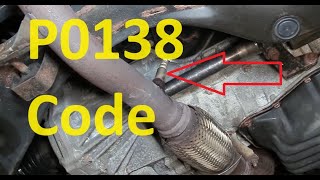
- Replacing the catalytic converter. P0138 is an electrical circuit code for the sensor, not an efficiency code (like P0420) for the converter. 🎬 Watch: Learn more about P0138 causes and fixes
- Using a spark plug non-fouler or O2 simulator to 'trick' the ECU, especially on cars with aftermarket test pipes. While this may temporarily clear a code, it does not fix the underlying electrical fault indicated by P0138 and may not be legal for emissions purposes.
Most Likely Causes
- Failed Rear (Downstream) Oxygen Sensor 🔴 High Probability → Shop Oxygen Sensor Oxygen sensors are wear items that degrade over time due to constant exposure to high-temperature exhaust gases. Internal failures, such as a short in the heating element or degradation of the sensing element, can cause the sensor to output a fixed high voltage. They are generally expected to last over 50,000 miles, but failure is common.
How to confirm: With the engine running, use an OBD-II scanner with live data to monitor the 'O2S B1S2' voltage. If the voltage is stuck at 1.0V or higher and does not fluctuate, the sensor has likely failed. The normal range for a healthy downstream sensor on a warm engine at steady RPM is between 0.6 and 1.0 volts. A definitive test is to measure the sensor's internal heater resistance; it should be between 4.5 - 8.0 Ω at room temperature.
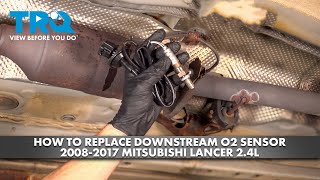
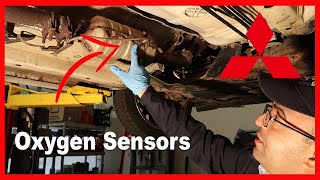
Typical fix: Replace the rear oxygen sensor. The sensor is located on the exhaust pipe after the catalytic converter. 🎬 See this quick video on the sensor's location Using a specialized O2 sensor socket can make removal easier. 🎬 Watch: Step-by-step downstream O2 sensor replacement guide
Est. part cost: $50-$120 - Wiring Harness or Connector Damage 🟡 Medium Probability The O2 sensor wiring runs under the vehicle and is exposed to heat, road debris, and moisture. On Lancers, there are multiple owner reports of the harness rubbing against the frame or other chassis components, causing wires to fray and short to power. This can happen even without modifications but is more common after exhaust work.
How to confirm: Visually inspect the entire wiring harness from the rear O2 sensor to its connection point. Look for any melted, frayed, or rubbing wires. Check the connector (D-40 on the sensor side) for corrosion or damage. Use a multimeter to check for a short to power on the signal wire (between terminal 3 of connector D-40 and terminal 40 of ECM connector B-108).
Typical fix: Repair the damaged section of the wiring harness and secure it away from heat sources or sharp edges using zip ties or loom. Replace the connector if it is damaged.
Est. part cost: $5-$50
Rare But Worth Checking
- Engine Control Module (ECM) Failure: This is a very rare cause. Before condemning the ECM, all other possibilities, especially the sensor and its wiring, must be exhaustively checked. Mitsubishi lists this as a potential cause in their troubleshooting guide but places it last after checking the sensor and wiring.
- Exhaust Leak Before the Sensor: While an exhaust leak typically causes low voltage or lean codes, a significant leak could disrupt exhaust flow and cause erratic readings. However, it is not a primary cause for a 'circuit high' fault, which usually points to an electrical issue.
Diagnosis Steps
- Read the code with an OBD-II scanner to confirm P0138 is present.
- Use the scanner's live data feature to observe the voltage of 'Bank 1, Sensor 2'. On a Lancer, this should be a relatively stable voltage between 0.6-1.0V when the engine is warm and at a steady RPM. If it's stuck high (specifically >1.8V for 2 seconds), the sensor or circuit is at fault.
- Perform a thorough visual inspection of the rear O2 sensor's wiring harness, from the sensor itself to the main connector. Pay close attention to where the harness might rub against the subframe, suspension components, or heat shields.
- If the wiring looks good, disconnect the sensor. Check the connector terminals (D-40) for damage, corrosion, or moisture.
- With the sensor disconnected and the key on (engine off), use a multimeter to check for voltage on the signal wire in the vehicle-side harness. There should not be battery voltage present. If there is, you have a short to power in the harness that must be found and repaired.
- If the wiring and connector are confirmed to be in good condition and there is no short to power, the rear O2 sensor itself is the most likely faulty component and should be replaced. A final confirmation is to test the heater resistance across the two heater pins on the sensor itself. Per the service manual, it should be 4.5 - 8.0 ohms.
- After replacement, clear the code and perform a drive cycle to ensure the repair was successful.
Parts You'll Likely Need
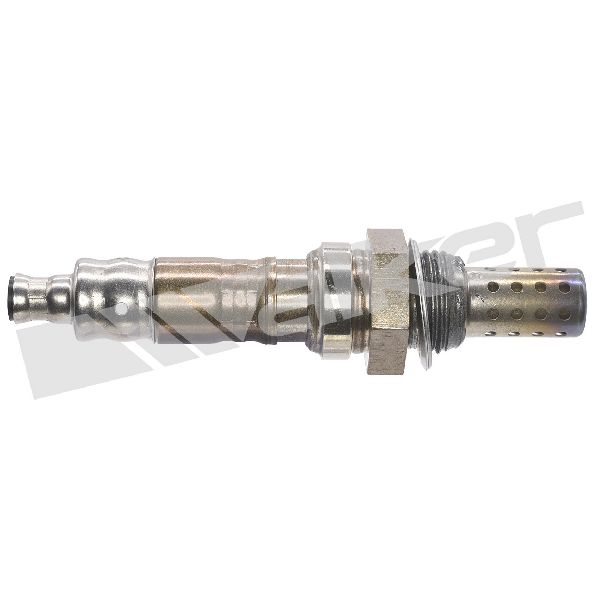
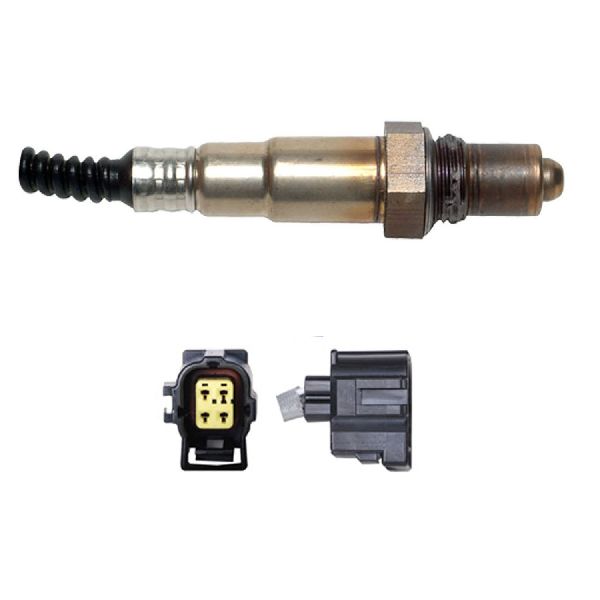
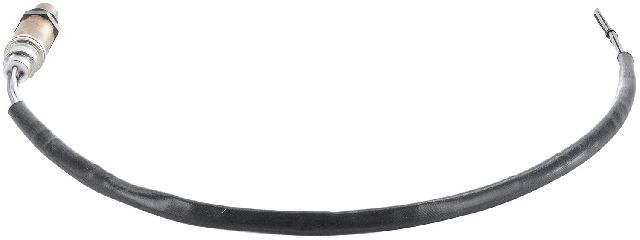
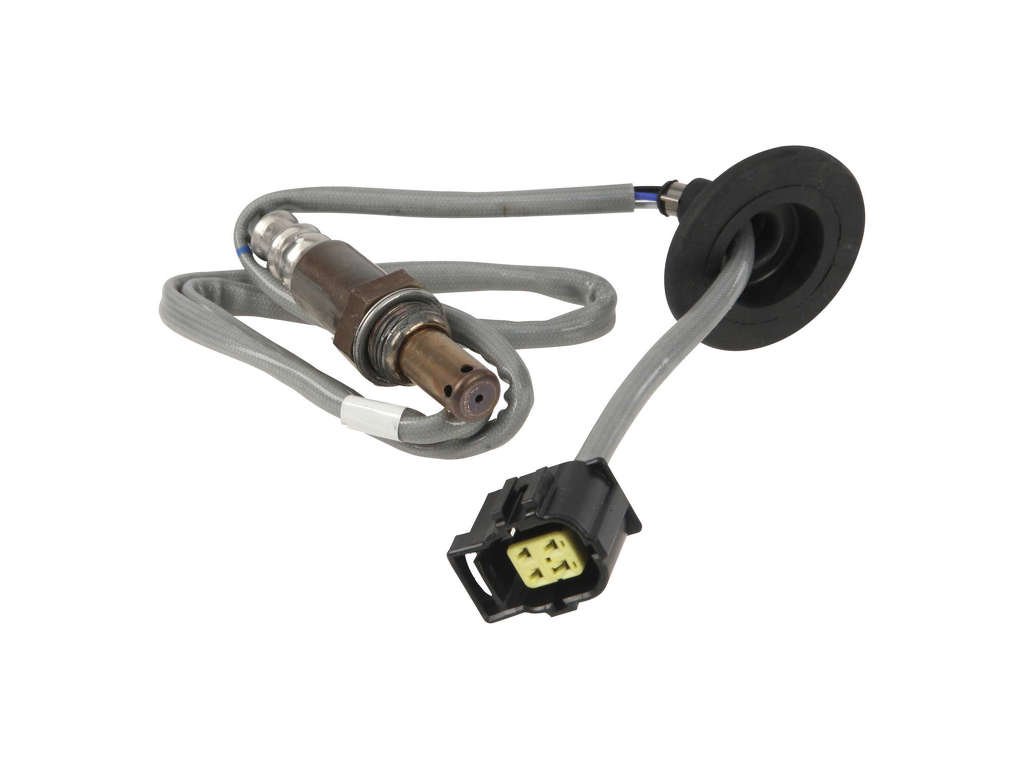
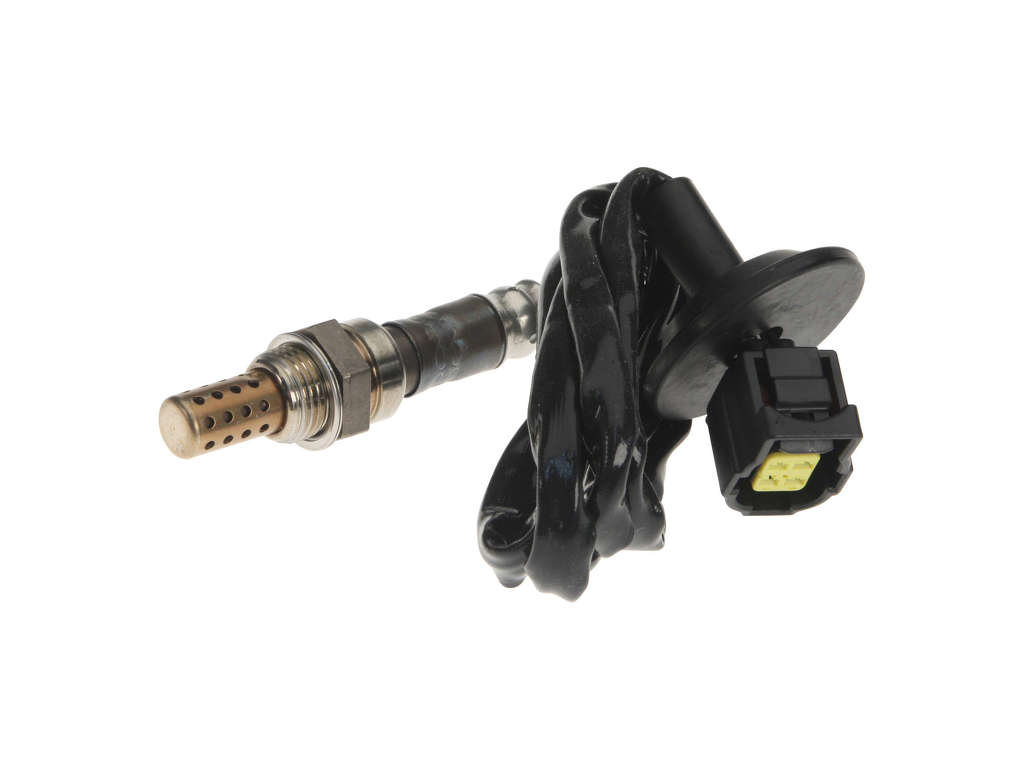
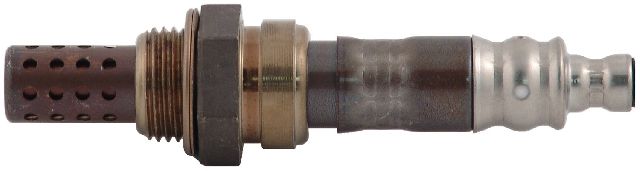
- Rear Oxygen Sensor (Downstream)
(OEM #1588A144)— This is the most common cause of a P0138 code, as the sensor's internal components fail and produce a constant high voltage signal.
Trusted brands: Denso (e.g., 234-4739), NGK/NTK (e.g., 23160), Walker Products
OEM price range: $180-$250
Aftermarket price range: $50-$120
Platform-Specific Known Issues
- Wiring Harness Chafing: A recurring issue reported by Lancer owners is the rear O2 sensor wiring harness rubbing against the vehicle's frame or subframe. This can wear through the insulation and cause the signal wire to short to power, triggering P0138. This should be inspected carefully before replacing the sensor.
Mechanic-Grade Diagnostic Values
- Rear O2 Sensor Heater Resistance — expected: 4.5 - 8.0 Ω (at 20°C / 68°F). Failure: A reading of infinite resistance (OL) or a value outside the specified range.
- Rear O2 Sensor Live Data Voltage (Warm Engine, Steady RPM) — expected: Stable between 0.6V and 1.0V. Failure: Voltage stuck high, specifically >1.8V for 2 seconds.
- Rear O2 Sensor Signal Wire to ECM — expected: Continuity between Terminal 3 of sensor connector D-40 and Terminal 40 of ECM connector B-108.. Failure: No continuity (open circuit) or a short to power/ground.
Scan Tool Commands That Help
- Mitsubishi M.U.T.-IIISE (or equivalent professional scanner): Live Data, Item AD: Heated Oxygen Sensor (rear) — This is the primary function used to monitor the rear O2 sensor's output voltage in real-time to see if it is stuck high, confirming the condition that sets the P0138 code.
Wiring & Ground Locations
- D-40 — The 4-pin electrical connector for the rear oxygen sensor itself, located on the wiring harness near the sensor under the vehicle.. This is the primary connector to inspect for damage, corrosion, and to perform voltage/resistance tests on the sensor and harness side.
- B-108 — One of the main multi-pin connectors at the Engine Control Module (ECM).. Pin 40 of this connector is the specific terminal for the rear O2 sensor signal. Pin 41 is the sensor ground. This is the endpoint for checking harness continuity from the sensor.
- A-54, C-37 — Intermediate connectors in the wiring harness between the O2 sensor and the ECM.. The official Mitsubishi diagnostic procedure notes to check these connectors for damage if a wiring fault is suspected, as they are potential points of failure in the circuit.
OEM Part Supersession History
1588A144→— This part number appears to be stable and fits a wide range of Mitsubishi vehicles from 2008-2021, including the Lancer, Outlander, and RVR.
Diagnostic Flowchart
Other Known Issues on This Vehicle
Issues unrelated to this code that are worth knowing about as an owner of this generation:
- CVT Transmission Overheating/Failure 🔴 High — Common on models equipped with the CVT, particularly earlier in the generation. Can manifest as shuddering, surging, or complete failure. (Ref: TSB-10-23-005 (fluid level), TSB-20-23-001REV (shudder/surge), Recall SR-16-006 (ECU logic).)
- Clear Coat / Paint Peeling 🟠 Medium — Widespread issue, especially on darker colors and red. The clear coat fails, oxidizes, and peels, often starting on horizontal surfaces like the roof and trunk.
- ETACS ECU Failure 🟠 Medium — Affects certain 2009-2010 models. Can cause random electrical issues, including loss of headlights or wipers. (Ref: Safety Recall Campaign C1502T.)
- Radiator Fan Control Module Failure 🟠 Medium — A common failure part that leads to the cooling fans not activating, causing the engine to overheat in traffic or at idle.
- Engine Stalling 🟡 Low — Some owners report intermittent stalling, especially when coming to a stop or at low speeds. Often attributed to a faulty MAP sensor or a dirty throttle body.
Used vs. New Parts: Buying Guide for This Vehicle
When a used part is the smart pick: For this repair, using used parts is generally not recommended. The primary failure part is the oxygen sensor itself, which is a wear item. A used sensor has unknown remaining life and may fail shortly after installation. A used wiring harness pigtail could be a viable option if only the connector is damaged and a new one is unavailable.
Donor-vehicle mileage cap: roughly under 50000 miles for the part to have meaningful remaining life.
What to inspect on the donor part:
- For a connector pigtail, ensure the plastic is not brittle or cracked.
- Check that locking tabs are intact.
- Inspect terminals for corrosion or signs of water intrusion.
- Ensure there is enough wire length for splicing.
Aftermarket brands forum-validated for this vehicle:
- Denso (e.g., 234-4739) - Often the original equipment manufacturer, highly recommended.
- NTK/NGK (e.g., 23160) - A major OEM supplier known for quality sensors.
- Bosch - A reputable brand with direct-fit options available that forum users have reported work well.
Brands owners have reported issues with on this vehicle:
- Unbranded or generic 'universal' sensors that require splicing are often cited as problematic. While they may work, improper splicing can introduce resistance and new faults. Direct-fit is strongly recommended.
Real Owner Stories
Aggregated from forums and TSBs cited above. Mileages and costs reflect what owners reported in those sources.
2009 Mitsubishi Lancer Ralliart — 55000 miles
Symptoms: Persistent P0138 code on a vehicle equipped with a high-flow catalytic converter.
What fixed it: The discussion identified the cause as either the sensor failing due to age or a wiring issue.
Source hint: EvolutionM - 'DTC P0138: Heated Oxygen Sensor Circuit High Voltage <SENSOR 2>' (2009)
2008 Mitsubishi Lancer Evolution — ~40000 miles
Symptoms: Check Engine Light (P0138) appeared after installing a modified exhaust.
What fixed it: Found the O2 sensor body was physically rubbing against the vehicle frame.
Source hint: EvolutionM - 'CEL: P0138 Troubles!' (2008)
2008 Mitsubishi Lancer — ~60000 miles
Symptoms: P0138 code appeared after a year of running a test pipe with non-foulers; suspected sensor failure or wire damage from a snowstorm.
What fixed it: Replacing the sensor is the recommended solution if the sensor is confirmed bad.
Source hint: EvolutionM - 'p0138 code' (2008)
Related OBD-II Codes
Frequently Asked Questions
Is there a specific wiring issue on the Mitsubishi Lancer that causes the P0138 code?
What is the correct resistance for the rear oxygen sensor heater on a Lancer?
What voltage should I see for 'Bank 1, Sensor 2' on my OBD-II scanner?
Are there any recalls for electrical issues that might affect my 2009-2010 Lancer?
Does the Lancer share this O2 sensor issue with other Mitsubishi models?
Can a modified exhaust cause P0138 on my Lancer Evolution?
Helpful Videos
We Have This Part in Stock

The information in this article is provided for general reference and educational purposes only. Vehicle specifications, procedures, and part compatibility can vary by production date, trim level, and region. Always consult your vehicle's factory service manual and verify part numbers before purchasing or performing repairs. Safety-critical components such as airbags, seat belts, and braking systems should be installed by a qualified professional.
- Mitsubishi Lancer:
- 🧭 Diagnostic Flowchart
- 🎬 Helpful Videos
- 🛍️ Shop This Part
- What's Unique About the 2008-2017 Mitsubishi Lancer
- Symptoms You May Notice
- Most Likely Causes
- Rare But Worth Checking
- Diagnosis Steps
- Parts You'll Likely Need
- Platform-Specific Known Issues
- Mechanic-Grade Diagnostic Values
- Scan Tool Commands That Help
- Wiring & Ground Locations
- OEM Part Supersession History
- Other Known Issues on This Vehicle
- Used vs. New Parts: Buying Guide for This Vehicle
- Real Owner Stories
- 2009 Mitsubishi Lancer Ralliart — 55000 miles
- 2008 Mitsubishi Lancer Evolution — ~40000 miles
- 2008 Mitsubishi Lancer — ~60000 miles
- Related OBD-II Codes
- Frequently Asked Questions
- 🎟️ Get 5% Off