

P0138 on 2000-2006 Nissan Sentra: O2 Sensor High Voltage Causes and Fixes
On a 2000-2006 Nissan Sentra, code P0138 is almost always caused by a failing downstream (rear) oxygen sensor. Replacing this sensor is the most common fix, with parts costing between $30 for aftermarket and $120 for an OEM-quality sensor. Before replacing, a quick inspection of the wiring harness for melting or damage is recommended.
- P0138 on a 2000-2006 Sentra points to the rear O2 sensor reading a high voltage.
- The most probable cause is a failed rear O2 sensor. Replacement is a DIY-friendly job with the right tool (an O2 sensor socket).
- Always inspect the wiring for damage before replacing the sensor, as this is the second most likely cause.
- To avoid having the code return, use a high-quality OEM brand sensor like Denso or NGK/NTK.
What's Unique About the 2000-2006 Nissan Sentra
For the B15 generation Sentra (2000-2006), this code is straightforward across its primary engines (1.8L QG18DE and 2.0L SR20DE). There are no complex, generation-specific issues commonly associated with P0138. The primary challenge owners face is the potential for recurring codes if they use low-quality aftermarket sensors instead of OEM brands like Denso or NGK/NTK, which are often the original equipment suppliers for Nissan. Due to the vehicle's age, corrosion of the sensor, exhaust bolts, and wiring harness clips is also a common factor during repair, often requiring penetrating oil and a proper O2 sensor socket to remove.
Symptoms You May Notice
- Check Engine Light is on
- Reduced fuel economy
- Rough or unstable idle
- Noticeable odor of gasoline from the exhaust
- Failing a vehicle emissions test
- Poor engine performance or hesitation
- Replacing the upstream (front) O2 sensor instead of the downstream (rear) one. P0138 specifically refers to Sensor 2, which is the rear sensor.
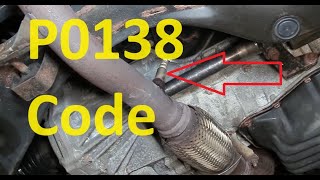
- Assuming the sensor is bad without checking the wiring. A simple wiring short can mimic a failed sensor, and replacing the sensor won't fix the problem. 🎬 Watch: Common causes and fixes for the P0138 code
Most Likely Causes
- Faulty Downstream Oxygen (O2) Sensor 🔴 High Probability → Shop Oxygen Sensor Sensors have a finite lifespan (typically 90,000-120,000 miles) and fail from age, heat cycles, and contamination from exhaust gases. On a vehicle over 15-20 years old, sensor failure is the most common point of failure for this code.
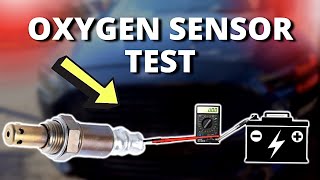
How to confirm: Use an OBD-II scanner with live data to monitor the Bank 1 Sensor 2 voltage. If the voltage is stuck high (e.g., >0.9V) and doesn't fluctuate, the sensor is likely bad. You can also test the sensor's internal heater circuit with a multimeter. 🎬 See this guide on how to test an oxygen sensor A video from MotoEclinic on a 2000 Sentra with P0138 demonstrates checking for power, ground, and a 3-volt signal reference at the connector before condemning the sensor.
Typical fix: Replace the downstream (rear) oxygen sensor. It is highly recommended to use an OEM or high-quality aftermarket brand like Denso or NGK/NTK. Ensure the new sensor comes with anti-seize compound for the threads.
Est. part cost: $30-$120 - Damaged Wiring or Connectors 🟡 Medium Probability The sensor wiring is routed under the vehicle near the hot exhaust, making it susceptible to melting, corrosion, or physical damage over time. The plastic connector and clips can become brittle and break. A short-to-power in the signal wire, where the 12V heater circuit wire chafes and touches the signal wire, can also force the voltage high and trigger the code.
How to confirm: Visually inspect the entire wiring harness from the O2 sensor to the main engine harness. Look for any signs of melting, chafing, corrosion in the connector pins, or breaks in the wires. Perform a continuity test on the wires and check for shorts to power or ground if visual inspection is inconclusive.
Typical fix: Repair the damaged section of wiring or replace the connector pigtail. Ensure the repair is insulated and secured away from the hot exhaust pipe.
Est. part cost: $5-$30 - Engine Running Rich ⚪ Low Probability While less common for this specific code, issues like a leaking fuel injector, a faulty fuel pressure regulator, or even a dirty Mass Airflow (MAF) sensor can cause excess fuel to enter the exhaust, leading to a high voltage reading from the O2 sensor.
How to confirm: This is a more advanced diagnosis. Look for other trouble codes related to the fuel system. A mechanic can test fuel pressure (should be approx. 43 PSI for this model) and check fuel trims with a professional scan tool to see if the engine is commanding or seeing a rich condition.
Typical fix: Diagnose and repair the root cause of the rich condition, such as cleaning the MAF sensor, or replacing a faulty fuel injector or fuel pressure regulator.
Est. part cost: $50-$300+
Rare But Worth Checking
- Exhaust Leak: An exhaust leak *before* the catalytic converter can sometimes draw in oxygen and cause the upstream sensor to react, making the computer add fuel. This rich mixture is then read by the downstream sensor, potentially triggering P0138. It's worth checking for leaks if a new sensor doesn't fix the issue.
- Failing Catalytic Converter: A chemically inefficient or clogged catalytic converter can fail to process exhaust gases correctly, leading to abnormal readings from the downstream O2 sensor. This is usually accompanied by other codes like P0420.
- Faulty Powertrain Control Module (PCM): This is extremely rare. The PCM itself can fail, but this should only be considered after all other possibilities have been exhaustively ruled out.
Diagnosis Steps
- Connect an OBD-II scanner and confirm that P0138 is the primary code. Note any other codes present.
- Use the scanner's live data feature to observe the voltage for 'B1S2' (Bank 1, Sensor 2). A reading that is consistently high (e.g., 0.9V - 1.2V) and does not fluctuate much confirms the condition.
- Turn off the vehicle and allow the exhaust to cool.
- Safely raise the vehicle and locate the downstream O2 sensor, which is screwed into the exhaust pipe just after the catalytic converter.
- Thoroughly inspect the sensor's wiring harness and connector for any signs of melting, corrosion, chafing, or loose connections. Pay close attention to where the harness might contact the exhaust or chassis.
- If the wiring looks good, the most likely culprit is the sensor itself. Proceed with replacement. An O2 sensor socket is highly recommended, and penetrating oil may be needed for a corroded sensor.
- After replacement, clear the codes with the scanner and perform a test drive to ensure the Check Engine Light does not return.
- If a new sensor does not resolve the code, further diagnosis is needed to check for a rich running condition (leaking injectors, high fuel pressure) or a failing catalytic converter.
Parts You'll Likely Need
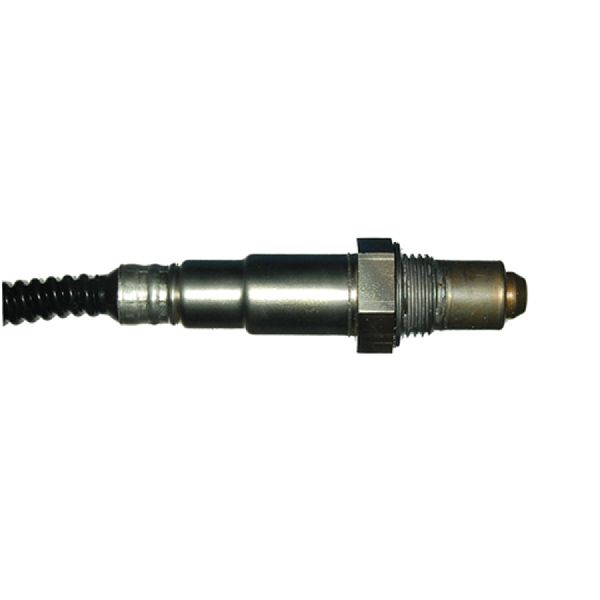
- Downstream Oxygen Sensor (Rear)
(OEM #226A0-4M200 (for 1.8L QG18DE, check VIN for exact fitment))— This is the most common failure point for code P0138 on the B15 Sentra due to age and operating conditions.
Trusted brands: Denso, NGK/NTK, Bosch
OEM price range: $90-$150
Aftermarket price range: $30-$80
Related Codes That Often Appear With This One
- P0420 — If the catalytic converter is failing, it can cause both a P0420 (Catalyst System Efficiency Below Threshold) and a P0138, as the downstream O2 sensor's readings are directly related to converter efficiency.
Technical Service Bulletins (TSBs) & Recalls
While specific bulletins for the B15 Sentra are limited, Nissan has issued several TSBs for other models of the same era and newer that address P0138, highlighting it as a persistent manufacturer-wide diagnostic point. For instance, Bulletin #NTB15051 notes that P0138 (Heated Oxygen Sensor 2 Circuit High Voltage) may be stored in the ECM and requires following a specific diagnostic flow chart. Similarly, Bulletin #NTB15053A lists P0138 alongside related codes like P0137 (low voltage) and P0139 (slow response) for the heated oxygen sensor 2 circuit. More recent bulletins, such as #NTB18-062, #NTB18-062a, and #NTB18-062b, continue to document instances where the MIL is on specifically due to DTC P0138, confirming the sensor circuit's high voltage as a recurring technical concern across the Nissan platform.
Platform-Specific Known Issues
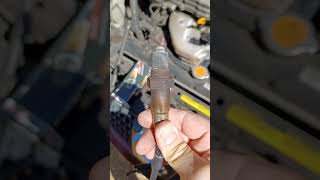
- Corrosion on Sensor and Exhaust: Given the age of the B15 Sentra, the original oxygen sensor is often seized in the exhaust pipe due to rust. Applying penetrating oil and allowing it to soak before attempting removal is crucial. Using a dedicated O2 sensor socket provides better grip and reduces the chance of stripping the sensor's hex head. 🎬 Watch: 2000-2006 Nissan Sentra oxygen sensor replacement walkthrough
- Aftermarket Sensor Incompatibility: Numerous forum discussions for B15 Sentras and other Nissans of the era mention that cheap, universal aftermarket O2 sensors can fail quickly or not work correctly, causing the P0138 code to return. It is strongly advised to use direct-fit sensors from OEM suppliers like Denso or NTK for a lasting repair.
Mechanic-Grade Diagnostic Values
- Downstream O2 Sensor (B1S2) Live Data Voltage — expected: Slowly fluctuating/drifting just above 0.5V on a healthy, warm engine.. Failure: Voltage is stuck high, consistently reading above 0.9V.
- O2 Sensor Connector - Signal Reference Voltage — expected: Approximately 3.0 Volts with Key On, Engine Off.. Failure: No voltage or significantly different voltage, indicating a wiring or PCM issue.
- Fuel Pressure (at fuel rail) — expected: Approximately 43 PSI. For 2000-2006 models, the regulator is in the fuel tank.. Failure: Significantly higher pressure could indicate a faulty regulator, causing a rich condition that triggers P0138.
Scan Tool Commands That Help
- Nissan CONSULT-II: DTC Confirmation Procedure — To verify the P0138 fault is currently active. The procedure involves running the engine at 3,500-4,000 rpm for 1 minute, then idling for 2 minutes to see if the 1st trip DTC is detected by the ECM.
- Professional Scan Tool (e.g., CONSULT): IPDM E/R Active Test — To test the functionality of various electrical loads controlled by the Intelligent Power Distribution Module. This can help diagnose underlying electrical issues that might be causing sensor circuit problems, though it does not directly test the O2 sensor itself.
Wiring & Ground Locations
- Engine/Transmission Grounds — Key grounding points include the transmission case, throttle body, alternator bracket, and both strut towers.. A poor engine ground can introduce electrical noise and voltage offsets, potentially causing the PCM to misinterpret the O2 sensor's low-voltage signal and set a false P0138 code.
- Ground F / Ground M — Located in the right kick panel area, inside the cabin.. Body and chassis grounds are crucial for the proper operation of the entire electrical system, including the PCM and its sensor circuits. A corroded or loose ground in this area can cause a variety of difficult-to-diagnose electrical problems.
- Ground L — Located in the left kick panel area, inside the cabin.. This ground point serves various components on the driver's side of the vehicle. Ensuring it is clean and tight is a good practice when diagnosing any electrical fault code.
- O2 Sensor Connector Pins — At the 4-wire connector for the downstream O2 sensor.. A technician must test these specific pins for battery power (for the heater), ground, and the signal wire voltage to determine if the fault is in the sensor or the vehicle's wiring/PCM.
Real Owner Repair Stories
- YouTube channel 'MotoEclinic' (2000 Nissan Sentra) — Check Engine Light with code P0138.
✅ What actually fixed it The technician first tested the sensor connector with the key on, engine off. He confirmed the presence of battery power, a good ground, and a 3-volt signal reference from the computer. Since the wiring tested good, he condemned the sensor, replaced the downstream O2 sensor, cleared the code, and the problem was resolved. - Reddit user in r/AskMechanics (Not specified, but general mechanic experience.) — Persistent P0138 code.
❌ Tried (didn't work) Likely sensor replacement.
✅ What actually fixed it The cause was found to be the wiring harness rubbing through above the sensor. The 12V wire for the sensor's heater circuit shorted to the signal wire, constantly sending high voltage to the computer and triggering the code.
OEM Part Supersession History
226A0-4M200→226A0-4M221— Part revision or manufacturer change. The original part is listed as discontinued by Nissan.
Model Year Variations Within This Range
- 2004-2006: These models received a facelift with cosmetic changes to the grille, headlights, and taillights. Build quality was also reportedly improved. While this doesn't directly change the P0138 diagnosis, part numbers for surrounding components could differ.
- 2003-2006: Some 1.8L models sold in California (and other states adopting its rules) were built to SULEV (Super Ultra Low Emission Vehicle) standards. These vehicles may have different catalytic converters and emissions components (like a swirl control valve) compared to Federal emissions models, potentially affecting part selection.
- 2000-2006: Unlike the previous generation Sentra, the fuel pressure regulator is part of the in-tank fuel pump module, not a separate, easily accessible part on the engine's fuel rail.
Diagnostic Flowchart
Used vs. New Parts: Buying Guide for This Vehicle
When a used part is the smart pick: A used wiring harness pigtail from a junkyard is a smart choice if your original connector is melted or damaged and you cannot find a new replacement pigtail. A used OEM catalytic converter from a low-mileage, rear-ended donor car can also be a cost-effective alternative to a new aftermarket one.
Donor-vehicle mileage cap: roughly under 80000 miles for the part to have meaningful remaining life.
What to inspect on the donor part:
- For a wiring pigtail, check for brittle plastic, corrosion on pins, and any signs of melting or previous repairs.
- For a catalytic converter, inspect for any rattling (indicating a broken internal substrate), heavy rust, or dents. Ensure the O2 sensor bung threads are not stripped.
OEM-only on this vehicle (don't cheap out):
- Oxygen Sensor: While not strictly 'OEM-only', using an OEM-supplier brand is critical. The PCM is calibrated for the specific response curve of the original sensor.
Aftermarket brands forum-validated for this vehicle:
- NTK (NGK)
- Denso
Brands owners have reported issues with on this vehicle:
- Generic, unbranded, or 'white-box' sensors sold on marketplaces like Amazon or eBay are frequently reported on forums to fail quickly or be dead-on-arrival.
Related OBD-II Codes
Frequently Asked Questions
What brand of oxygen sensor is best for my 2000-2006 Sentra to fix P0138?
Where is the sensor for code P0138 located on my Nissan Sentra?
I'm replacing the rear O2 sensor on my Sentra and it's stuck. Any tips?
I replaced the O2 sensor on my Sentra but the P0138 code came back. What's next?
What should the rear O2 sensor voltage look like on a scanner for my Sentra?
Besides a bad sensor, what else commonly causes P0138 on this Sentra?
Helpful Videos
We Have This Part in Stock


The information in this article is provided for general reference and educational purposes only. Vehicle specifications, procedures, and part compatibility can vary by production date, trim level, and region. Always consult your vehicle's factory service manual and verify part numbers before purchasing or performing repairs. Safety-critical components such as airbags, seat belts, and braking systems should be installed by a qualified professional.
- Nissan Sentra:
- 🧭 Diagnostic Flowchart
- 🎬 Helpful Videos
- 🛍️ Shop This Part
- What's Unique About the 2000-2006 Nissan Sentra
- Symptoms You May Notice
- Most Likely Causes
- Rare But Worth Checking
- Diagnosis Steps
- Parts You'll Likely Need
- Related Codes That Often Appear With This One
- Technical Service Bulletins (TSBs) & Recalls
- Platform-Specific Known Issues
- Mechanic-Grade Diagnostic Values
- Scan Tool Commands That Help
- Wiring & Ground Locations
- Real Owner Repair Stories
- OEM Part Supersession History
- Model Year Variations Within This Range
- Used vs. New Parts: Buying Guide for This Vehicle
- Related OBD-II Codes
- Frequently Asked Questions
- 🎟️ Get 5% Off