

P0138 on 2002-2007 Saturn Vue 2.2L: O2 Sensor High Voltage Causes and Fixes
On a 2002-2007 Saturn Vue with the 2.2L engine, code P0138 almost always means the downstream oxygen sensor (after the catalytic converter) has failed. Replacing this sensor is the most common fix, costing around $40-$80 for a quality aftermarket part. Before replacing, it's wise to visually inspect the wiring harness for any melting or damage, as its proximity to the hot exhaust makes it vulnerable.
- P0138 on the 2.2L Saturn Vue almost always points to a failed downstream (post-catalytic converter) O2 sensor.
- Before replacing the sensor, perform a quick visual check of the wiring harness near the exhaust for any signs of melting or physical damage.
- Use a high-quality replacement oxygen sensor from brands like ACDelco, Denso, or NTK, as this engine is known to be sensitive to aftermarket parts.
- The specific failure condition is the PCM seeing a voltage above ~1.0V for several seconds, indicating a sensor or wiring short.
What's Unique About the 2002-2007 Saturn Vue
The first-generation Saturn Vue with the 2.2L L61 Ecotec engine is a straightforward platform for this code, as the inline-4 design means there's only one exhaust bank to worry about. However, this engine family can be prone to excessive oil consumption from piston ring issues, which can contaminate and 'poison' the oxygen sensor, leading to premature failure and codes like P0138. Additionally, owners and technicians report this engine is sensitive to the brand of oxygen sensor used, making it critical to choose an OEM (ACDelco) or high-quality OE-equivalent part (Denso, NTK) for a lasting repair. Using universal or budget sensors is a known cause of repeat failures.
Symptoms You May Notice
- Check Engine Light is on
- Failure to pass an emissions test
- Reduced fuel economy
- Rough idling or engine stalling
- Strong exhaust odor due to a rich fuel mixture
- Replacing the catalytic converter. A P0138 code points to an electrical circuit issue with the sensor, not the efficiency of the converter itself. A bad converter would typically set a P0420 code.
- Replacing the upstream (Sensor 1) oxygen sensor. P0138 specifically identifies Sensor 2, which is located after the catalytic converter.
Most Likely Causes
- Failed Downstream Oxygen Sensor (Bank 1, Sensor 2) 🔴 High Probability → Shop Oxygen Sensor Oxygen sensors are wear-and-tear items that fail from age, heat, and contaminants. The L61 engine can also have oil consumption issues that foul the sensor, causing it to fail and report a constant high voltage. Internal short circuits are a common failure mode for aged sensors.
How to confirm: Use a scan tool to monitor the live data for 'O2S B1S2'. If the voltage is stuck high (e.g., >0.9V) and does not fluctuate, the sensor has almost certainly failed. A healthy downstream sensor should show a relatively stable voltage between 0.4V and 0.6V at idle on a fully warmed-up engine.
Typical fix: Replace the downstream oxygen sensor. A special 22mm (7/8") slotted socket is often required to remove the old sensor without damaging the wires. Ensure the engine is cool before attempting removal, but a slightly warm exhaust can sometimes help break the sensor free. Penetrating oil can be applied beforehand.
Est. part cost: $40-$100 - Damaged Wiring or Connector 🟡 Medium Probability The sensor's wiring is routed under the vehicle near hot exhaust components and is susceptible to melting, chafing, or damage from road debris. A short circuit between the signal wire and the heater power wire within the harness is a common cause of the P0138 high voltage reading.
How to confirm: Visually inspect the entire wiring harness from the O2 sensor to its connector for any signs of melting, breaks, or corrosion. Check for a short to power on the signal wire. A user on the Cobalt SS Network forum with the same L61 engine found frayed wires right at the O2 sensor connector causing a P0138 code.
Typical fix: Repair the damaged section of the wiring harness or replace the connector pigtail. GM specifies using crimp-and-seal connectors for repair; soldering is explicitly forbidden as it can block the sensor's reference air path through the wire strands, causing incorrect readings.
Est. part cost: $15-$50
Rare But Worth Checking
- Engine Running Rich: While less common to trigger only P0138, issues like a leaking fuel injector or a faulty fuel pressure regulator can create a genuinely rich condition (too much fuel), causing the O2 sensor to produce a legitimate high voltage reading. This would usually be accompanied by other codes like P0172 (System Too Rich).
- Faulty Powertrain Control Module (PCM): In very rare cases, the PCM itself can fail, causing it to misinterpret the O2 sensor signal. This should only be considered after all other possibilities (sensor, wiring) have been definitively ruled out.
Diagnosis Steps
- Connect an OBD-II scanner and confirm that P0138 is the active code. Note any other codes present.
- View live data on the scanner, focusing on the 'Bank 1 Sensor 2' (B1S2) O2 sensor voltage.
- Observe the B1S2 voltage. If it is stuck above 0.8V-0.9V and does not change, the sensor or its circuit is faulty. A healthy sensor should have a relatively steady voltage between 0.4V and 0.6V once the engine is warm.
- Perform a thorough visual inspection of the downstream O2 sensor's wiring harness and connector. Look for any signs of melting, chafing, corrosion, or loose connections. Pay close attention to where the harness may contact the exhaust or chassis.
- If the wiring appears intact, unplug the O2 sensor. The voltage reading on the scan tool for the signal wire should drop to a reference value of around 450mV (0.45V). If it does, the sensor itself is confirmed to be bad.
- If the voltage on the scan tool remains high even with the sensor unplugged, there is a short to power in the wiring harness that must be located and repaired.
- If the wiring is good and the sensor is the suspected cause, replace the Bank 1, Sensor 2 oxygen sensor with a quality part.
- Clear the trouble codes and perform a drive cycle to ensure the code does not return.
Parts You'll Likely Need
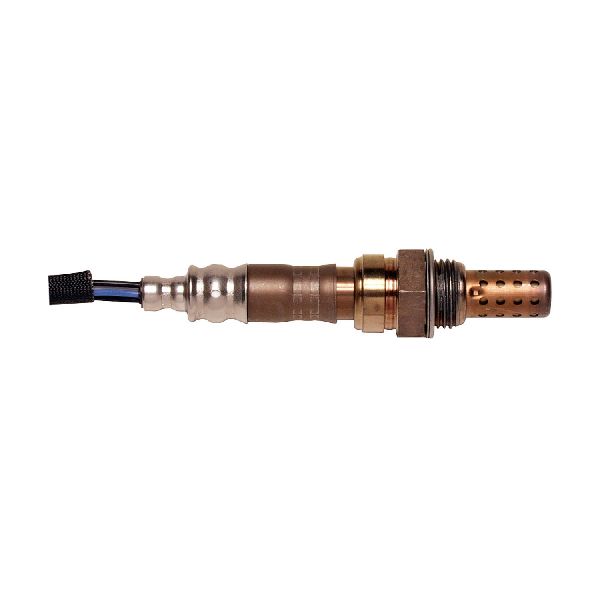
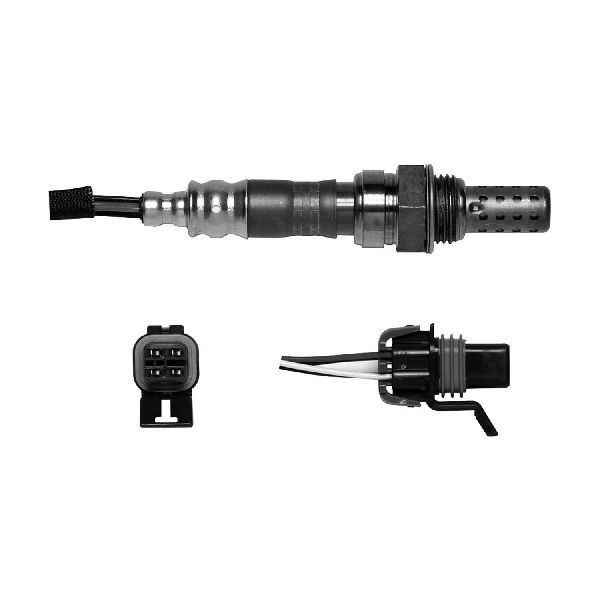
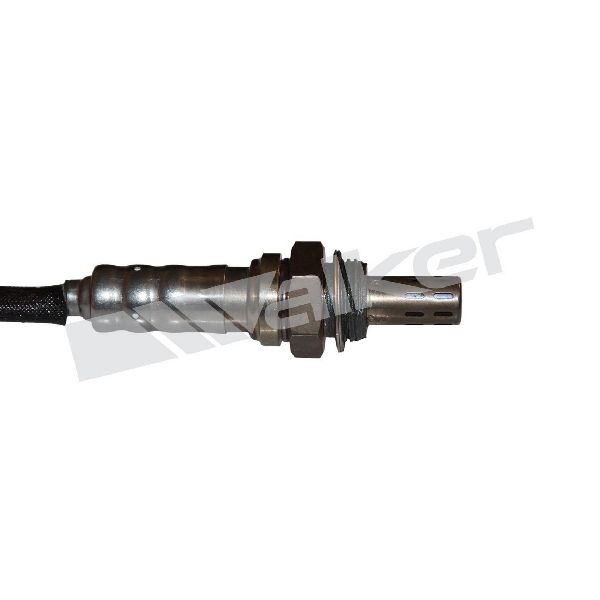
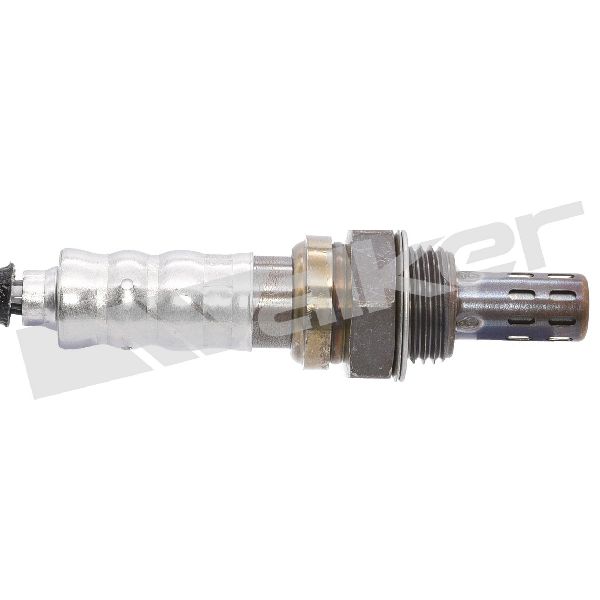
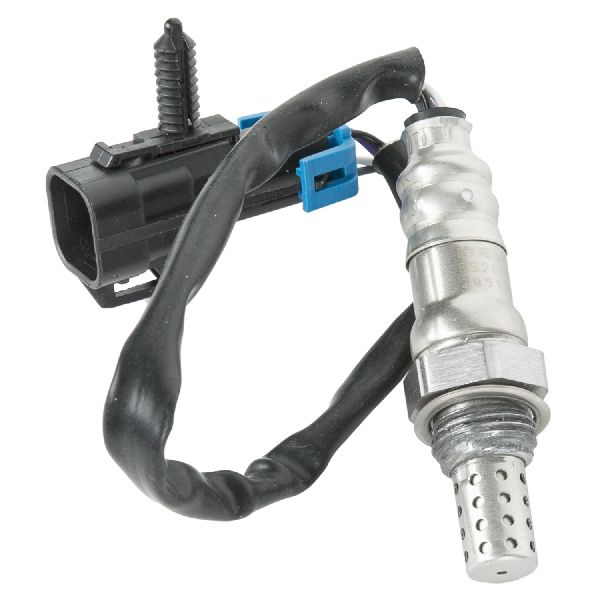
- Downstream Oxygen Sensor (Bank 1, Sensor 2)
(OEM #12578576)— This is the component that fails in the vast majority of P0138 cases on this vehicle. It is a standard wear item whose internal components degrade over time, causing the signal to short to a high voltage.
Trusted brands: ACDelco (p/n 213-3138), Denso (p/n 234-4235), NTK
OEM price range: $80-$120
Aftermarket price range: $40-$80
Related Codes That Often Appear With This One
- P0172 — If the engine is running excessively rich due to another fault (like a bad fuel injector or MAF sensor), it can cause both a P0172 (System Too Rich) and a P0138 because the downstream O2 sensor is correctly detecting the high-fuel, low-oxygen exhaust.
- P0140 — A P0140 (O2 Sensor Circuit No Activity Detected) can sometimes appear alongside or be related to P0138 if the sensor is failing intermittently or has a complex internal electrical fault.
- P0141 — This code indicates a fault with the heater circuit of the same Sensor 2. Since the sensor, connector, and wiring harness are shared, damage to the harness or a complete sensor failure can often trigger both a heater code (P0141) and a signal code (P0138) simultaneously.
Technical Service Bulletins (TSBs) & Recalls
- TSB 050601003A: While not directly for P0138, this TSB addresses excessive oil consumption on some 2.2L L61 engines, a condition known to foul and destroy oxygen sensors, which in turn can cause a P0138 code.
- TSB 03-06-01-017: Issued for 2002-2003 models, this TSB notes an original oiler nozzle design that didn't supply enough oil to the timing chain, leading to premature wear. While not a direct cause of P0138, it's a critical reliability issue for the L61 engine.
Platform-Specific Known Issues
- The 2.2L L61 Ecotec engine is known to be sensitive to the brand of oxygen sensor used. Owners on forums frequently report that using cheaper, off-brand sensors can cause the P0138 code to return. Using an OEM ACDelco or a trusted OE-equivalent brand like Denso or NTK is strongly recommended.
- Some 2005 models with the L61 engine were subject to excessive oil consumption due to piston ring wear (related to TSB 050601003A). This burning oil can contaminate and destroy the oxygen sensor, leading to a P0138 code.
- A user on the Cobalt SS Network forum with the same 2.2L L61 engine and multiple O2 sensor codes including P0138 discovered frayed wires right at the oxygen sensor connector, which resolved the issue when repaired. This highlights the importance of checking the wiring carefully before replacing the sensor.
Mechanic-Grade Diagnostic Values
- Downstream O2 Sensor (HO2S B1S2) Heater Resistance — expected: 4-20 Ohms at ambient temperature. A 2006 GM document for the L61 specifies a range of 3.7 Ω to 7.7 Ω.. Failure: A reading of 0 Ohms (short circuit) or infinite/O.L. (open circuit) indicates a failed heater element, which often fails along with the sensor circuit, triggering P0138 and P0141.
- PCM Fault Trigger Threshold — expected: The PCM will set code P0138 when it sees the B1S2 signal voltage remain above a specific limit for a set duration.. Failure: For the 2004 L61, the specific threshold is a voltage > 1042 mV (1.042V) for 3.8 seconds. A more general GM threshold is > 0.742V for an extended period.
- HO2S B1S2 Signal Wire Voltage (Sensor Unplugged) — expected: Approximately 450mV (0.45V). Failure: If the voltage on the scan tool remains high (near battery voltage) with the sensor unplugged, the signal wire is shorted to a power source in the harness. If it drops to 450mV, the wiring is good and the sensor is bad.
- HO2S B1S2 Connector Wire Voltages (Key-On, Engine-Off) — expected: Signal Wire (Purple): ~450mV reference voltage. Heater Power (Pink/Black): Battery Voltage (~12V). Low Reference (Tan): Near 0V. Ground (varies): Near 0V.. Failure: No voltage on the heater power wire indicates a blown fuse or wiring issue upstream. Voltage on the signal wire significantly different from 450mV (with sensor unplugged) indicates a wiring short or PCM issue.
Hidden / Shadow Codes Worth Checking
- Mode $06, Test ID $21: This is not a trouble code, but an onboard test monitor for the Catalyst Efficiency on Bank 1. A technician can view this data with a capable scan tool to see the raw efficiency value the PCM is calculating. While P0138 is an electrical code, seeing a catalyst efficiency value that is borderline or failing can provide context that the catalytic converter may also be degrading, which can affect downstream O2 sensor readings. (see via A professional scan tool (like the GM Tech 2) or an advanced consumer scan tool capable of displaying Mode $06 data.)
Scan Tool Commands That Help
- GM Tech 2: Engine Data / Data Display — This is the primary function used to view live data streams for all engine sensors, including HO2S B1S2 voltage, short-term and long-term fuel trims, and engine temperature. It is essential for confirming if the sensor voltage is stuck high.
- GM Tech 2: Diagnostic Trouble Codes (DTC) > DTC Info — To view the freeze frame data associated with the P0138 code. This shows the exact engine conditions (RPM, speed, temperature, etc.) at the moment the fault was triggered, which can provide clues to the root cause.
- GM Tech 2: Special Functions / Output Control — While direct control of the O2 sensor signal isn't possible, a technician can use output controls to command the fuel system rich or lean and observe the O2 sensor's response. If the B1S2 voltage does not react at all, it further confirms a sensor or circuit fault. This can also be used to test related components like the fuel pump relay or injectors.
Wiring & Ground Locations
- G107 — At the rear of the L61 2.2L engine block.. This is a primary engine ground point. A loose or corroded connection at G107 can create a floating ground, causing voltage offsets and erratic readings for multiple engine sensors, including the oxygen sensors, potentially leading to false high voltage codes.
- HO2S B1S2 Connector — The 4-pin connector is located under the vehicle, tracing up from the O2 sensor which is installed in the exhaust pipe just after the catalytic converter. The connector is typically clipped to a bracket on the chassis or near the transmission.. This connector and its associated wiring are the most common points of failure besides the sensor itself. Wires can melt from exhaust heat or get damaged by road debris. A short between the Pink/Black (Heater Power) and Purple (Signal) wires is a textbook cause for P0138.
- Engine Harness Ground (Saturn S-Series reference) — On similar GM platforms, a critical ground is located on the back of the block, above the starter, under the #4 intake runner, secured by a 10mm bolt with two ring terminals (4 wires total).. While from a different Saturn model, this specific location described by a forum veteran is a high-value check. Poor grounding at this point is known to cause O2 sensor issues and is difficult to see and access, making it a commonly missed check.
OEM Part Supersession History
12565680, 12568221, 12578573→12578576— Standard part consolidation and minor revisions by GM over the vehicle's lifespan.
Heads up: The current part number, 12578576 (also sold as ACDelco 213-3138), is the correct replacement for all previous versions for this application.
Model Year Variations Within This Range
- 2002-2005: Early four-cylinder models (2002-2005) had an optional VTi Continuously Variable Transmission (CVT). This transmission was known for poor reliability and was discontinued. While it doesn't directly cause P0138, a vehicle with this transmission may have other unique electrical or module communication characteristics.
- 2006-2007: The Vue received a facelift for the 2006 model year, which included a redesigned interior and minor exterior cosmetic changes. The core L61 powertrain and its emissions components related to P0138 remained the same.
Diagnostic Flowchart
Other Known Issues on This Vehicle
Issues unrelated to this code that are worth knowing about as an owner of this generation:
- Timing Chain Guide/Tensioner Wear 🔴 High — Common, especially on earlier models or those with poor oil maintenance. Often presents as a rattle on cold startup after 80,000 miles. Failure can cause catastrophic engine damage. (Ref: TSB #03-06-01-017)
- VTi Transmission Failure (CVT) 🔴 High — Extremely common on 2002-2005 four-cylinder models equipped with the VTi continuously variable transmission. These units are known to be unreliable and expensive to repair.
- 4T45-E Automatic Transmission Solenoid Failure 🟠 Medium — For models with the 4-speed automatic (4T45-E), failure of shift solenoids is a common issue, leading to harsh shifting, getting stuck in one gear, or setting transmission-specific codes like P0757.
- Ignition Switch Malfunction / Recall 🔴 High — Widespread on 2002-2004 models. A faulty ignition switch could allow the key to be removed while not in 'Off' or cause the engine to shut off if bumped. This was part of a major GM recall. (Ref: NHTSA Campaign ID 14V047000 (GM Recall 13454))
- Ignition Control Module (ICM) Failure 🟠 Medium — The ICM on the 2.2L L61 can fail, leading to symptoms like engine misfires, stalling, rough idling, or a no-start condition. Heat is a primary cause of failure.
- Excessive Oil Consumption 🟠 Medium — Some L61 engines, particularly around the 2005 model year, can suffer from excessive oil consumption due to piston ring issues. This can lead to low oil levels and foul spark plugs and O2 sensors. (Ref: TSB 050601003A)
Used vs. New Parts: Buying Guide for This Vehicle
When a used part is the smart pick: Almost never for the oxygen sensor itself. A used part makes sense ONLY for the connector pigtail if the original is damaged and you can source a clean one from a junkyard harness. The sensor is a wear item and should always be purchased new.
Donor-vehicle mileage cap: roughly under 80000 miles for the part to have meaningful remaining life.
What to inspect on the donor part:
- For a wiring pigtail: check for flexible, uncracked insulation.
- Ensure connector locking tabs are intact.
- Look for clean, corrosion-free terminals inside the connector.
- Avoid any harnesses from vehicles with signs of fire or major fluid leaks in that area.
OEM-only on this vehicle (don't cheap out):
- Oxygen Sensor - While not strictly 'OEM-only', using a cheap, no-name sensor is a widely reported cause of immediate or premature failure. Stick to OEM (ACDelco) or proven OE-equivalent brands.
Aftermarket brands forum-validated for this vehicle:
- Denso (specifically p/n 234-4235 for this application)
- NTK/NGK
- Bosch (Direct-fit, not universal)
Brands owners have reported issues with on this vehicle:
- Universal-fit sensors that require splicing (these can introduce resistance and sealing issues)
- Unbranded, 'white-box' parts from online marketplaces
Real Owner Stories
Aggregated from forums and TSBs cited above. Mileages and costs reflect what owners reported in those sources.
2005-2007 Chevrolet Cobalt 2.2L L61
Symptoms: Multiple O2 sensor codes including P0138.
What fixed it: Repairing frayed wires found right at the oxygen sensor connector.
Source hint: Cobalt SS Network forum thread titled 'downstream o2 sensor'
Related OBD-II Codes
Frequently Asked Questions
Does TSB 050601003A regarding oil consumption apply to my 2005 Saturn Vue with the 2.2L engine?
Can I use a generic universal oxygen sensor to fix the P0138 code on my L61 Ecotec engine?
Is there a recall for the ignition issues on my 2002-2004 Saturn Vue?
Can I solder the wires if I find a break in my Vue's O2 sensor harness?
Does TSB 03-06-01-017 for the timing chain affect my 2002-2003 Vue's reliability?
What should the voltage reading be for a healthy downstream sensor on my 2.2L Vue?
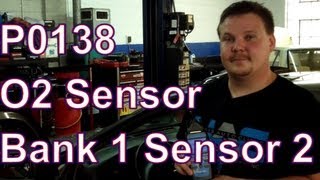
Helpful Videos
We Have This Part in Stock


The information in this article is provided for general reference and educational purposes only. Vehicle specifications, procedures, and part compatibility can vary by production date, trim level, and region. Always consult your vehicle's factory service manual and verify part numbers before purchasing or performing repairs. Safety-critical components such as airbags, seat belts, and braking systems should be installed by a qualified professional.
- Saturn Vue:
- 🧭 Diagnostic Flowchart
- 🎬 Helpful Videos
- 🛍️ Shop This Part
- What's Unique About the 2002-2007 Saturn Vue
- Symptoms You May Notice
- Most Likely Causes
- Rare But Worth Checking
- Diagnosis Steps
- Parts You'll Likely Need
- Related Codes That Often Appear With This One
- Technical Service Bulletins (TSBs) & Recalls
- Platform-Specific Known Issues
- Mechanic-Grade Diagnostic Values
- Hidden / Shadow Codes Worth Checking
- Scan Tool Commands That Help
- Wiring & Ground Locations
- OEM Part Supersession History
- Model Year Variations Within This Range
- Other Known Issues on This Vehicle
- Used vs. New Parts: Buying Guide for This Vehicle
- Real Owner Stories
- 2005-2007 Chevrolet Cobalt 2.2L L61
- Related OBD-II Codes
- Frequently Asked Questions
- 🎟️ Get 5% Off