

P0138 on 2017-2024 Subaru Crosstrek: O2 Sensor High Voltage Causes and Fixes
On a 2017-2024 Subaru Crosstrek, the P0138 code is most often caused by a faulty rear oxygen sensor (Bank 1, Sensor 2). Subaru issued a Technical Service Bulletin (TSB #09-115-24R) detailing an updated sensor to fix this common issue. Replacing the sensor with the improved OEM part or a quality equivalent like Denso is the most common and effective repair.
- P0138 on a Subaru Crosstrek almost always points to a faulty rear (downstream) oxygen sensor.
- Subaru is aware of this issue and released TSBs with information on an updated replacement sensor.
- Before replacing the sensor, always perform a quick visual inspection of the wiring and connector for obvious damage, as they are exposed under the vehicle.
- Replacing the rear O2 sensor is a DIY-friendly job for most home mechanics with basic tools and can save significant labor costs.
- Do not mistake this for a catalytic converter failure; the sensor circuit should be diagnosed and fixed first.
What's Unique About the 2017-2024 Subaru CROSSTREK
For the Subaru Crosstrek and its platform-mates (Impreza, Forester), this code is common enough that Subaru released Technical Service Bulletin #09-115-24R. This TSB announces the availability of a newly developed rear oxygen sensor specifically designed to address codes P0137, P0138, P0140, and P0141. The bulletin explains that the new sensors have an "optimized coating application to help prevent cracking within the internal surfaces reducing any possibility of short/open circuits." This is a direct acknowledgment from the manufacturer of a design weakness in the original part, making sensor failure the primary suspect when P0138 appears.
Diagnostic Flowchart
Tap your situation to follow the diagnostic path that matches what you're seeing on this vehicle.
Generation note: The 2017-2024 range covers the end of the first generation (2017), the full second generation (2018-2023), and the start of the third generation (2024). The TSB #09-115-24R explicitly applies to the 2017-2024 Crosstrek, confirming the issue spans all three generations. The underlying FB20 engine and emissions components are shared 🎬 Watch: An easy guide to changing Subaru oxygen sensors. across many of these years, making the diagnosis and repair consistent.
Symptoms You May Notice
- Check Engine Light is on.
- Decreased fuel economy.
- Rough or unstable idle.
- Failure to pass an emissions test.
- Strong exhaust odor due to a rich fuel mixture.
- Replacing the catalytic converter. The P0138 code points to a problem with the sensor monitoring the converter, not necessarily the converter itself. Always diagnose the sensor and circuit first.
- Replacing the front (upstream) oxygen/air-fuel ratio sensor. P0138 specifically refers to Sensor 2, which is the downstream sensor located after the catalytic converter.
Most Likely Causes
- Faulty Rear Oxygen Sensor (Bank 1, Sensor 2) 🔴 High Probability → Shop Oxygen Sensor Subaru TSB #09-115-24R confirms a high failure rate for the original sensor due to a design that was susceptible to internal cracking and short circuits. The updated part was specifically created to resolve this weakness.
How to confirm: Use a scan tool to monitor the live voltage data for Bank 1, Sensor 2. If the voltage is stuck high (e.g., >0.9V) and doesn't fluctuate as expected, the sensor is likely bad. You can also test the sensor's internal heater circuit with a multimeter; a healthy sensor should have a resistance of about 5.6 Ohms +/- 0.8 Ohms. An open circuit or very high resistance (over 50 Ohms) in the heater also necessitates sensor replacement.
Typical fix: Replace the rear (downstream) oxygen sensor. It is highly recommended to use the updated OEM part (Subaru P/N 22690AB010) or a high-quality aftermarket equivalent like Denso 234-4513. After replacement, clear the codes and perform a drive cycle. 🎬 See this walkthrough for replacing the downstream sensor.
Est. part cost: $90-$235 - Damaged Wiring or Connector 🟡 Medium Probability The sensor is located under the vehicle and its wiring is routed up into the engine bay. This harness is exposed to heat, moisture, and road debris, which can damage the wiring or corrode the connector pins over time.
How to confirm: Visually inspect the entire wiring harness from the O2 sensor to its connector, which is often located on the driver's side, near the rear of the transmission. Check for melted insulation near the exhaust, frayed wires, or corrosion inside the connector terminals.
Typical fix: Repair the damaged section of wire or clean the connector terminals with electrical contact cleaner. In severe cases, the connector pigtail may need to be replaced.
Est. part cost: $10-$50 - Engine Running Rich ⚪ Low Probability
How to confirm: Check for other trouble codes related to the fuel system (e.g., fuel injectors, fuel pressure regulator, MAF sensor). A rich condition will usually trigger other codes alongside P0138. An exhaust gas analyzer can also confirm a rich condition.
Typical fix: Diagnose and repair the underlying cause of the rich condition, such as a leaking fuel injector, faulty fuel pressure regulator, or a dirty MAF sensor.
Est. part cost: $50-$400+
Rare But Worth Checking
- Exhaust Leak: An exhaust leak before the rear O2 sensor can sometimes introduce outside air, confusing the sensor and causing erratic readings, though this more commonly causes lean codes or low voltage codes like P0137.
- Faulty Engine Control Module (ECM): This is very rare. The ECM should only be considered a possibility after all other potential causes, including the sensor and its wiring, have been definitively ruled out.
- Coolant Contamination: In vehicles that have experienced a head gasket failure, coolant can enter the exhaust system and contaminate the oxygen sensors, causing them to fail. This is usually accompanied by other obvious symptoms like overheating and white smoke from the exhaust.
Diagnosis Steps
- Connect an OBD-II scanner and confirm that P0138 is the primary code. Note any other codes present, especially P0137, P0140, or P0141.
- Use the scanner's live data function to observe the voltage from 'Bank 1, Sensor 2'. A healthy downstream sensor should show a relatively stable voltage (usually 0.5V-0.8V). If it is stuck high (e.g., above 0.9V) and does not fluctuate, this points towards a problem.
- Perform a thorough visual inspection of the rear oxygen sensor's wiring harness and connector. Look for any signs of melting, chafing, corrosion, or loose connections. The connector is often on the driver's side near the rear of the transmission.
- Given the high probability of sensor failure confirmed by Subaru's TSB, the next logical step is to replace the rear oxygen sensor. Use the updated OEM part or a quality Denso/NGK equivalent.
- After replacing the sensor, clear the codes with the scanner and perform a test drive to ensure the code does not return.
- If a new sensor does not resolve the code, re-inspect the wiring for an intermittent short to power. Also, check for a rich running condition caused by other components like fuel injectors or a fuel pressure regulator.
- As a final, rare step, the ECM's driver circuit for the sensor could be at fault, which may require professional diagnosis.
Parts You'll Likely Need
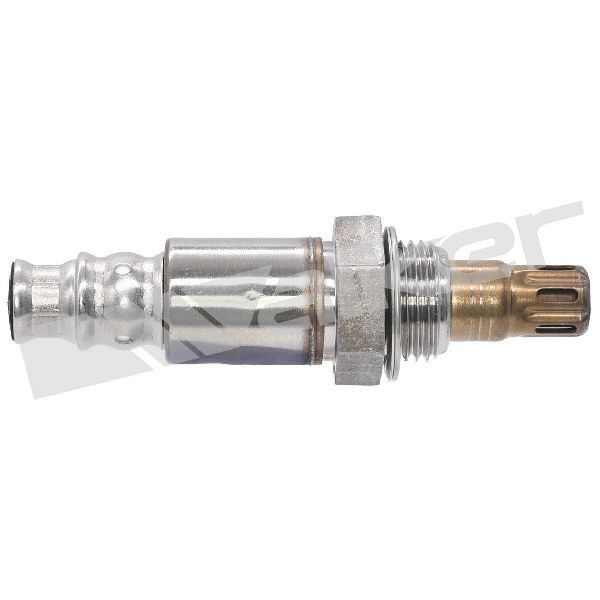
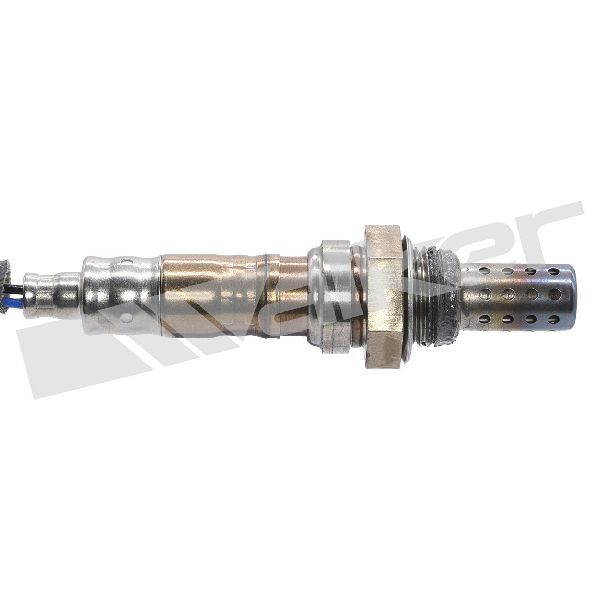
- Rear Oxygen Sensor (Bank 1, Sensor 2)
(OEM #22690AB010)— This is the most frequent cause of P0138 on the Crosstrek, confirmed by manufacturer TSB #09-115-24R, which introduced this improved part to prevent internal sensor cracking and short circuits.
Trusted brands: Subaru (OEM P/N: 22690AB010), Denso (P/N: 234-4513), NTK
OEM price range: $160-$235
Aftermarket price range: $50-$170
Related Codes That Often Appear With This One
- P0137 — This code is for 'O2 Sensor Circuit Low Voltage' for the same sensor. Seeing both may indicate an intermittent wiring problem or a failing sensor that is fluctuating between open and shorted states, as described in the TSB.
- P0141 — This code is for 'O2 Sensor Heater Circuit Malfunction' for the same sensor. Since the heater is part of the sensor assembly, a P0141 strongly suggests the entire sensor needs to be replaced. The TSB also groups this code with P0138 as being resolved by the new sensor.
- P0140 — This code means 'O2 Sensor Circuit No Activity Detected' for the same sensor. This can happen if the sensor fails completely or if there is a break in the wiring. It is also listed in TSB #09-115-24R.
Technical Service Bulletins (TSBs) & Recalls
- 09-115-24R: A revised TSB confirming the new sensor for fixing P0137, P0138, P0140, and P0141. It applies to 2017-2024 Crosstrek models and explains the new sensor's improved design to prevent internal cracking and short/open circuits.
Platform-Specific Known Issues
- Subaru has issued Technical Service Bulletin #09-115-24R regarding the availability of an improved rear oxygen sensor to resolve this specific code. The TSB states the new sensor has an 'optimized coating application to help prevent cracking within the internal surfaces'.
- Owners on forums like subaruxvforum.com frequently report resolving the P0138 code simply by replacing the rear O2 sensor. Many recommend using the OEM part or a Denso equivalent to avoid compatibility issues.
Mechanic-Grade Diagnostic Values
- Rear O2 Sensor (B1S2) Live Data Voltage — expected: Relatively stable, lazy fluctuation between 0.5V and 0.8V on a warm, running engine.. Failure: Stuck high, above 0.9V, for an extended period. A reading above 1.1V or 1.2V almost certainly indicates a fault.
- Rear O2 Sensor Heater Circuit Resistance — expected: 5.6 Ohms +/- 0.8 Ohms at 68°F (20°C). A reading between 5-8 Ohms is generally considered acceptable.. Failure: No reading (open circuit) or very high resistance (over 50 Ohms).
- Rear O2 Sensor Heater Circuit Voltage (at connector) — expected: Approximately 12V (B+) on the power pin with the key on, engine off.. Failure: No voltage indicates a problem with the power supply or fuse, not the sensor itself.
Scan Tool Commands That Help
- Subaru Select Monitor (SSM) or equivalent professional scanner: Current Data Display & Save > Oxygen Sensor — This is the dealer-level tool function used to view and record the live voltage data from the rear O2 sensor to confirm if it is stuck high, as indicated by the P0138 code.
Wiring & Ground Locations
- E25 — This is the wiring diagram identifier for the rear O2 sensor plug itself.. Knowing the connector ID helps locate the correct component in a factory service manual or wiring diagram for pin-out testing.
- Rear O2 Sensor Connector — The harness connector is typically located on the driver's side of the vehicle, near the rear of the transmission.. This is the primary point for electrical testing (voltage, ground, resistance) without having to access the sensor itself. It is a common point for corrosion or damage.
- Heater Circuit Wires (at connector) — On some models, the heater circuit wires are Pin 1 (Red) for power and Pin 2 (Green/Yellow) for the ECU-controlled ground.. Identifying the correct pins is critical for accurately testing the heater circuit's power supply and resistance, which is often the point of failure (triggering P0141 alongside P0138).
- Engine-to-Frame Grounding Strap — There is a main grounding strap located near the O2 sensor connector area that connects the engine to the vehicle frame.. While not part of the sensor circuit, a corroded or loose main ground can cause a variety of electrical issues, including erratic or biased sensor readings. If the sensor and its direct wiring check out, this is a potential, often-overlooked, contributing factor.
Real Owner Repair Stories
- Reddit user HaasMe on r/Crosstrek (2018 Crosstrek 6MT, 110k miles) — Recurring Check Engine Light for the downstream O2 sensor heater circuit (related to P0138/P0141).
❌ Tried (didn't work) Replacing the original sensor with an aftermarket Walker brand sensor (P/N: 350-34052). The code returned after about a week.
✅ What actually fixed it The user performed detailed electrical checks and found the wiring and ECU signals were correct, leading to the conclusion that the aftermarket sensor was not fully compatible despite fitting correctly. The resolution path pointed towards replacing the sensor again, this time with a genuine OEM or Denso part, which is a common recommendation for avoiding compatibility issues on Subarus.
OEM Part Supersession History
Unknown (Original part installed at factory)→22690AB010— This is the improved part number referenced in TSB #09-115-24R, designed with an 'optimized coating' to prevent internal cracking and short circuits that caused codes like P0138.
Heads up: Use of aftermarket sensors, even from reputable brands, can be problematic. A documented case showed an aftermarket Walker sensor caused the code to return, while OEM and Denso parts are widely recommended for compatibility.22690AB070→N/A— This part number is also listed for the rear oxygen sensor on 2018-2021 Crosstrek models. It may be a regional or mid-generation revision.
Heads up: When ordering, it is critical to verify the correct part number using the vehicle's VIN, as multiple part numbers may exist for the same application depending on the specific production date and original market.
Helpful Videos
We Have This Part in Stock

The information in this article is provided for general reference and educational purposes only. Vehicle specifications, procedures, and part compatibility can vary by production date, trim level, and region. Always consult your vehicle's factory service manual and verify part numbers before purchasing or performing repairs. Safety-critical components such as airbags, seat belts, and braking systems should be installed by a qualified professional.
- Subaru CROSSTREK:
- 🧭 Diagnostic Flowchart
- 🎬 Helpful Videos
- 🛍️ Shop This Part
- What's Unique About the 2017-2024 Subaru CROSSTREK
- Symptoms You May Notice
- Most Likely Causes
- Rare But Worth Checking
- Diagnosis Steps
- Parts You'll Likely Need
- Related Codes That Often Appear With This One
- Technical Service Bulletins (TSBs) & Recalls
- Platform-Specific Known Issues
- Mechanic-Grade Diagnostic Values
- Scan Tool Commands That Help
- Wiring & Ground Locations
- Real Owner Repair Stories
- OEM Part Supersession History
- 🎟️ Get 5% Off